

Modern Church Architecture with Multi-functional Design: Köln-Weidenpesch Church
This article explores the innovative design of Köln-Weidenpesch Church, blending sacred architecture with multifunctional community-focused spaces.


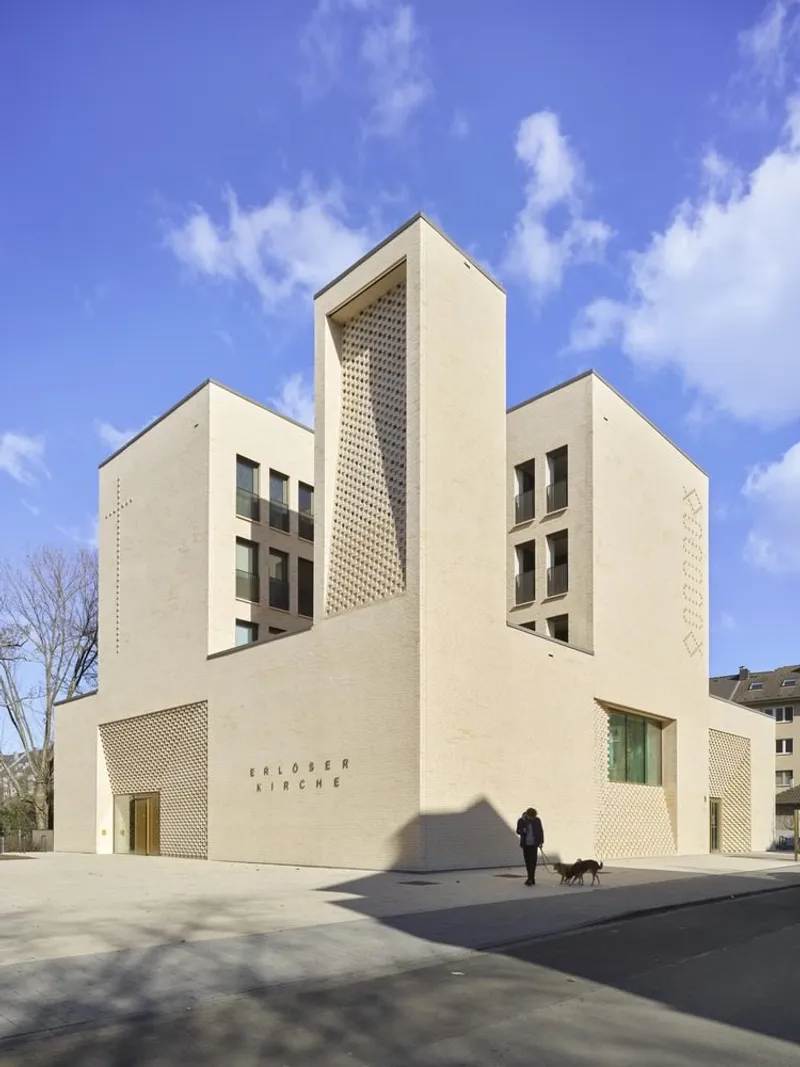
The Köln-Weidenpesch Church, designed by Harris + Kurrle Architekten BDA, represents a groundbreaking approach to modern church architecture. This project harmoniously integrates sacred and secular spaces, redefining the role of religious buildings in urban communities.
A Multifunctional Vision for Worship and Community
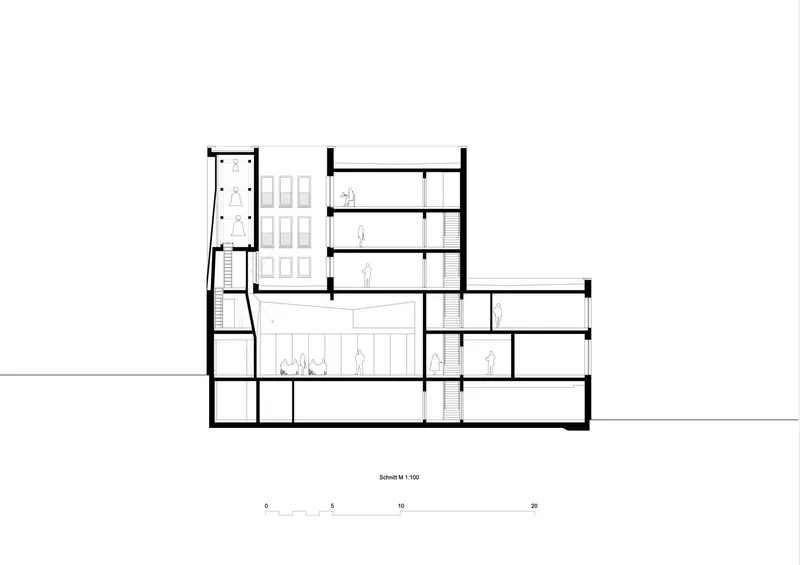
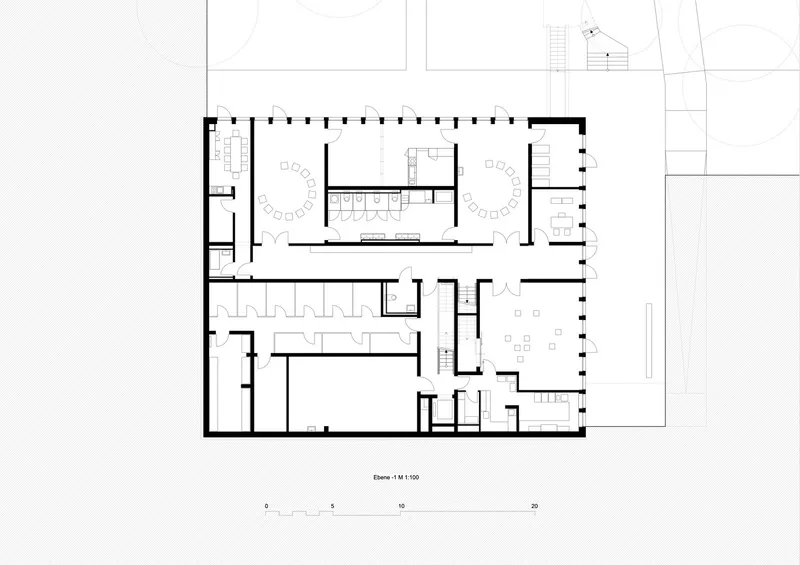
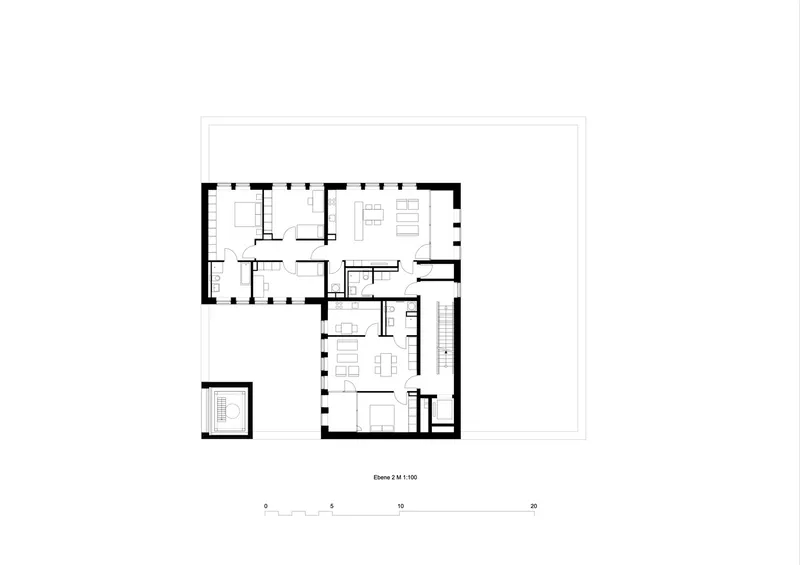
The project was born from a practical yet innovative vision. It consolidated two 1960s church sites into a single multifunctional structure, featuring a worship area, community center, day-care facilities, residential flats, and offices. This hybrid development emphasizes functionality without compromising the spiritual atmosphere.
The architectural competition held in 2015 was won by Harris + Kurrle Architekten, who proposed a design that embodies inclusivity, utility, and elegance.
Compact Design for Urban Integration
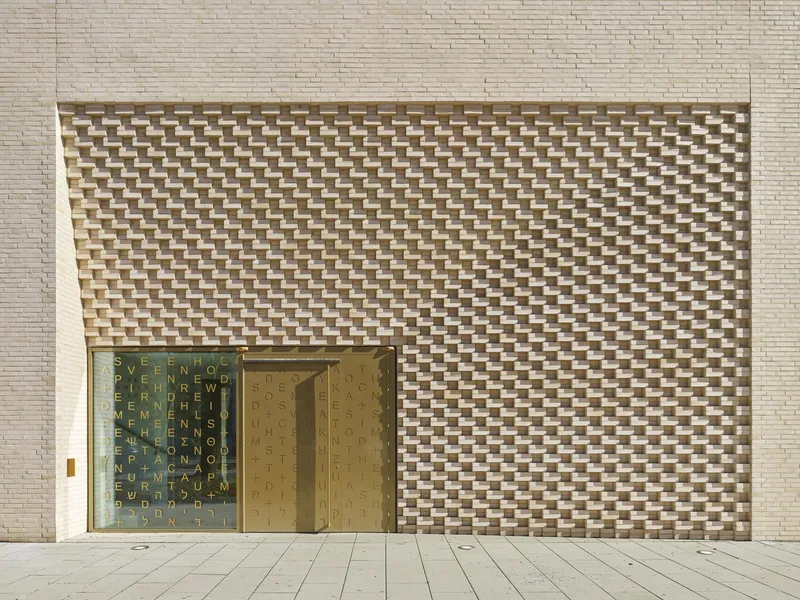
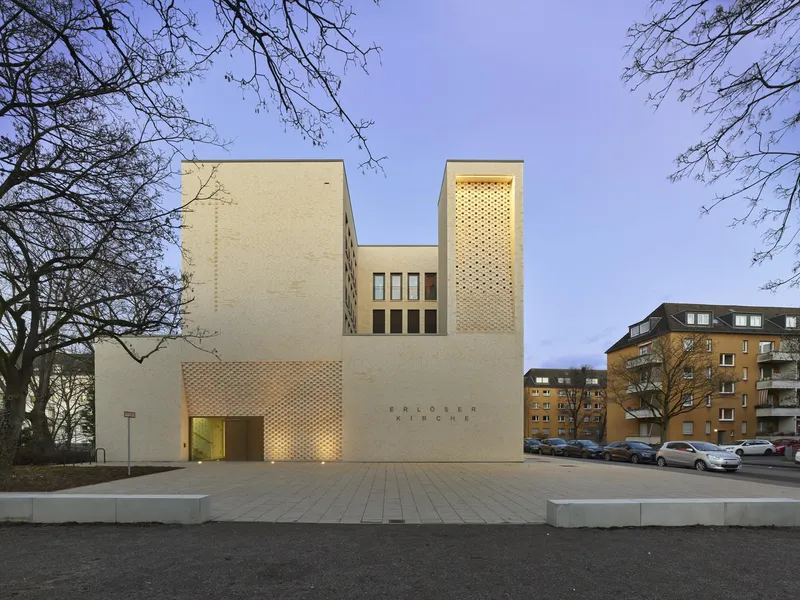
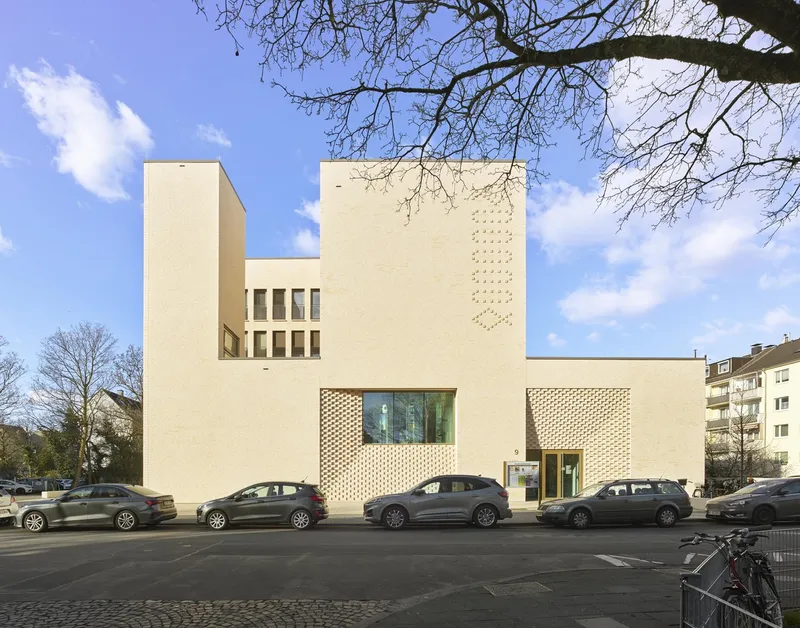
The building's compactness balances its height, ensuring it does not overpower its surroundings while creating a defined and inviting church square. The façade, constructed from sand-colored clinker bricks, establishes an aesthetic uniformity, while ornamental brickwork highlights sacred elements like the church windows, bell tower, and entrance portals.
This seamless blend of modern design principles and traditional materials helps the church convey a sense of sacredness and openness to the urban landscape.

Architectural Features and Design Highlights
1. Exterior Design: Enclosing Sacred and Secular Life
The exterior treatment symbolizes the coexistence of sacred and profane functions.
- Worship space façade: Predominantly closed, with purposefully placed windows to accentuate the sanctity.
- Community functions façade: Structured by a uniform grid of windows, reflecting everyday activities.
These distinct façades, unified by the brick material, highlight the building's multifunctional purpose.
2. Interior Design: Illuminated by Natural Light
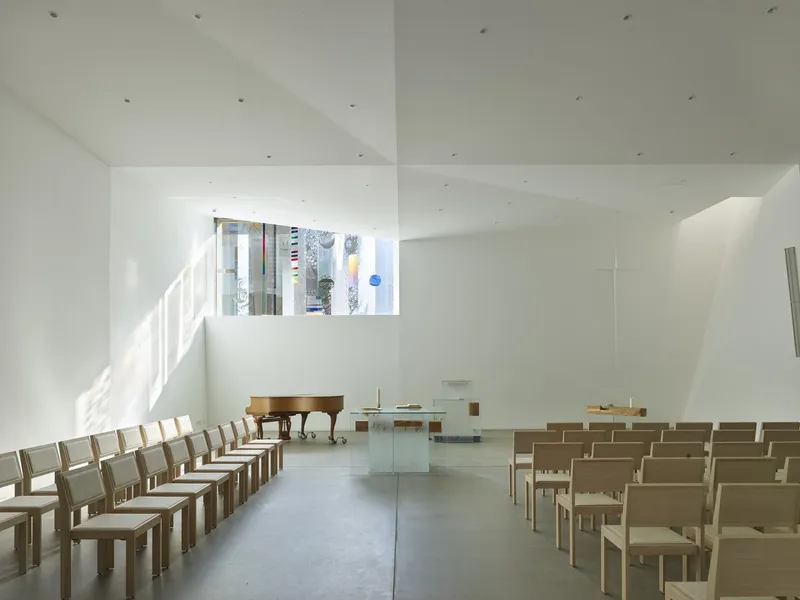
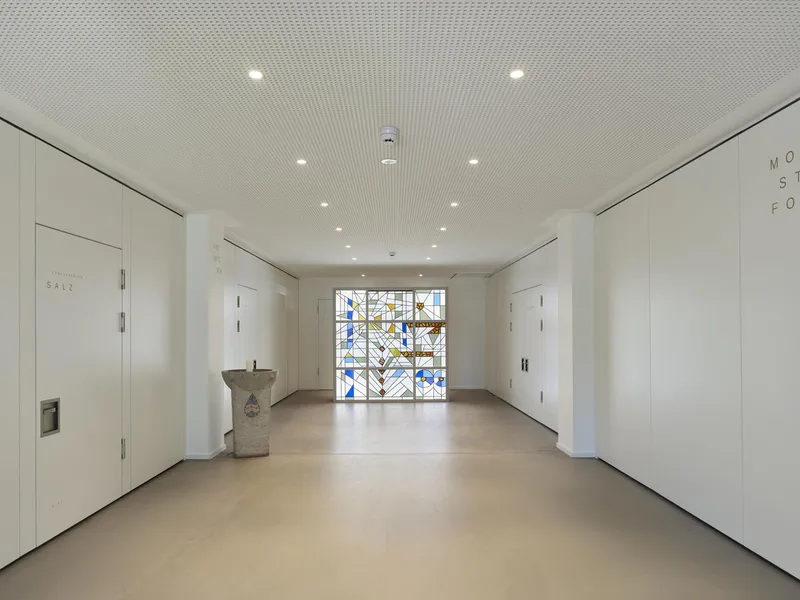
Natural light plays a central role in shaping the church's serene interior. Key lighting features include:
- South-facing artist-designed window: Created by Gabriele Wilpers, offering direct sunlight.
- Zenithal lighting: Above the cross area, symbolizing divine connection.
The white walls and ceilings emphasize the varying light effects, enhancing the contemplative atmosphere and complementing religious artifacts.
3. Adaptive Spaces for Community Needs
The building’s adaptability is one of its strongest features:
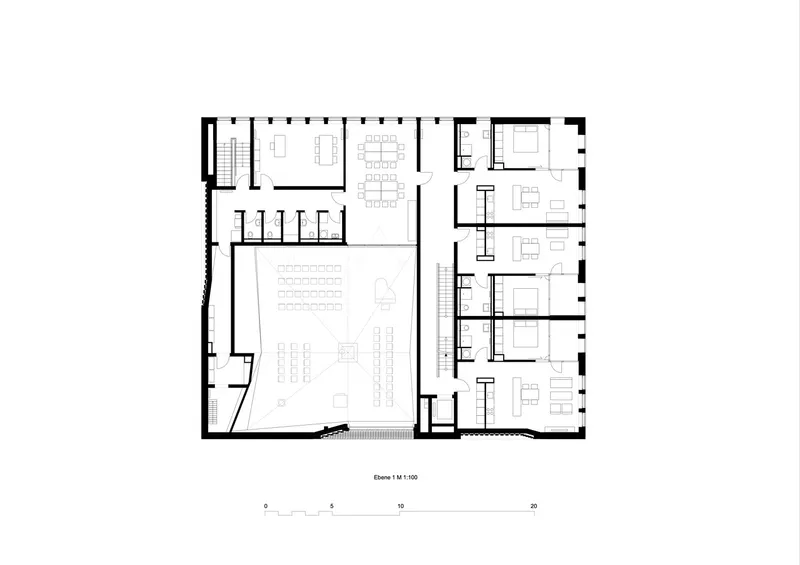
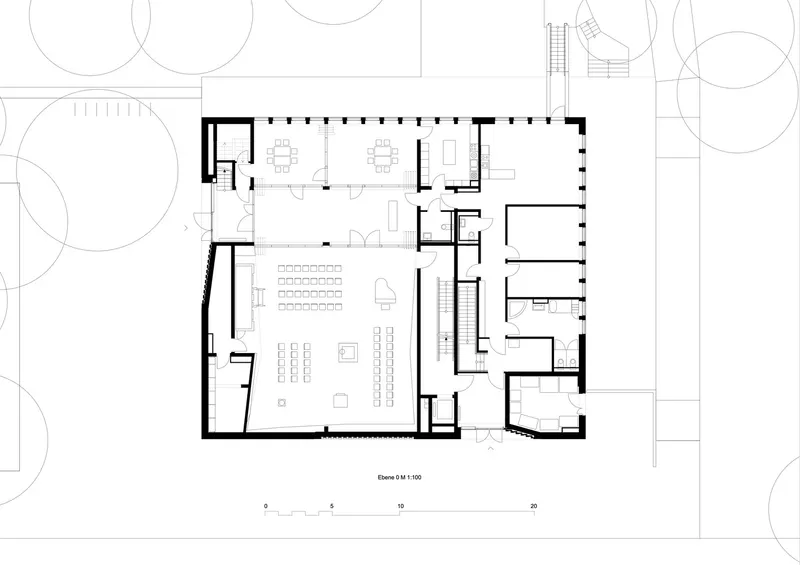
- Movable partition walls allow the group rooms and lobby to merge with the worship area for larger gatherings.
- Day-care facilities include a garden-level play area and multi-purpose rooms, integrating children into the community.
- Residential flats: Nine units are designed on upper floors, contributing to urban housing solutions.
Sustainable and Inclusive Urban Design
The church square acts as a welcoming public space with long benches under mature trees, encouraging interaction and reflection. The garden, primarily serving the daycare center, includes a terrace for community celebrations and a natural adventure area for children.
This integration of open spaces with the building reinforces the principle of being "surrounded by life," a core design ethos.
Products and Materials Used
To maintain aesthetic and functional integrity, the architects employed high-quality materials:
- Clinker Bricks: Feldhaus Klinker’s Modern Waterstruck Vario was chosen for its durability and timeless appeal.
- Windows and Fixtures: Provided by Schüco, ensuring energy efficiency and precision.
A Beacon of Modern Church Architecture
Köln-Weidenpesch Church redefines modern church architecture, offering a blueprint for multifunctional religious spaces that serve both spiritual and societal needs. Its design demonstrates how contemporary architecture can embrace tradition while adapting to modern urban demands.
By integrating worship spaces with day-to-day community activities, the church not only revitalizes its sacred role but also becomes a vibrant hub for urban life.

All the photographs are work of Roland Halbe


Popular Articles
Popular articles from the community


Juan García Correa, John González and Claudia Rueda Sink a Circular Amphitheater into a Manizales Engineering Building
On the La Nubia campus in Manizales, Colombia, the S1 Building folds labs and offices into a hillside of ramped lawns that double as a campus route.

graciastudio Turns a Viewless Tijuana Lot Inward Around a Courtyard of Concrete, Timber and Trees
In Tijuana, Jorge Gracia's GA2 House stacks a timber-clad private floor over exposed concrete and replaces a missing view with a planted interior patio.

Cube Design Draws an Ecological Corridor Between Two Shenzhen Hills with the Nankai Building
Beside Shenzhen's container docks, the Nankai Building pairs stacked balconies with a climbing green screen to connect two hillsides across its height.

LT2A and OPEN Architectes Thread a Brick and Glass High School Through a Wooded Belgian Campus
In Braine-l'Alleud, a 3,000 m² wing for Collège Cardinal Mercier pairs pale brick with a glazed colonnade, deferring to a small chapel and a dense wood.

Similar Reads
You might also enjoy these articles


Hodi-Mandai Geram
Project Function: Preservation and revitalization of the Intangible heritage and socio-spatial identity of the Hodi by Housing, Cultural Memory Center, Sacred Grove, landscape, local tourism economy


Olio Towers: A Mid-Rise for Performers That Fuses Housing, Rehearsal, and Stage
Located blocks from Houston's Theater District, this modular tower stacks living units around a central performance atrium.

Oasis: Modular Green Housing Carved into Dhaka's Urban Fabric
A shortlisted Plugin Housing entry reclaims unauthorized settlements in Dhaka with stepped concrete volumes, green roofs, and ventilation-driven design.

Black Hole: A Floating Megastructure for the Post-Physical Era
Emiliano Mazzarotto envisions a spherical, self-scaling arena where e-sports, digital hotels, and holographic stadiums replace traditional public space.

Explore Architect For Liturgy Competitions
Discover active competitions in this discipline

Design Challenge - Contemporary interpretation of a religious complex

Challenge to reimagine the Iron Throne

Photograph architecture without architects

Illustrate the lost glory of Angkor Wat - Render Challenge
Comments (0)
Please login or sign up to add comments
No comments yet. Be the first to comment!