

Modern Indian Educational Architecture: A Fusion of Tradition and Innovation
Bajaj Institute of Technology's modern design harmonizes tradition, creating an innovative educational space in Wardha, India.


In the heart of Wardha, India, the Bajaj Institute of Technology stands as a testament to a harmonious blend of modern architectural innovation and traditional Indian design elements. Spearheaded by CCBA Designs, the academic block of the institute reflects a distinctive approach that intertwines sacred architectural concepts with contemporary spatial design.
Understanding the Vision
Initiated by the Shiksha Mandal organization, the Bajaj Institute of Technology emerged as a response to the need for quality and affordable education in India. Unlike other institutions facing challenges, the client advocated for a unique style of educational propagation and architecture. The result is a cutting-edge engineering college that caters to the educational needs of the town of Wardha.
Architectural Inspiration
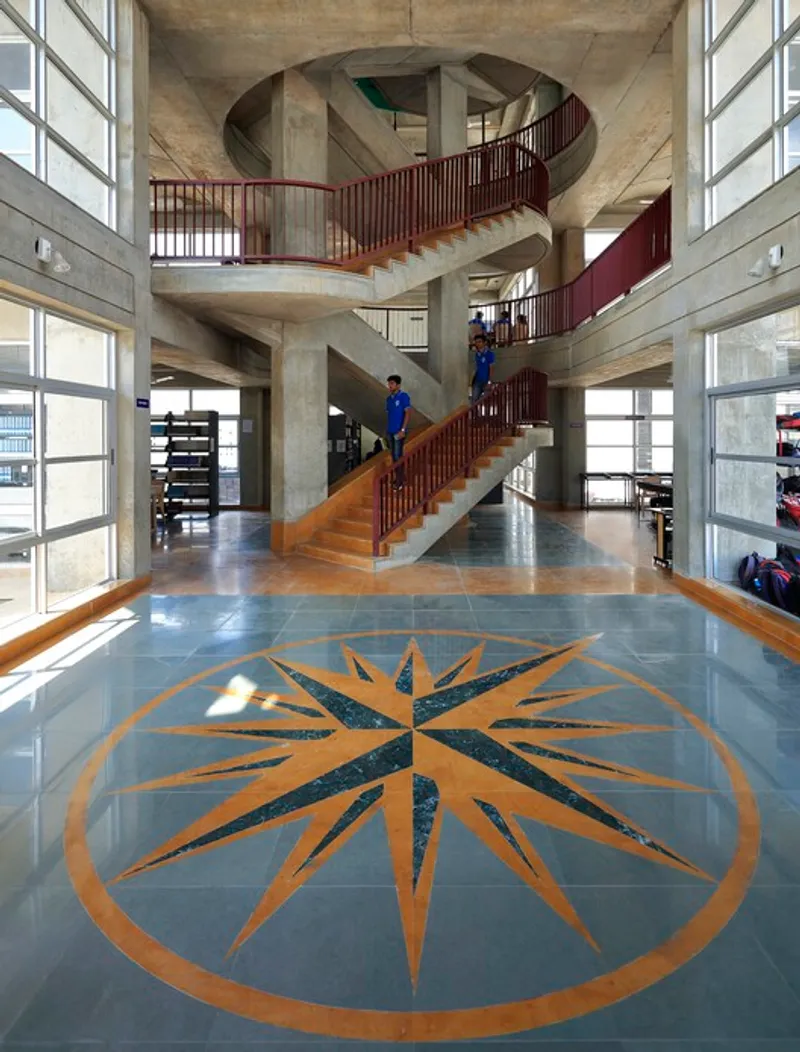
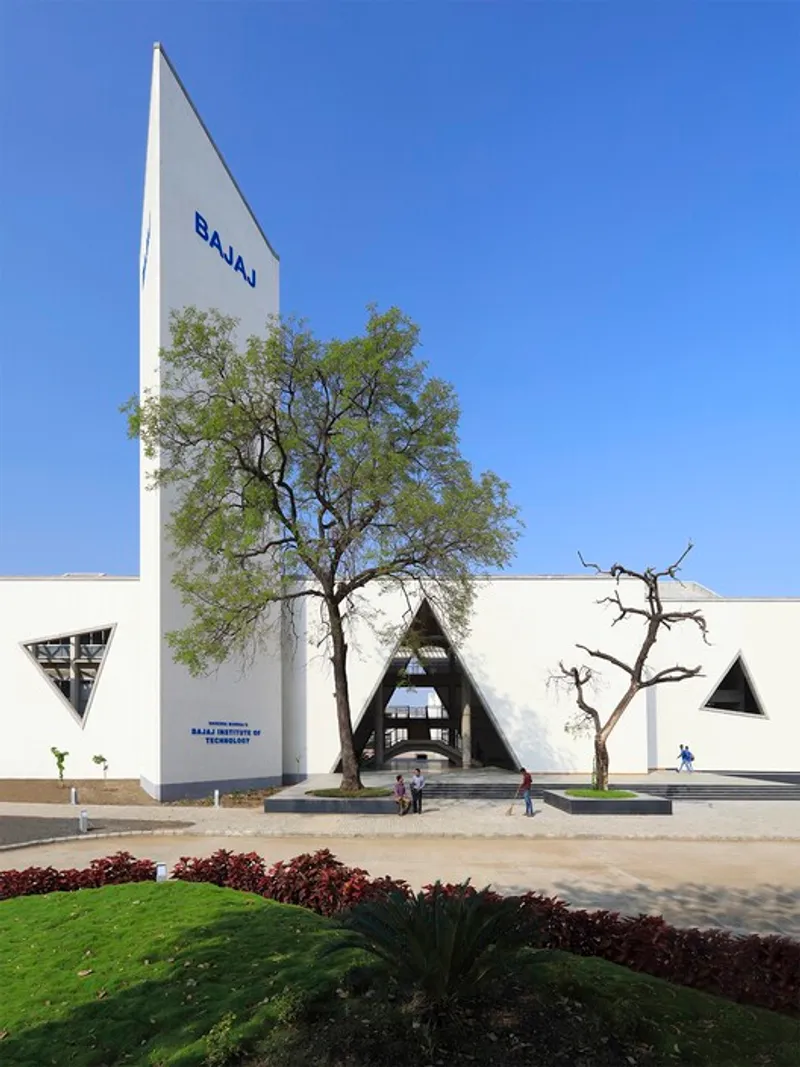
The conceptual design draws inspiration from the sacred architecture of temples, churches, mosques, and building complexes. The spatial movement within the academic block mirrors the sacred attributes of these places through modern interpretations, such as mandapa, torana, gopuram, circumambulation, and a stump. The elongated quadratic shape of the institute reflects the flavors of modern architecture while paying homage to traditional elements of space-making.
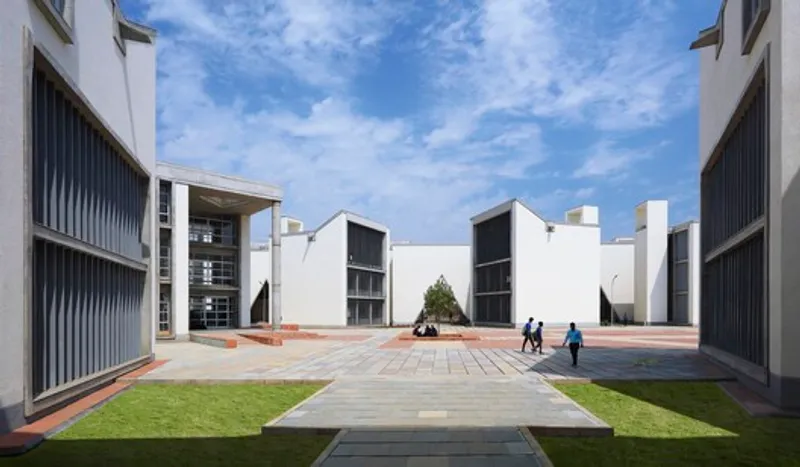

Central Plaza and Geometric Abbreviations
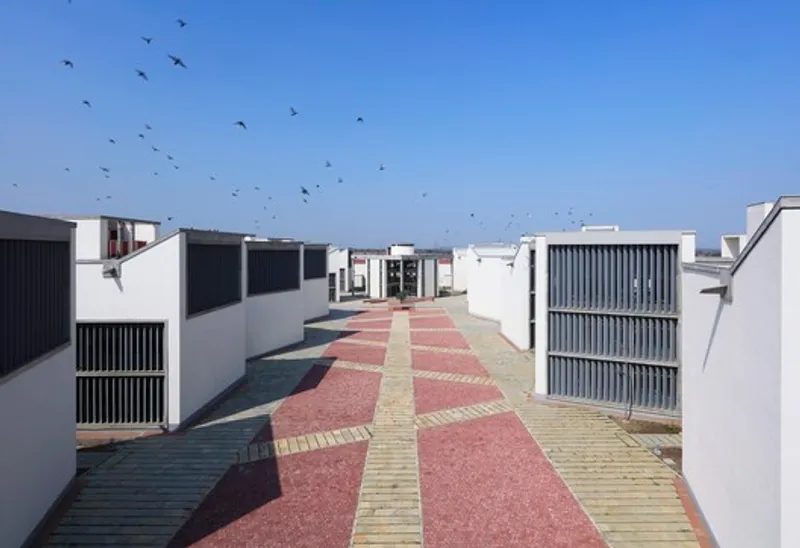
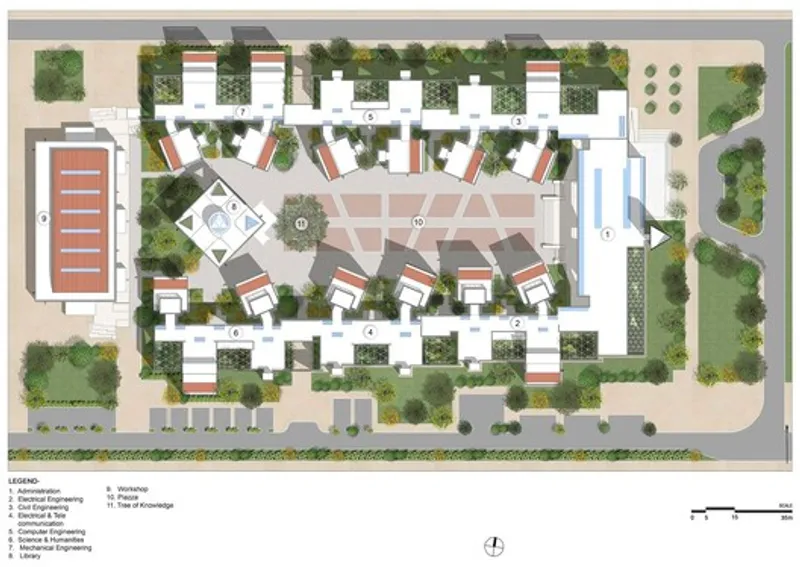
Positioned around the periphery, the building opens up to a large central plaza, creating geometric abbreviations and focal points that unify the architectural language. The campus is conceived as a complex dispersed over three levels, interconnected through walkways and bridges. The design aims to provide a cohesive environment, transcending the harsh climatic conditions of Wardha.
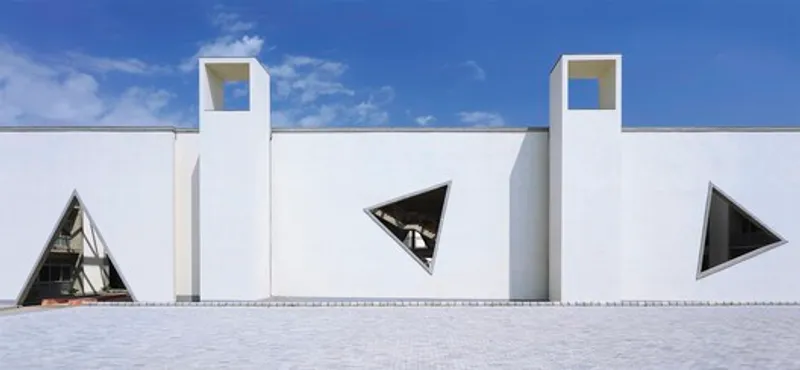
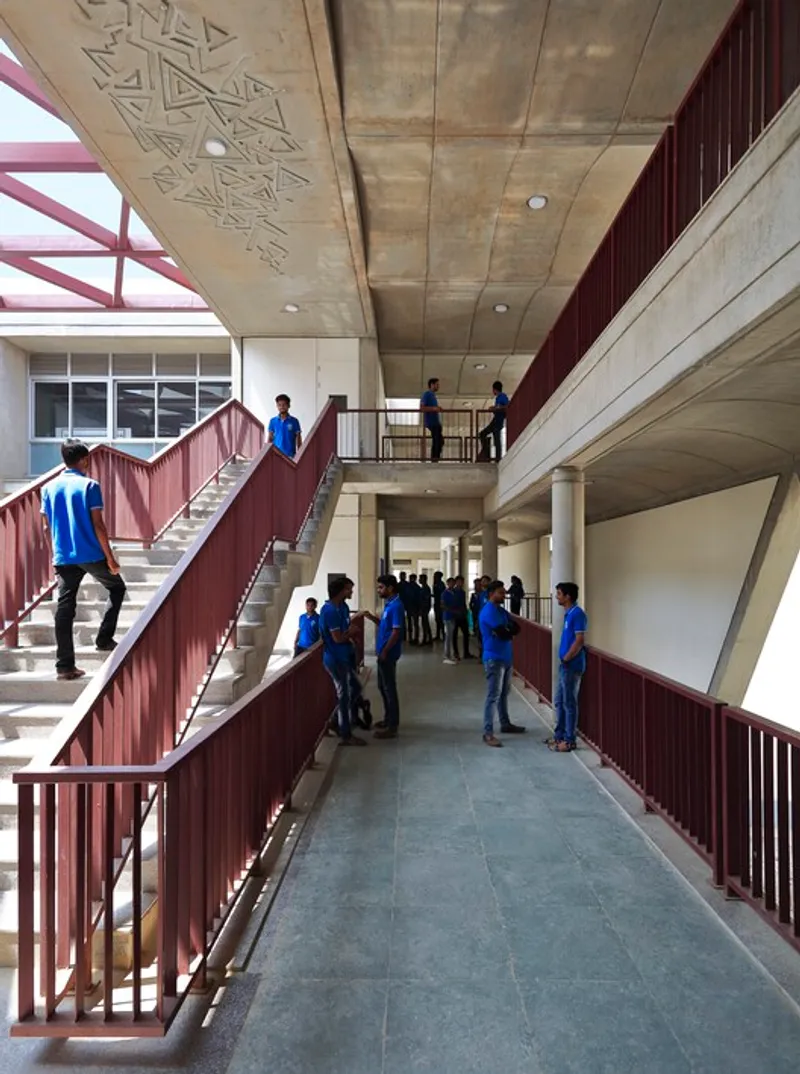
Spatial Layout and Hierarchy
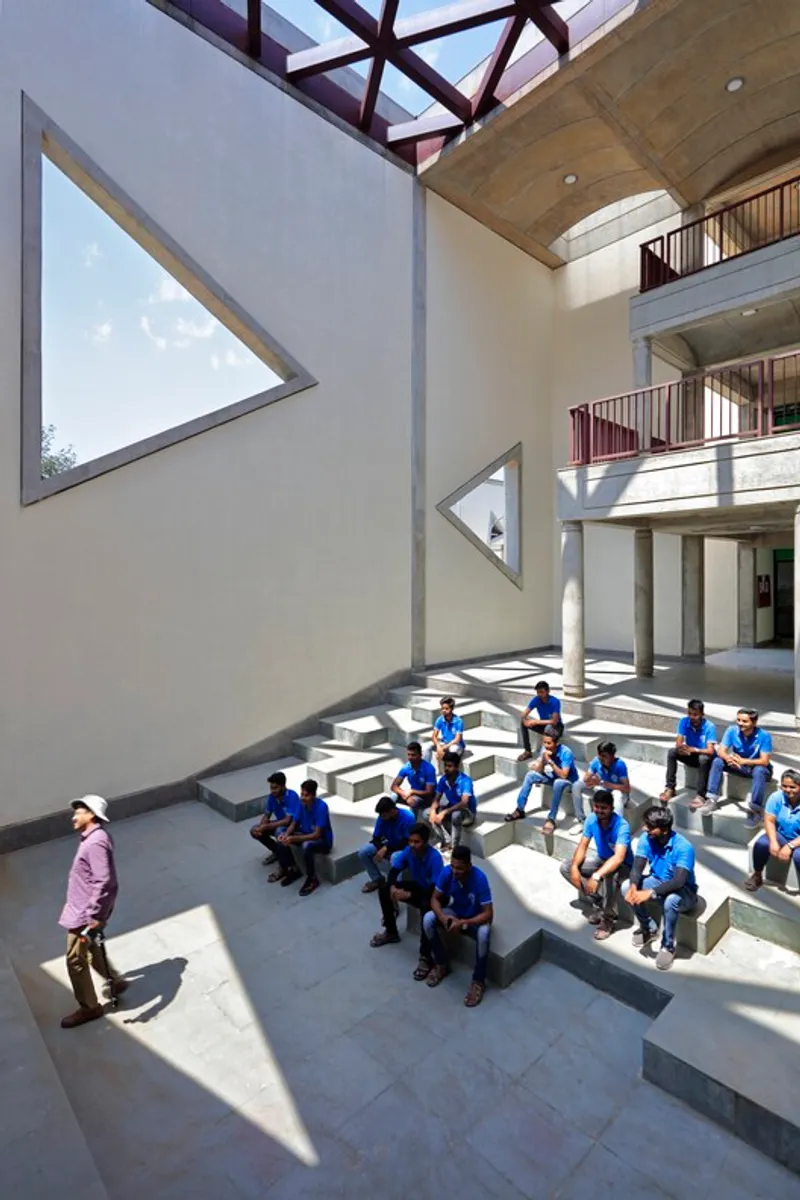
The movement through the entrance unfolds a spatial layout that allows users to circumambulate through long corridors and passageways. Classrooms, laboratories, and internal courtyards are strategically arranged, forming a hierarchy of built and open spaces. This layout harmoniously caters to an environment independent of the climatic challenges of the region.

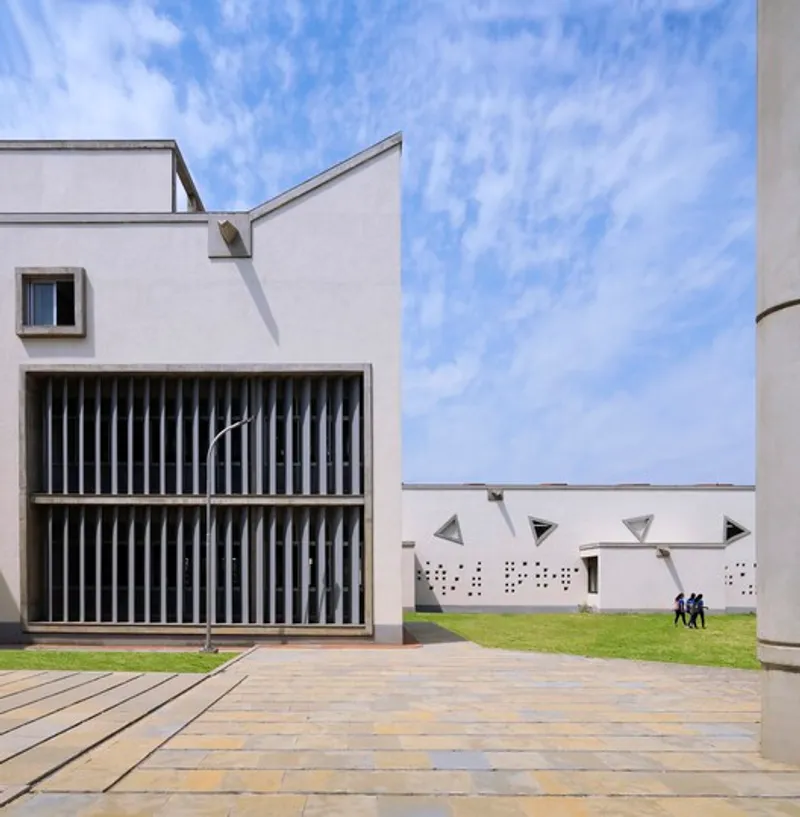
The Served Spaces
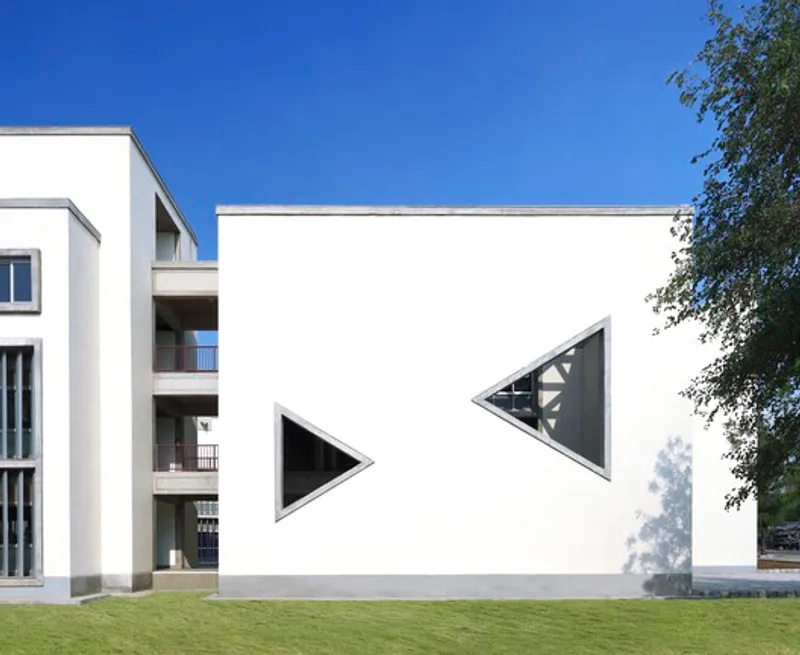
Classrooms, laboratories, workshops, and the library play integral roles in the design. Classrooms, with their skewed arrangement and vertical louvers, open into the central plaza. Laboratories benefit from internal vegetated courtyards for cross-ventilation, creating a dynamic ecosystem. The workshop, characterized by a large RCC structure with a steel roof, incorporates an aluminum jaali wall for an interplay of light and shadow. The library, known as 'The Knowledge Center,' strategically placed at the end of the central plaza axis, holds symbolic meaning for the design.
Balancing Tradition and Modernity
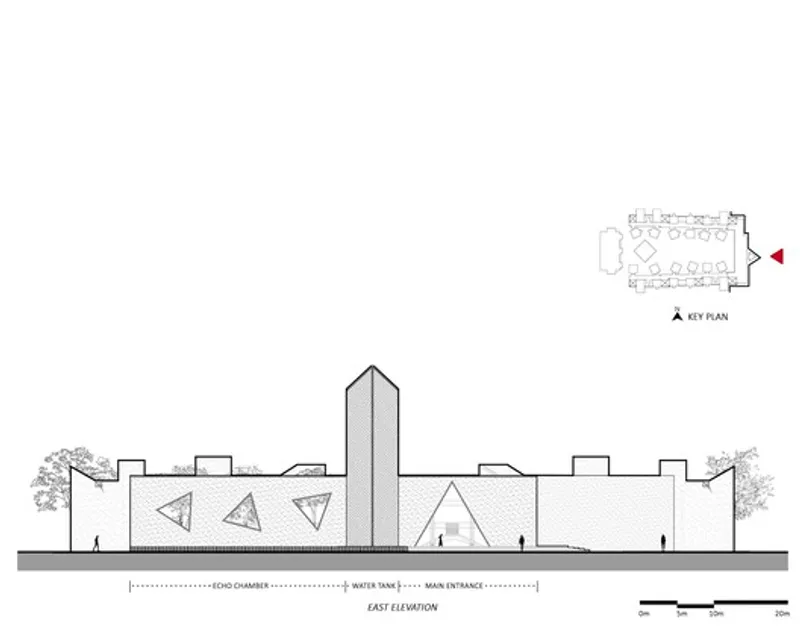
BIT Wardha, while embracing modern architectural language, remains rooted in the culturally rich traditions of India. Aligned along the E-W axis to tackle climatic conditions, the design features an exposed material palette that expresses modern architecture. The absence of outward decorations allows the true form of the design to reveal itself, speaking to both tradition and innovation.
In conclusion, the Bajaj Institute of Technology in Wardha stands as a beacon of modern Indian educational architecture, seamlessly blending tradition with innovation. The thoughtful design not only caters to the functional aspects of an educational institution but also embodies cultural richness, inspiring generations to come.
All photographs are work of Ashish Bhonde & Ramprasad Akkisetti


Popular Articles
Popular articles from the community


U.GA Architects Wraps an Oval Rooftop Pool in Curved Board-Formed Concrete on Busan's Jeollidan-gil
In Busan's Jeonpo-dong, a 454 m² mixed-use block stacks a neighborhood facility, guest rooms and an oval rooftop pool inside spiraling concrete walls.

longwave studio Reorganizes a 112 m² Tainan Apartment Around the Daily Routines of a Family and Two Cats
In Tainan, Taiwan, birch plywood, rust-red furniture and a freestanding plaster wall link arrival, storage, work and family life in one apartment.

Architekt Andreas Gruber Scatters 23 Dark Timber Chalets Across a South Tyrolean Forest Edge
In Molini di Tures, Amonti Chalets breaks a resort into a hamlet of gabled timber houses, with parking, storage and services pushed into the slope.

David Macias Steps a Doorless Stone and Plaster House Down a Tropical Colombian Hillside
In the humid hills of Colombia, Threshold House replaces the front door with an open void and terraces its 850 m² down the slope instead of fighting it.

Similar Reads
You might also enjoy these articles

Gil Mello Arquitetura Tilts a Single Roof Toward the Waterfalls on a Plateau Above Aiuruoca, Brazil
In Aiuruoca, Minas Gerais, a 200 m² house of local labor and reclaimed poles pairs a low valley veranda with a tall mountain one.
U.GA Architects Wraps an Oval Rooftop Pool in Curved Board-Formed Concrete on Busan's Jeollidan-gil
In Busan's Jeonpo-dong, a 454 m² mixed-use block stacks a neighborhood facility, guest rooms and an oval rooftop pool inside spiraling concrete walls.

Felipe Hess Arquitetos Turns a Blind Stone Wall to the Street and Opens a Brazilian House onto a Courtyard and Canal
A canal-front house in Brazil hides behind painted stone and planting, then opens to an olive-tree courtyard, a reed-ceilinged porch and a curving pool.
David Macias Steps a Doorless Stone and Plaster House Down a Tropical Colombian Hillside
In the humid hills of Colombia, Threshold House replaces the front door with an open void and terraces its 850 m² down the slope instead of fighting it.


Comments (0)
Please login or sign up to add comments
No comments yet. Be the first to comment!