

Modernist Townhouse Renovation in Hampstead by Studio Hagen Hall
A sustainable and refined modernist townhouse renovation in London’s Hampstead revives mid-century charm with spatial and material elegance.


A Sensitive Revival of Post-War Architecture
Located within the verdant Hampstead Conservation Area in North London, the Pine Heath Townhouse by Studio Hagen Hall is a masterful renovation that celebrates the legacy of post-war modernist architecture while bringing the home into the present with sustainable upgrades and refined spatial planning. Originally designed by Ted Levy, Benjamin & Partners in the late 1960s, the townhouse is one of a cluster of nine homes inspired by Cape Town’s coastal developments. While many of the neighboring homes have been stripped of their mid-century character, Pine Heath retains much of its original charm, now thoughtfully reimagined for contemporary living.


From Modest Refurbishment to Comprehensive Restoration
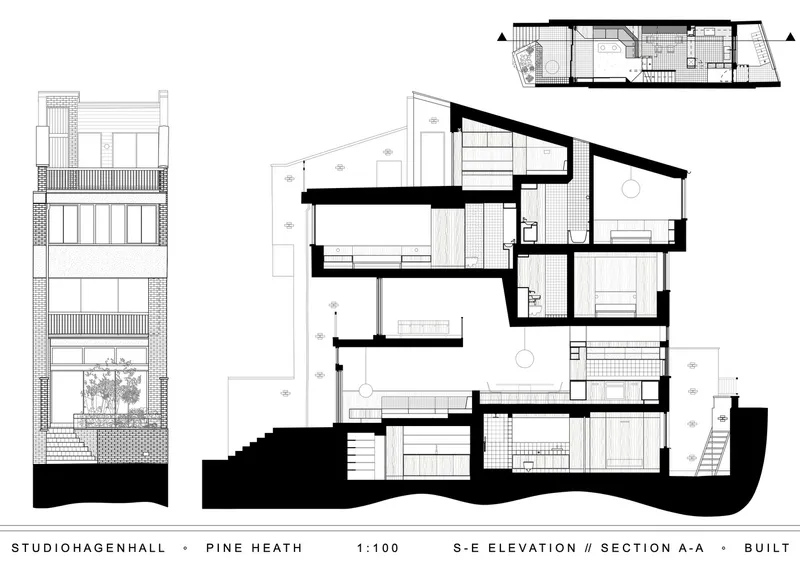
Initially intended as a light refurbishment focusing on the kitchen, bathrooms, and windows, the project evolved into a full-scale renovation upon discovery of the home's underlying potential. Studio Hagen Hall proposed a holistic design strategy to reintroduce the house’s modernist soul, while enhancing energy efficiency, operational performance, and daily functionality. The architectural team focused on creating a broken-plan layout that accommodates the needs of a growing family and responds elegantly to the original structure’s vertical configuration.



Layered Spatial Strategy and Functional Elegance
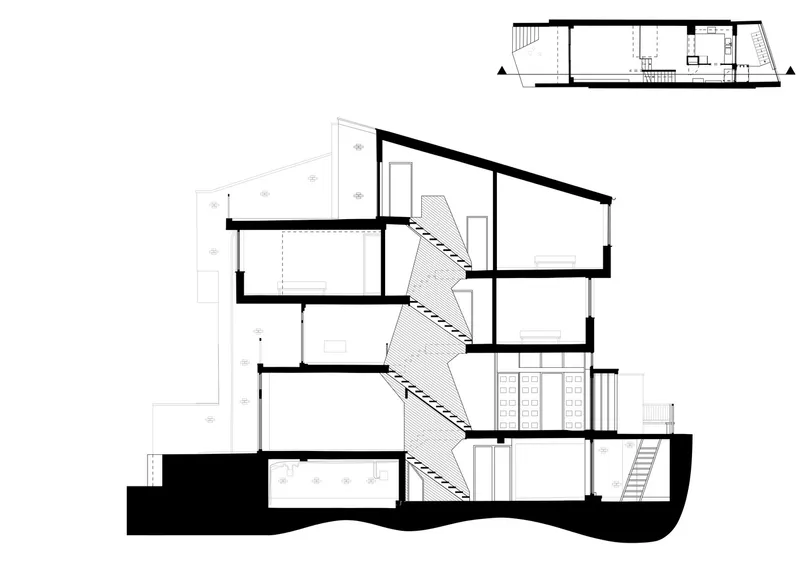
Spanning five levels, the home now balances intimate private areas with multifunctional shared spaces. A fourth bedroom suite and gym were added to the basement, while the top floor houses a guest pod and office. The reconfiguration of the plan establishes seamless transitions between indoor and outdoor zones, introducing visual and physical connectivity. The central stairwell, a defining feature, acts as the project’s spatial spine. Pocket doors, cleverly realigned to allow axial views from front to back, amplify the home's sense of openness while preserving privacy.


Material Heritage and Sustainable Craftsmanship
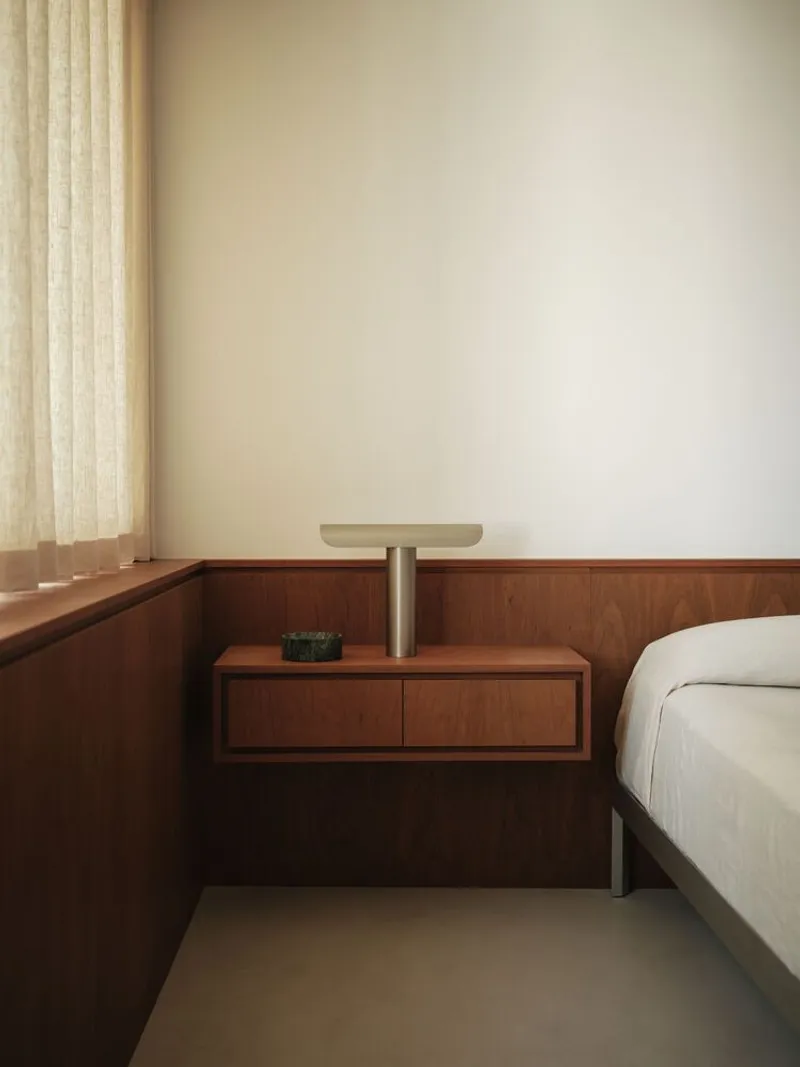
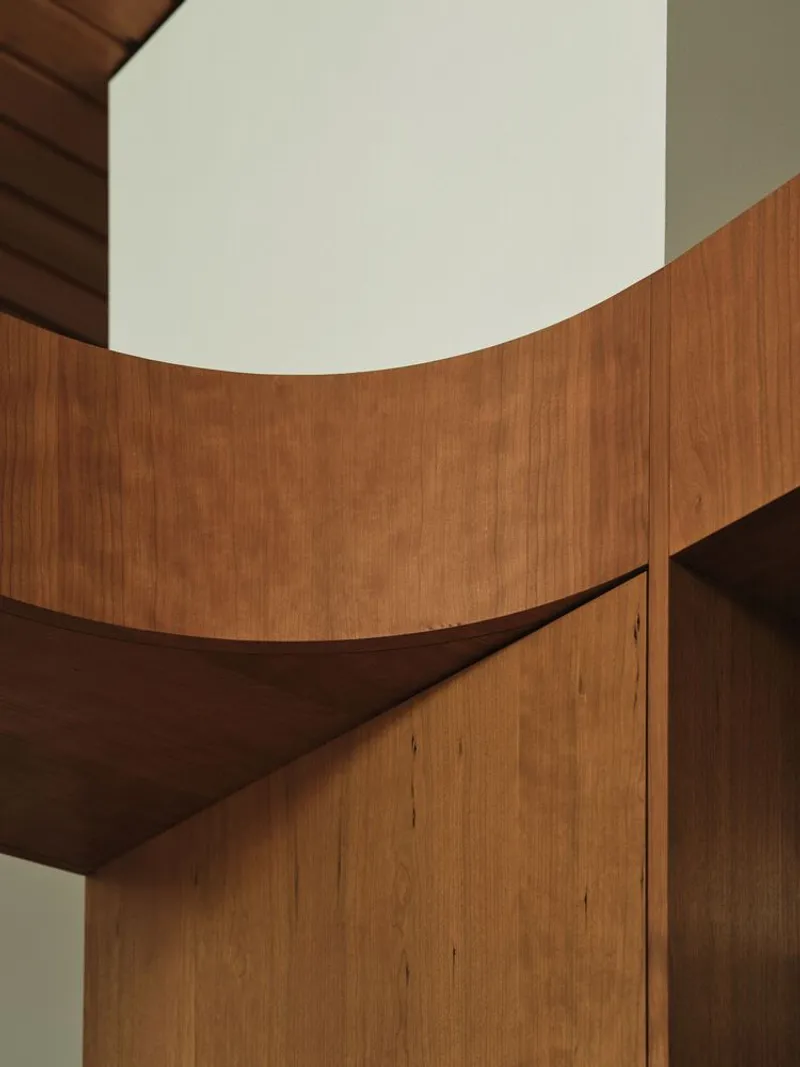
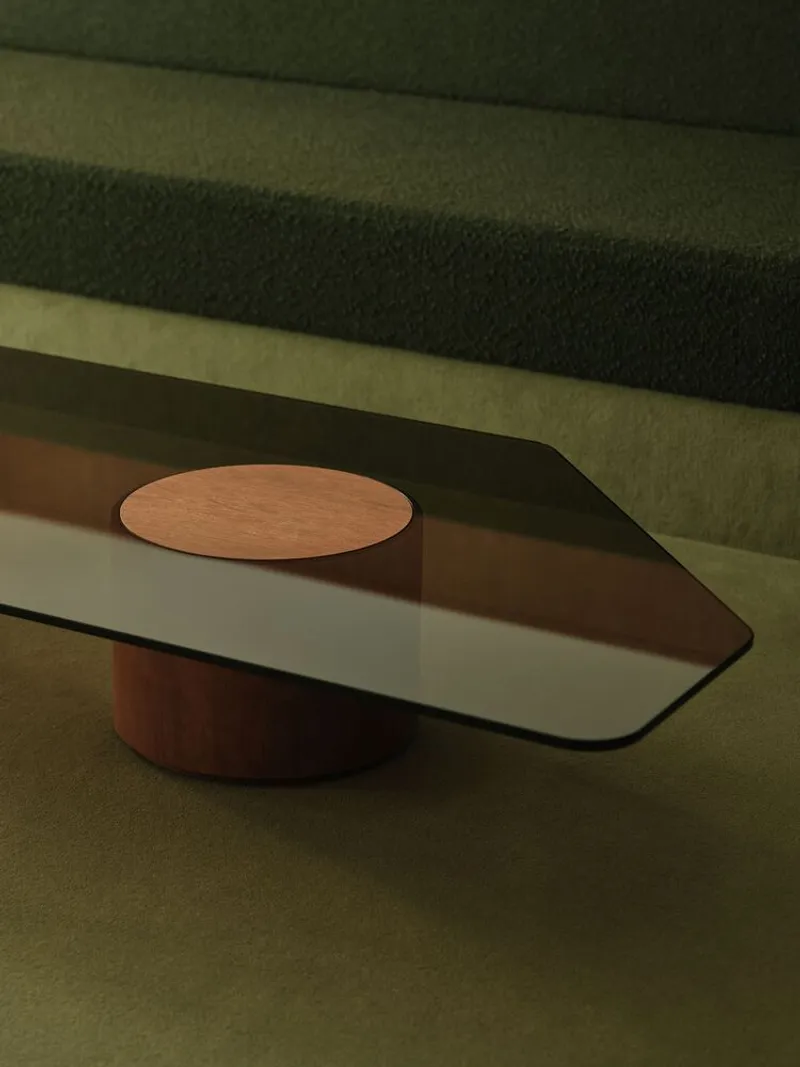
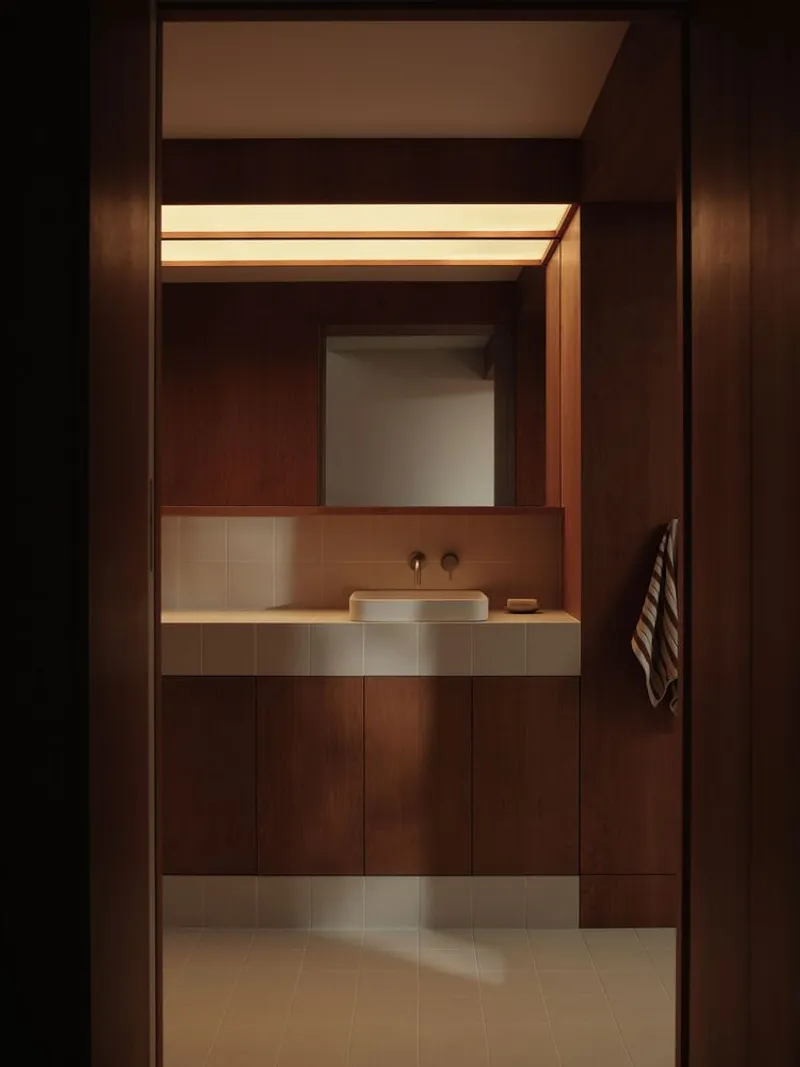
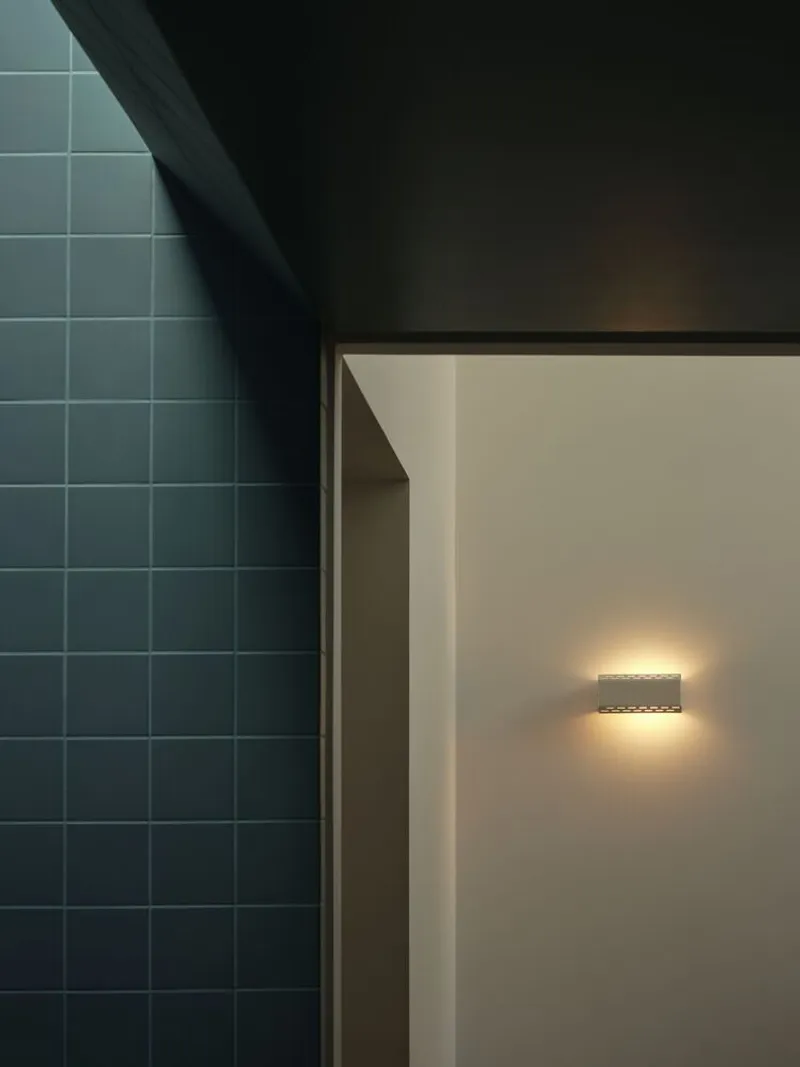
The design pays particular homage to the existing material palette, especially the use of Paraná pine—a rare and now endangered species. Rather than discarding or replacing this material, Studio Hagen Hall sensitively worked around it, letting it inform the aesthetic direction of the project. Floor-to-ceiling timber-lined portals frame views and transitions, while the continuity of detailing—seen in datum lines, tile grids, and joinery cut at 45-degree angles—underscores the meticulous execution of the renovation.


Light, Flow, and the Return of Modernist Character
Natural light and thoughtful sightlines define the spatial experience throughout the home. Built-in storage units are repositioned to optimize views, and large picture windows and reconfigured thresholds ensure unobstructed sightlines across the plan. Upon entry, a cloak area with seating opens directly to garden views, guiding the visitor along a coherent visual narrative. Every aspect of the design reflects Studio Hagen Hall’s dedication to spatial clarity and sensitive modernist revival.



A Blueprint for Modernist Restoration
The Pine Heath Townhouse is not merely a home upgrade—it’s a strategic restoration that reasserts the value of mid-century architectural ideals in today's context. It demonstrates how careful material preservation, modern energy-efficient interventions, and spatial rethinking can harmonize heritage with contemporary living. For architecture enthusiasts and designers alike, this project offers a compelling case study in modernist townhouse renovation—thoughtful, enduring, and deeply attuned to its history.







Popular Articles
Popular articles from the community


Conexión: Biophilic Design Reimagines High-Rise Living in Hong Kong
Conexión reimagines high-rise living in Hong Kong through biophilic design, green facades, shared spaces, daylight, water and nature within.

The Ocean Hive: Sustainable Architecture for a Self-Sufficient Civilization at Sea
The Ocean Hive imagines sustainable architecture at sea, where modular habitats, algae, wave power and ocean waste sustain a growing colony.

The Musturak Paradise: Senior Living Architecture for a Connected Future in Temara, Morocco
The Musturak Paradise reimagines senior living architecture in Temara via private homes, social spaces, culture, community, and shared care.

Hill & Cross Opera: Sculptural Opera House Architecture Shaped by Tallinn’s Landscape and Identity
Hill & Cross Opera reimagines opera house architecture in Tallinn through its sculptural hill, civic plaza, glass wave and a luminous cross.

Similar Reads
You might also enjoy these articles

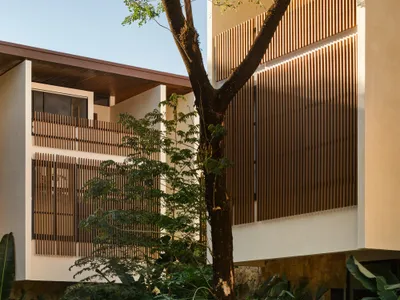
FAMM Arquitectura Organizes Ten Villas Around Courtyards and Jungle in Nosara, Costa Rica
El Molino pairs two elongated volumes with deep overhangs and timber louvers to build a compact coastal community five minutes from the beach.
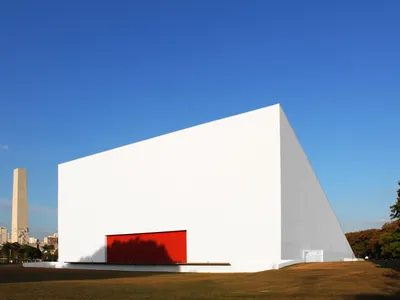
Oscar Niemeyer's Ibirapuera Park Pavilions Define São Paulo's Cultural Identity in Concrete and Curve
A constellation of modernist volumes set within São Paulo's most important urban park, conceived for the city's 400th anniversary in 1954.
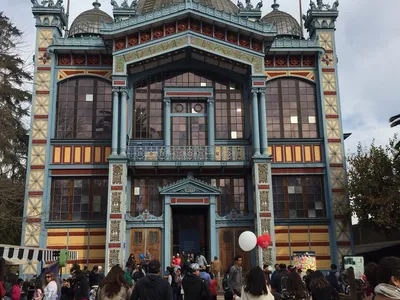
How Henri Picq's 1889 Paris Pavilion Traveled 11,000 Kilometers to Become Santiago's Artequín Museum
A prefabricated iron and glass pavilion built for the Paris Universal Exposition found a second life as a children's art museum in Chile.
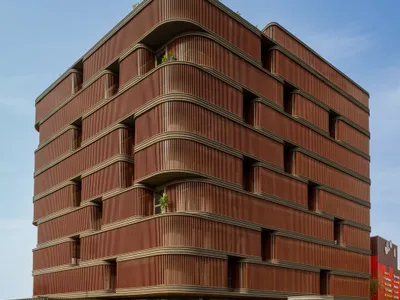
Sanjay Puri Architects Wraps a Jaipur Office Tower in Capsule-Shaped Green Buffers
A nine-level climate-responsive workplace near Jaipur Airport uses stacked planter terraces and aluminium screens to fight 40°C heat.

Explore Architecture Competitions
Discover active competitions in this discipline



Challenge to reimagine the Iron Throne


Photograph architecture without architects


Illustrate the lost glory of Angkor Wat - Render Challenge


Design challenge to reuse E-waste
Comments (0)
Please login or sign up to add comments
No comments yet. Be the first to comment!