
Mohegan Trail Residence by Bates Masi + Architects – Sustainable Coastal Island Living
Mohegan Trail Residence by Bates Masi + Architects is a durable, minimalist coastal island home with exposed wood, cedar cladding, and saltbox design.


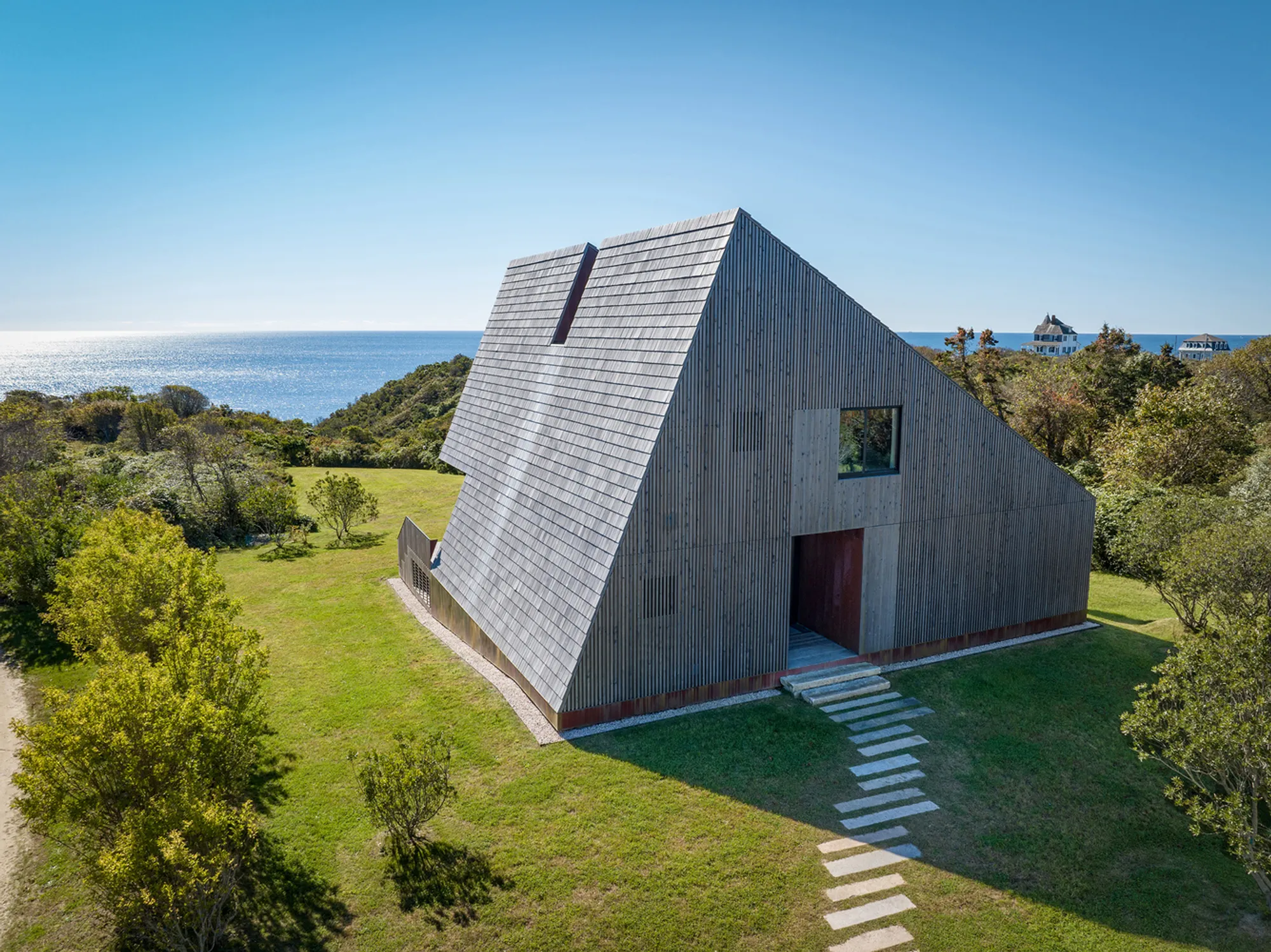
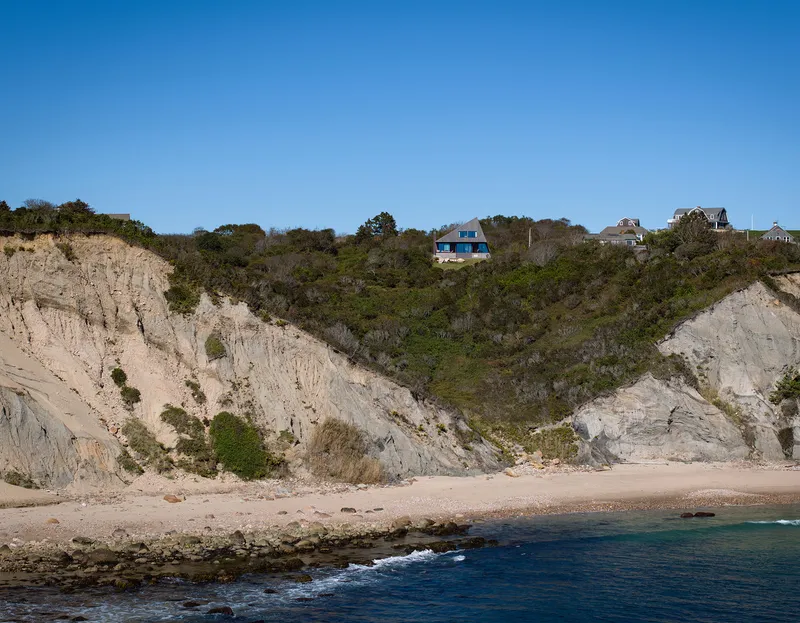
Nestled on a remote coastal bluff in New Shoreham, the Mohegan Trail Residence by Bates Masi + Architectsexemplifies resilient residential architecture designed for the challenges of island living. With no cargo boat access and strict size limits on the passenger ferry, all materials and equipment had to be carefully selected for transport, emphasizing practicality and durability without compromising design quality.
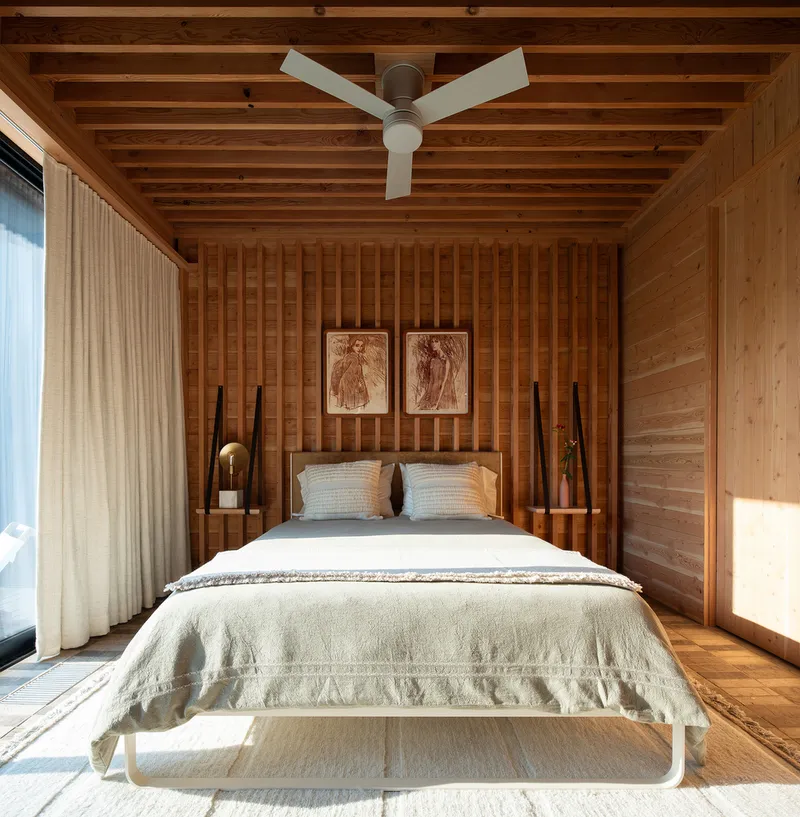
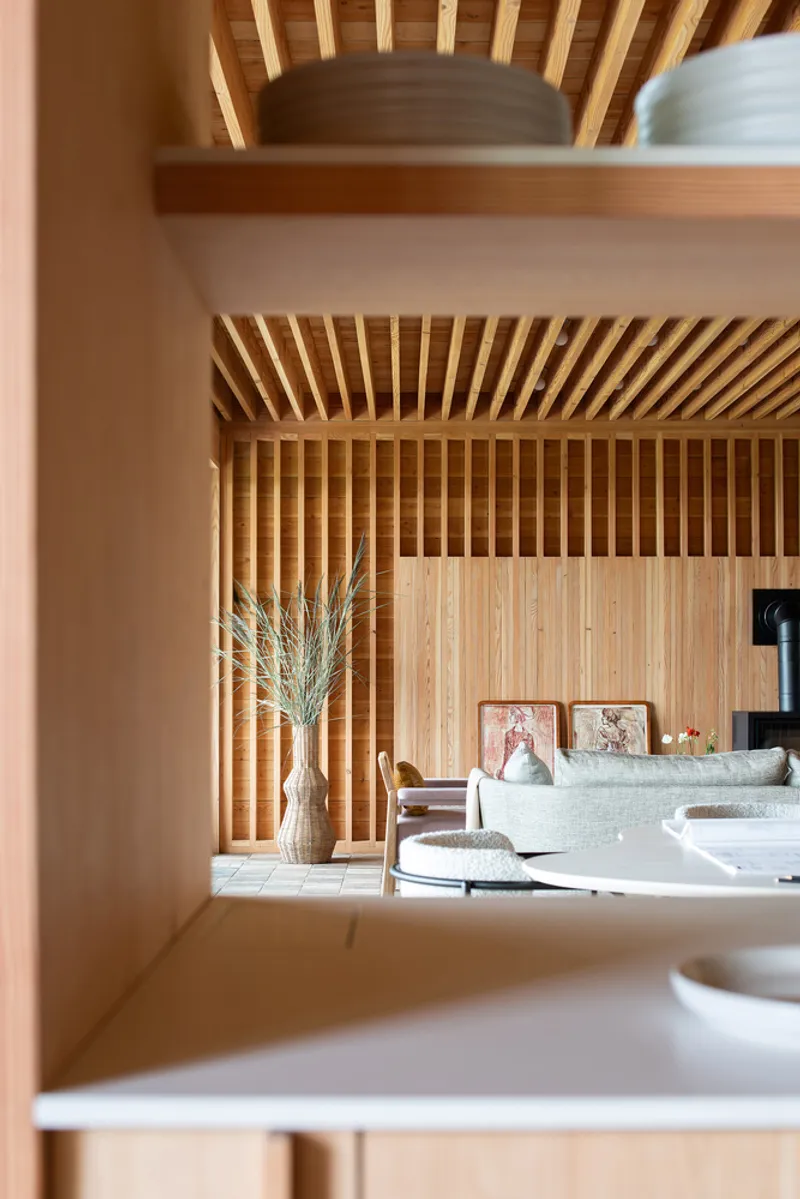
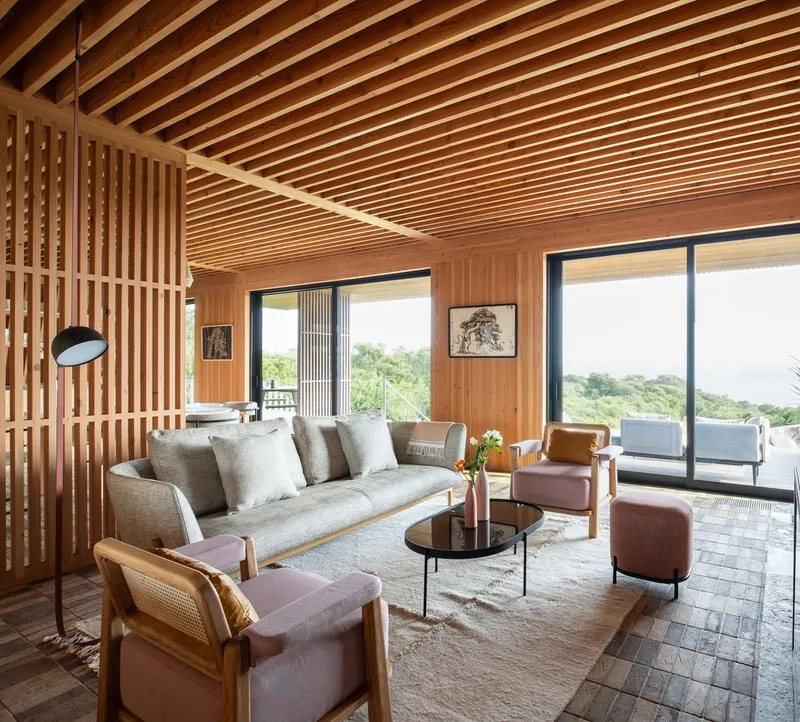
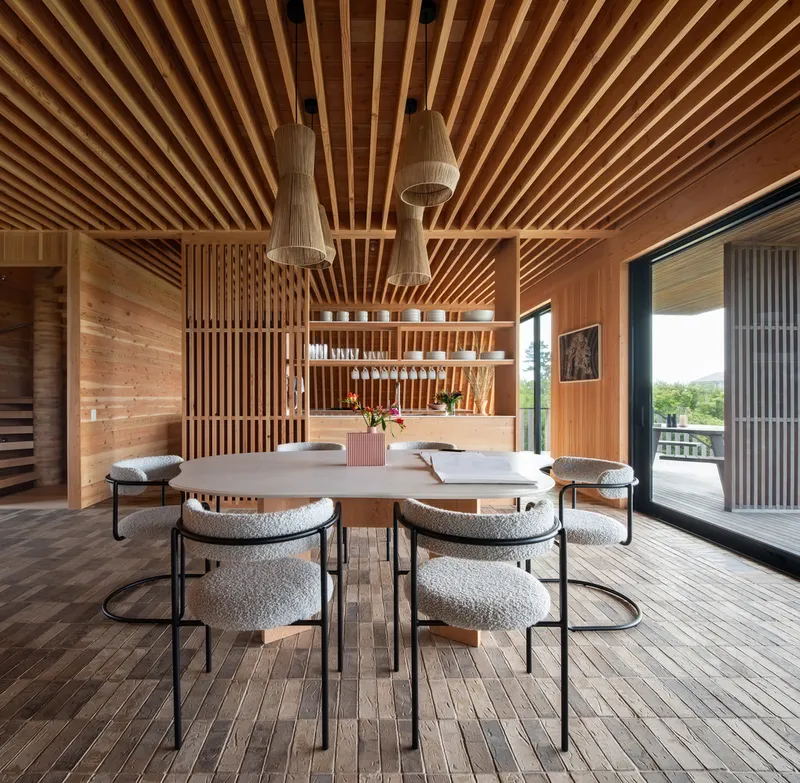
The design relies on locally available dimensional lumber in short spans, eliminating the need for heavy equipment or steel trusses. Strategically spaced studs, rafters, and joists allow easy on-site assembly, while threaded rods and bolted shear walls anchor the structure against high coastal winds. This approach merges structural integrity with a raw, authentic aesthetic that celebrates the exposed, densely spaced framing as a defining architectural language.
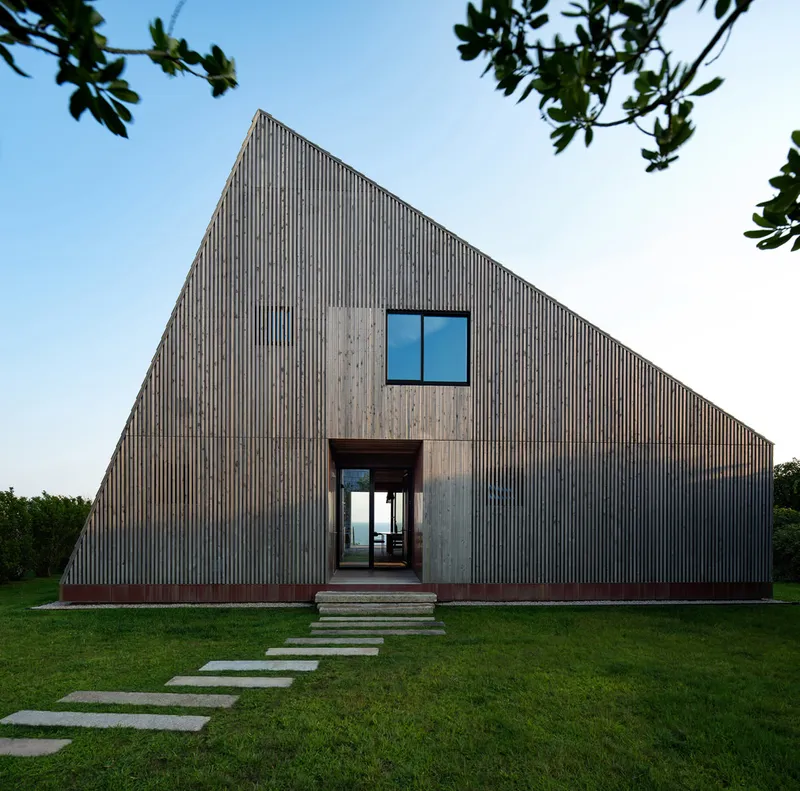
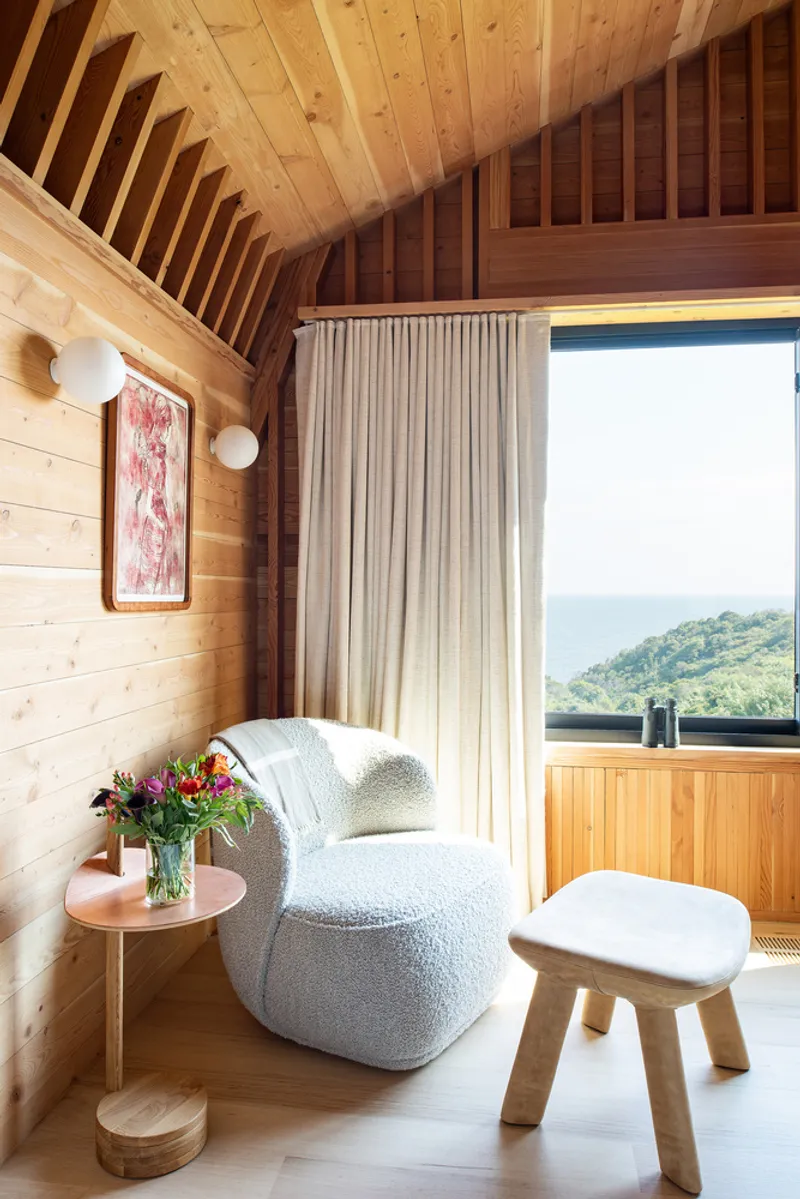
The home's exterior is clad in cedar shakes for natural moisture resistance, with tongue-and-groove deck boards replacing traditional plywood to withstand the island’s wet climate. A 6-inch continuous layer of rigid insulation outside the sheathing ensures energy efficiency while leaving the interior framing exposed, creating warmth and tactile authenticity. Copper flashing protects vulnerable areas, and unglazed clay tiles reference the island’s natural deposits, grounding the home in its unique coastal context.
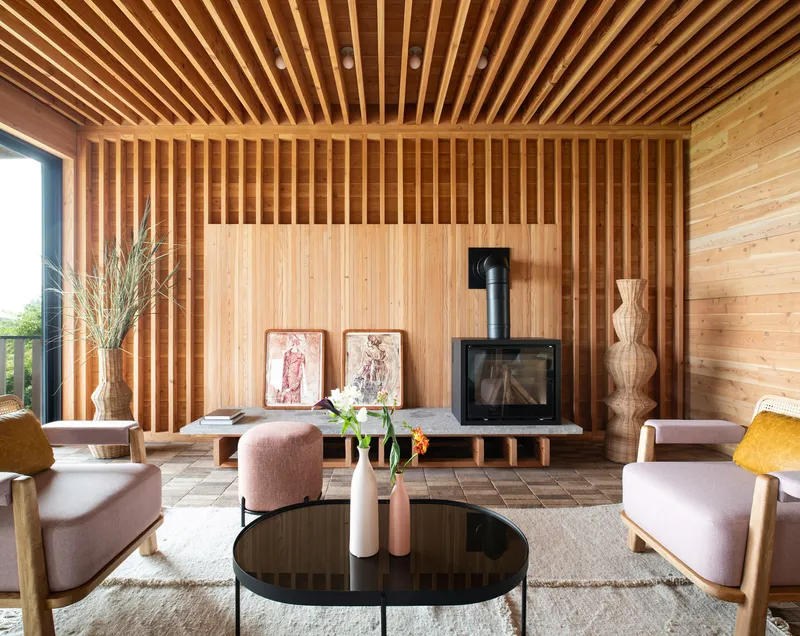
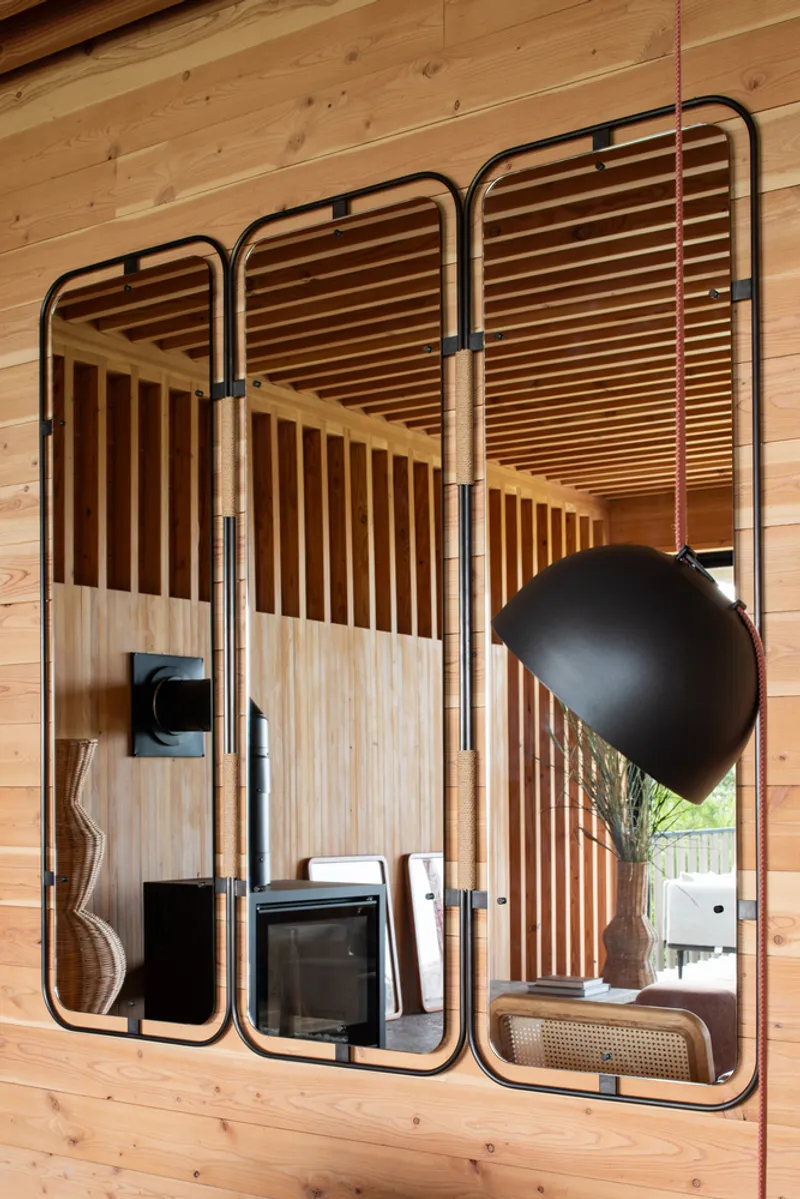
Inside, the design prioritizes simplicity and minimalism. Lighting is line-voltage with local controls, shades are manually operated, and a wood-burning stove provides cozy warmth. Millwork is intentionally restrained, using solid wood open shelving that complements the exposed framing and reinforces the residence’s raw, functional charm.
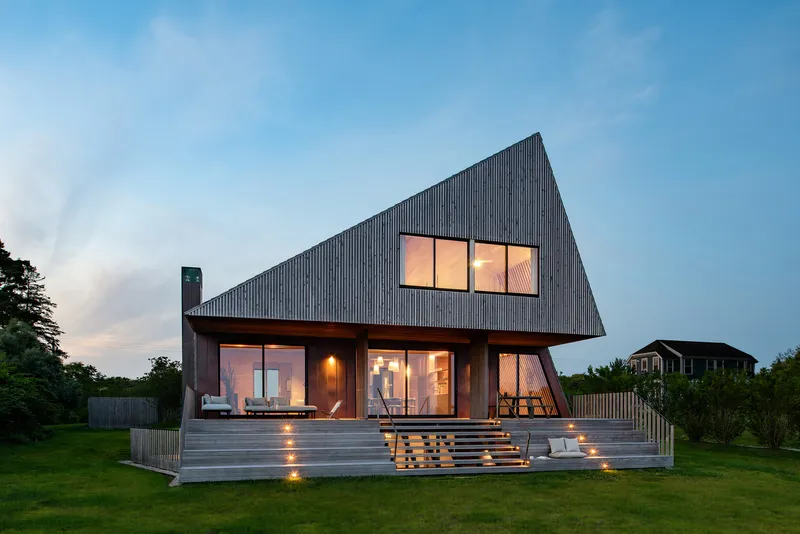
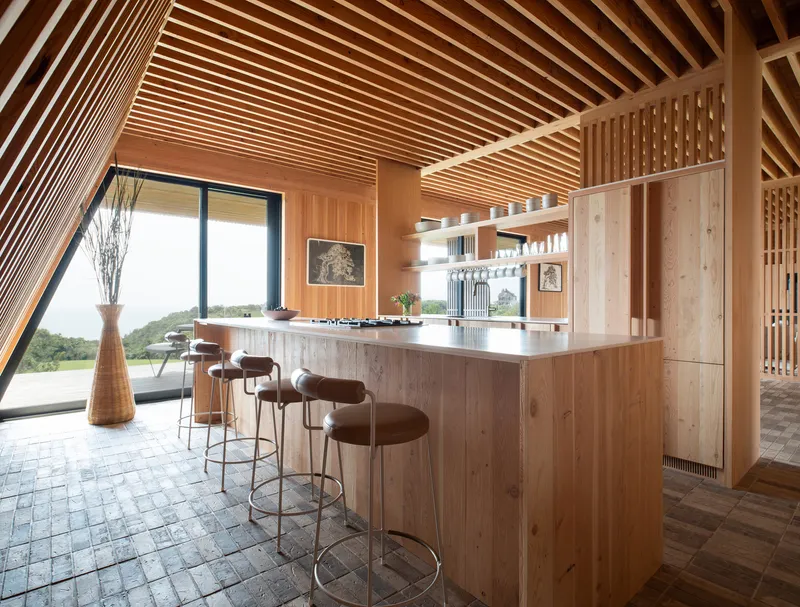
The house adopts a gabled saltbox form with a 45'x45' footprint, dictated by local codes and regional vernacular traditions. Oriented to face northeast, the most weather-resistant side withstands incoming storms, with the roof extending to the ground without penetrations. Minimal exterior detailing evokes the traditional shingle-style architecture of the Northeastern U.S., reinterpreted with a modern sensibility.
All photographs are works of Bates Masi + Architects




Popular Articles
Popular articles from the community


Co-Life: Senior Housing Design That Reconnects Older Adults With the City
Co-Life reimagines senior housing design through healing gardens, shared streets, workshops, and a sustainable community across generations.

The Earth Pod: 3D Printed Homes for Resilient Refugee Communities
The Earth Pod reimagines refugee housing through 3D printed homes made from clay, combining resilience, self-sufficiency, and rapid shelter.

Conexión: Biophilic Design Reimagines High-Rise Living in Hong Kong
Conexión reimagines high-rise living in Hong Kong through biophilic design, green facades, shared spaces, daylight, water and nature within.

The Musturak Paradise: Senior Living Architecture for a Connected Future in Temara, Morocco
The Musturak Paradise reimagines senior living architecture in Temara via private homes, social spaces, culture, community, and shared care.


Similar Reads
You might also enjoy these articles


Hodi-Mandai Geram
Project Function: Preservation and revitalization of the Intangible heritage and socio-spatial identity of the Hodi by Housing, Cultural Memory Center, Sacred Grove, landscape, local tourism economy


Olio Towers: A Mid-Rise for Performers That Fuses Housing, Rehearsal, and Stage
Located blocks from Houston's Theater District, this modular tower stacks living units around a central performance atrium.

Oasis: Modular Green Housing Carved into Dhaka's Urban Fabric
A shortlisted Plugin Housing entry reclaims unauthorized settlements in Dhaka with stepped concrete volumes, green roofs, and ventilation-driven design.

Black Hole: A Floating Megastructure for the Post-Physical Era
Emiliano Mazzarotto envisions a spherical, self-scaling arena where e-sports, digital hotels, and holographic stadiums replace traditional public space.


Explore Seaside Architecture Competitions
Discover active competitions in this discipline



Challenge to reimagine the Iron Throne


Photograph architecture without architects


Illustrate the lost glory of Angkor Wat - Render Challenge


Design challenge to reuse E-waste
Comments (0)
Please login or sign up to add comments
No comments yet. Be the first to comment!