
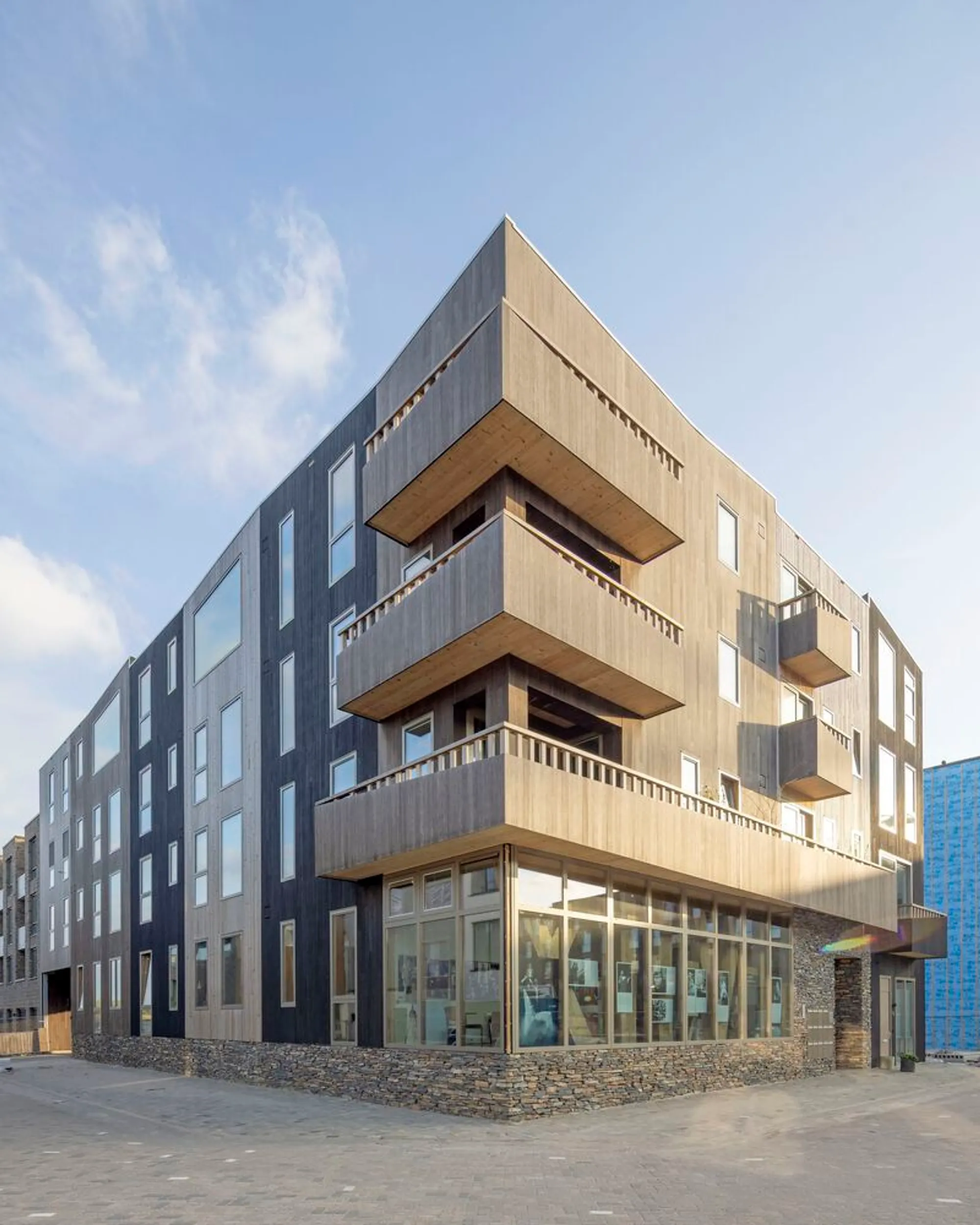
Mooijburg 12.06 Housing by Natrufied Architecture: Sustainable Timber Living in Amsterdam
Sustainable timber housing in Amsterdam featuring CLT structure, biobased facades, resident participation, energy-positive design, and integrated rainwater reuse systems.


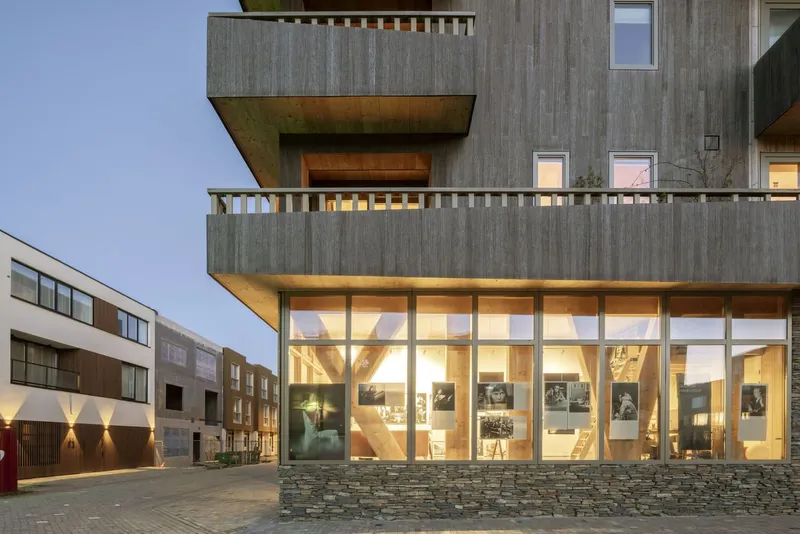
Located on the newly developed Centrumeiland next to IJburg in Amsterdam, Mooijburg 12.06 Housing represents a forward-thinking model for sustainable residential architecture in the Netherlands. Designed by Natrufied Architecture, this 2,100 m² collective housing project redefines urban living through biobased construction, resident participation, and advanced timber engineering.
The Mooijburg development is part of Amsterdam’s innovative Co-Commissioning (MO) framework, where developers collaborate directly with future homeowners. Awarded to Mooijburg BV: a consortium including DGV Group, Evergreen Building Development, and Weever Bouw, the project reflects a new generation of climate-responsive housing shaped by its residents.Sustainable timber housing in Amsterdam featuring CLT structure, biobased facades, resident participation, energy-positive design, and integrated rainwater reuse systems.
Collective Private Commissioning and Co-Creation in Housing Design
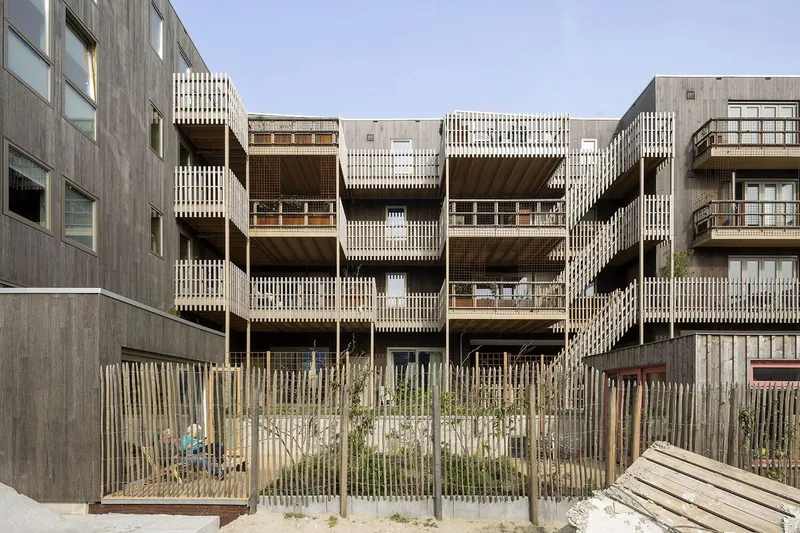
Centrumeiland has become a laboratory for sustainable urban development, combining private plots, Collective Private Commissioning (CPO) initiatives, and self-build housing cooperatives. Within this context, Mooijburg 12.06 stands out as a highly participatory housing block.
Future residents were actively involved in determining the size and layout of their homes. Each household selected its desired square meters within the structural grid, resulting in a collectively organized yet individually tailored apartment complex. This participatory planning approach strengthens community engagement while maintaining architectural coherence.
The project demonstrates how collaborative housing models can foster social sustainability alongside environmental responsibility.
Cross Laminated Timber (CLT) Construction as Structural Backbone
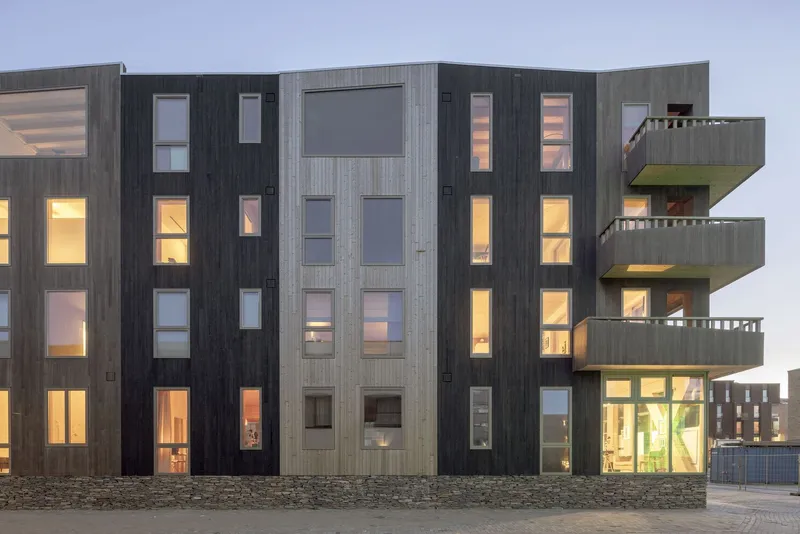
A defining feature of Mooijburg 12.06 Housing is its extensive use of Cross Laminated Timber (CLT). Above the basement level, the primary load-bearing structure is constructed entirely from CLT panels, engineered in close coordination with structural engineers and acoustic consultants.
This timber construction system offers multiple advantages:
- Reduced embodied carbon compared to conventional concrete structures
- Precision prefabrication and rapid on-site assembly
- High thermal performance and structural efficiency
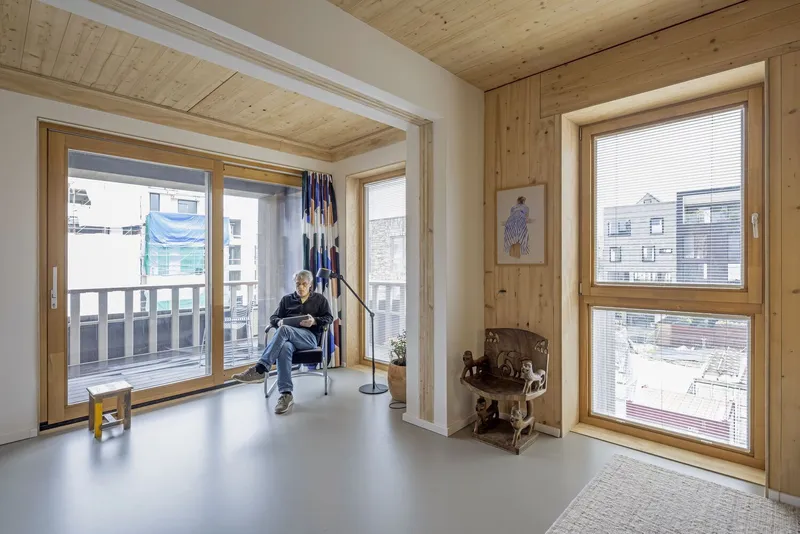
- Warm, natural interior aesthetics
Under the leadership of Weever Bouw, and with the expertise of Laminated Timber Solutions and Pfeifer, the four-storey building was erected in just three weeks, highlighting the speed and efficiency of modular timber construction.

Biobased Facade Materials and Circular Design Strategy
The facade design reinforces the project’s ambitious sustainability goals. Biobased materials dominate the exterior envelope, including:
- Pre-aged fir wood
- Pressed bamboo cladding
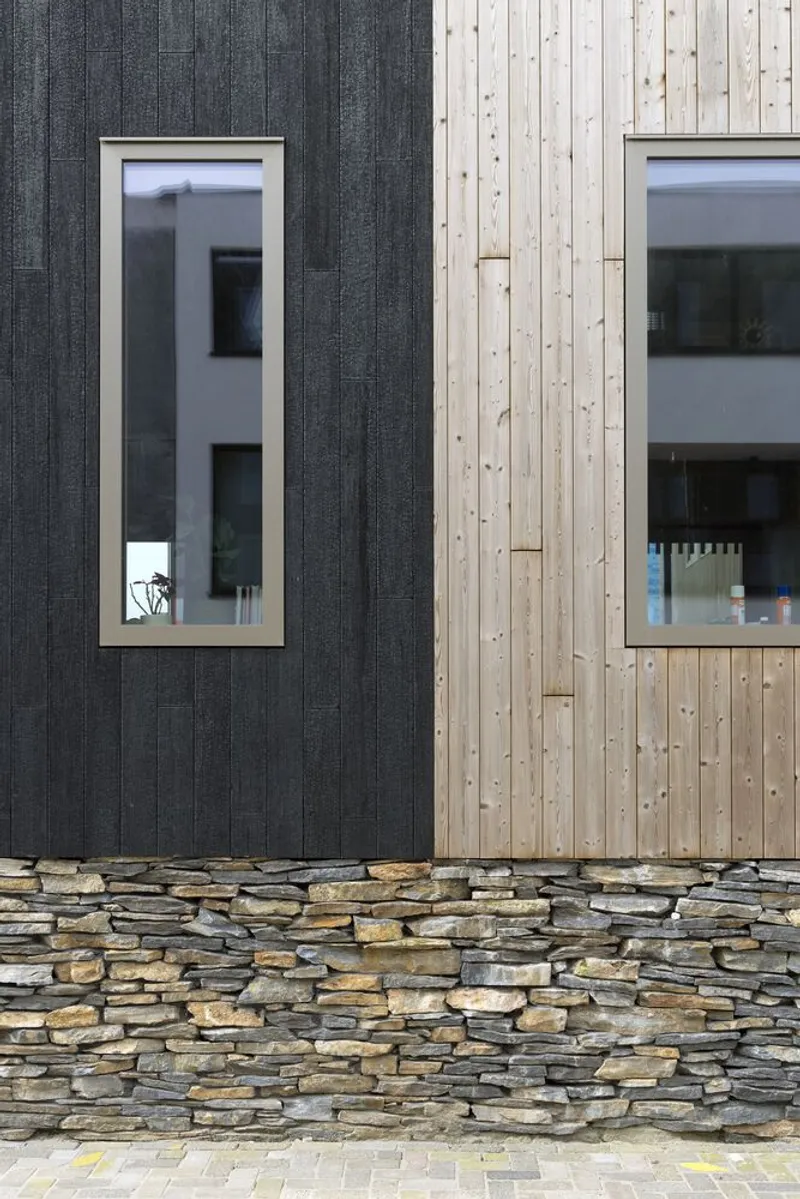
- Shou Sugi Ban (charred bamboo) treatments
The use of Bamboo X-treme® by MOSO® Bamboo contributes to durability and weather resistance while maintaining a low environmental footprint. These materials are not merely aesthetic choices; they reflect a deliberate strategy to reduce embodied carbon and prioritize renewable resources.
The varied textures and treatments create a visually dynamic facade, while maintaining a cohesive architectural identity rooted in natural materiality.

Energy Performance and Climate-Responsive Innovation
Mooijburg 12.06 was designed to exceed Dutch energy performance standards, achieving an Energy Performance Coefficient (EPC) better than -0.2. This exceptional rating positions the building among the most energy-efficient residential developments in Amsterdam.
Key sustainability features include:
- High-performance building envelope
- Timber structural system with low carbon footprint
- Water retention and reuse systems
- Integrated facade planters with automatic irrigation
Rainwater collected on flat roofs and galleries is stored and reused to irrigate integrated facade planters. This closed-loop water system minimizes runoff into the sewer system and enhances urban biodiversity, a crucial aspect of climate-adaptive design in dense urban environments.

Architectural Identity and Detail
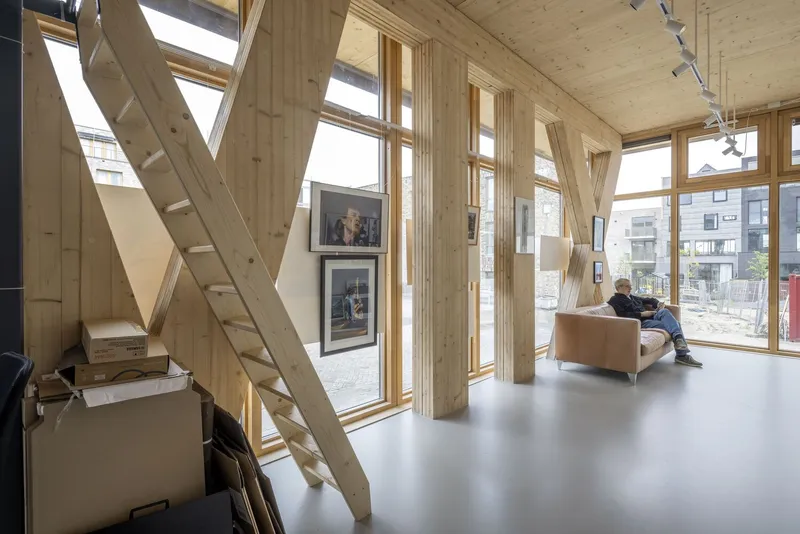
One of the project’s most distinctive architectural gestures is the incorporation of large wooden Roman numerals. These elements function simultaneously as structural supports, entrance markers, and identifiers for the plot. This detail merges functionality with architectural storytelling, giving the building a strong identity within the Centrumeiland masterplan.
Internally, exposed timber surfaces contribute to a warm and tactile atmosphere. The CLT structure remains visible in key areas, reinforcing the connection between structural logic and spatial experience.
A Model for Future Sustainable Urban Housing
Mooijburg 12.06 Housing exemplifies the future of sustainable housing development in Amsterdam and beyond. By combining:
- Resident participation
- Advanced CLT timber construction
- Biobased facade materials
- Circular water management systems
- Ultra-low energy performance
the project sets a benchmark for climate-resilient, community-oriented architecture.
In an era where cities must rapidly decarbonize their building stock, Mooijburg demonstrates how collaborative development models and mass timber construction can deliver both environmental and social value. It is not only a housing project, it is a blueprint for the next generation of sustainable urban living.

All photographs are works of
Marcel van der Burg


Popular Articles
Popular articles from the community

AL-JANNAH: Sustainable Architecture and Permaculture for Afghan Widows
AL-JANNAH uses sustainable architecture and permaculture to create resilient oasis of housing, learning, work and renewal for Afghan widows.

Hill & Cross Opera: Sculptural Opera House Architecture Shaped by Tallinn’s Landscape and Identity
Hill & Cross Opera reimagines opera house architecture in Tallinn through its sculptural hill, civic plaza, glass wave and a luminous cross.

Riyadh For All: Intergenerational Urban Design for Active Aging in Rabat
Riyadh For All reimagines urban design in Rabat with intergenerational co-living, adaptive courtyards, and Moroccan cultural exchange today.

The Earth Pod: 3D Printed Homes for Resilient Refugee Communities
The Earth Pod reimagines refugee housing through 3D printed homes made from clay, combining resilience, self-sufficiency, and rapid shelter.
Similar Reads
You might also enjoy these articles

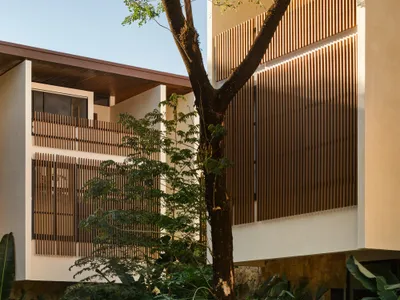
FAMM Arquitectura Organizes Ten Villas Around Courtyards and Jungle in Nosara, Costa Rica
El Molino pairs two elongated volumes with deep overhangs and timber louvers to build a compact coastal community five minutes from the beach.
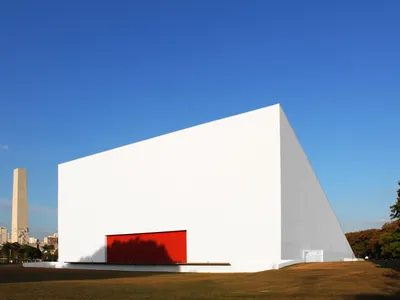
Oscar Niemeyer's Ibirapuera Park Pavilions Define São Paulo's Cultural Identity in Concrete and Curve
A constellation of modernist volumes set within São Paulo's most important urban park, conceived for the city's 400th anniversary in 1954.
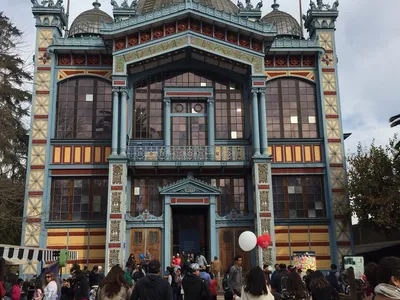
How Henri Picq's 1889 Paris Pavilion Traveled 11,000 Kilometers to Become Santiago's Artequín Museum
A prefabricated iron and glass pavilion built for the Paris Universal Exposition found a second life as a children's art museum in Chile.
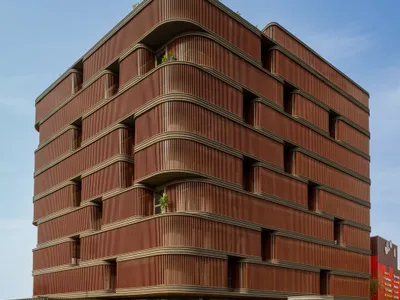
Sanjay Puri Architects Wraps a Jaipur Office Tower in Capsule-Shaped Green Buffers
A nine-level climate-responsive workplace near Jaipur Airport uses stacked planter terraces and aluminium screens to fight 40°C heat.

Explore Amsterdam Competitions
Discover active competitions in this discipline


Challenge to design mud housing for contemporary communities


Challenge to reimagine the Iron Throne


Photograph architecture without architects


Illustrate the lost glory of Angkor Wat - Render Challenge
Comments (0)
Please login or sign up to add comments
No comments yet. Be the first to comment!