
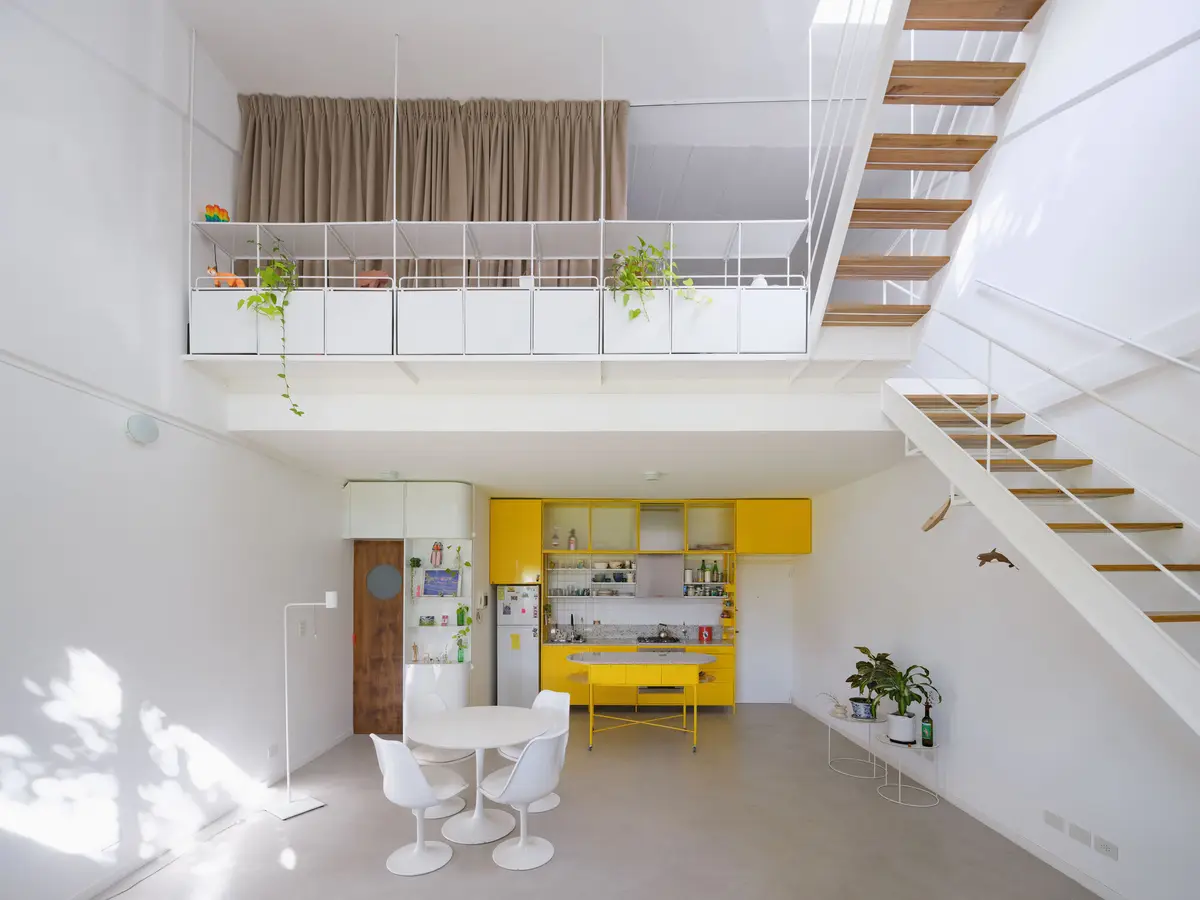
Morsa Taller and Pablo Giterman Stack a Glass Pavilion on a Buenos Aires Factory Rooftop
A 72-square-meter former office in Colegiales becomes a vertical home crowned by a transparent steel and glass terrace room.


In the Colegiales neighborhood of Buenos Aires, a three-story factory was carved into apartments and offices during the 1990s. One of those units, a two-level space with no original partitions and a disused terrace accessible only through a hatch, sat waiting for someone to see its potential. Morsa Taller, led by Alejandra Esteve, and architect Pablo Giterman took the project on, delivering a 72-square-meter home that reads less like a renovation and more like an argument for what forgotten industrial leftovers can become when treated with structural ambition and chromatic nerve.
What makes this project genuinely interesting is the way the architects refused to treat the rooftop as secondary space. Instead of capping the residence at the existing slab, they built a transparent steel and glass enclosure on the terrace, turning dead square meters into the most luminous room in the house. Below, the double-height volume is organized around a floating timber staircase, a punchy yellow kitchen, and a mezzanine bedroom that borrows light from every direction. The result is a home that climbs rather than spreads, stacking domestic life into a narrow vertical sequence that opens up dramatically as you ascend toward the sky.
The Glass Crown
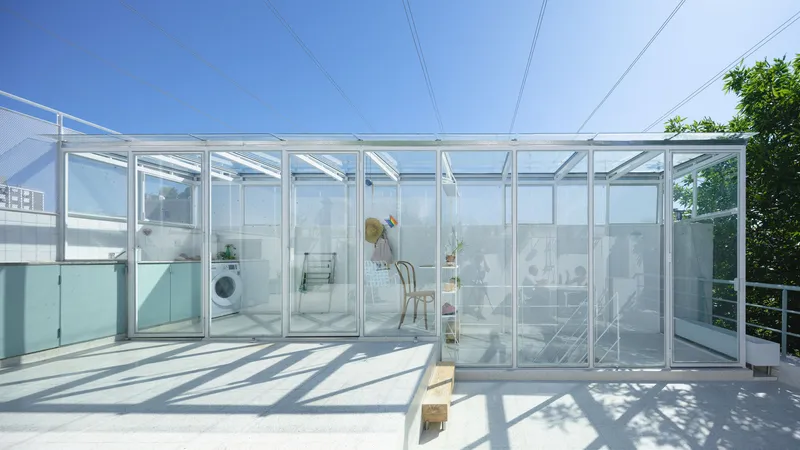
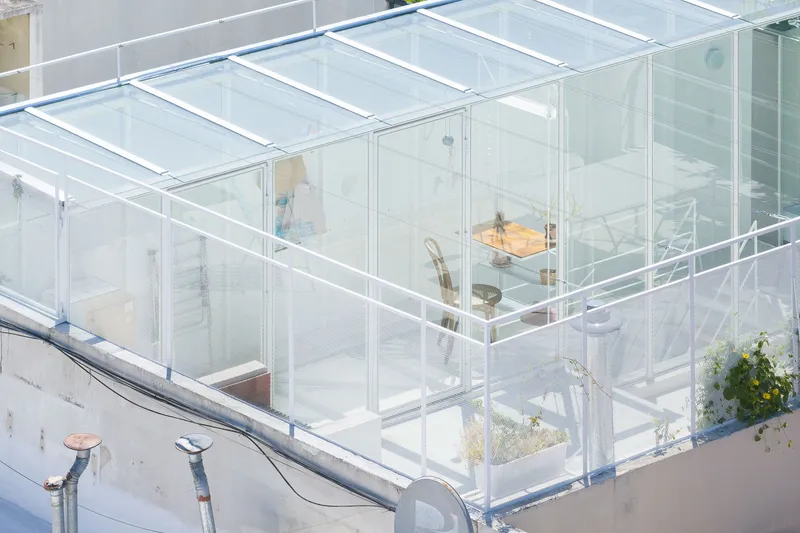
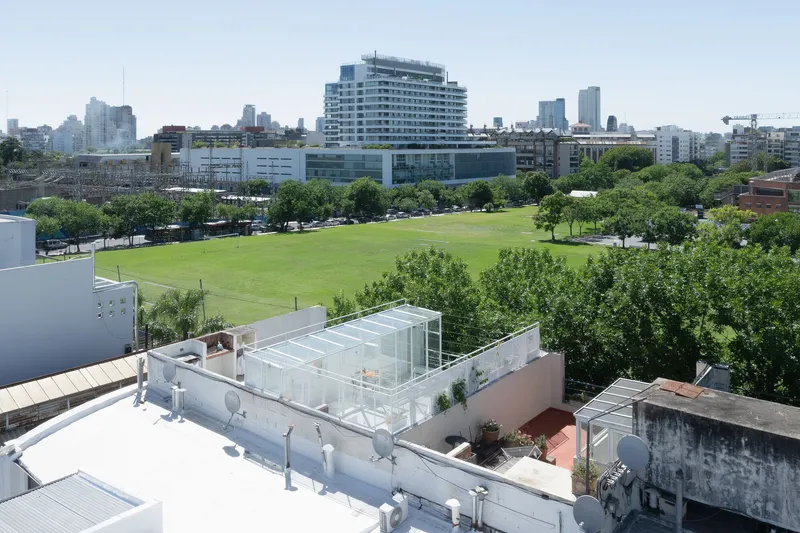
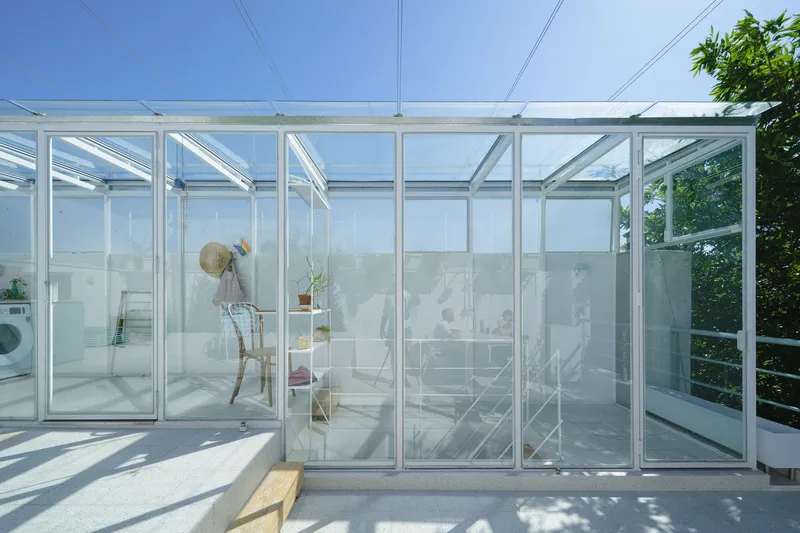
The rooftop pavilion is the project's most assertive move. A white steel frame holds panels of glass and translucent material, creating a lightweight greenhouse volume that sits on the existing curved concrete slab without overwhelming it. The structure is deliberately transparent: from the air it reads as a lantern on the roofscape, and from inside it frames treetops and neighboring buildings as if they were part of the decor.
Sliding panels allow the enclosure to open fully in warm weather, erasing the boundary between interior and terrace. When closed, the pavilion traps warmth and daylight, functioning almost like a solarium. It is simultaneously a practical addition of usable area and a conceptual statement: the best room in the house is the one that was never meant to be a room at all.
Terrace as Living Room
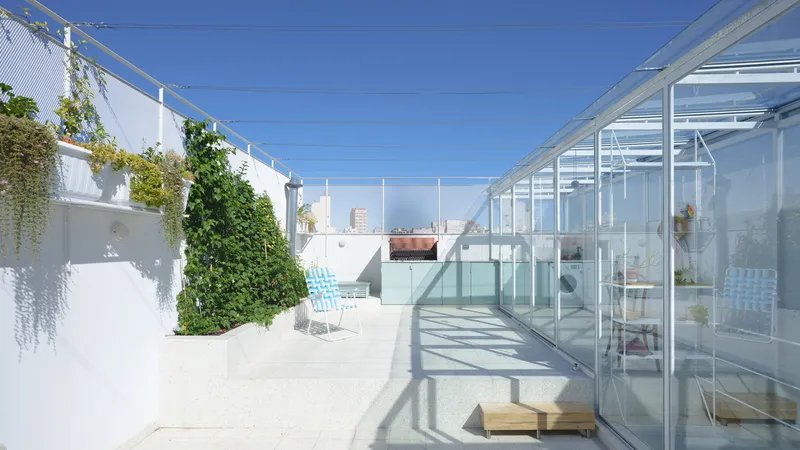
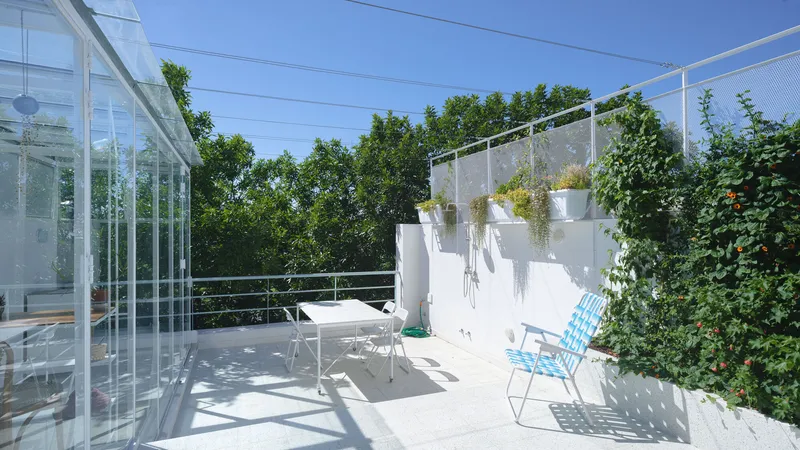
Outside the glass enclosure, the terrace itself operates as a genuine outdoor living space. A timber deck, blue lounge chairs, and a vertical green wall of hanging plants give the roof a domestic warmth that most Buenos Aires rooftops lack. The planting is not decorative filler; it forms a soft buffer between the pavilion's steel frame and the hard edges of neighboring party walls.
Wire mesh chairs and potted plants occupy the periphery, turning corners into seating nooks. The architects clearly designed the terrace and the pavilion as a single ecosystem rather than an enclosed room with leftover outdoor space. On a 72-square-meter footprint, that kind of territorial precision is not optional. It is what makes the home feel larger than its numbers.
Transparency, Inside and Out
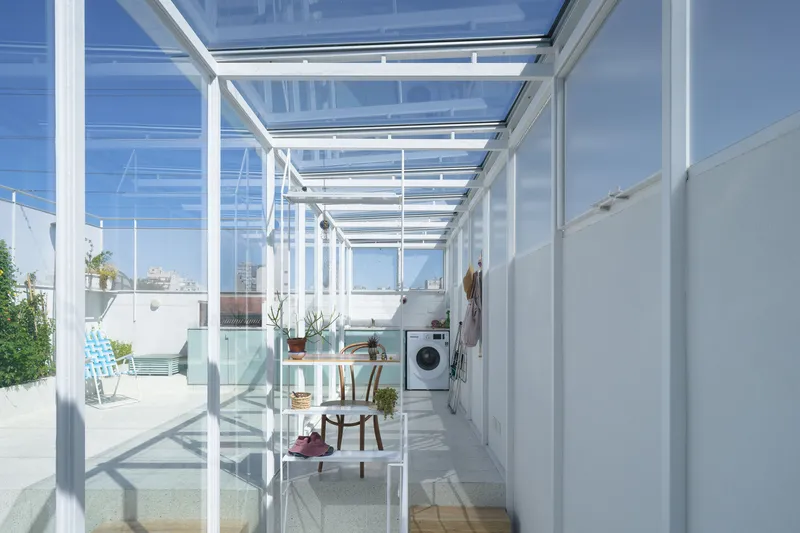
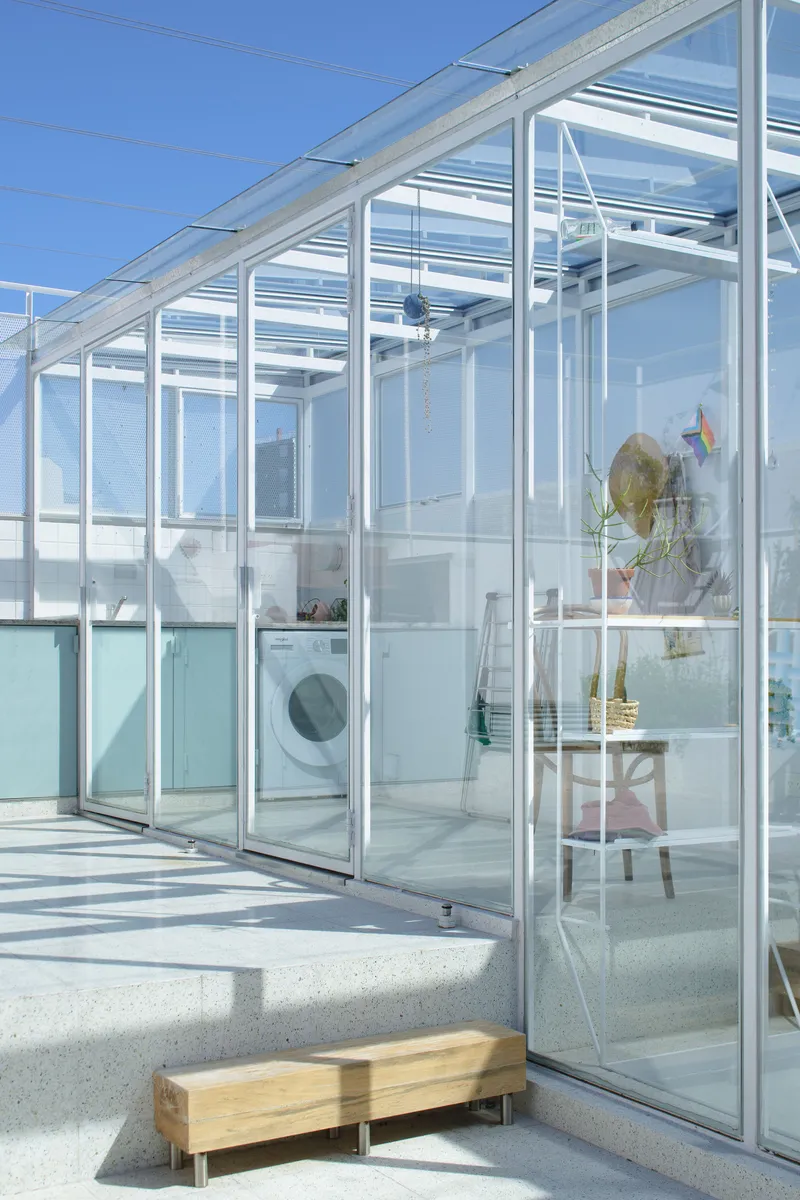
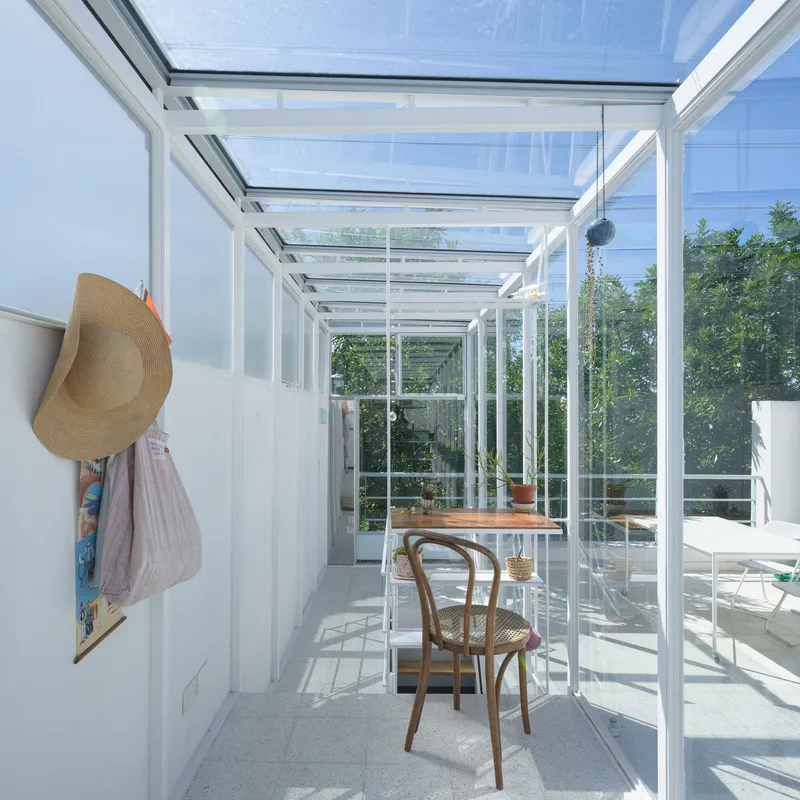
The glass pavilion does practical work, too. One zone houses a laundry area behind transparent walls, keeping services visible but contained. A washing machine sits next to a wooden bench in full view through the glazing. There is something refreshingly honest about this: in a house this compact, hiding utilities behind drywall would waste precious volume. Instead, the architects let the mundane coexist with the aspirational.
Looking up through the aluminum roof beams, the sky and treetops fill the frame. The structural members are slim enough to recede visually, letting the canopy overhead feel like a fifth facade made of leaves and weather. It is a simple detail, but it transforms the experience of standing in what is, technically, a laundry corridor.
Climbing Through the Section
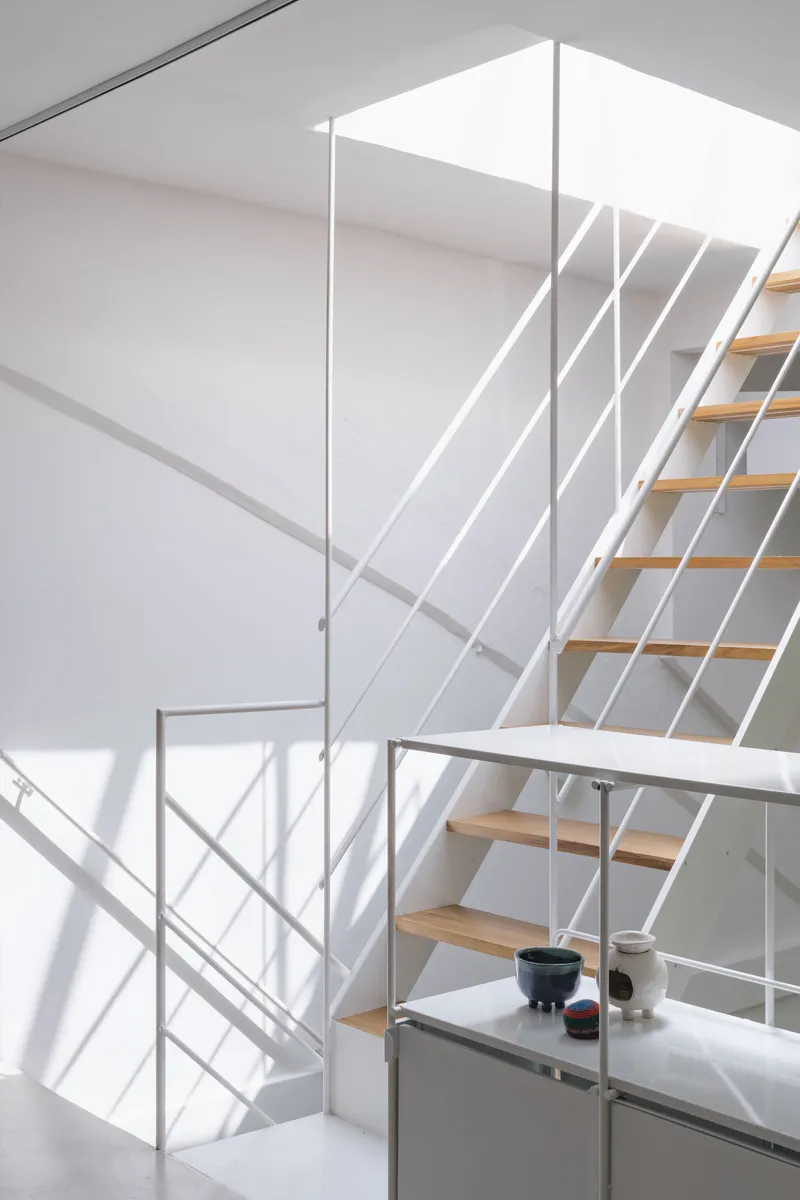
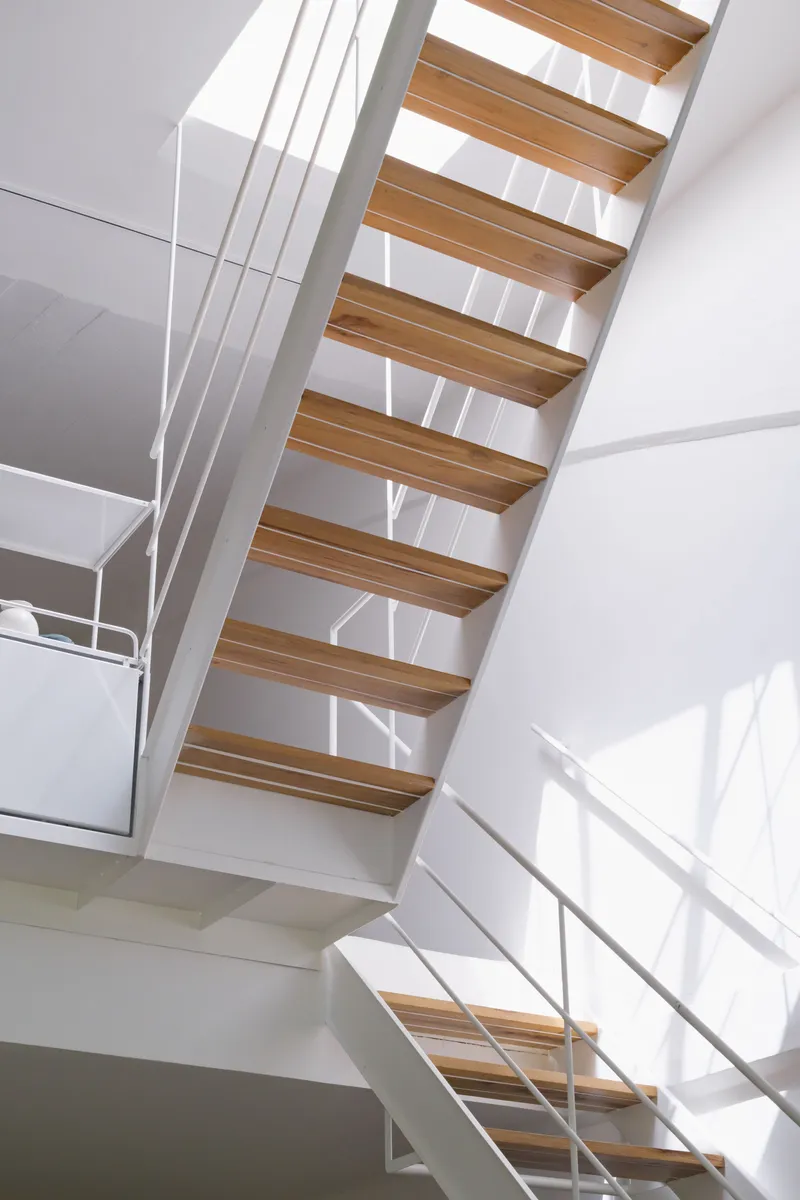

The timber staircase is the spine of the project. Open treads and white steel cable railings keep the double-height volume visually continuous from the kitchen level up through the mezzanine bedroom and onward to the terrace. Light passes through the stair without obstruction, which is critical in a narrow plan where blocking sightlines would make the space feel like a shaft.
The stair does more than connect floors. It generates spatial events: a potted plant catches light on a landing, a glimpse of the sky appears through the cable rails, the yellow kitchen flashes into view two stories below. In a compact vertical house, the staircase is the room you spend the most time passing through, and the architects treated it accordingly.
A Kitchen in Full Color
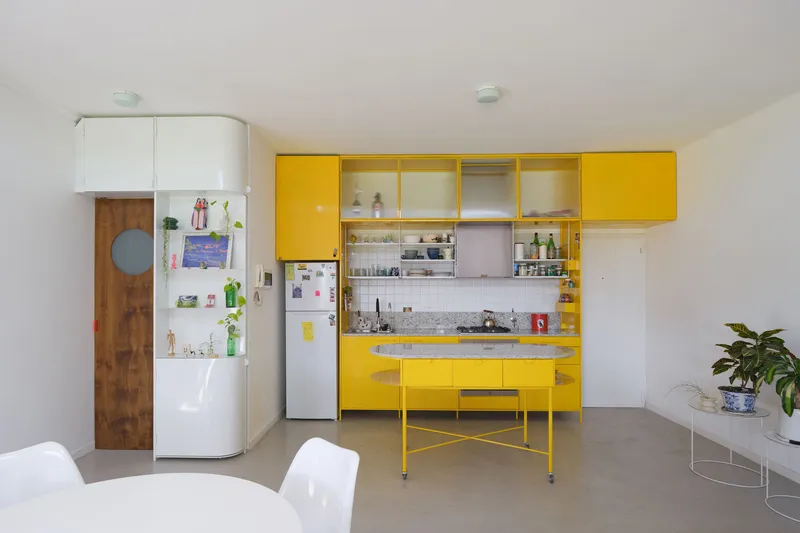
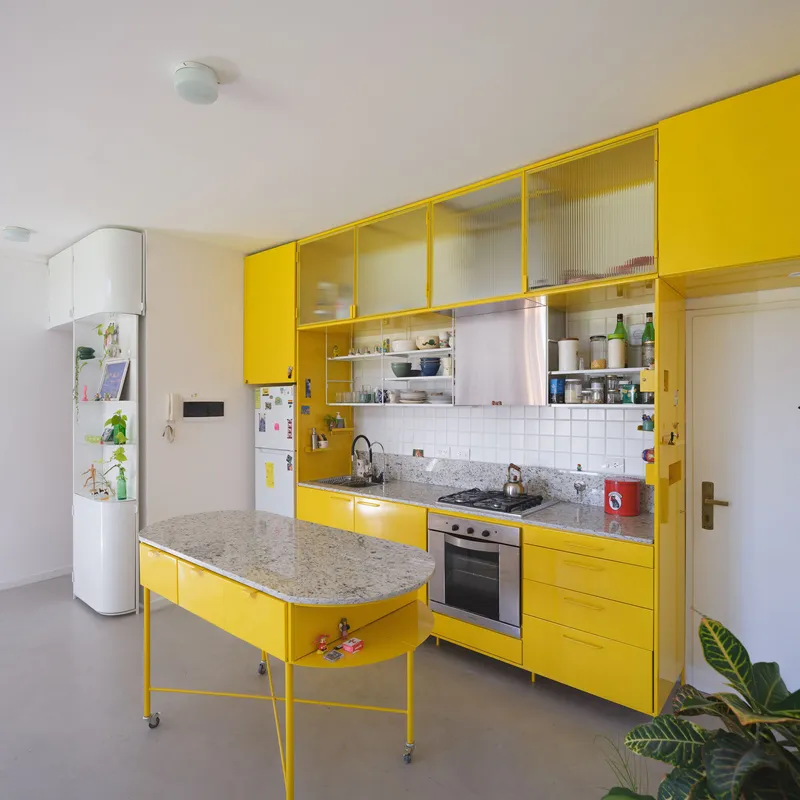
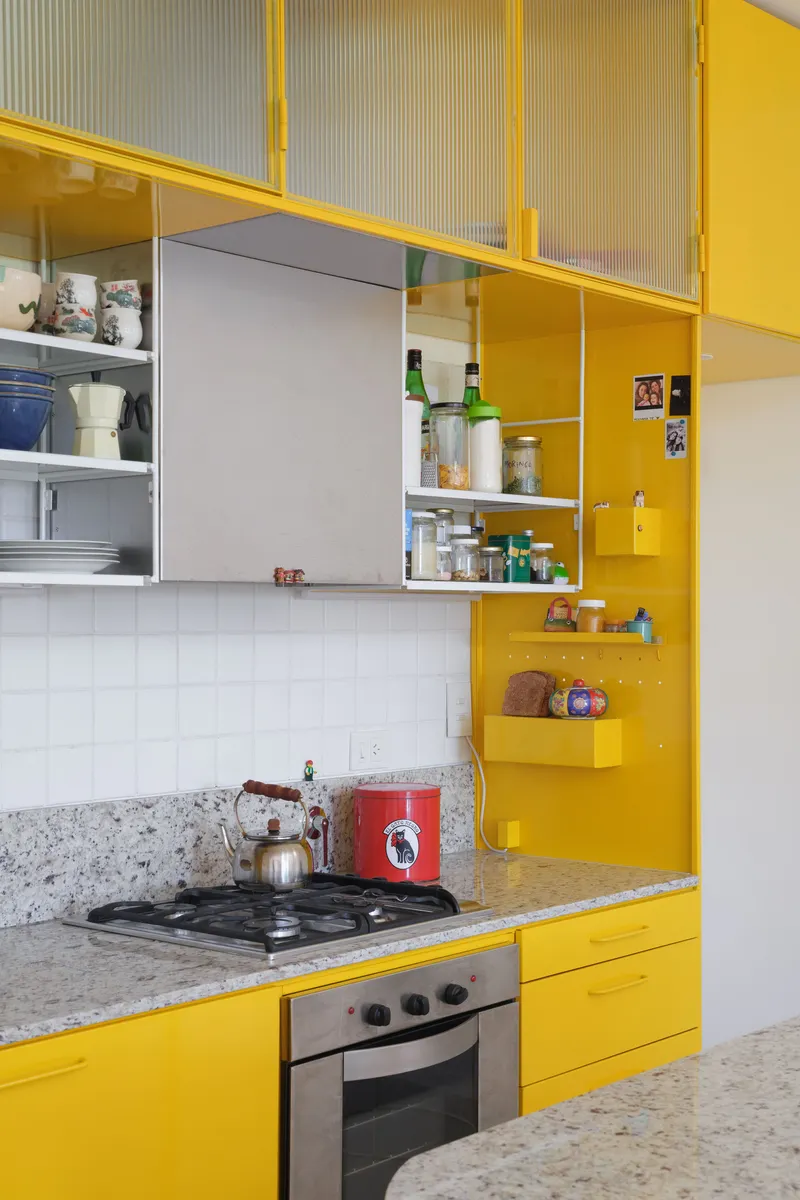
The kitchen occupies the lower level and announces itself in saturated yellow lacquer. Curved island edges, a terrazzo countertop on wheels, fluted glass sliding doors on the upper cabinets, and a white subway tile backsplash combine into something that feels specific and personal rather than catalog-sourced. The yellow is bold enough to define the room's identity without a single piece of art on the walls.
A curved detail where the terrazzo meets the yellow cabinetry reveals the level of craft in play. The mobile island, compact enough to roll aside when needed, acknowledges that 72 square meters cannot afford fixed furniture that serves only one function. The kitchen is designed to be reconfigured on the fly, and that flexibility is embedded in the millwork itself.
Details That Earn Their Keep

The bathroom continues the project's appetite for color, swapping yellow for a warm orange vanity with a stainless steel basin set against white grid tiles. The material palette is restrained but each surface choice carries weight. There is no neutral filler here: every material either stores something, reflects light, or adds warmth.
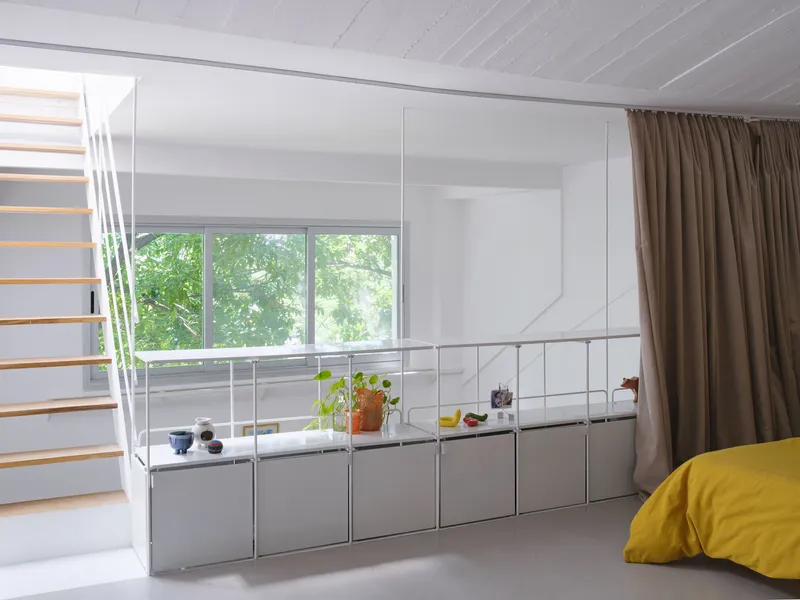
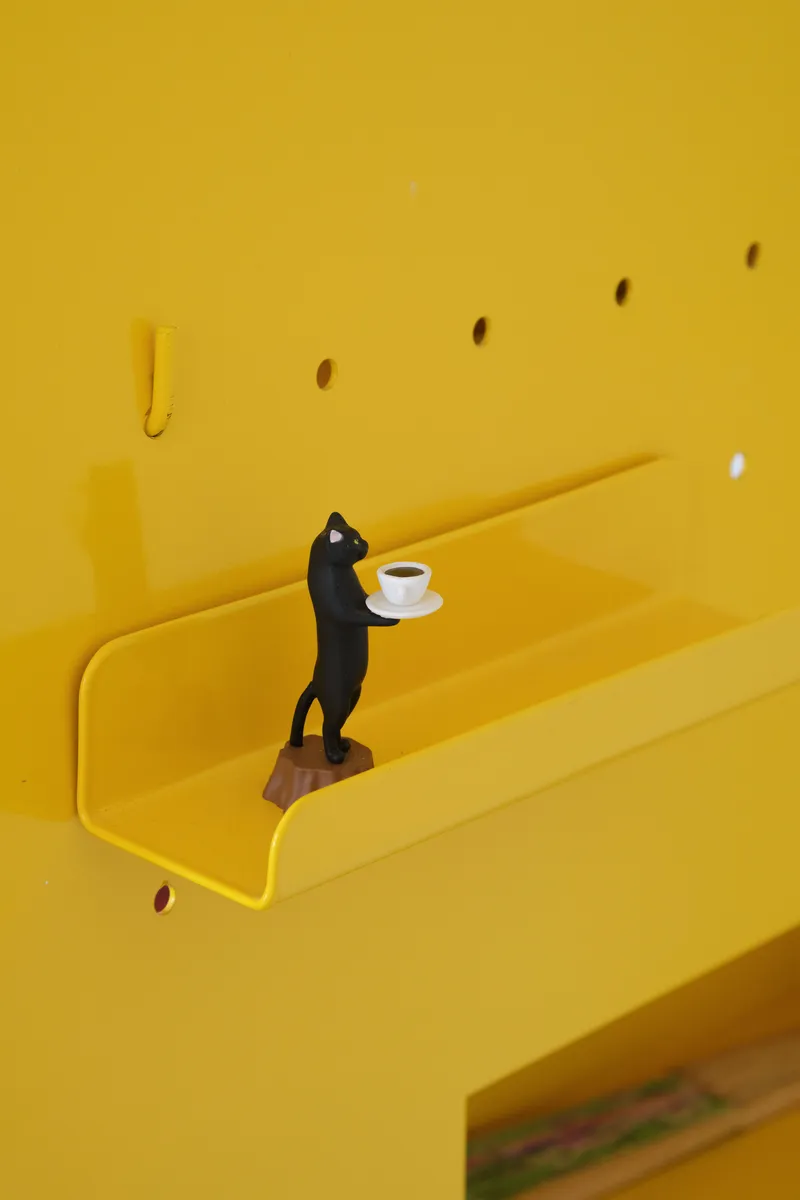
Elsewhere, modular grey cabinetry beneath a horizontal window handles storage with quiet efficiency. Taupe curtains and exposed ceiling joists above give the sleeping area a softer register than the public zones below. A tiny yellow shelf with wall hooks and a miniature figurine holding a cup captures the spirit of the whole project: small moves, placed with intention, that make a compact home feel genuinely inhabited.
Reading the Building from Above
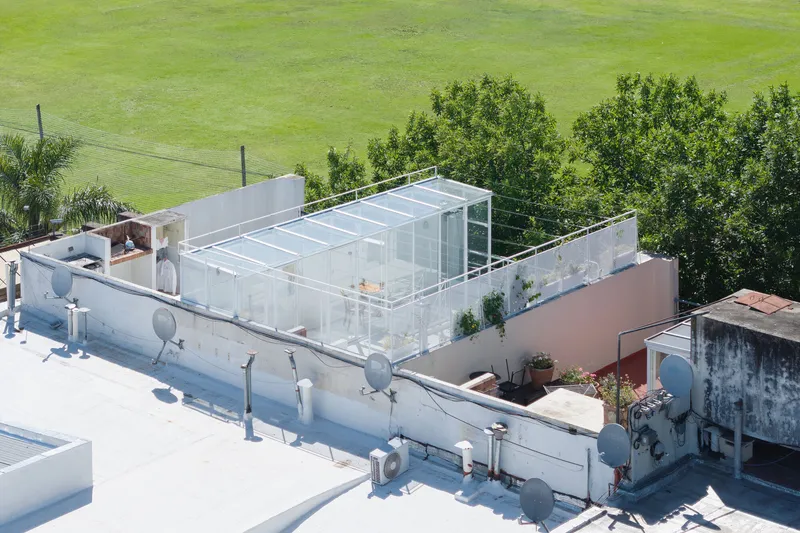
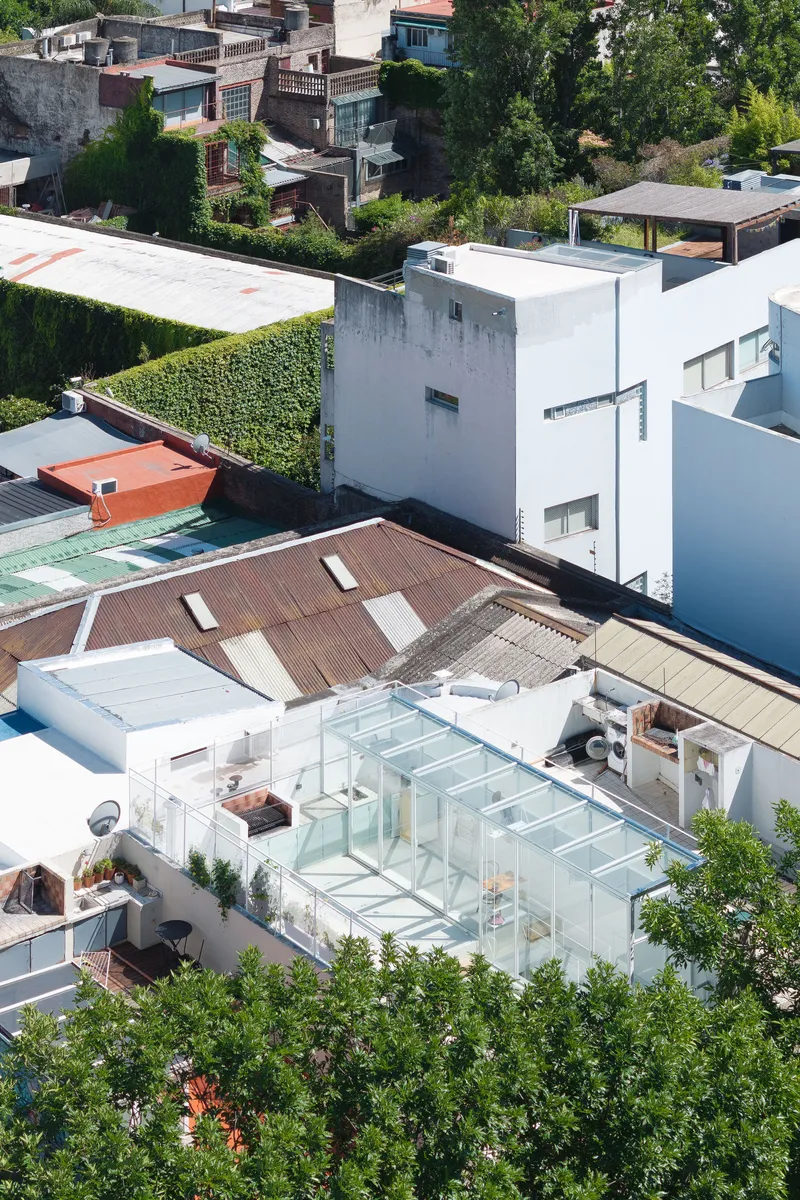
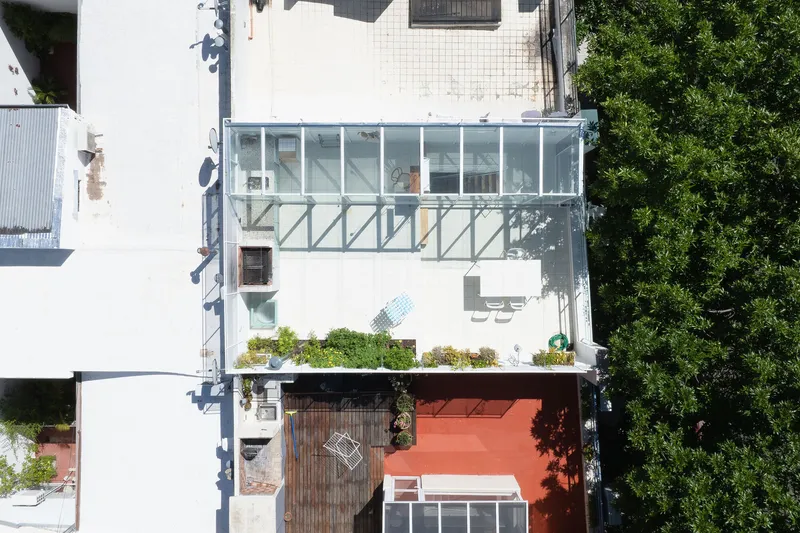
Aerial views reveal how the glass pavilion sits within the broader roofscape. The white-painted terrace and timber deck appear as a bright clearing among a dense field of neighboring houses and mature trees. The pavilion reads as a precise, lightweight insertion rather than a heavy addition, its transparency preventing it from competing with the existing factory volume below.
From the street, the stacked glass volumes and planted terrace are legible on the facade, signaling that something unusual is happening inside. The architects did not hide their intervention. They wanted the new life of this former industrial building to be visible, a vertical garden of domestic activity rising above the neighborhood.
Plans and Drawings

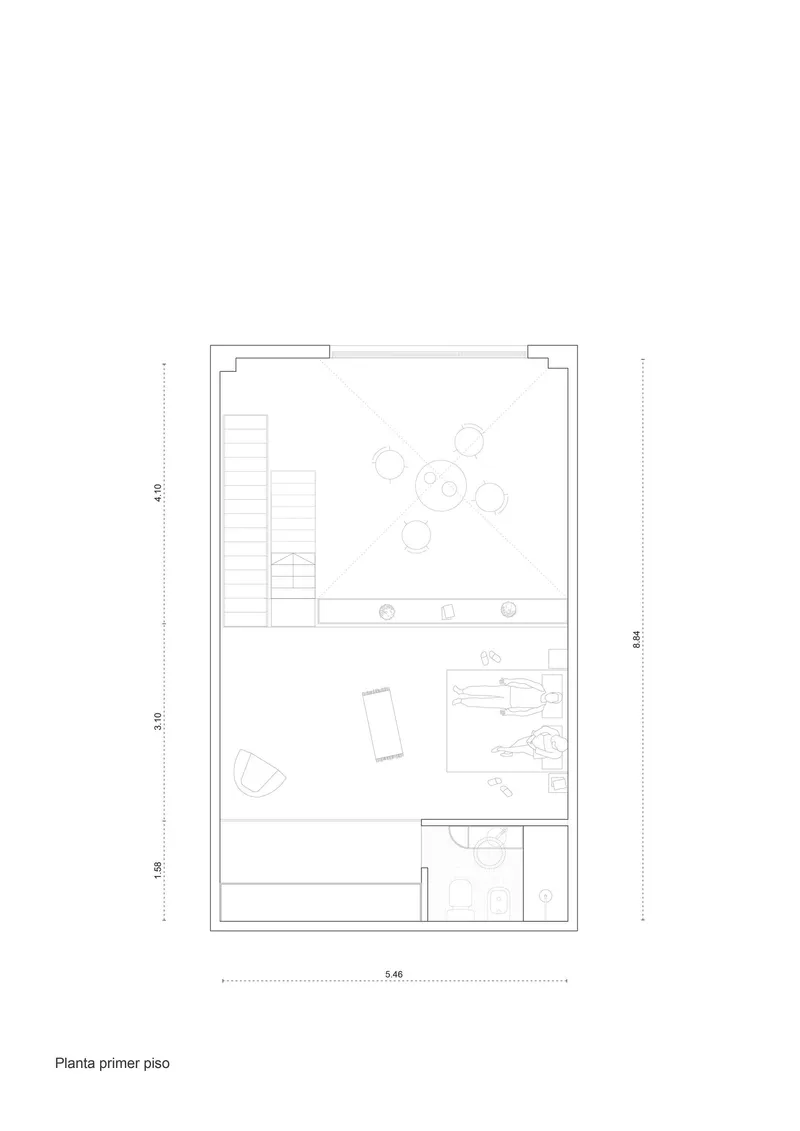

The floor plans lay out the logic clearly. The ground level holds the kitchen and a circular furniture arrangement that maximizes social space. The first floor accommodates the bedroom, bathroom, and a seating area. The terrace plan shows the planted zones and the curved balconies along one side, remnants of the original factory geometry that the architects folded into their new landscape.
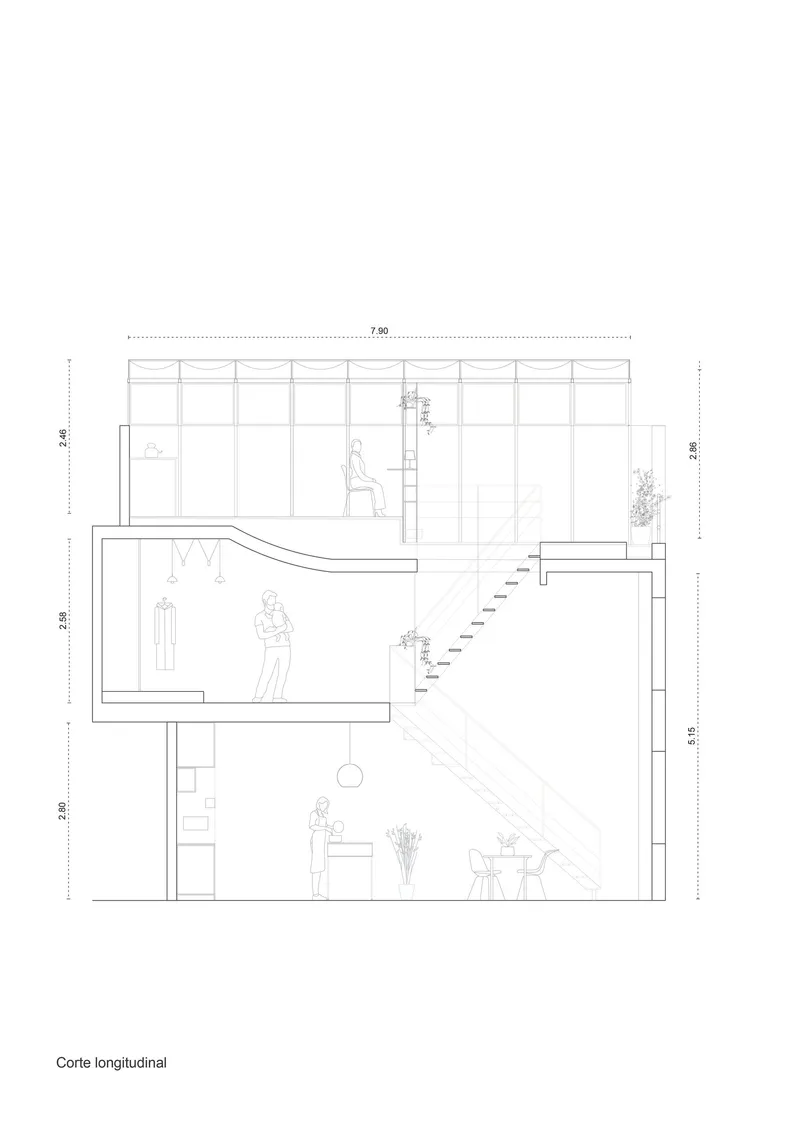
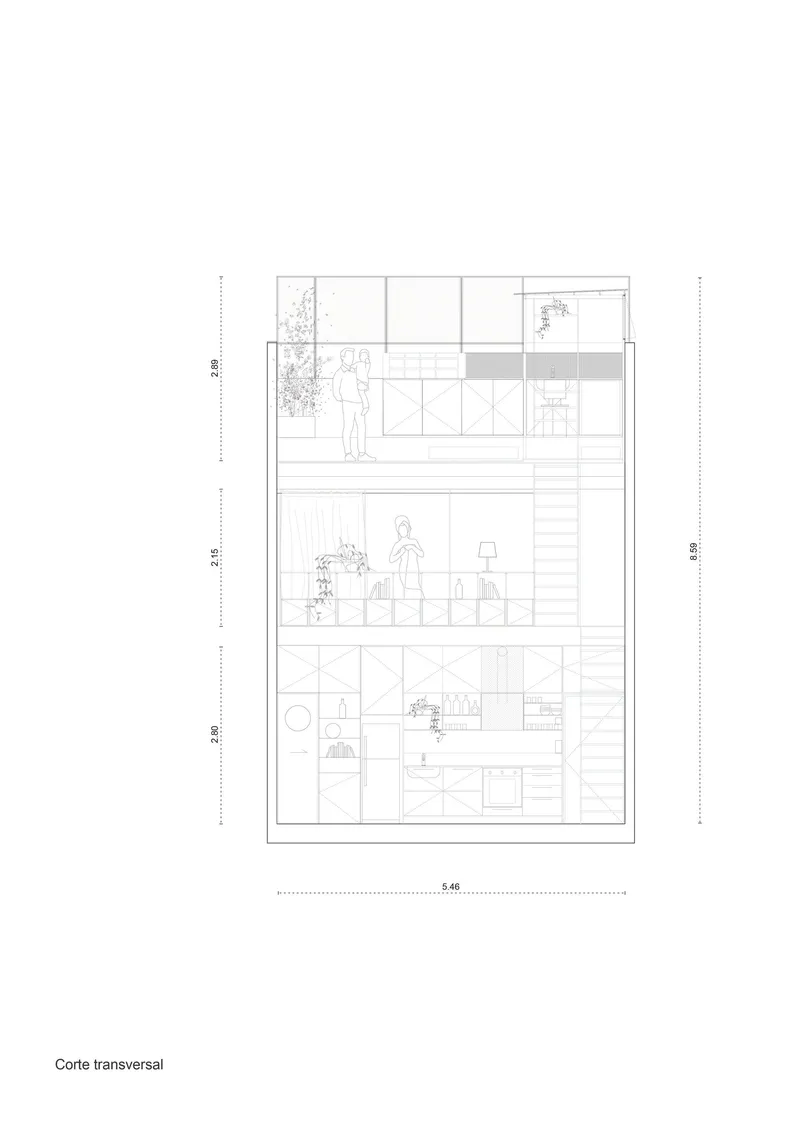
The longitudinal and transverse sections are where the project's ambition becomes most legible. Three stacked levels connected by the open staircase, human figures occupying every floor, plants spilling from the terrace, and the glass pavilion capping the composition. The sections confirm what the photographs suggest: this is a house designed in section first, where the vertical relationship between floors matters more than any single plan.
Why This Project Matters
Adaptive reuse projects often get praised simply for not demolishing an existing building. That is a low bar. What Morsa Taller and Pablo Giterman accomplish here goes further: they identified the least valued asset of the unit, a rooftop terrace reachable only by hatch, and made it the heart of the home. In a city where rooftops are routinely abandoned to water tanks and satellite dishes, reclaiming that territory with a habitable glass room is a pointed critique of how Buenos Aires underuses its vertical inventory.
At 72 square meters, the house also makes a case for intensity over expansion. Every surface, from the terrazzo-topped mobile island to the orange vanity to the cable-railed stair, is working. Nothing coasts on neutrality. The project proves that small residential conversions do not need to play it safe to be livable. They need to be specific, vertically inventive, and unafraid of yellow.
House in a Former Factory, Renovation and Extension by Morsa Taller and Pablo Giterman. Buenos Aires, Argentina. 72 m². Completed 2025. Photography by Javier Agustín Rojas.
About the Studio
Share Your Own Work on uni.xyz
If projects like this are the kind of work you want to make, uni.xyz is a place to publish your own, find collaborators, and enter design competitions.


Popular Articles
Popular articles from the community


Singing Woman: An Opera House That Performs Before the Curtain Rises
Ovidiu Cristian Pavel's conceptual opera house translates Estonia's choral identity into a sculpted waterfront landmark facing the Baltic Sea.

Extended Shell: Retrofitting Kolkata's Balconies as Living Urban Thresholds
A modular retrofit system recovers the social and environmental intelligence of Kolkata's historic verandas for contemporary Park Street residents.

The Amber Palace Opera: A Geological Fiction Surfaces on Tallinn's Baltic Waterfront
Pierre Brillard reimagines a Baltic legend as a public landscape, opera house, and waterfront promenade rooted in Tallinn's coastal identity.

Opera on the Sea: Driftwood Logic Shapes a Timber Opera House on Estonia's Coast
Trevor Orgill's opera house translates the entangled drift of floating timber into a civic building where wood, water, and music converge.

Similar Reads
You might also enjoy these articles

Pixel Gardens: One Repeated Module Stacked Into a Terraced Social Housing Tower for Famagusta
Salem Bader's shortlisted housing tower builds a vertical neighbourhood from one repeated module, offsetting units to carve terraces, light and air.

Bao Huynh Watercolor Atelier: A Serene Art Retreat in Hội An
Bao Huynh Watercolor Atelier in Hội An blends multifunctional art spaces, sustainable design, local materials, and family-friendly living in a serene environment.

Atelier Macri Concept Store Interior Design by CASE-REAL
Atelier Macri store features a "ko" counter, walnut wood details, cork displays, blending retail, gallery, and seamless customer experiences.

Manuel Vargas Izquierdo Stadium and High-Performance Sports Center: Architectural Excellence in Jalpa de Méndez
The Manuel Vargas Izquierdo Stadium blends sustainable design, inclusive sports facilities, and cultural-inspired architecture, revitalizing Jalpa de Méndez’s public spaces.

Explore Building Extension Competitions
Discover active competitions in this discipline

Challenge to design luxury tourism on rails

VR headsets Storefront design competition

Designing a staircase for a client
Comments (0)
Please login or sign up to add comments
No comments yet. Be the first to comment!