

Mortuary by Moser und Hager Architekten: A Contemporary Reflection on Death and Architecture
Moser und Hager Architekten’s Mortuary blends symbolism, light, and materials to create a serene, reflective space for mourning.


A Contemporary Approach to Sacred Architecture
Moser und Hager Architekten’s Mortuary in Kematen an der Krems, Austria, stands as a contemporary meditation on death, memory, and the role of architecture in commemorating life’s final transition. The project, completed in 2021, spans 195 m² and is an example of how modern design can convey deep emotional resonance while respecting age-old cultural practices. The architects explore the transient nature of life through the use of symbolic design elements that connect the living with the departed, transforming the space into a quiet, reflective sanctuary for mourners.
Symbolism and Design Concept: The Path Between Worlds
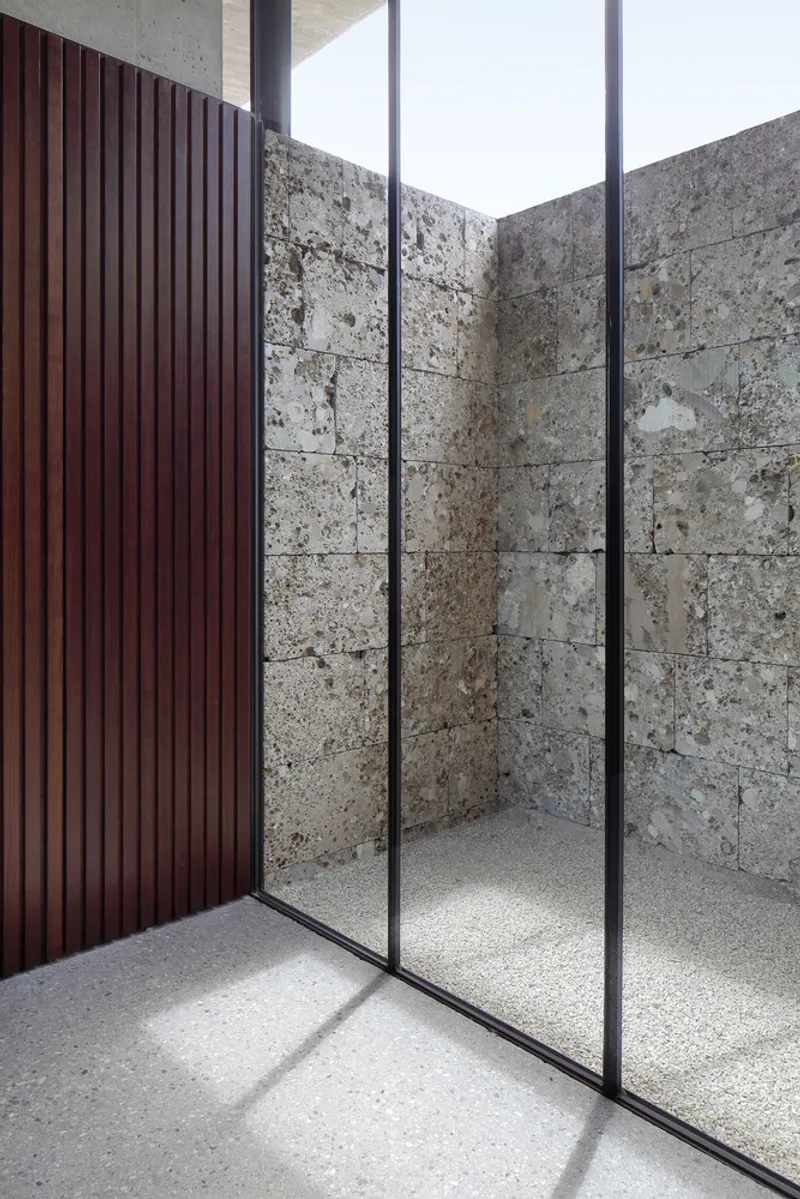
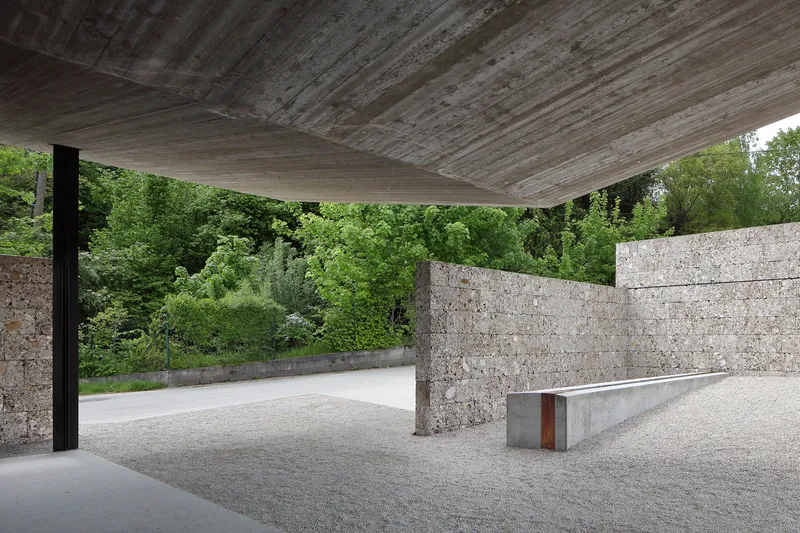
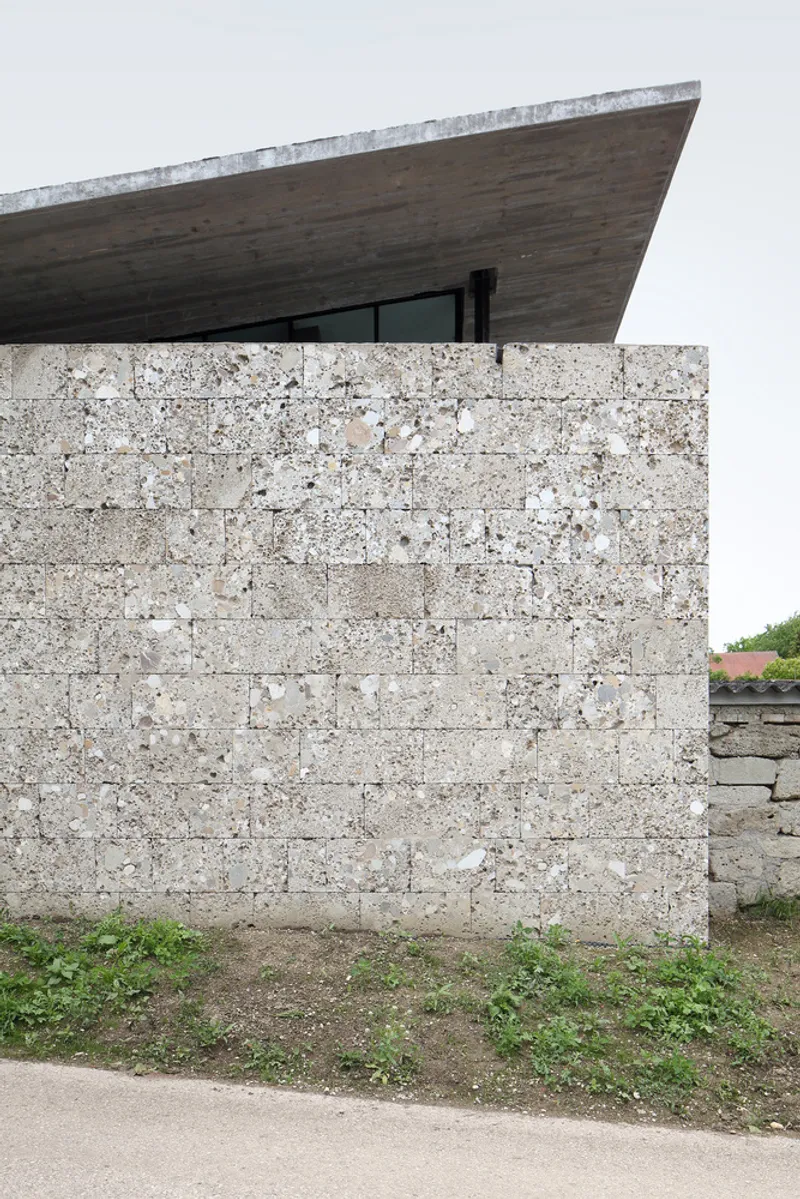
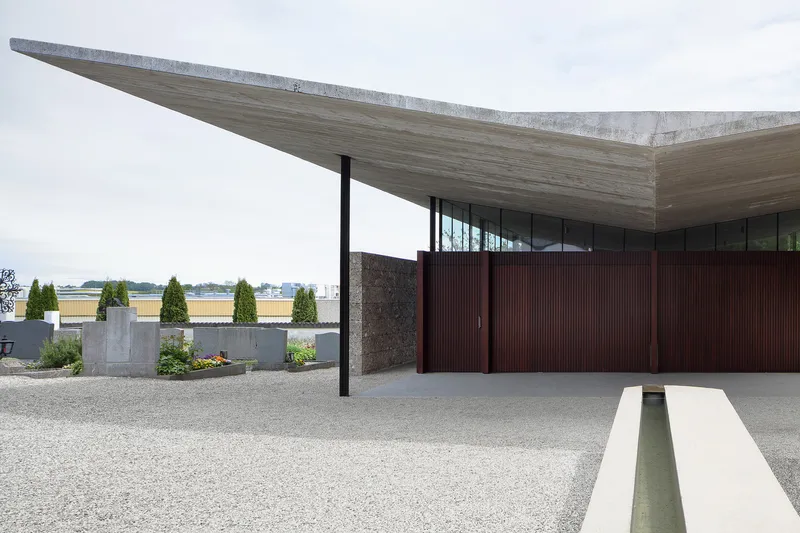
The Mortuary is not merely a functional building; it is a space that embodies the ancient symbolism of death and the passage to the afterlife. One of the central design concepts is the creation of a threshold—the symbolic division between the living and the departed. The architects drew inspiration from traditional structures and burial rites, creating a wall made from the conglomerate stone typical of the Krems Valley. This wall extends from the cemetery’s existing boundary, wrapping around the funeral hall to define the space both physically and symbolically.
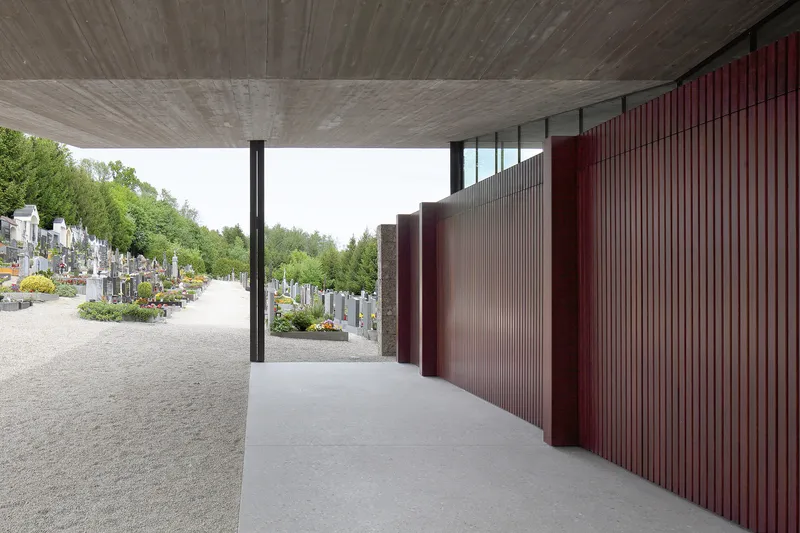
The entrance to the Mortuary is carefully positioned at the end of a narrow lane that leads directly from the Romanesque parish church in the center of the village. This pathway not only defines the building’s axis but also serves as a metaphorical journey from life to death. The architects meticulously considered the relationship between the built environment and the surrounding landscape, creating a design that allows the user to engage in a ritualistic transition from the earthly realm into the eternal.
The Structure: Crafting a Sacred Space with Light and Materiality
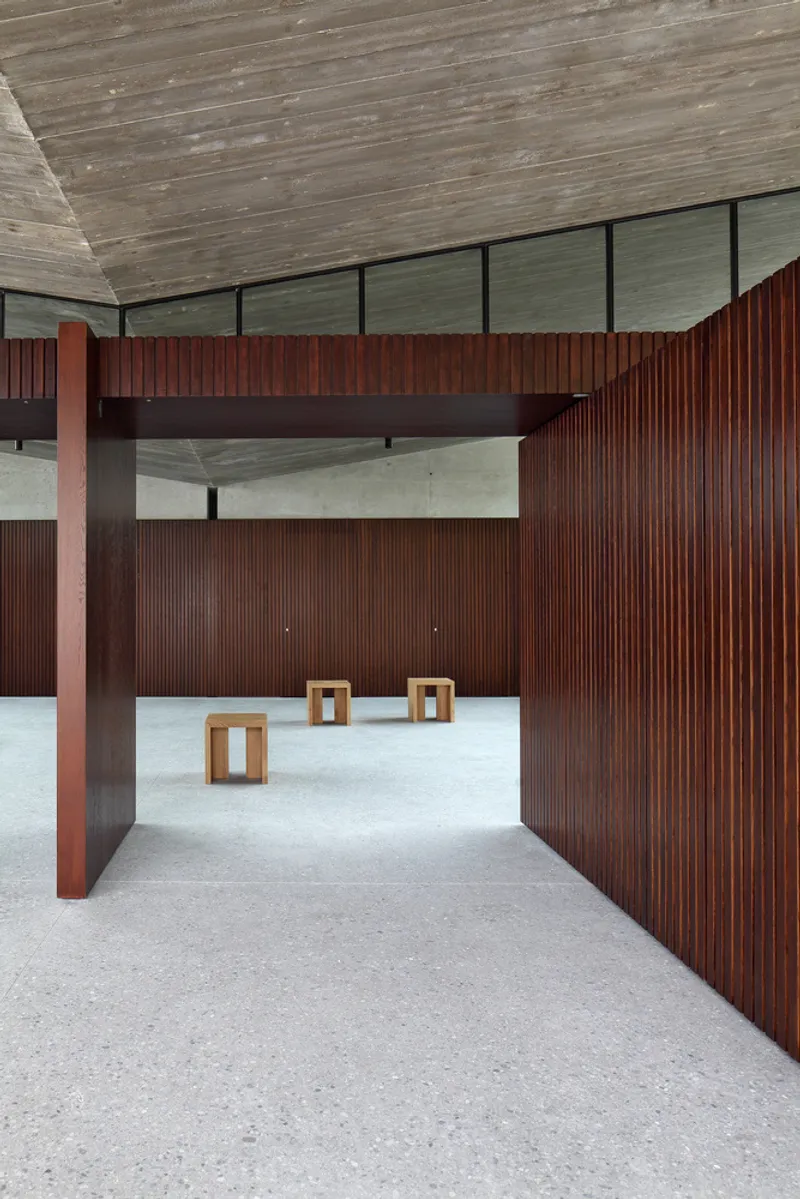
At the heart of the Mortuary is the funeral hall, a serene space designed to facilitate both individual and communal reflection. The structure’s form is defined by a delicate concrete shell roof, which floats above the stone wall, supported by slender T-profile beams that create a cruciform section. This roof’s design symbolizes the fragility of life, offering a gentle, protective canopy for mourners.
Through large glass panels, the interior space is connected to the outside world, allowing for views into the surrounding landscape. The transparency of the glass enables mourners to feel a sense of openness while still being enveloped by the protective stone walls. The design invites a continuous engagement with nature, with changing daylight and moving clouds creating a dynamic interplay of light and shadow within the space.
The interior is dominated by the use of oak wood, a material that adds warmth and tactility to the somber concrete and stone. The oak wood clads the end walls of the funeral hall and forms simple seating for visitors. This material choice contrasts with the heavy, earth-bound weight of the stone and concrete, offering a sense of comfort and warmth during a time of mourning. A heavy curtain can divide the space in half, allowing for flexible use during funeral services, further reinforcing the theme of transformation and passage.
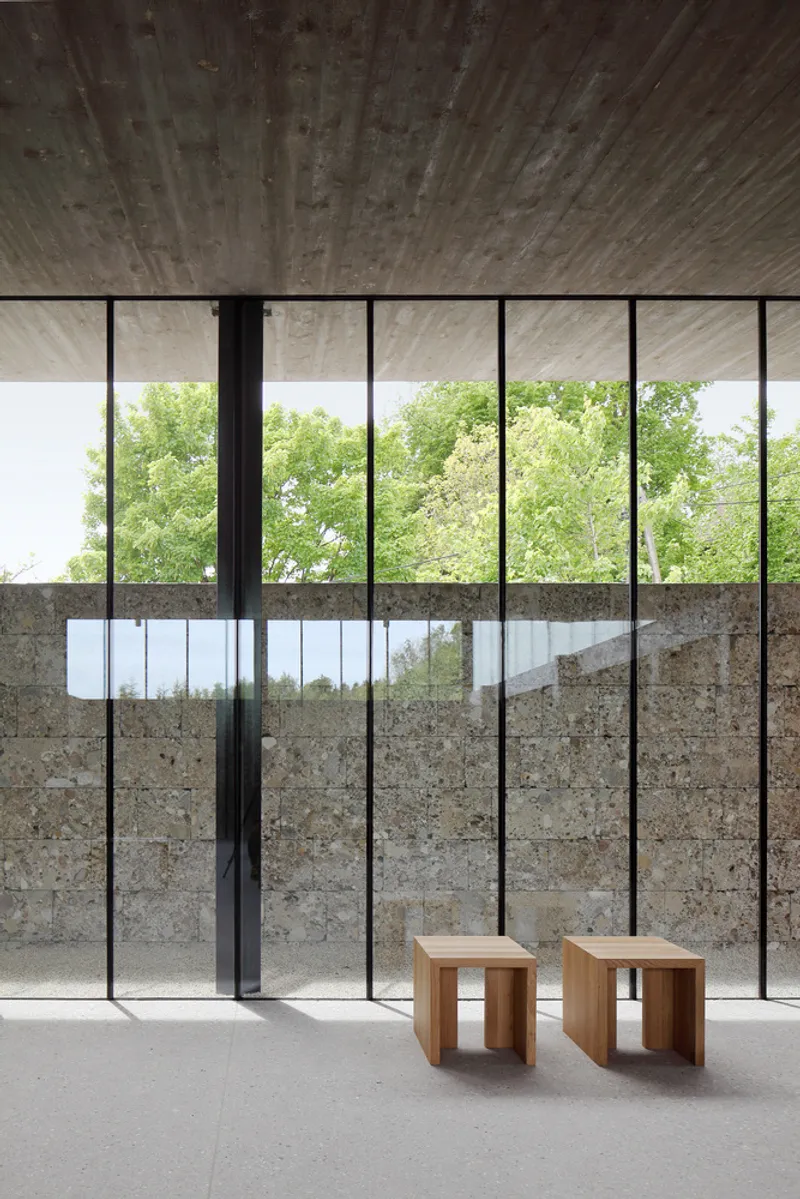
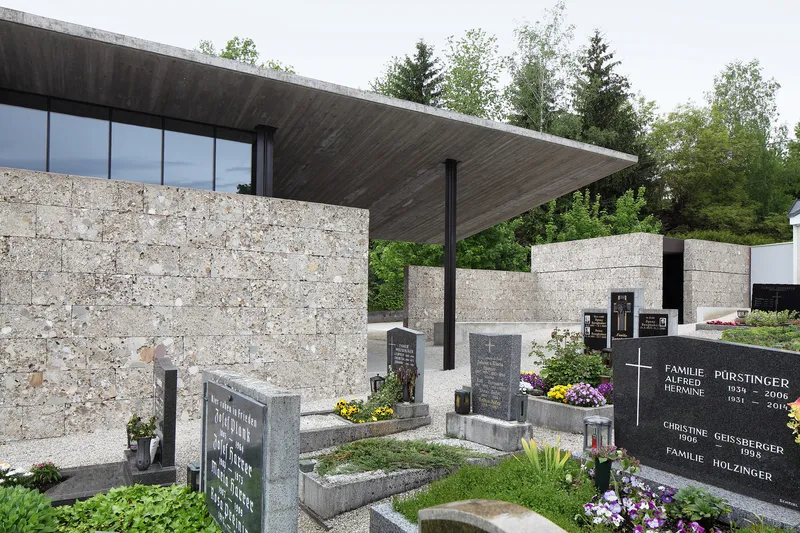
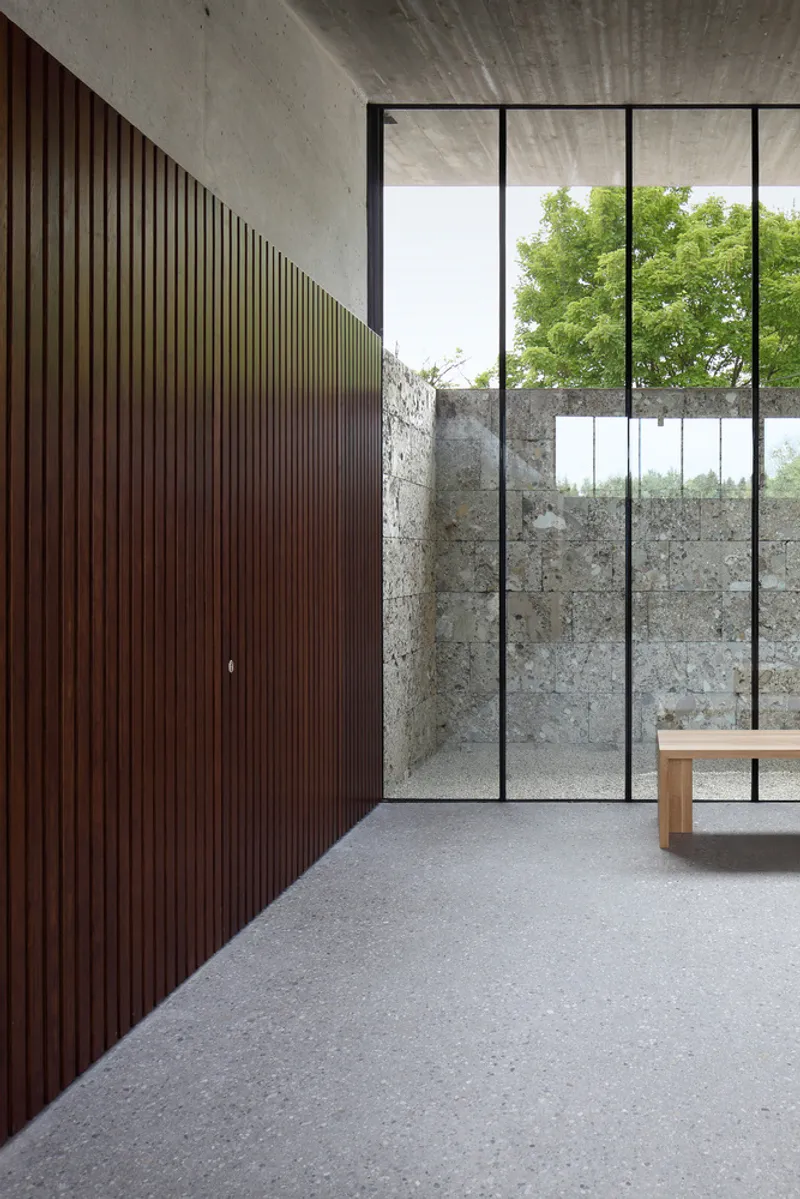
The Forecourt: Connecting Interior and Exterior Spaces
The relationship between the Mortuary and its surrounding environment is a key feature of the design. The forecourt, a transition zone between the outside world and the funeral hall, is framed by the stone wall that extends from the cemetery. Here, the architects employed natural design elements to create a calming atmosphere. The forecourt is gently sloped, providing a gradual transition to the outbuilding, which houses additional rooms for storage and functions related to the funeral services.
The green roof of the outbuilding adds a layer of biophilic design, bringing nature into the built environment. This planted roof provides shade and enhances the sense of connection between the interior of the Mortuary and the surrounding landscape. Rainwater is channeled through a brass channel, symbolizing the passage of time and the impermanence of life. The water is collected and allowed to drip into a concrete basin designed by Gerhard Brandl, evoking the cyclical nature of life and death.
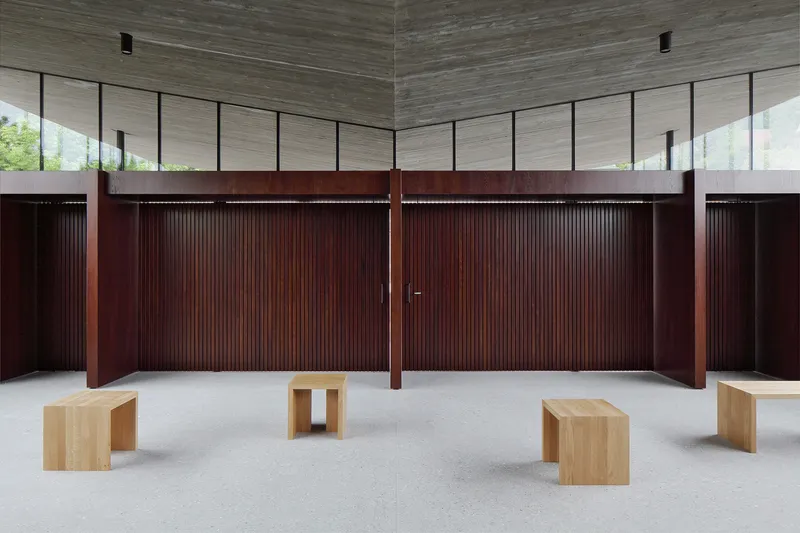
The Role of Architecture in Healing and Reflection
In the Mortuary, Moser und Hager Architekten have created more than just a functional space for memorial services. The building serves as a healing architecture that provides solace for those in mourning, allowing them to reflect on the fragility of life. The architects ask an important question: can architecture explain death or dispel fear? While the answer may not be definitive, architecture can certainly provide a sense of comfort and a respectful setting for the inevitable process of mourning.
The stone wall acts as a boundary, but it is not a barrier. It encloses the space while allowing the light to flow in. The floating roof signifies protection, yet it does not overwhelm the space. These elements combine to create a physical manifestation of the delicate balance between life and death, offering a place where one can find peace amidst the turmoil of grief.
The Eternal Cycle of Life and Death
Moser und Hager Architekten’s Mortuary is a profound example of how architecture can engage with the themes of death, memory, and transience. The building’s carefully considered design uses symbolism, light, and materiality to create a space that is both respectful and comforting. Through its connection to nature, its thoughtful use of local materials, and its focus on creating a tranquil, reflective environment, the Mortuary serves as a lasting testament to the delicate and cyclical nature of life. The project stands as an invitation for visitors to reflect on their own lives, to experience the transience of existence, and to engage in the universal journey from life to death.


Popular Articles
Popular articles from the community


U.GA Architects Wraps an Oval Rooftop Pool in Curved Board-Formed Concrete on Busan's Jeollidan-gil
In Busan's Jeonpo-dong, a 454 m² mixed-use block stacks a neighborhood facility, guest rooms and an oval rooftop pool inside spiraling concrete walls.

longwave studio Reorganizes a 112 m² Tainan Apartment Around the Daily Routines of a Family and Two Cats
In Tainan, Taiwan, birch plywood, rust-red furniture and a freestanding plaster wall link arrival, storage, work and family life in one apartment.

Jaramillo Van Sluys Arquitectura and Urbanismo Turn a Demolished Registry Lot in Quito into an Orchard Plaza
In Quito's Centro Histórico, a 2,800 m² plaza exposes the San Agustín convent wall and redraws its lost Augustinian orchard in volcanic stone.

LT2A and OPEN Architectes Thread a Brick and Glass High School Through a Wooded Belgian Campus
In Braine-l'Alleud, a 3,000 m² wing for Collège Cardinal Mercier pairs pale brick with a glazed colonnade, deferring to a small chapel and a dense wood.

Similar Reads
You might also enjoy these articles


Hodi-Mandai Geram
Project Function: Preservation and revitalization of the Intangible heritage and socio-spatial identity of the Hodi by Housing, Cultural Memory Center, Sacred Grove, landscape, local tourism economy


Olio Towers: A Mid-Rise for Performers That Fuses Housing, Rehearsal, and Stage
Located blocks from Houston's Theater District, this modular tower stacks living units around a central performance atrium.

Oasis: Modular Green Housing Carved into Dhaka's Urban Fabric
A shortlisted Plugin Housing entry reclaims unauthorized settlements in Dhaka with stepped concrete volumes, green roofs, and ventilation-driven design.

Black Hole: A Floating Megastructure for the Post-Physical Era
Emiliano Mazzarotto envisions a spherical, self-scaling arena where e-sports, digital hotels, and holographic stadiums replace traditional public space.

Explore Funerary Architecture Competitions
Discover active competitions in this discipline

Challenge to reimagine the Iron Throne

Photograph architecture without architects

Illustrate the lost glory of Angkor Wat - Render Challenge

Bring back Drive In's
Comments (0)
Please login or sign up to add comments
No comments yet. Be the first to comment!