
Diez + Muller Arquitectos Fan Four Concrete Volumes Across an Ecuadorian Hillside
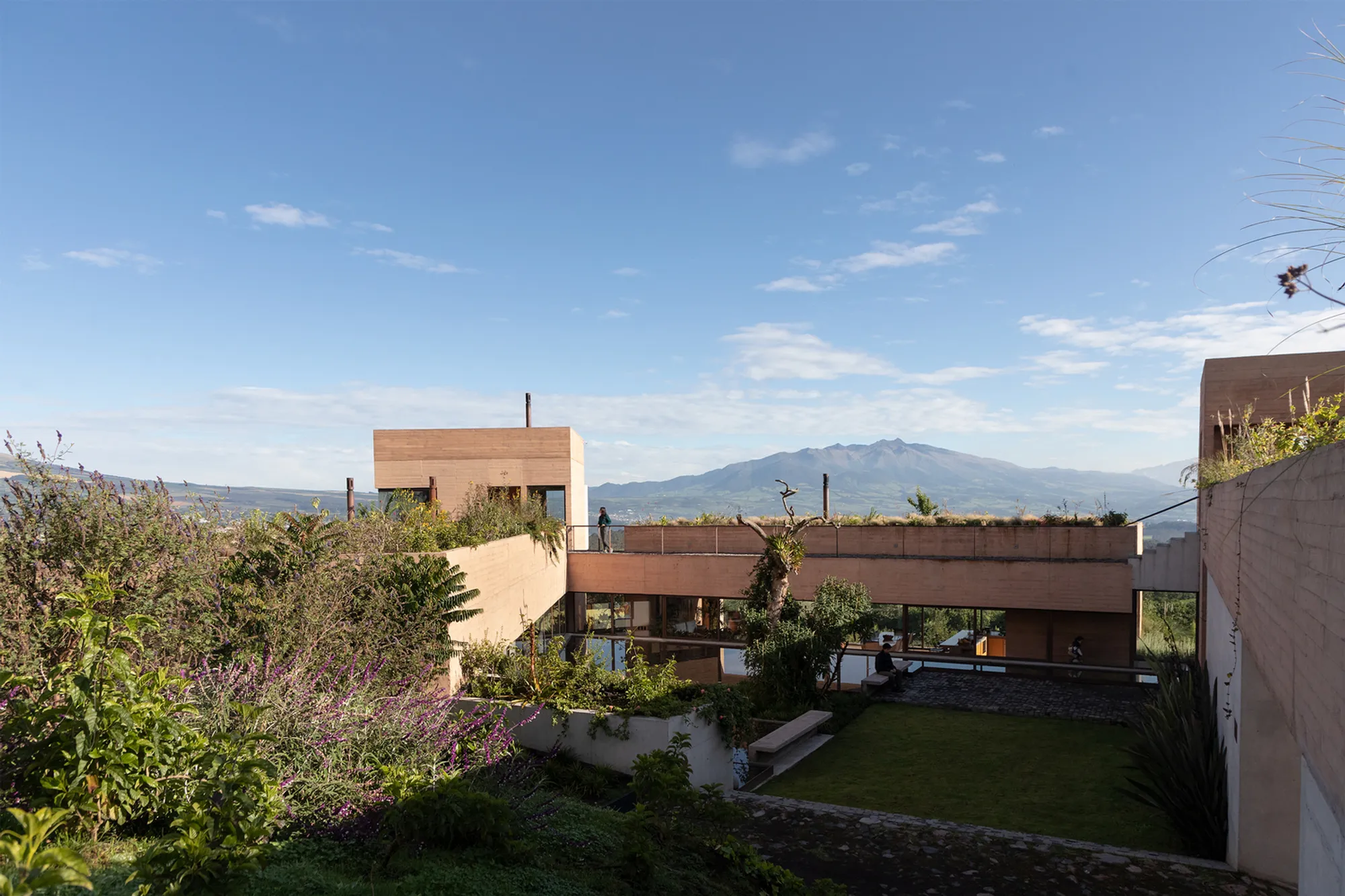
The Pasture House in Machachi, Ecuador, fragments a mountain retreat into fanning forms that sink into and rise from the Andean terrain.


At 3,200 meters above sea level in Machachi, Ecuador, the Andean landscape is vast enough to swallow most buildings whole. Diez + Muller Arquitectos understood that a single monolithic house dropped onto this hillside would either look like a bunker or a gesture of hubris. Instead, they broke the program of a four-bedroom residence into four rectangular volumes, fanned them outward like fingers, and let the triangular courtyards between them do most of the spatial and emotional work. The result, completed in 2023, is a house that feels both embedded and open, simultaneously retreating into the earth and reaching toward distant peaks.
What makes The Pasture House worth studying is not simply that it "blends with nature," a claim so ubiquitous it has lost all meaning. It is the specificity of the integration strategy: green roofs that literally bridge between planted terraces and the rising slope to the north, board-formed concrete stained salmon-pink to rhyme with the iron-rich soils, and a choreographed approach sequence that withholds the building until you are practically inside it. The architecture operates less as an object and more as a series of thresholds, each one recalibrating your relationship to the enormous landscape around you.
Fanning Volumes and the Spaces Between
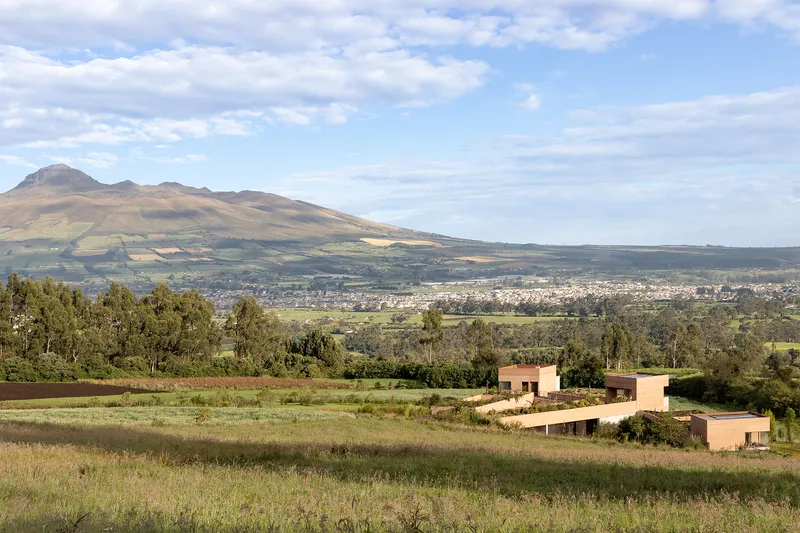
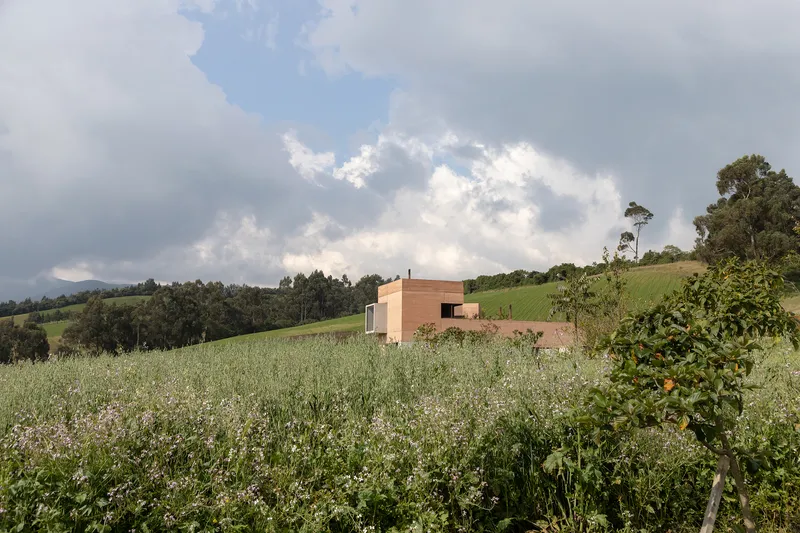
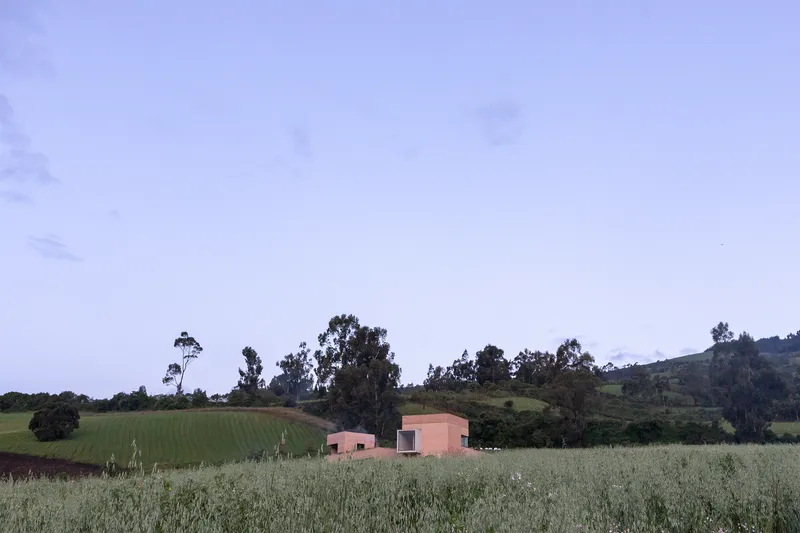
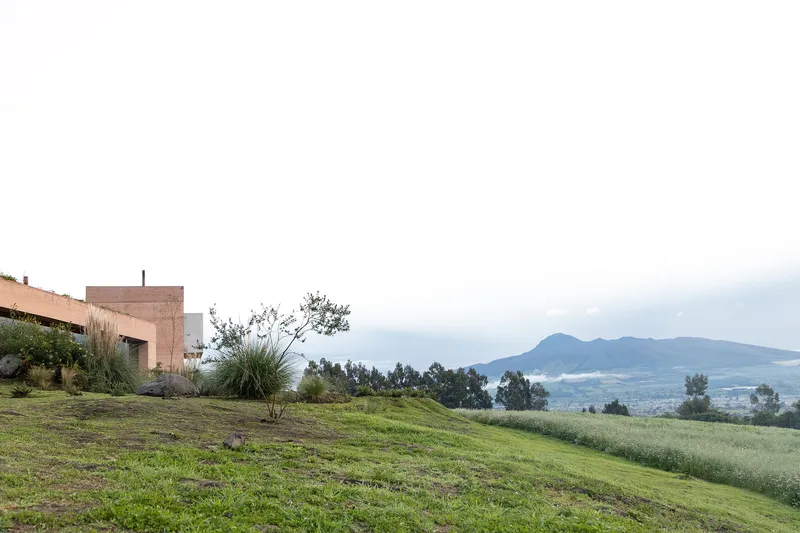
Seen from a distance, The Pasture House reads as a small cluster of forms scattered across agricultural fields, pink-toned walls rising just enough above wildflower meadows to register as architecture. The decision to fragment the volume into four fanning rectangles is the project's generative move. Each block can orient independently: one sinks into the slope, another rotates to capture a view of the valley, a third rises to frame the mountain range. The interstices between them become courtyard gardens, sheltered from wind while still open to sky and light.
The fragmentation also solves a problem of scale. A single mass equivalent to all four volumes would overwhelm the terrain at this altitude. Broken apart, the house participates in the landscape's own rhythm of ridges and furrows. Storm clouds gather behind it; native grasses push up against its walls. The architecture refuses to be the most important thing in the frame.
Board-Formed Concrete as Terrain
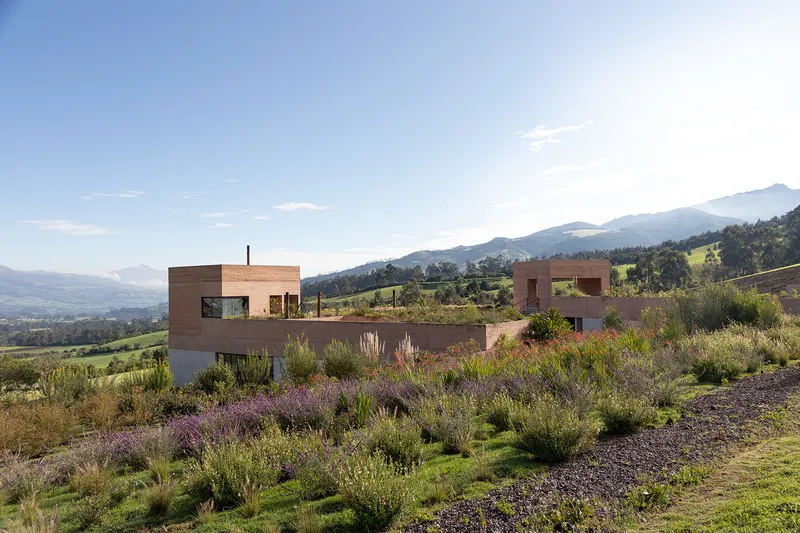
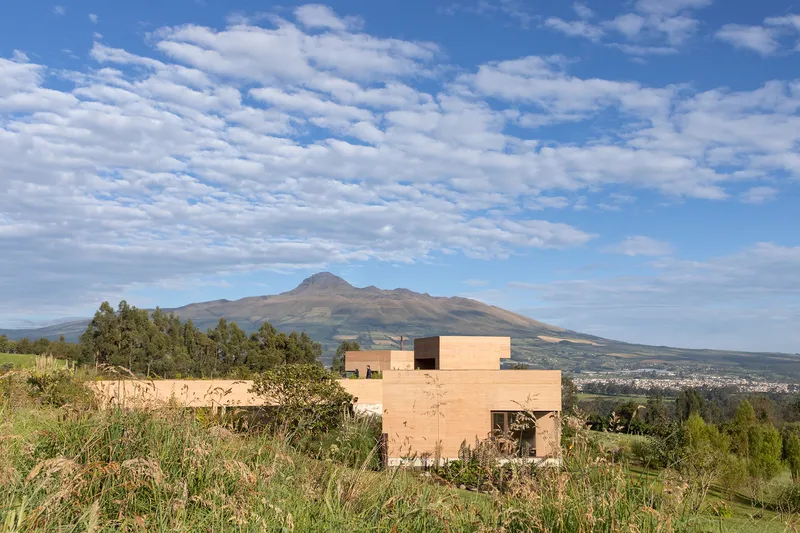
The salmon-colored, board-formed concrete is far more than a surface treatment. The angled hatch pattern left by the formwork gives the walls a geological texture, almost sedimentary, that shifts in character as the Andean light moves across it throughout the day. In morning sun, the walls glow warm; under overcast skies, they darken and recede into the hillside. The color itself is deliberate, pulling from the reddish soils and dried grasses that surround the site.
Structurally, the concrete walls do double duty. They bear the loads of timber roof beams and floor plates while also acting as retaining elements where the volumes cut into the terrain. The plasticity of the material allows each block to adapt to the existing topography rather than demanding that the site be leveled. Where a wall meets earth, it simply continues into it. The boundary between structure and ground is intentionally ambiguous.
Courtyards and the Choreography of Approach
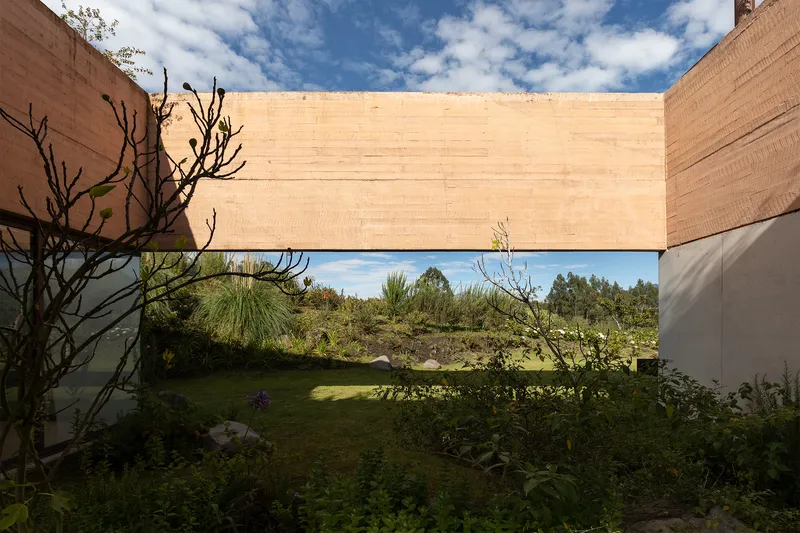
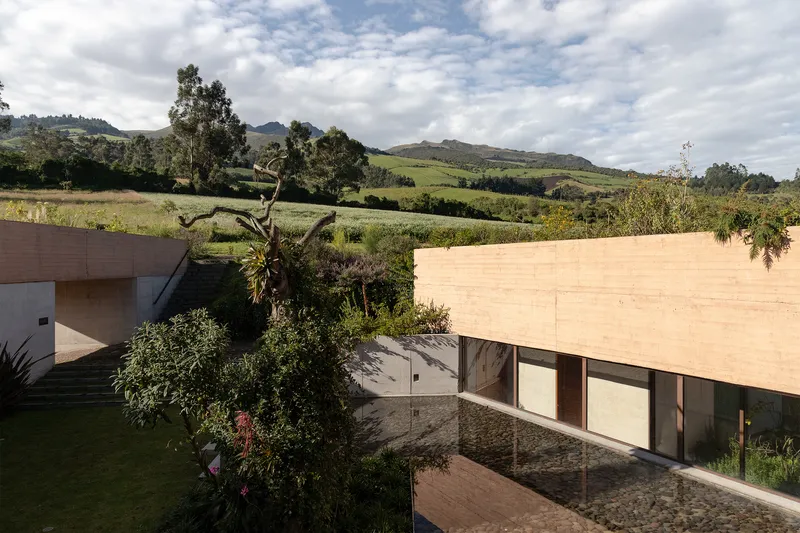
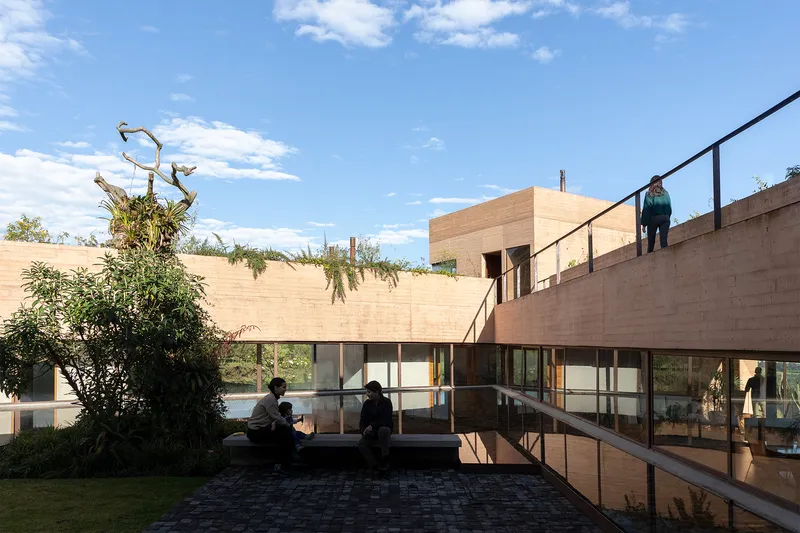
The entrance is positioned at the lowest point of the site, and the path to the house ascends laterally. You do not see the building in its entirety until you are already inside its network of courtyards. Vertical elements reveal themselves progressively: a wall edge, a timber bridge spanning overhead, a glimpse of a planted roof. The architects describe this as an "intuitive process" of linking object and landscape, and the result is a sequence that slows you down, forcing the transition from the vastness of the valley to the intimacy of domestic space.
The courtyards themselves are lined with native plantings and anchored by young trees that will, over time, grow tall enough to create canopy. A steel stair ascends past one planted court; a timber-clad bridge spans another. Glazed walkways run along the sides of the rectangular forms, connecting rooms while offering views back into these garden voids. The house is as much about the outdoor rooms as the indoor ones.
Planted Roofs as Connective Tissue
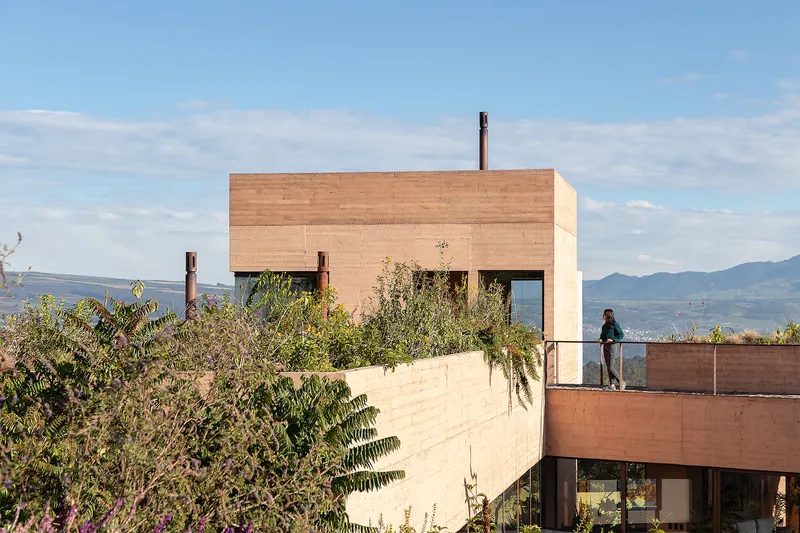
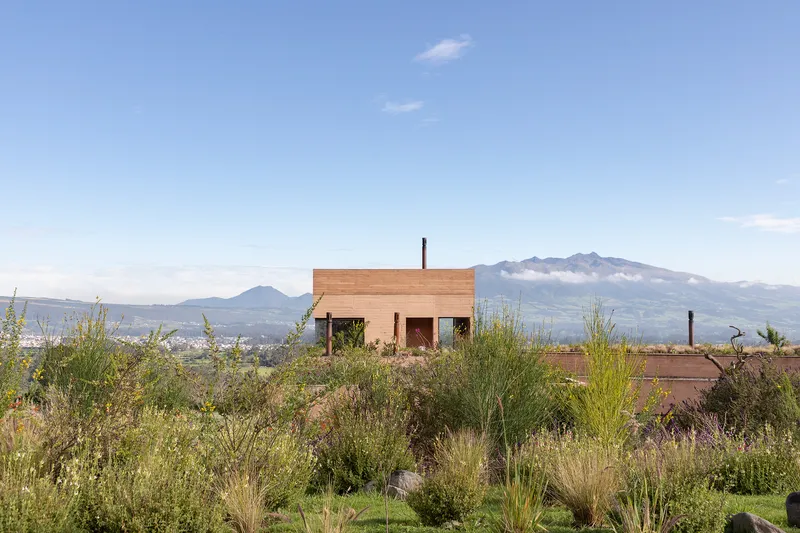
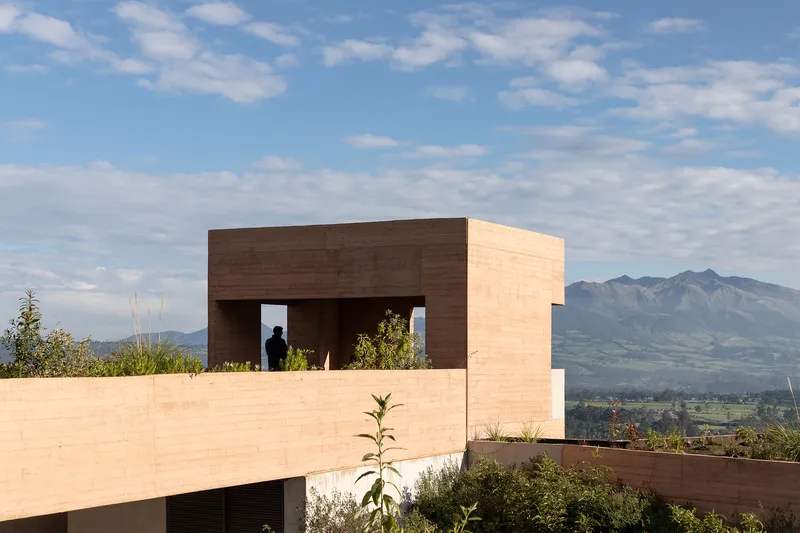
The green roofs are not ornamental. They function as topographic bridges, connecting the covered roof patios and raised rooms to the higher natural slope on the north side of the site. Walk across a planted roof and you step directly onto the hillside. The building dissolves from above: from certain vantage points, only the terrace openings and the upper volume's rammed earth walls announce that there is a house here at all.
One of the most compelling images of the project shows a figure silhouetted in a deep opening cut through the planted roof edge, the valley stretching out behind them. It captures the project's fundamental ambition: to recover human scale within an overwhelming landscape. The opening is just large enough for a person, framing the body against kilometers of terrain. Architecture here is less about shelter and more about calibrating your perception of where you stand in the world.
Interior Spaces: Timber, Concrete, and Framed Views
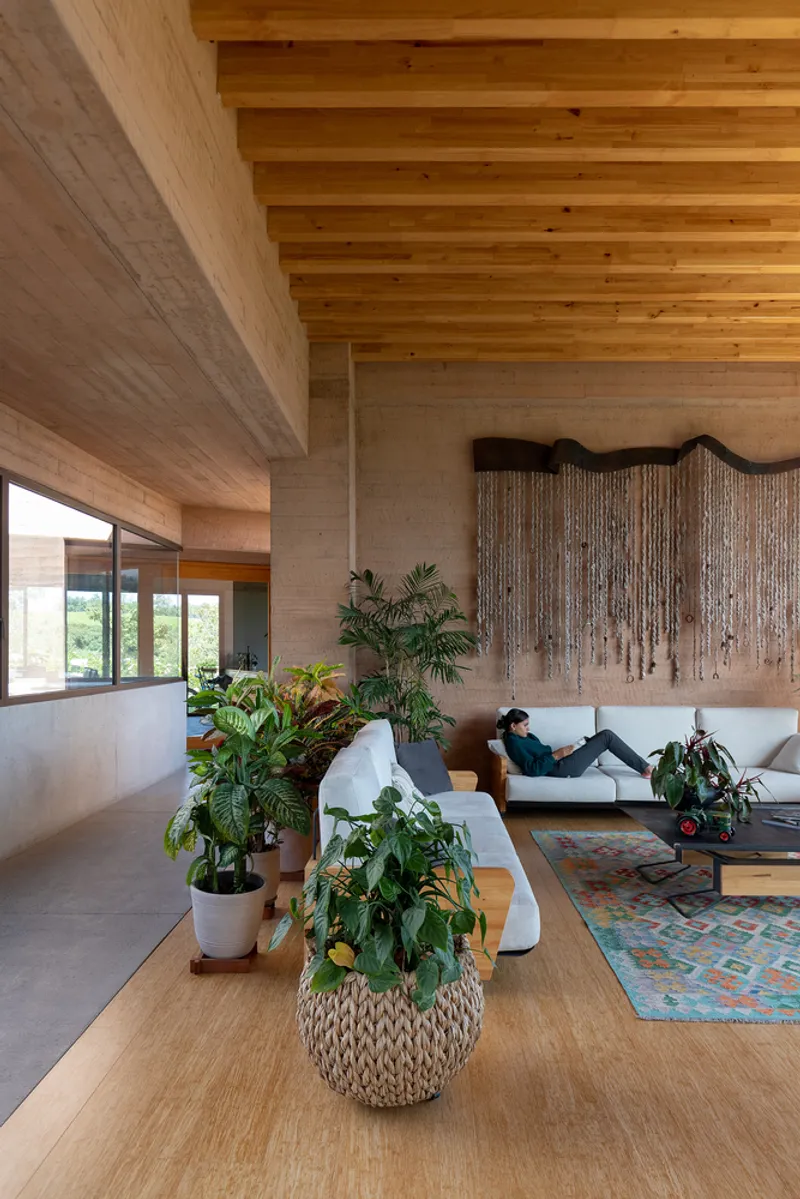
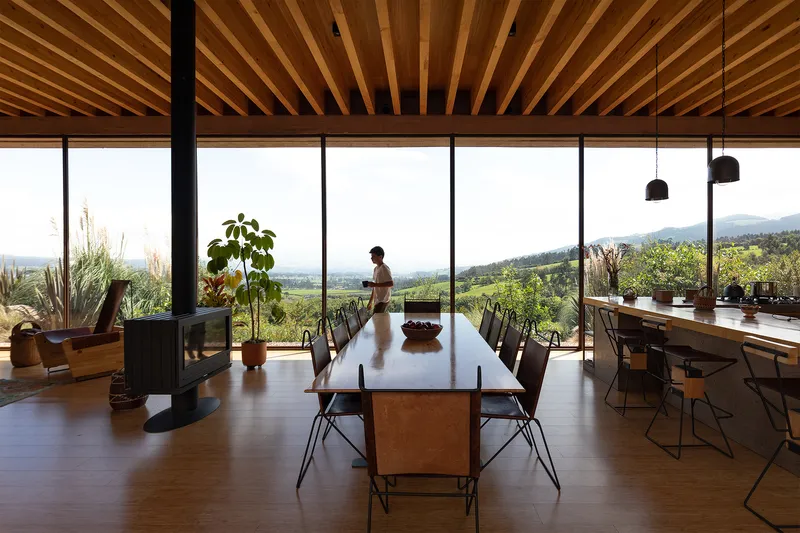
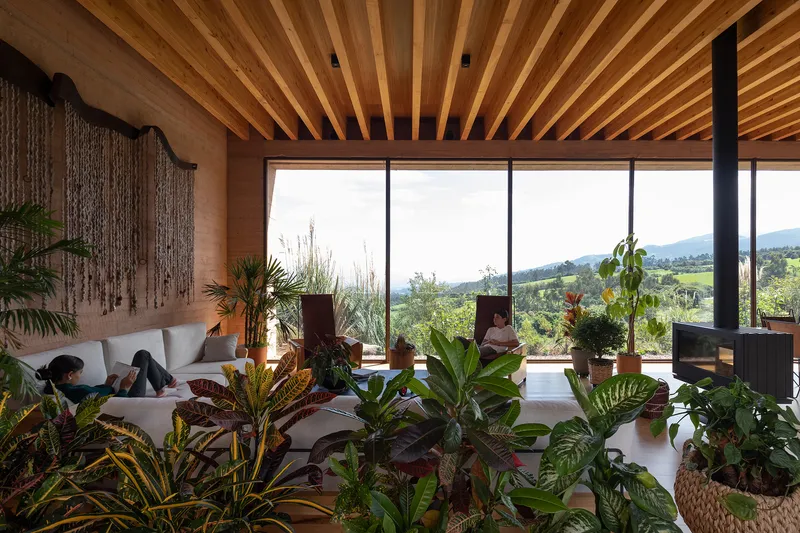
Inside, the material palette is restrained: polished concrete floors, unfinished board-formed concrete walls, and exposed timber ceiling beams and joists. The double-height living space is anchored by the textured concrete walls and warmed by the rhythmic pattern of the timber ceiling overhead. Potted plants punctuate the interior, reinforcing the continuity between inside and out.
The dining room demonstrates the architects' skill with framing. Floor-to-ceiling glazing opens directly onto the landscape, and the striped timber ceiling draws the eye outward, its linear geometry contrasting with the organic curves of the distant hills. Monitor windows and clerestories bring additional light into deeper spaces, ensuring that even circulation zones and stairwells are washed with daylight.
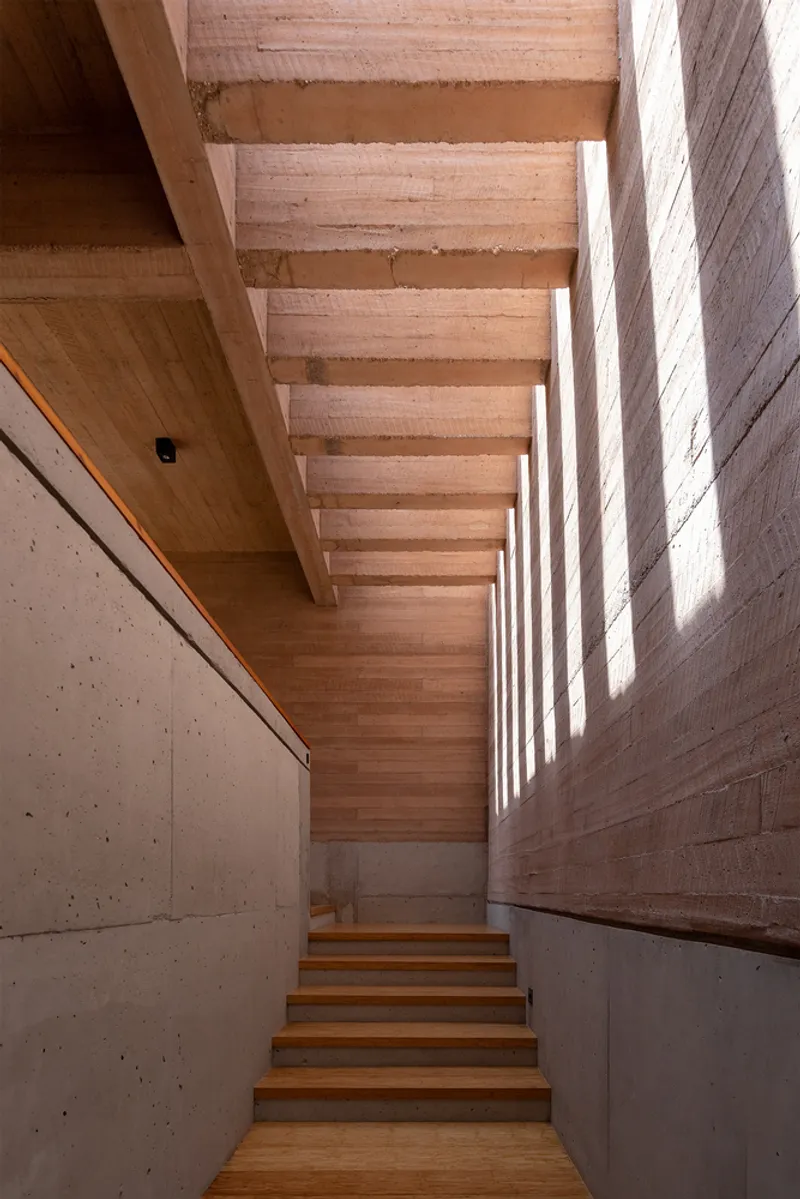
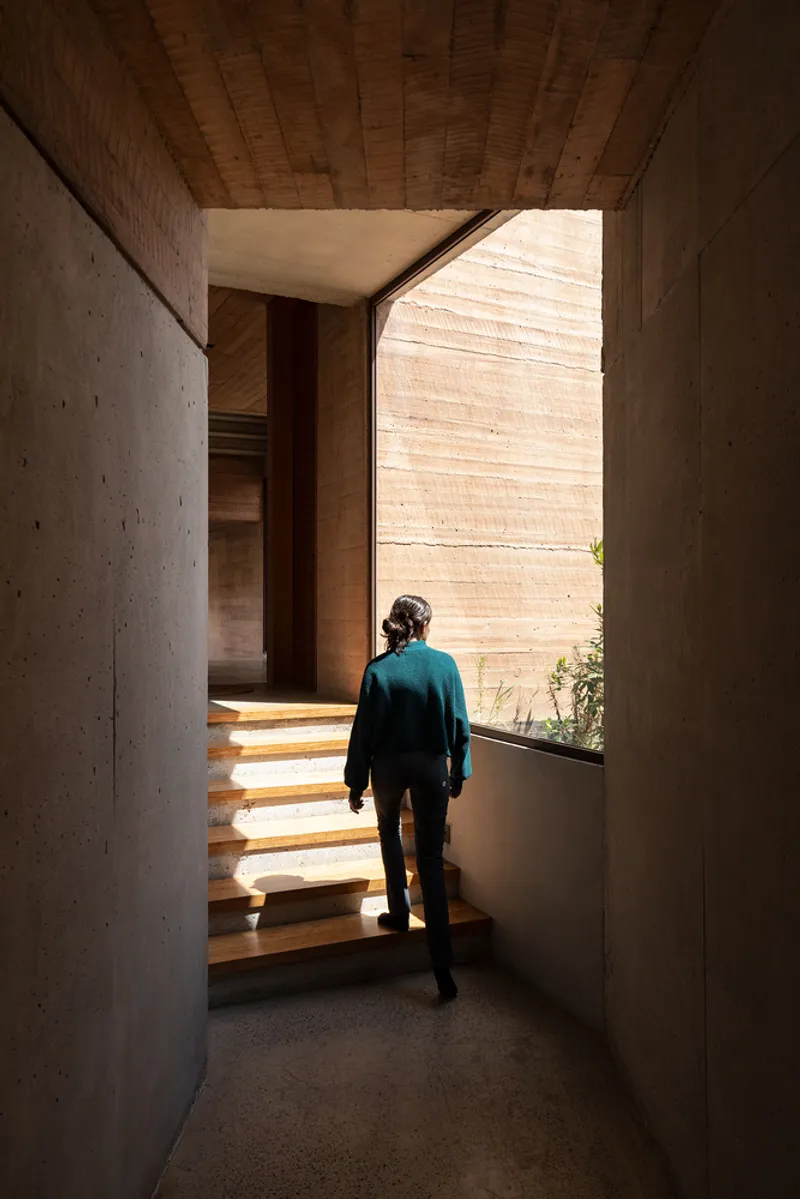
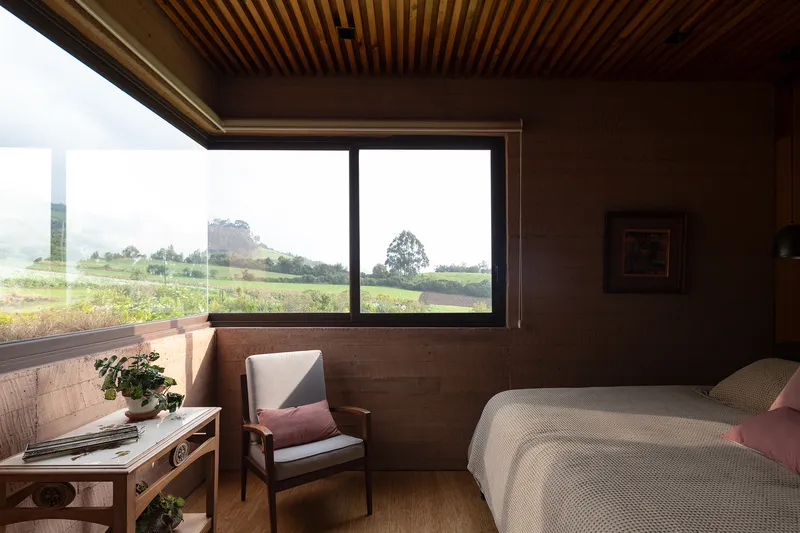
The stairwells deserve particular attention. A timber stair rising between concrete walls catches slotted clerestory light that casts striped shadows down the steps, turning a simple vertical circulation into a moment of focused beauty. Bedrooms are quiet, deliberately understated: rammed earth walls, a slatted timber ceiling, and a single horizontal window that opens onto farmland and distant hills. These are rooms for contemplation, not spectacle.
Thresholds and Moments of Pause
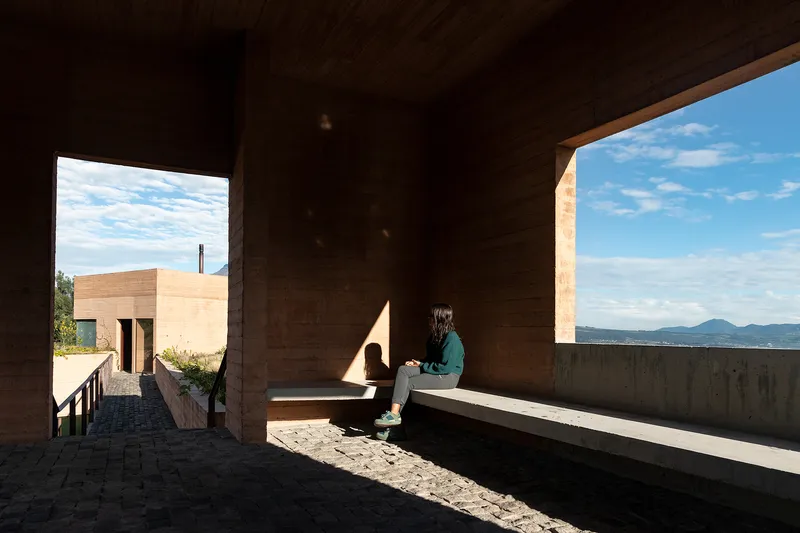
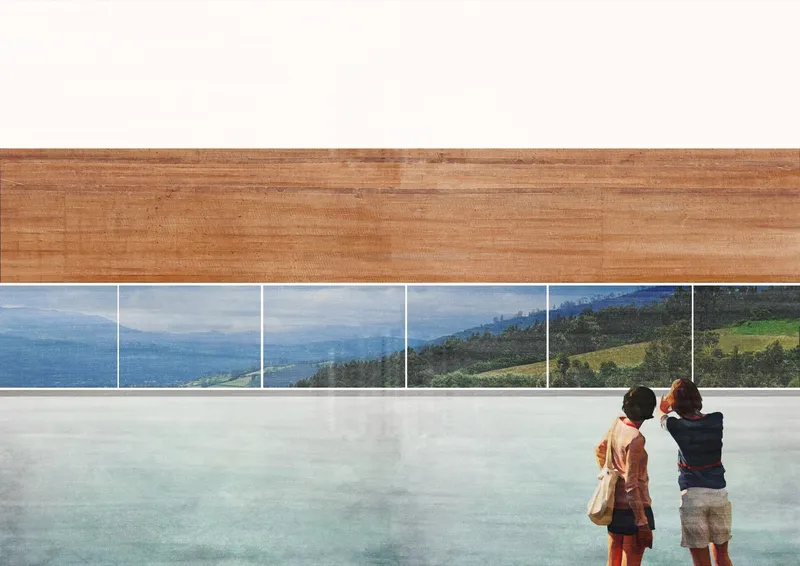
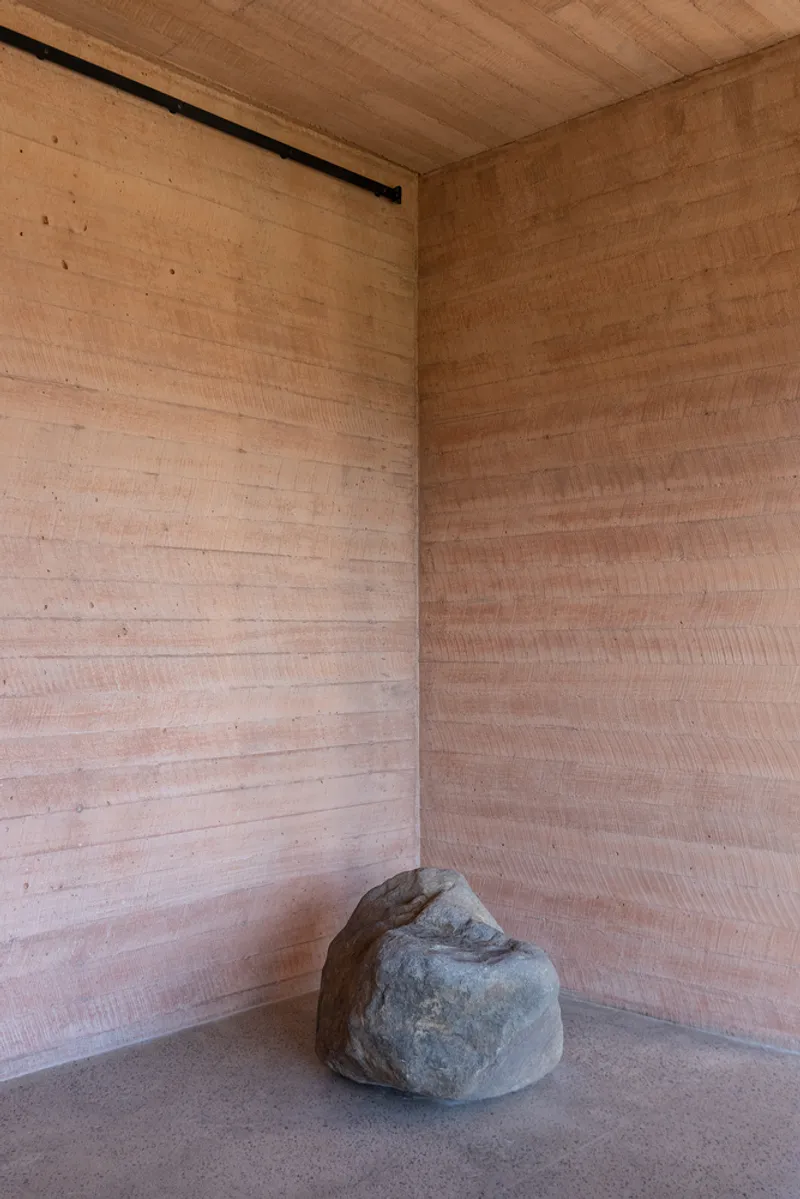
Diez + Muller treat every transition between inside and outside as a designed moment. A covered terrace frames two rectangular openings to the mountains, each one a different composition. Visitors stand at a horizontal window, watching green hills roll away under heavy clouds. In one corner, a single boulder sits on a polished concrete floor, a found object that compresses the entire landscape into a domestic room.
The emotional effect of these thresholds is cumulative. No single view is meant to overwhelm. Instead, the house offers a sequence of carefully proportioned frames, each one asking you to look again, to notice a different ridge, a different quality of light. The architecture becomes a kind of perceptual instrument tuned to its specific place on this specific hillside.
Exterior Connections and the Hillside Landscape
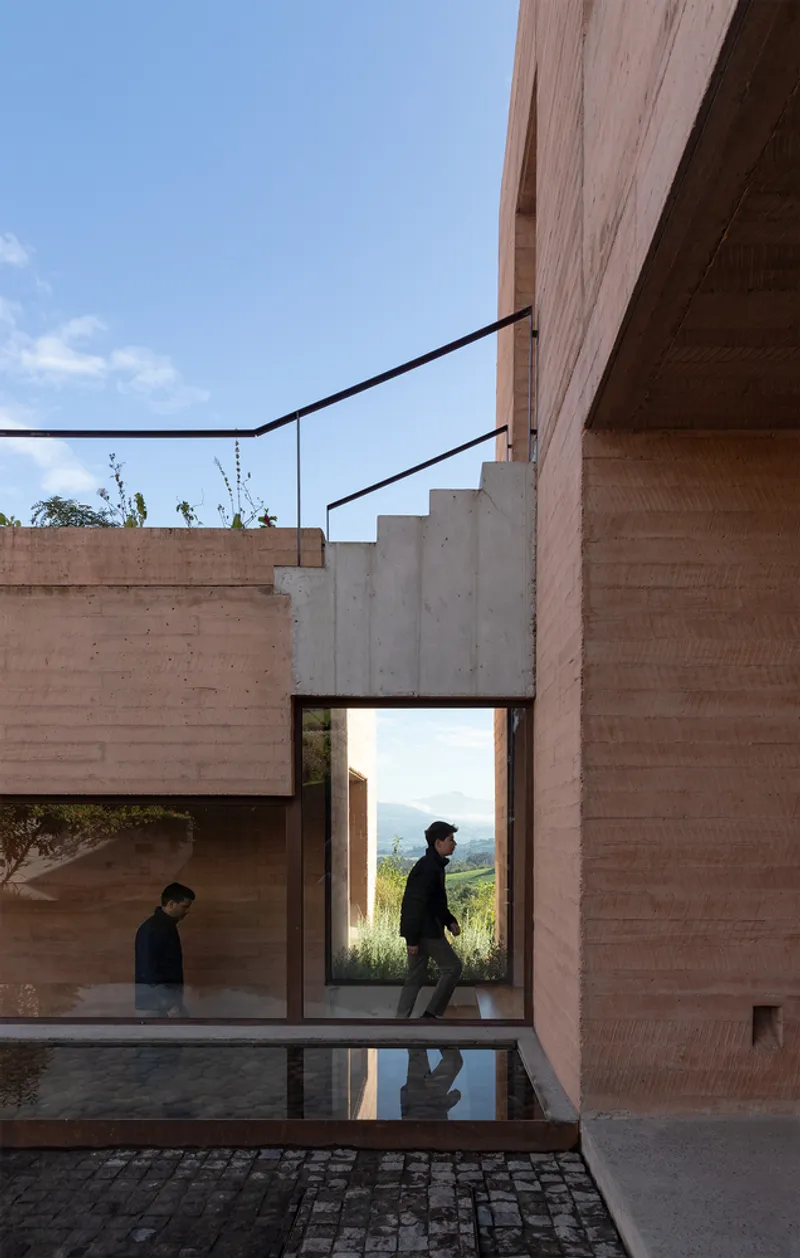
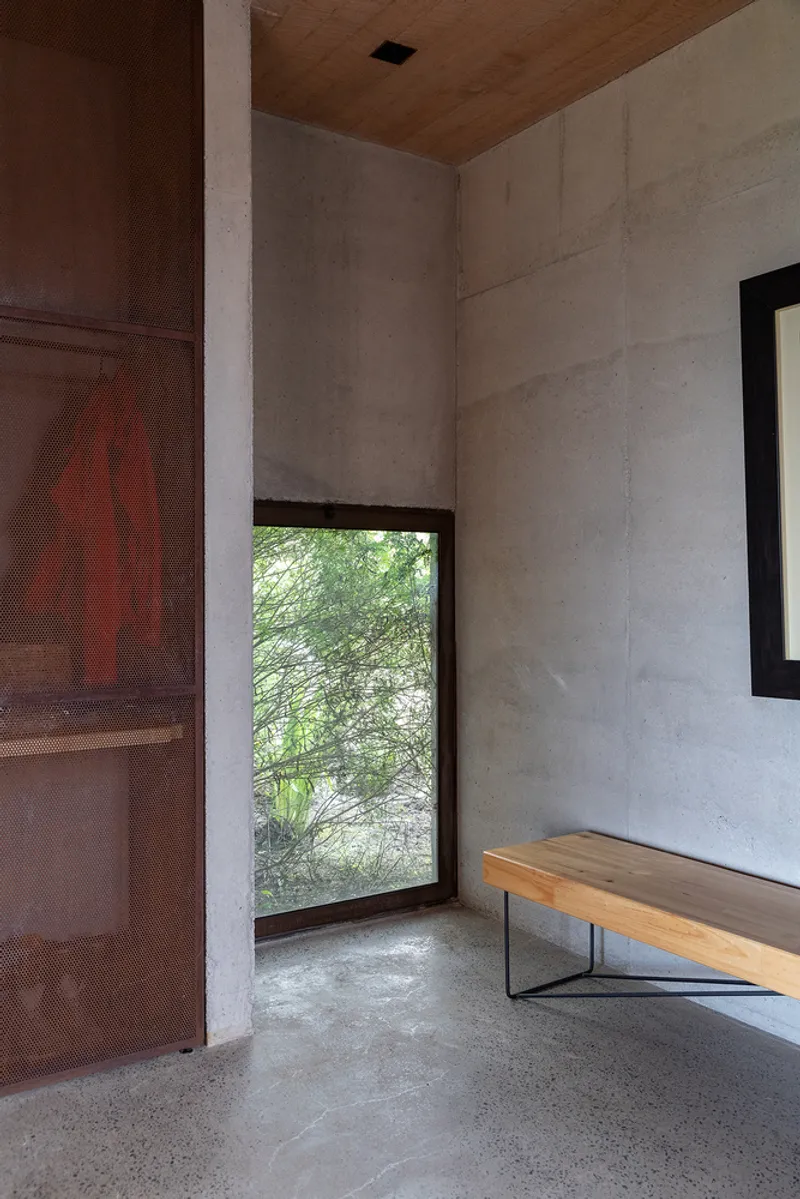
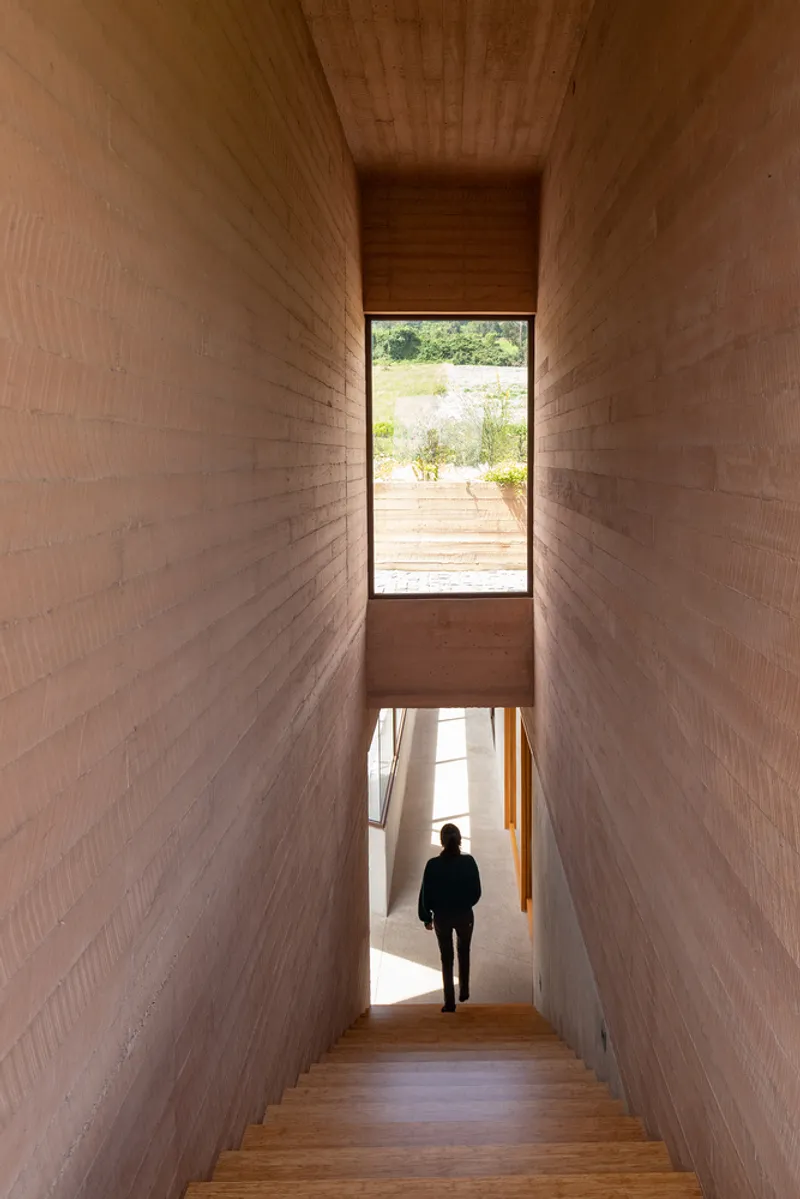
Exterior stairs climb past rammed earth walls while figures move through glazed corridors below. A perforated metal screen at one entry corner filters light and view, creating a sense of arrival that is measured rather than dramatic. A narrow timber-lined stairwell descends toward daylight entering from above, compressing space before releasing it. These connective elements, the stairs, bridges, glazed walkways, and screens, are where the architecture happens. The four volumes are quiet; the spaces between them are alive.
Plans and Drawings
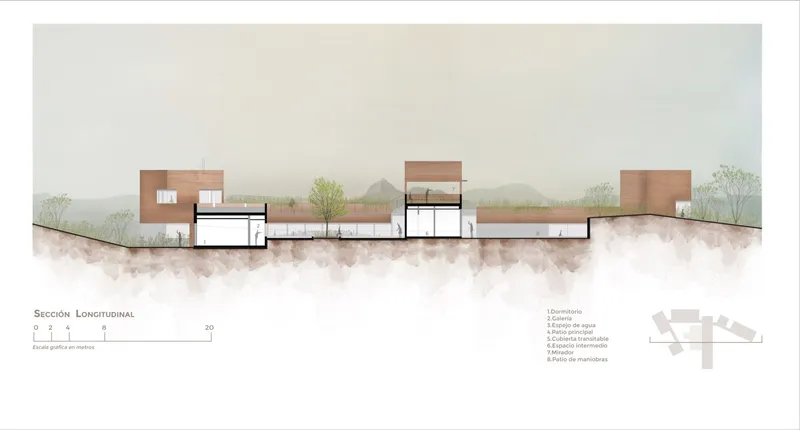
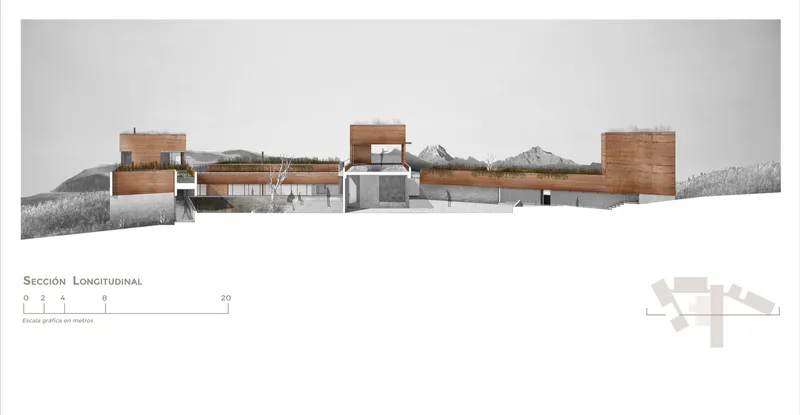
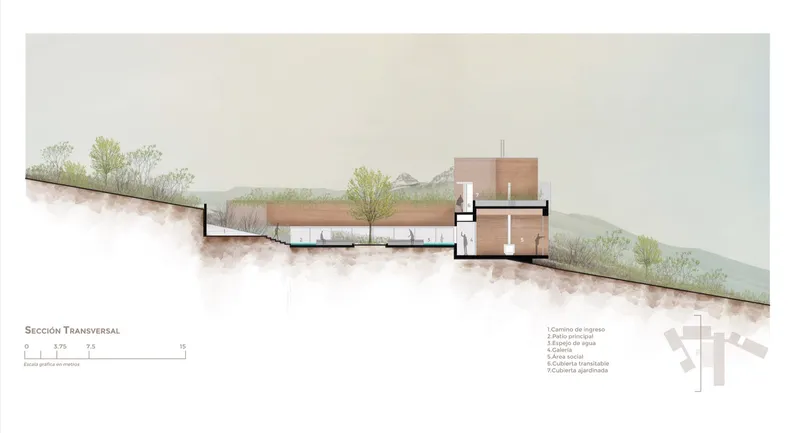
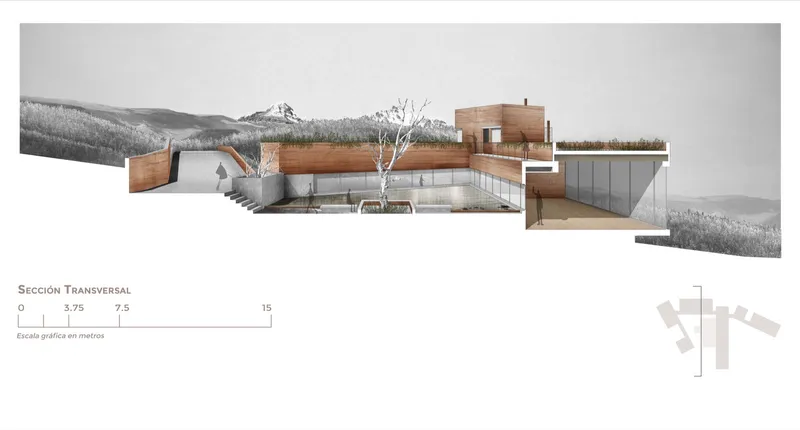
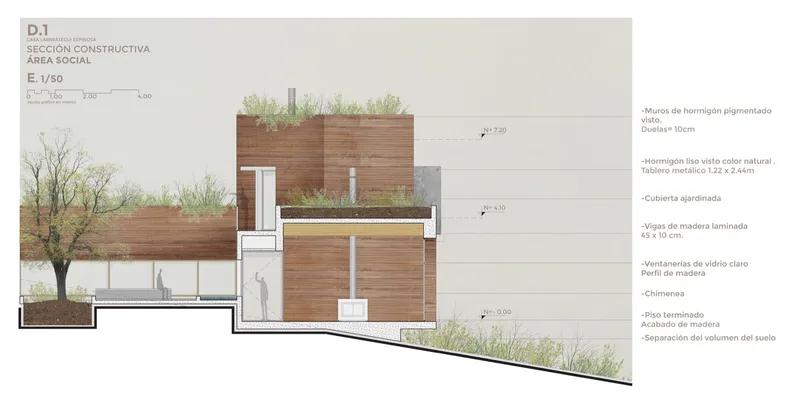
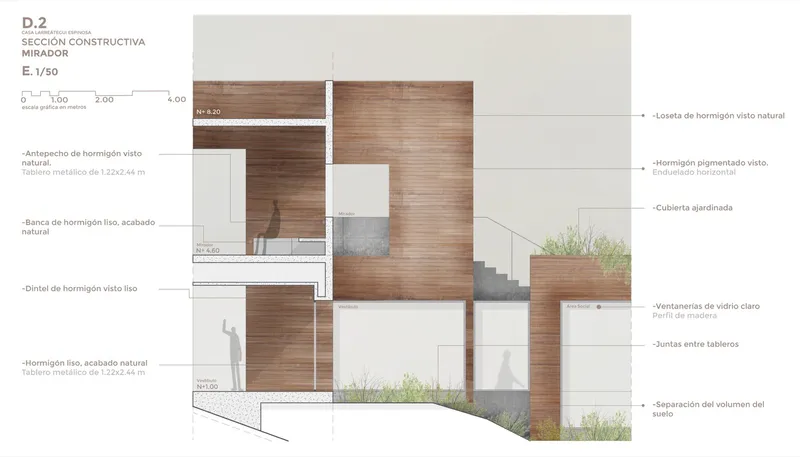
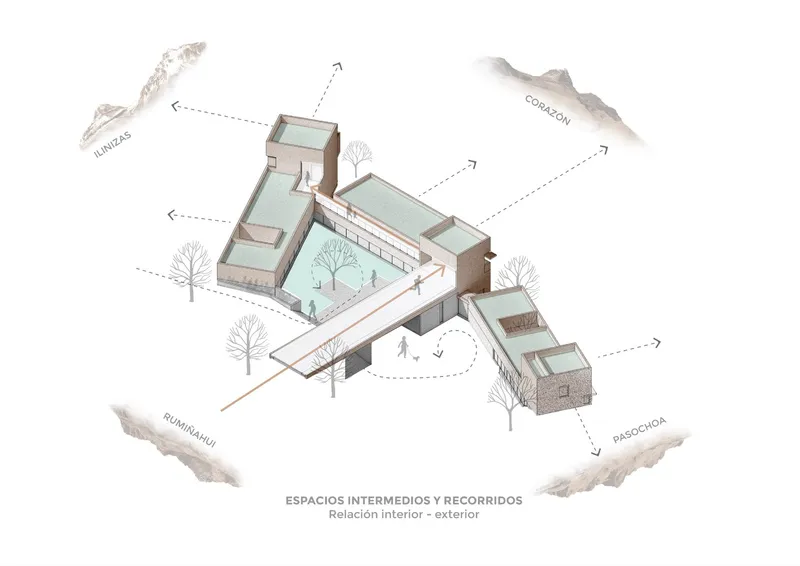
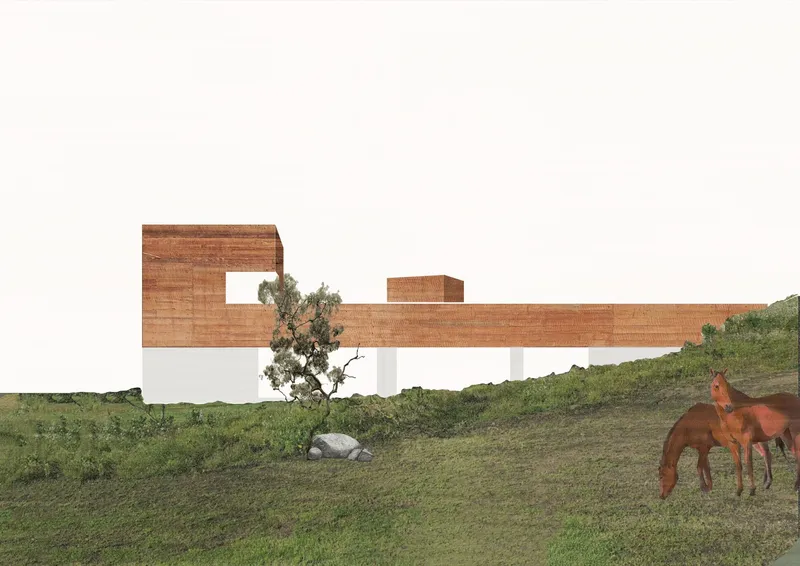
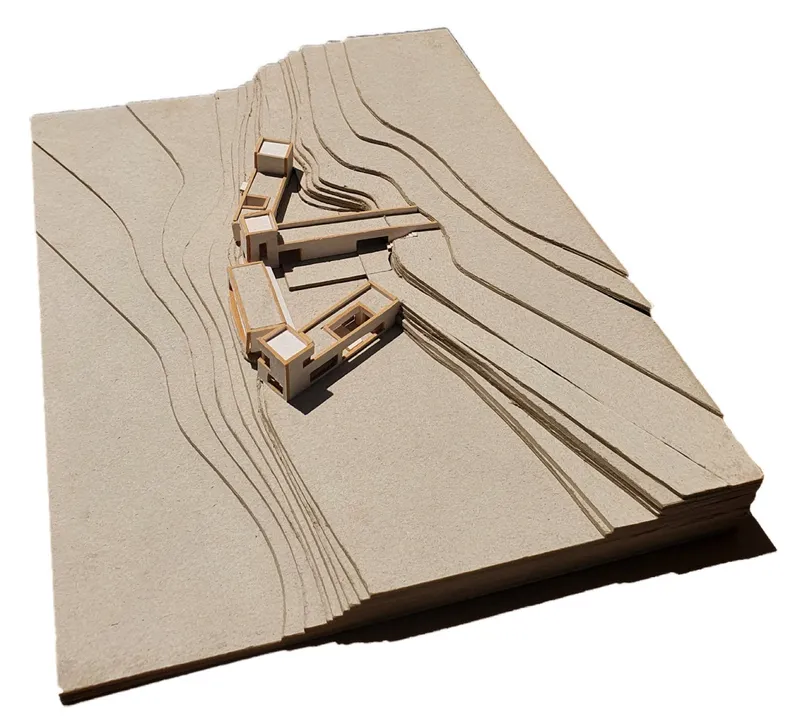
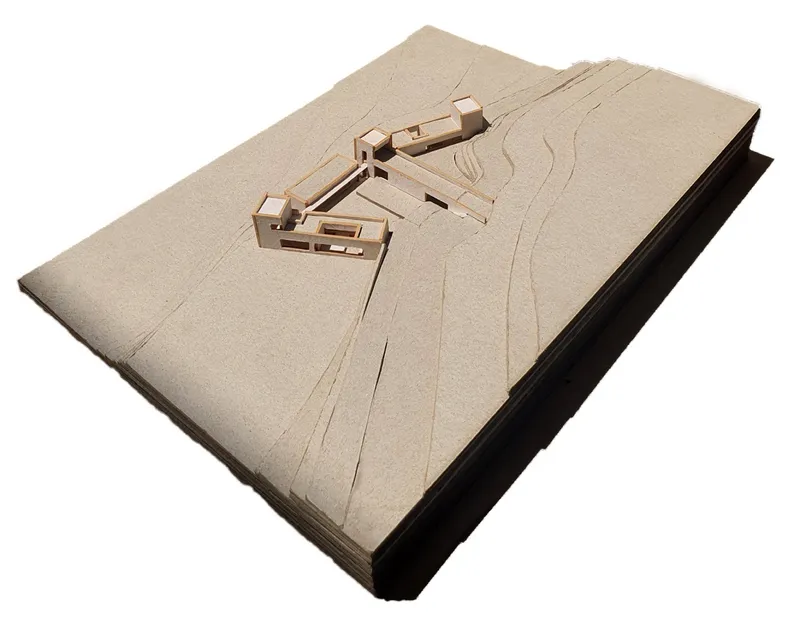
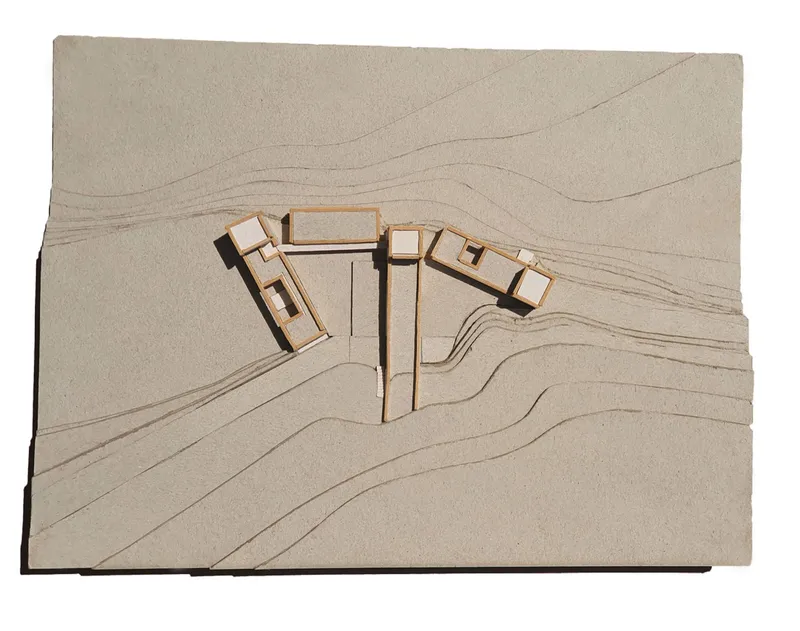
The longitudinal sections reveal how the multi-level complex steps down the hillside, each volume finding its own relationship to the terrain while timber-clad roofs maintain a rough visual continuity. Transverse sections expose the subterranean spaces carved into the slope, with central courtyards acting as light wells. The construction details are instructive: timber cladding layers over concrete floor plates, planted roof assemblies, and glazed openings are all rendered with enough precision to understand the building's tectonic logic.
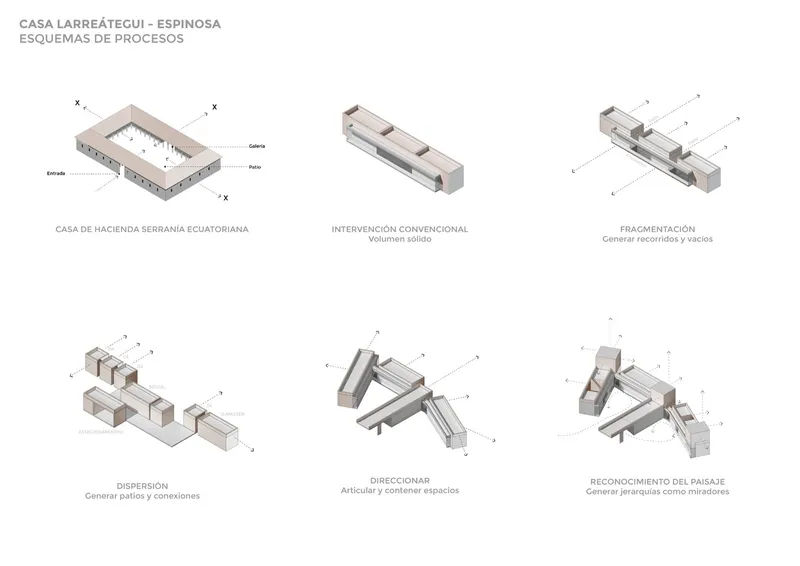
The isometric sequence is especially revealing, illustrating the design process from a single existing volume through fragmentation, rotation, and articulation into the final fanned arrangement. The axonometric shows courtyard plantings and circulation paths linking the dispersed volumes, confirming that the in-between spaces were designed with equal care. Physical site models, with their carved contour lines, make visible the topographic strategy that drawings alone can only suggest.
Why This Project Matters
Mountain architecture has a persistent problem. Designers either ignore the terrain, producing objects that sit on the landscape like dropped cargo, or they defer to it so completely that the architecture disappears into gesture. The Pasture House does neither. By fragmenting the program into four oriented volumes and investing the residual spaces with as much design attention as the rooms themselves, Diez + Muller have created a house that is legible as architecture while remaining subordinate to its site. The green roofs that literally reconnect the building to the slope above are not just ecological features; they are the conceptual heart of the project.
What will be worth watching is how the house ages. Board-formed concrete weathers. Planted roofs thicken. Trees grow. The architects have designed a building that is intended to become less visible over time, not more. In an era when residential architecture is increasingly designed for the photograph, The Pasture House is designed for the walk through, for the slow revelation, for the moment you round a concrete wall and the entire valley opens up in front of you. That takes confidence, and it takes a genuine understanding of what it means to build in a landscape that will always be bigger than anything you put in it.
The Pasture House (Casa El Pastizal) by Diez + Muller Arquitectos, Machachi, Ecuador. Completed 2023. Photography by JAG Studio.
About the Studio
Share Your Own Work on uni.xyz
If projects like this are the kind of work you want to make, uni.xyz is a place to publish your own, find collaborators, and enter design competitions.




Popular Articles
Popular articles from the community


The Earth Pod: 3D Printed Homes for Resilient Refugee Communities
The Earth Pod reimagines refugee housing through 3D printed homes made from clay, combining resilience, self-sufficiency, and rapid shelter.

Riyadh For All: Intergenerational Urban Design for Active Aging in Rabat
Riyadh For All reimagines urban design in Rabat with intergenerational co-living, adaptive courtyards, and Moroccan cultural exchange today.

Hill & Cross Opera: Sculptural Opera House Architecture Shaped by Tallinn’s Landscape and Identity
Hill & Cross Opera reimagines opera house architecture in Tallinn through its sculptural hill, civic plaza, glass wave and a luminous cross.

Co-life: Sustainable Architecture for Age-Friendly Community Living
Co-life reimagines sustainable architecture for seniors through courtyards, rammed earth, shared gardens, and spaces designed for belonging.


Similar Reads
You might also enjoy these articles

Bamboo Housing Challenge 2026: Design Affordable, Sustainable Homes Using Bamboo
An international design competition by Bamboo U and IBUKU inviting architects and designers to reimagine affordable housing using bamboo — with the winning design built full-scale in Bali.

Computational Design & Education: Beegraphy Design Awards Introduces 7th Category (Featuring Jiyun's Innovative Approach)
Dive into Beegraphy’s 7th Design Awards category, where computational design meets education to create immersive, interactive learning tools, inspired by Jiyun’s work.

From Parametric Lighting to Urban Furniture: Join the 2nd Workshop in Beegraphy’s Computational Design Series
Dive into Cutting-Edge Design Techniques and Practical Applications with Industry Experts

Last Call: Unleash Your Architectural Genius in SHAK's Kindergarten Design Competition
Urgent call for architects to join SHAK's kindergarten design competition before the looming deadline

Explore Architecture Competitions
Discover active competitions in this discipline



Challenge to reimagine the Iron Throne


Photograph architecture without architects


Illustrate the lost glory of Angkor Wat - Render Challenge


Design challenge to reuse E-waste
Comments (0)
Please login or sign up to add comments
No comments yet. Be the first to comment!