
Mugok Recovers What Hospitality Lost
100A associates carve a contemplative retreat into a South Korean mountain valley where concrete, corten steel, and timber slow time to a crawl.

Most hospitality projects sell departure: leave your life, enter ours. Mugok, designed by 100A associates and completed in 2024 in the mountain valley of Muju-gun, South Korea, refuses that transaction. Instead of staging luxury as spectacle, lead architects Sol-ha Park and Kwang-il An have built an 842-square-meter compound that operates more like a spatial ritual, a sequence of thresholds, courtyards, and chambers designed not for escape but for reorientation. The result is an architecture that treats slowness as a structural principle rather than a marketing promise.
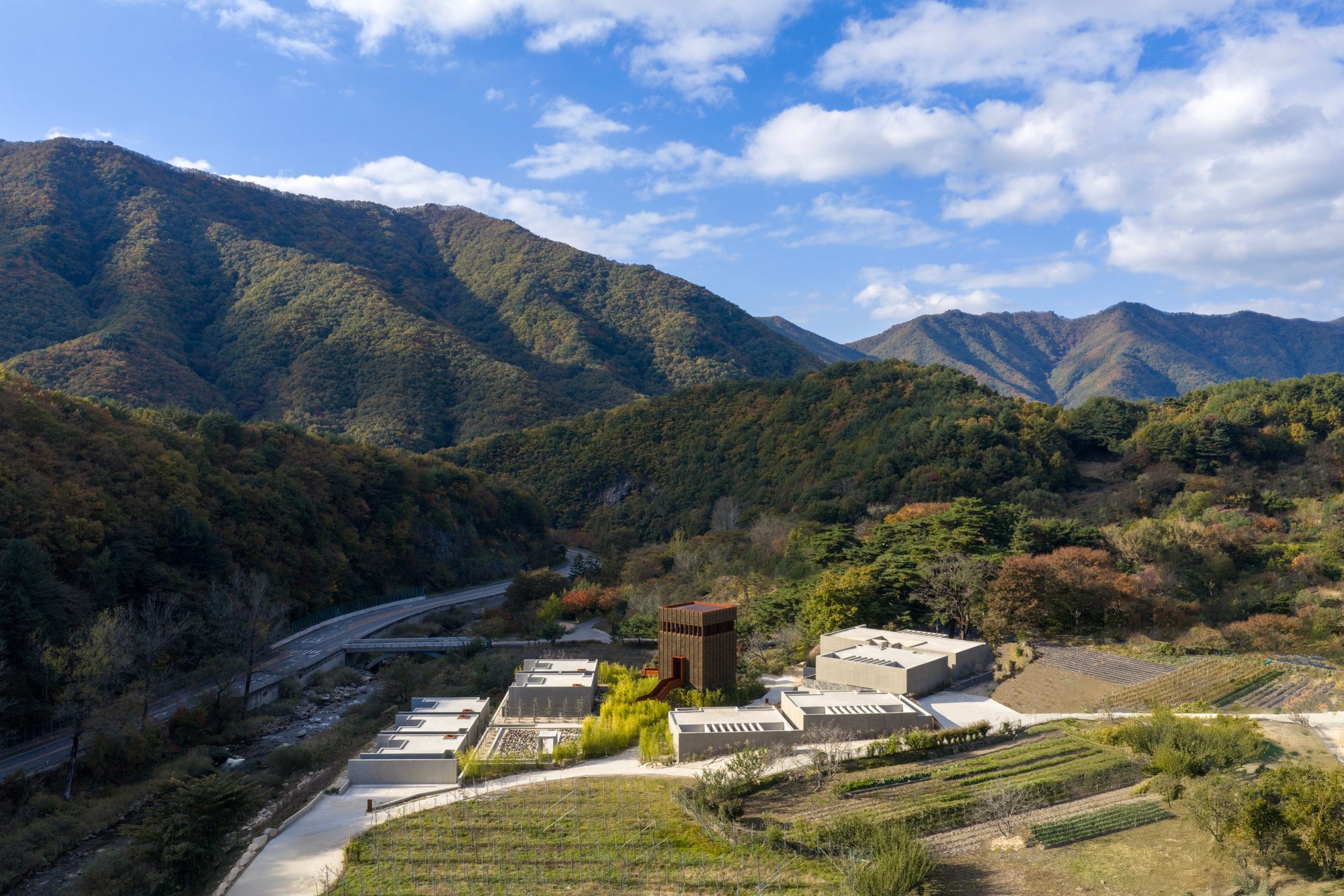
Nestled between forested hills and a winding river, the compound reads from above as a cluster of pavilions gathered around interlocking courtyards. On the ground, the experience is entirely different: tightly framed views, heavy material surfaces, and a choreography of light that turns every corridor into a threshold. Mugok belongs to a rare category of hospitality architecture where the building itself is the primary offering, not the thread count.
Rooted in the Valley
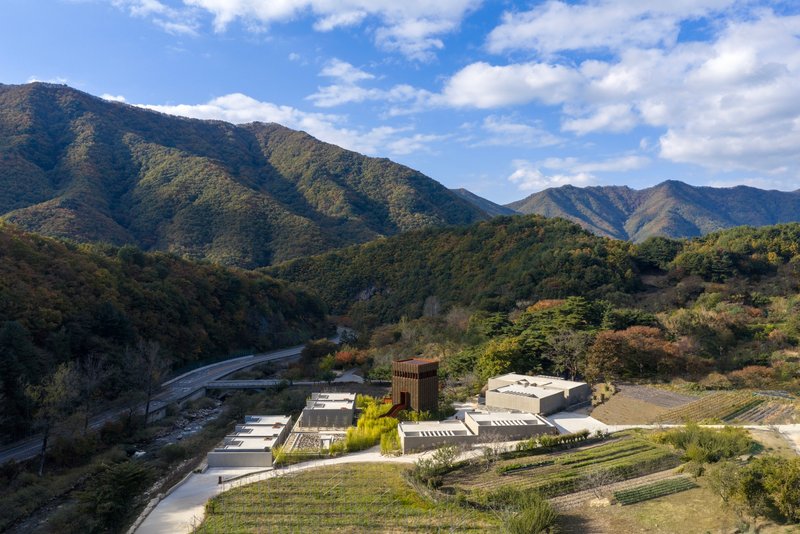
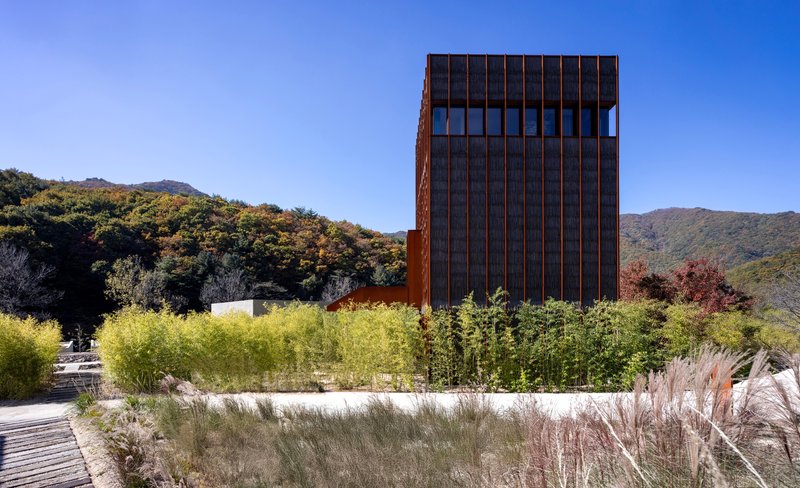
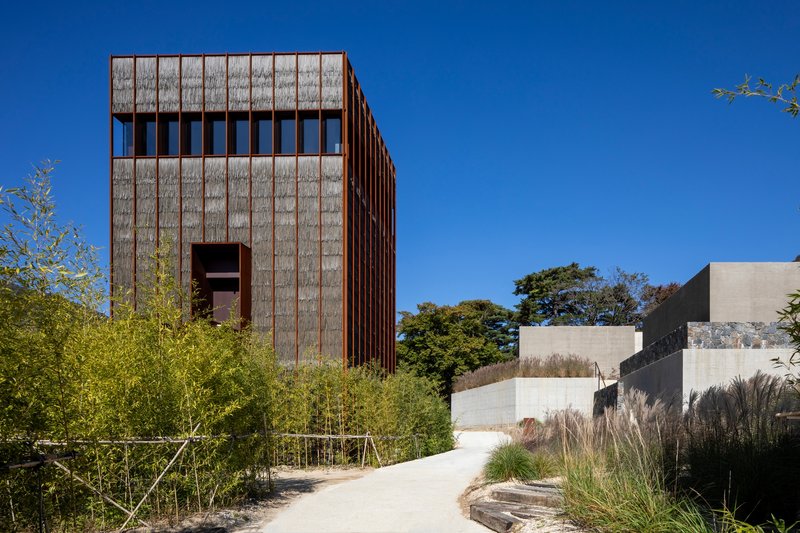
The aerial view tells you almost everything about the architects' ambitions. The compound does not sit on the landscape so much as settle into it. Terraced gardens step down toward the river, and the buildings' low profiles defer to the surrounding ridgeline. From a distance, the corten steel tower is the only vertical assertion, a rusted beacon emerging from native grasses and planted beds that signal arrival without shouting.
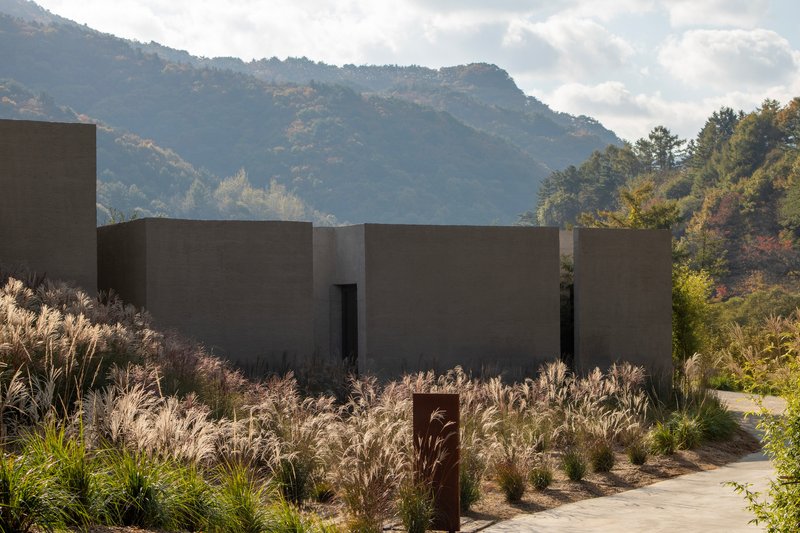
Concrete volumes at ground level maintain this posture of restraint. Their door openings punctuate the hillside like cave mouths, and the mountains fill every gap between walls. There is a deliberate refusal to compete with the topography. The architecture frames the valley instead of performing against it.
A Palette of Weight
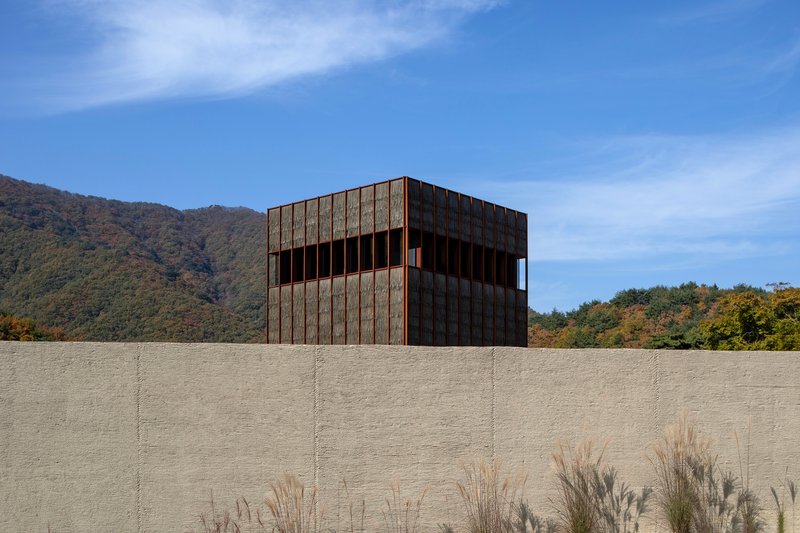
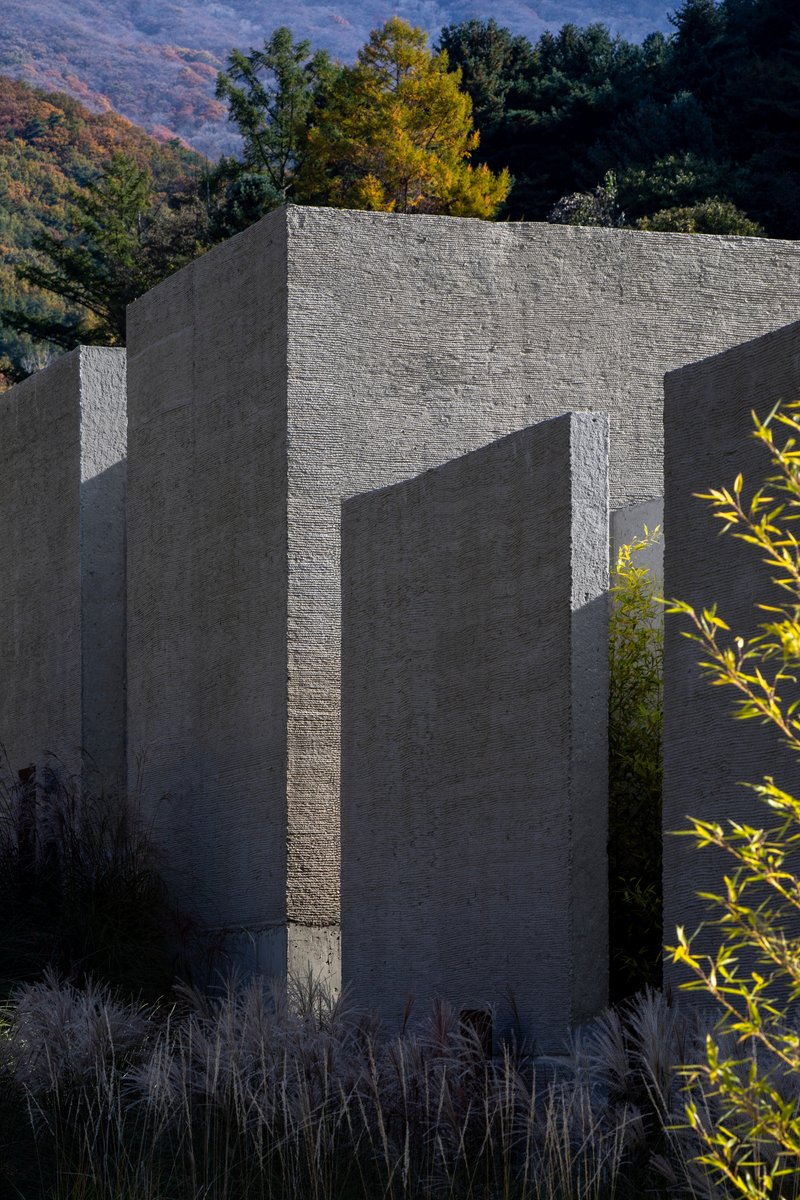
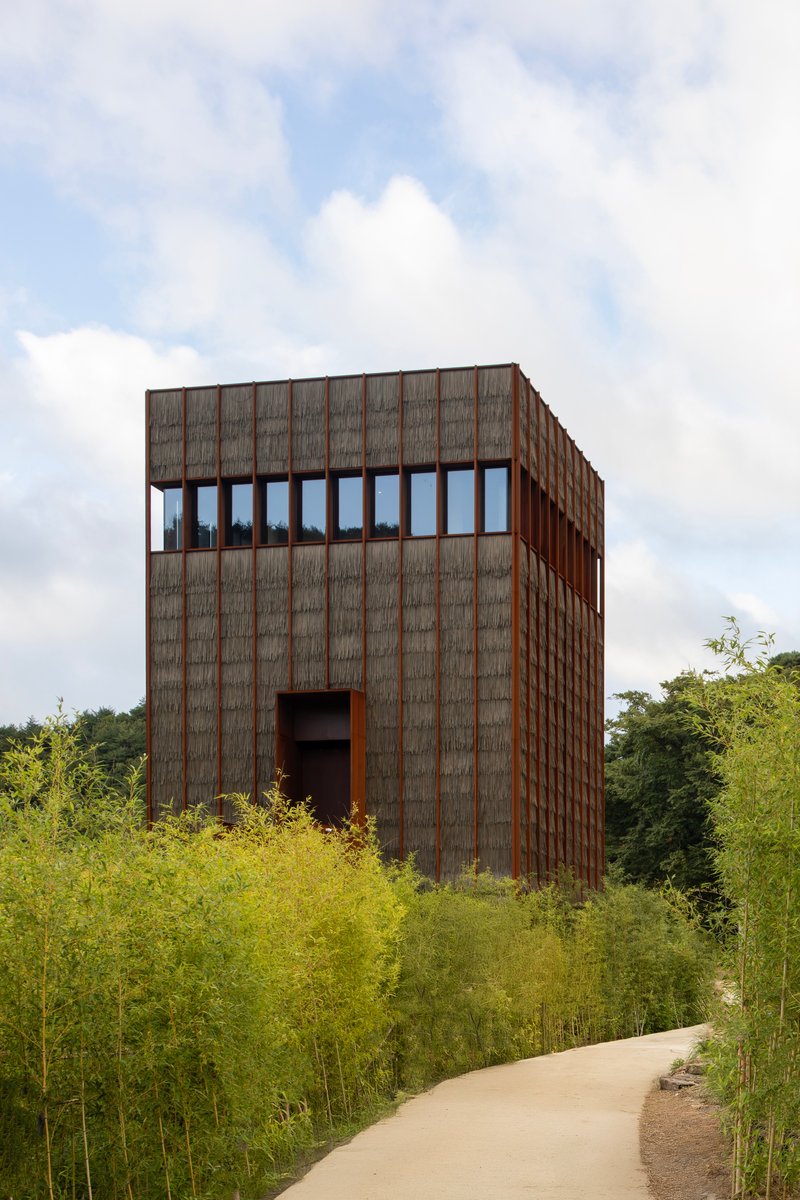
100A associates have assembled a material palette that feels geological. Weathered steel sits above textured concrete retaining walls, both surfaces registering time and weather in their patina. Vertical timber battens clad certain volumes with a lighter, more fibrous texture, but even the wood has been allowed to weather, its surface silvering against the foliage. The clerestory band of windows on the timber volume is a precise incision: enough glazing to admit light, not enough to dissolve the wall's solidity.
What unifies these materials is their refusal to be pristine. Concrete is board-formed and left exposed. Steel oxidizes. Wood grays. The architecture ages alongside its setting, which is a significant commitment for a hospitality project, where owners typically demand eternal freshness. Here, entropy is part of the design language.
Thresholds and Framed Passages
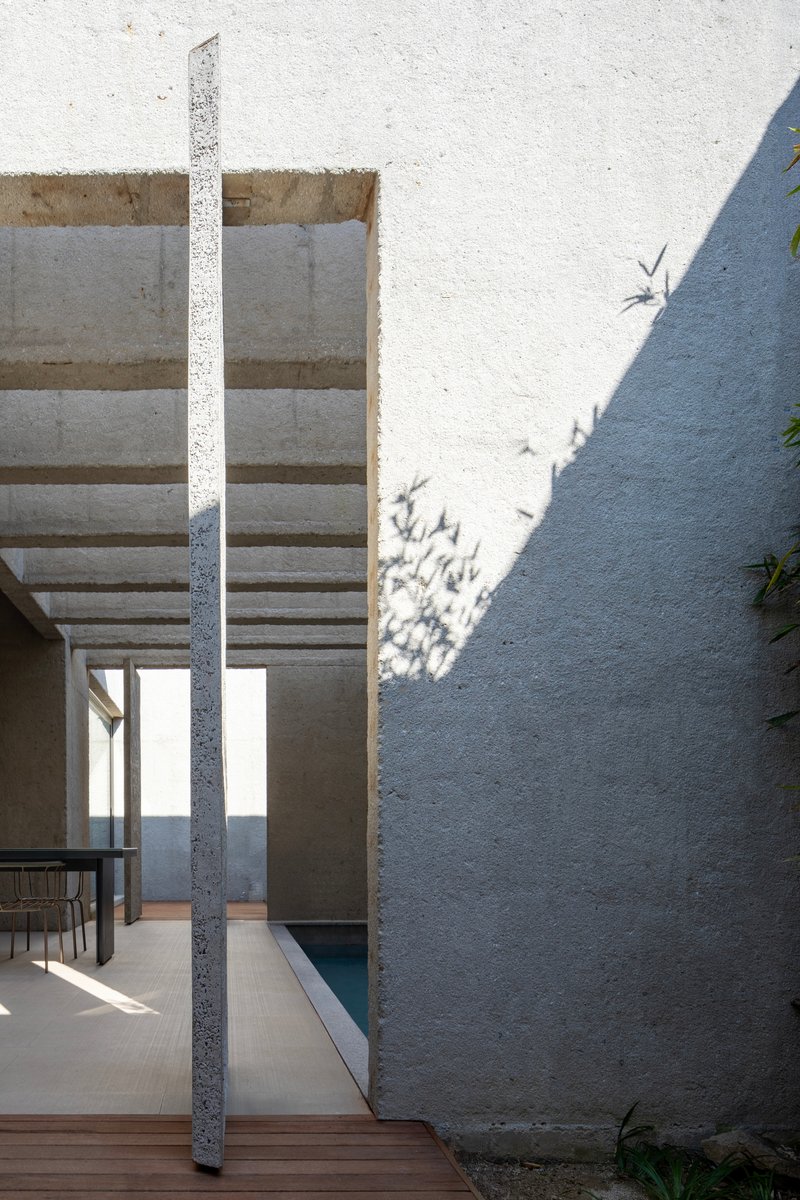
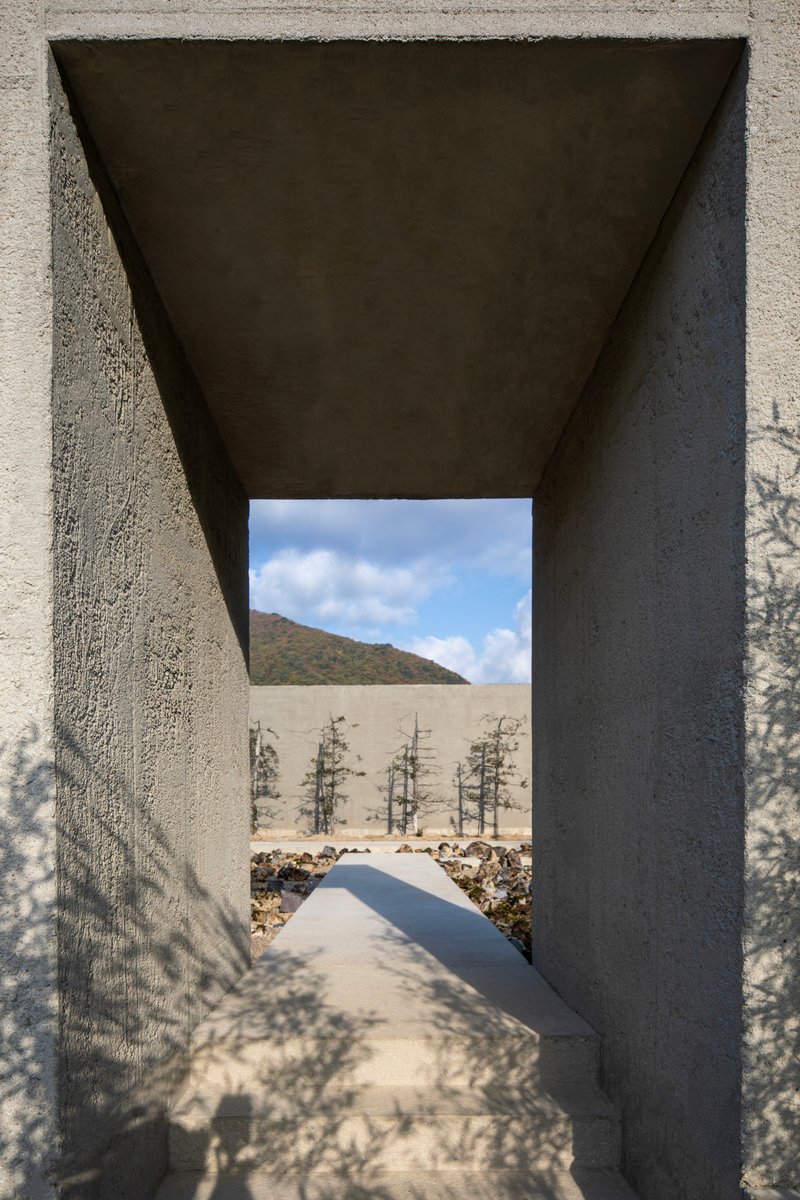
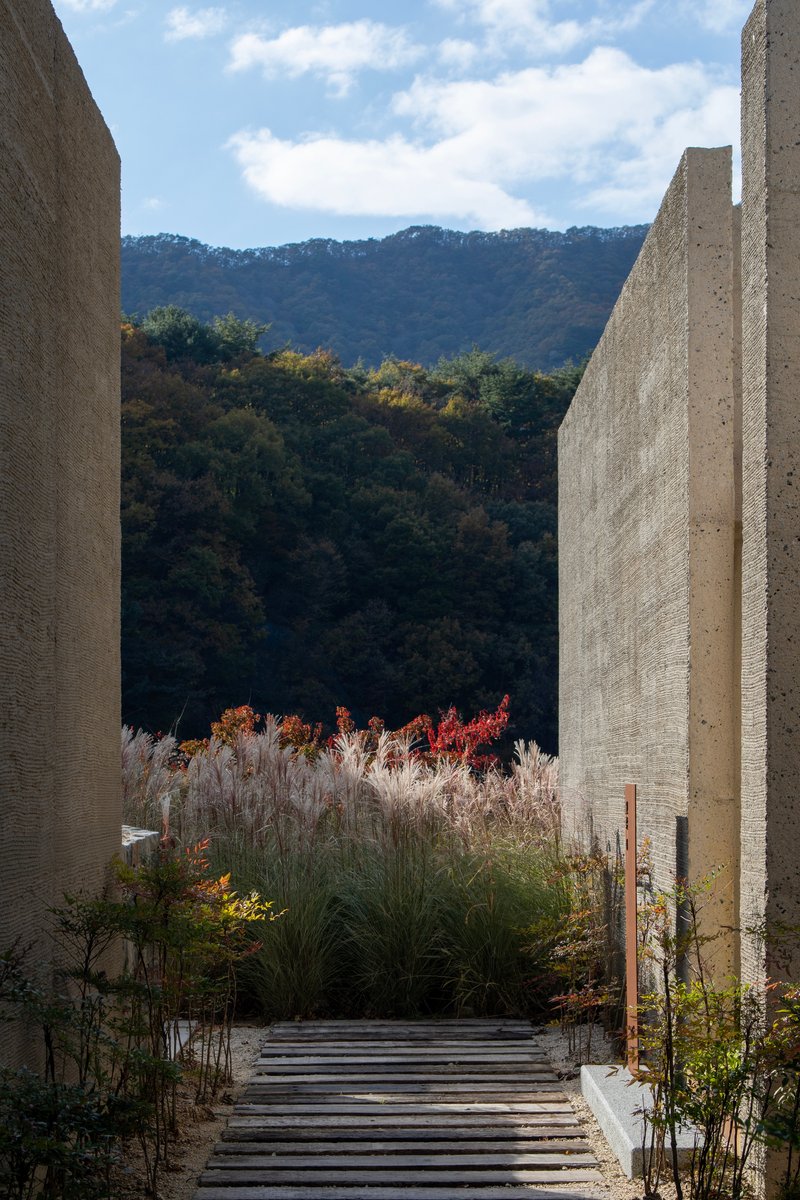
The architecture is experienced as a series of compressions and releases. A slatted concrete pergola casts crisp shadow lines onto a white stucco wall, signaling transition. A tapered concrete portal narrows the view to a single lane of young trees and distant hills. Between textured concrete walls, a planted courtyard appears as a centered composition with the forested mountains beyond. Each passage calibrates your attention before delivering the next view.
This is not decorative scenography. The thresholds function architecturally, modulating scale and light so that arrival at each courtyard or room carries a sense of discovery. Sol-ha Park and Kwang-il An clearly understand that the space between rooms matters as much as the rooms themselves.
Courtyards as Organizing Logic
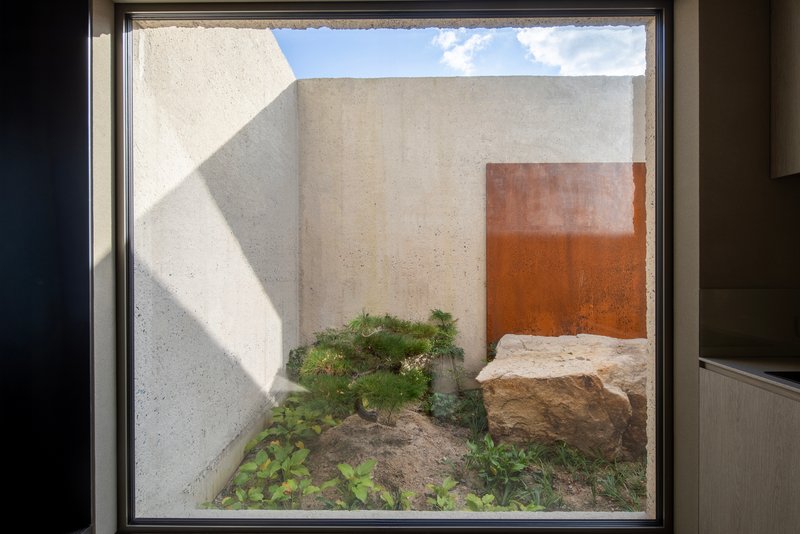
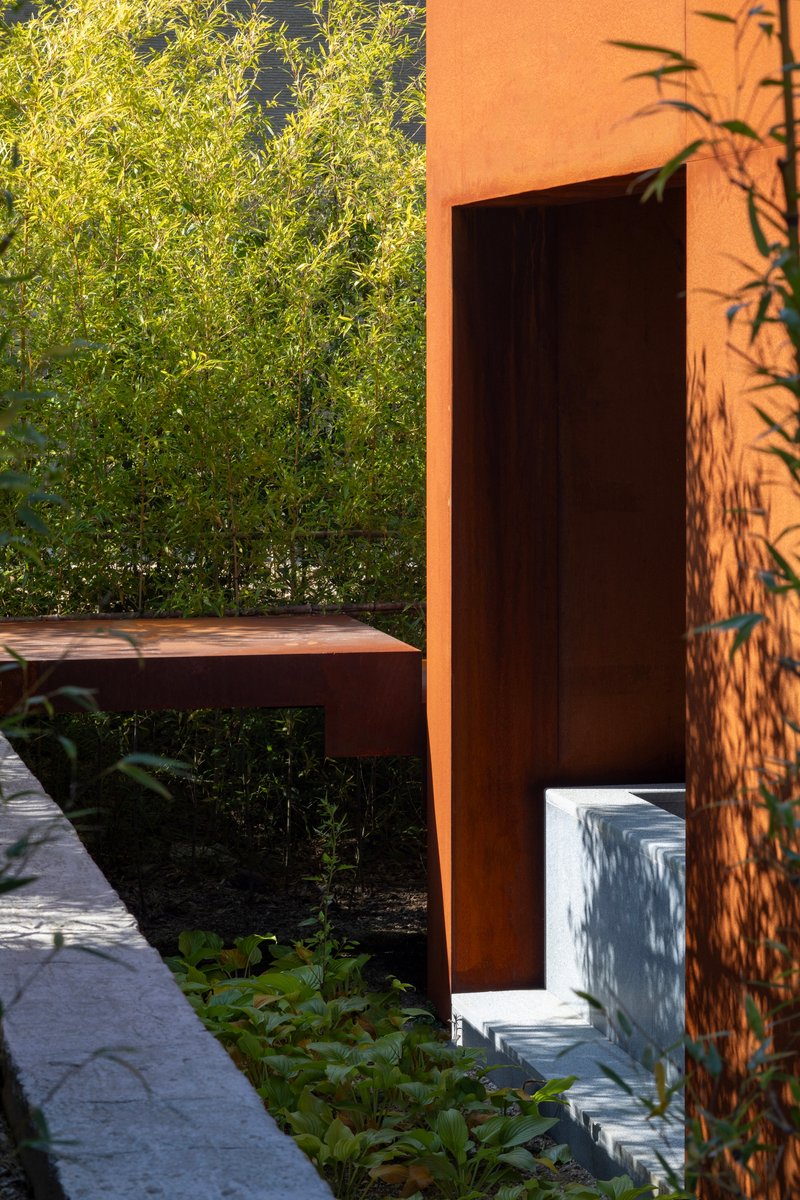
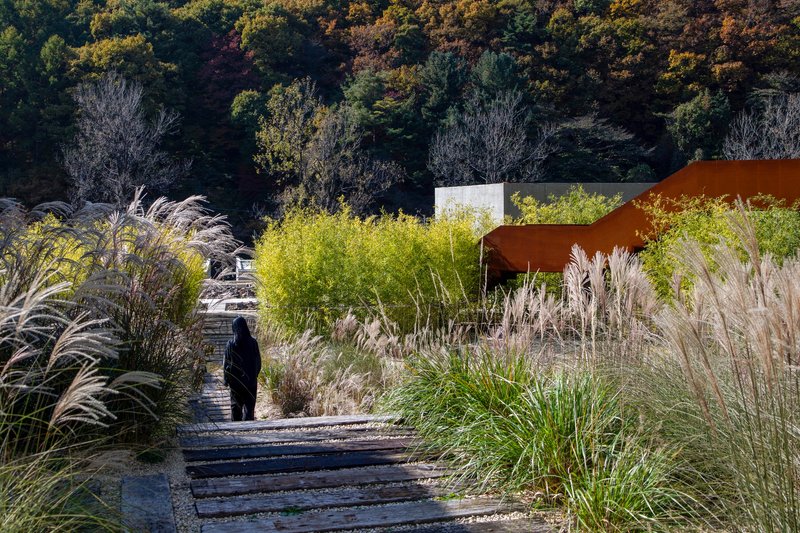
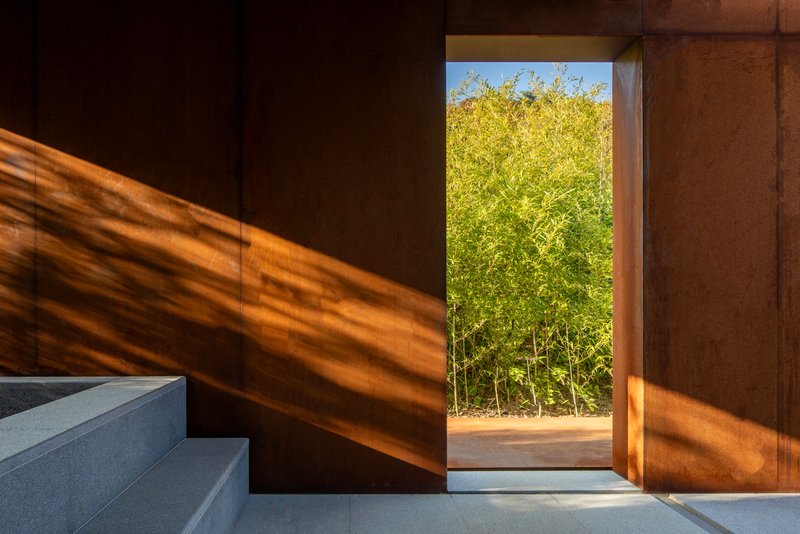
The courtyards are not leftover spaces between buildings. They are the project's primary organizing logic: each one calibrated with a distinct character. One frames a limestone boulder against a weathered steel panel and planted greenery, reading almost as an installation. Another reveals a bamboo grove through a rusted steel doorway, afternoon shadows stretching across the stucco. The timber decking pathway through planted grasses, with a figure walking toward the corten canopy, shows how these outdoor rooms function at the scale of the body.
By fragmenting the program into pavilions connected by courtyards, the architects avoid the corridor hotel typology entirely. Movement through Mugok is always partially outdoors, always contingent on weather and season. The compound breathes.
Interior Rituals of Water and Light
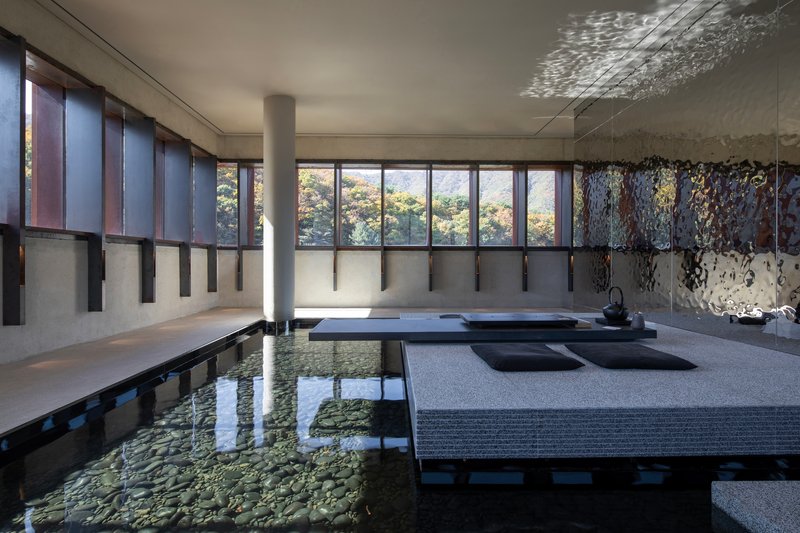
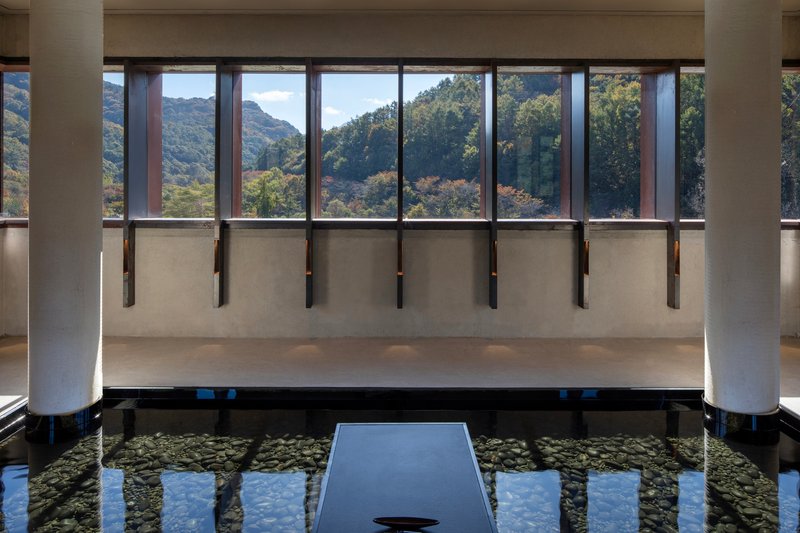
Water appears throughout the interiors as both surface and program. A reflecting pool with raised seating platforms sits beneath a glazed clerestory, dappled light playing across the ceiling in a constantly shifting pattern. Elsewhere, a pool chamber opens through ribbon windows toward the forested hills, its concrete beam mullions subdividing the panorama into vertical strips. These are meditative spaces where the architecture choreographs the act of being still.
The interior view through rusted steel walls toward a framed bamboo grove continues the threshold logic outdoors. Even within enclosed spaces, the architects maintain tension between containment and openness, between the heavy enclosure and the view that penetrates it.
Bathing as Architecture
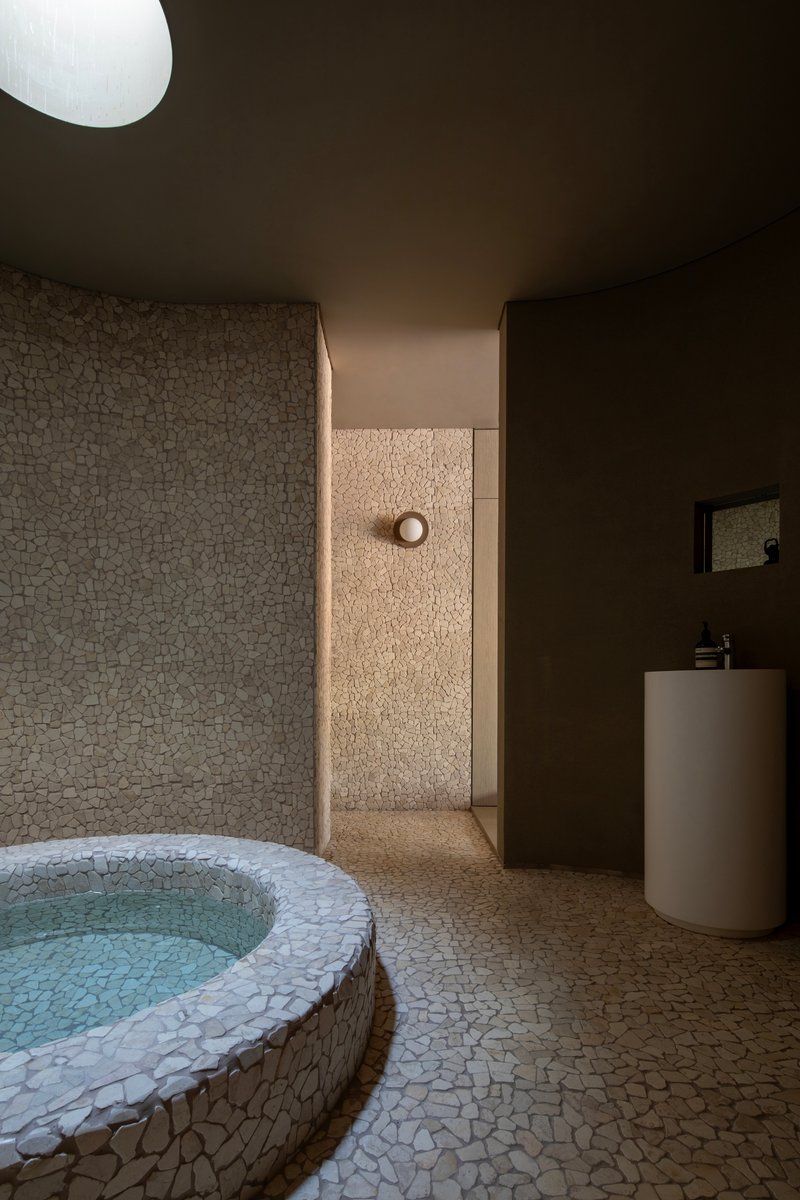
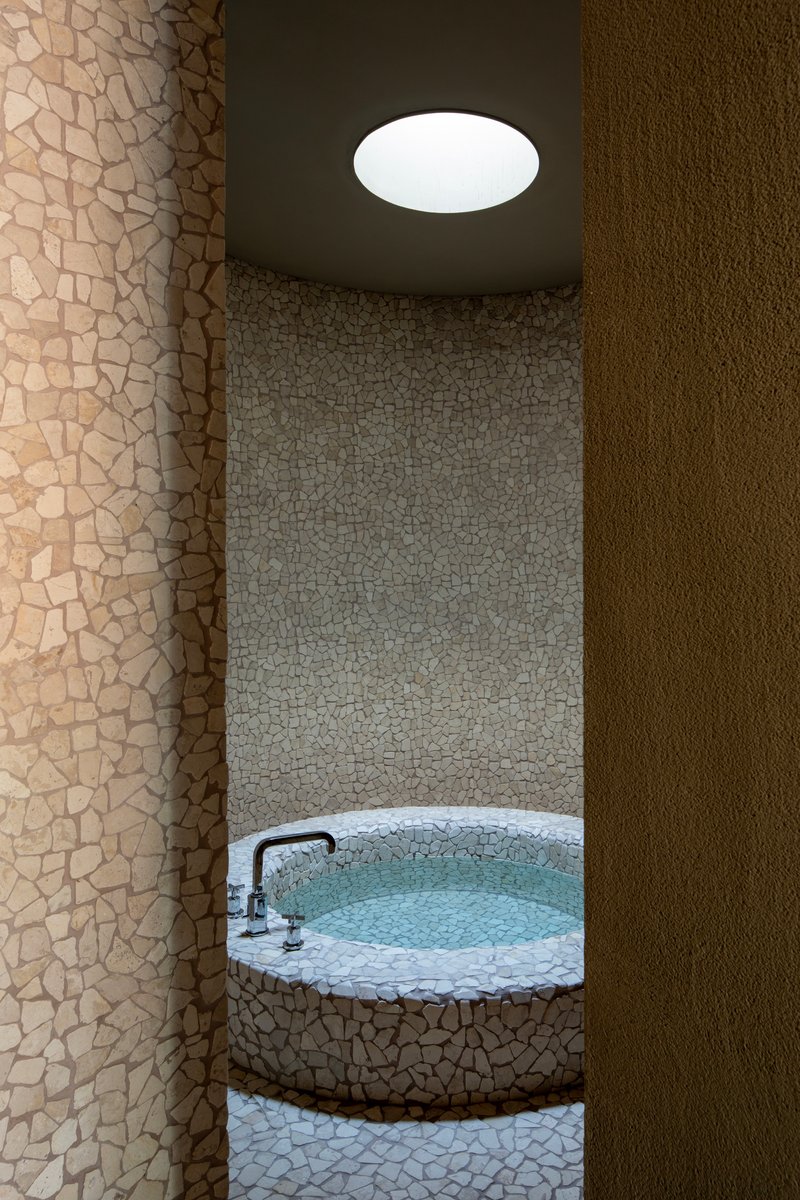
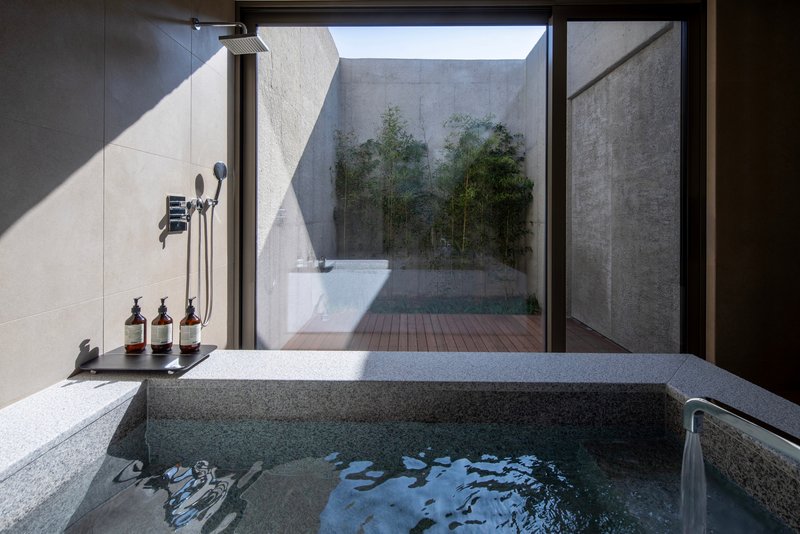
The bathing rooms deserve their own discussion because they are where the project's ambitions become most legible. A circular stone-clad soaking tub beneath a cylindrical skylight, surrounded by pebble mosaic walls, transforms a functional program into something closer to a chapel. The curved wall opening that frames this tub operates like a liturgical threshold. A sunken stone bathtub facing a private bamboo courtyard through floor-to-ceiling glass collapses the boundary between bathing and landscape entirely.
100A associates treat the act of bathing not as amenity but as the culmination of the spatial sequence. The materials intensify: stone becomes more tactile, light becomes more directed, and the relationship between interior and courtyard becomes most intimate. In hospitality architecture, bathrooms are often afterthoughts. Here, they are the argument.
Private Rooms, Public Restraint
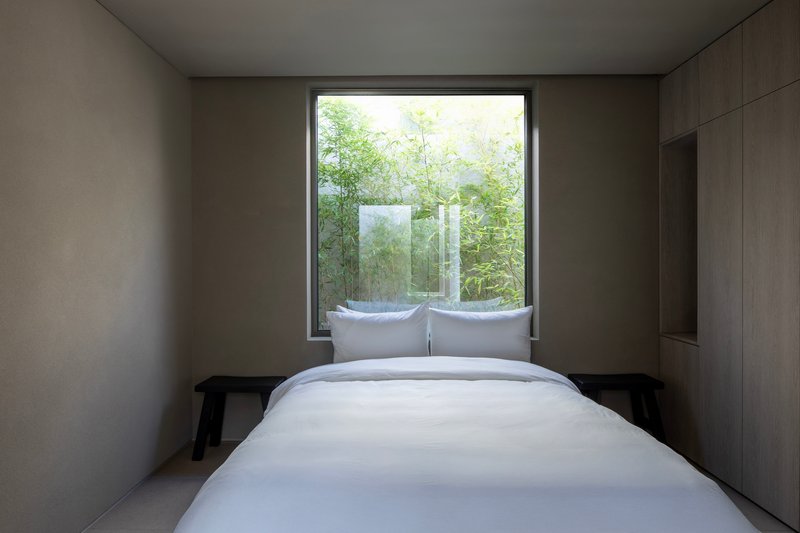
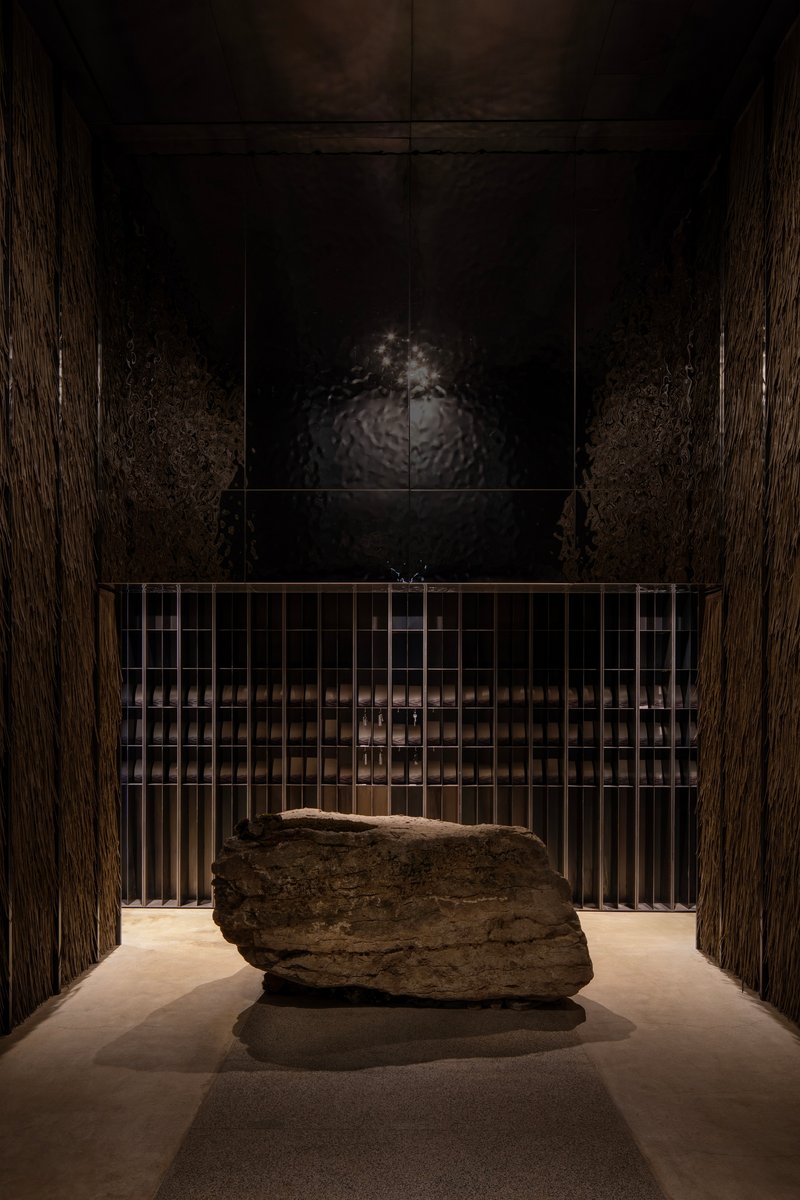
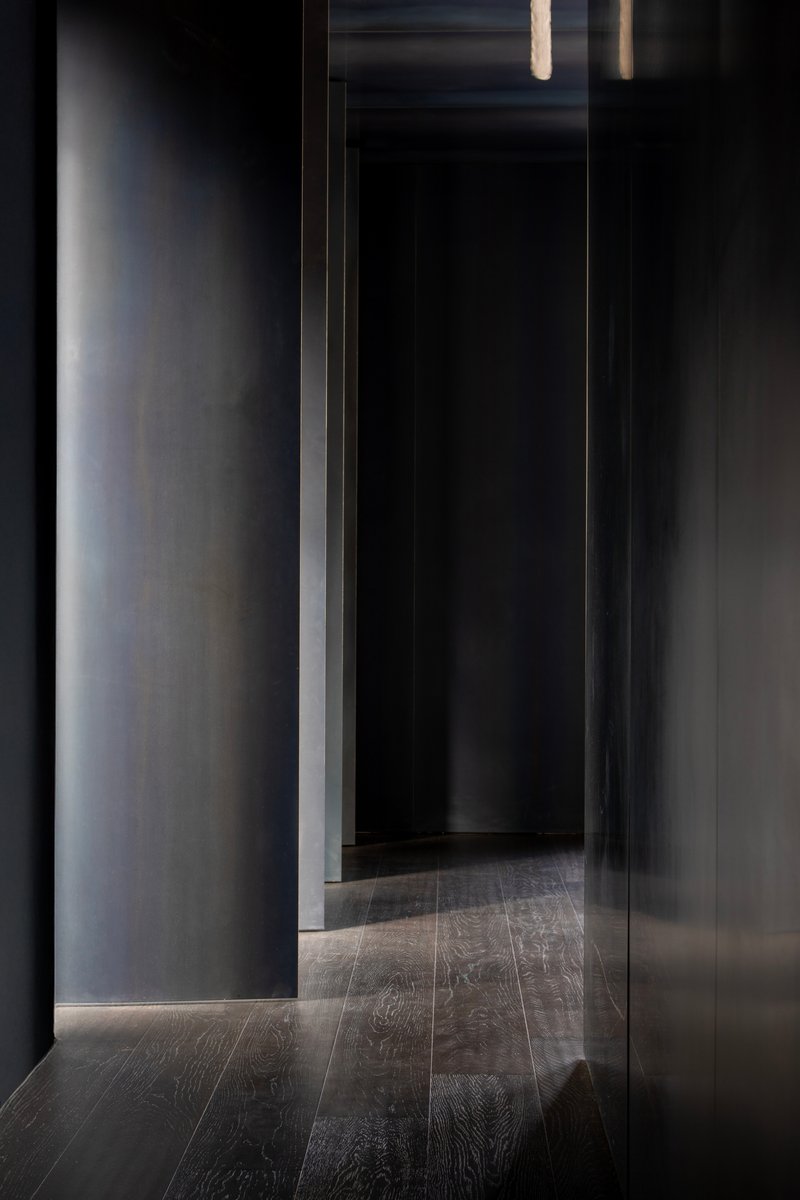
The guest rooms and corridors maintain the compound's overall discipline. A bedroom with timber-lined walls frames a planted courtyard through a translucent glass screen, filtering daylight into a warm glow without sacrificing privacy. The entry hall introduces a large stone boulder on a plinth behind a metal grille, an almost ceremonial gesture that declares arrival as an event. Narrow corridors with dark timber flooring and grey plastered walls are lit only by recessed strip lighting, compressing the experience before the next expansion.
There is very little furniture language to decode here. The rooms are defined by their surfaces, their proportions, and their relationship to adjacent outdoor space. The architecture itself furnishes the experience.
Details That Hold
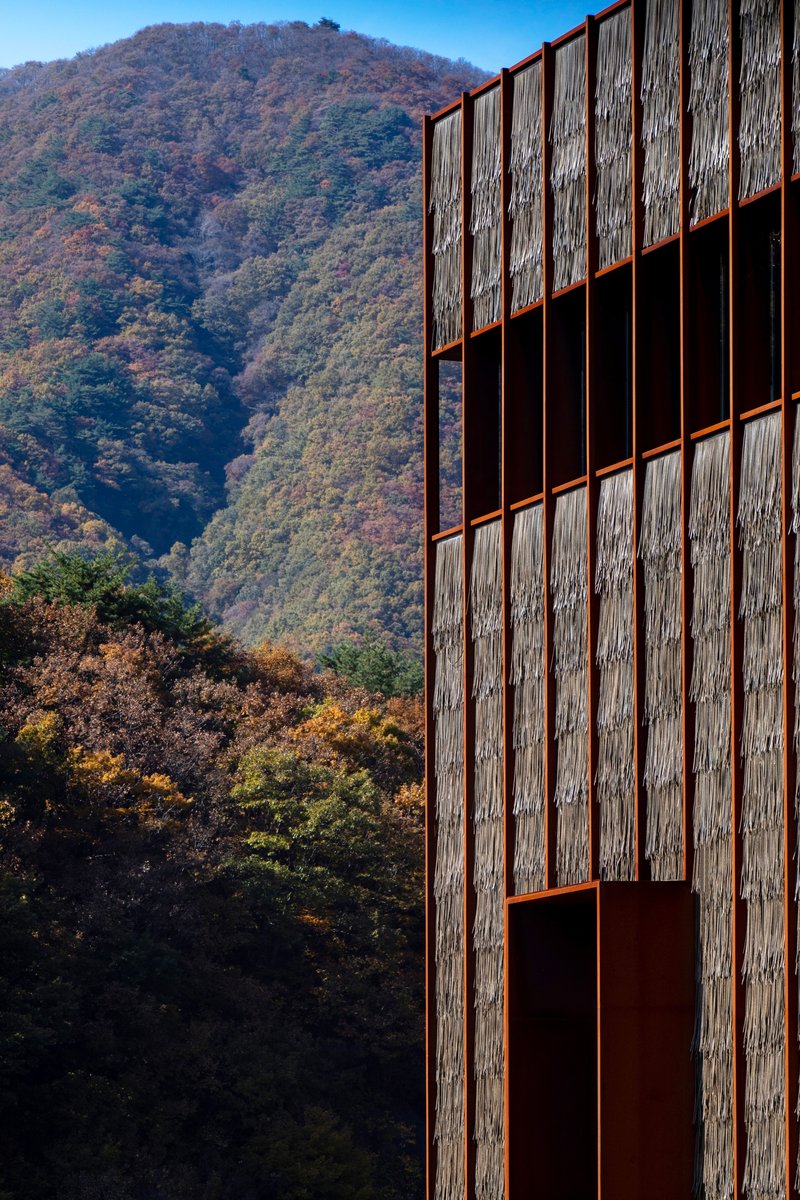
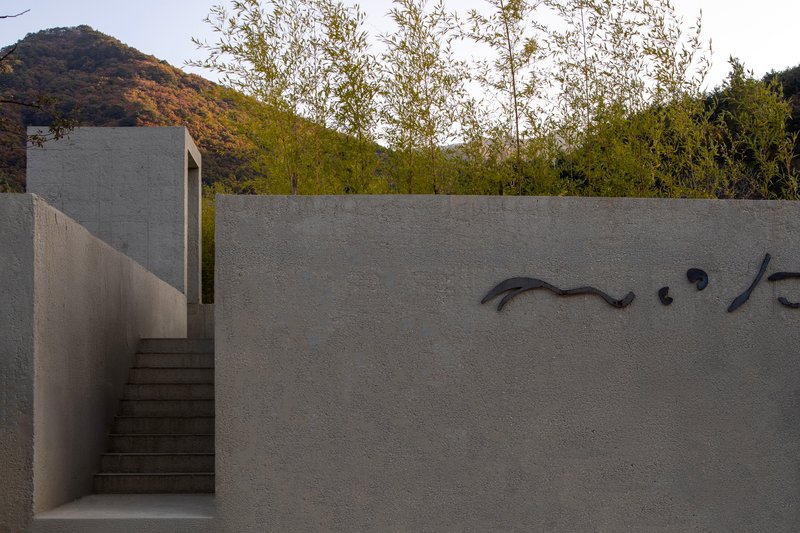
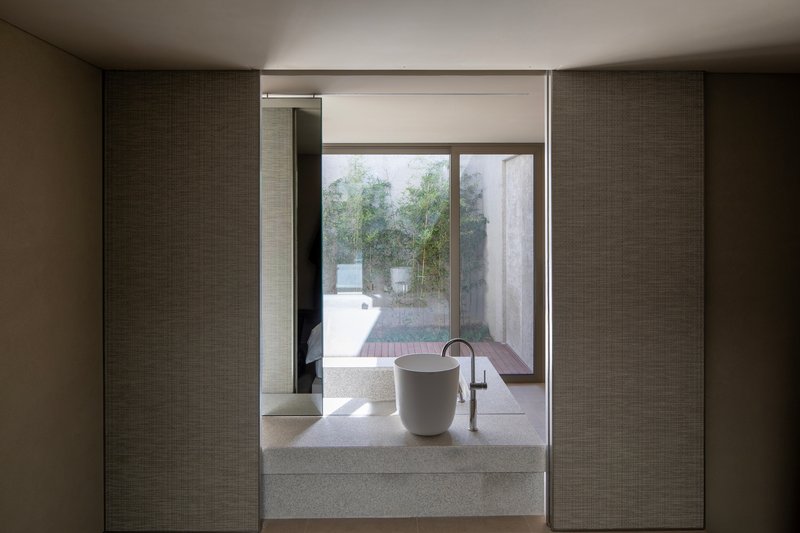
Corner details reveal a project that was closely supervised through construction. The vertical timber cladding meets recessed openings cleanly against the forested hillside, with no visible flashings or compromised joints. Calligraphic metal signage beside an ascending stair at dusk suggests a graphic identity that extends the material language rather than contradicting it. Even the terrazzo basin and freestanding tub, framed by textured wall panels overlooking a courtyard, demonstrate a consistency of detailing that carries from exterior to interior without interruption.
These are the moments where you can tell whether an architect was present on site or merely produced drawings. Mugok reads as the former.
Plans and Drawings
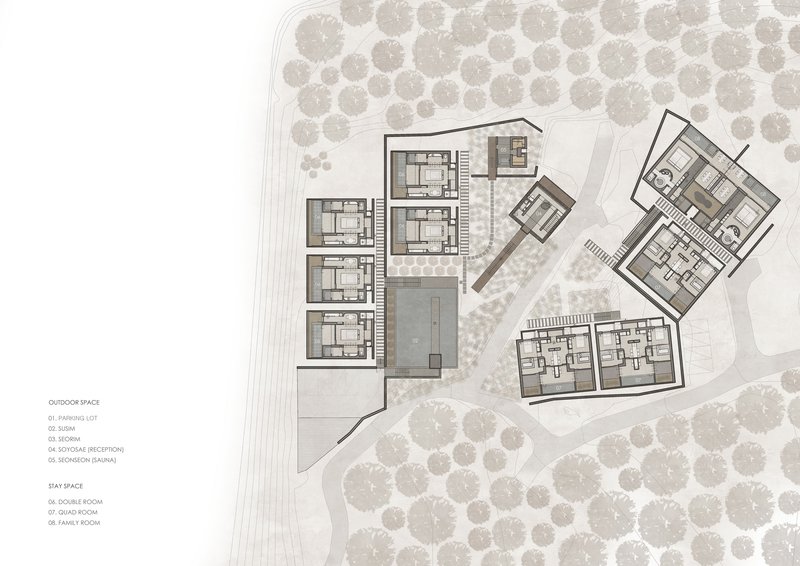
The site plan confirms what the aerial view suggests: a loose constellation of pavilions organized around a central courtyard, with the surrounding tree canopy providing both enclosure and environmental context. The plan's geometry is neither strictly orthogonal nor aggressively angular. Walls shift at subtle angles, creating the tapered passages and oblique views that define the ground-level experience. The winding pathway from entry to the various pavilions ensures that no single vantage point reveals the entire compound, preserving the sequential narrative that the architects clearly prioritized.
Why This Project Matters
Mugok matters because it proposes an alternative model for hospitality architecture in a market saturated with minimalist boxes dressed in neutral tones and marketed as mindfulness. 100A associates have done something harder: they have built a compound where the spatial sequence itself induces contemplation, where materials carry the weight of time, and where every threshold asks you to slow down before you proceed. The building does not merely contain a hospitality program. It performs one.
For architects working in this category, the project offers a useful corrective. The temptation in hospitality is always to flatten the experience into photogenic surfaces. Mugok resists that flattening at every turn, prioritizing depth over image, sequence over snapshot, and atmosphere over amenity. In a valley in Muju-gun, Sol-ha Park and Kwang-il An have built something that earns its silence.
Mugok by 100A associates (lead architects Sol-ha Park, Kwang-il An). Located in Muju-gun, South Korea. 842 m², completed 2024. Photography by Jae-yoon Kim.
About the Studio
Share Your Own Work on uni.xyz
If projects like this are the kind of work you want to make, uni.xyz is a place to publish your own, find collaborators, and enter design competitions.




Popular Articles
Popular articles from the community

OUJ Rewires a 72-Square-Meter Taipei Apartment for Multigenerational Living After the Pandemic
Inside a 40-year-old public housing block, plywood volumes and translucent screens turn three cramped bedrooms into a flexible family home.
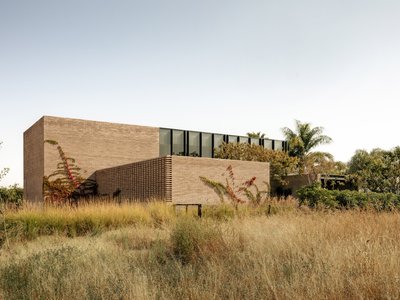
LABarq Builds an Entire House in Querétaro from a Single Custom Concrete Block
Casa Capuchinas uses one sand-colored block as structure, finish, and sunscreen across 477 square meters of suburban Mexico.

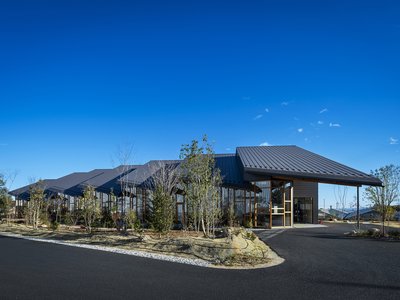
20 Most Popular Office Building Projects of 2025
From biophilic workspaces in India to net-positive energy offices in New Delhi, 20 office building projects that defined architecture in 2025.
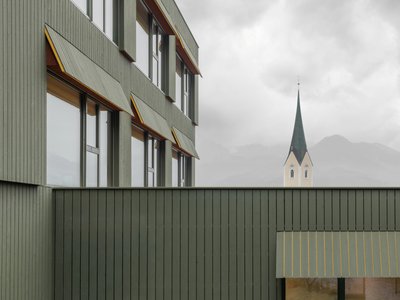
Pedevilla Architects Disguise a Five-Story School as a Tyrolean Farmhouse in Kössen
A dark-clad education center in rural Austria borrows the robust calm of Alpine vernacular to anchor a village's northern edge.


Similar Reads
You might also enjoy these articles

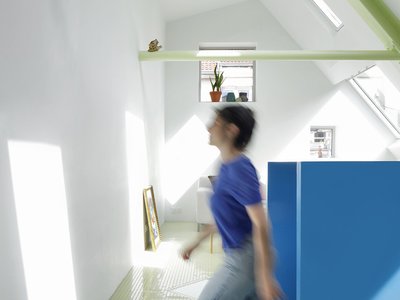
127af Flips a Tiny Bagnolet Rowhouse Upside Down with a Handcrafted Roof Extension
A 55-square-meter terraced house on the edge of Paris gains a luminous upper living floor through lightweight timber and steel.
1.61 Design Workshop Wraps a 600-Square-Meter Café in Vietnam in Sculptural Burgundy Drama
Reden Café & Bistro pairs a helical staircase, mosaic floors, and deep red interiors to rethink Vietnamese hospitality space.
The Unbound Brain: A School Shaped by Cognitive Architecture
Cylindrical learning pods radiate like neurons from a central cortex, turning the floor plan into a spatial model of human thought.
Revival Vernacular Architecture: Rammed Earth Settlements for the Sahara
A modular desert community in Mauritania that fuses passive cooling techniques with earthen construction and local craftsmanship.

Explore Architecture Competitions
Discover active competitions in this discipline




The International Standard for Design Portfolios


The Global Benchmark for Architecture Dissertation Awards


The Global Benchmark for Graduation Excellence


Challenge to reimagine the Iron Throne
Comments (0)
Please login or sign up to add comments
No comments yet. Be the first to comment!