

Mumo Museum of Motorcycles by DRAA: A Timber Landmark Celebrating Motorcycle Heritage in Southern Chile
A timber museum in southern Chile showcasing antique motorcycles through staggered wooden pavilions, panoramic views, innovative engineering, and heritage-inspired design.


The Mumo Museum of Motorcycles in Puerto Octay stands as a striking new cultural destination in southern Chile, designed by DRAA to house the country’s largest collection of antique motorcycles—machines that predate the corporate dominance of the motorcycle industry in the 1970s. Set against a dramatic natural backdrop, the museum blends timber innovation, local craftsmanship, and curatorial flexibility to create a uniquely immersive exhibition environment.
A Site Rooted in Landscape and History
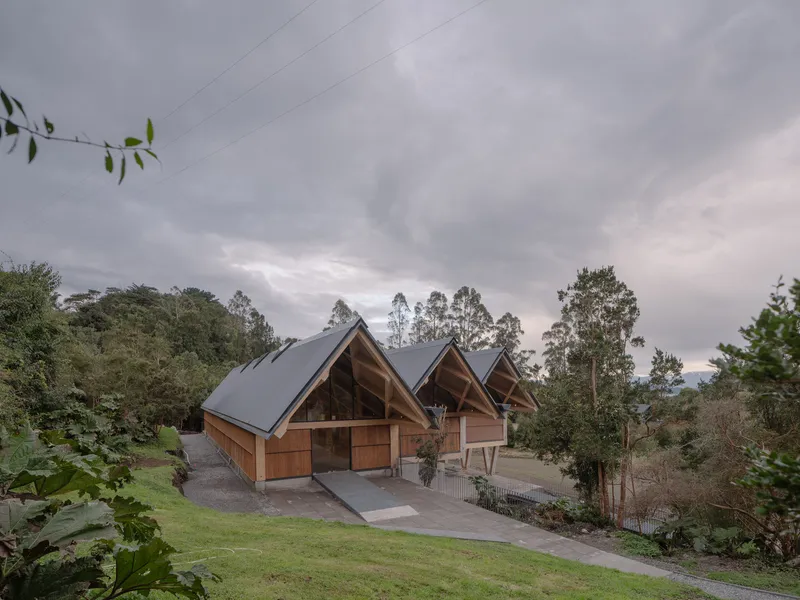
Located on a generous plot near the Cardenal Samoré border crossing into Argentina, the museum occupies a site along the legendary Pan-American Highway, a route long romanticized by motorcycle enthusiasts worldwide. The landscape unfolds in rolling hills descending toward Lake Llanquihue, framed by the iconic silhouette of Osorno Volcano.
Responding to this exceptional context, the museum’s architectural expression draws from the region’s traditional material palette, shaped by the German colonization of southern Chile in the mid-19th century. The client specifically requested a building that would feel rooted in this heritage while offering expansive, flexible spaces to display hundreds of motorcycles.


A Timber Structure Elevated in the Landscape
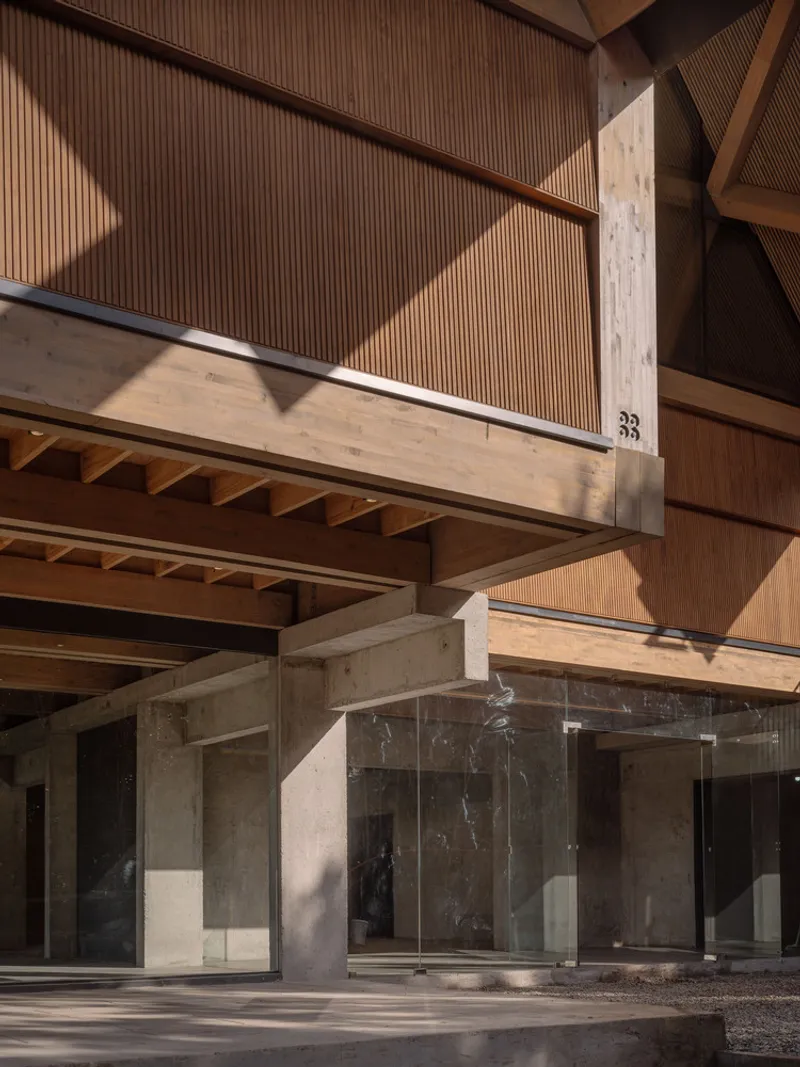
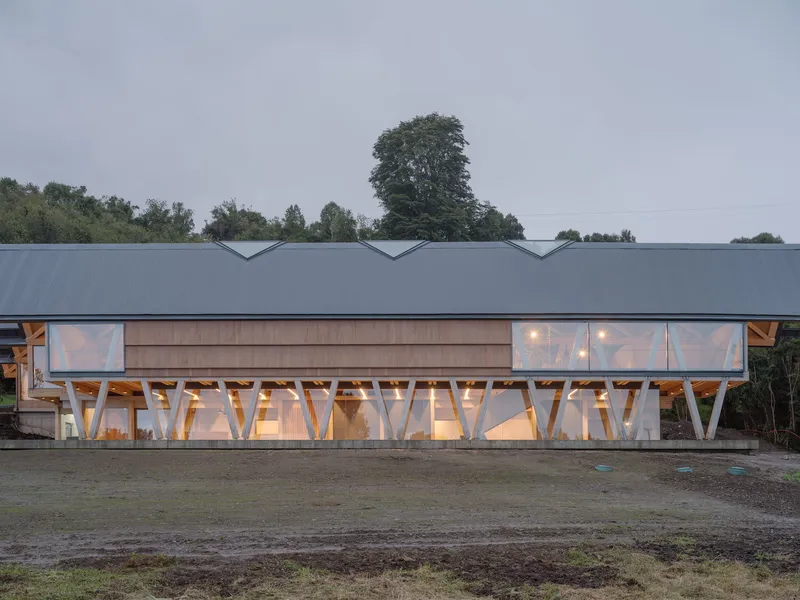
DRAA approached the brief with a clear architectural strategy: a wooden building composed of a piano nobile exhibition level above a service-oriented ground floor. This lower level accommodates visitor amenities, including a small café and museum shop, while the elevated exhibition hall capitalizes on panoramic views.
The noble floor consists of three staggered timber pavilions, fabricated from CNC-machined laminated pino insigne, Chile’s most abundant fir species. These pavilions sit atop a stepped concrete plinth, integrating the museum into the sloping terrain and aligning the visitor experience with the volcanic horizon.
The museum’s external cladding also employs pino insigne, thermally treated to increase durability. This decision reinforces the notion of a wooden building clad in wood—a direct homage to regional methods of construction.
Curatorial Flexibility Through Fragmented Continuity
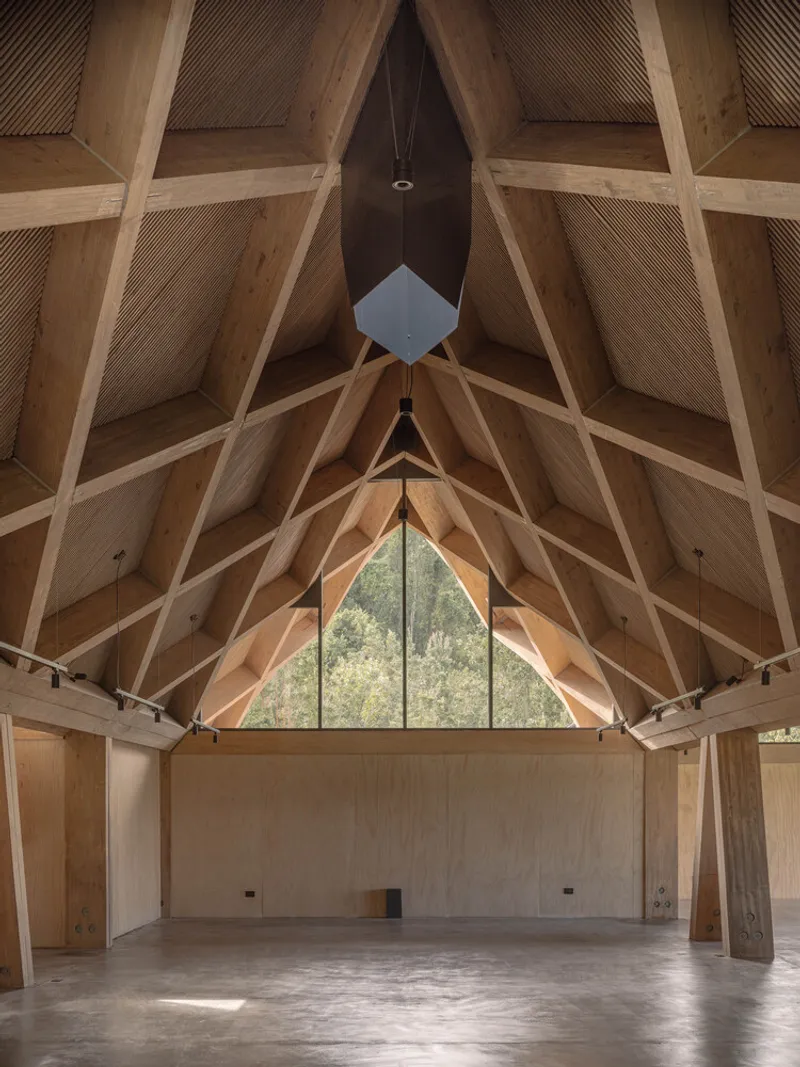
Inside, the three overlapping timber volumes gently segment the exhibition hall without creating hard boundaries. This spatial strategy introduces natural pauses within the visitor journey—critical given the museum’s expansive collection of motorcycles, each with its own technical and historical significance.
The fragmented yet continuous layout supports a non-linear curatorial script, allowing visitors to move through the exhibition with multiple sightlines, layered perspectives, and curated moments of rest. The architecture becomes a tool for storytelling, ensuring the density of the collection does not overwhelm the visitor.


Innovative Timber Engineering
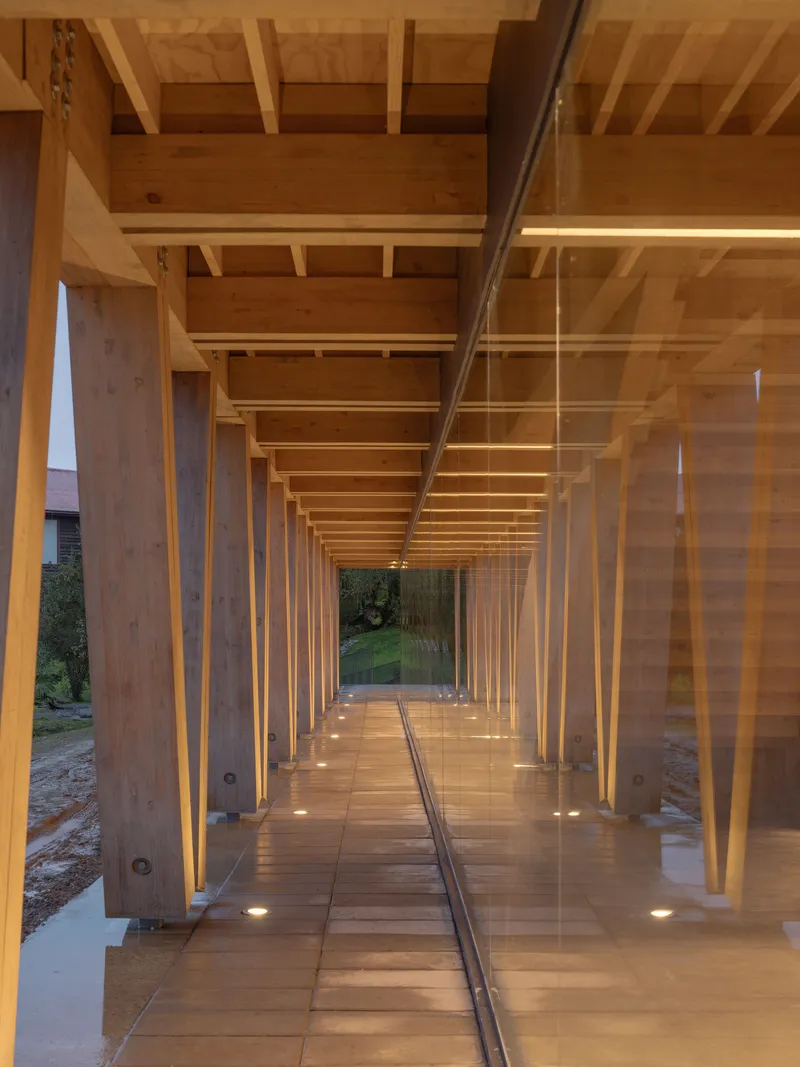
Each pavilion is structured using paired, woven wooden beams that transform the roof plane into a rigid diaphragm. These diaphragms connect via steel rings that double as skylights, creating pockets of natural light while simultaneously resolving structural forces.
This precise engineering eliminates the need for intrusive lateral bracing, enabling the interior to remain visually open—ideal for large-scale installations such as motorcycle totems or suspended displays.
While CNC-machined timber kits represent a high level of prefabrication, the project’s real technological leap lies in the use of Rothoblaas engineered screws. These small yet highly advanced metal connectors replace traditional gussets and metal flanges, simplifying assembly and reducing the visual presence of structural hardware.
This subtle but meaningful advancement marks a fascinating evolution: a lineage that stretches from early German settlers, who brought timber-building traditions to the region, to contemporary Chilean timber innovation and digital fabrication.


A Museum That Merges Heritage, Technology, and Landscape
The Mumo Museum of Motorcycles is more than a venue for mechanical artifacts—it is an architectural statement that bridges historical legacy, cutting-edge timber engineering, and the powerful emotional landscape of southern Chile. Through a thoughtful combination of material honesty, prefabricated precision, and curatorial generosity, DRAA delivers a building that honors both the motorcycles on display and the cultural history that surrounds them.


All photographs are works of Marcos Zegers




Popular Articles
Popular articles from the community


The Musturak Paradise: Senior Living Architecture for a Connected Future in Temara, Morocco
The Musturak Paradise reimagines senior living architecture in Temara via private homes, social spaces, culture, community, and shared care.

Conexión: Biophilic Design Reimagines High-Rise Living in Hong Kong
Conexión reimagines high-rise living in Hong Kong through biophilic design, green facades, shared spaces, daylight, water and nature within.

The Earth Pod: 3D Printed Homes for Resilient Refugee Communities
The Earth Pod reimagines refugee housing through 3D printed homes made from clay, combining resilience, self-sufficiency, and rapid shelter.

Hill & Cross Opera: Sculptural Opera House Architecture Shaped by Tallinn’s Landscape and Identity
Hill & Cross Opera reimagines opera house architecture in Tallinn through its sculptural hill, civic plaza, glass wave and a luminous cross.


Similar Reads
You might also enjoy these articles


Hodi-Mandai Geram
Project Function: Preservation and revitalization of the Intangible heritage and socio-spatial identity of the Hodi by Housing, Cultural Memory Center, Sacred Grove, landscape, local tourism economy


Olio Towers: A Mid-Rise for Performers That Fuses Housing, Rehearsal, and Stage
Located blocks from Houston's Theater District, this modular tower stacks living units around a central performance atrium.

Oasis: Modular Green Housing Carved into Dhaka's Urban Fabric
A shortlisted Plugin Housing entry reclaims unauthorized settlements in Dhaka with stepped concrete volumes, green roofs, and ventilation-driven design.

Black Hole: A Floating Megastructure for the Post-Physical Era
Emiliano Mazzarotto envisions a spherical, self-scaling arena where e-sports, digital hotels, and holographic stadiums replace traditional public space.


Explore Cultural Architecture Competitions
Discover active competitions in this discipline



Challenge to reimagine the Iron Throne


Photograph architecture without architects


Illustrate the lost glory of Angkor Wat - Render Challenge


Bring back Drive In's
Comments (0)
Please login or sign up to add comments
No comments yet. Be the first to comment!