
NAB 3 Parramatta Square & NAB 2 Carrington St. Offices by Woods Bagot – A Unified Workplace Vision Transforming Sydney’s Corporate Landscape
Two NAB Sydney workplaces unite emerging and established identities through bold design, flexible spaces, and a signature red-thread stair connecting both campuses.


The NAB 3 Parramatta Square (3PS) and NAB 2 Carrington Street (2CS) offices—designed by globally recognized architecture studio Woods Bagot—represent a groundbreaking workplace transformation across two major Sydney locations. Together, these interconnected workplaces form NAB’s “Sydney Campus,” accommodating more than 6,000 workstations and redefining corporate design, workplace culture, and future-ready employee experience.
This dual-site strategy provided an exceptional opportunity: to design two distinct yet harmonized environments that reflect NAB’s evolving identity, align with diverse demographic needs, and strengthen the bank’s connection to both established and emerging business districts.
A Dual Architectural Narrative: One Workplace Vision, Two Distinct Personas
1. NAB 3 Parramatta Square – The ‘Emerging’ Identity
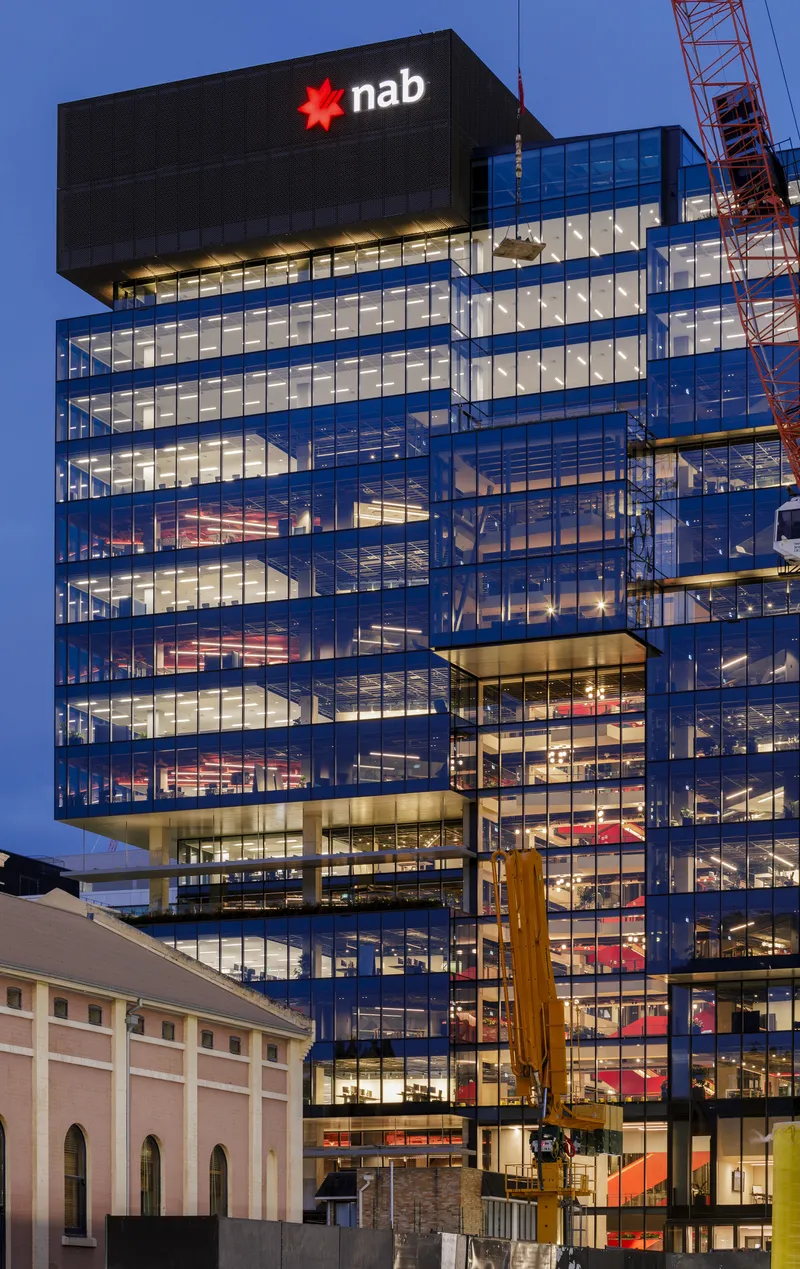
Located in the heart of the rapidly developing Parramatta Square precinct, the 13-level, 35,000 sqm workplace is conceptualized around an “emerging persona.” Woods Bagot sought to embody the bold, diverse, and future-driven character of Greater Sydney.
Key elements include:
- Raw, authentic materiality celebrating an evolving urban identity
- Layered spatial movements and intersecting geometries for interactive experiences
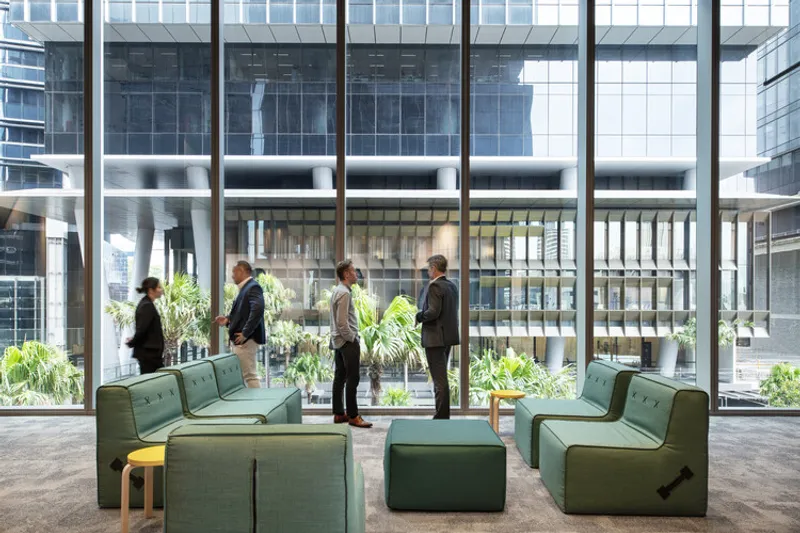
- Open lower levels that connect directly to the public realm, encouraging transparency
- Customer-focused immersive zones supporting collaboration, innovation, and engagement
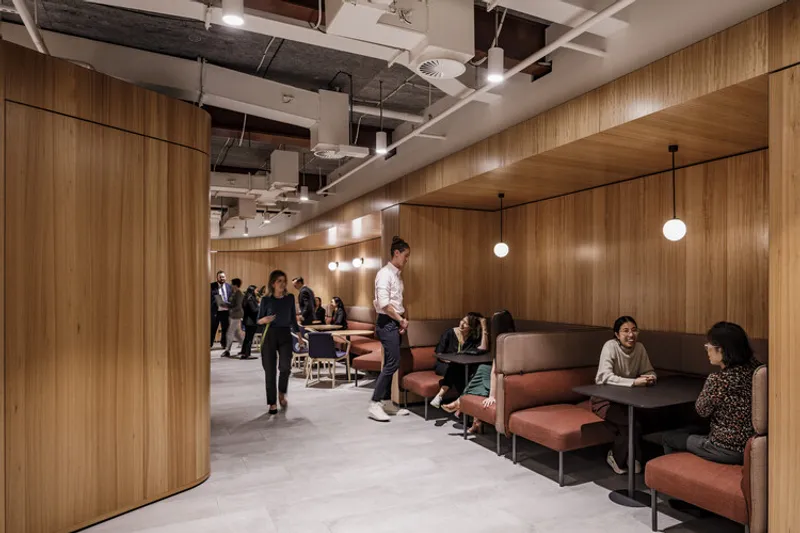
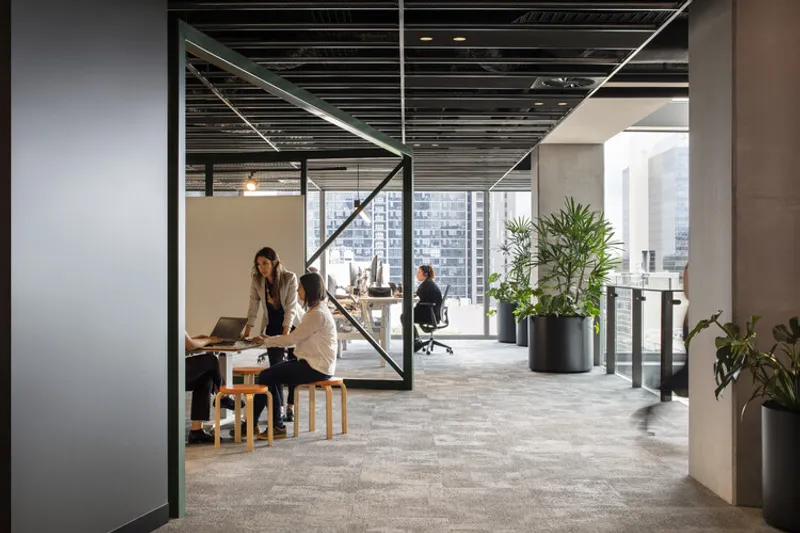
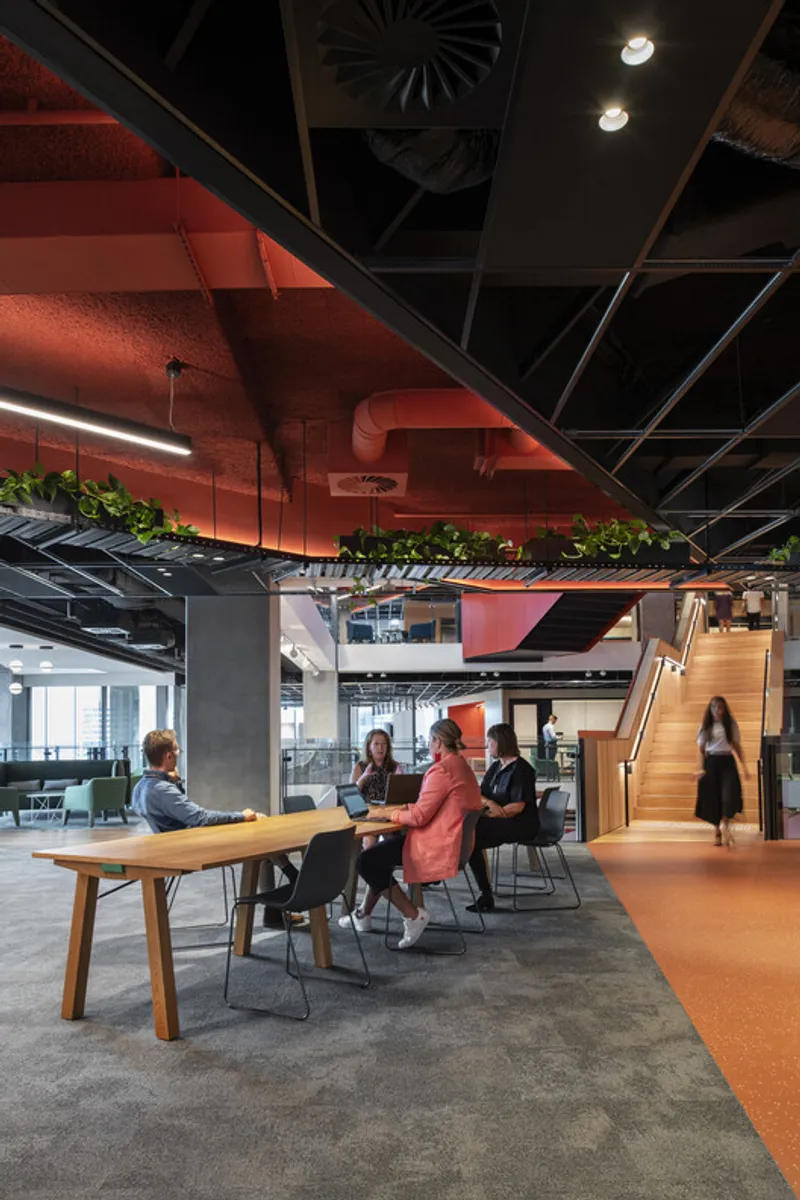
The design unapologetically lifts the curtain on NAB’s internal workings, turning banking into an open, community-oriented experience. Staff spaces are designed with flexibility, adaptability, and engagement at the forefront—aligning with modern workplace expectations.
2. NAB 2 Carrington Street – The ‘Established’ Identity
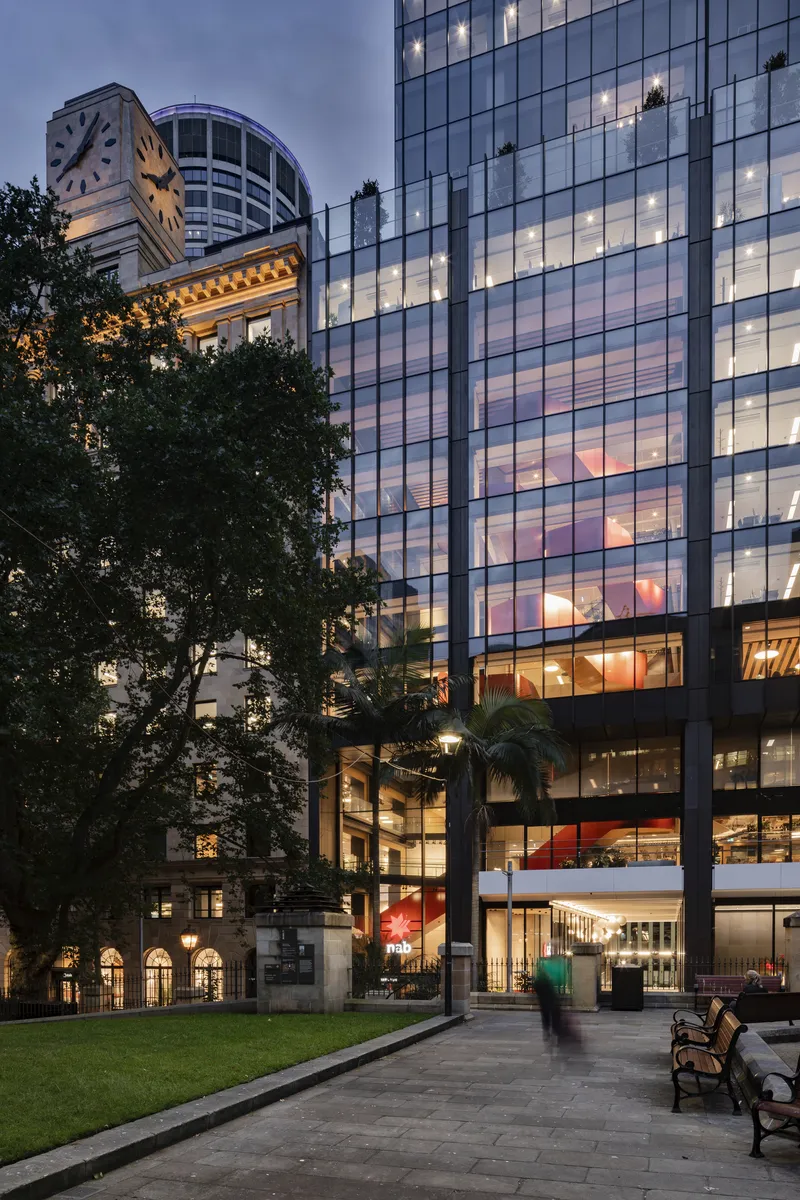
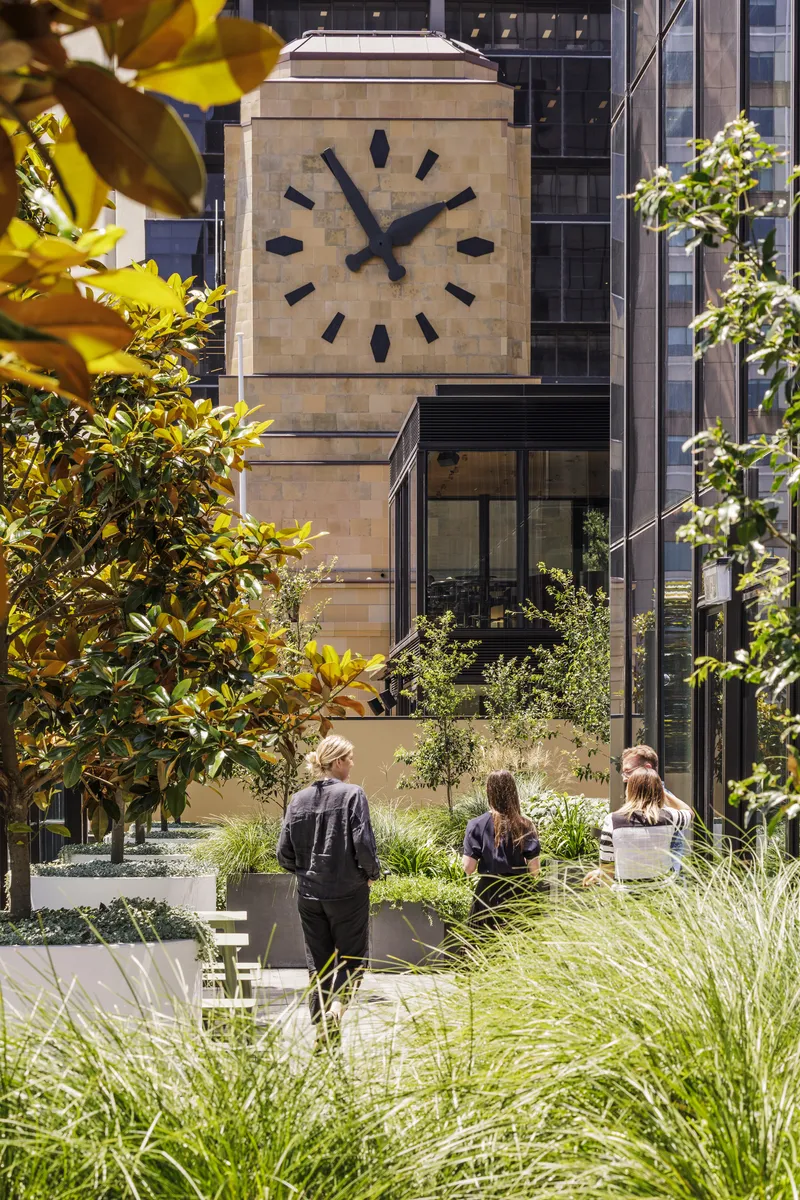
Situated within the heritage-listed Shell House and its adjacent commercial tower, NAB 2CS reflects an “established persona,” rooted in Sydney’s historic CBD fabric.
This 12-level, 29,000 sqm tenancy channels:
- Refined materiality inspired by the building’s historic character
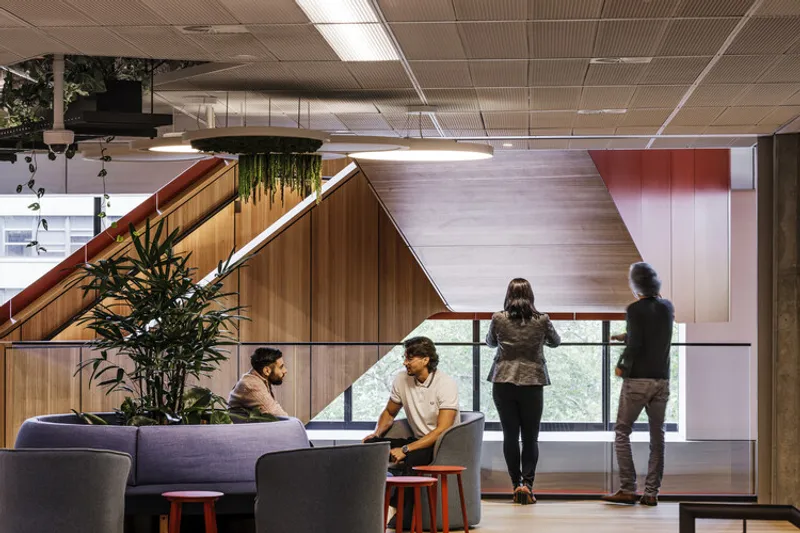
- Premium views overlooking Wynyard Park and the iconic urban canopy
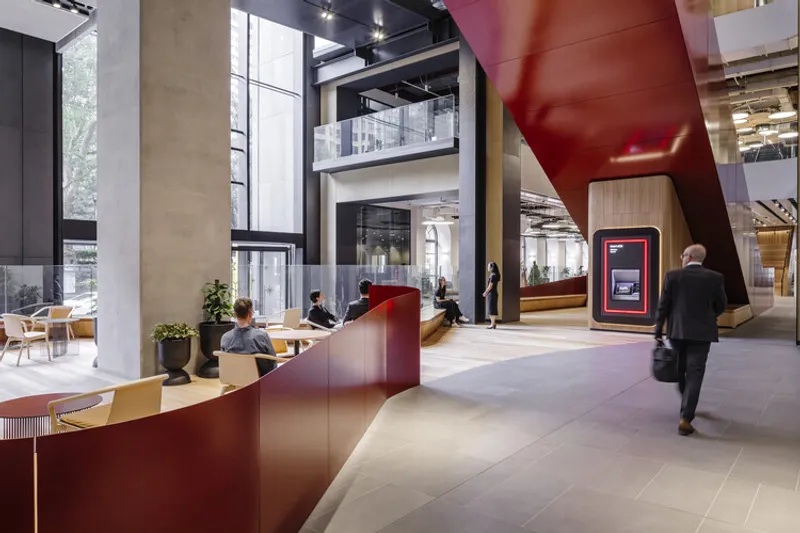
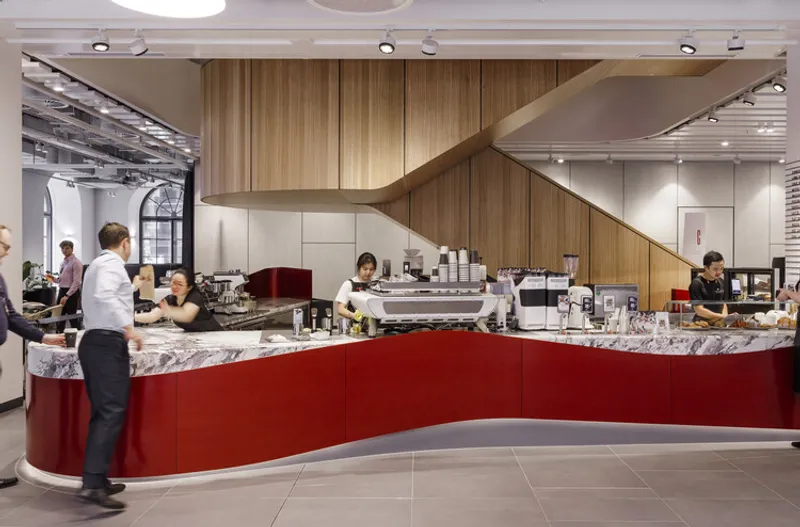
- Publicly accessible first four levels, including a micro-branch and café
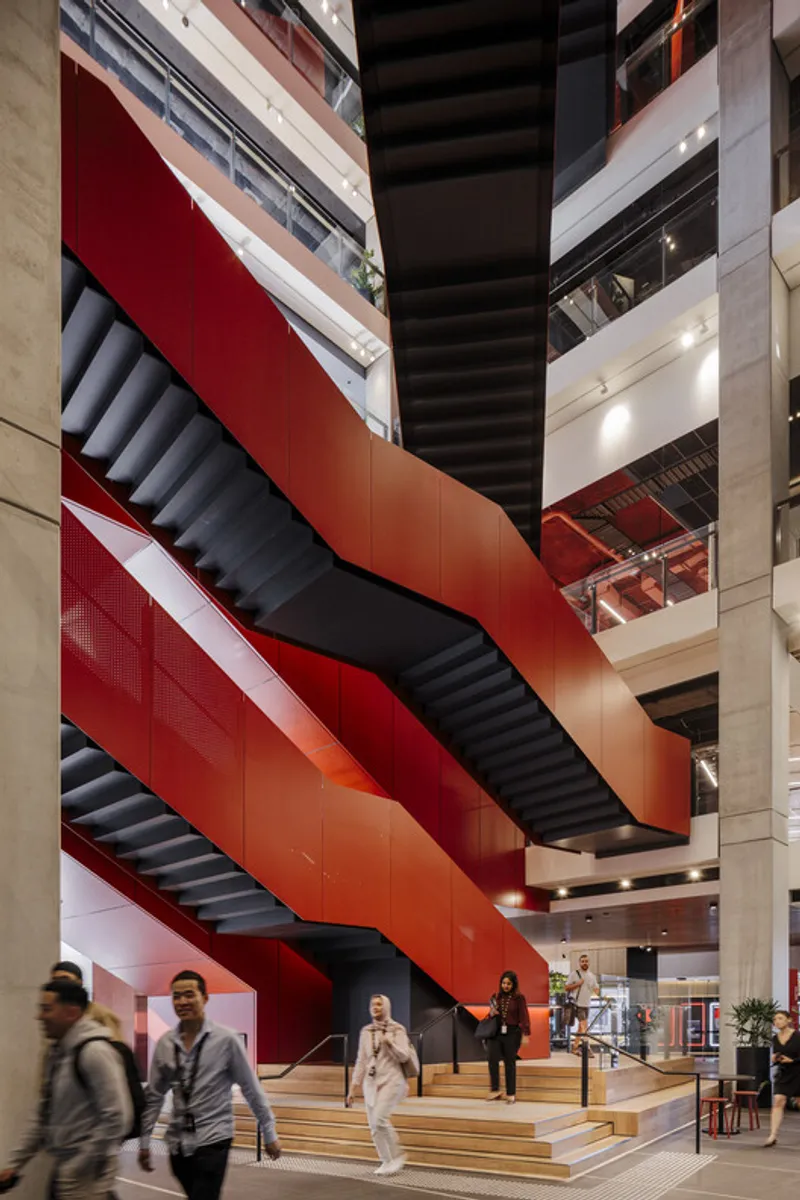
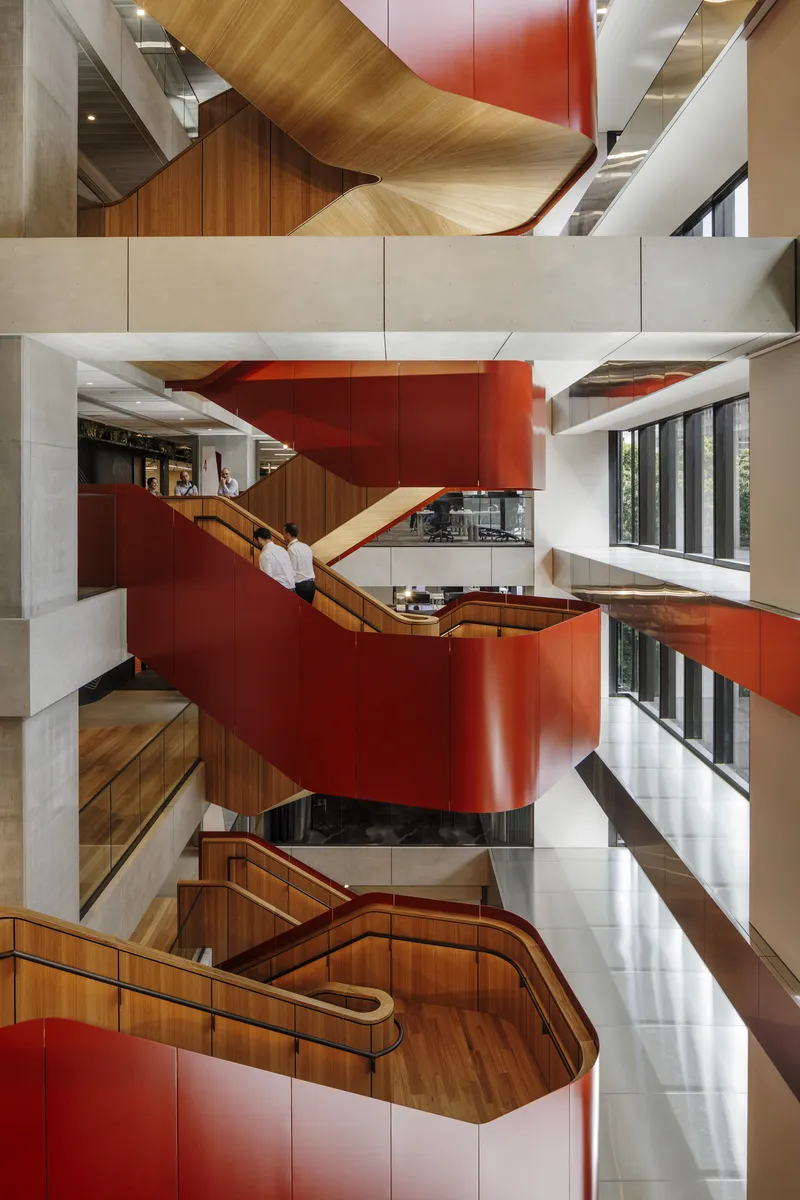
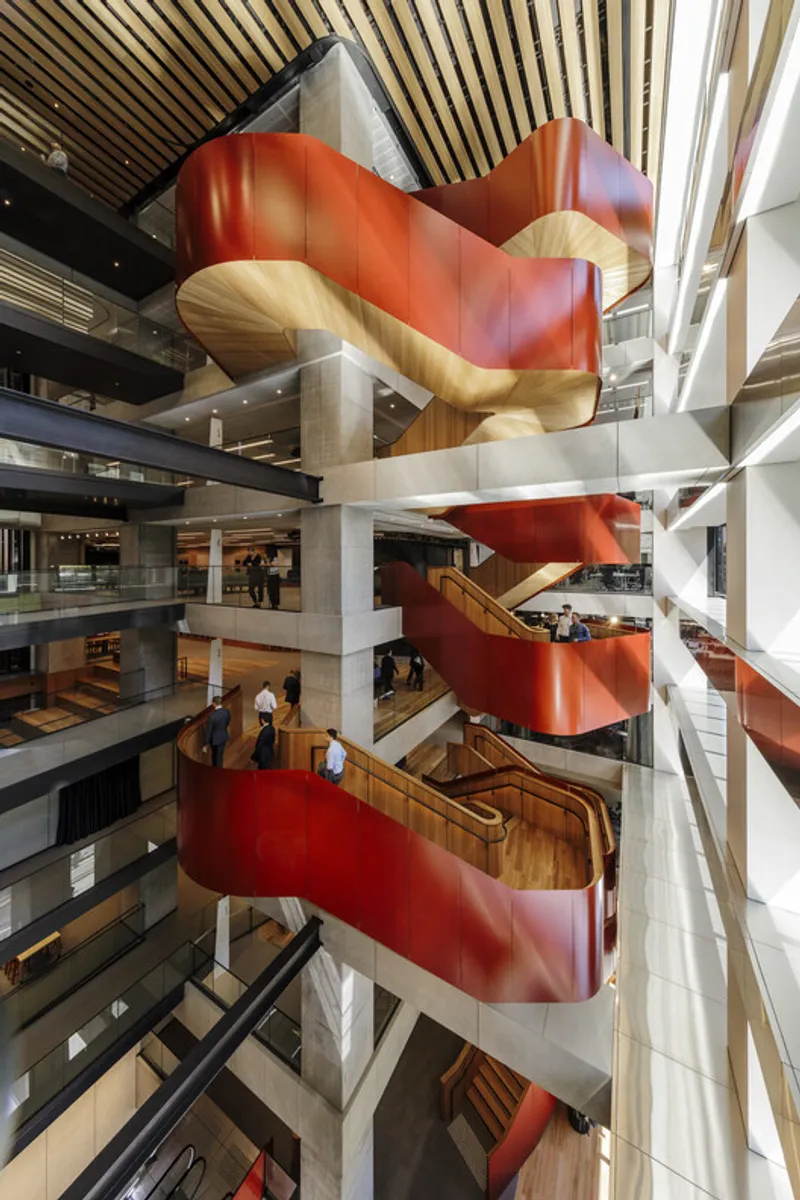
- A sculptural entry ribbon creating a dramatic arrival and circulation journey
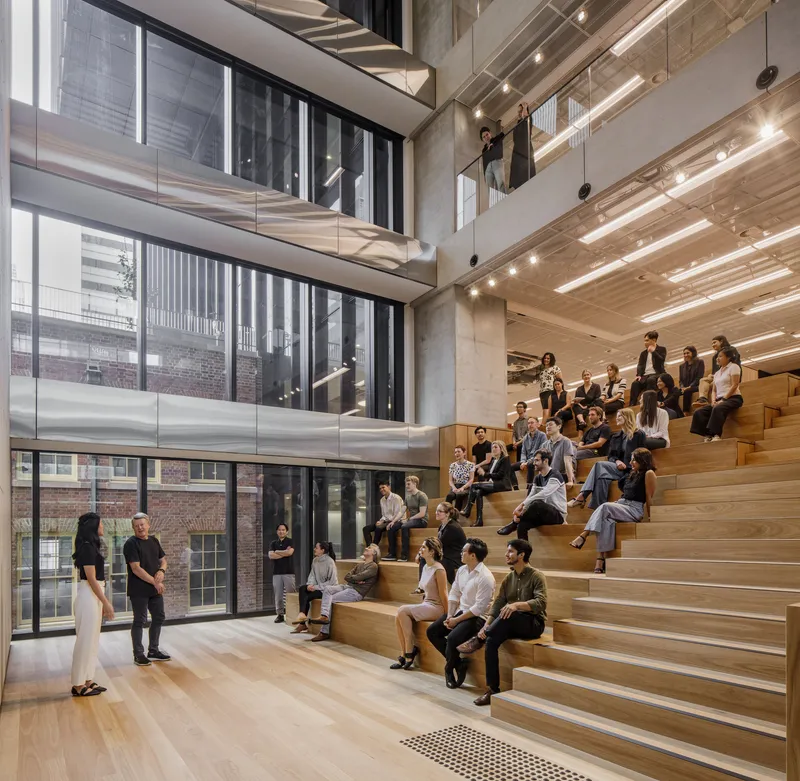
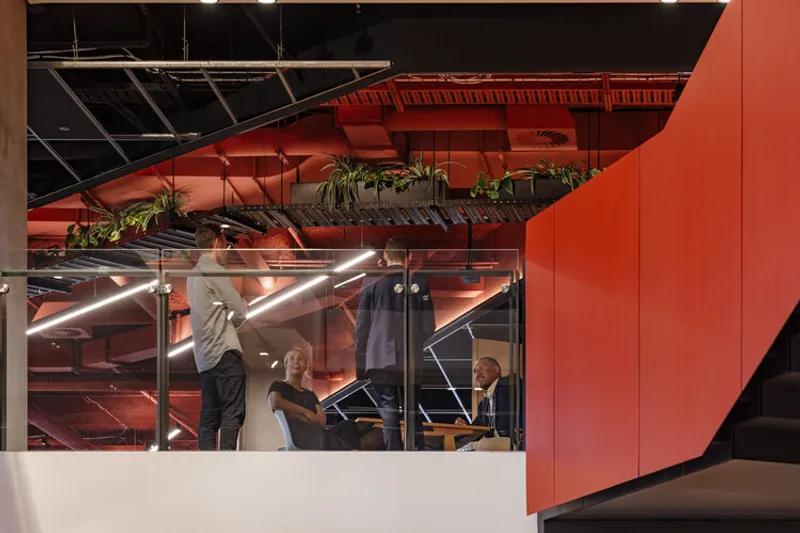
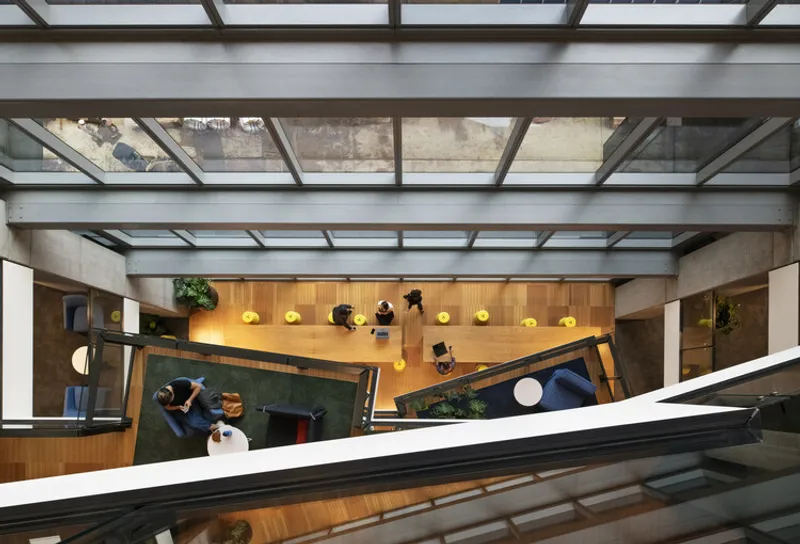
The design elevates NAB’s workplace strategy with diverse collaboration spaces, terraces, an amphitheater, and state-of-the-art employee amenities, ensuring the workplace remains a destination for productivity and connection.
The Red Thread – A Symbol of Unity Across Both Workplaces
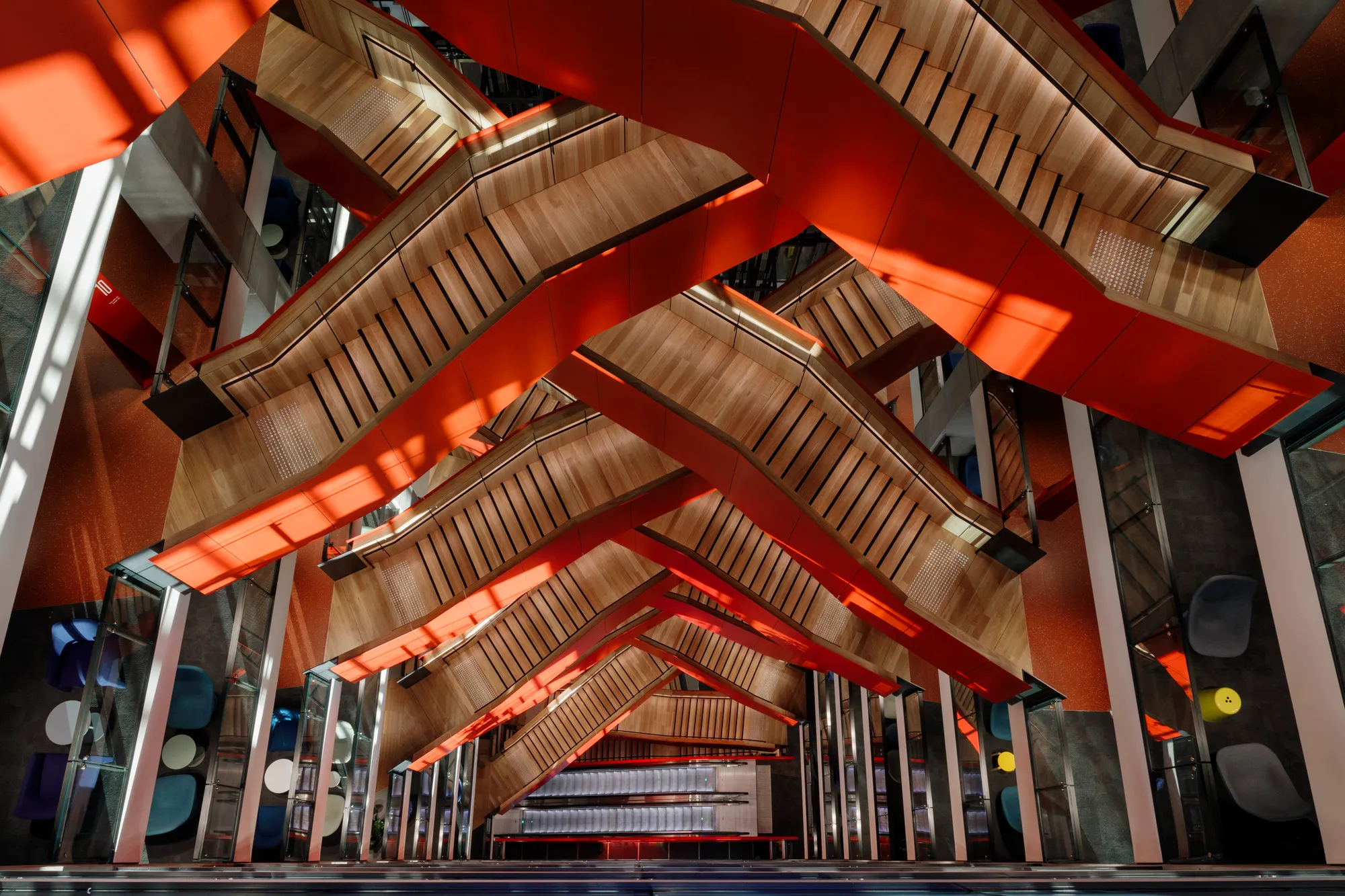
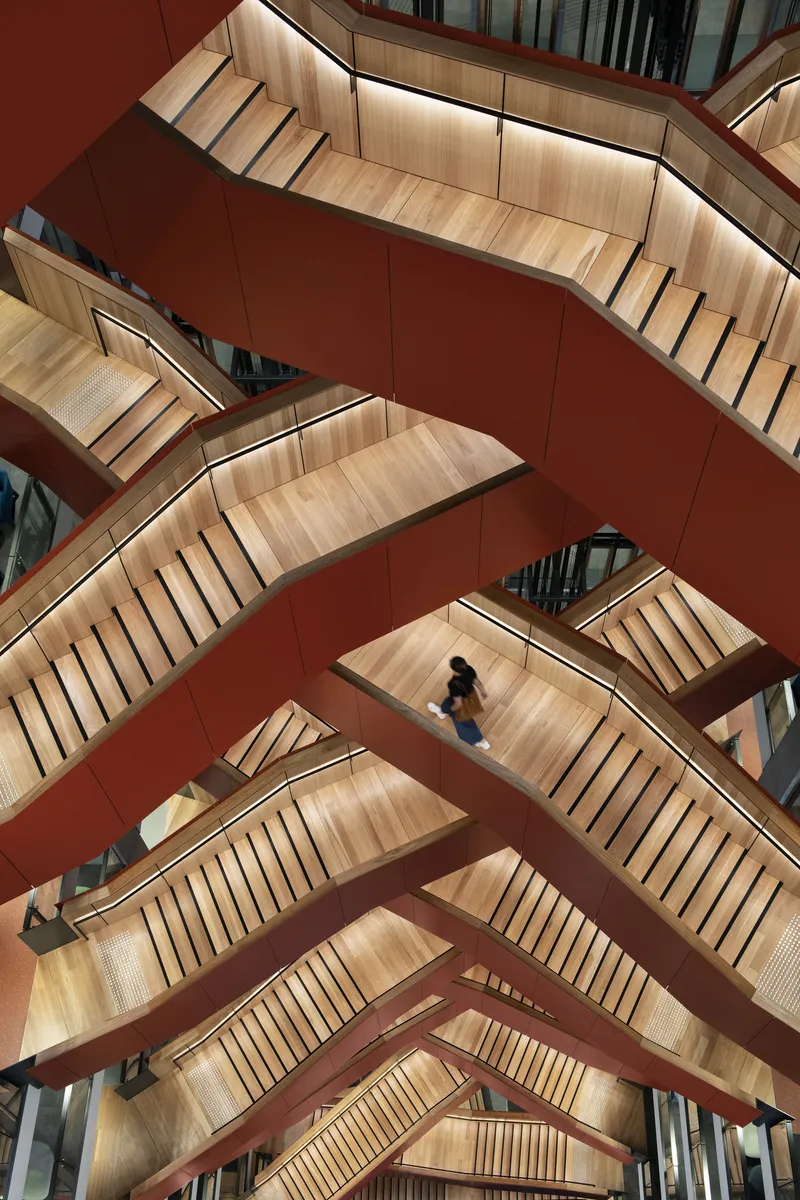
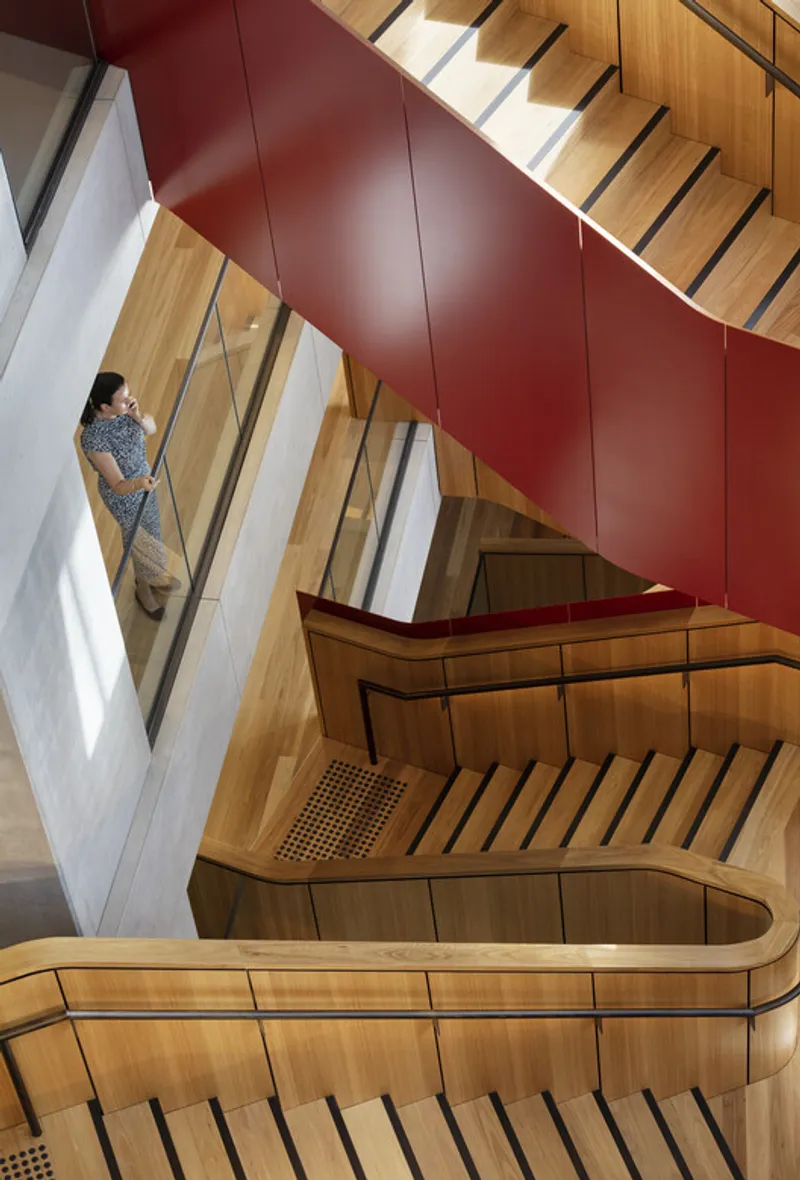
A standout feature linking the two locations is the iconic “red-thread” stair, a design intervention that serves as both a branding device and a spatial connector. This sculptural staircase weaves through both tenancies, creating vertical movement, visual continuity, and a unified architectural language.
As Woods Bagot Principal Ian Lomas describes, the stair embodies NAB's DNA—bold, connected, and future-focused—tying the Sydney campuses together through design.
A Decade-Long Collaboration Shaping NAB’s Workplace Evolution
These projects are the result of more than ten years of partnership between NAB and Woods Bagot. Their collaboration builds on the design legacy established by the renowned 700 Bourke Street project in Melbourne, translating NAB’s identity into environments that support its long-term workplace aspirations.
Woods Bagot’s global workplace leader Amanda Stanaway highlights that the design of both sites required distilling NAB’s fundamental values while responding to the unique context, culture, and demographic of each location.
The simultaneous delivery of the twin workplaces demonstrates a rare, highly successful design partnership—one that integrates brand, culture, and future workplace strategies into a cohesive architectural vision.
NAB 3 Parramatta Square and NAB 2 Carrington Street set a new benchmark for corporate architecture, sustainable workplace strategy, and experiential design in Australia. Together, they embody a unified yet diverse design language, showcasing how workplaces can adapt to evolving business needs, enhance employee well-being, and build stronger community connections.
Through refined materiality, bold geometry, and innovative workplace planning, Woods Bagot has created two landmark projects that shape the future of how we work, collaborate, and engage with the city.
All the photographs are works of Nicole England, Trevor Mein



Popular Articles
Popular articles from the community


Riyadh For All: Intergenerational Urban Design for Active Aging in Rabat
Riyadh For All reimagines urban design in Rabat with intergenerational co-living, adaptive courtyards, and Moroccan cultural exchange today.

Co-life: Sustainable Architecture for Age-Friendly Community Living
Co-life reimagines sustainable architecture for seniors through courtyards, rammed earth, shared gardens, and spaces designed for belonging.

Play: Fragments of Their World
Familiar architecture becomes modular playground design, creating safe spaces where displaced children can learn, connect, imagine and play.

The Musturak Paradise: Senior Living Architecture for a Connected Future in Temara, Morocco
The Musturak Paradise reimagines senior living architecture in Temara via private homes, social spaces, culture, community, and shared care.
Similar Reads
You might also enjoy these articles


Hodi-Mandai Geram
Project Function: Preservation and revitalization of the Intangible heritage and socio-spatial identity of the Hodi by Housing, Cultural Memory Center, Sacred Grove, landscape, local tourism economy


Olio Towers: A Mid-Rise for Performers That Fuses Housing, Rehearsal, and Stage
Located blocks from Houston's Theater District, this modular tower stacks living units around a central performance atrium.

Oasis: Modular Green Housing Carved into Dhaka's Urban Fabric
A shortlisted Plugin Housing entry reclaims unauthorized settlements in Dhaka with stepped concrete volumes, green roofs, and ventilation-driven design.

Black Hole: A Floating Megastructure for the Post-Physical Era
Emiliano Mazzarotto envisions a spherical, self-scaling arena where e-sports, digital hotels, and holographic stadiums replace traditional public space.


Explore Office Building Competitions
Discover active competitions in this discipline



Challenge to reimagine the Iron Throne


Photograph architecture without architects


Illustrate the lost glory of Angkor Wat - Render Challenge


Design challenge to reuse E-waste
Comments (0)
Please login or sign up to add comments
No comments yet. Be the first to comment!