
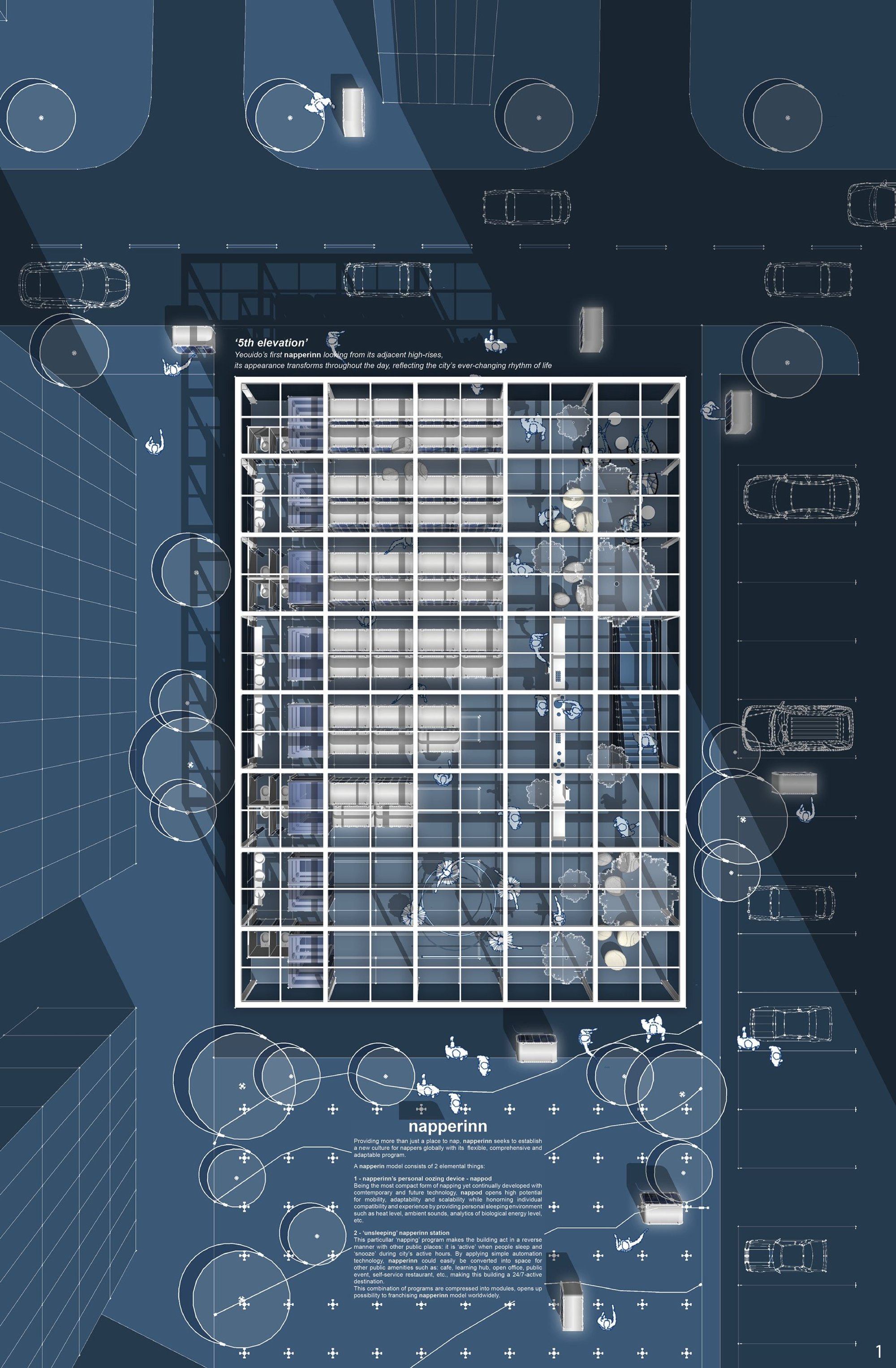
Napperinn: Redefining Urban Rest through Modular Architecture and Adaptive Systems
A modular architecture concept transforming urban downtime into productive rest spaces through automation, adaptability, and scalable design

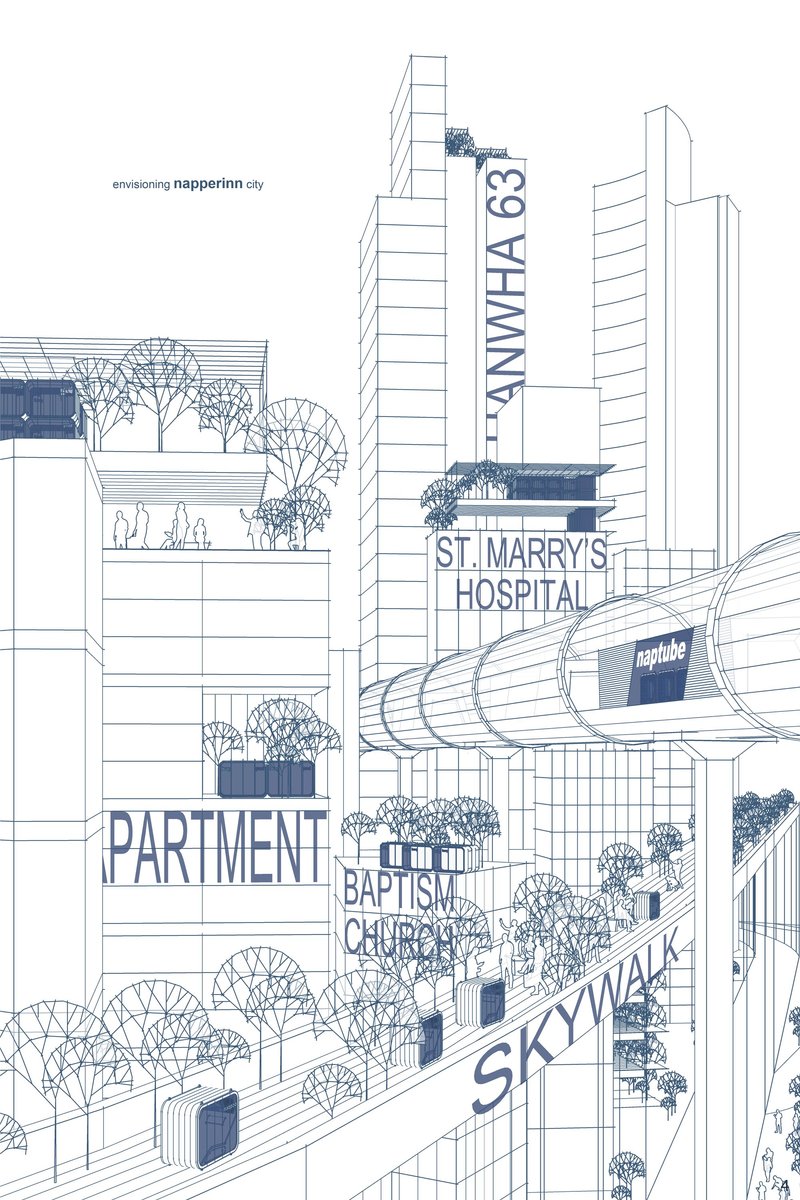
In an increasingly dense and fast-paced urban environment, the demand for rest is often overlooked within architectural planning. Napperinn, a visionary project by Nghi Nguyen and Dat Tan Le, introduces a forward-thinking response to this challenge through modular architecture. More than a resting facility, Napperinn proposes a dynamic, automated, and scalable system that integrates seamlessly into the rhythm of the city.
Positioned at the intersection of infrastructure, public space, and wellness design, this project explores how architecture can adapt in real time to human needs. By combining automation, prefabrication, and flexible programming, Napperinn transforms the simple act of napping into a structured urban service.
Editor's Choice entry of Cocoon
Concept: Architecture that Responds to Time
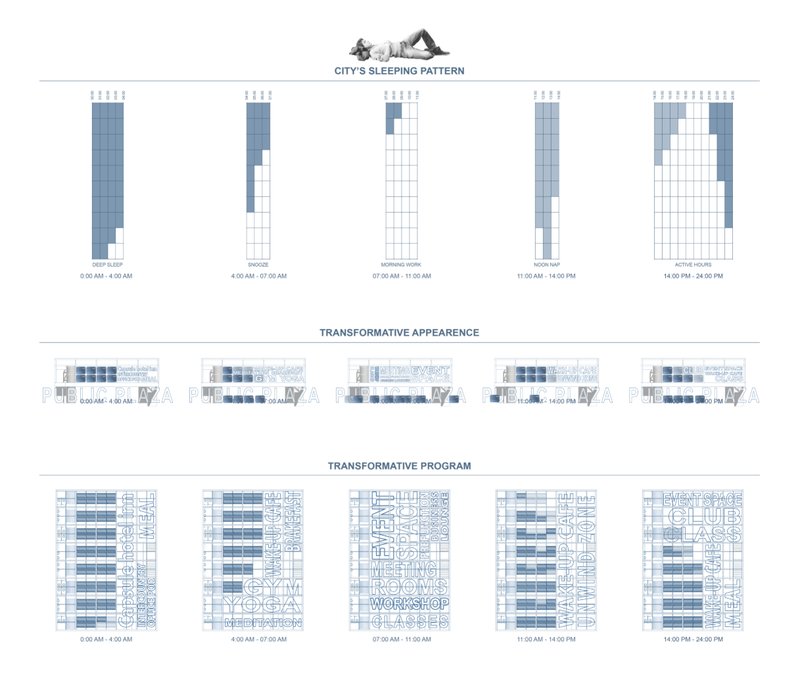
The core idea of Napperinn is rooted in the concept of temporal architecture, where spatial programs shift based on the time of day. The project analyzes the city’s sleeping patterns and aligns its functions accordingly.
During early hours, the structure prioritizes deep rest, while transitioning into wake-up and productivity zones as the day progresses. By evening, it evolves into active public spaces. This cyclical transformation allows the building to function as a 24/7 adaptive system rather than a static structure.
This approach redefines conventional architectural programming by introducing a time-based operational logic, making the building both efficient and responsive.
Automation and the Nap Pod System
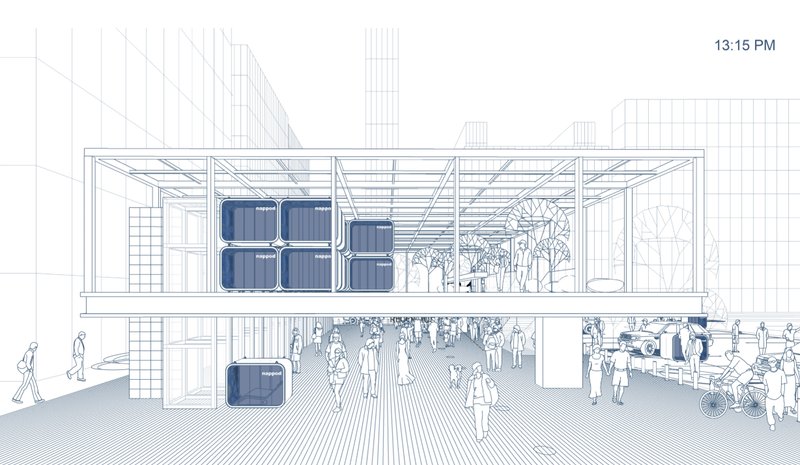
At the heart of the project lies the nap pod (nappod) system, an automated unit designed to deliver personalized rest experiences. Users can book a pod through a mobile interface, allowing the system to allocate and deliver a resting unit efficiently.
The nappods are equipped with advanced features such as:
- Environmental control (temperature, lighting, sound)
- Biofeedback and biometric analysis
- Compact, mobile, and scalable design
This integration of technology positions Napperinn as a hybrid between architecture and service infrastructure. The building becomes an interface rather than a fixed object.
Transformative Program and Spatial Flexibility
One of the defining aspects of this modular architecture project is its ability to transform spatial functions throughout the day. The program includes:
- Nap zones that can convert into capsule accommodations
- Wake-up cafes and relaxation areas
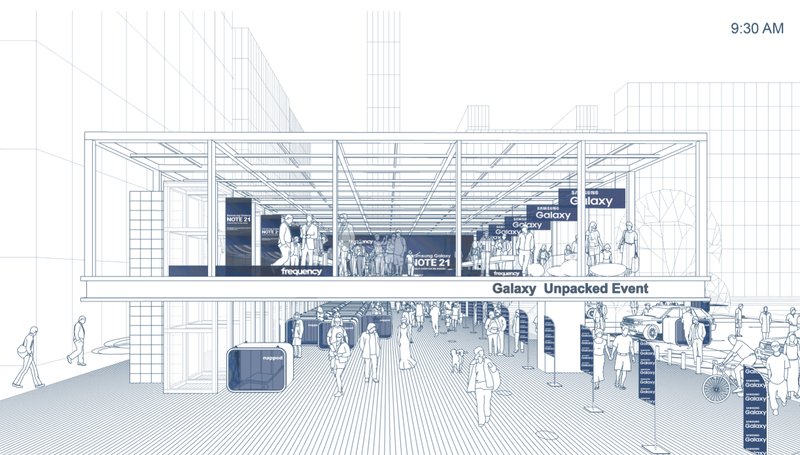
- Multifunctional halls for events, workshops, and co-working
- Public engagement spaces that activate during peak hours
This layered programming ensures that no space remains underutilized. Instead, the building continuously adapts to urban demand, maximizing efficiency and engagement.
Modular Design and Scalability
Napperinn employs a prefabricated modular system, allowing it to be deployed across various urban contexts. The structure is composed of repeatable units that can be scaled vertically or horizontally depending on site conditions.
This modular strategy offers several advantages:
- Rapid construction and reduced on-site time
- Flexibility in adapting to different city densities
- Potential for global replication and franchising
The project demonstrates how modular architecture can function as a scalable urban solution rather than a site-specific intervention.
Urban Integration and Mobility
The project envisions integration with existing transportation systems, enabling seamless access to nappods across the city. The concept extends beyond a single building into a distributed network of rest points.
By embedding itself within transit corridors and dense urban zones, Napperinn transforms travel time into rest time. This creates a new layer of urban infrastructure focused on human well-being.
Architectural Expression and Transparency
Visually, Napperinn presents itself as a transparent and dynamic structure. The facade reveals internal transformations, allowing observers to witness the shifting activities throughout the day.
This transparency contributes to the idea of a “fifth facade,” where the building’s activity patterns become legible from surrounding high-rise viewpoints. The architecture communicates its function, reinforcing its role as a living system.
Material and Technological Framework
The project utilizes prefabricated steel modules to achieve structural efficiency and speed. This construction approach aligns with the project’s emphasis on scalability and adaptability.
Additionally, the incorporation of automation technologies such as self-driving systems and digital interfaces enhances operational efficiency. The combination of physical modularity and digital intelligence defines the project’s innovative edge.
Juror Commentary and Critical Reflection
Juror Junwoong Seog highlighted the project’s multidisciplinary and time-based approach as particularly compelling. The ability to transform programmatically across different time frames demonstrates a strong conceptual foundation.
However, the critique also points toward areas for further development:
- More detailed strategies for mobility and deployment in dense urban environments
- Stronger articulation of the relationship between interior and exterior spaces
These observations emphasize the importance of refining the project’s urban integration and spatial narrative to fully realize its potential.
Napperinn represents a significant exploration into the future of modular architecture, where buildings are no longer static entities but responsive systems. By integrating automation, adaptability, and scalable design, the project redefines how architecture can support human well-being in urban environments.
As cities continue to grow and evolve, solutions like Napperinn suggest a shift toward adaptive infrastructure that prioritizes flexibility, efficiency, and user experience. It is not just a place to rest, but a prototype for a new architectural paradigm.




Popular Articles
Popular articles from the community

Pinto Builds a Faceless Pavilion Beneath Casuarina Trees on Thailand's Rayong Coast
SON Restaurant refuses a front door or a back wall, treating all four facades equally in a 260-square-meter brick and stucco grid.
Reincarnation Weaves a Three-Story Retreat into the Green Landscape of Rural Bangladesh
Ara Manor in Narsingdi dissolves the line between domestic architecture and its lush surroundings through screens, courtyards, and planted rooftops.
Eco Chapel: A Green Architecture Pavilion Designed in Symbiosis with the Forest
Eco Chapel uses green architecture to weave prayer, learning and reuse into a forest pavilion shaped by modular hexagonal canopies for life.
Kaffeebühnen: Coffee Shop Architecture Designed as a Civic Stage Between Vienna’s City and Park
Kaffeebühnen turns coffee shop architecture into a civic stage, linking Vienna’s park edge, urban life, warm timber yards, and coffee craft.

Similar Reads
You might also enjoy these articles
Eco Chapel: A Green Architecture Pavilion Designed in Symbiosis with the Forest
Eco Chapel uses green architecture to weave prayer, learning and reuse into a forest pavilion shaped by modular hexagonal canopies for life.
Kaffeebühnen: Coffee Shop Architecture Designed as a Civic Stage Between Vienna’s City and Park
Kaffeebühnen turns coffee shop architecture into a civic stage, linking Vienna’s park edge, urban life, warm timber yards, and coffee craft.
Healing Façade: Sustainable Architecture for Reforestation, Community, and Sacred Ecology in Ethiopia
Healing Façade reimagines sustainable architecture as a living wall that restores soil, catches water and renews Ethiopia's forest churches.


Urban Forest: A Vertical Ecosystem for 5,000 Workers in Singapore's Changi Business Park
Radially stacked pods and layered green decks turn a 7-acre plot into 47 acres of ecological workspace projected for 2040.






Comments (0)
Please login or sign up to add comments
No comments yet. Be the first to comment!