
Narbo Via Museum by France – Foster + Partners
A monumental Roman-heritage museum in France blending concrete precision, archaeological display, and sustainable environmental strategies into a contemporary civic landmark.


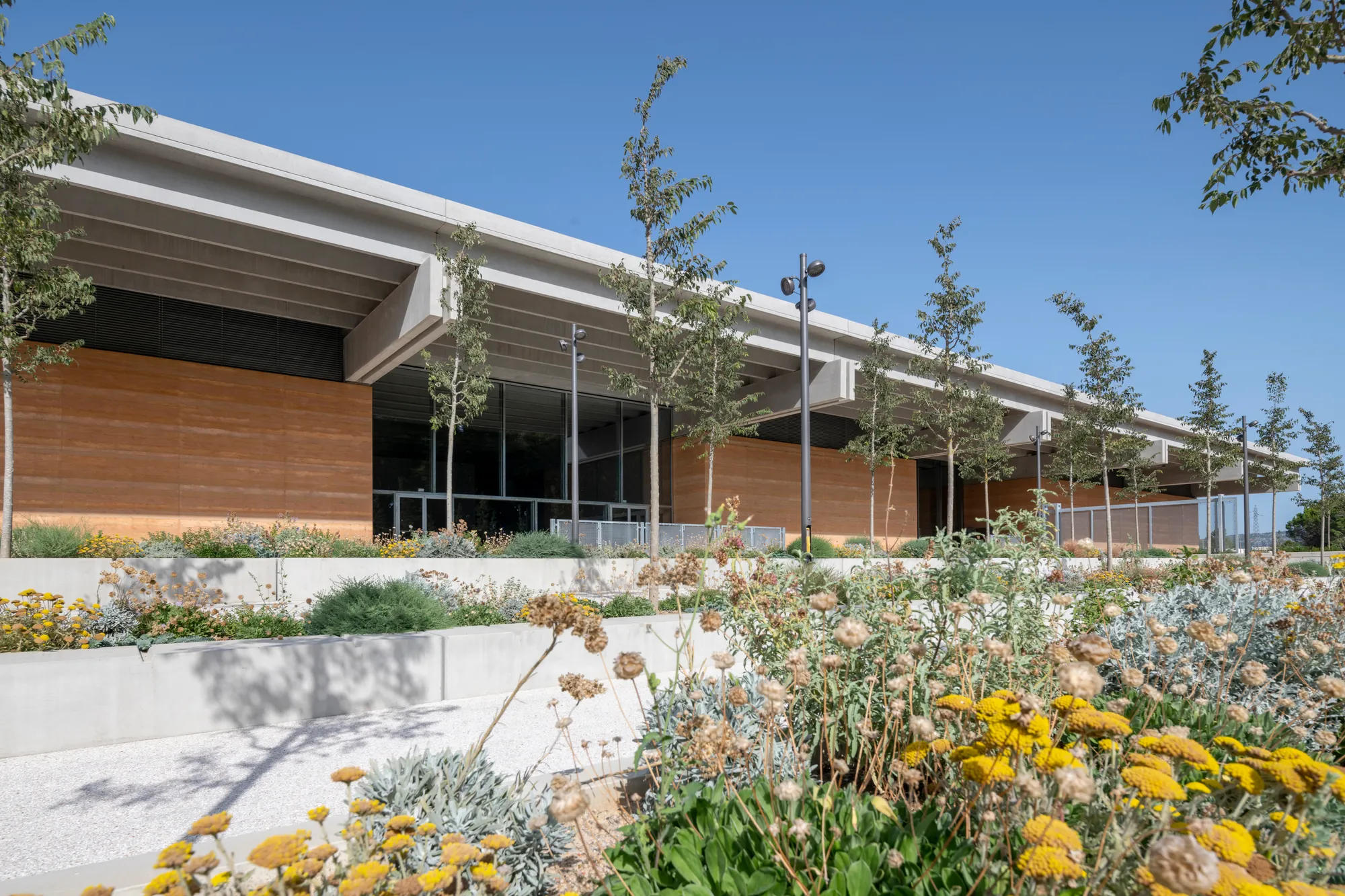
Narbo Via Museum in Narbonne, France, designed by Foster + Partners, stands as an ambitious cultural landmark that repositions the city within its deep Roman lineage. This museum is more than a repository of antiquities. It is a powerful urban instrument that reconnects the contemporary landscape with the multilayered history of Narbo Martius, once a thriving Roman capital. Through an architectural language rooted in permanence, material honesty, and civic presence, the museum establishes itself as both a gateway and a destination.
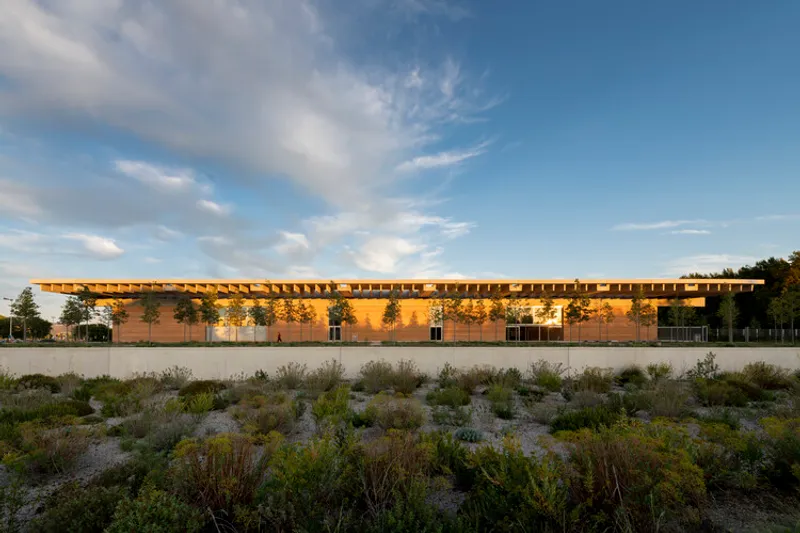
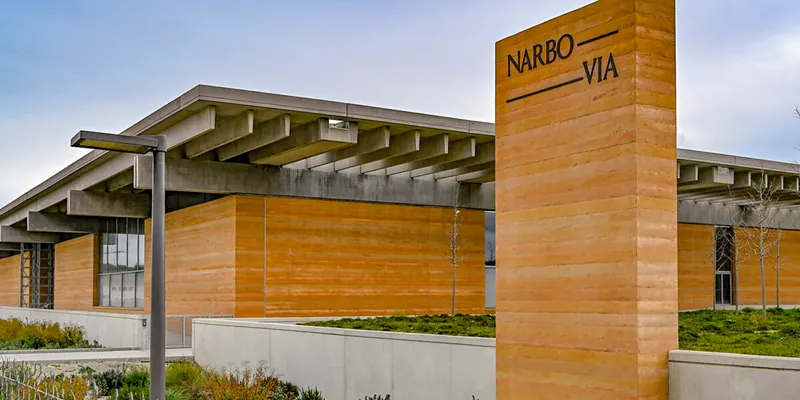
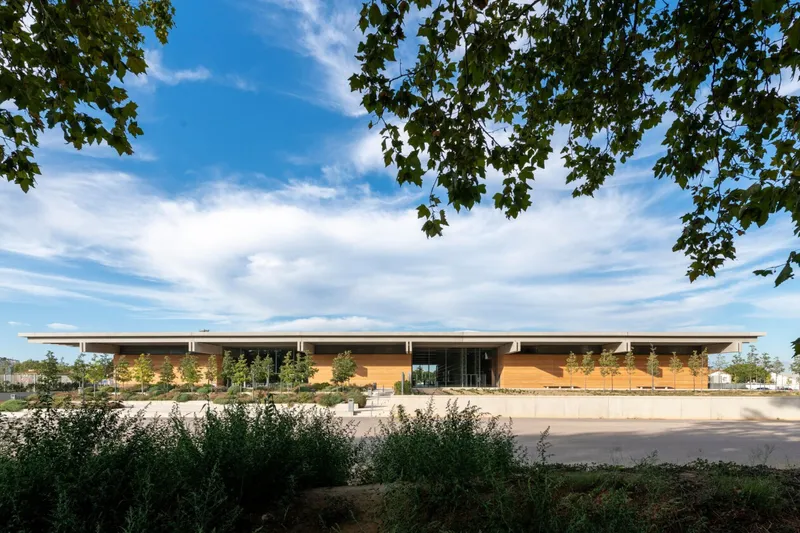
The project unfolds on a site bordering the Canal de la Robine, an axis of water historically tied to regional development. Its placement, slightly removed from dense urban fabric yet deeply connected through new pedestrian links, was strategic. Foster + Partners envisioned a museum that greets visitors as a ceremonial threshold to the city, rather than simply another cultural facility. With its monumental horizontal form raised on a podium, Narbo Via communicates authority, anchoring the entrance to Narbonne with a structure that feels timeless, calm, and precise.
Monumentality through restraint
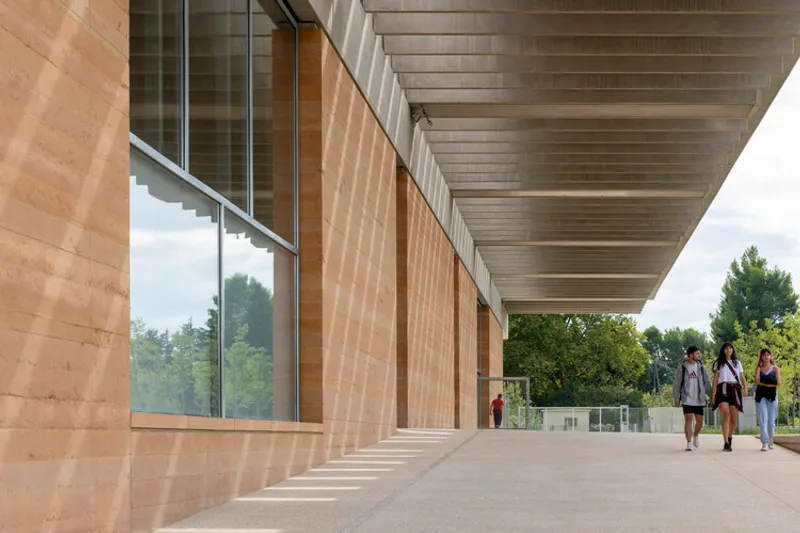
At first encounter, the architectural character is deliberately understated. Instead of relying on ornamentation or dramatic formal gestures, the museum draws power from proportion, thickness, and material mass. The building reads as a monolithic block, elevated slightly to evoke civic grounding and to offer long, uninterrupted visual planes. Its massing embodies a contemporary form of monumentality: confident, rigorous, yet never overwhelming.
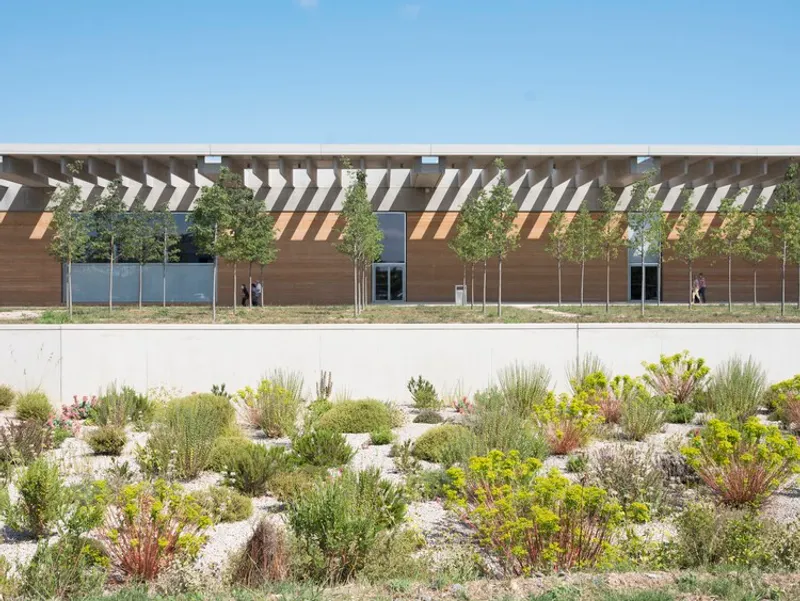
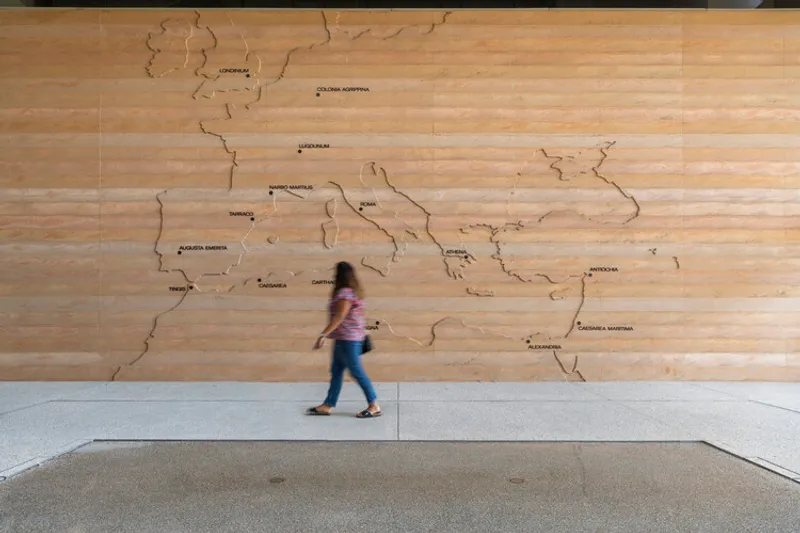
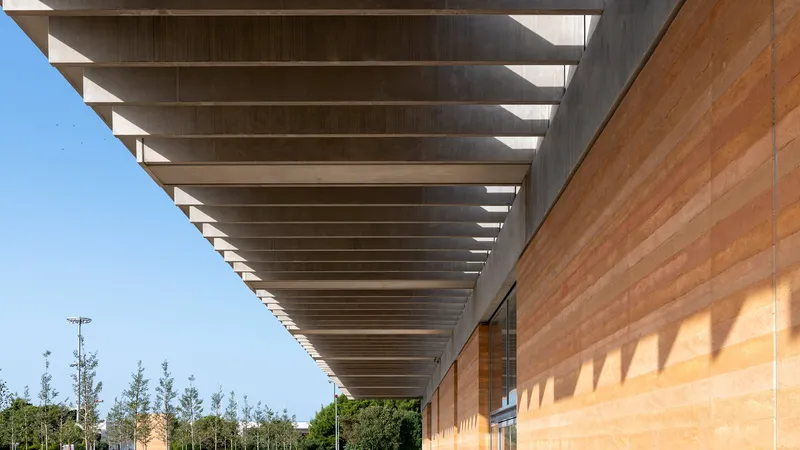
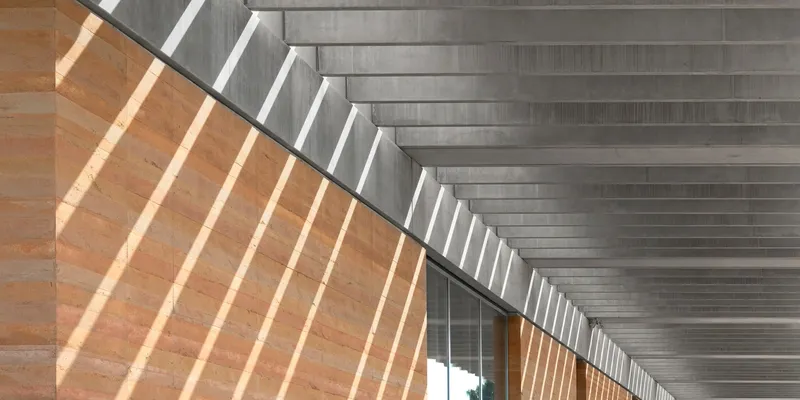
This approach aligns with Roman architectural intelligence, where spatial hierarchy, rhythm, and construction logic mattered more than superficial decoration. The museum channels the tone of ancient stone repositories, where cultural artefacts rested surrounded by silence, weight, and time. The decision to construct primarily in cast-in-place coloured concrete reinforces this connection. Each wall reveals stratified texture created by tamping layers of dry-mixed concrete during fabrication. The resulting surface resembles geological sediment, archaeological layers, and the historical process of Roman concrete curing over centuries. In Narbo Via, material becomes memory.
Spatial strategy and programme integration
The organisation of the museum addresses multiple user groups simultaneously: casual visitors, scholars, conservation experts, and students. Rather than segregating functions, Foster + Partners crafted an interconnected environment driven by visual permeability and educational transparency.
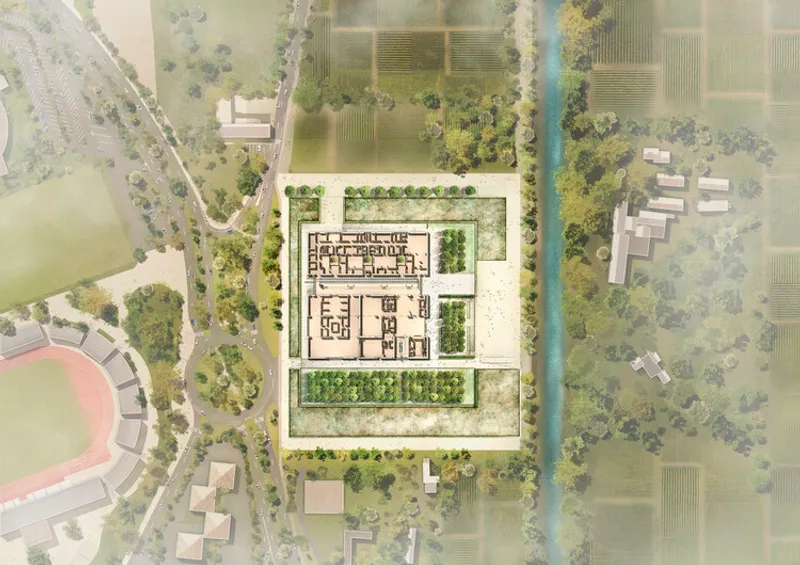
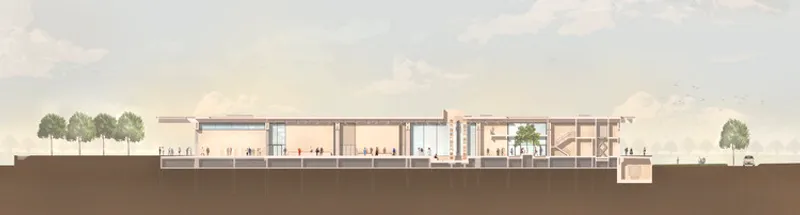
The plan integrates:
• Permanent exhibition galleries• Temporary exhibition halls• A multimedia learning centre• An auditorium for lectures and cultural programming• A public bookstore and café• Research laboratories and artefact restoration workshops• Climate-controlled storage zones• Formal exterior gardens and an outdoor amphitheatre
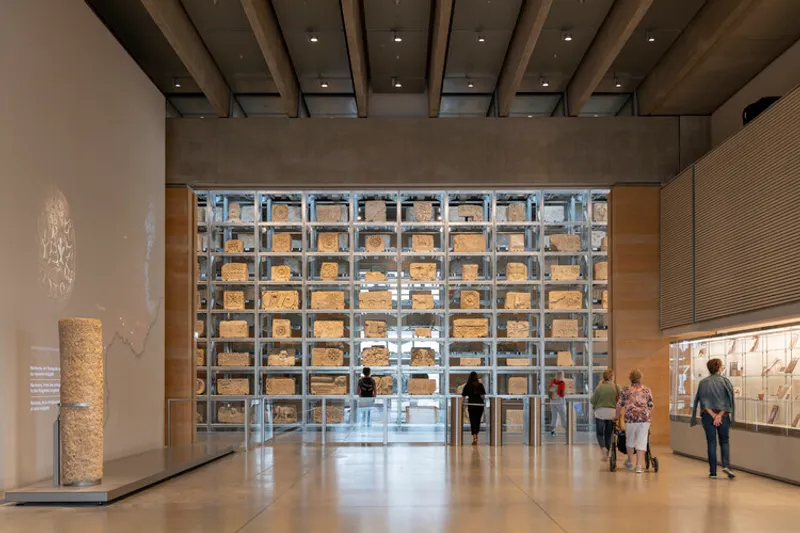
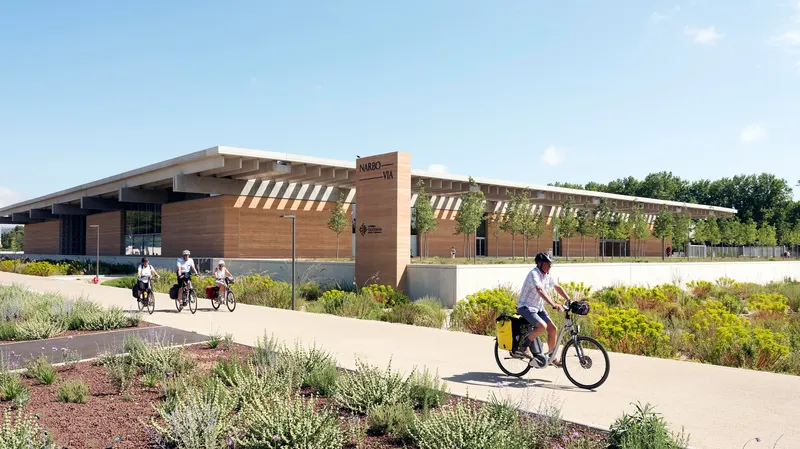
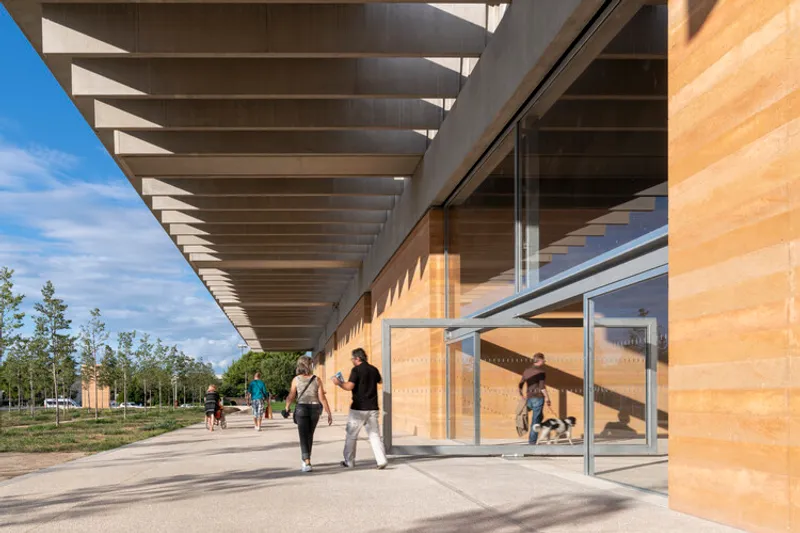
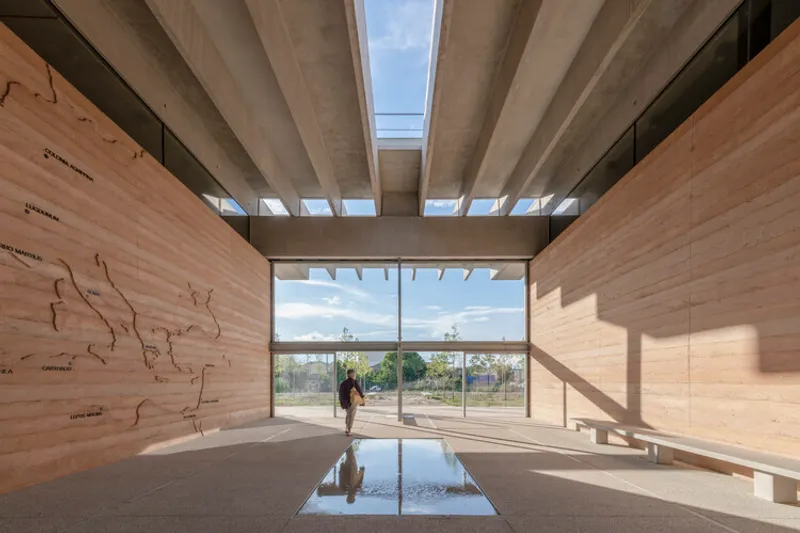
All these components are unified beneath a vast concrete roof canopy that spans across the programme like an architectural field. This unifying roof is both functional and symbolic. It stabilizes the internal environment through its thermal mass, houses light wells that draw daylight deep into the building, and shelters circulation paths around the perimeter. The canopy floats above a clerestory, introducing a fine band of light that separates roof from wall, emphasizing architectural levity despite massiveness.
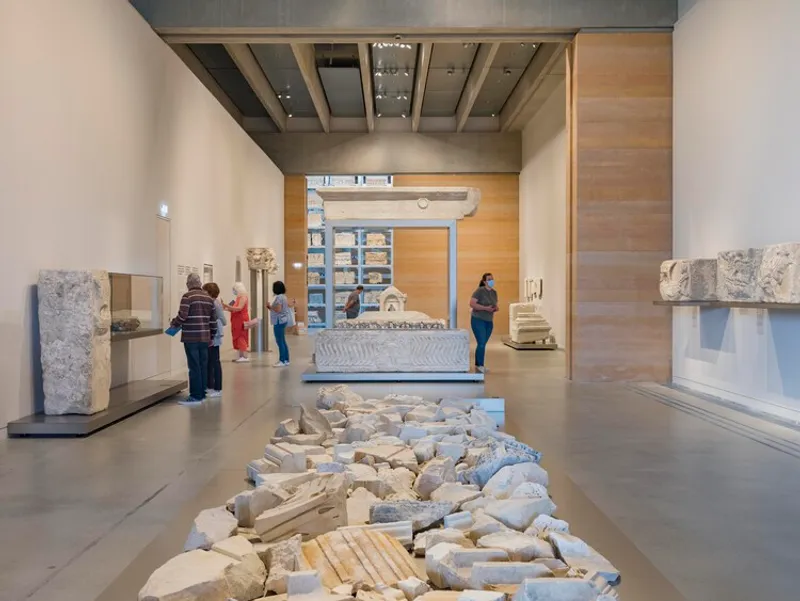
The Lapidary Wall: intellectual and spatial core
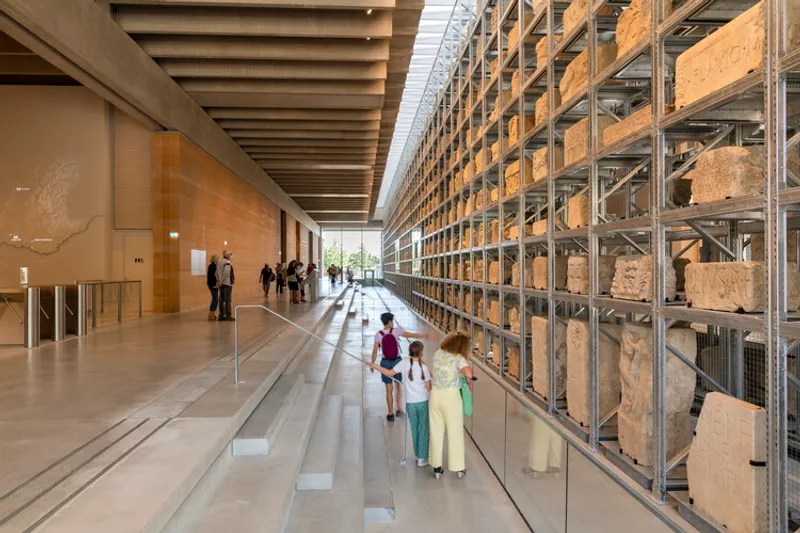
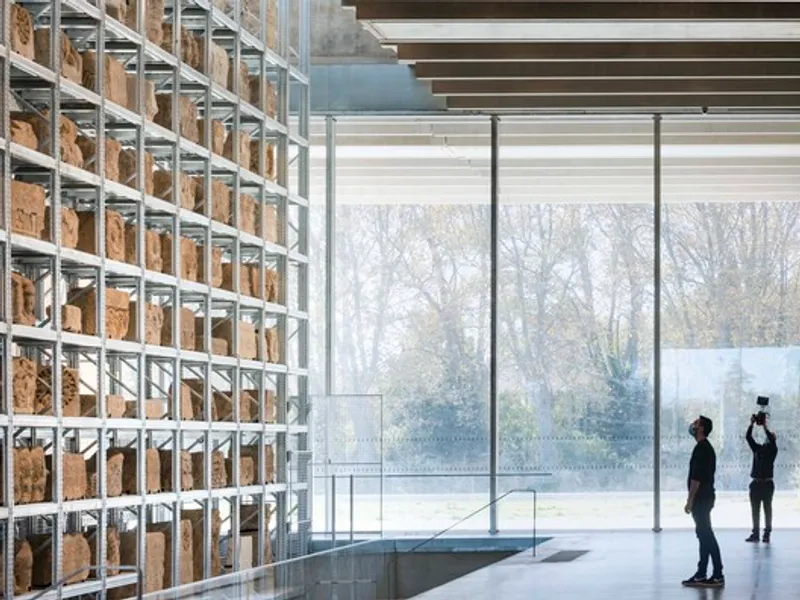
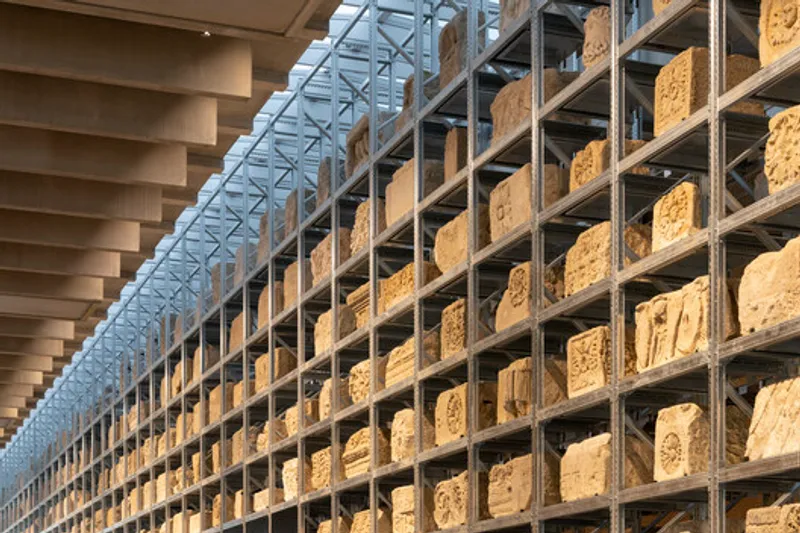
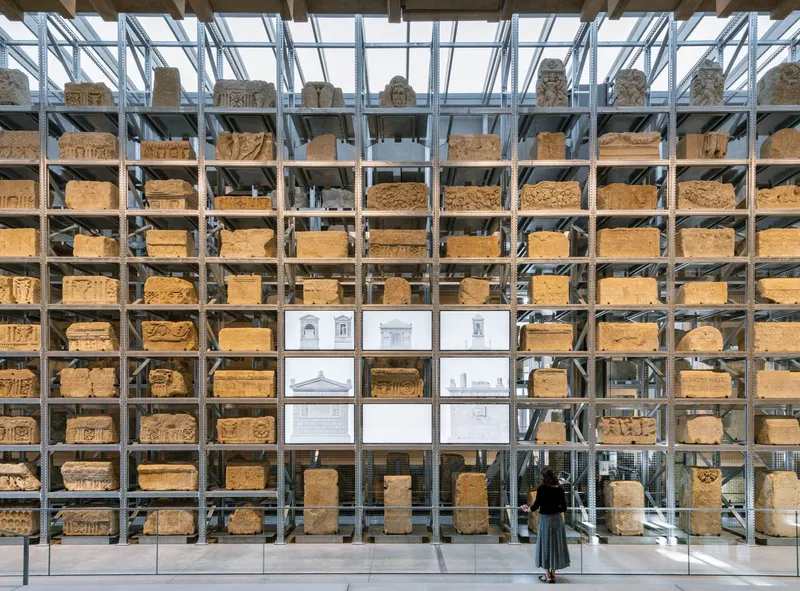
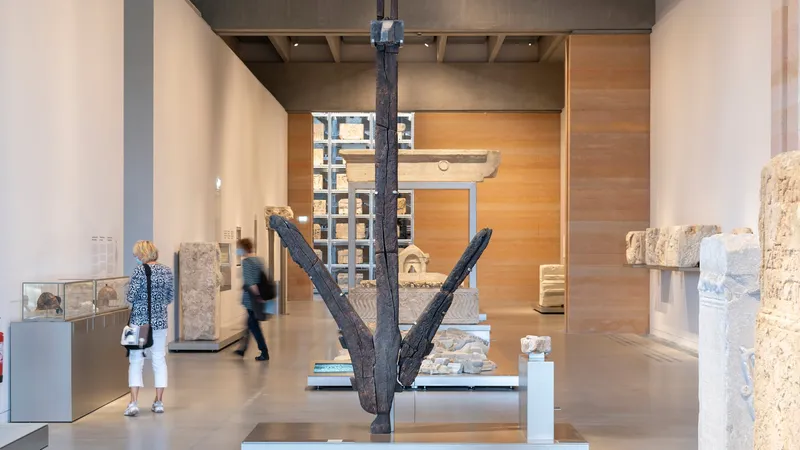
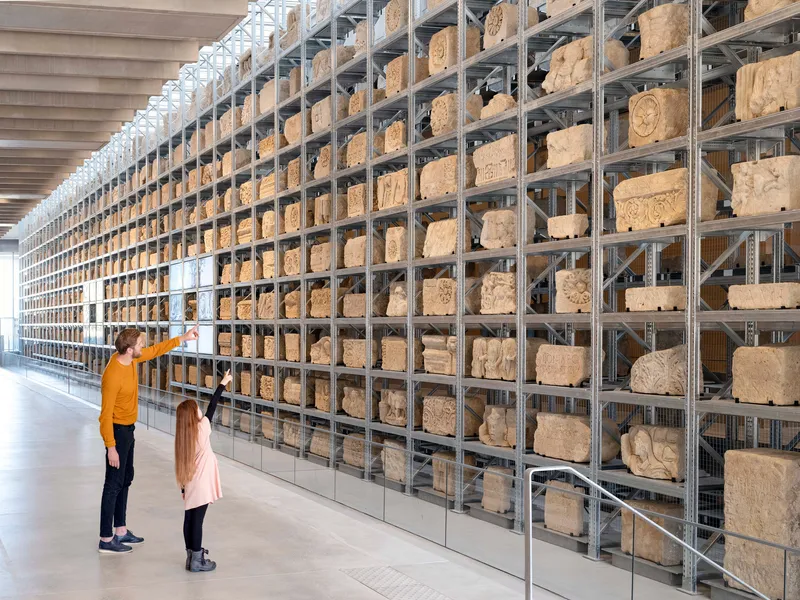
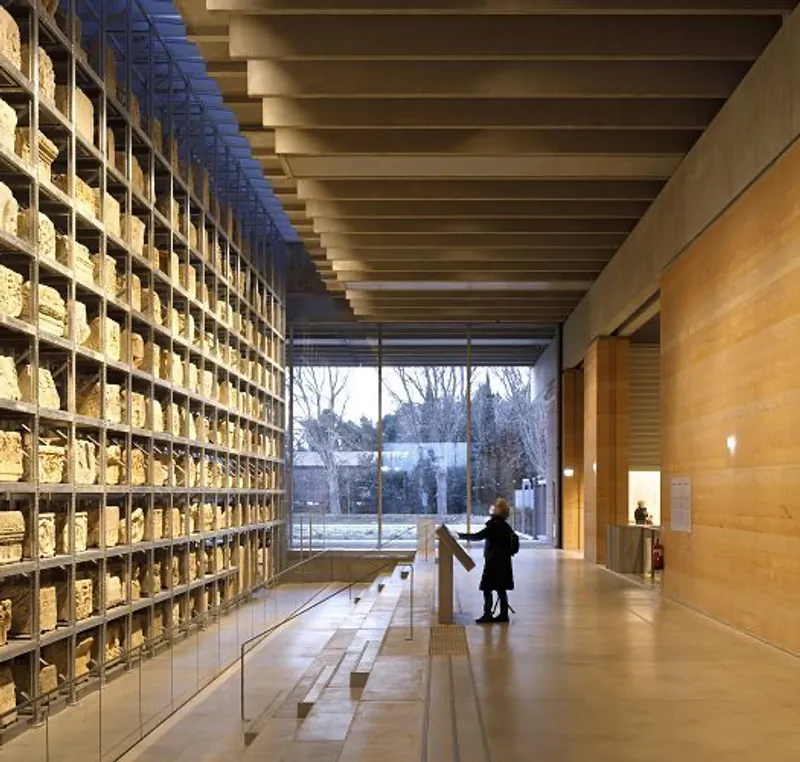
At the heart of Narbo Via lies its most defining architectural element: the Lapidary Wall. This monumental storage-display system holds hundreds of Roman stone blocks, inscriptions, sarcophagus fragments, and carved reliefs. Rather than concealing artefacts in archive vaults, the museum treats them as visible layers of history.
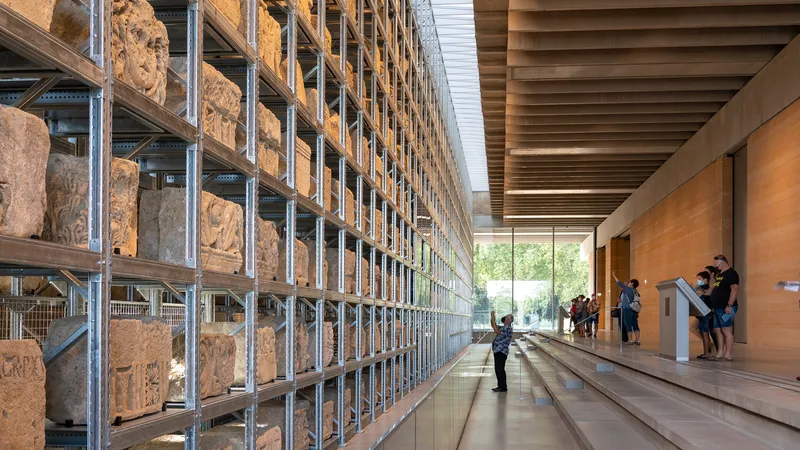
The wall functions as both exhibition object and spatial divider. On one side, galleries unfold for public viewing. On the other, research spaces operate with controlled access. Light filters through the matrix of stone, casting delicate shadows that animate surfaces throughout the day and marking the silent labour of archaeologists behind the wall. Visitors are able to watch conservation work directly, dissolving barriers between scholarship and public culture. This approach reframes the museum not as a warehouse of relics but as a living organism where preservation, interpretation, and education occur simultaneously.
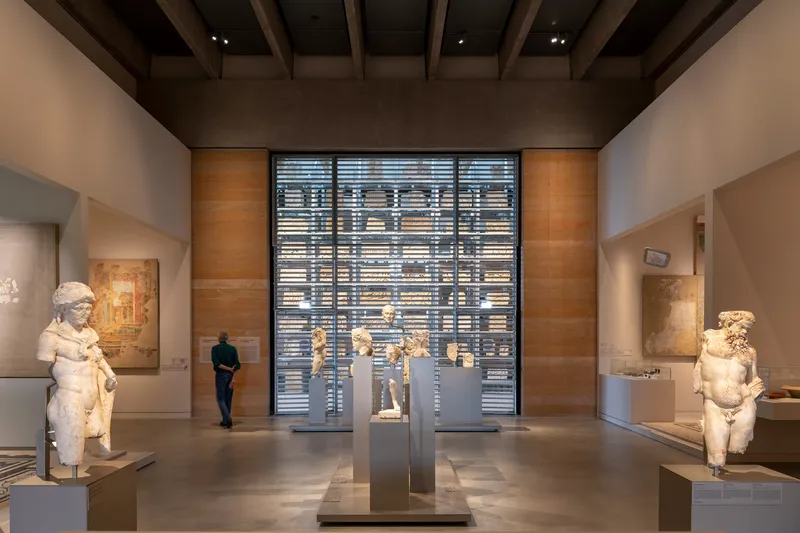
The Lapidary Wall represents a philosophical shift in museum design. Instead of staging Roman fragments as static objects behind glass, Narbo Via situates them in a continuous timeline. Artefacts are no longer relics of a lost world. They are ingredients of an ongoing story that evolves through research, exhibition, and community engagement.
Environmental intelligence inspired by antiquity
The museum is technologically sophisticated, yet its environmental strategy is rooted in early Roman engineering. Instead of relying predominantly on high-energy mechanical cooling, Foster + Partners designed a hybrid passive system optimised through thermal mass and low-velocity air distribution.
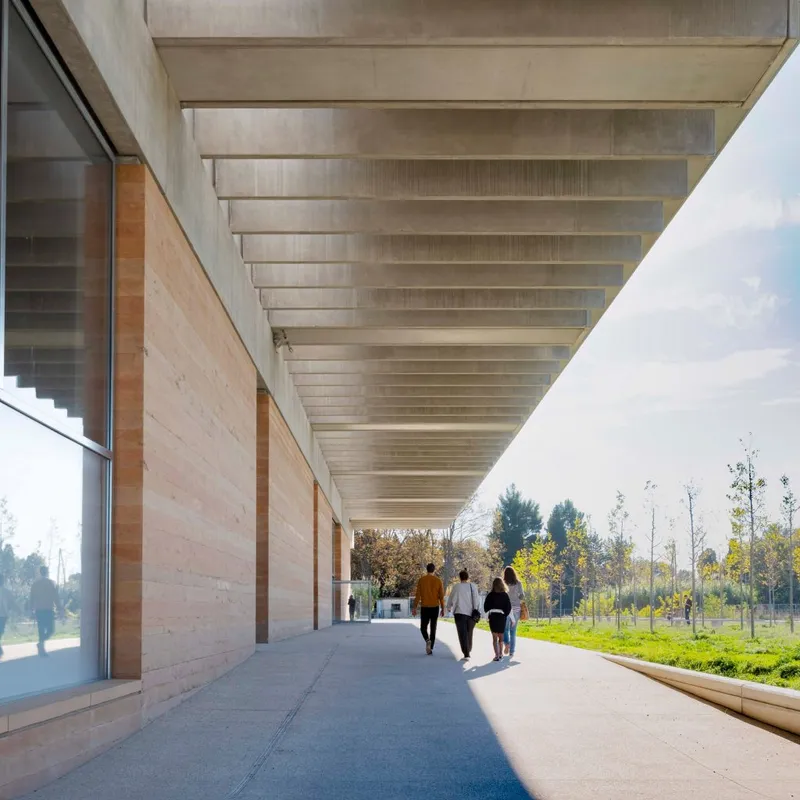
A dedicated underground services void channels cool air into exhibition halls near floor level. Because air moves slowly and remains close to the occupant zone, conditioned volume remains minimal. Warm air naturally rises into tall roof volumes, then exhausts upward through the clerestory. High ceilings, substantial masonry walls, shaded façades, and deep overhangs reduce solar gain significantly. This creates a stable thermal environment that protects artefacts while reducing energy consumption.
Such strategies reflect Roman bath houses and civic buildings that used thick walls, courtyards, and subterranean systems to temper climate before the invention of modern HVAC. Narbo Via reinterprets this historical ingenuity, proving that architecture designed for durability can also be architecture designed for environmental responsibility.
Interior atmosphere and movement
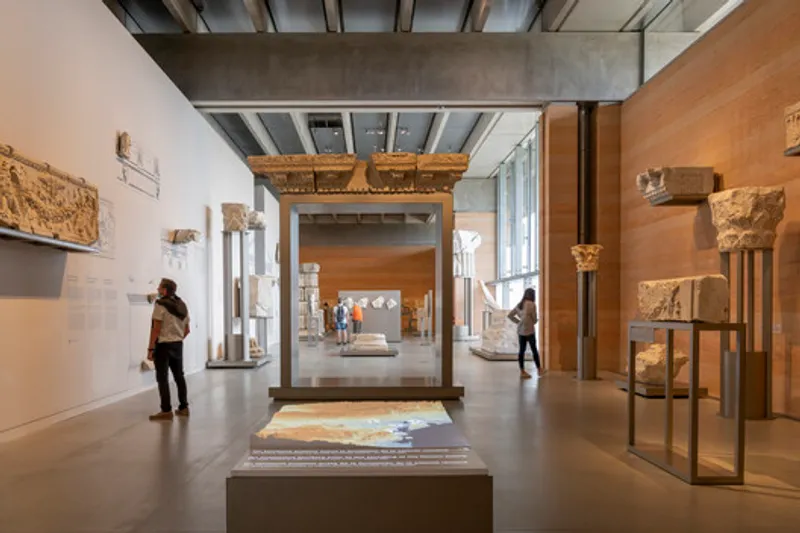
The experience of moving through Narbo Via is designed with choreographic intention. Visitors enter through shaded walkways under the roof canopy, where filtered light softens material heaviness. Inside, circulation is axial and intuitive. Long views reinforce clarity while subtle shifts in ceiling height transform emotional register from contemplative to monumental to intimate.
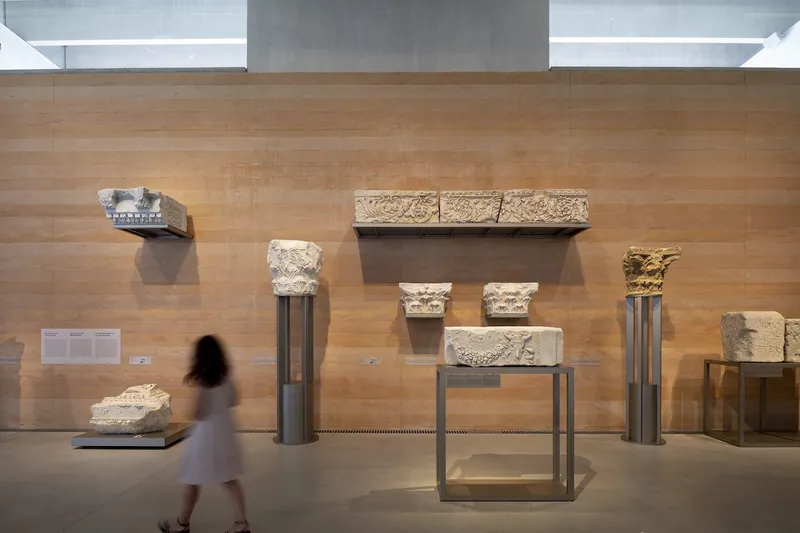
Materials remain consistent: coloured concrete walls, polished floors, metal framing, timber inserts, and controlled illumination. Instead of saturating galleries with theatrical lighting, the museum lets artefacts speak within calm ambience. Spaces feel grounded, meditative, attuned to history. The museum becomes a vessel for time, where present and past coexist without competition.
Landscape as extension of museum narrative
The museum grounds are carefully choreographed to complement the architecture. Inspired by formal French gardens and Roman courtyards, the landscape introduces linear paths, controlled geometry, and species selected for regional resilience. The exterior amphitheatre integrates cultural programming with public life. Concerts, lectures, and open-air exhibitions transform the museum into a civic stage rather than an enclosed archive.
Most importantly, a new pedestrian ramp now links the museum to the canal towpath, enabling direct access from the city centre. This gesture dissolves the boundary between cultural institution and public realm. The museum no longer sits outside the city; it is woven into its daily movement and memory.
Narbo Via as cultural identity and future legacy
Narbo Via Museum represents a model of how contemporary architecture can honour history without imitating it. Foster + Partners avoided nostalgic Roman pastiche. Instead, they studied Roman intelligence in structure, space, and climate. The result is an architecture that feels ancient in concept yet firmly modern in execution.
The museum elevates archaeological heritage to civic scale, offering Narbonne a new landmark that strengthens cultural identity and international significance. It is a place for residents, researchers, and travellers to meet history not as a distant chronology but as a living foundation for the city’s future.
Narbo Via serves as a reminder that museums are not static storage facilities. They are vessels for collective memory, laboratories for research, and bridges to cultural evolution. Through raw materiality, environmental consciousness, and spatial clarity, the building redefines how antiquity can be exhibited, protected, and interpreted. It is a museum where the story of Rome continues to breathe, speak, and expand.
All the Photographs are works of Nigel Young, Philippe Chancel



Popular Articles
Popular articles from the community


Play: Fragments of Their World
Familiar architecture becomes modular playground design, creating safe spaces where displaced children can learn, connect, imagine and play.

The Musturak Paradise: Senior Living Architecture for a Connected Future in Temara, Morocco
The Musturak Paradise reimagines senior living architecture in Temara via private homes, social spaces, culture, community, and shared care.

Riyadh For All: Intergenerational Urban Design for Active Aging in Rabat
Riyadh For All reimagines urban design in Rabat with intergenerational co-living, adaptive courtyards, and Moroccan cultural exchange today.

Co-Life: Senior Housing Design That Reconnects Older Adults With the City
Co-Life reimagines senior housing design through healing gardens, shared streets, workshops, and a sustainable community across generations.
Similar Reads
You might also enjoy these articles


Hodi-Mandai Geram
Project Function: Preservation and revitalization of the Intangible heritage and socio-spatial identity of the Hodi by Housing, Cultural Memory Center, Sacred Grove, landscape, local tourism economy


Olio Towers: A Mid-Rise for Performers That Fuses Housing, Rehearsal, and Stage
Located blocks from Houston's Theater District, this modular tower stacks living units around a central performance atrium.

Oasis: Modular Green Housing Carved into Dhaka's Urban Fabric
A shortlisted Plugin Housing entry reclaims unauthorized settlements in Dhaka with stepped concrete volumes, green roofs, and ventilation-driven design.

Black Hole: A Floating Megastructure for the Post-Physical Era
Emiliano Mazzarotto envisions a spherical, self-scaling arena where e-sports, digital hotels, and holographic stadiums replace traditional public space.

Explore Cultural Architecture Competitions
Discover active competitions in this discipline



Challenge to reimagine the Iron Throne


Photograph architecture without architects


Illustrate the lost glory of Angkor Wat - Render Challenge

Bring back Drive In's
Comments (0)
Please login or sign up to add comments
No comments yet. Be the first to comment!