

Gera Studio Architects Plants a Brick Pavilion in a Kerman Pomegranate Garden
Narbon Villa channels Persian climate wisdom through sky rifts, sunken courtyards, and a cracked brick core on an 11,000-square-meter orchard site.


Kerman is one of Iran's oldest cities, founded somewhere between 224 and 241 CE, and brick has been its fundamental building material for nearly as long. When Gera Studio Architects set out to build a residence on an 11,000-square-meter pomegranate orchard in Chatrud, just outside Kerman, the studio chose brick not merely as a cladding option but as a conceptual anchor. Narbon Villa, completed in 2022 on a budget of just $100,000, treats brick as a living record of the region's architectural DNA, cracking it open at its core to let light, wind, and memory move through the house.
What makes the project genuinely interesting is how little it actually builds. At 350 square meters on a site thirty times that size, the villa is less a house than a carefully positioned instrument for reading its environment. Every formal move, from twin vertical voids the architects call "sky rifts" to a sunken courtyard that pre-cools air before it enters the living spaces, derives from passive strategies native to the region. The building shares its garden with neighbors and passersby through a deliberate gap in the existing thatched boundary wall, fitted with a glass door. The result is a pavilion that belongs as much to the orchard as to its owners.
White Volumes and Brick Insertions


From the garden, Narbon Villa reads as a cluster of white stucco volumes punctuated by raw brick elements. The palette is deliberate: micro cement and thatch clad the exterior surfaces, establishing a quiet backdrop against which the brick stairs, lintels, and core emerge with material intensity. One large square aperture in the parapet frames nothing but sky and treetops, turning the facade itself into a viewing device. The reflecting pool at the base stretches the composition downward, doubling the geometry in still water.
Rather than demolishing the orchard's original thatched perimeter wall, the architects preserved it and erected a new wall behind it, maintaining the street texture while creating a buffer alley that feels deliberately nostalgic. That layered boundary strategy sets the tone for the whole project: old fabric stays, new fabric slips in behind it.
The Sunken Courtyard and Entry Sequence


Arrival at Narbon Villa is a descent. A sunken courtyard intercepts visitors between the garden gate and the interior, dropping them below grade into cool shade. In a city where summer days are long and punishing, this is not a decorative gesture; it is thermal infrastructure. The courtyard acts as a transitional lung, pre-cooling air through shading and earth contact before it enters the house.
The entry corridor itself reinforces the compression. Pale brick lines both walls and ceiling, narrowing the visitor's field of vision until a pair of glazed double doors opens onto the garden beyond. The sequence moves from bright sun to cool shadow to filtered light to green horizon in a matter of steps, and the material transitions, from stucco to brick to glass, mark each threshold with tactile clarity.
Sky Rifts and Passive Ventilation


The two deep vertical voids the architects call "sky rifts" are the villa's most distinctive feature, and its most functional. Cut through the full height of the building, they channel Kerman's prevailing winds into the interior, operating on the same principle as the traditional Persian badgir (wind tower) but expressed as a contemporary spatial event. As sunlight shifts through the day, the rifts cast moving blades of shadow across interior surfaces, turning the house into a kind of sundial.
The double-height living space captures this effect most dramatically. A mezzanine level bridges one side of the void, and a large glazed wall on the opposite face frames the pool and garden. Wind enters through the rift above, crosses the open volume, and exits through operable glazing below. The house breathes without mechanical assistance for much of the year, which matters when your construction budget is $100,000 and every dollar spent on HVAC is a dollar not spent on space.
Brick as Structure, Surface, and Concept


Inside, the exposed brick core dominates. Vaulted brick ceilings span the kitchen, where a herringbone pattern overhead contrasts with white cabinetry and a wood island below. The brick is not cosmeticized; it carries visible texture, variation, and the occasional crack. Gera Studio treats these imperfections as narrative content, a material record of time and craft rather than something to plaster over.
The interplay between the rough brick vaults and the smooth white walls creates a tonal rhythm that repeats room to room. Flooring alternates between brick and ceramic, and furniture incorporates wood, stone, and weathered rust-patina metal. The material logic is consistent: everything is local, everything ages, everything gains character rather than losing it.
The Multi-Level Roofscape


Persian domestic architecture has always treated the roof as habitable territory, and Narbon Villa extends that tradition across multiple levels. Elongated walls cast shade over terraces at different elevations, creating a sequence of outdoor rooms that stay usable even under Kerman's fierce sun. The rooftop is equipped for stargazing (there is a telescope mounted beside a framed aperture aimed at the mountains) and the architects report that the family uses the terraces for open-air cinema nights and social gatherings.
At dusk, the relationship between the roofscape and the garden below becomes clearest. The swimming pool and terrace sit at ground level, bordered by tall trees and the orchard's ancient sycamores, while the staggered roof planes above provide overlook points that feel more like a hilltop village than a single house. The villa's 350 square meters of floor area punch well above their weight because so much of the living happens on top of and around the building, not just inside it.
Why This Project Matters
Narbon Villa is a case study in doing more with less. On a budget that would barely cover finishes in many Western markets, Gera Studio Architects delivered a house that cools itself, shares its landscape with the community, and anchors its identity in 1,800 years of regional building culture. The sky rifts alone are worth studying: they prove that passive ventilation can be spatially spectacular, not just thermally responsible.
More broadly, the project challenges the assumption that climate-responsive design and contemporary aesthetics are competing agendas. Every strategy here, the sunken courtyard, the wind channels, the shading walls, the preserved boundary, comes directly from Persian precedent, yet nothing about the villa reads as nostalgic pastiche. It reads as architecture that knows exactly where it is and what it needs to do. That clarity is rare, and it earned the project a shared first place in Iran's 15th Architecture and Interior Architecture Award in 2023.
Narbon Villa by Gera Studio Architects, Chatrud, Kerman, Iran. 350 square meters built on an 11,000-square-meter site. Completed 2022. Photographs by Mohammad Hassan Ettefagh.
About the Studio
Share Your Own Work on uni.xyz
If projects like this are the kind of work you want to make, uni.xyz is a place to publish your own, find collaborators, and enter design competitions.


Popular Articles
Popular articles from the community

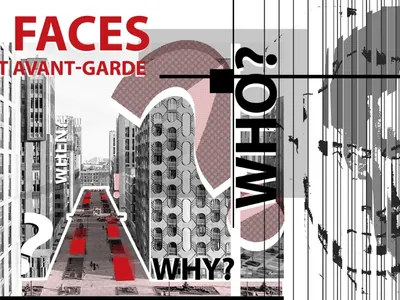
Faces of the Soviet Avant-Garde: Turning Moscow's Street Names into an Open-Air Museum
A network of sculptural installations across a Moscow residential district transforms forgotten architect names into spatial encounters with cultural memor
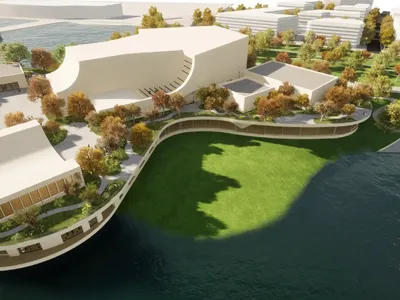
The Amber Palace Opera: A Geological Fiction Surfaces on Tallinn's Baltic Waterfront
Pierre Brillard reimagines a Baltic legend as a public landscape, opera house, and waterfront promenade rooted in Tallinn's coastal identity.
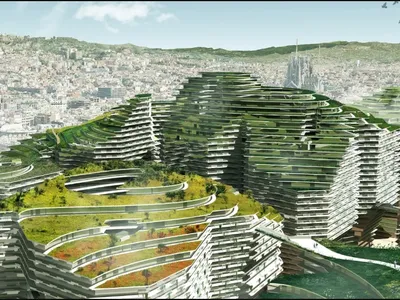
Manzana Morphosis: Stretching Barcelona's Grid into a Living Landscape for 2050
A radical reworking of the Eixample manzana turns density into a tool for generous public space, vertical ecology, and environmental performance.
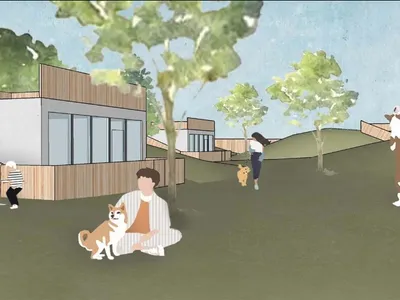
Temporary Home for Dogs: A Reversed Zoo Rethinks Animal Shelter Architecture
In Bucharest, a sinuous corridor and freed landscape flip the logic of containment, designing a shelter that works to make itself unnecessary.

Similar Reads
You might also enjoy these articles


Hodi-Mandai Geram
Project Function: Preservation and revitalization of the Intangible heritage and socio-spatial identity of the Hodi by Housing, Cultural Memory Center, Sacred Grove, landscape, local tourism economy


Olio Towers: A Mid-Rise for Performers That Fuses Housing, Rehearsal, and Stage
Located blocks from Houston's Theater District, this modular tower stacks living units around a central performance atrium.

Oasis: Modular Green Housing Carved into Dhaka's Urban Fabric
A shortlisted Plugin Housing entry reclaims unauthorized settlements in Dhaka with stepped concrete volumes, green roofs, and ventilation-driven design.

Black Hole: A Floating Megastructure for the Post-Physical Era
Emiliano Mazzarotto envisions a spherical, self-scaling arena where e-sports, digital hotels, and holographic stadiums replace traditional public space.

Explore Persian Architecture Competitions
Discover active competitions in this discipline

Challenge to reimagine the Iron Throne

Photograph architecture without architects

Illustrate the lost glory of Angkor Wat - Render Challenge

Design challenge to reuse E-waste
Comments (0)
Please login or sign up to add comments
No comments yet. Be the first to comment!