
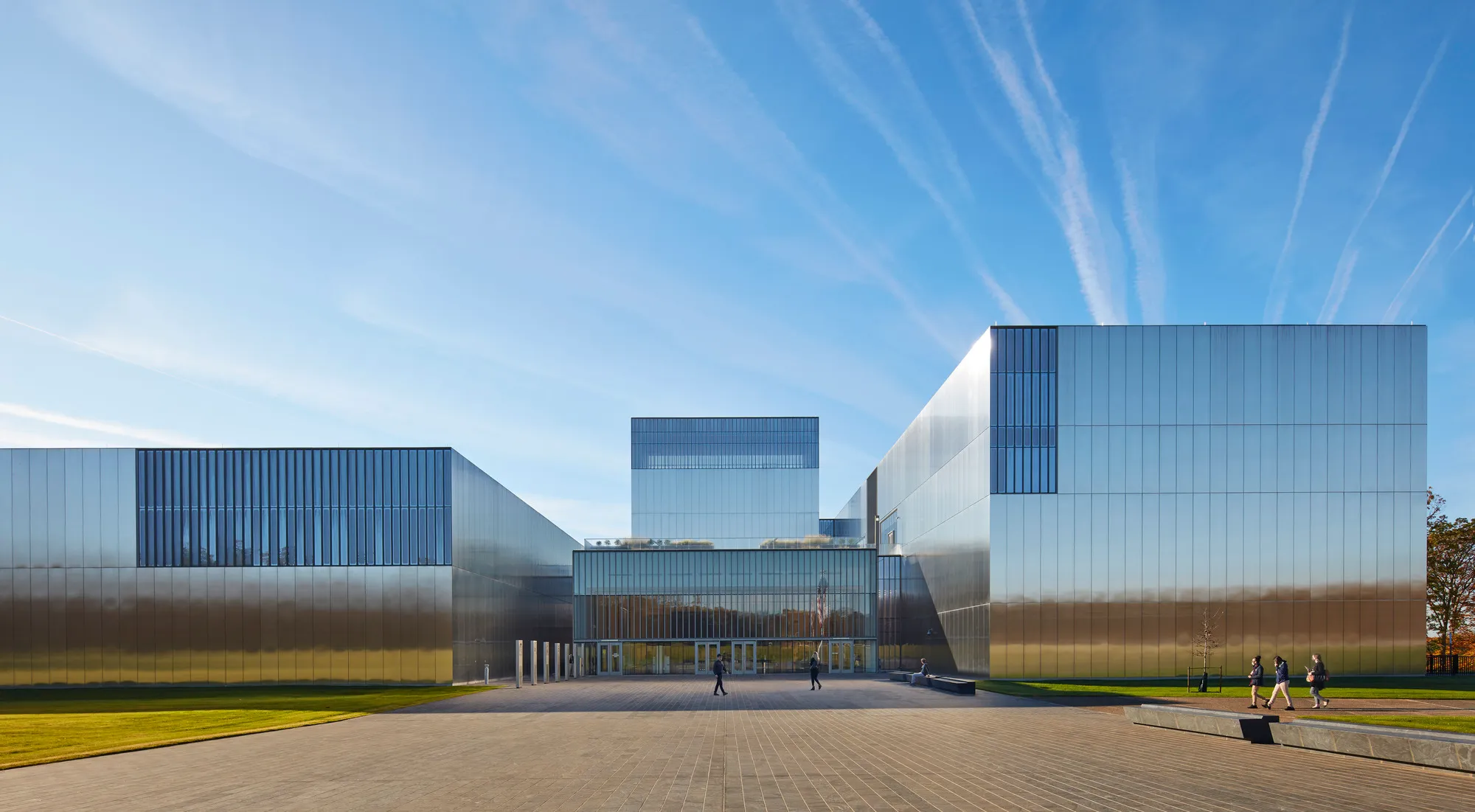
National Museum of the United States Army / Skidmore, Owings & Merrill
National Museum of the United States Army by Skidmore, Owings & Merrill honors soldiers through monumental design, reflective steel façades, immersive exhibits, and sustainable architecture in Virginia.


Located within the expansive landscape of Fort Belvoir in Virginia, just 20 miles from Washington, D.C., the National Museum of the United States Army (NMUSA) stands as a powerful architectural and cultural landmark. Designed by the globally renowned firm Skidmore, Owings & Merrill (SOM), the 185,000-square-foot museum opened in 2020 as the first institution dedicated to telling the comprehensive story of the United States Army, the oldest branch of the U.S. military.

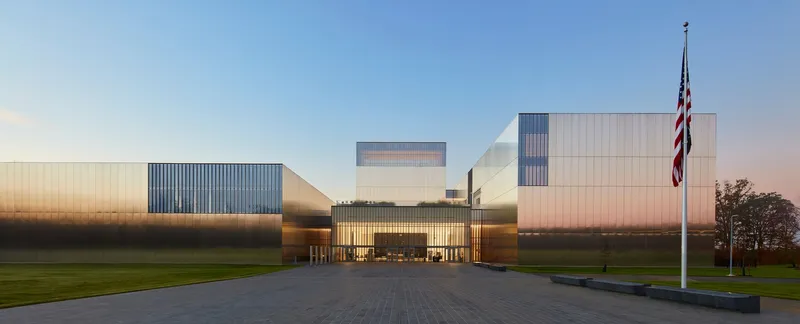
A Monumental Cultural Institution
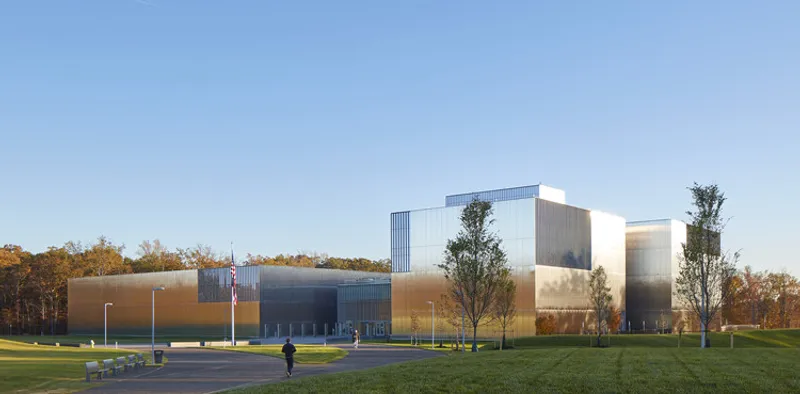
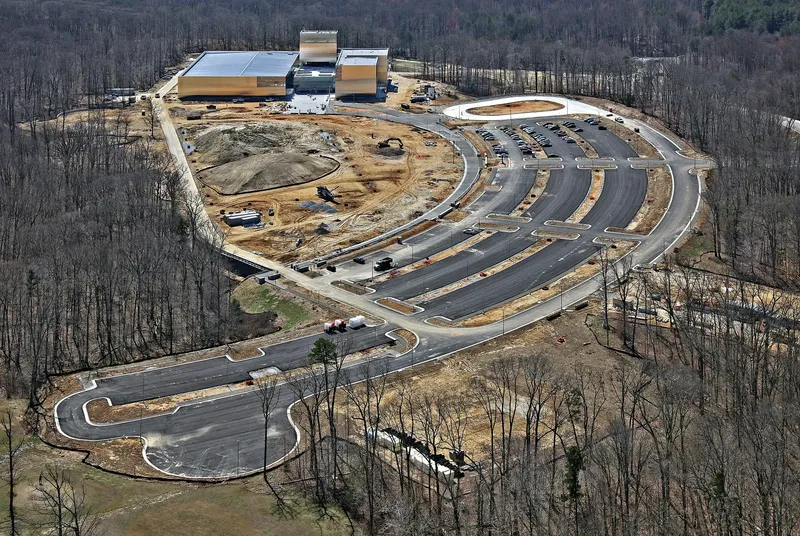
Spanning 84 acres of rolling terrain, the museum is more than a building, it is a national symbol. Conceived as the Army’s “front door,” the design establishes a dignified civic presence while harmonizing with the natural topography. Positioned atop a plateau, the structure evokes monumentality and permanence, reinforcing themes of honor, sacrifice, and service.
Rather than focusing solely on battles or wars, the museum emphasizes the individual soldier. Through immersive exhibitions and personal narratives, visitors journey across centuries of American history, engaging with stories of valor, resilience, and dedication.
Architectural Expression and Exterior Design
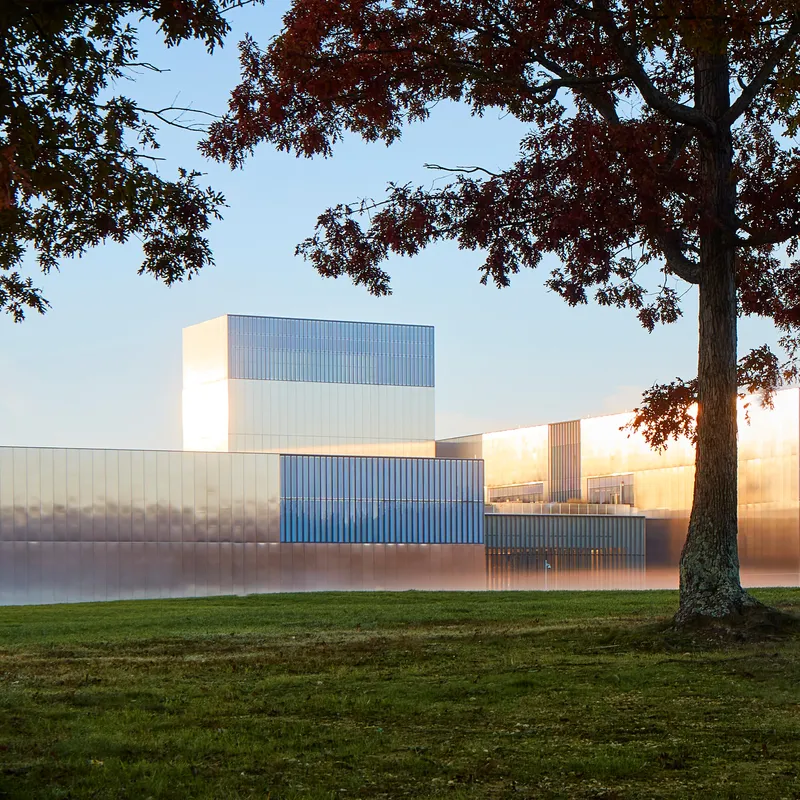
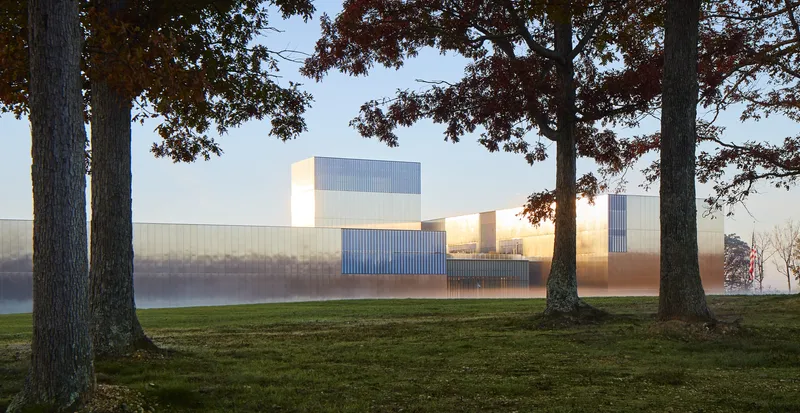
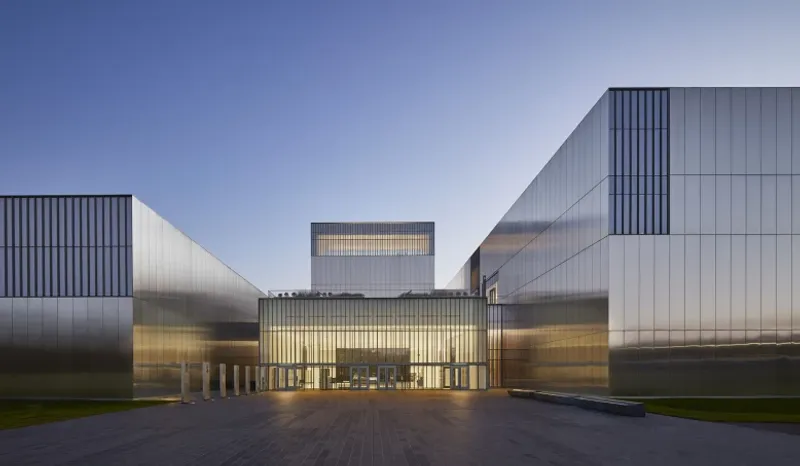
The approach to the museum is intentionally ceremonial. A winding access road reveals glimpses of the stainless steel-clad facade through trees and across open meadows, gradually building anticipation. Rising 100 feet at its peak, the building’s exterior is defined by a disciplined grid of laser-cut stainless steel panels. This precise system reflects the rigor and order synonymous with military service.
The reflective facade transforms throughout the day and across seasons, mirroring Virginia’s landscape and conveying optimism. Recessed glass panels and painted aluminum fins animate the pavilion corners, introducing rhythm and depth. Built on a strict three-foot grid, every joint aligns with meticulous precision, an architectural embodiment of discipline and unity.
Interior Experience: Symbolism and Storytelling
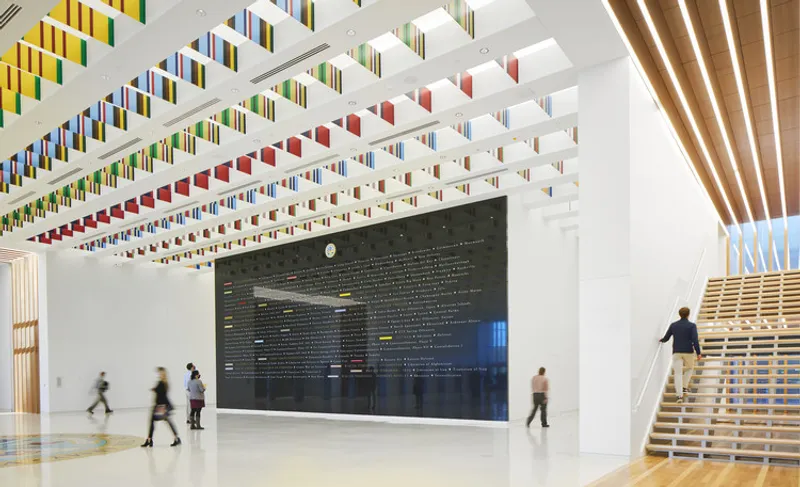
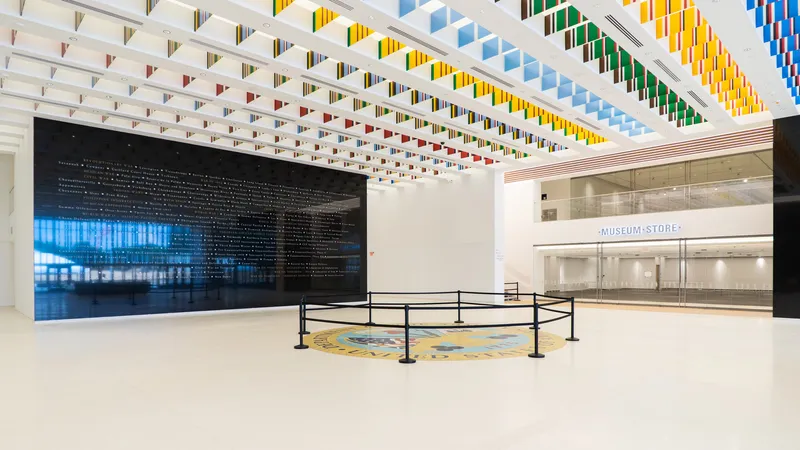
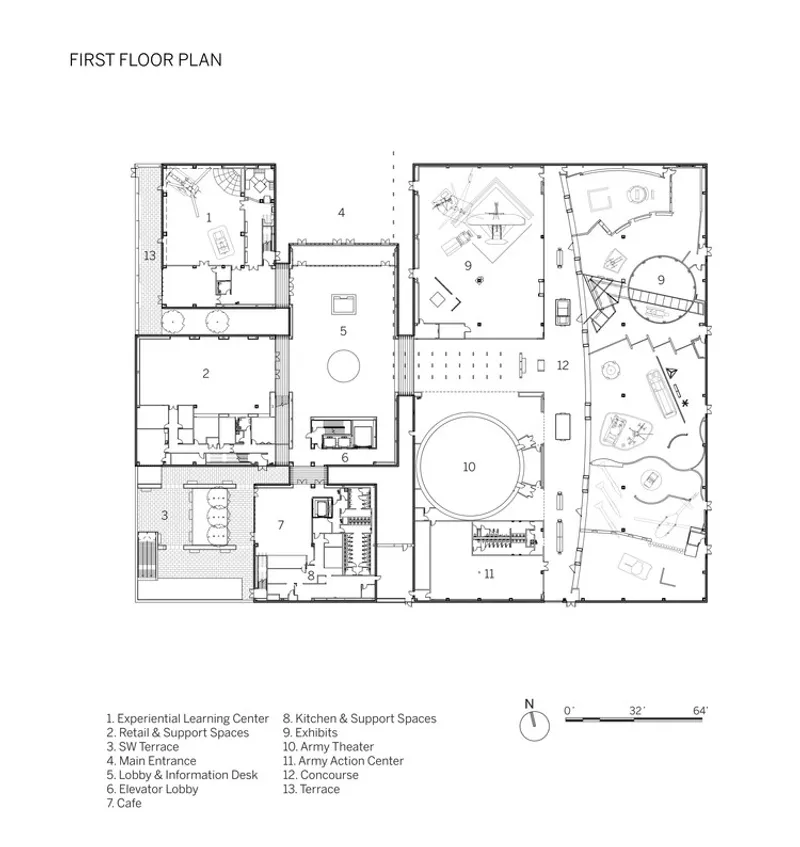
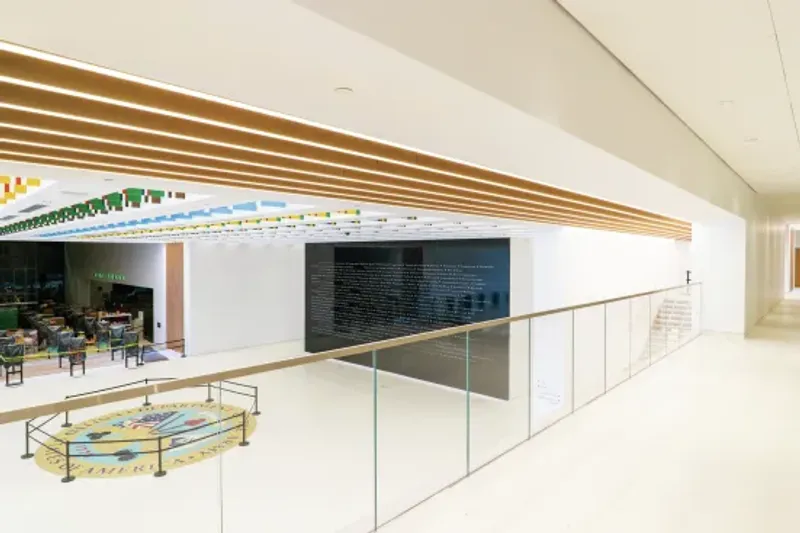
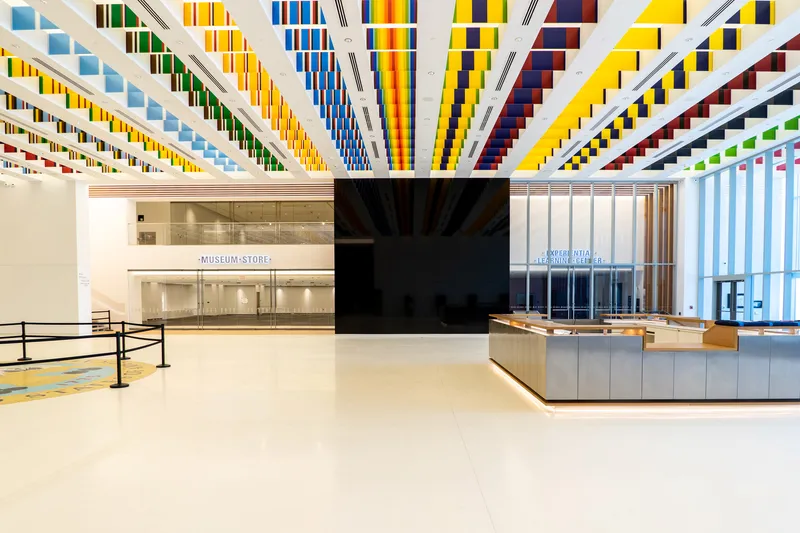
Inside, the symbolism deepens. Stainless steel pylons engraved with soldiers’ stories guide visitors from the promenade through the vestibule into the exhibition hall. The grand lobby, designed as both gathering space and event venue, features a striking black granite wall inscribed with every campaign in Army history. The Department of the Army emblem is embedded within a terrazzo floor, crafted using Terroxy Resin Systems.
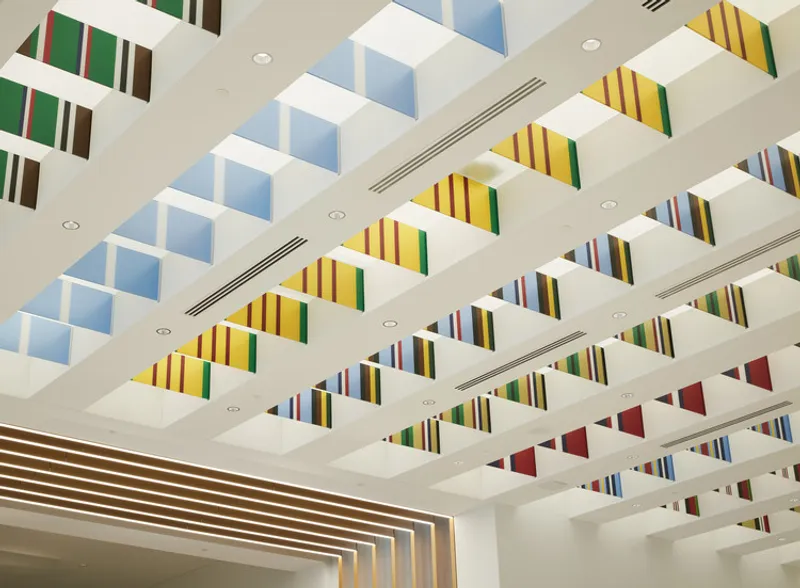
Above, a coffered ceiling of 22 rows of translucent laminated glass panels reflects the colors of historic campaign streamers, symbolically honoring generations of service members. Surrounding the lobby are retail areas, a café, landscaped terraces, exhibition galleries, and a 300-degree immersive theater. A monumental staircase leads to additional galleries on the second level.
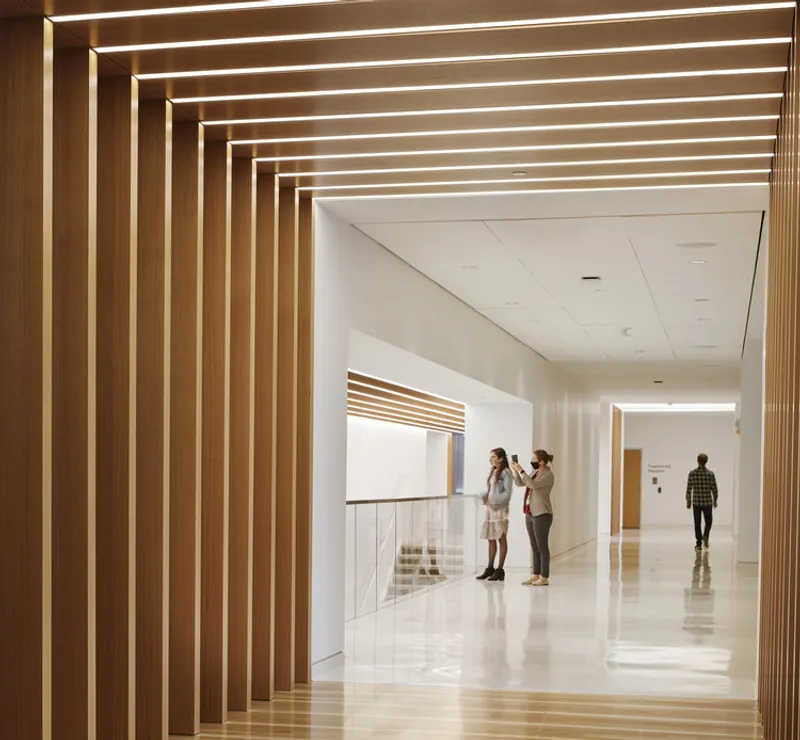
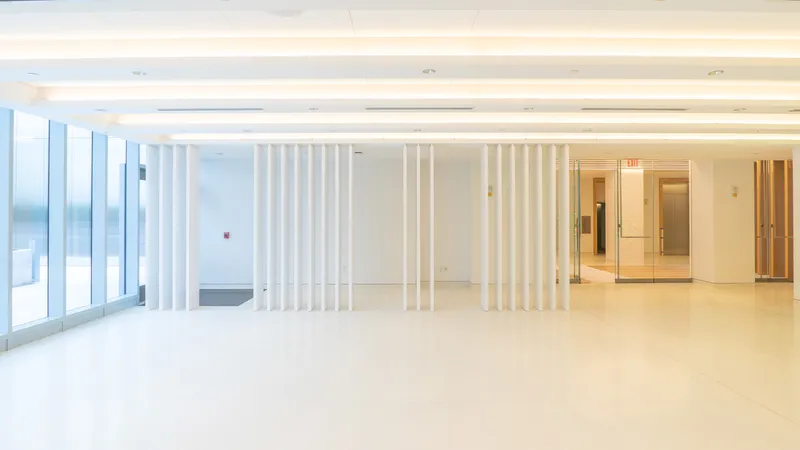
Natural materials: including stone flooring, American white oak, and ash finishes, introduce warmth and tactility. Glass and wood thresholds frame transitions between pavilions while visually reconnecting visitors with the surrounding landscape.
Veterans’ Hall and Medal of Honor Garden
On the third floor, the wood-clad Veterans’ Hall provides a luminous, contemplative event space. Adjacent to it lies the Medal of Honor Garden, a ceremonial terrace dedicated to recipients of the nation’s highest military distinction. A 10-foot-tall black granite wall bears the engraved names of every Medal of Honor recipient. Granite paving beneath features striped detailing that echoes the interior ceiling pattern and incorporates stainless steel stars alongside the Army Medal of Honor emblem.
This solemn yet uplifting space reinforces the museum’s core values: intrepidity, gallantry, and valor, creating a powerful emotional culmination to the visitor experience.
Sustainable Design and LEED Certification
The National Museum of the United States Army achieved LEED® Silver certification, reflecting SOM’s integrated approach to sustainable architecture. Environmental strategies include:
- Enhanced building insulation
- High-performance glazing systems
- Energy-efficient LED lighting
- Automatic daylight and occupancy sensors
- A green roof system
These features significantly reduce energy and water consumption while enhancing indoor environmental quality. The museum’s sustainable design not only lowers operational impact but also strengthens its connection to the surrounding Virginia landscape.
Manufacturers and Materials
Key collaborators and manufacturers contributing to the project include:
- Skyfold – Vertically Folding Operable Walls (Classic™ Series)
- Terrazzo & Marble – Terroxy Resin Systems Flooring
- Metalwërks – Custom architectural metal systems
A Lasting Architectural Legacy
As a contemporary civic monument, the National Museum of the United States Army seamlessly integrates architecture, landscape, and storytelling. Through disciplined geometry, refined materiality, and sustainable innovation, SOM has crafted a landmark that honors individual soldiers while reinforcing national identity.
The museum stands not only as a repository of military history but as an enduring symbol of service, sacrifice, and architectural excellence.
All the photographs are works of
Dave Burk | SOM




Popular Articles
Popular articles from the community


Co-life: Sustainable Architecture for Age-Friendly Community Living
Co-life reimagines sustainable architecture for seniors through courtyards, rammed earth, shared gardens, and spaces designed for belonging.

The Earth Pod: 3D Printed Homes for Resilient Refugee Communities
The Earth Pod reimagines refugee housing through 3D printed homes made from clay, combining resilience, self-sufficiency, and rapid shelter.

Play: Fragments of Their World
Familiar architecture becomes modular playground design, creating safe spaces where displaced children can learn, connect, imagine and play.

Hill & Cross Opera: Sculptural Opera House Architecture Shaped by Tallinn’s Landscape and Identity
Hill & Cross Opera reimagines opera house architecture in Tallinn through its sculptural hill, civic plaza, glass wave and a luminous cross.


Similar Reads
You might also enjoy these articles

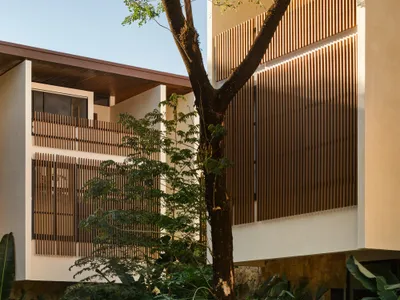
FAMM Arquitectura Organizes Ten Villas Around Courtyards and Jungle in Nosara, Costa Rica
El Molino pairs two elongated volumes with deep overhangs and timber louvers to build a compact coastal community five minutes from the beach.
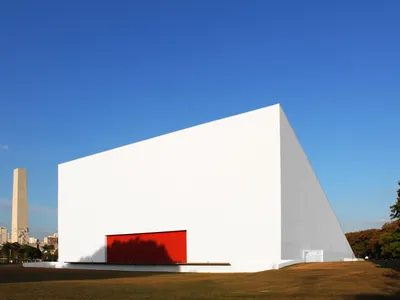
Oscar Niemeyer's Ibirapuera Park Pavilions Define São Paulo's Cultural Identity in Concrete and Curve
A constellation of modernist volumes set within São Paulo's most important urban park, conceived for the city's 400th anniversary in 1954.

How Henri Picq's 1889 Paris Pavilion Traveled 11,000 Kilometers to Become Santiago's Artequín Museum
A prefabricated iron and glass pavilion built for the Paris Universal Exposition found a second life as a children's art museum in Chile.
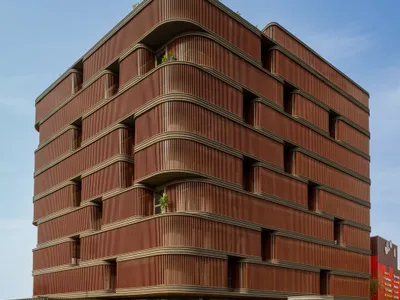
Sanjay Puri Architects Wraps a Jaipur Office Tower in Capsule-Shaped Green Buffers
A nine-level climate-responsive workplace near Jaipur Airport uses stacked planter terraces and aluminium screens to fight 40°C heat.


Explore Architecture Competitions
Discover active competitions in this discipline



Challenge to reimagine the Iron Throne


Photograph architecture without architects


Illustrate the lost glory of Angkor Wat - Render Challenge


Bring back Drive In's
Comments (0)
Please login or sign up to add comments
No comments yet. Be the first to comment!