

Nature-Integrated Architecture: The Design of Rose Mary Cafe by Chiasmus Partners
A South Korean cafe seamlessly integrates with its natural surroundings through fluid architecture, transparent materials, and immersive spatial design.


A Harmonious Blend of Architecture and Landscape
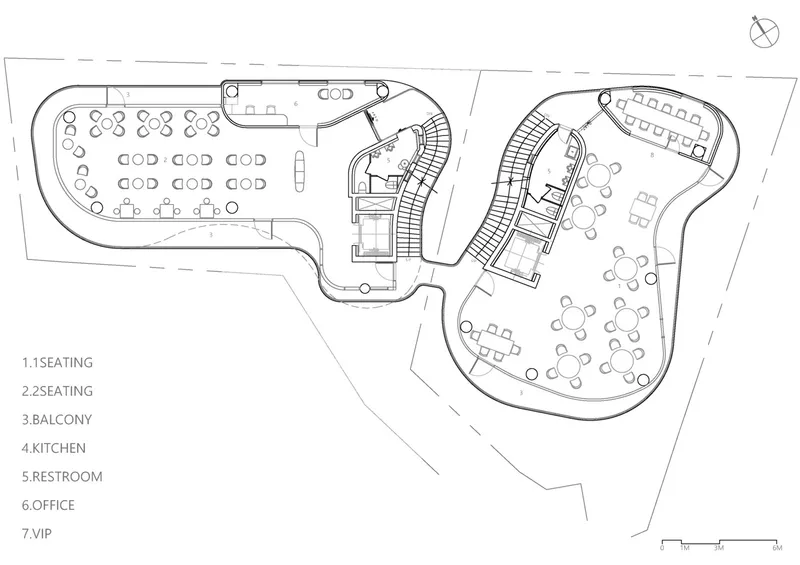
Rose Mary Cafe, designed by Chiasmus Partners, redefines nature-integrated architecture with its seamless connection between built space and the surrounding environment. Located in Sangjeok-dong, Seongnam-si, adjacent to the Daewang Reservoir, the cafe consists of two buildings covering approximately 570 square meters. The architectural approach emphasizes fluid spatial connections, organic forms, and an immersive experience of nature, making it a landmark in contemporary South Korean architecture.
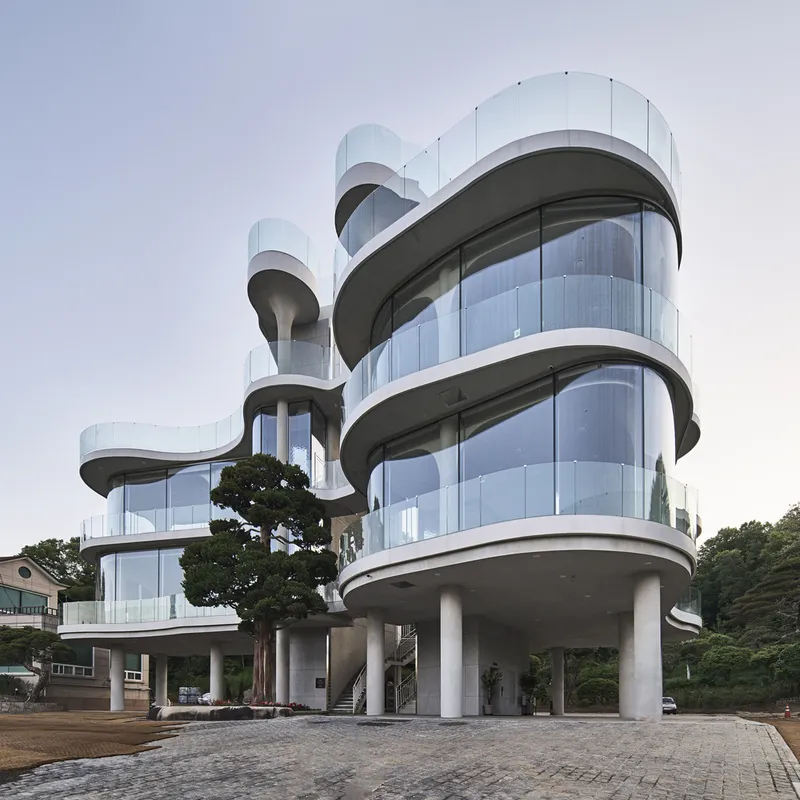
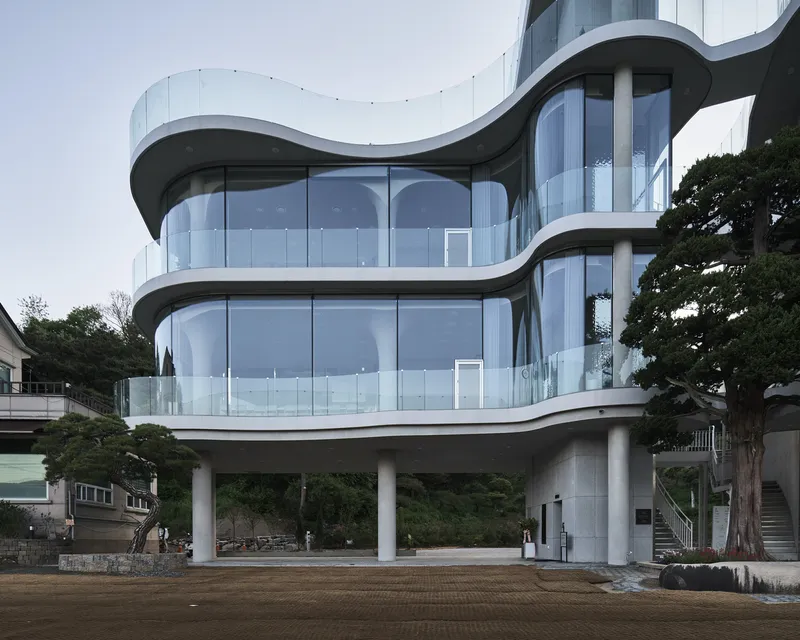
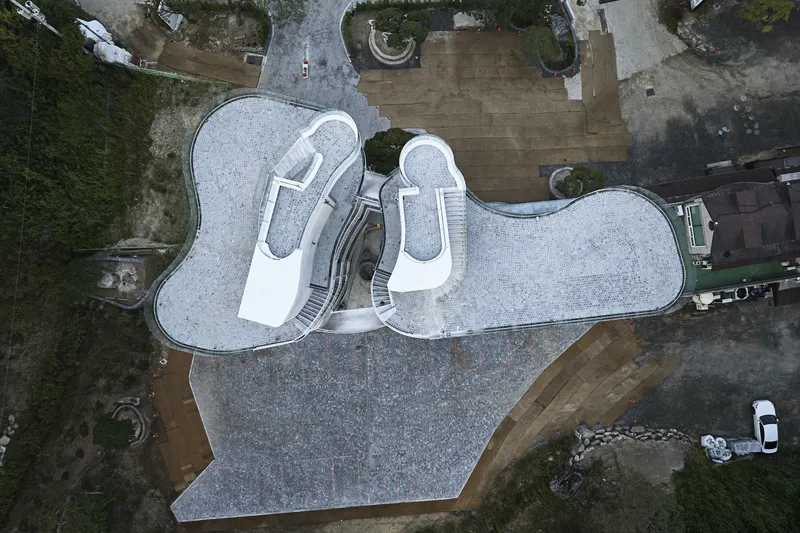
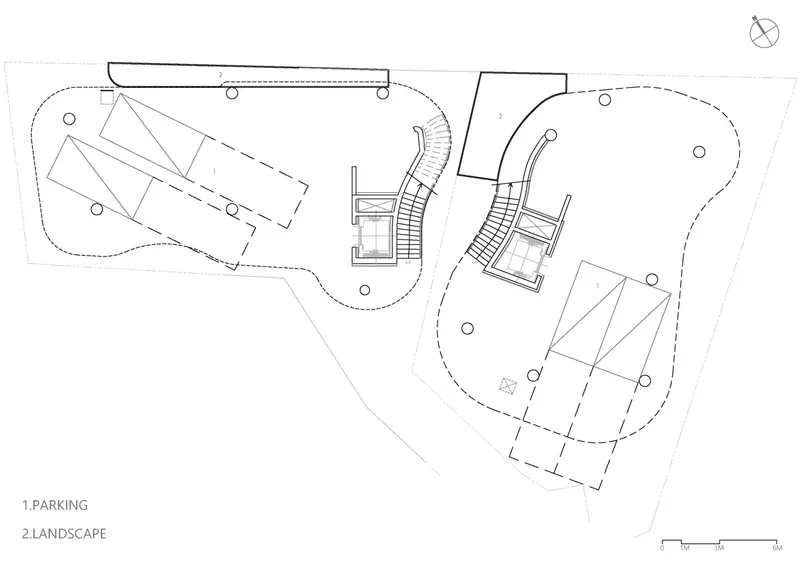
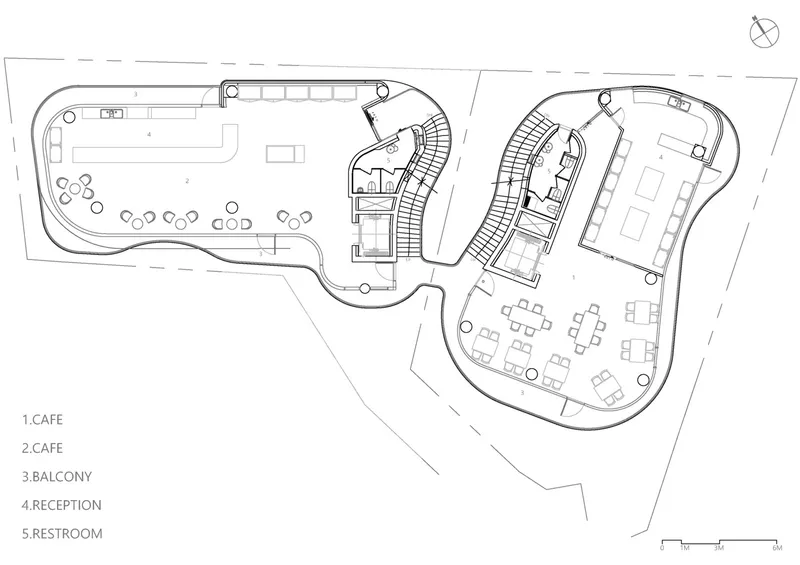
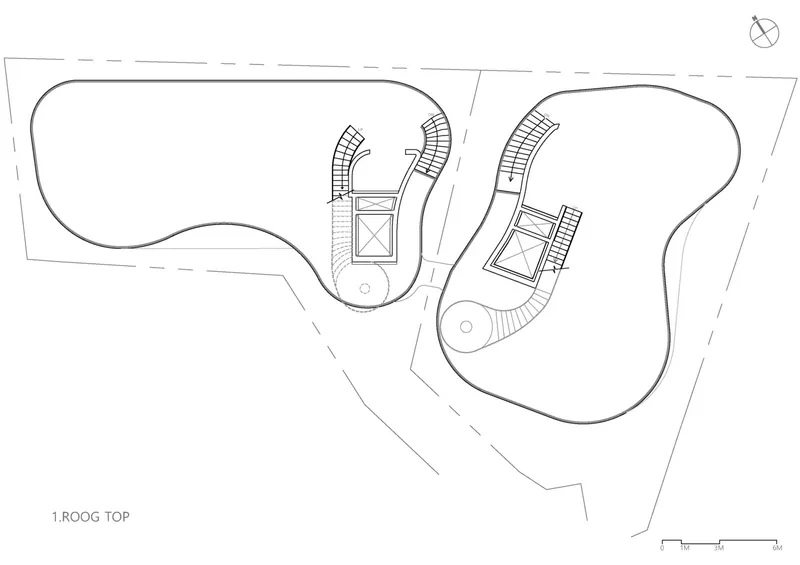
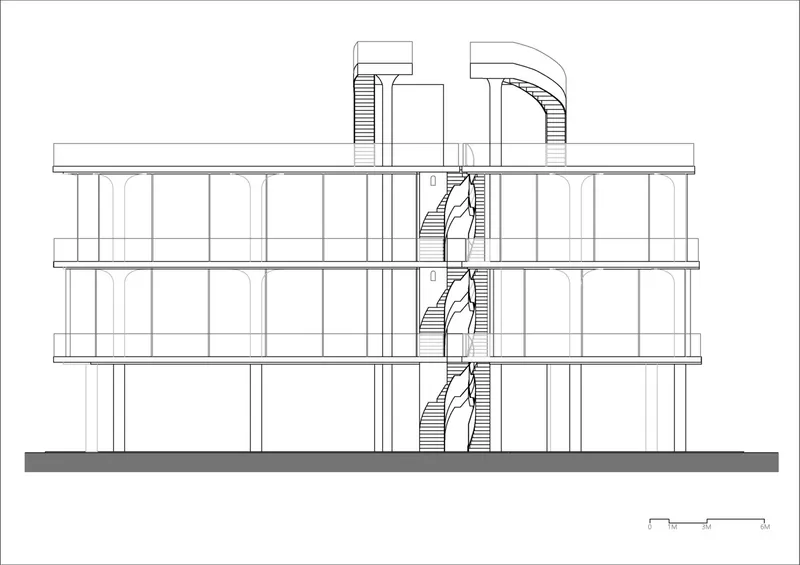
The design is centered around a staircase that connects the two structures both horizontally and vertically. This central circulation element creates an organic flow reminiscent of a DNA spiral, weaving together four primary spaces across two floors and an open rooftop. Legal site constraints dictated the separation of the buildings, yet the architects used this limitation as an opportunity to create a structure that feels interconnected rather than fragmented.
A Pavilion-Like Experience Rooted in Nature
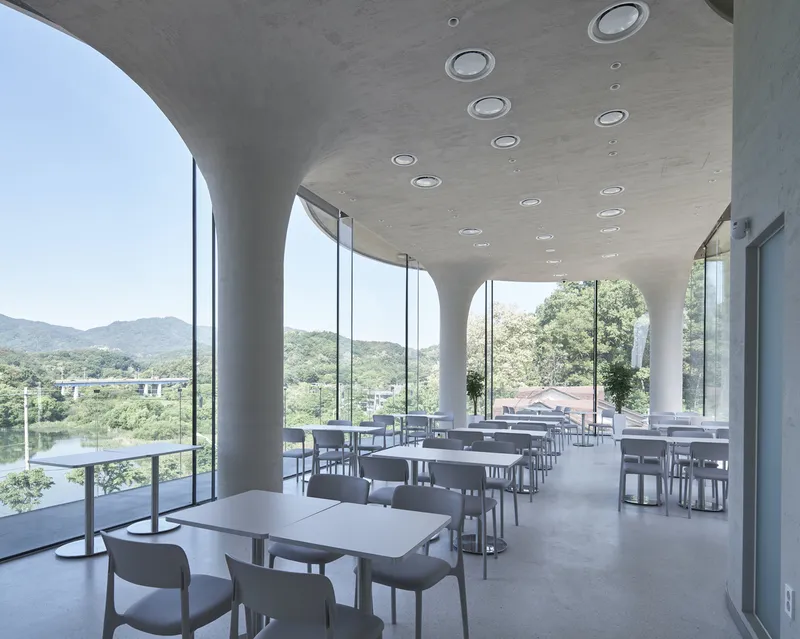
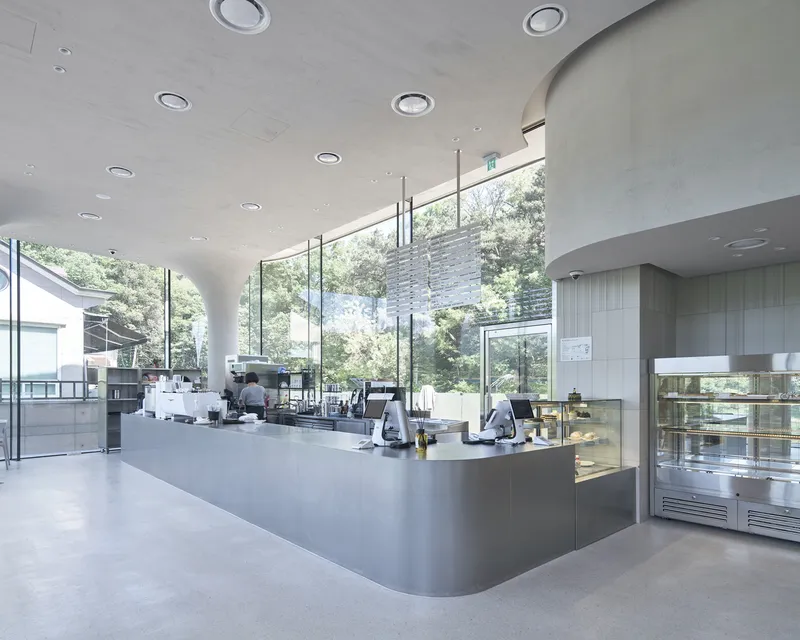
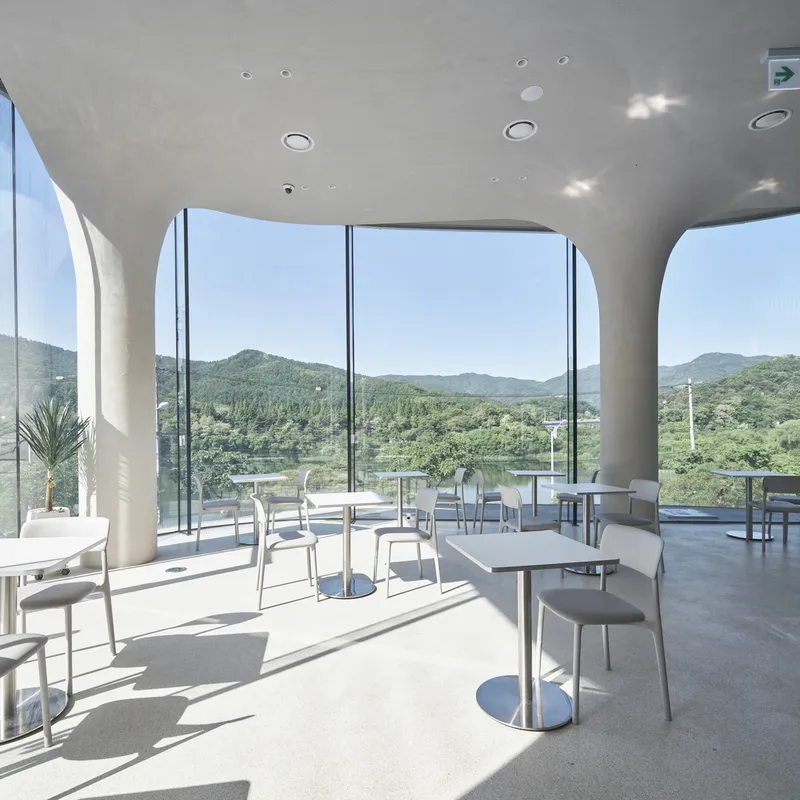
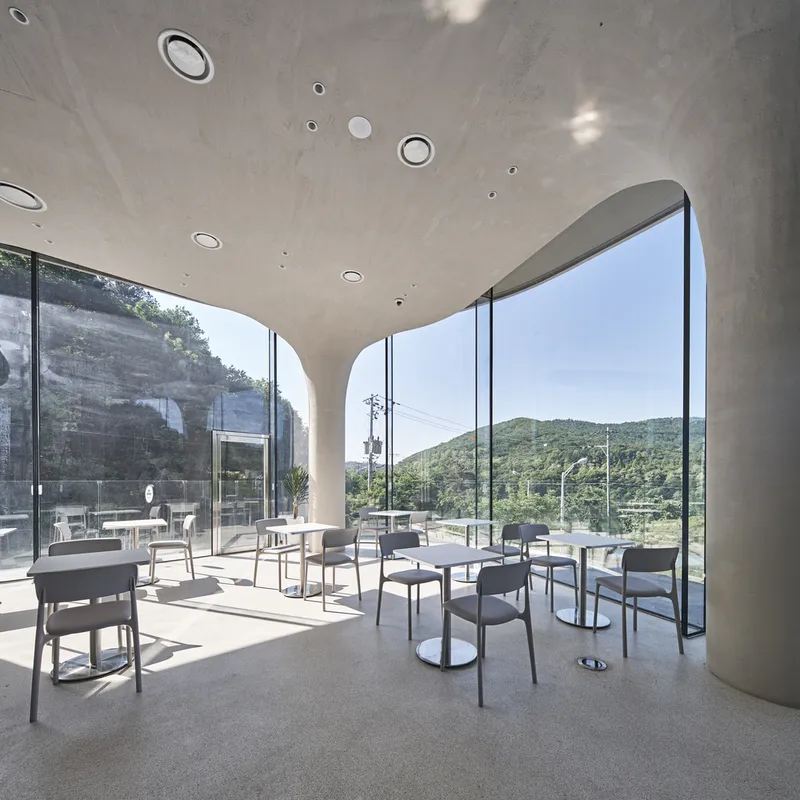
The cafe is positioned between two contrasting landscapes—the serene waters of the Daewang Reservoir and the lush greenery of Inreungsan Mountain. To maximize the engagement with these natural elements, the architects designed an expansive curved façade that opens up the interior to uninterrupted views. This approach dissolves the boundary between indoor and outdoor spaces, creating an immersive pavilion-like experience where architecture becomes an extension of nature.
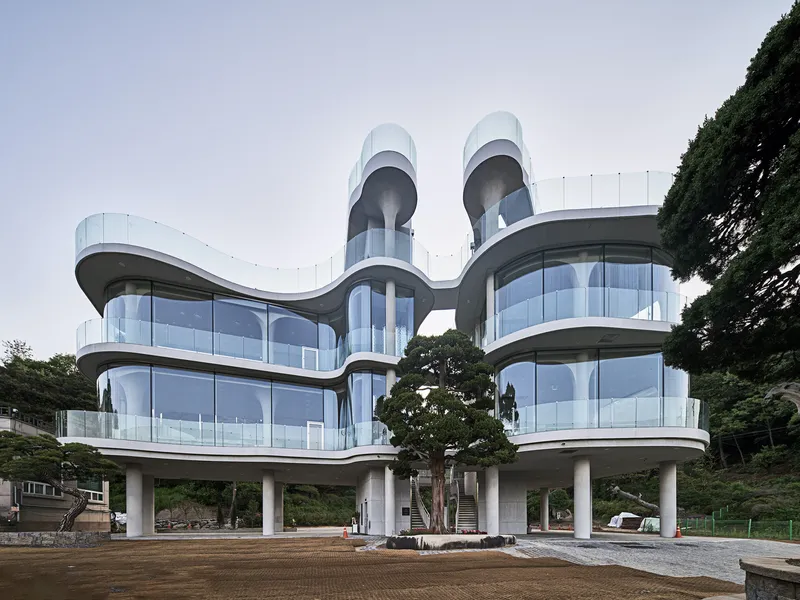
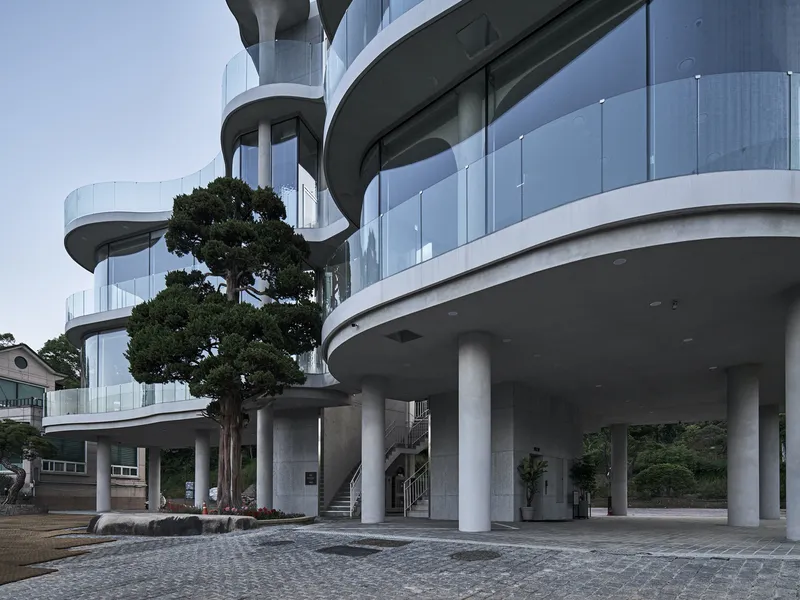
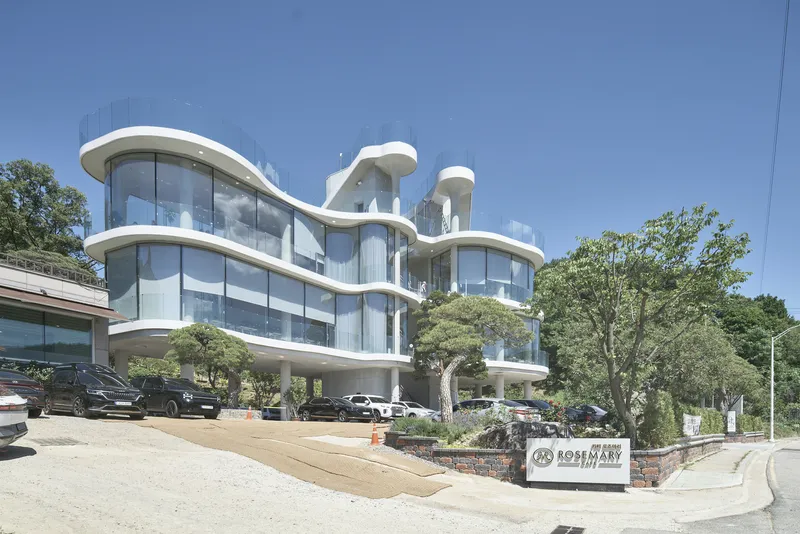
Curved ceiling structures enhance this concept by mirroring the organic forms of the landscape. These curvatures, flowing seamlessly from the exterior into the interior, reinforce a sense of continuity. The spatial design avoids abrupt material changes, maintaining a cohesive visual experience where the architecture itself becomes a sculptural entity.
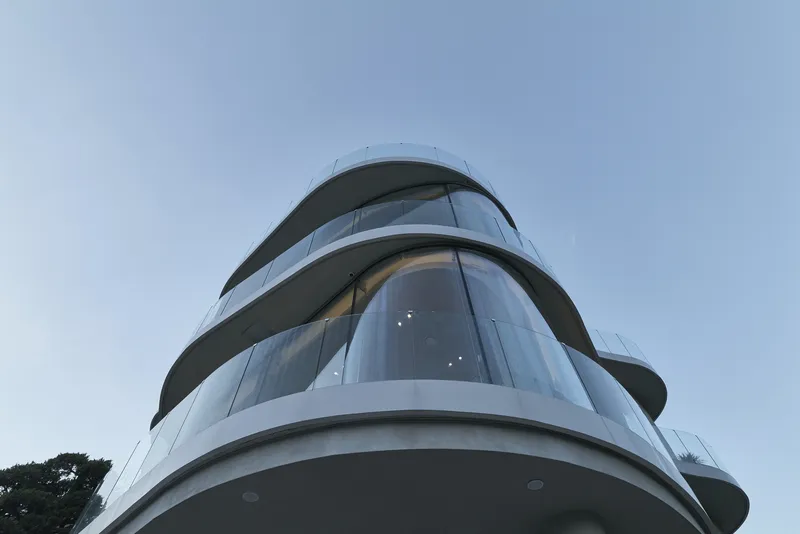
Curved Balconies and a Transparent Skin
The exterior design of Rose Mary Cafe is a direct response to its natural surroundings. Three layers of curved balconies stack atop one another, mirroring the undulating contours of the reservoir and mountains. These organic forms contrast with the rigid geometry often found in urban architecture, making the cafe a fluid, sculptural element in the landscape.
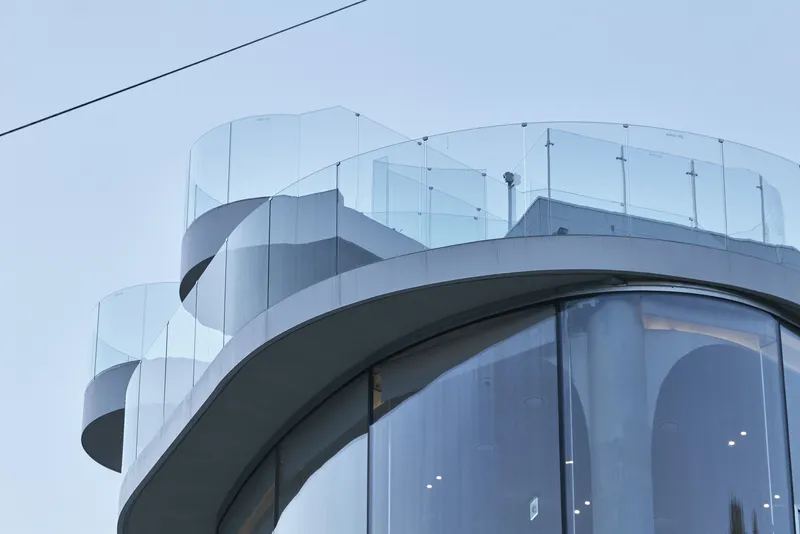
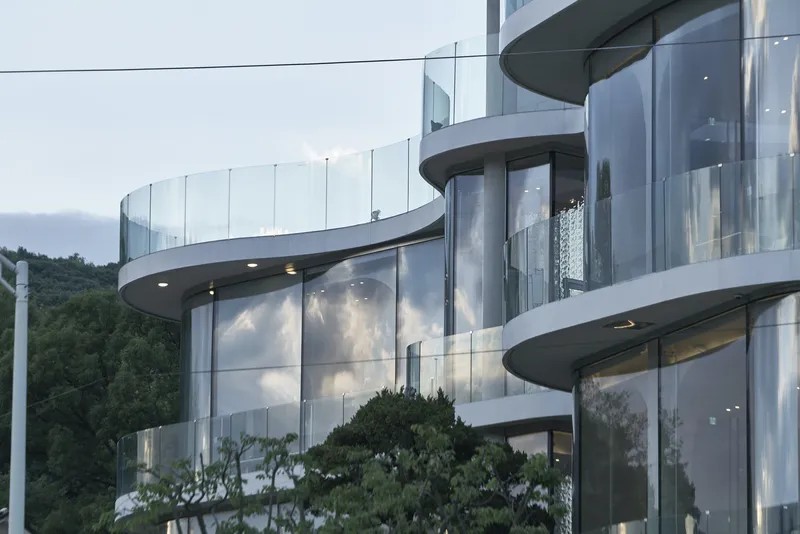
One of the most striking features is the use of a crystal glass curtain wall, which reflects the surrounding water and sky. This design element captures the essence of the site’s environmental conditions—transforming with shifting light, weather, and time of day. Inspired by the mist that hovers over the reservoir and mountains, the transparency of the glass adds a dynamic quality to the structure, blurring the line between solid form and ephemeral atmosphere.

A Space for Leisure and Contemplation
Rose Mary Cafe is not just a place to enjoy coffee; it is a destination designed for leisure and contemplation. The architectural intent goes beyond functional requirements, offering an open, adaptable space where visitors can engage with nature in a meditative way. The pavilion-like structure invites people to move freely, ascend through its levels, and experience the landscape from multiple vantage points.

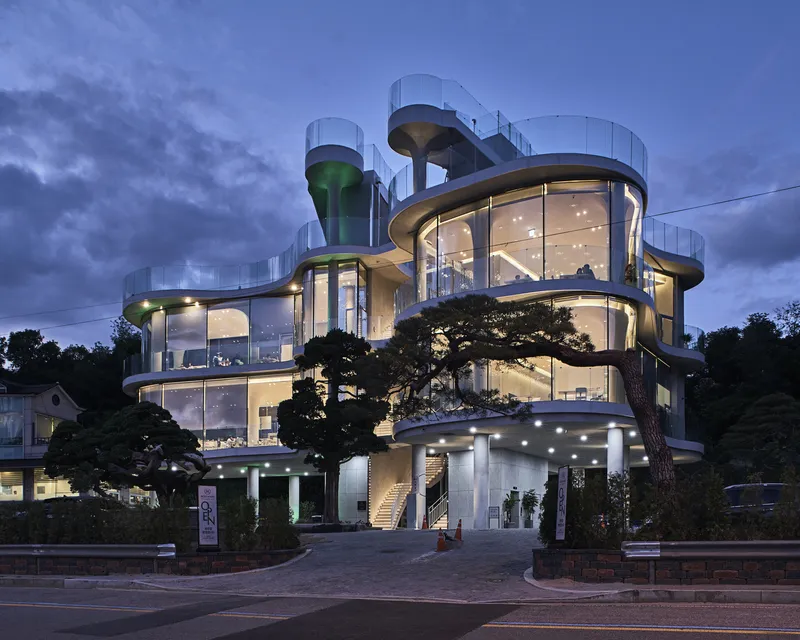
The integration of nature into the built environment is not merely aesthetic—it shapes the way visitors interact with the space. Whether standing on the curved balconies, gazing at the reflective glass façade, or moving through the organically connected interiors, every element of the design encourages a deeper connection with the natural surroundings.
Redefining Nature-Integrated Architecture
Rose Mary Cafe by Chiasmus Partners exemplifies how nature-integrated architecture can create meaningful spaces that enhance the human experience. The design prioritizes transparency, fluidity, and organic form, resulting in a structure that feels at once contemporary and deeply connected to its environment. It stands as a testament to the potential of architecture not only to inhabit a landscape but to become an integral part of it.
By embracing the principles of seamless spatial flow, transparency, and natural engagement, this project sets a new standard for architecture that is in harmony with its surroundings. It is not merely a building—it is an experience that unfolds in dialogue with nature.

All Photographs are works of Namsun Lee


Popular Articles
Popular articles from the community


ETEH Reworks the Shared Spaces of São Domingos School in Brazil Around Timber, Color and Hanging Plants
At São Domingos School in Brazil, 436 m² of hall, refectory and library are recast with timber joinery, a yellow and blue code and trailing greenery.

David Ortega Stacks a Two-Story Mexico City Penthouse Around a Steel Stair and a Pergola-Shaded Roof Terrace
In Colonia Roma, a 300 m² penthouse uses oak joinery, a planted steel stair and a slatted roof pergola to make a new-build apartment feel like a house.


Aquadapt: An Underwater Habitat That Rewrites Its Rooms by the Hour
Curved modules ring the seabed while one shell shifts from breakfast room to cinema, farm and football pitch as residents' needs change.

Singing Woman: An Opera House That Performs Before the Curtain Rises
Ovidiu Cristian Pavel's conceptual opera house translates Estonia's choral identity into a sculpted waterfront landmark facing the Baltic Sea.

Similar Reads
You might also enjoy these articles

Bamboo Housing Challenge 2026: Design Affordable, Sustainable Homes Using Bamboo
An international design competition by Bamboo U and IBUKU inviting architects and designers to reimagine affordable housing using bamboo — with the winning design built full-scale in Bali.
Computational Design & Education: Beegraphy Design Awards Introduces 7th Category (Featuring Jiyun's Innovative Approach)
Dive into Beegraphy’s 7th Design Awards category, where computational design meets education to create immersive, interactive learning tools, inspired by Jiyun’s work.
From Parametric Lighting to Urban Furniture: Join the 2nd Workshop in Beegraphy’s Computational Design Series
Dive into Cutting-Edge Design Techniques and Practical Applications with Industry Experts

Last Call: Unleash Your Architectural Genius in SHAK's Kindergarten Design Competition
Urgent call for architects to join SHAK's kindergarten design competition before the looming deadline

Explore Architecture Competitions
Discover active competitions in this discipline

Challenge to reimagine the Iron Throne

Photograph architecture without architects

Illustrate the lost glory of Angkor Wat - Render Challenge

Design challenge to reuse E-waste
Comments (0)
Please login or sign up to add comments
No comments yet. Be the first to comment!