
NEBR Arquitetura Builds a White House Around a Tree in Pernambuco's Zona da Mata
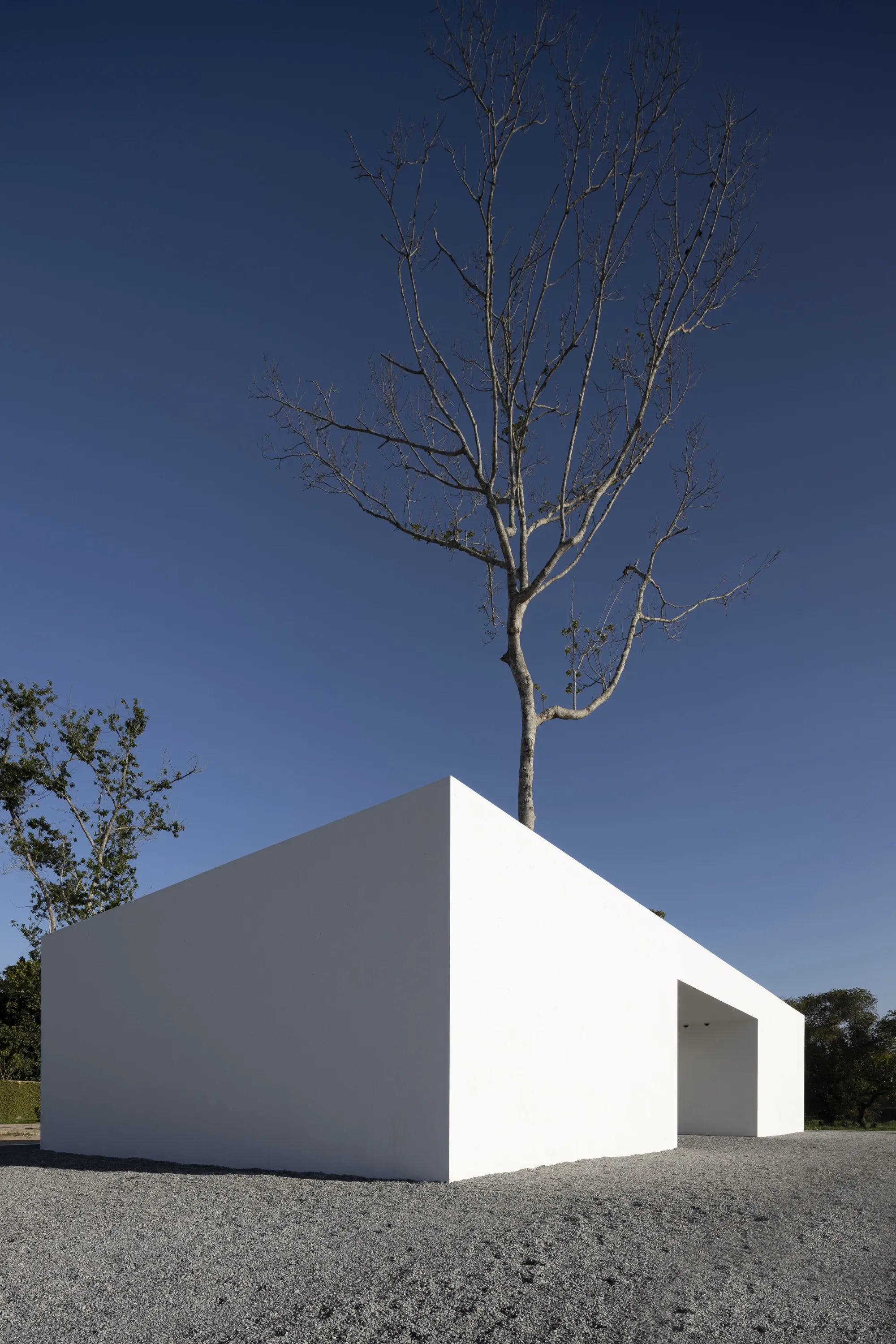
Casa Branca is a 150-square-meter residence and studio in Paudalho, Brazil, organized entirely around a single existing tree.


There is a long tradition in Brazilian architecture of negotiating with the landscape rather than bulldozing it. NEBR arquitetura, led by Edson Muniz, takes that idea literally with Casa Branca: a compact white volume in Paudalho, Pernambuco, that wraps itself around a single existing tree and refuses to let go. The tree punches through the roof. It organizes circulation. It defines the courtyard. It is the building's reason for being the shape it is, and the result is a 150-square-meter house and studio that reads as both rigorous and deeply specific to its site.
What makes the project worth studying is its economy. Built under defined technical and financial limitations, with NEBR managing construction directly, Casa Branca treats constraint as a design engine. The exterior is almost aggressively plain: white, prismatic, barely fenestrated on some elevations. But once you cross the threshold, the interior erupts with color, material variety, and curved geometries that redistribute every square meter of the plan. The gap between the building's public face and its private life is the real subject here.
A Monolith with a Pulse
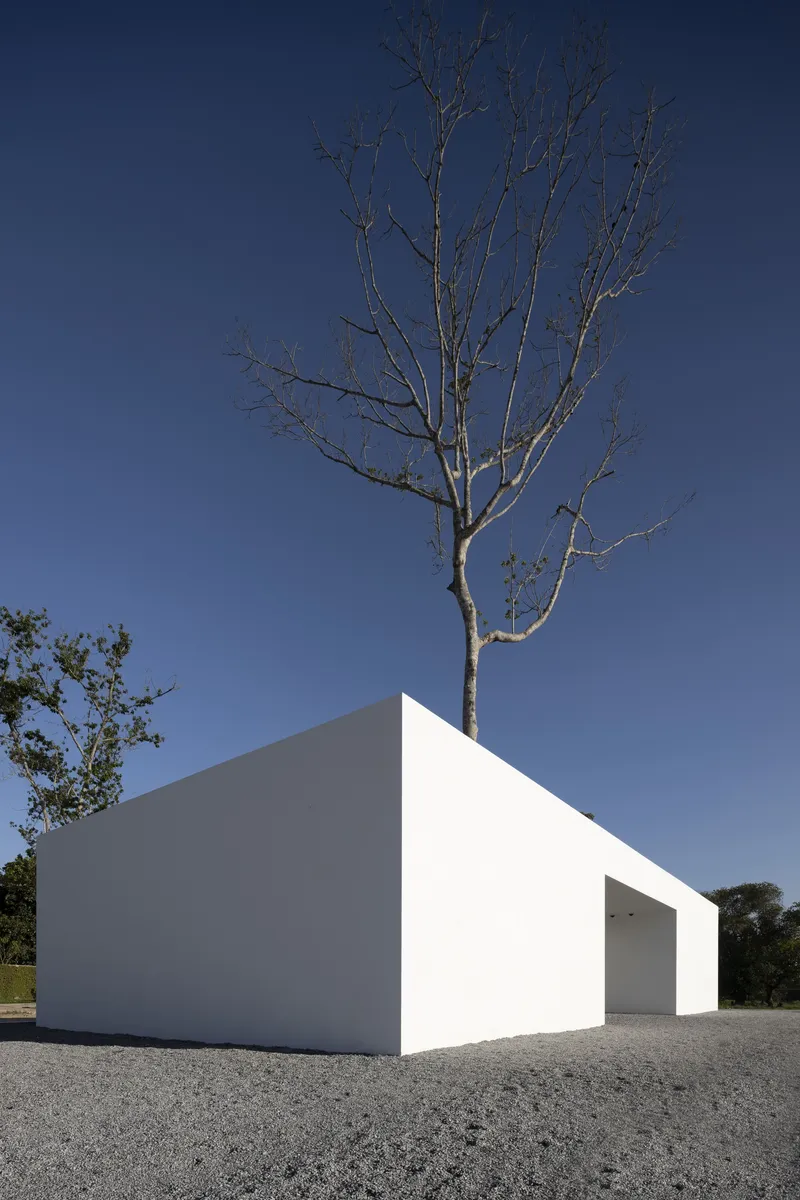
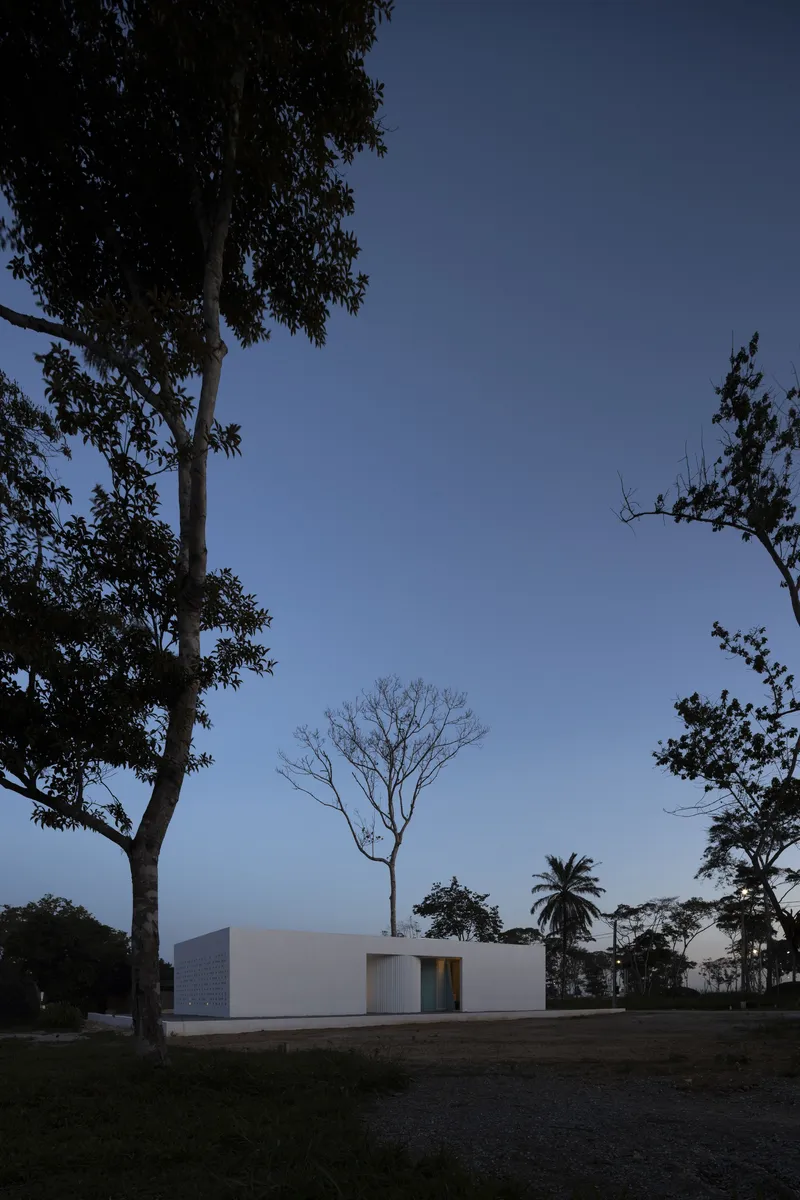
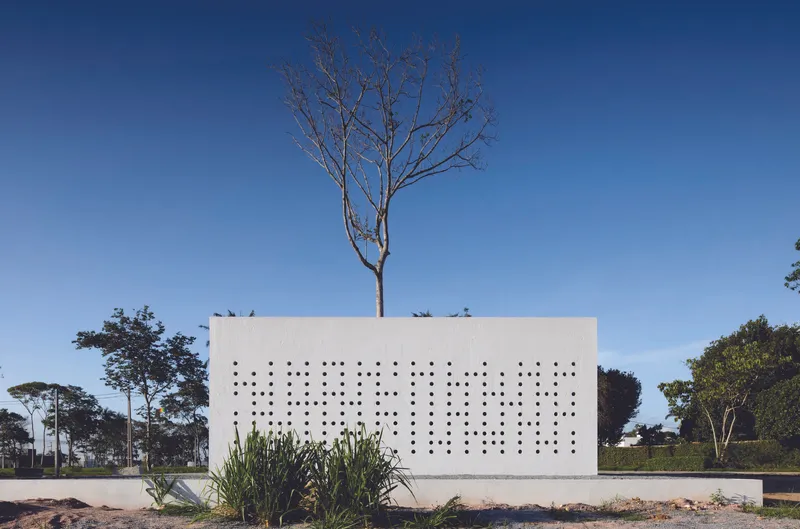
From the street, Casa Branca presents itself as a sealed white box. Deep recesses mark the entrance; perforated concrete screens allow ventilation without compromising the sense of enclosure. The bare tree rising from the rooftop acts as the only vertical punctuation, a signal that something alive is happening inside what could otherwise be mistaken for a minimalist storage facility. It is a deliberate provocation: the exterior tells you almost nothing about the spatial complexity within.
The choice to keep the facade neutral and consistent on all sides collapses any conventional front-back hierarchy. Every elevation is essentially equal, which shifts the architectural event entirely inward. This is an unusual move for a house in the humid tropical landscape of Pernambuco, where open facades and deep verandas are the norm. NEBR opts instead for a controlled perimeter that mediates climate through specific openings rather than broad exposure.
The Tree as Organizing Principle
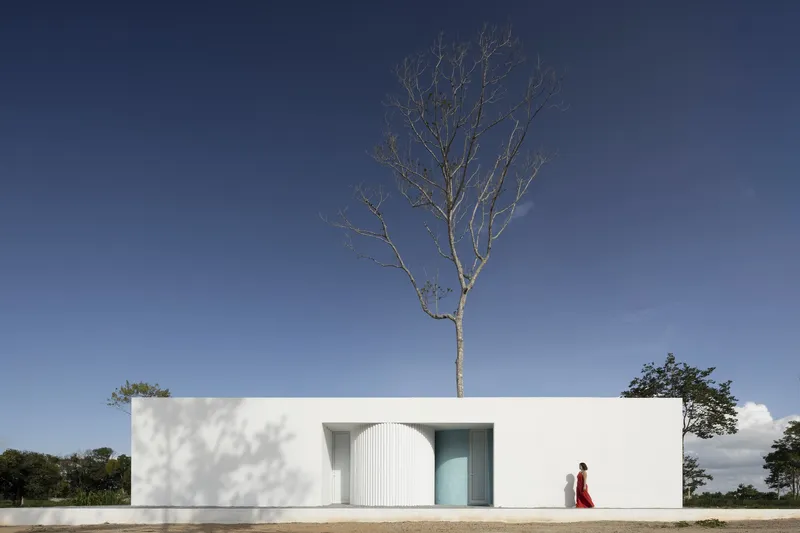
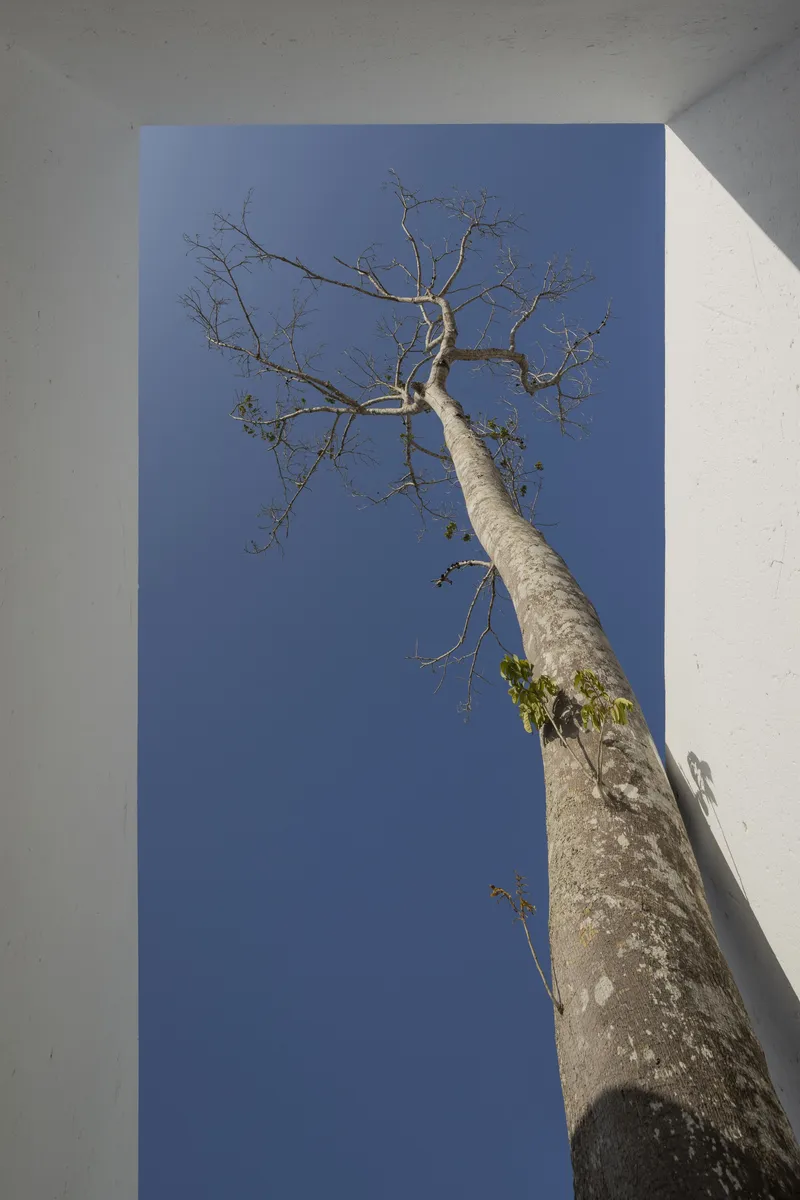
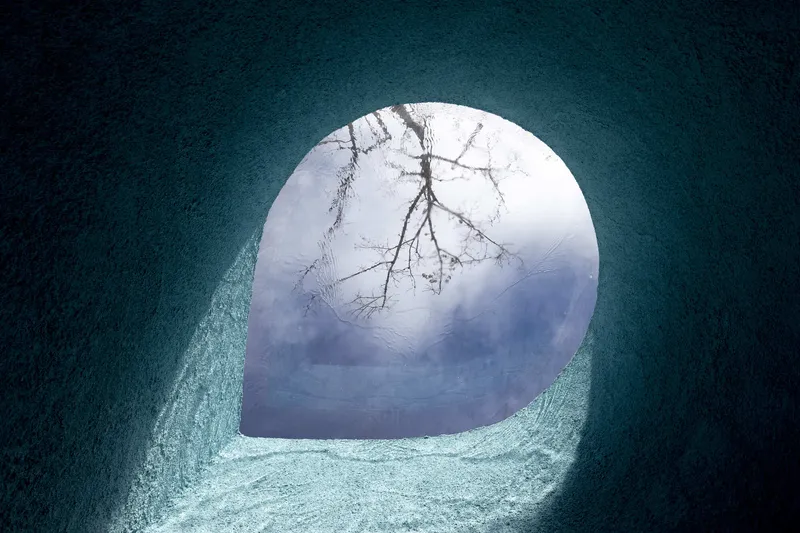
The existing tree is not merely preserved. It is promoted to the role of spatial generator. The plan wraps around a central circular courtyard that contains the tree, and its canopy is framed by a rectangular roof opening that turns the sky into a ceiling. From below, looking up through this aperture, the bare branches read almost like structural members, a kind of natural tracery set against blue or overcast skies.
The arched corrugated door on one facade and the circular skylight above both echo the curvilinear gestures that NEBR introduces inside the rectangular envelope. The tree becomes a hinge between these two formal languages: the straight-line discipline of the perimeter walls and the softer, more organic curves of internal partitions and circulation paths. It is a simple idea executed with real conviction.
Glass Block as Color Engine
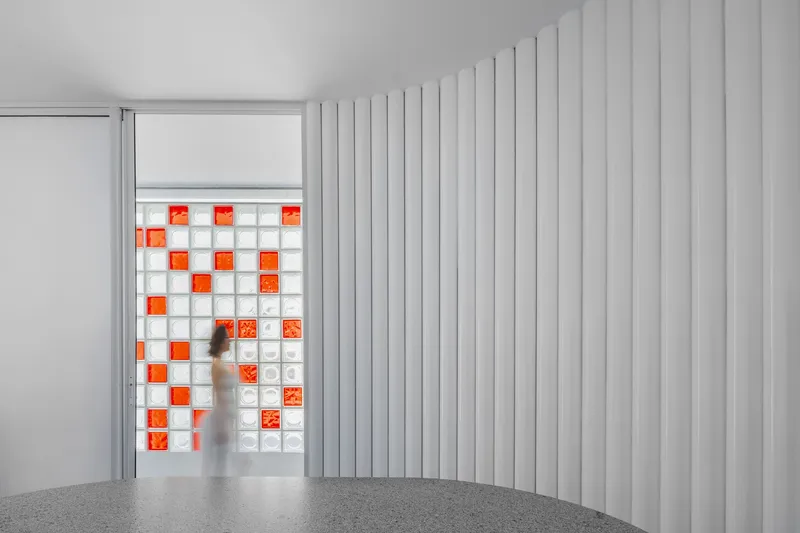
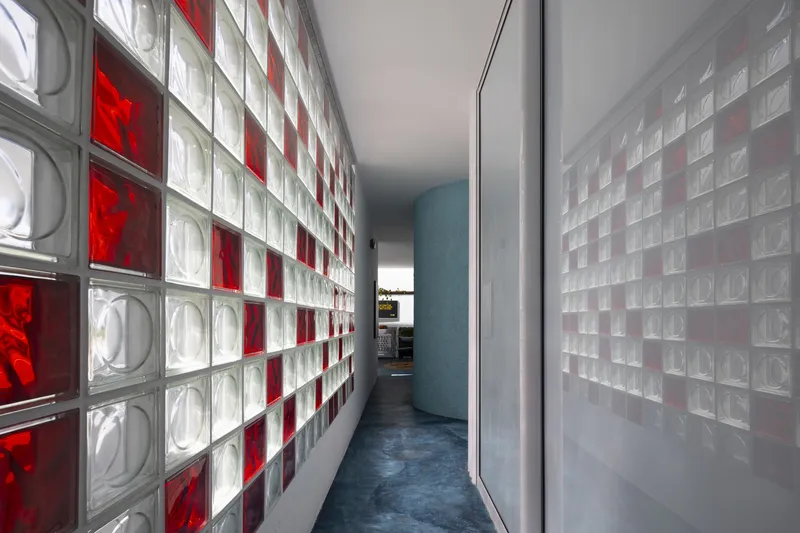
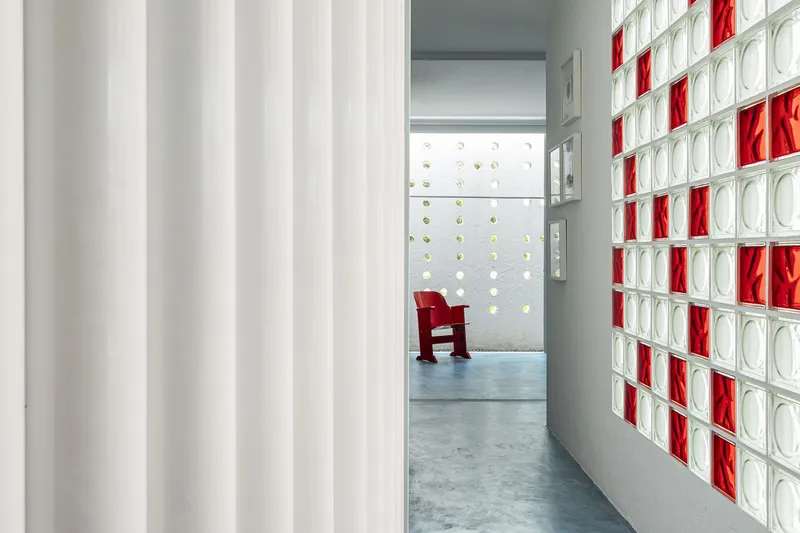
Seves glass blocks appear throughout Casa Branca in grids of orange, red, and clear units, and they do far more work than conventional glazing. In the narrow passage flanked by red glass block walls, the material saturates the space with a warm glow that transforms a simple corridor into something almost liturgical. Elsewhere, a grid window of orange and white blocks acts as a filter, casting patterned light that shifts with the sun's angle.
The red translucent glass partition that separates the dressing area from the bedroom is a particularly effective detail. It maintains visual separation while allowing light to bleed between rooms, creating a gradient of color that makes a 150-square-meter plan feel layered rather than cramped. It is a reminder that glass block, often dismissed as a dated material, can be genuinely powerful when deployed with chromatic intention.
Blue Floors, Striped Furniture, and the Interior Rebellion
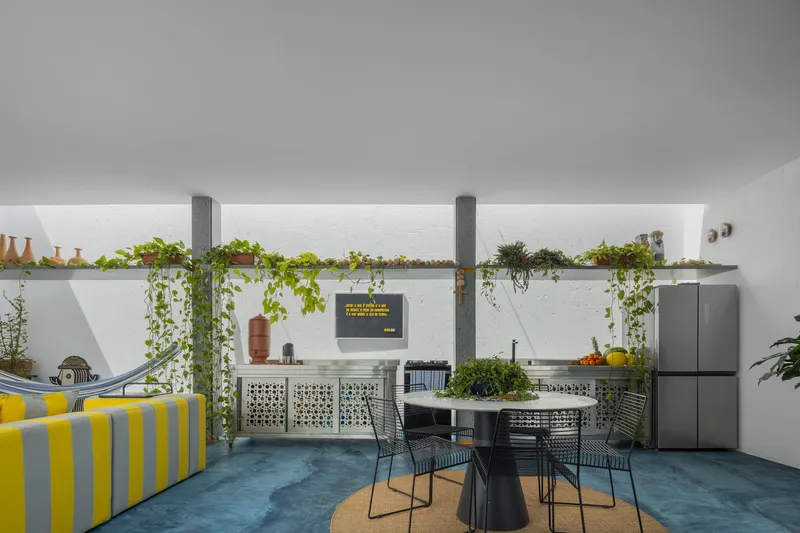
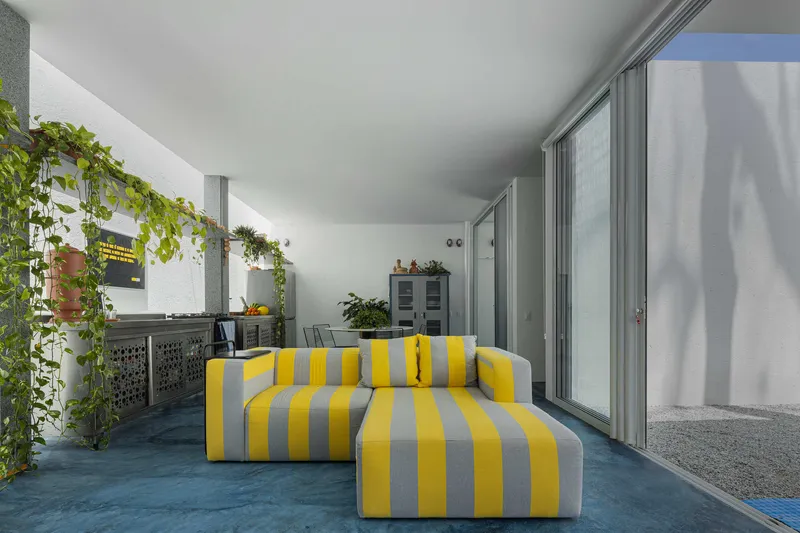
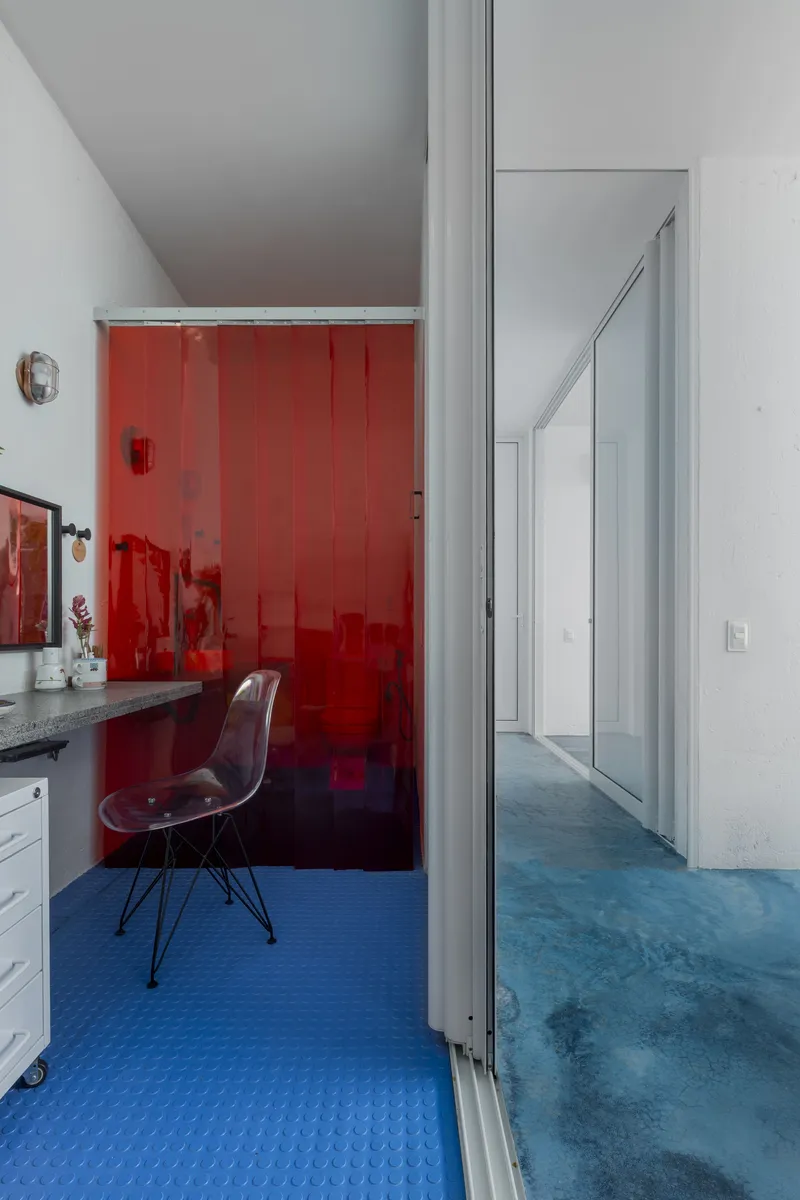
If the exterior is an exercise in restraint, the interior is its opposite. A deep blue rubber floor runs continuously through the living areas, studio workspace, and corridors, establishing a visual ground plane that unifies every room. Against this blue, the architects introduce yellow and grey striped seating, cascading tropical plants along perforated screens, and a red glass-enclosed vanity that feels like a jewel box dropped into the plan.
The covered terrace with sliding glass doors and the semi-outdoor living area demonstrate how NEBR blurs the line between inside and out. Gravel, planting, and the blue floor run right up to the glass, and the roof overhangs provide shade without sealing the space. The material palette here, concrete, rubber, corrugated metal, painted plaster, is modest by any standard, but the color relationships elevate it. Nothing is neutral on the inside.
Light, Screens, and Controlled Exposure
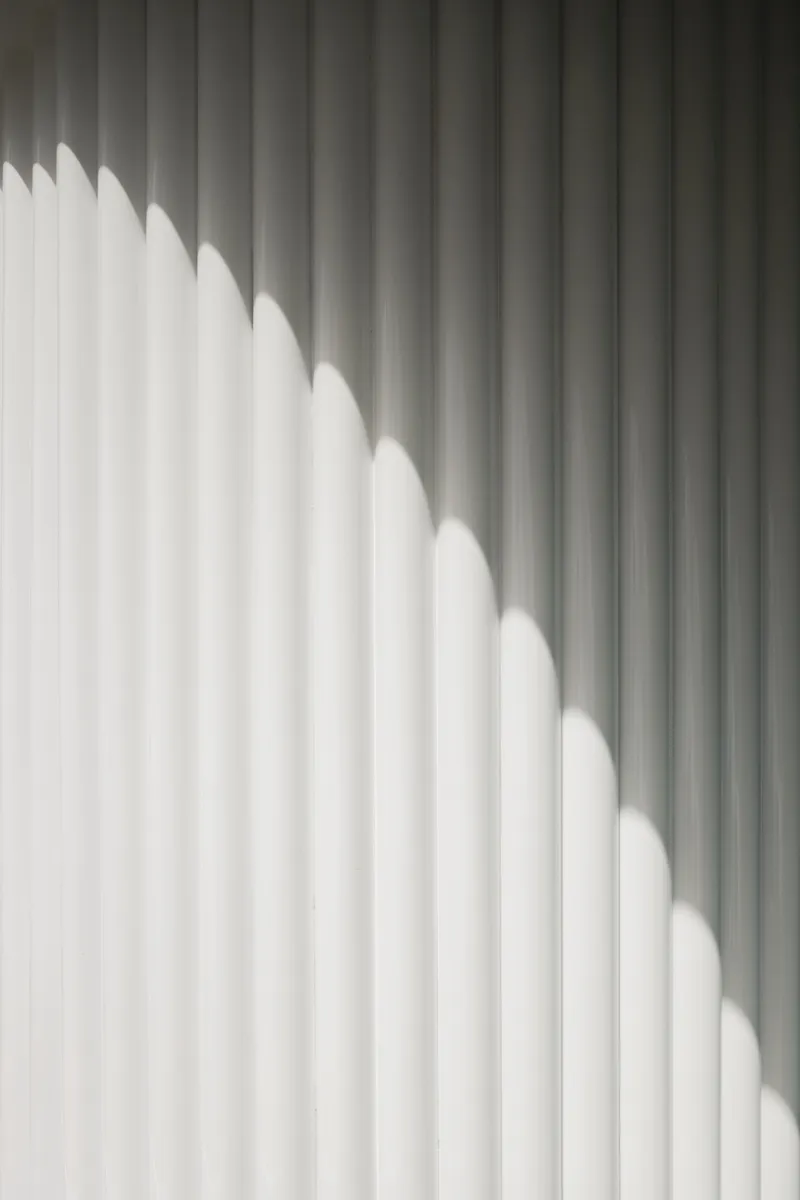
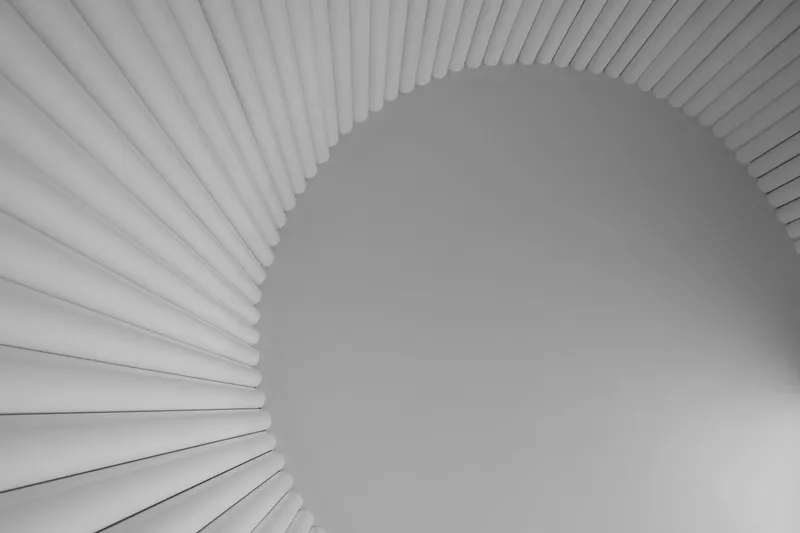
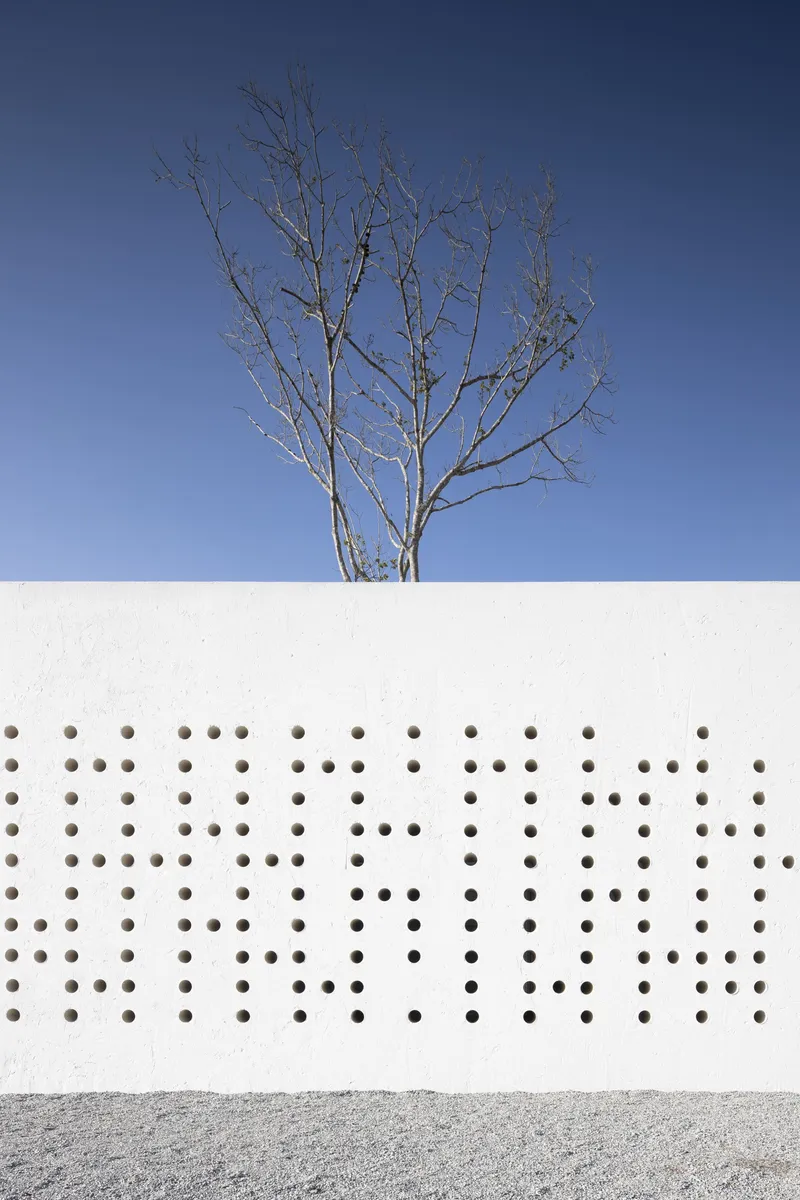
Vertical white slats, perforated concrete panels with circular openings, and a vaulted ceiling with radiating ribbed geometry: NEBR deploys an arsenal of screening devices to manage Pernambuco's intense tropical light. The diagonal shadow patterns cast across the slatted walls in the studio space are not decorative accidents. They are the result of careful orientation and spacing that allows diffused daylight to reach the workspace without glare.
The vaulted ceiling with its arched rib pattern is perhaps the most formally adventurous element in the house. It introduces a third geometric register, neither the straight lines of the envelope nor the curves of the internal partitions, but a radial fan that recalls both vernacular vaulting and mid-century Brazilian modernism. Whether intentional or intuitive, it grounds the project in a regional lineage while remaining unmistakably contemporary.
After Dark
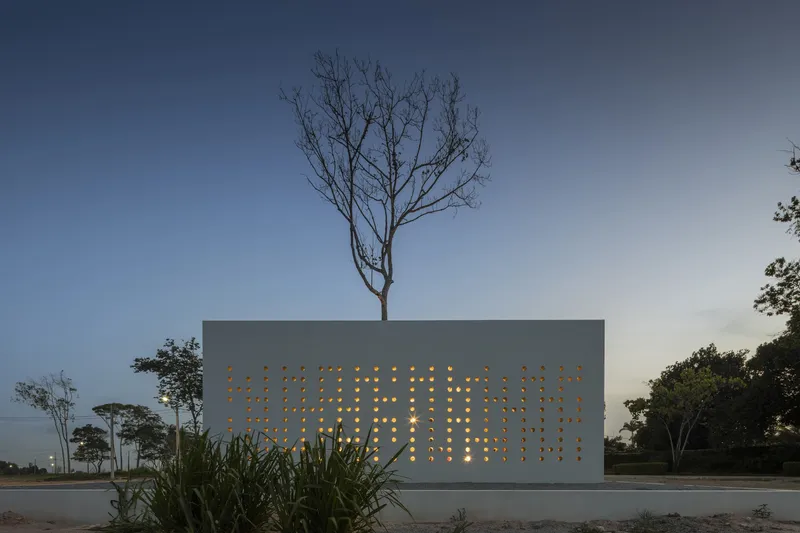
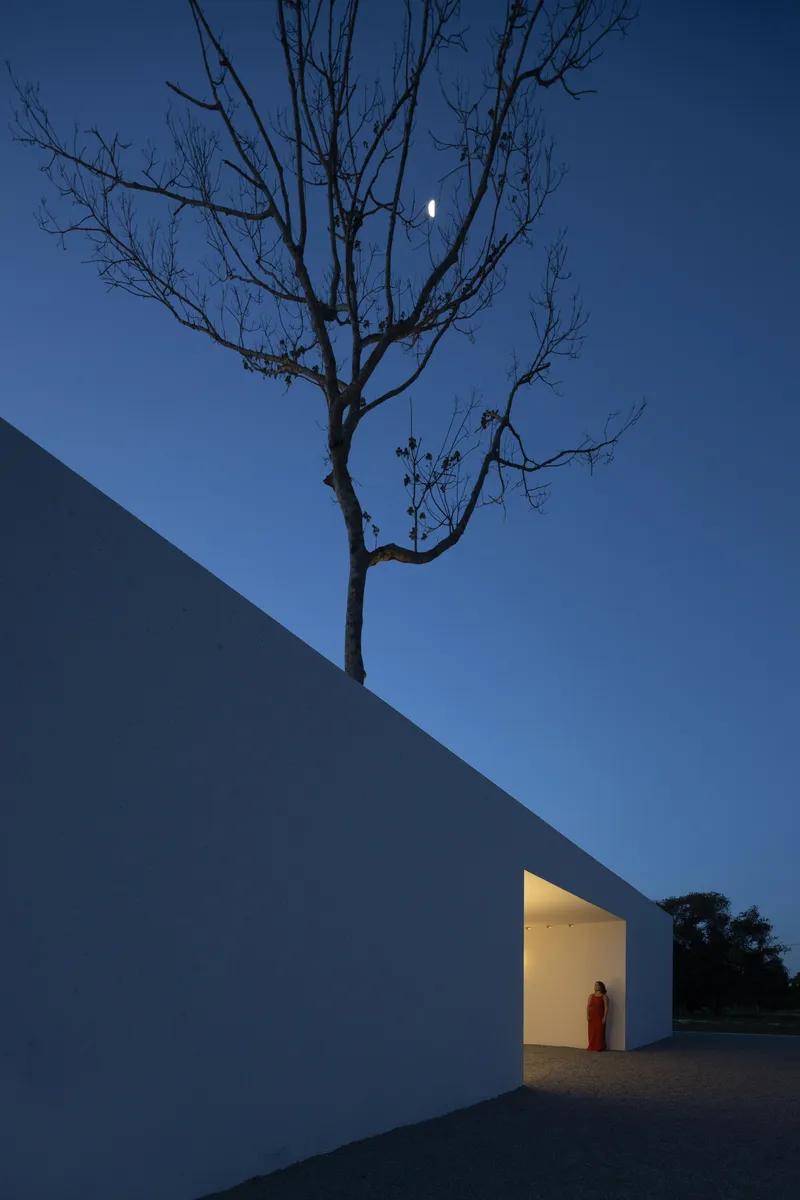
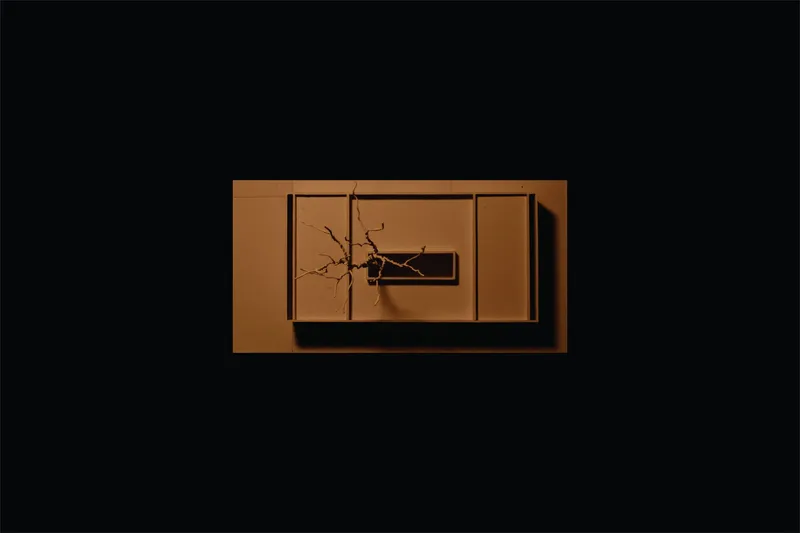
At dusk and into the night, Casa Branca inverts its daytime logic. The perforated concrete screens that read as opaque white surfaces by day become luminous grids, glowing from within. The aerial night view reveals the courtyard tree reflected in a small central pool, and the glass block walls radiate color out through the building's skin. The figure in the red dress framed by the glowing doorway is an almost cinematic image, a reminder that architecture is ultimately about framing human presence.
The nocturnal photographs by Felipe Petrovsky are particularly effective at revealing the building's sectional logic. You can read the depth of the plan through layers of illuminated screens, understand where rooms sit relative to the courtyard, and trace the tree's silhouette against the sky. Lighting design here is not supplementary; it is the mechanism by which the building communicates its spatial ideas to the street.
Plans and Drawings
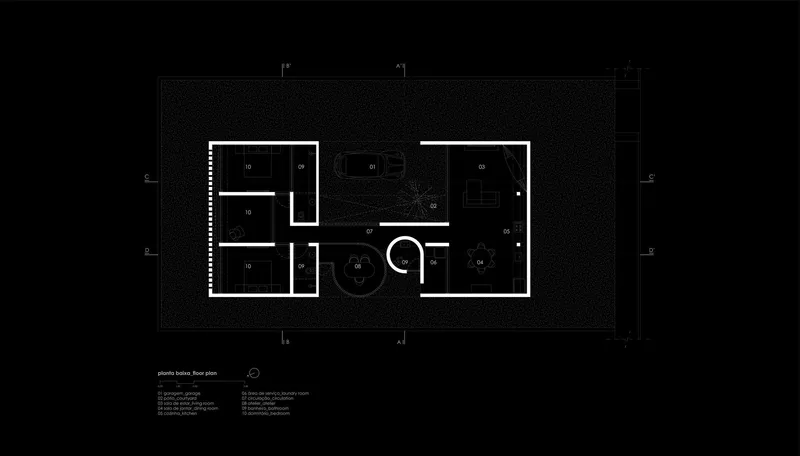
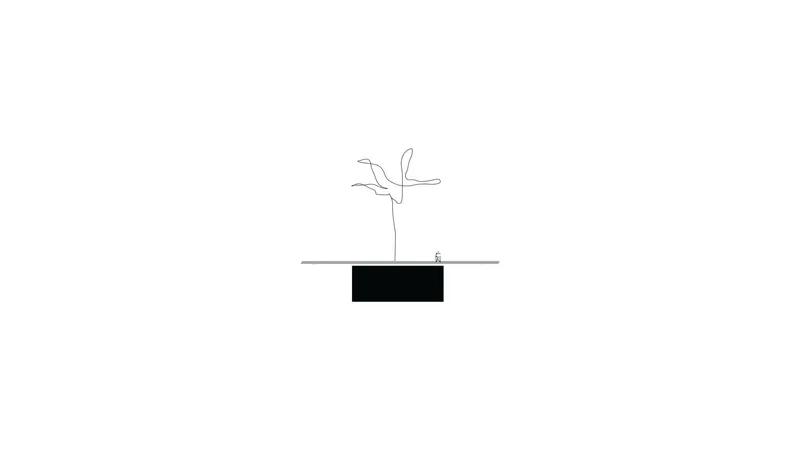
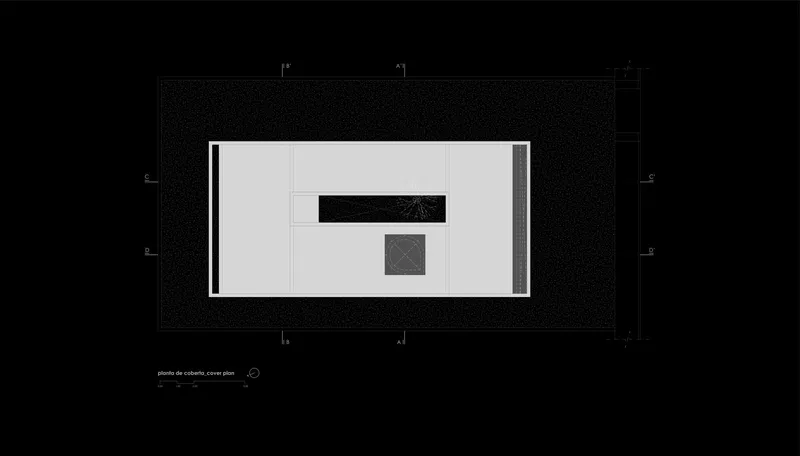
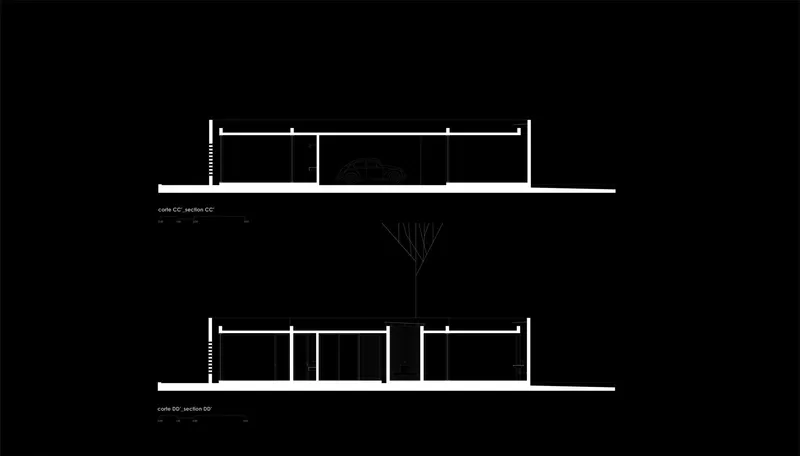
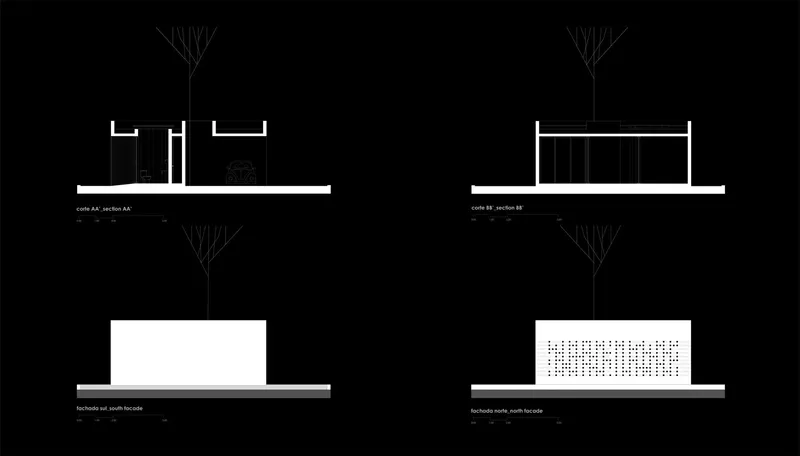
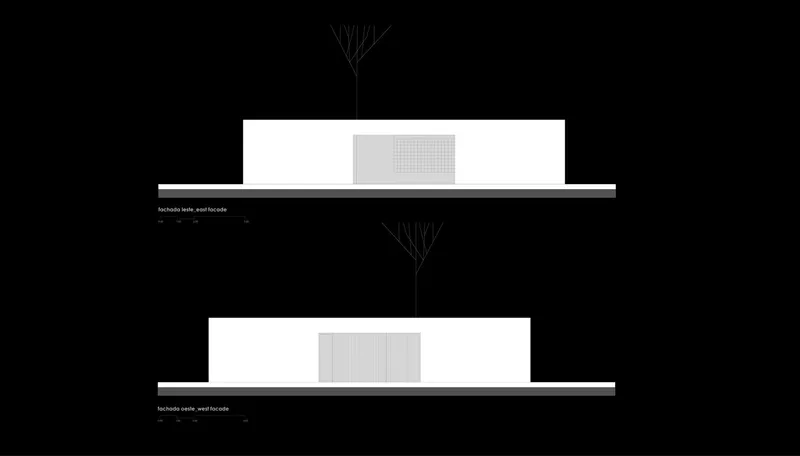
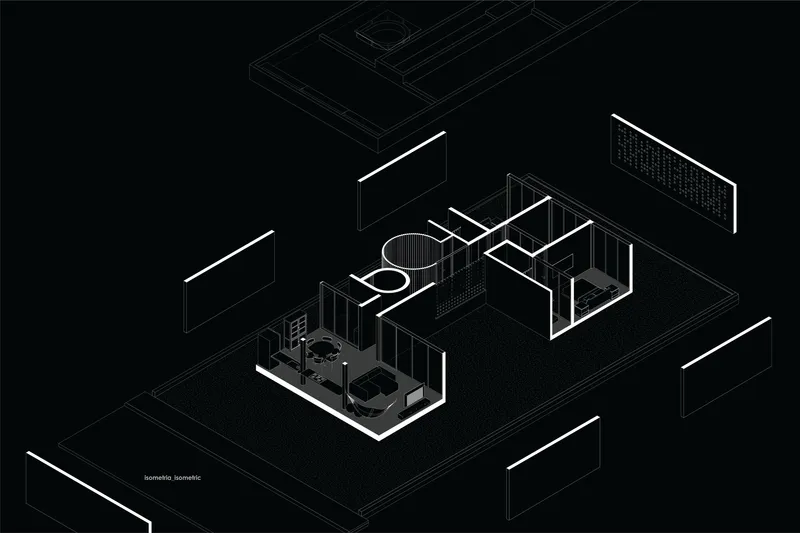
The floor plan confirms what the photographs suggest: the entire house pivots around the circular courtyard containing the tree. Rooms radiate outward from this void, and curved partitions redirect movement through the plan in a way that avoids any dead-end corridors. The section drawing makes the tree's vertical role explicit, showing it emerging from the ground plane, through the interior volume, and out past the roof line. It is the building's column, its courtyard wall, and its antenna.
The elevation studies are revealing for a different reason. They document NEBR's iterative process, showing multiple facade treatments, glazing patterns, and screen configurations that were explored before arriving at the final design. The axonometric drawing, with its furniture and circulation paths rendered in precise detail, confirms the density of program packed into 150 square meters. There is nothing wasted here.
Why This Project Matters
Casa Branca matters because it demonstrates what is possible when an architect builds with limited resources and total control. NEBR arquitetura managed the construction directly, and the result is a building where every detail, from the glass block color sequences to the floor finish to the tree opening, reflects a single, continuous design intelligence. In a profession increasingly dominated by large teams and outsourced execution, this level of authorship is rare and worth defending.
More broadly, the project contributes to an ongoing conversation about regionalism in Brazilian architecture. It does not quote northeastern vernacular forms literally, but it responds to the same conditions, intense sun, humid air, dense vegetation, with strategies that feel rooted rather than imported. The tree at its center is not a metaphor. It is a fact of the site that the architecture had the good sense to organize around. That instinct, to let the existing condition generate the design, is the most valuable lesson Casa Branca offers.
Casa Branca by NEBR arquitetura (Edson Muniz). Paudalho, Pernambuco, Brazil. 150 m². Completed 2026. Photography by Felipe Petrovsky.
About the Studio
Share Your Own Work on uni.xyz
If projects like this are the kind of work you want to make, uni.xyz is a place to publish your own, find collaborators, and enter design competitions.



Popular Articles
Popular articles from the community


Lunar Spiral: Space Architecture Shaped by the Mathematics of the Universe
Lunar Spiral reimagines space architecture through Fibonacci geometry, lunar regolith, levitating habitats, and self-sustaining Moon living.

Hill & Cross Opera: Sculptural Opera House Architecture Shaped by Tallinn’s Landscape and Identity
Hill & Cross Opera reimagines opera house architecture in Tallinn through its sculptural hill, civic plaza, glass wave and a luminous cross.

Co-life: Sustainable Architecture for Age-Friendly Community Living
Co-life reimagines sustainable architecture for seniors through courtyards, rammed earth, shared gardens, and spaces designed for belonging.

Play: Fragments of Their World
Familiar architecture becomes modular playground design, creating safe spaces where displaced children can learn, connect, imagine and play.

Similar Reads
You might also enjoy these articles

Bao Huynh Watercolor Atelier: A Serene Art Retreat in Hội An
Bao Huynh Watercolor Atelier in Hội An blends multifunctional art spaces, sustainable design, local materials, and family-friendly living in a serene environment.

Atelier Macri Concept Store Interior Design by CASE-REAL
Atelier Macri store features a "ko" counter, walnut wood details, cork displays, blending retail, gallery, and seamless customer experiences.

Manuel Vargas Izquierdo Stadium and High-Performance Sports Center: Architectural Excellence in Jalpa de Méndez
The Manuel Vargas Izquierdo Stadium blends sustainable design, inclusive sports facilities, and cultural-inspired architecture, revitalizing Jalpa de Méndez’s public spaces.

KAKR Buluh Awar Hall: Revitalizing Community and Ecology Through Bamboo Architecture
Community built bamboo hall revitalizes Buluh Awar village, empowering youth, restoring ecology, celebrating vernacular craftsmanship through sustainable architecture and culture.



Comments (0)
Please login or sign up to add comments
No comments yet. Be the first to comment!