
Nelson Mandela Cruise Terminal: Durban’s Gateway to Zulu Culture
The Nelson Mandela Cruise Terminal in Durban blends Zulu-inspired design, functional efficiency, and structural innovation, welcoming 6,000 passengers daily.


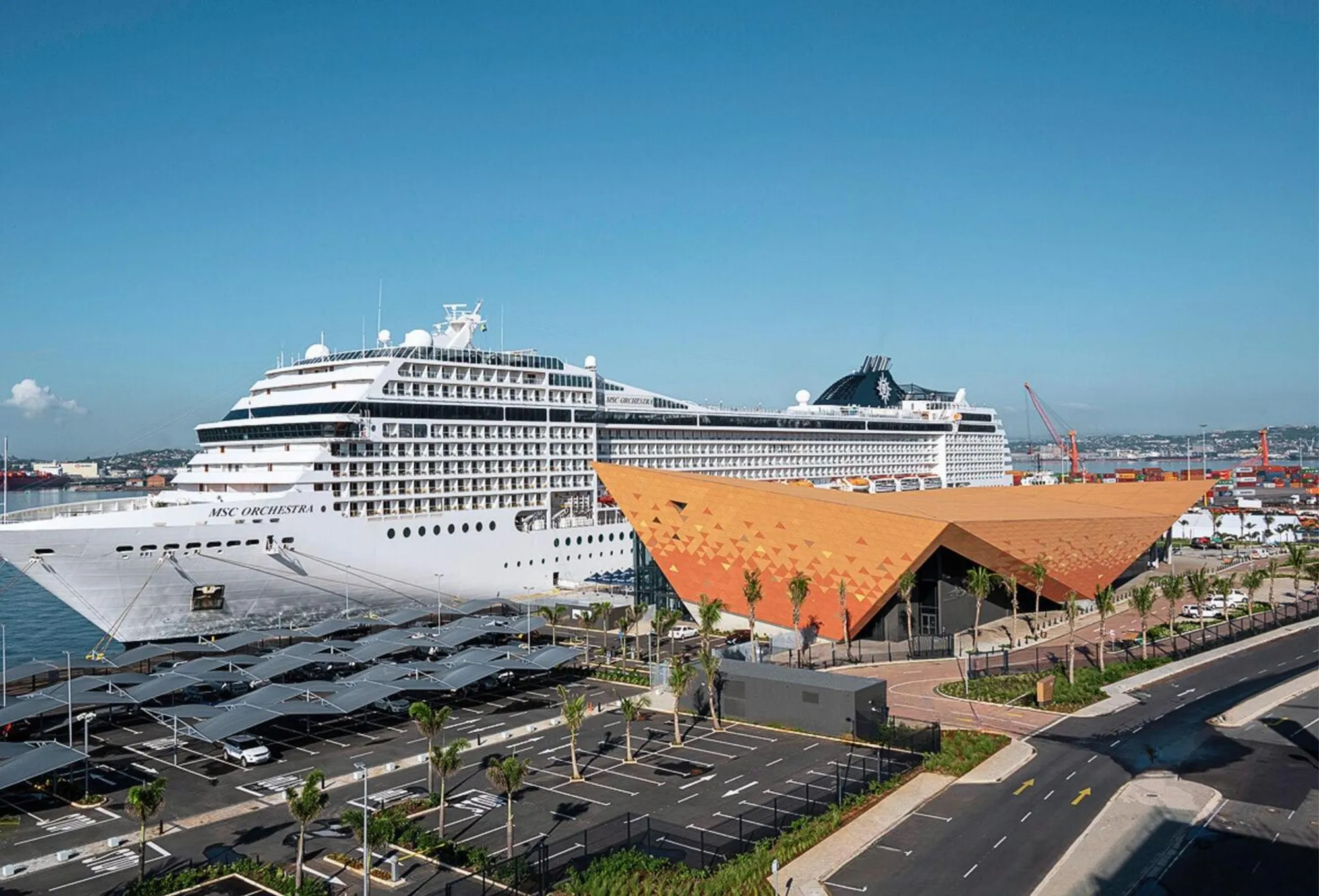
The Nelson Mandela Cruise Terminal, designed by Elphick Proome Architecture in collaboration with Vusa Collaborative, stands as a striking landmark on Durban’s harbor, serving as both a functional cruise terminal and a cultural gateway to KwaZulu-Natal. Conceptualized as the modern portal to the Kingdom of the Zulus, the terminal immerses visitors in the rich heritage and traditions of the region, offering an iconic first impression of South Africa’s coastal city.
Dwarfed by docked cruise liners, the terminal asserts a powerful presence through its bold, sculptural form, bridging the city and the harbor. Its design draws heavily from Zulu cultural motifs, integrating earthy tones, vibrant textures, and traditional triangular patterns into a visually compelling architectural envelope. The resulting African-inspired façade breaks away from the neutral palettes typical of transportation architecture worldwide, creating a unique and contextually significant identity.

Functional Design and Flexibility
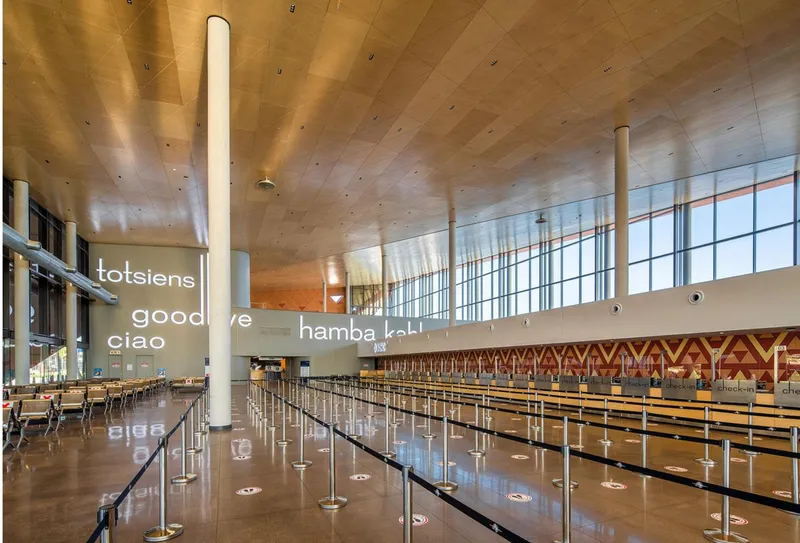
Functionality drives the terminal’s design. Serving up to 6,000 passengers per day, the building efficiently manages large flows of people with a clear, single-level layout. To accommodate seasonal fluctuations, the terminal seamlessly transforms into a conference center during the five-month off-season when cruising activity is minimal. Carefully planned pedestrian and vehicle circulation, entry and exit points, and drop-off zones ensure smooth embarkation, disembarkation, and luggage handling, supporting both high operational efficiency and passenger comfort.

Structural Innovation
The terminal’s expansive shed-like structure posed significant engineering challenges. The envelope is formed using a 1.2-meter-deep primary steel structural zone clad with profiled aluminum sheeting, enabling an extraordinary long cantilever supported at a single springing point. This technical solution extends to vertical and slightly inclined horizontal planes, creating a dramatic visual language while maintaining structural integrity. The “African grid” of structural columns supports a vast canopy that defines an expansive public piazza, emphasizing the terminal’s bold overhangs and dynamic form.

Construction Challenges and Achievement
Built amid the complexities of the Covid-19 pandemic, the project faced material shortages, stringent financing constraints, and government requirements for affirmative action subcontracting. Despite these challenges, the terminal was completed on time and within budget for the 2022 cruise season, marking a significant achievement in project management and collaboration.


Experiential Architecture
The terminal is more than a functional transport hub; it is a carefully orchestrated architectural experience. A gently folded roof guides arriving passengers’ attention to the wharf, while departing passengers are directed towards curated city vistas. Broad interior spaces and panoramic views across Durban’s rejuvenated historic precinct enhance the journey, reinforcing the terminal’s role as a ceremonial portal to the city and the cultural landscape of KwaZulu-Natal.


All photographs are works of
Karl Beath Photography, Maxine Elphick Photography




Popular Articles
Popular articles from the community


Lunar Spiral: Space Architecture Shaped by the Mathematics of the Universe
Lunar Spiral reimagines space architecture through Fibonacci geometry, lunar regolith, levitating habitats, and self-sustaining Moon living.

Hill & Cross Opera: Sculptural Opera House Architecture Shaped by Tallinn’s Landscape and Identity
Hill & Cross Opera reimagines opera house architecture in Tallinn through its sculptural hill, civic plaza, glass wave and a luminous cross.

The Ocean Hive: Sustainable Architecture for a Self-Sufficient Civilization at Sea
The Ocean Hive imagines sustainable architecture at sea, where modular habitats, algae, wave power and ocean waste sustain a growing colony.

Conexión: Biophilic Design Reimagines High-Rise Living in Hong Kong
Conexión reimagines high-rise living in Hong Kong through biophilic design, green facades, shared spaces, daylight, water and nature within.


Similar Reads
You might also enjoy these articles


Hodi-Mandai Geram
Project Function: Preservation and revitalization of the Intangible heritage and socio-spatial identity of the Hodi by Housing, Cultural Memory Center, Sacred Grove, landscape, local tourism economy


Olio Towers: A Mid-Rise for Performers That Fuses Housing, Rehearsal, and Stage
Located blocks from Houston's Theater District, this modular tower stacks living units around a central performance atrium.

Oasis: Modular Green Housing Carved into Dhaka's Urban Fabric
A shortlisted Plugin Housing entry reclaims unauthorized settlements in Dhaka with stepped concrete volumes, green roofs, and ventilation-driven design.

Black Hole: A Floating Megastructure for the Post-Physical Era
Emiliano Mazzarotto envisions a spherical, self-scaling arena where e-sports, digital hotels, and holographic stadiums replace traditional public space.

Explore Infrastructure Design Competitions
Discover active competitions in this discipline



Challenge to reimagine the Iron Throne


Photograph architecture without architects


Illustrate the lost glory of Angkor Wat - Render Challenge


Design challenge to reuse E-waste
Comments (0)
Please login or sign up to add comments
No comments yet. Be the first to comment!