

New Apostolic Church Contemporary Architecture: A Sacred Landmark in Pforzheim
New Apostolic Church in Pforzheim redefines contemporary religious architecture, blending sculptural form, natural light, and material authenticity for a transcendent experience.


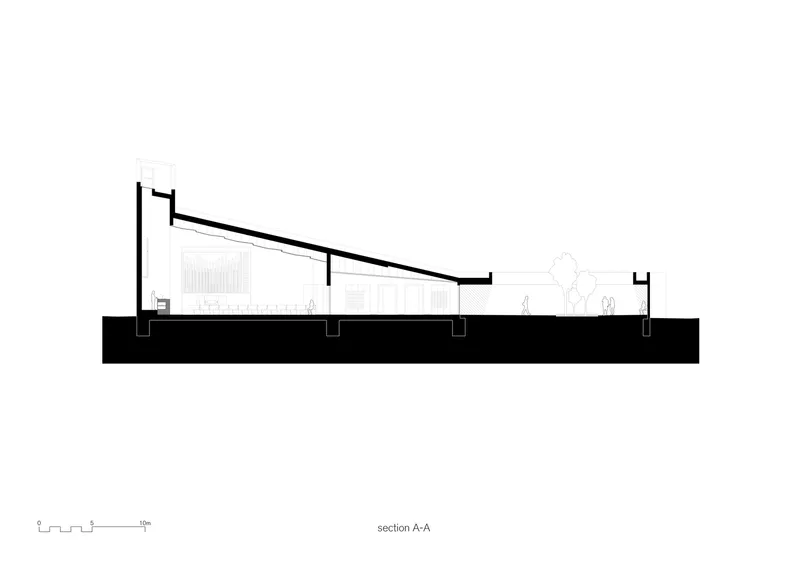
The New Apostolic Church in Pforzheim, designed by Bez+Kock Architekten, stands as a striking example of contemporary religious architecture. Rising from a tree-lined meadow near a bustling road and railway line, the 810-square-meter structure creates an immediate visual identity as a sacred space. Its sculptural form, defined by a polygonal volume and a sloping roof crowned by a skylight, establishes a profound architectural presence at the western entrance to the city.
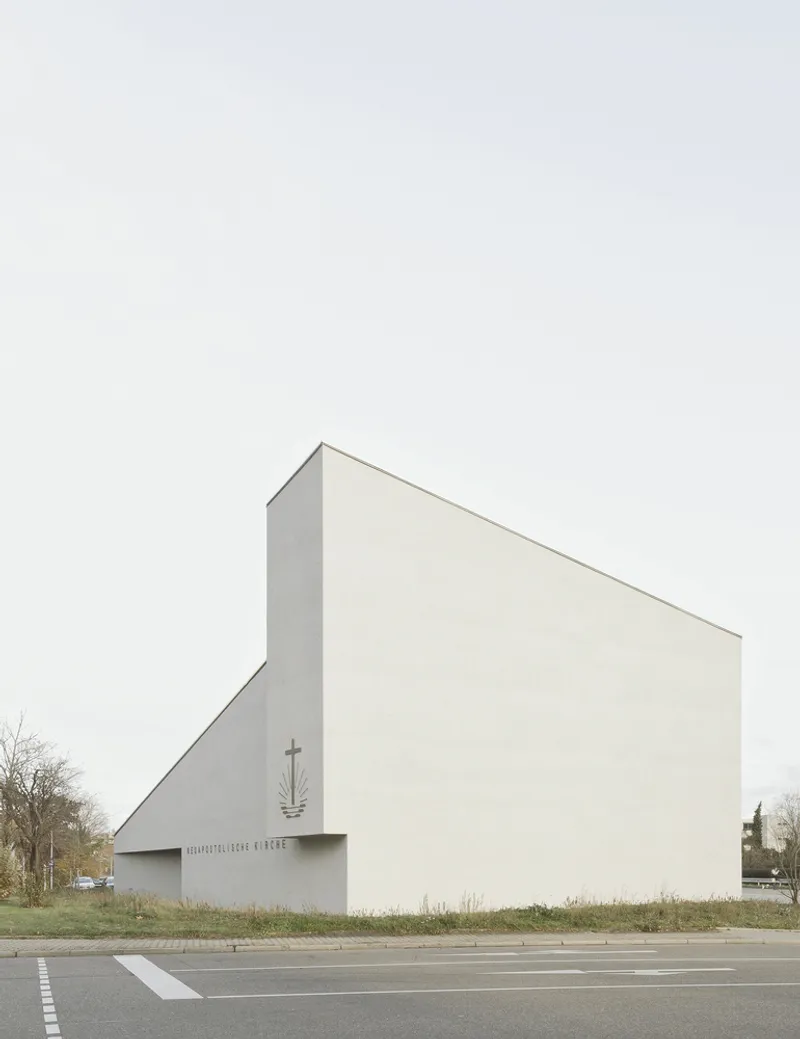
A Monumental Form Rooted in Spiritual Tranquility
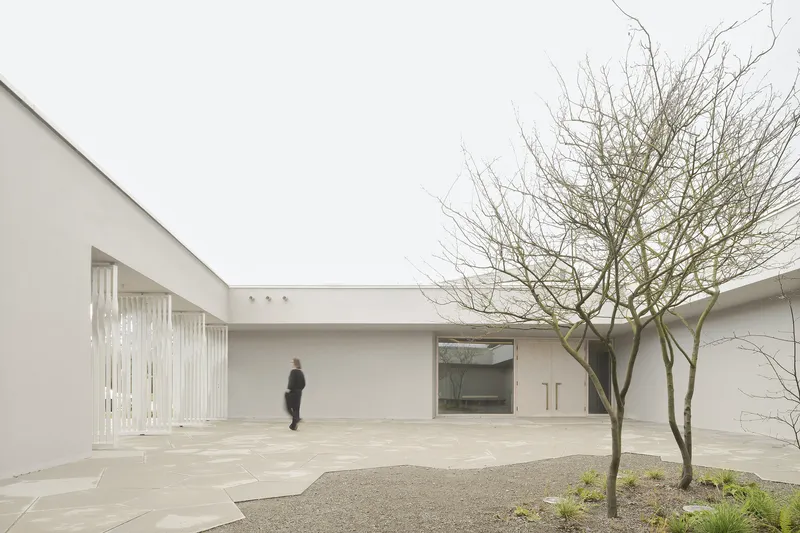
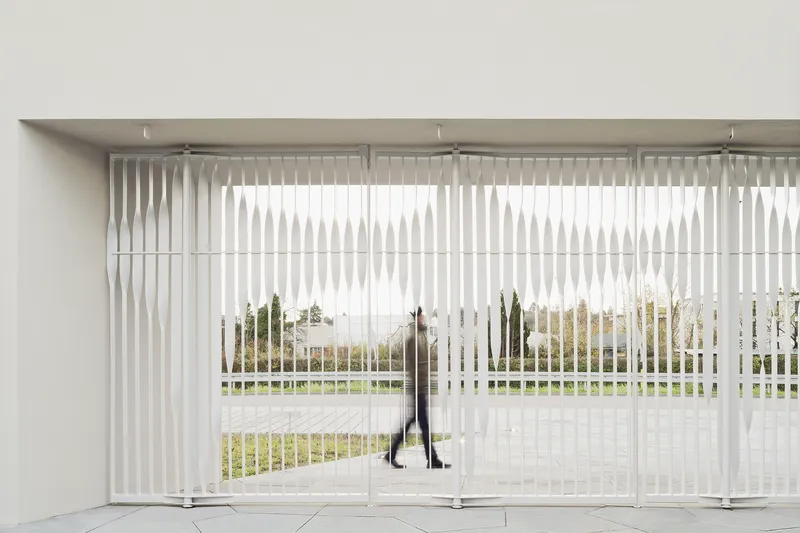
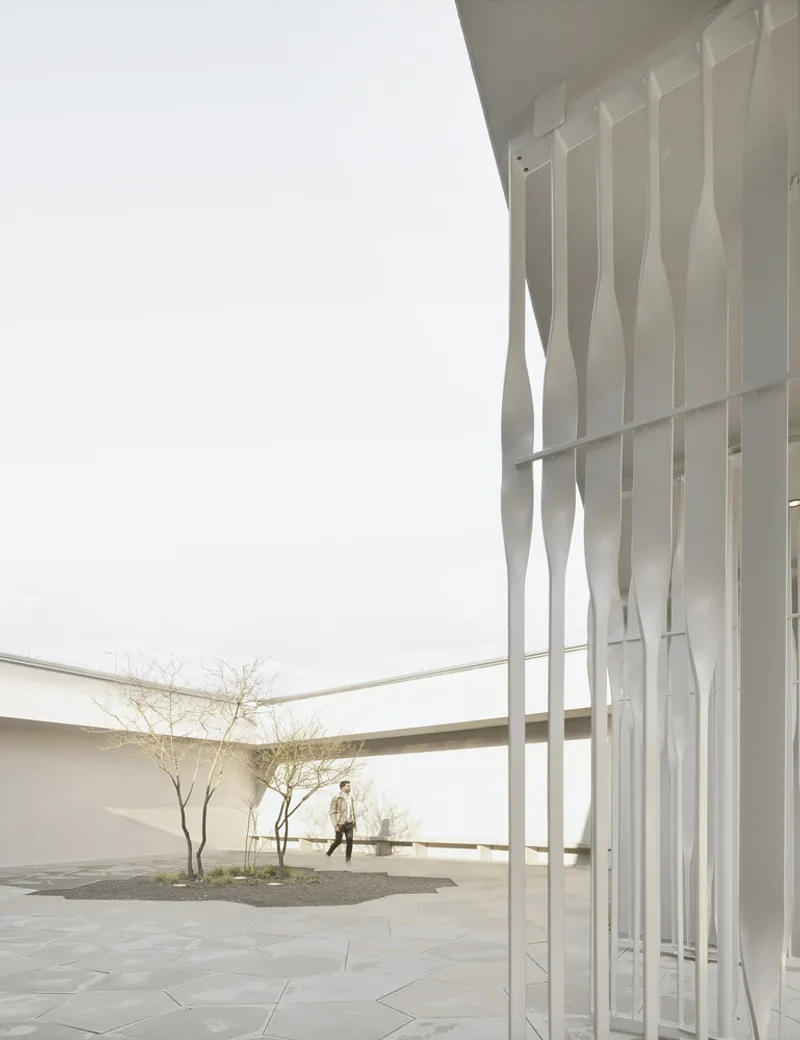
The church’s design embodies a transition from the dynamic energy of the surrounding urban landscape to a realm of spiritual contemplation. A gently sloping ramp leads visitors through four symbolic pivot gates into a tranquil churchyard. This space, characterized by a cluster of rock pear trees and enveloped by benches, serves as a contemplative refuge that marks the passage from everyday life into the solemn atmosphere of the church.
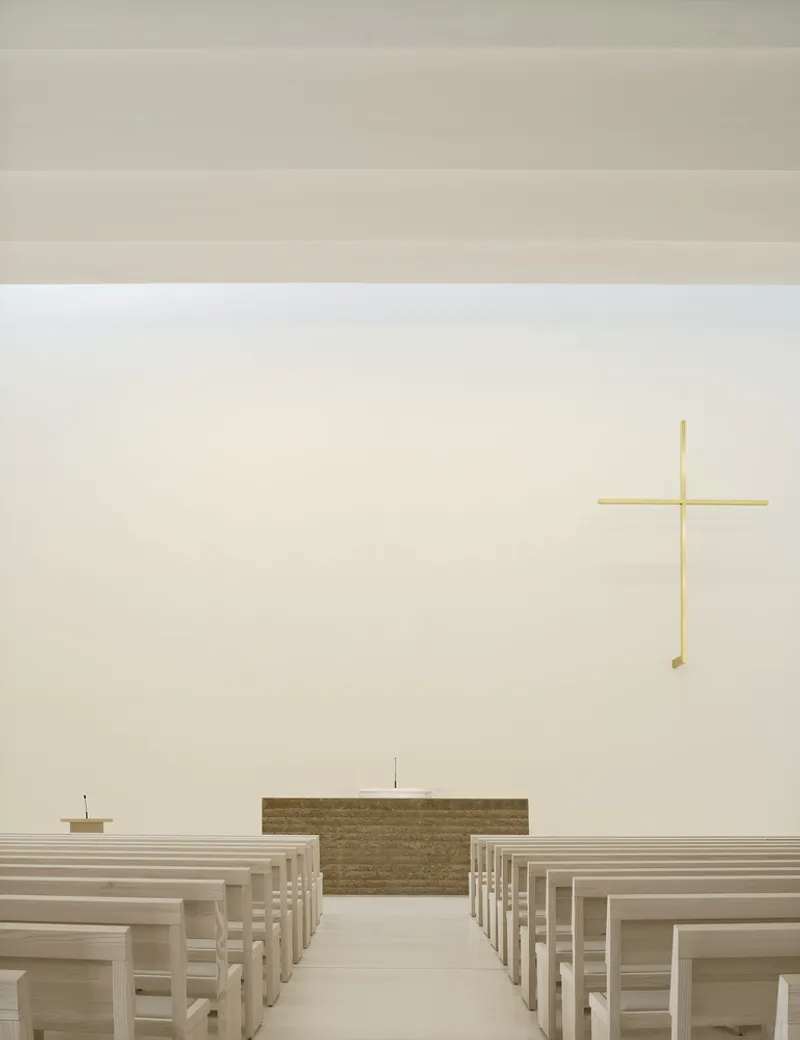
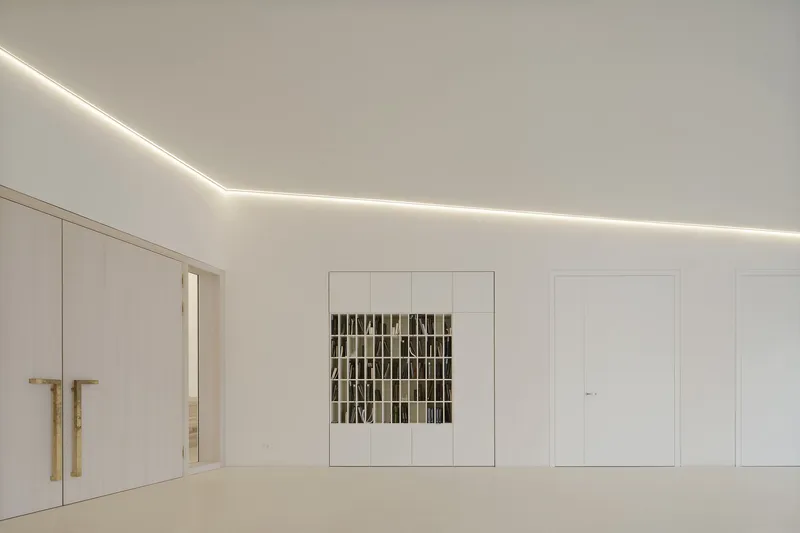

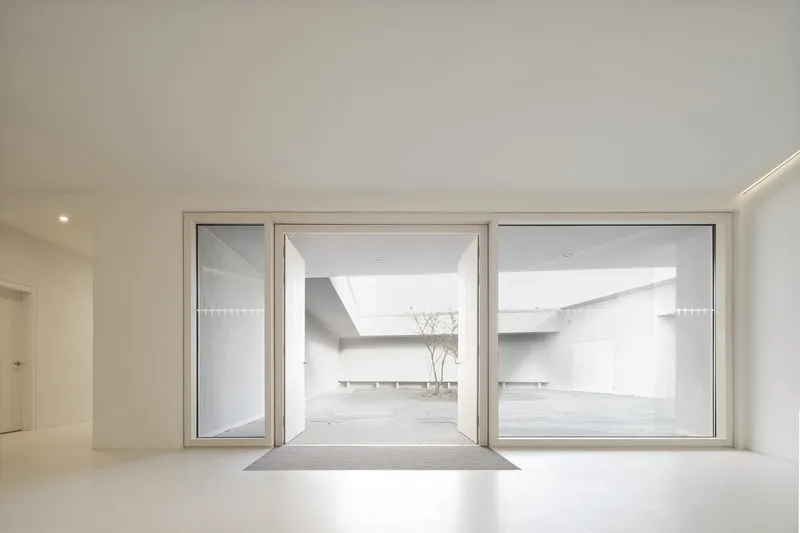
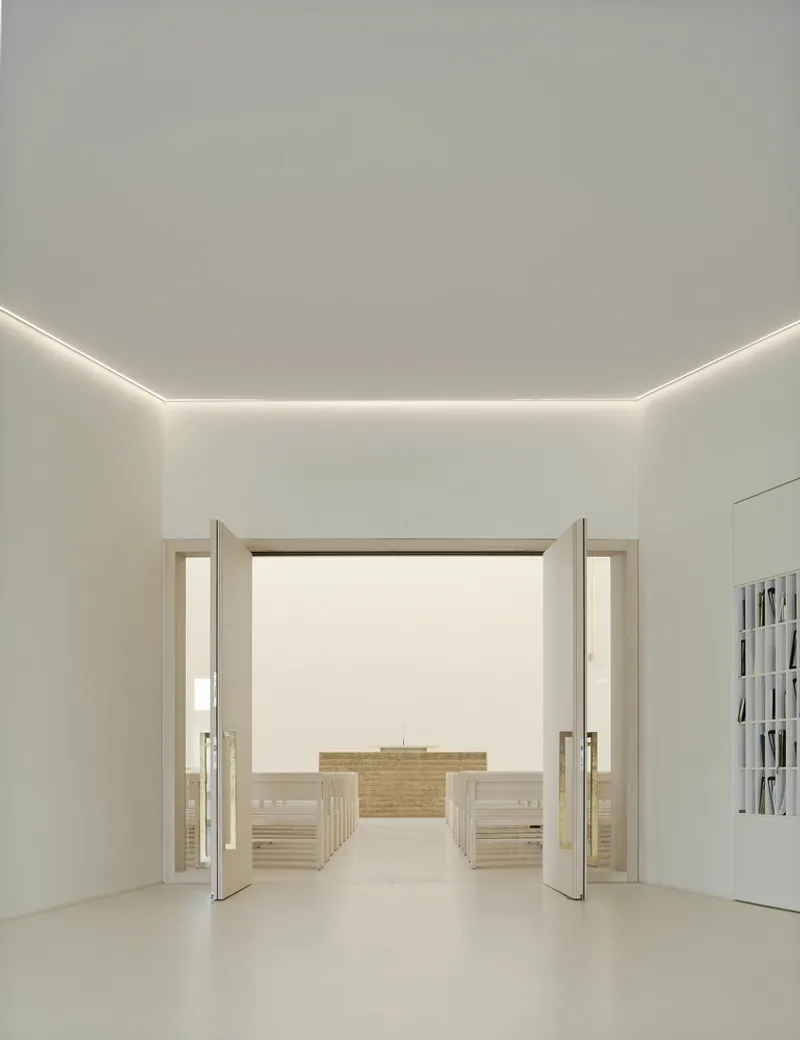
Within this sequence, the architectural journey unfolds along a continuous axis that connects the churchyard, foyer, and main worship hall. The spatial experience is choreographed to lead the visitor toward the altar, a focal point crafted from rammed earth and bathed in warm, natural light filtering from above. This considered interplay between space and illumination enhances the church’s introspective yet inviting ambiance.
Harmonizing Light and Materiality
Daylight plays a defining role in shaping the sacred experience within the New Apostolic Church. Vertical wooden slats filter sunlight through the side windows, casting rhythmic patterns across the interior. The restrained material palette—clay plaster, silver fir wood, and white terrazzo—imbues the space with an organic warmth, reinforcing the spiritual character of the building.

Externally, the church’s plastered façade is enriched with light-colored natural stone chippings pressed into the surface, elevating the simplicity of the material while maintaining a refined elegance. This integration of raw, tactile elements establishes a strong connection to the natural surroundings, grounding the architecture in a timeless materiality.
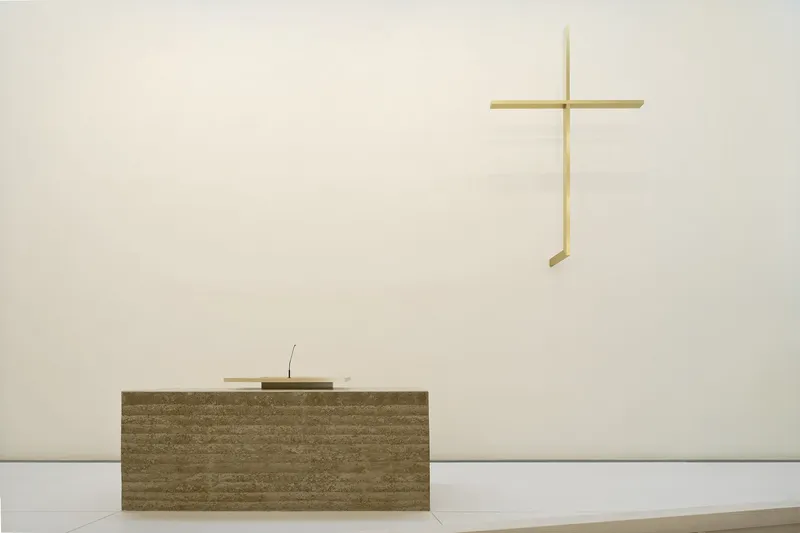
A Contemporary Vision of Sacred Architecture
The New Apostolic Church in Pforzheim exemplifies the evolving language of contemporary religious architecture. Through its sculptural form, nuanced lighting strategy, and carefully curated material palette, the building transcends traditional ecclesiastical design. It stands as a testament to the ability of architecture to shape spiritual experience, offering a sanctuary where light, space, and materiality converge to create a profound sense of presence.
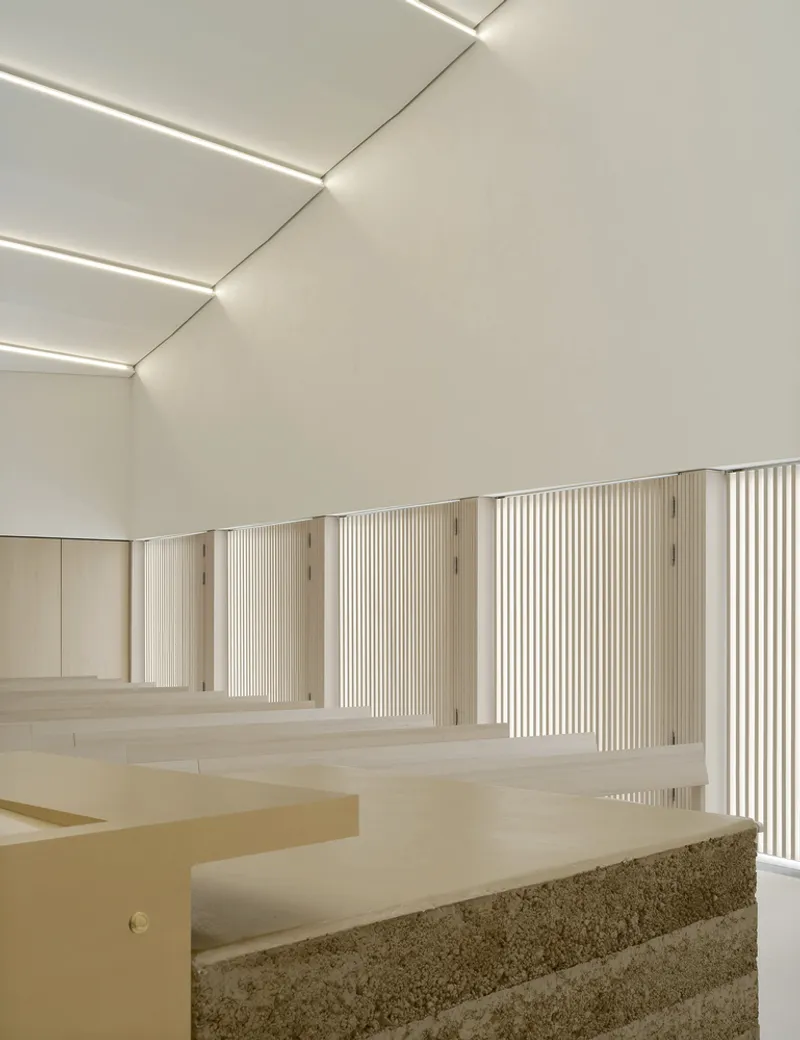
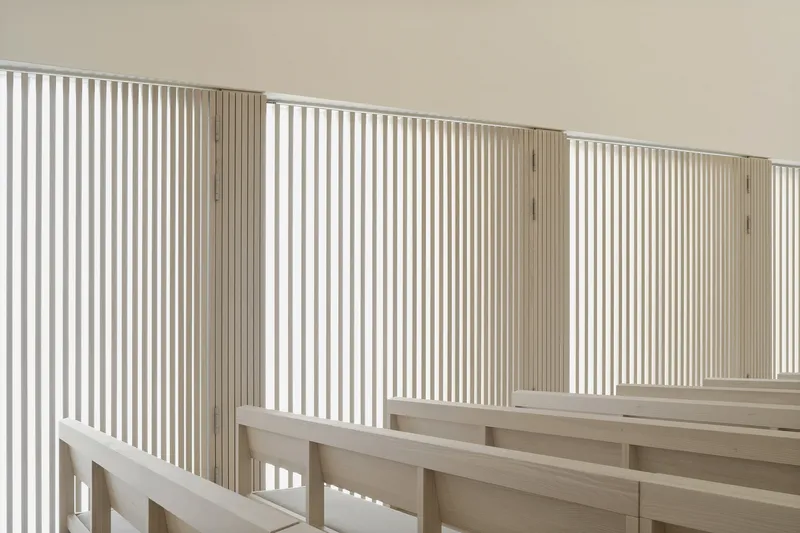

Bez+Kock Architekten have redefined the relationship between sacred architecture and modernity, demonstrating that contemporary church design can embrace both innovation and tradition. The result is a space that not only serves its congregation but also enriches the architectural fabric of the city.


All Photographs are works of Brigida González


Popular Articles
Popular articles from the community

Opera by the Sea Estonia: Three Shells Dissolving Architecture into Tallinn's Coastline
A winning opera house proposal replaces monumental form with interconnected shells that blur the boundary between building, park and Baltic Sea.

Temporary Home for Dogs: A Reversed Zoo Rethinks Animal Shelter Architecture
In Bucharest, a sinuous corridor and freed landscape flip the logic of containment, designing a shelter that works to make itself unnecessary.

Manzana Morphosis: Stretching Barcelona's Grid into a Living Landscape for 2050
A radical reworking of the Eixample manzana turns density into a tool for generous public space, vertical ecology, and environmental performance.

Singing Woman: An Opera House That Performs Before the Curtain Rises
Ovidiu Cristian Pavel's conceptual opera house translates Estonia's choral identity into a sculpted waterfront landmark facing the Baltic Sea.

Similar Reads
You might also enjoy these articles


Hodi-Mandai Geram
Project Function: Preservation and revitalization of the Intangible heritage and socio-spatial identity of the Hodi by Housing, Cultural Memory Center, Sacred Grove, landscape, local tourism economy


Olio Towers: A Mid-Rise for Performers That Fuses Housing, Rehearsal, and Stage
Located blocks from Houston's Theater District, this modular tower stacks living units around a central performance atrium.

Oasis: Modular Green Housing Carved into Dhaka's Urban Fabric
A shortlisted Plugin Housing entry reclaims unauthorized settlements in Dhaka with stepped concrete volumes, green roofs, and ventilation-driven design.

Black Hole: A Floating Megastructure for the Post-Physical Era
Emiliano Mazzarotto envisions a spherical, self-scaling arena where e-sports, digital hotels, and holographic stadiums replace traditional public space.

Explore Architect For Liturgy Competitions
Discover active competitions in this discipline

Challenge to reimagine the Iron Throne

Photograph architecture without architects

Illustrate the lost glory of Angkor Wat - Render Challenge

Design challenge to reuse E-waste
Comments (0)
Please login or sign up to add comments
No comments yet. Be the first to comment!