

New Datong Art Museum by Foster + Partners is now open for art enthusiasts!
Experience the stunning architecture and impressive collection at Datong's newest cultural landmark


The recently opened Datong Art Museum, designed by Foster + Partners, is set to become a cultural hub for the region. Located in the Datong New City's cultural plaza, the building's sculptural form has been conceived as a landscaped terrain, with a series of interconnected pyramids emerging from below the earth. The museum's gallery spaces are sunken below ground and surrounded by landscaped plazas, providing a natural setting for visitors.
Complementing the museum's cultural programme are a series of spaces dedicated to education and learning, including a children's gallery, media library, archive and art storage facilities. The museum is conceived as a social hub for people, bringing art, artists and visitors together in a space where they can interact. The Grand Gallery, the heart of the museum, exemplifies this spirit with a generously scaled, flexible exhibition space designed to accommodate specially commissioned large-scale artworks as well as performance art and other events.

Visitors are guided towards the museum by strong diagonal paths in the landscaping, and the entrance is via a winding sequence of ramps that lead down into an open sunken plaza, which also provides an amphitheatre for outdoor performances. Upon entering the building, visitors arrive at a mezzanine level that reveals a spectacular overview of the Grand Gallery, measuring 37 metres in height and spanning almost eighty metres. Further climate-controlled exhibition spaces are placed around the perimeter of the museum on a single level, allowing for ease of access.
A key aspect of the building is the focus on education and learning with a dedicated children's gallery filled with sunlight from tall, south-facing windows. A smaller education centre and a media library complement the education programme, and there are facilities to support artist residencies, talks and conferences.
The museum's four interconnected roof pyramids increase in height and fan outwards towards the four corners of the cultural plaza. Natural light streams into the interior through roof lights located at the apex of each pyramid. The roof is clad in naturally oxidised curved steel plates that help drain water and give a rich, three-dimensional quality to the surface. The panels are proportioned to suit the large scale of the museum, and their linear arrangement accentuates the pyramidal roof form.
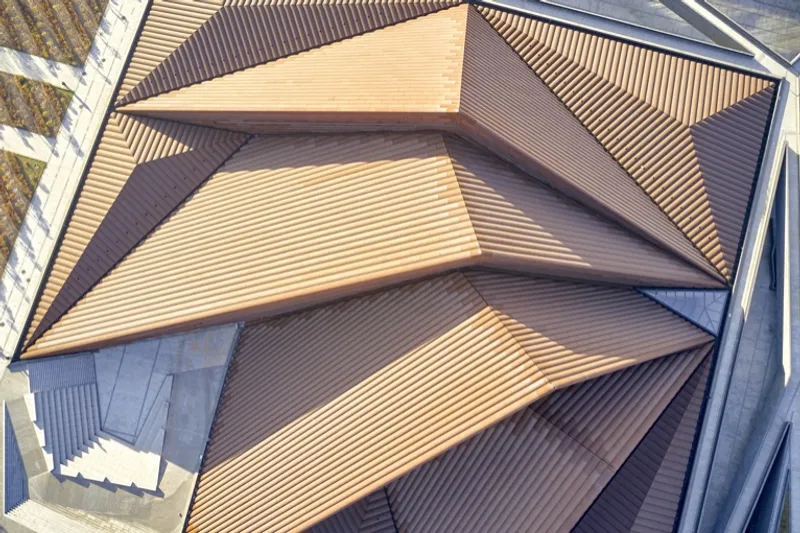
By sinking the building into the new plaza, the design relates in scale to the neighbouring cultural buildings, balancing the overall composition of the district masterplan while maximising the internal volume. A clerestory between each volume creates a naturally lit interior during the day while creating a unique beacon for the new cultural quarter at night.
The building's efficient passive design responds to Datong's climate. High-level skylights take advantage of the building's north and northwest orientation, using natural light to aid orientation while minimising solar gain and ensuring the optimum environment for the works of art. Sinking the building into the ground, along with a high-performance enclosure, further reduces energy needs. The roof is mostly solid and insulated to twice the building code requirements, making it an environmentally sustainable and energy-efficient building.

Overall, the Datong Art Museum is an important new cultural destination in China, designed to be a social hub for people to interact with art and artists. Its sculptural form, efficient passive design, and focus on education and learning make it an innovative and sustainable addition to Datong New City's cultural plaza.


Popular Articles
Popular articles from the community

Faces of the Soviet Avant-Garde: Turning Moscow's Street Names into an Open-Air Museum
A network of sculptural installations across a Moscow residential district transforms forgotten architect names into spatial encounters with cultural memor
Opera by the Sea Estonia: Three Shells Dissolving Architecture into Tallinn's Coastline
A winning opera house proposal replaces monumental form with interconnected shells that blur the boundary between building, park and Baltic Sea.

Cloaked Colonization: A Mobile Underwater Habitat That Moves Like a Fish
Micah Abaya's shortlisted EHC Pacific entry reimagines ocean settlement as a dispersed network of self-sustaining architectural organisms.

Singing Woman: An Opera House That Performs Before the Curtain Rises
Ovidiu Cristian Pavel's conceptual opera house translates Estonia's choral identity into a sculpted waterfront landmark facing the Baltic Sea.

Similar Reads
You might also enjoy these articles
116 Rokeby Building, Collingwood
Sustainable Collingwood office building featuring double-skin façade, natural ventilation, rooftop amenities, and carbon-neutral design focused on wellbeing and longevity.
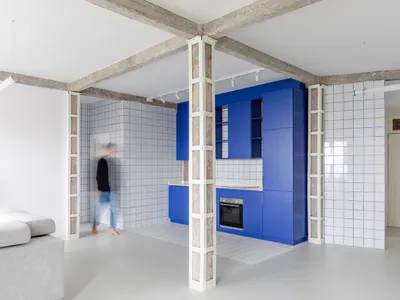
Contemporary Apartment Renovation in Spain: RV House by BIAN Opens Up to the Sea
A minimalist 1930s apartment in Santander is transformed into a flexible, sea-facing home through contemporary Spanish renovation.
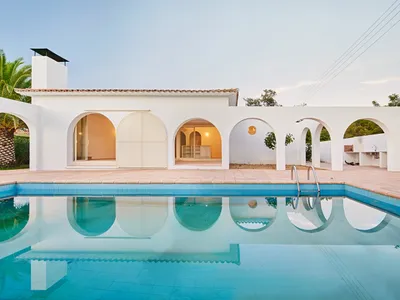
3 Marías House: A Contemporary Mediterranean Courtyard Retreat by Bajet Giramé + Burckhardt
Mediterranean courtyard home blending traditional architecture with modern design, terracotta flooring, flexible interiors, sustainable climate strategies, and garden integration.
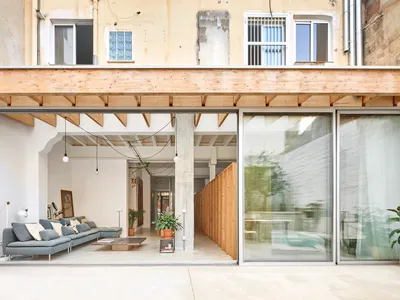
NZ10 Apartment by auba studio: Adaptive Reuse in Palma de Mallorca
Adaptive reuse apartment transforms bakery into light-filled home with patios, privacy layers, and wood interiors enhancing urban living experience.

Explore Museum Competitions
Discover active competitions in this discipline


Challenge to reimagine the Iron Throne

Photograph architecture without architects

Illustrate the lost glory of Angkor Wat - Render Challenge

Bring back Drive In's
Comments (0)
Please login or sign up to add comments
No comments yet. Be the first to comment!