
New Parliament House, New Delhi – Monumental Civic Architecture for a Modern Democracy
A contemporary parliamentary architecture that reinterprets national identity, democratic values, and monumental civic space for a new India.

The New Parliament House, New Delhi is envisioned as a response to the spatial, structural, and functional limitations of India’s existing Parliament building, a 90‑year‑old heritage structure that can no longer adequately accommodate the growing number of Members of Parliament, administrative staff, and modern governance requirements. While the historic Parliament House remains protected for its architectural and cultural significance, this proposal introduces a contemporary Parliament House architecture that aligns with the aspirations of a modern democratic nation.
Designed as an academic thesis project, the proposal explores how architecture can embody democratic ideals, national symbolism, and public accessibility while maintaining the gravitas and monumentality expected of a national institution.
Urban Context and Site Response
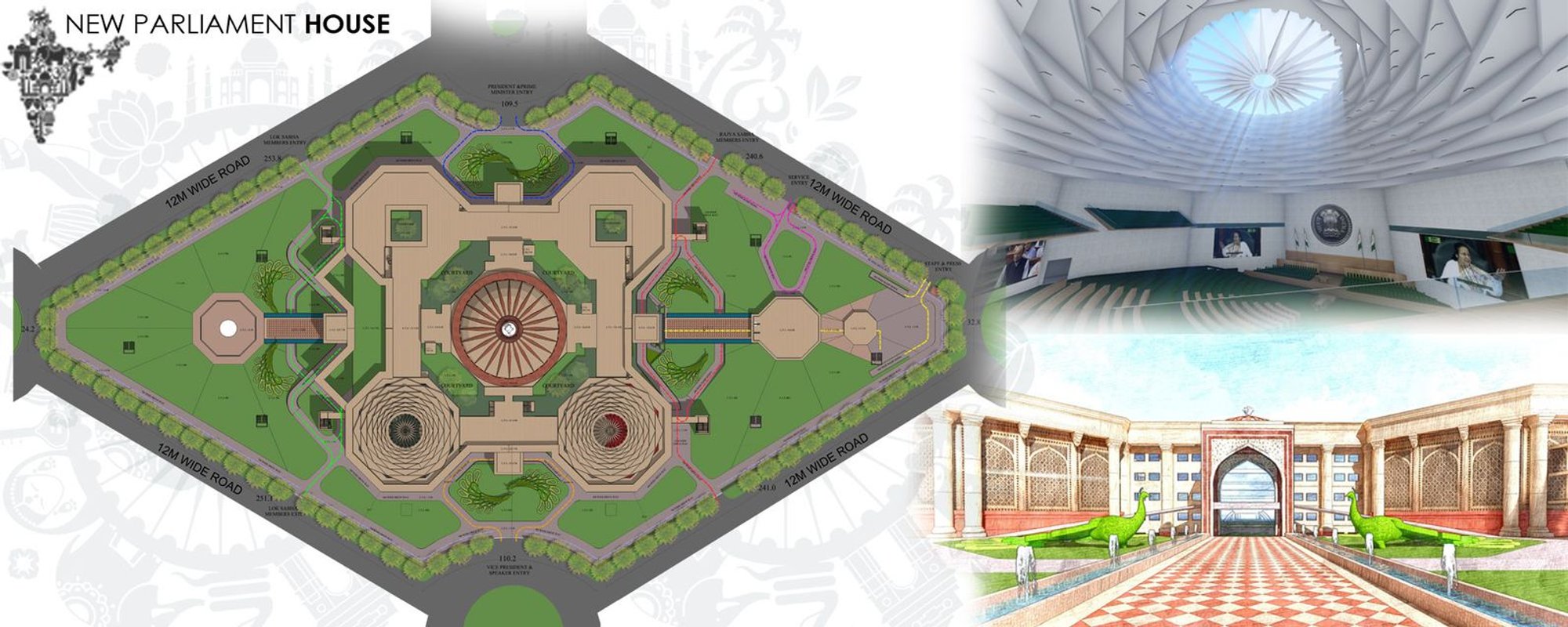
The site for the New Parliament House is strategically positioned within New Delhi’s central administrative precinct. To maximize visibility and symbolic presence, the building is aligned along a major urban axis, ensuring that it becomes a focal point within the city fabric. This axial placement reinforces the idea of governance being transparent, visible, and central to civic life.
The planning responds sensitively to its surroundings, balancing monumental scale with landscaped buffers. Controlled vehicular access, pedestrian‑friendly movement, and clear security zoning are carefully integrated, allowing the complex to function efficiently without overwhelming the urban context.
Concept and Design Philosophy
The core design philosophy of the project draws inspiration from the Indian national flag, translating its symbolism into architectural form. The building is conceptually divided into three hierarchical layers:
- The Head – Representing the intellectual and decision‑making strata of governance, this uppermost zone houses cabinet ministers, policy‑making committees, and executive functions.
- The Middle – Conceived as the most interactive zone, this level accommodates shared public and semi‑public spaces, reinforcing accessibility and inclusiveness. The central dome emerges here as a symbol of unity.
- The Base – Anchoring the complex, the base houses the Lok Sabha and Rajya Sabha chambers, representing the democratic roots where policies originate through elected representatives.
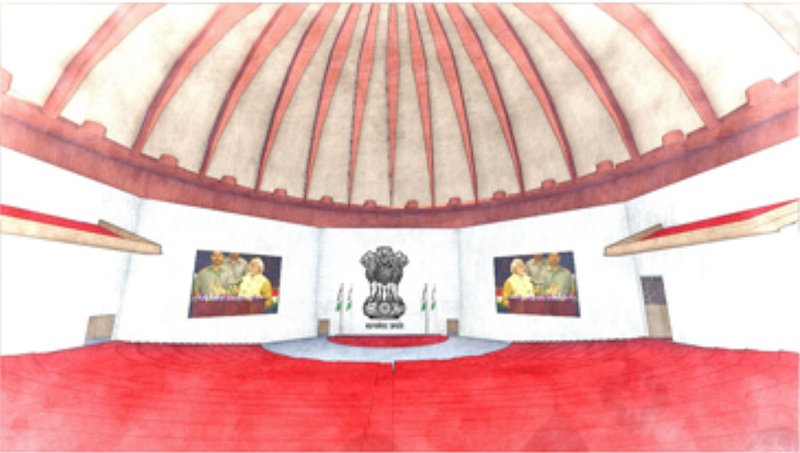
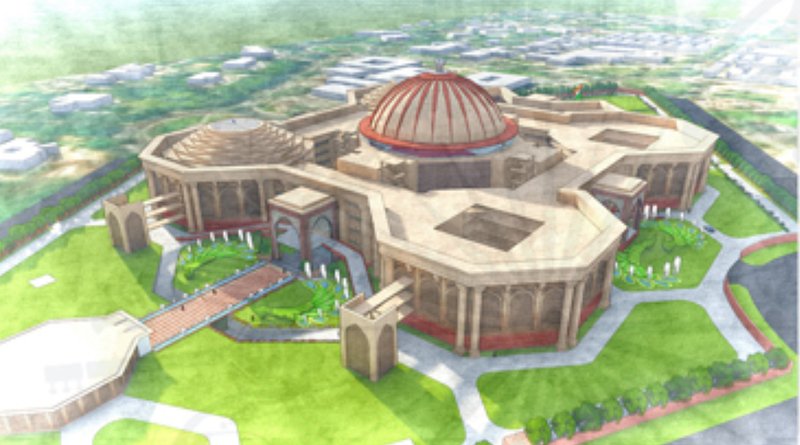
At the heart of the composition, the central dome is derived from the Ashoka Chakra, reinterpreted structurally and spatially. Its twenty‑four spokes function as both symbolic elements and structural ribs, reinforcing the idea of unity in diversity.
Architectural Form and Spatial Organization
The architectural form is inspired by the principles of symmetry and axial planning seen in historic Indian monuments, most notably the Taj Mahal. This symmetry ensures visual balance from multiple viewpoints and reinforces the building’s institutional character.
The plan organizes spaces around a strong central core, with radial and orthogonal connections enabling intuitive circulation. The arrangement encourages interaction while maintaining clear separation between public, semi‑public, and restricted zones—an essential requirement in contemporary Parliament House architecture.
Zoning and Circulation Strategy
Efficient zoning is fundamental to the project’s functionality:
- Site Zoning clearly separates public access, staff movement, service circulation, and high‑security routes.
- Vertical Zoning minimizes unnecessary movement for Members of Parliament by placing primary legislative chambers close to controlled entry points.
- Staff and Public Entry points are strategically located near public transport infrastructure, reducing dependency on private vehicles.
Special attention is given to the Speaker’s circulation, ensuring minimal and secure movement paths befitting the constitutional role.
Monumental Scale and Human Experience
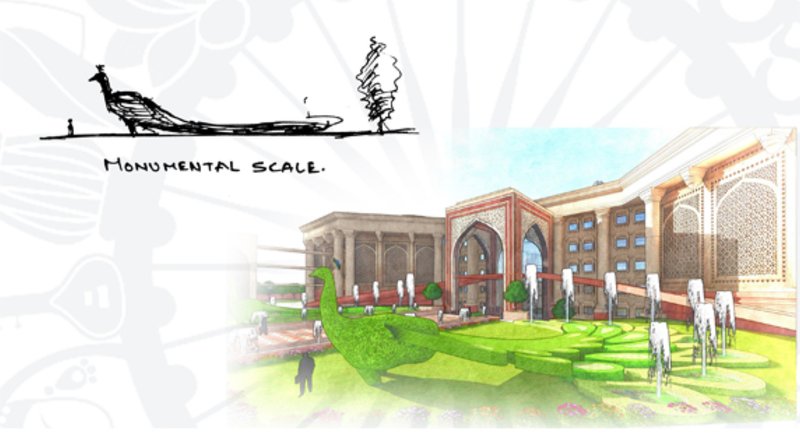
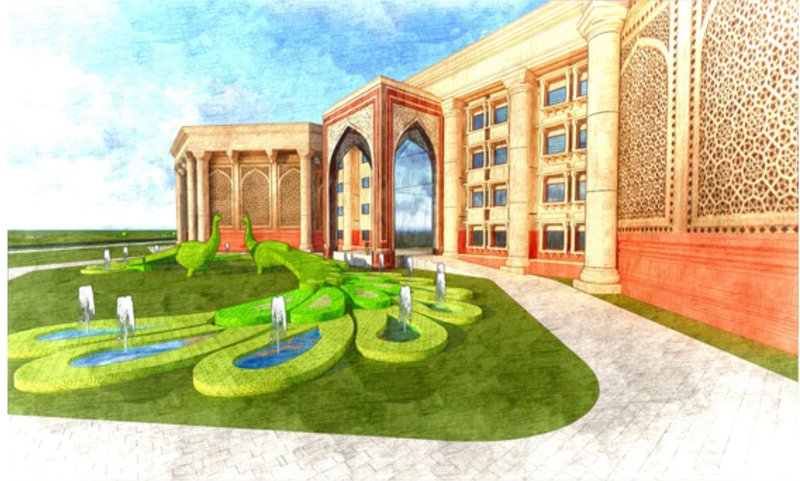
The project carefully negotiates between monumental scale and human comfort. Large colonnades, grand entrances, and expansive facades establish the institutional identity of the building. In contrast, courtyards, shaded walkways, and landscaped pockets introduce moments of intimacy and pause.
The façade employs large‑scale architectural elements to convey permanence and authority, while detailed screens and recessed openings soften the visual impact at the human scale. This duality allows the Parliament House architecture to remain imposing yet approachable.
Structural Expression and Interior Spaces
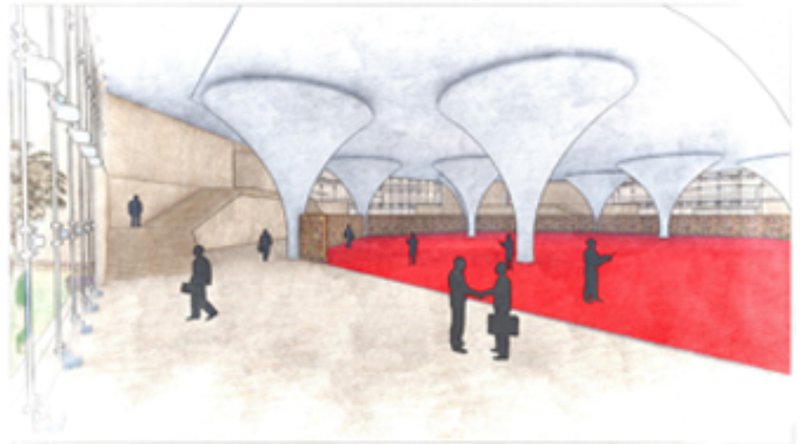
The central dome stands as both a structural and symbolic element, employing a ribbed system that distributes loads efficiently while creating a dramatic interior volume. Mushroom‑shaped columns within large halls emphasize verticality and openness, enhancing spatial legibility.
Interior spaces such as the Lok Sabha and Rajya Sabha chambers are designed to support visibility, acoustics, and democratic engagement. Natural light is filtered through skylights and courtyards, reinforcing transparency and reducing reliance on artificial lighting.
Landscape and Public Realm
Landscape design plays a crucial role in reinforcing the monumental character of the complex. Formal gardens, water features, and processional pathways guide movement toward key entrances. The integration of indigenous planting enhances sustainability while grounding the project within its local context.
The landscaped courtyards act as visual and climatic buffers, improving thermal comfort and offering moments of respite within the dense administrative environment.
The New Parliament House, New Delhi represents a thoughtful exploration of Parliament House architecture that balances symbolism, functionality, and urban responsibility. By reinterpreting national icons through contemporary design principles, the project envisions a legislative complex that is both rooted in tradition and responsive to the needs of a modern democracy.
The proposal not only addresses the spatial inadequacies of the existing Parliament building but also reimagines how architecture can embody democratic values, public engagement, and institutional dignity for generations to come.
Project by: Abhishek Saini
Academic Thesis | Faculty of Architecture and Planning, Jagannath University




Popular Articles
Popular articles from the community

Split House: A Compact Urban Home Blending Privacy, Light, and Flexible Living in Japan
Compact Japanese home featuring DOMA space, flexible café potential, passive lighting, privacy zoning, and sustainable urban living design.
Inverted Architecture Installation by Studio Link-Arc: Exploring the Intersection of Architecture and Living Organisms
Inverted Architecture Installation by Studio Link-Arc blends mycelium, sustainability, inverted design, ecological cycles, and urban adaptive architecture in Shenzhen.
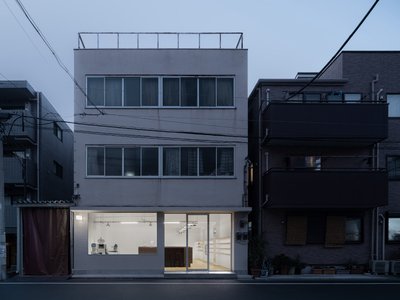
Atelier Macri Concept Store Interior Design by CASE-REAL
Atelier Macri store features a "ko" counter, walnut wood details, cork displays, blending retail, gallery, and seamless customer experiences.

Solar Steam: A Climate-Responsive Architecture That Redefines the Monument
A climate-responsive memorial architecture that transforms heat, decay, and time into a living system reflecting humanity’s ecological impact.


Similar Reads
You might also enjoy these articles

Digital Façade Design for our cities’ urban fronts
Prima Facie - Result Story
Protecting avian biodiversity: Bird observatories to help spread awareness & save rare bird species.
Results for ‘Fly’ - Landscape design competition out now
Connecting with nature: Forest interpretation center in Australia's Wollemi National Park
‘Asatti’ - Landscape design competition - Result story


Explore Architecture Competitions
Discover active competitions in this discipline




The International Standard for Design Portfolios


The Global Benchmark for Architecture Dissertation Awards


The Global Benchmark for Graduation Excellence


Challenge to reimagine the Iron Throne
Comments (0)
Please login or sign up to add comments
No comments yet. Be the first to comment!