
NAQI & Partners Wraps a Nha Trang Pool Villa in Cascading Green Terraces
A three-story residence on the Vietnamese coast fuses vertical gardens, a helical stair, and an indoor lap pool into one generous whole.


Pool villas tend to follow a predictable script: a rectangular volume, a deck, a blue rectangle of water, some loungers. The Nha Trang Pool Villa by NAQI & Partners throws that script away. Located in Vietnam's coastal resort city, the house is organized around a spiraling central void, an indoor lap pool, and a series of planted terraces that drape the facade in greenery. The result is a three-story residence that feels less like a villa and more like a vertical garden with rooms tucked inside it.
What makes the project genuinely interesting is the way it collapses the usual distinctions between inside, outside, structure, and landscape. The staircase is the spine, the pool is the ground plane, the balconies are gardens, and the glass block cylinder acts as both a light well and an architectural landmark. Each element does at least two things at once, and the house is richer for it.
A Facade That Grows
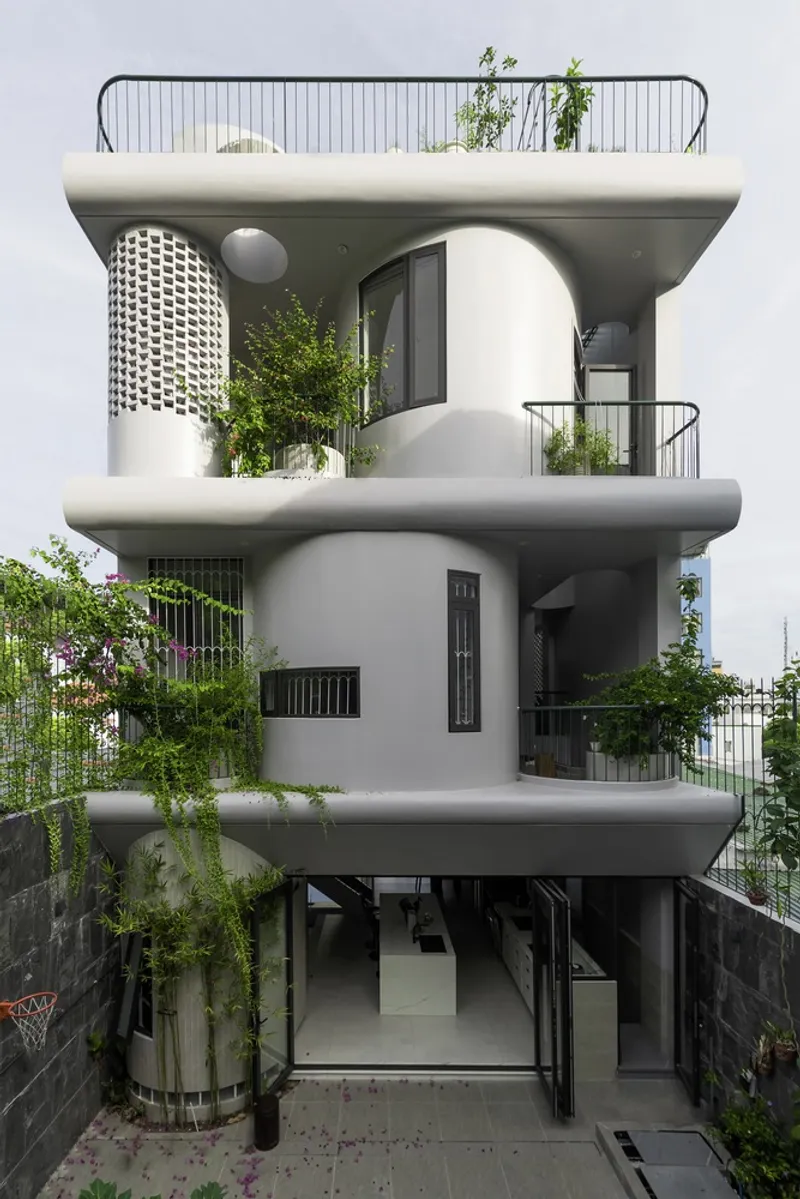
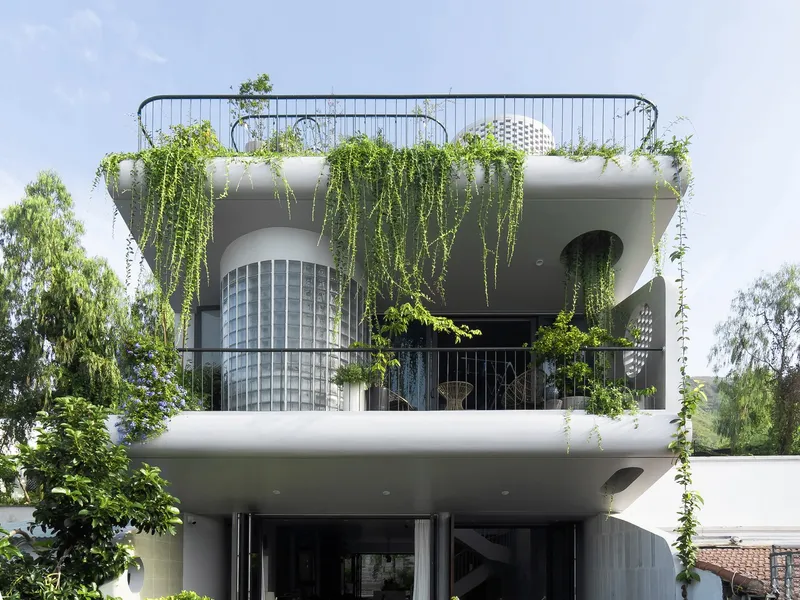
The street elevation is dominated by rounded white balconies stacked three levels high, each one trailing vines and flowering plants over its edge. The effect is cumulative: from the sidewalk, the building reads less as a concrete structure and more as a living wall punctuated by curves. A cylindrical glass block element anchors one side, catching light and adding a material counterpoint to the lush greenery.
Perforated screens filter light and views at various points across the facade, keeping the interior shaded without sealing it off. The planting is not decorative afterthought; it is integral to the thermal strategy, softening the harsh Nha Trang sun before it reaches the glass.
Vertical Garden, All the Way Up
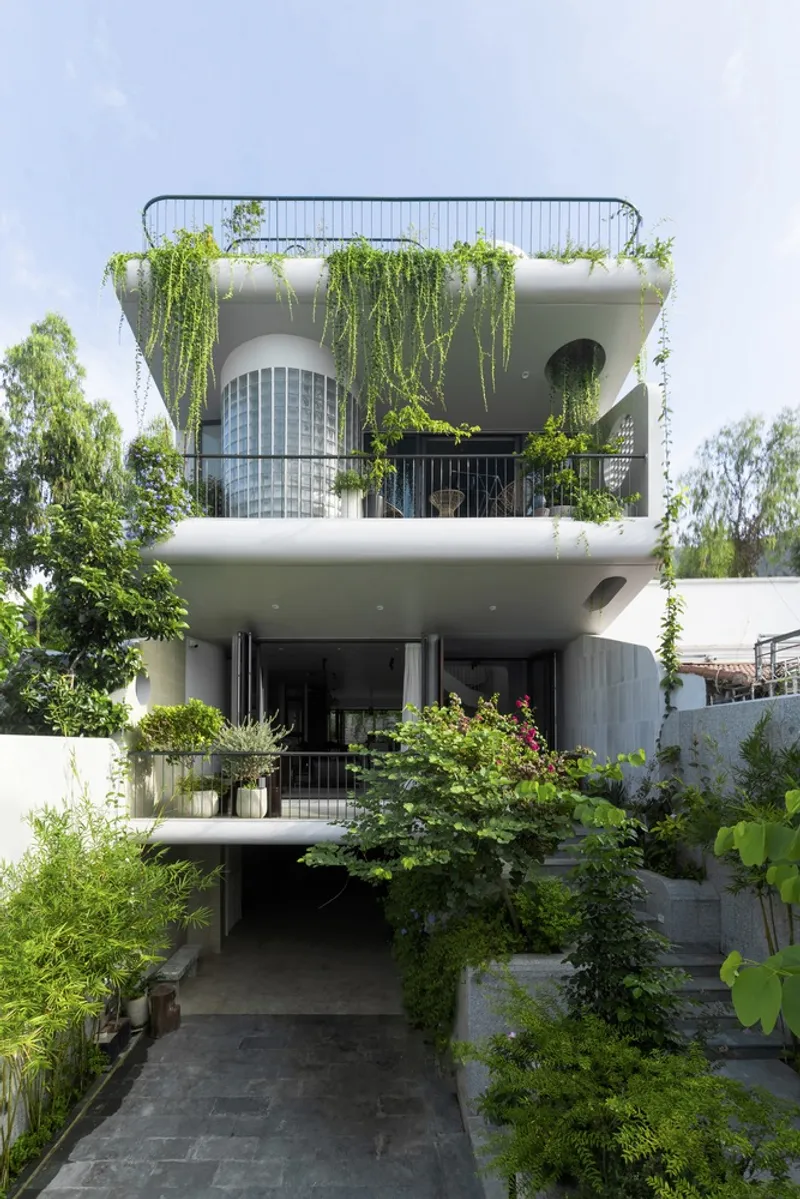
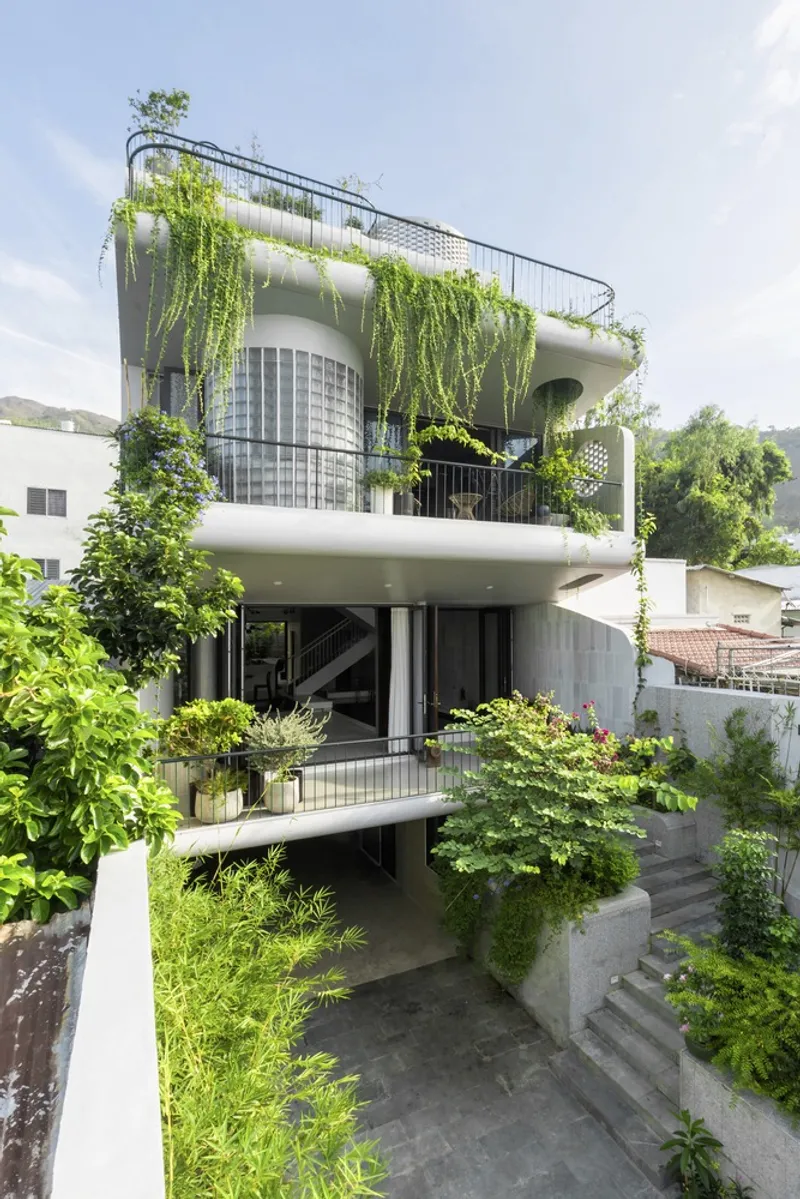
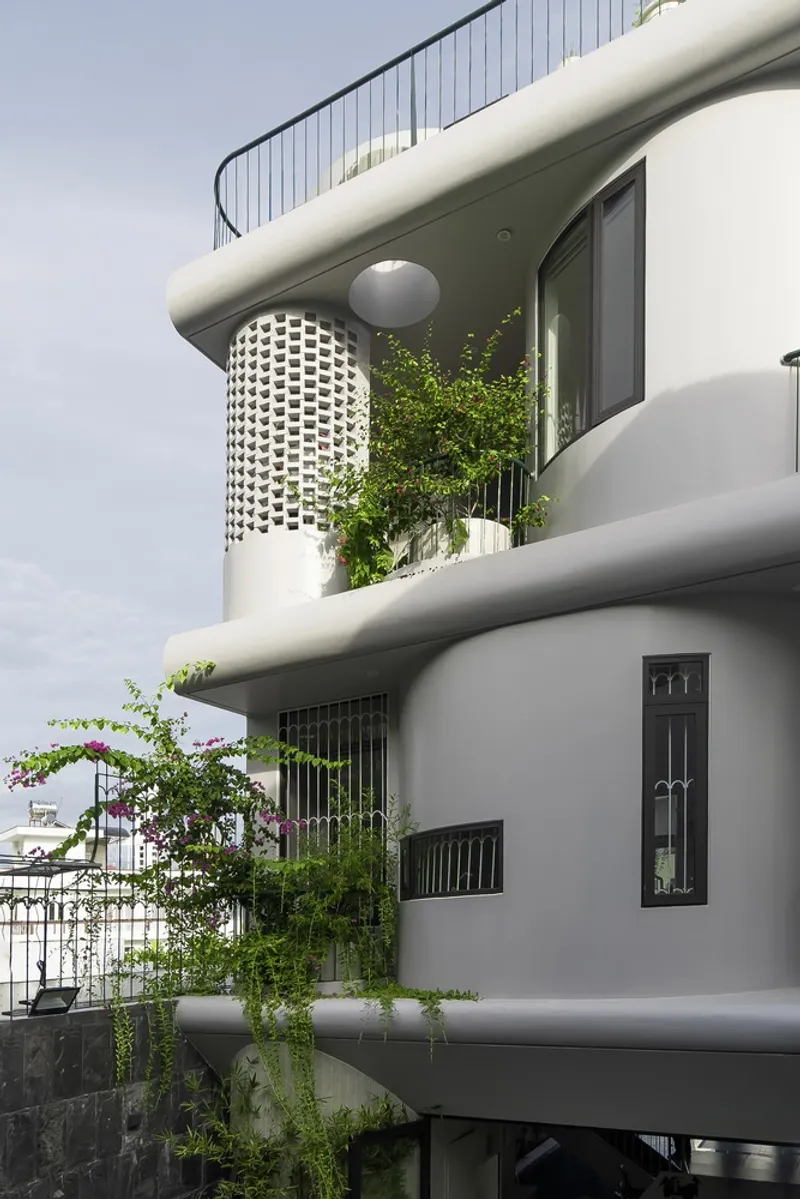
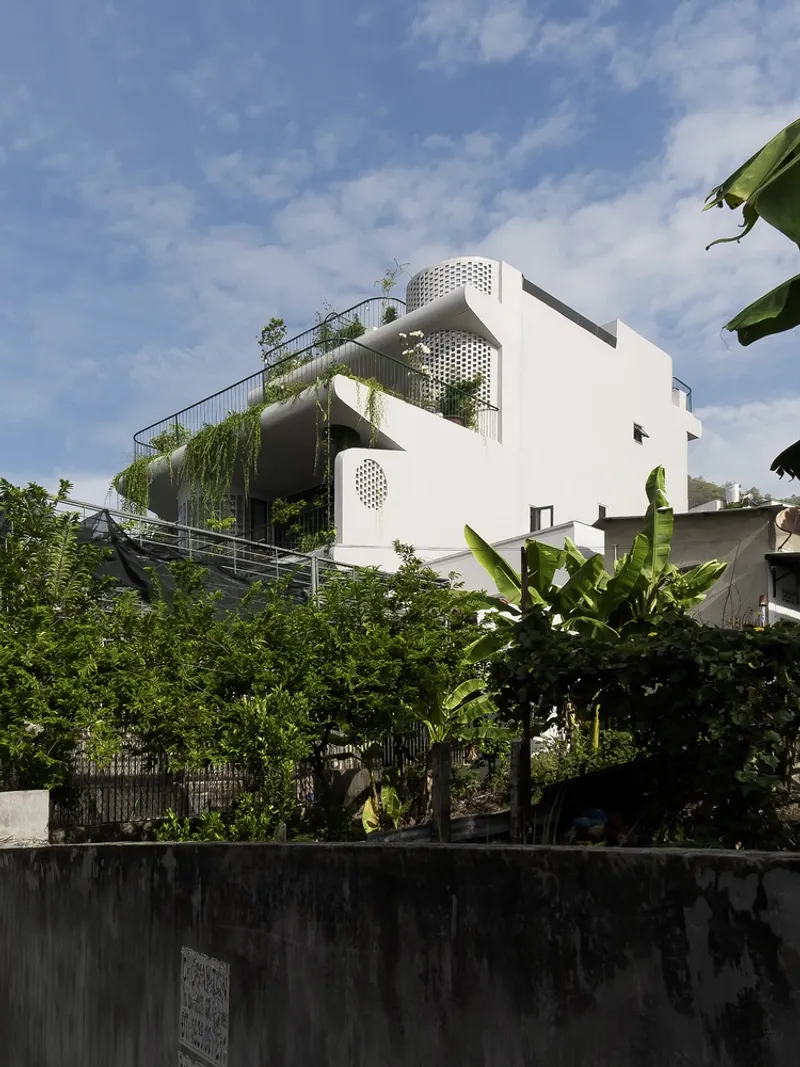
Seen from the garden side, the terraces reveal their full depth. Concrete stairs descend through planting beds, connecting levels through vegetation rather than corridors. The trailing greenery is not limited to ornamental species; banana trees, climbers, and dense ground cover create micro-climates at each floor, filtering air and providing privacy between bedrooms.
The perforated cylindrical screens visible on the upper floors serve double duty: they frame the planted balconies while acting as privacy barriers. Flowering vines thread through their openings, blurring the line between screen and trellis.
The Stair and the Void
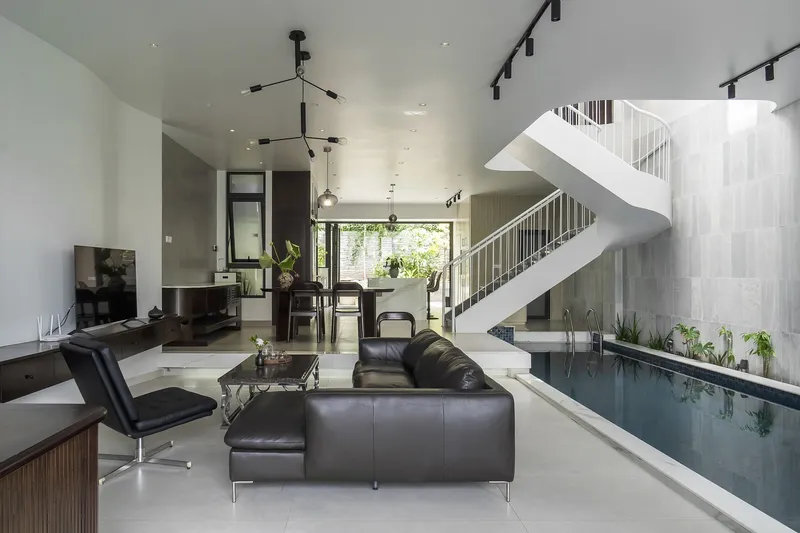
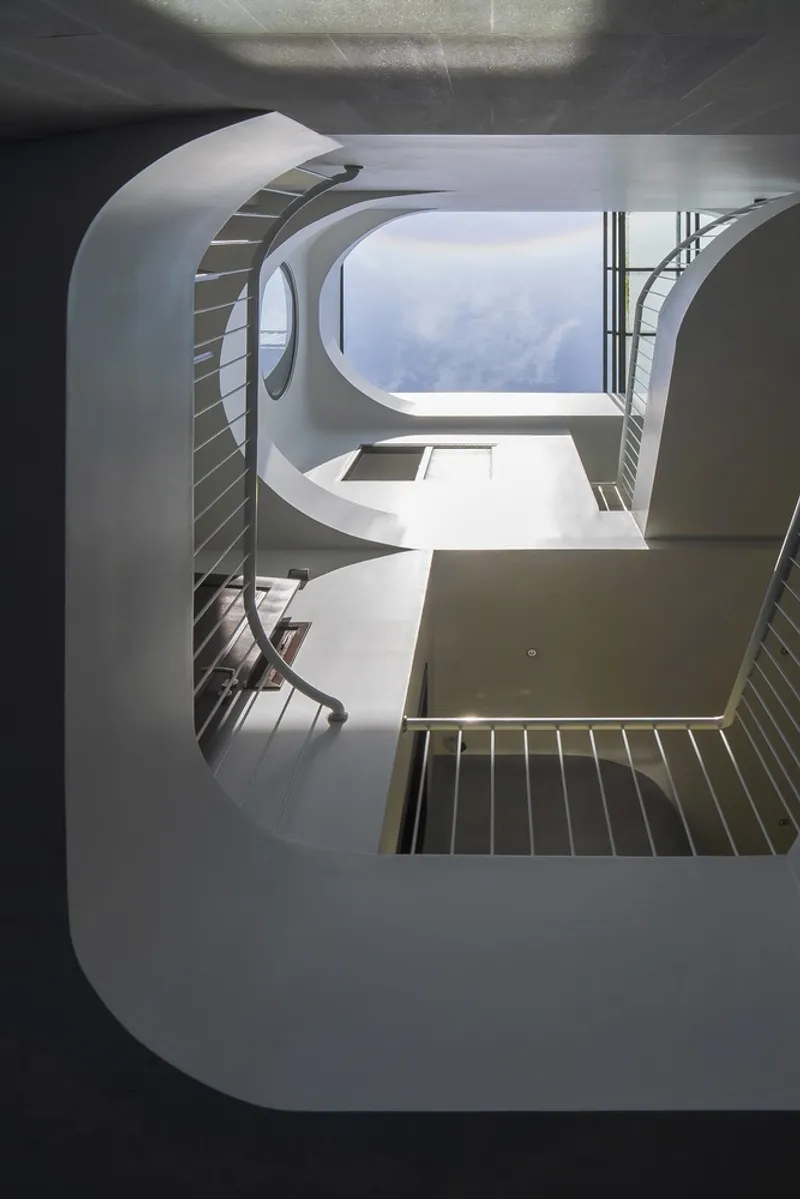
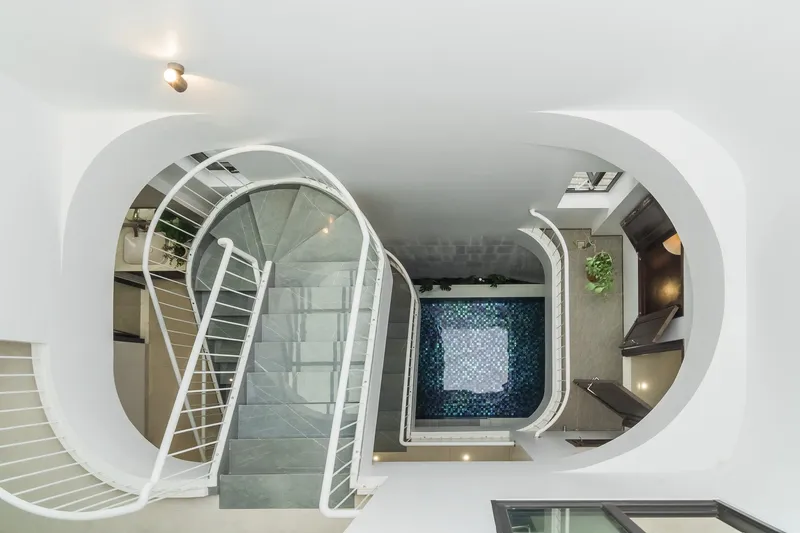
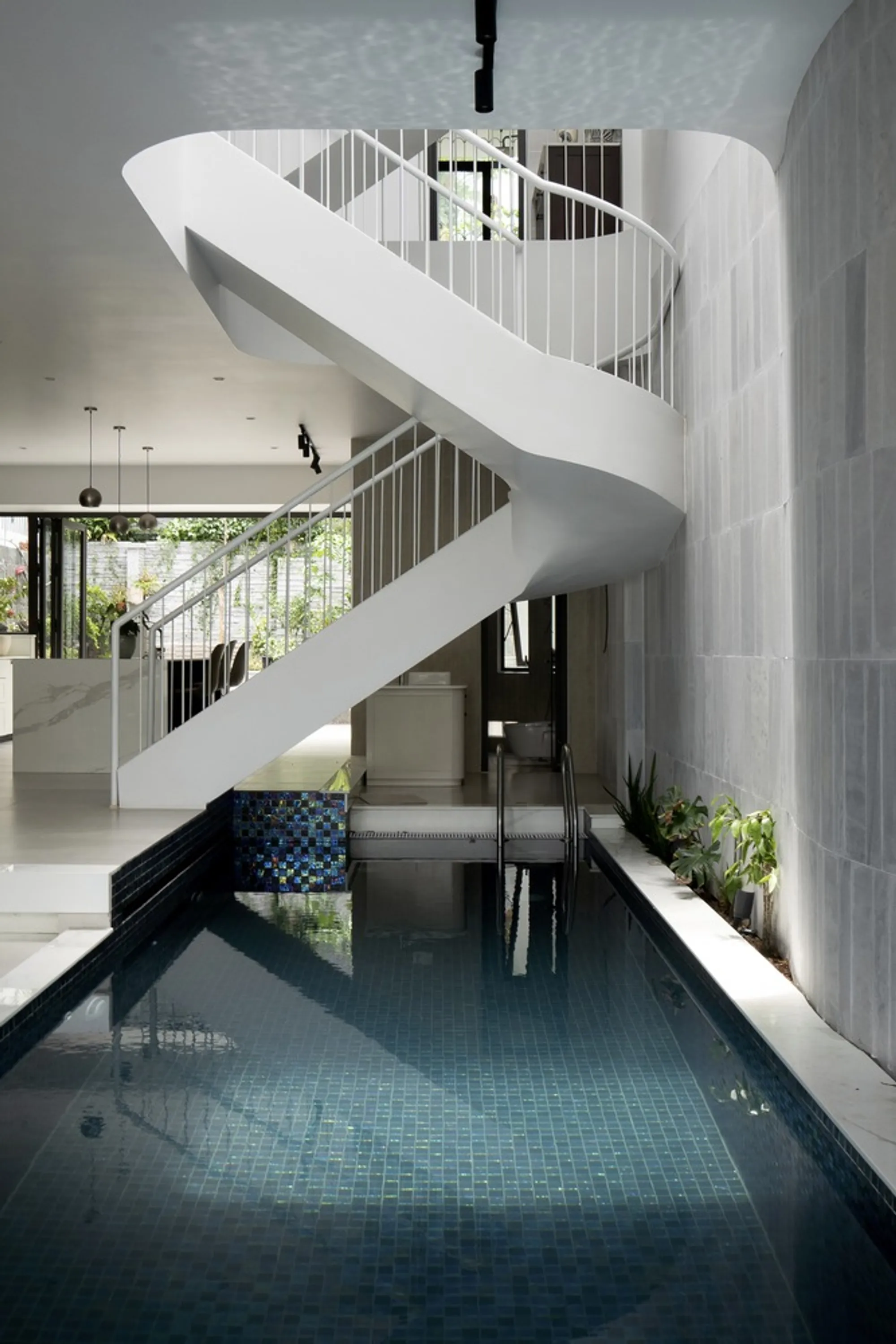
The helical white staircase is the project's most striking spatial move. It rises through a central void that is open to the sky, wrapping around itself in a tight spiral above the indoor lap pool. Looking up from the water, you see a coil of white steel framing a circle of clouds. Looking down from the top floor, you see the blue tiles of the courtyard pool far below. The void pulls daylight, breeze, and visual drama through every level of the house.
Structurally, the stair is thin and precise: slender steel stringers and flat treads that keep the spiral feeling light against the grey stone walls. It functions as both circulation and the primary light well, which means the house never depends on a single facade for illumination.
Living with Water
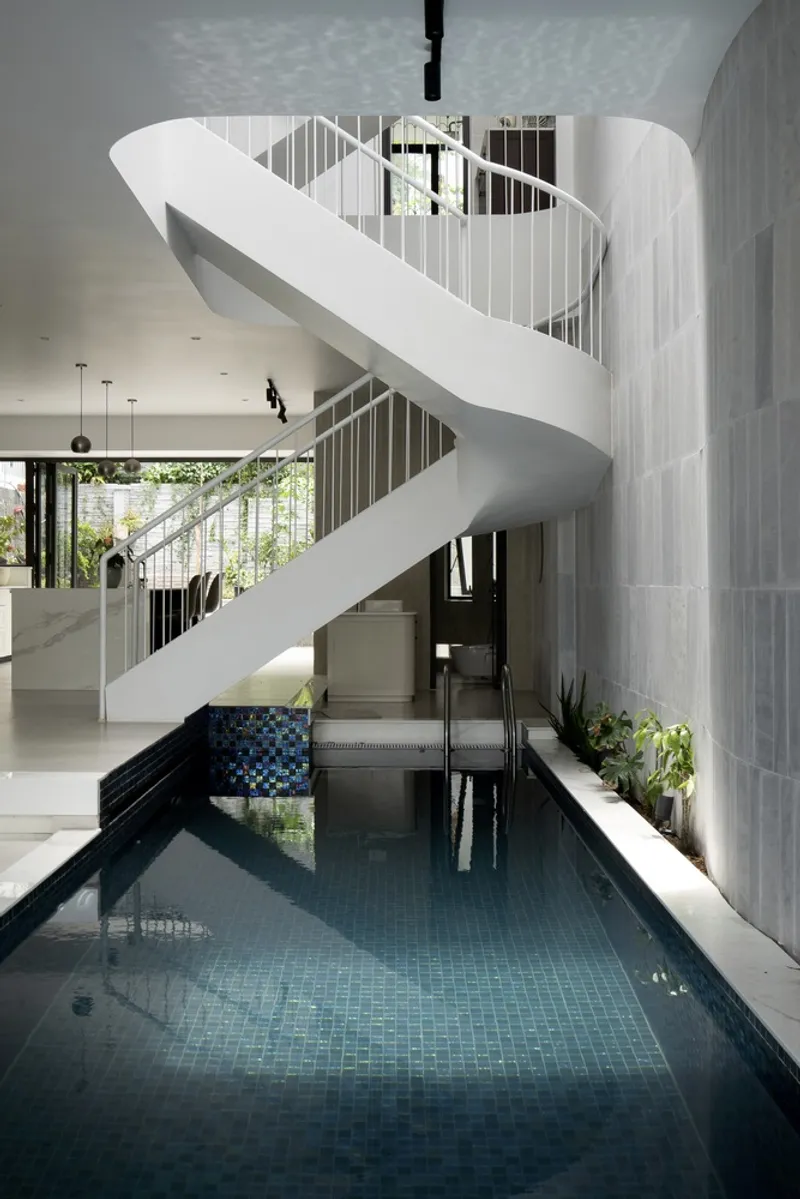
The indoor lap pool sits at the base of the staircase void, its dark tiles reflecting the spiraling structure above. Placing the pool here, rather than on a rooftop or in a separate pavilion, means water is woven into the daily experience of the house. You pass it on your way to the kitchen. You hear it from the second floor. It cools the air rising through the void.
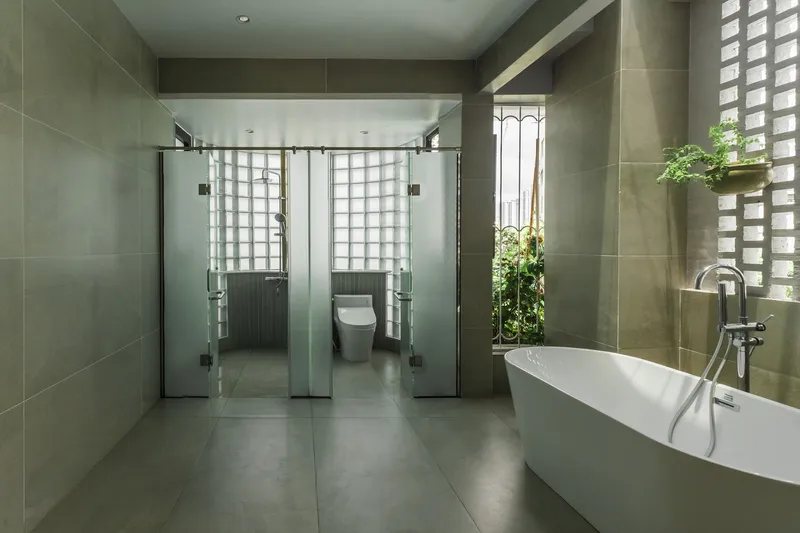
Bathrooms elsewhere in the house follow a similarly material-first approach. Grey tile, freestanding tubs, and perforated concrete block screens create a spa-like atmosphere that echoes the facade language. The blocks filter light from the garden, keeping bathrooms bright without exposing them.
Thresholds and Portals
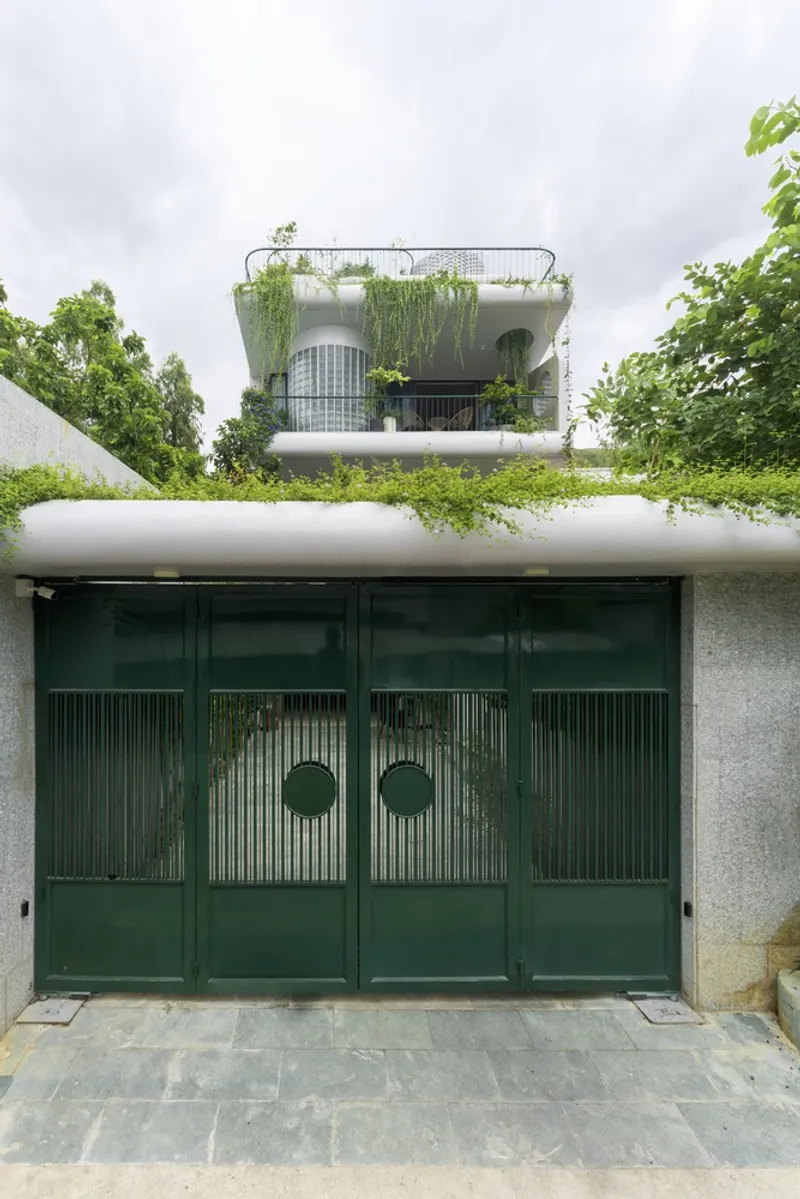
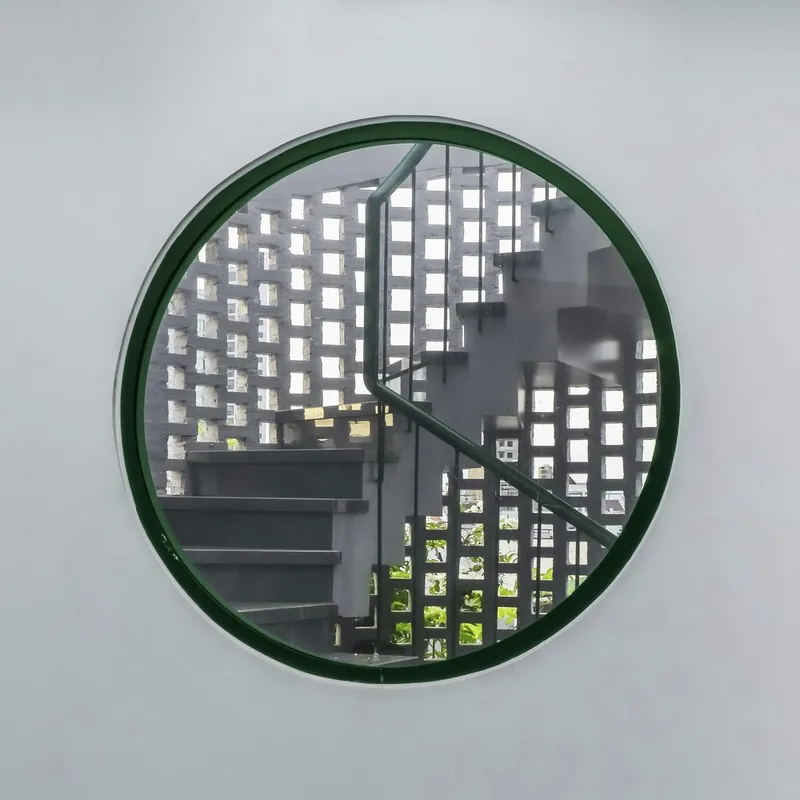
NAQI & Partners pay close attention to the moments between spaces. The entry gate is a dark green ribbed metal panel with circular porthole details, giving the street approach a nautical, almost industrial character that contrasts sharply with the lush garden beyond. A circular window elsewhere frames a perforated brick screen and a steel staircase, turning a simple opening into a composed view.
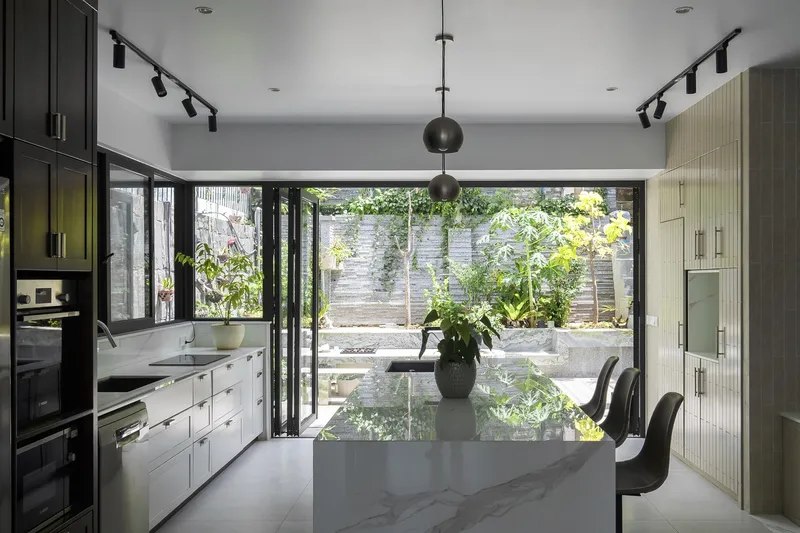
The kitchen opens through black-framed glass doors onto a planted courtyard, dissolving the boundary between cooking and gardening. A marble island anchors the room to the interior while the doors pull the eye outward. These thresholds are where the architecture does its most subtle work, calibrating how much of the garden you see, hear, and smell from any given room.
After Dark
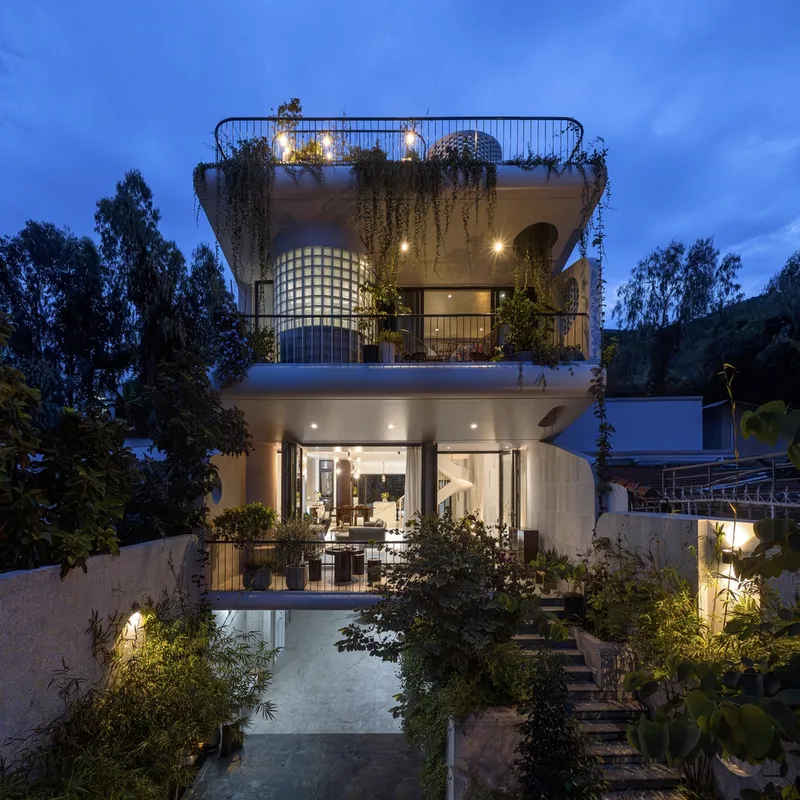
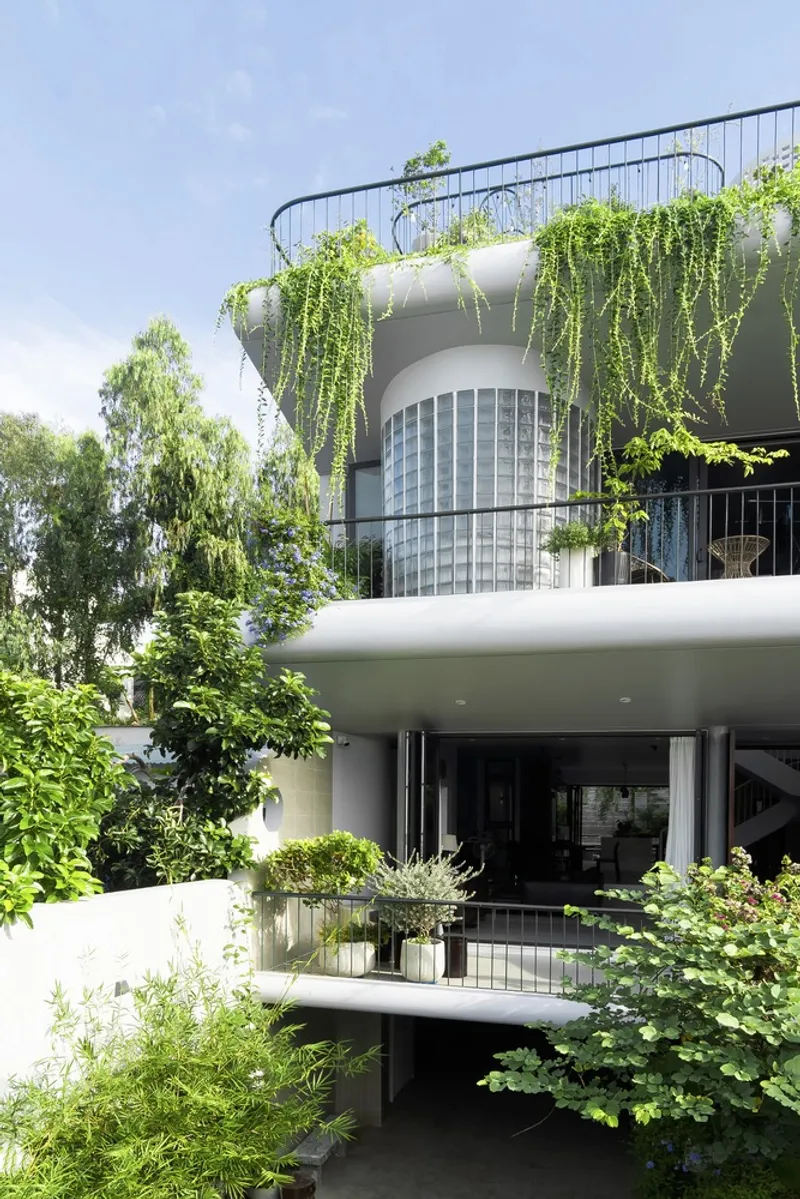
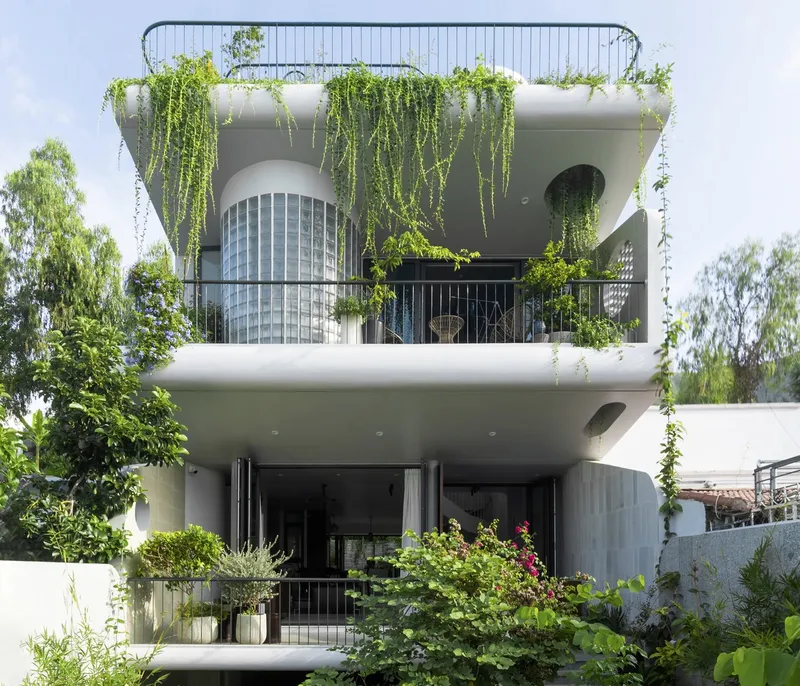
At dusk, uplighting transforms the cascading vegetation into a luminous curtain. The white balconies glow against the darkening sky, and the vines become silhouettes layered over warm interior light. The glass block cylinder, backlit, turns translucent, revealing its texture in a way that full daylight obscures.
The nighttime facade is arguably the building's best advertisement for its strategy of deep planting. Shadows and highlights exaggerate the depth of each terrace, making the house appear even more three-dimensional than it does under the midday sun.
Plans and Drawings
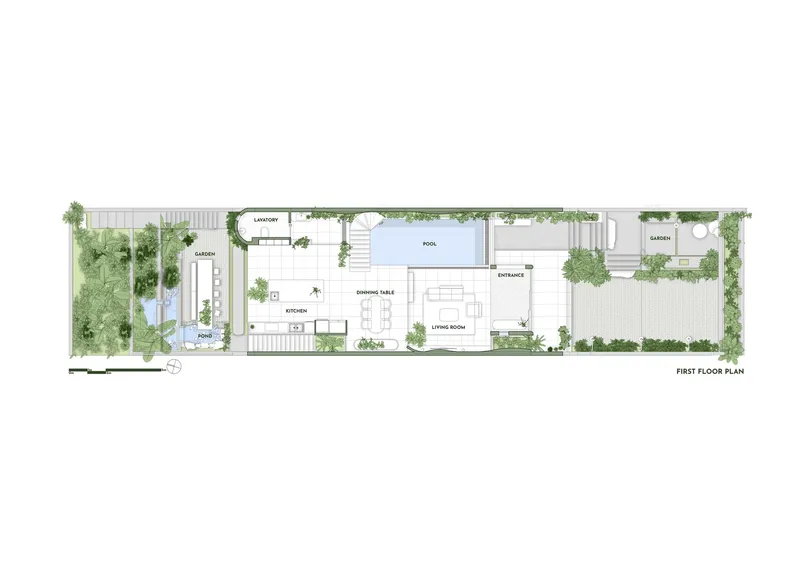
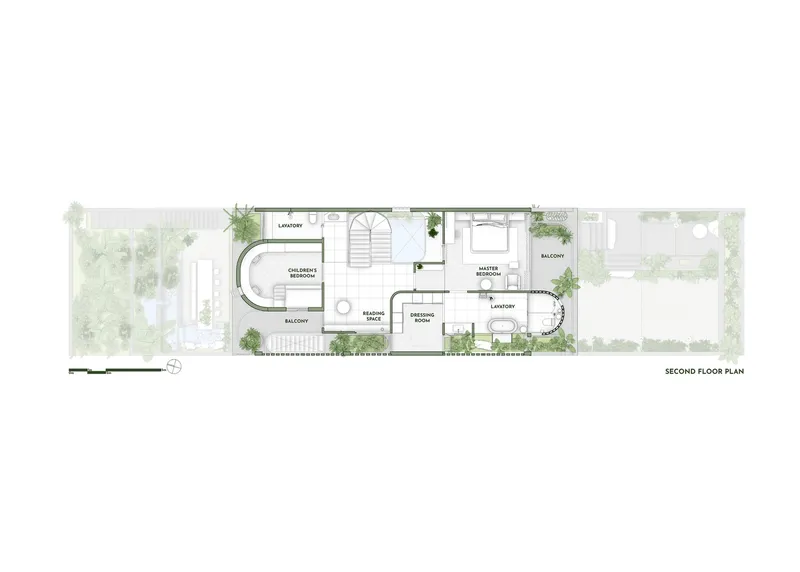
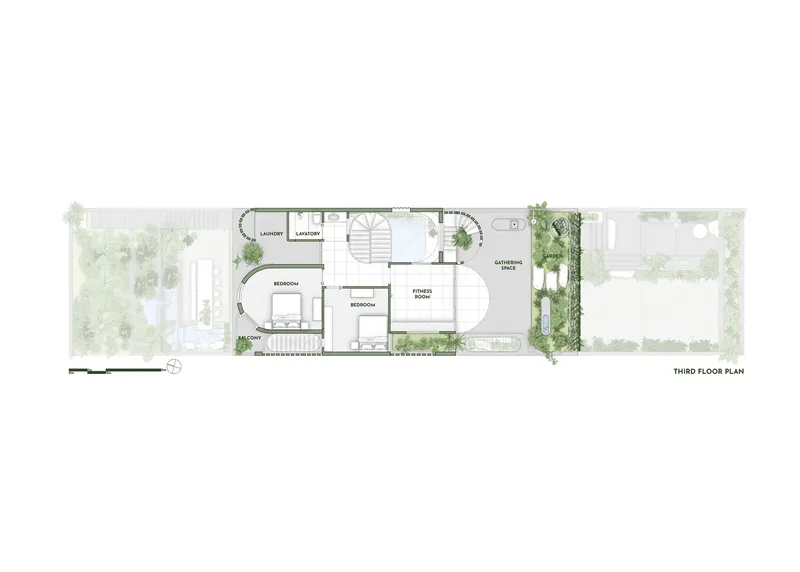
The floor plans confirm what the photographs suggest: the house is organized around two poles of outdoor space, the courtyard pool at the center and a vertical garden strip along the eastern edge. The first floor dedicates generous area to the pool and living spaces, with planting notations that make vegetation a structural layer of the design. Upper floors shift to bedrooms flanked by planted terraces on both ends, ensuring every private room has access to greenery and filtered light. A family room on the third floor overlooks the stair void, tying the upper level back to the spatial drama below.
Why This Project Matters
Tropical residential architecture in Southeast Asia often defaults to one of two modes: the hermetically sealed luxury box or the open-air pavilion. The Nha Trang Pool Villa stakes out a third position, one where enclosure and openness coexist at every scale. The helical void, the planted balconies, and the perforated screens all negotiate between privacy and porosity, creating a house that breathes without sacrificing comfort.
More than that, the project demonstrates what happens when landscape is not applied to a building but embedded in its section. The greenery is load-bearing, in the experiential sense: remove it and the architecture would feel exposed, too white, too hard. With it, the house achieves a density of atmosphere that few villas, pool or otherwise, manage to sustain across three full floors.
Nha Trang Pool Villa by NAQI & Partners, Nha Trang, Vietnam.
About the Studio
Share Your Own Work on uni.xyz
If projects like this are the kind of work you want to make, uni.xyz is a place to publish your own, find collaborators, and enter design competitions.



Popular Articles
Popular articles from the community


The Ocean Hive: Sustainable Architecture for a Self-Sufficient Civilization at Sea
The Ocean Hive imagines sustainable architecture at sea, where modular habitats, algae, wave power and ocean waste sustain a growing colony.

Hill & Cross Opera: Sculptural Opera House Architecture Shaped by Tallinn’s Landscape and Identity
Hill & Cross Opera reimagines opera house architecture in Tallinn through its sculptural hill, civic plaza, glass wave and a luminous cross.

The Musturak Paradise: Senior Living Architecture for a Connected Future in Temara, Morocco
The Musturak Paradise reimagines senior living architecture in Temara via private homes, social spaces, culture, community, and shared care.

Riyadh For All: Intergenerational Urban Design for Active Aging in Rabat
Riyadh For All reimagines urban design in Rabat with intergenerational co-living, adaptive courtyards, and Moroccan cultural exchange today.


Similar Reads
You might also enjoy these articles


Hodi-Mandai Geram
Project Function: Preservation and revitalization of the Intangible heritage and socio-spatial identity of the Hodi by Housing, Cultural Memory Center, Sacred Grove, landscape, local tourism economy


Olio Towers: A Mid-Rise for Performers That Fuses Housing, Rehearsal, and Stage
Located blocks from Houston's Theater District, this modular tower stacks living units around a central performance atrium.

Oasis: Modular Green Housing Carved into Dhaka's Urban Fabric
A shortlisted Plugin Housing entry reclaims unauthorized settlements in Dhaka with stepped concrete volumes, green roofs, and ventilation-driven design.

Black Hole: A Floating Megastructure for the Post-Physical Era
Emiliano Mazzarotto envisions a spherical, self-scaling arena where e-sports, digital hotels, and holographic stadiums replace traditional public space.


Explore Architecture Competitions
Discover active competitions in this discipline



Challenge to reimagine the Iron Throne


Photograph architecture without architects


Illustrate the lost glory of Angkor Wat - Render Challenge


Design challenge to reuse E-waste
Comments (0)
Please login or sign up to add comments
No comments yet. Be the first to comment!