

Niji House by Patio Livity – A Passive Cooling Sanctuary Designed for Light, Airflow, and Well-Being
Niji House is a light-filled tropical home centered around a cooling core, enhancing airflow, privacy, and serene multi-level living spaces.


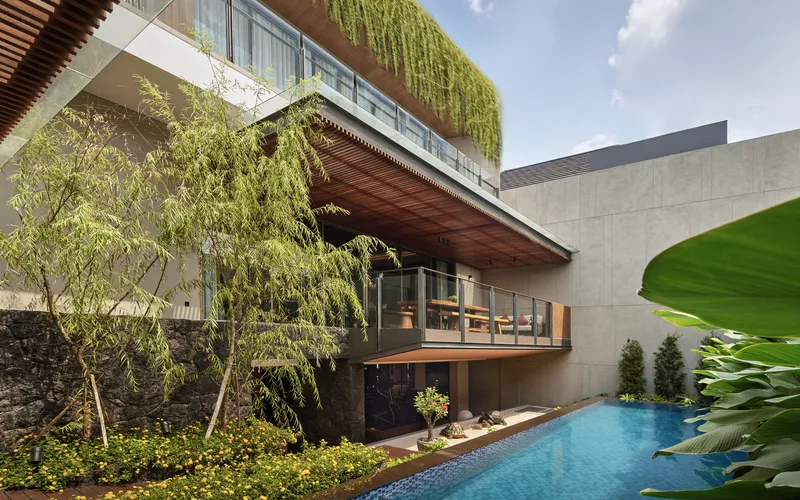
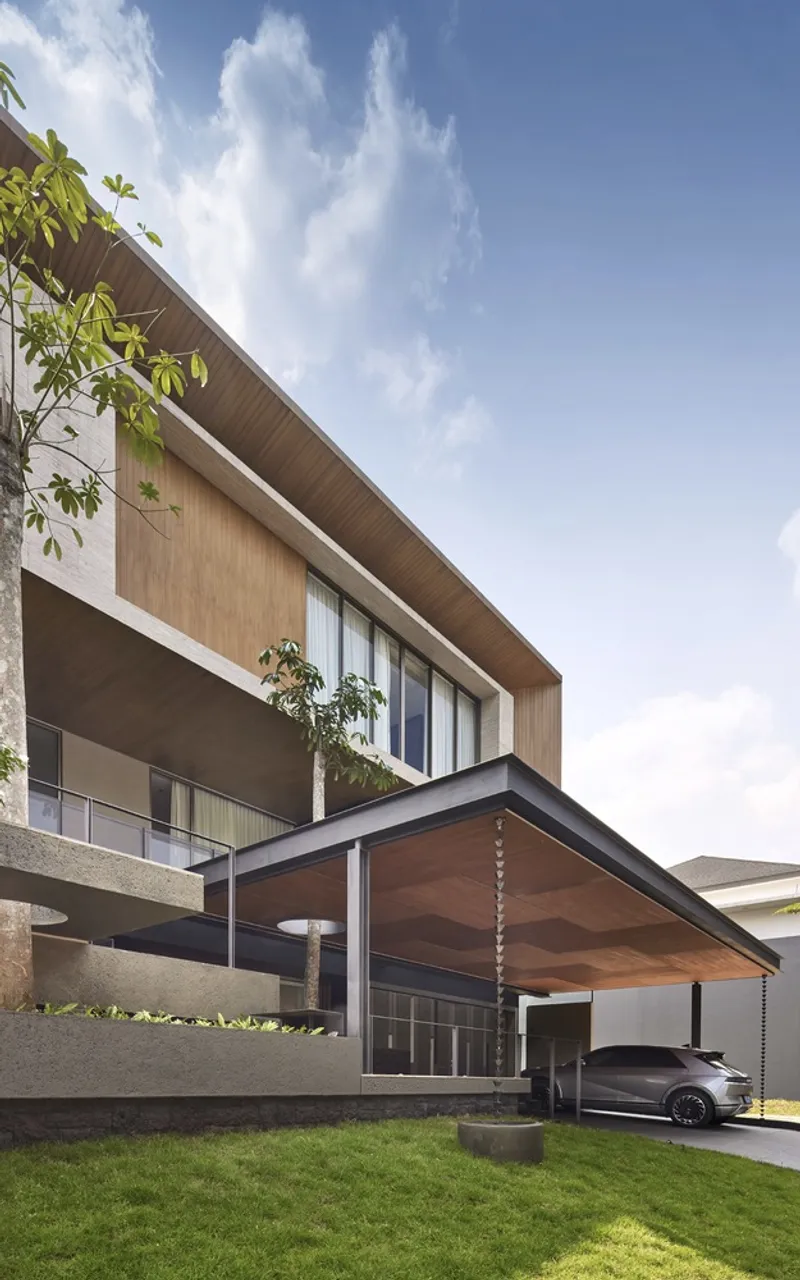
Niji House, located in Kecamatan Serpong Utara, Indonesia, is a 913 m² residential project by Patio Livity, designed as a serene, environmentally responsive home for a career-driven couple seeking both physical retreat and emotional restoration. Completed in 2024 and photographed by KIE, this modern residence blends tropical climate strategies, passive cooling systems, and a thoughtful spatial hierarchy to deliver a calm, light-filled living environment.
A Home Built Around a Climatic Core
The core idea behind Niji House is the creation of an integrated central core that houses structural elements, utility systems, MEP, and vertical circulation. This multi-functional void extends from the first to the third floor, becoming the architectural heart of the residence.
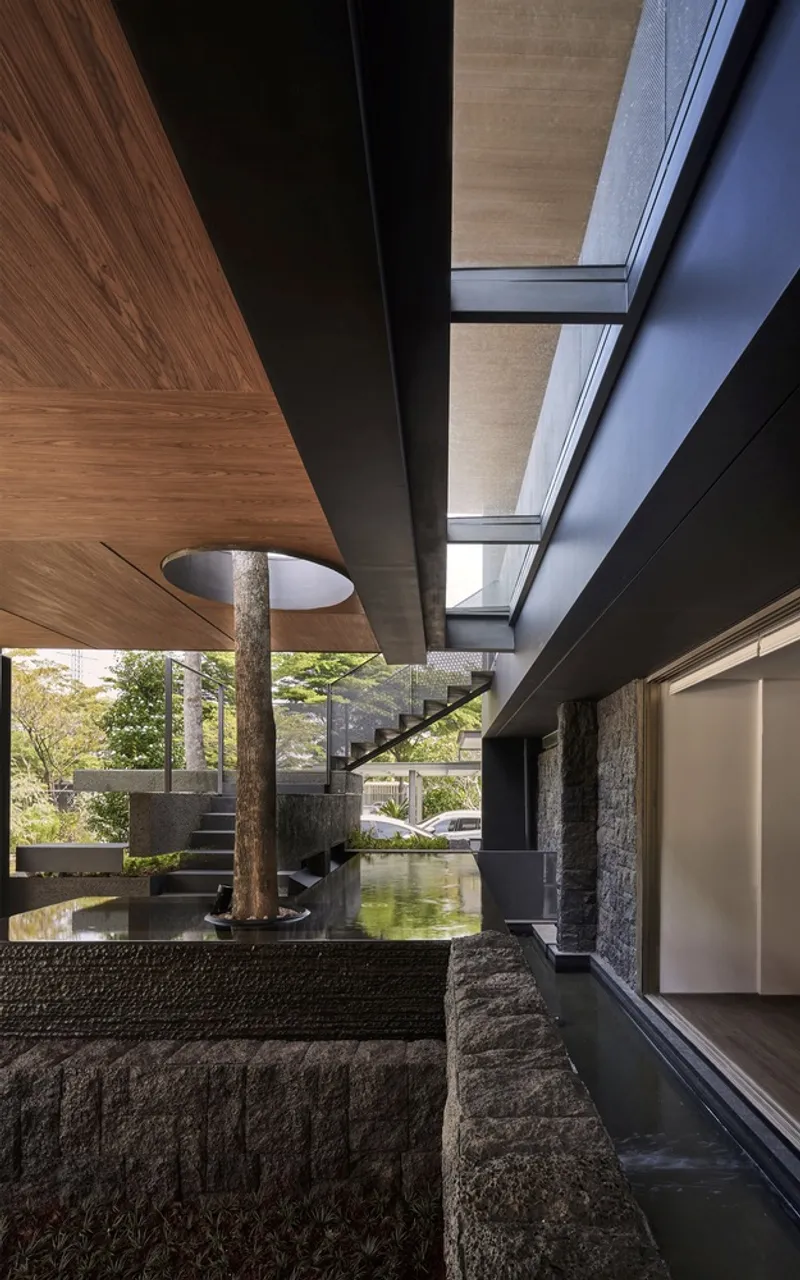
Designed as a light well and ventilation shaft, the core harnesses the stack effect, naturally drawing hot air upward and allowing cooler air to remain at the lower levels. A skylight above brings abundant daylight deep into the home, reducing artificial lighting needs throughout the day.
To offset potential heat gain, the architects introduced a koi pond at the base of the core, strategically cooling the surrounding air and stabilizing indoor thermal comfort. Combined with the home’s north–south orientation, openings on both ends support effective cross-ventilation and daylight distribution.

Balancing Privacy and Openness
One of the primary design challenges emerged from the developer’s restriction on external fencing. The homeowners, however, desired privacy from the street. Patio Livity approached this with a nuanced solution:
- Slightly elevating the front garden
- Integrating natural stone, sculpted concrete, and wide steps
- Designing horizontal lines that limit visibility from passersby
This intervention provided discreet privacy while respecting community guidelines, maintaining visual openness without compromising comfort.
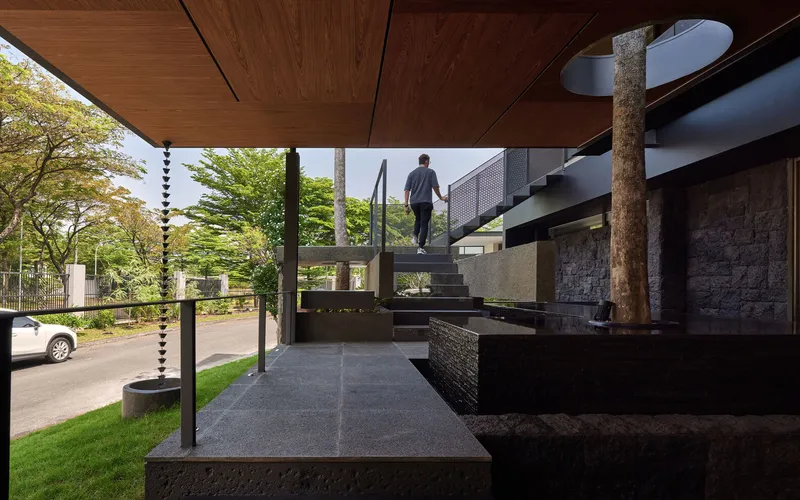
A Light-Filled Void that Connects Every Room
The spatial demands of the family required many rooms, which risked creating a bulky, enclosed mass. The architects resolved this by carving a central void into the home—simultaneously functioning as a climate-control core and a daylight-sharing volume.
This central void ensures that every room—even those deep in the plan—benefits from:
- Direct sunlight
- Natural airflow
- Visual openness
The result is a bright, breathable interior where light and air become part of the architectural experience.

Material Choices for Longevity and Climate Response
Material selection for Niji House prioritized durability, local availability, and low maintenance, acknowledging Indonesia’s tropical climate. The design features:
- Natural stone for its cooling effect and timeless weathering
- Textured paint and plaster for depth and resilience
- Concrete as the primary structure—the most adaptable and widely used material in Jakarta
- Selective steel use, especially in exposed areas like the carport, intentionally positioned away from the main structure to reduce cracking risks caused by heat
These choices reflect a careful approach to aging, sustainability, and long-term performance.

Zoned Living for a Multi-Layered Lifestyle
The house is organized with a clear zoning strategy that mirrors the homeowners’ lifestyle rhythms:
First Floor – Public & Wellness Spaces
Includes:
- Gym
- Yoga room
- Home theater
- Service and utility areas
This level serves as the social and active part of the home.
Second Floor – Semi-Private Family Hub
Featuring:
- Living room
- Dining area
- Kitchen
- Shared gathering zones
Warm, communal, and connected to natural light via the central void.
Third Floor – Private Retreat
A sanctuary for rest, containing:
- Master bedroom suite
- Children’s rooms
This level is quiet, deeply personal, and intentionally separated from the home’s active programs.

Two Masses Connected by a Bridge
The building is split into two volumes, divided by the central void. A bridge gently connects the two sides, reinforcing the sense of openness while maintaining spatial fluidity.
A Floating Pool Between Floors
Originally intended for the second floor, the swimming pool was lowered by half a meter, placing it gracefully between the first and second floors. This move:
- Enhances vertical circulation
- Allows light and air to flow between the levels
- Prevents dark or damp corners
- Creates an elevated yet intimate outdoor refuge
The pool becomes both a climatic feature and a sensory retreat, offering calming views and a soothing ambiance throughout the home.
Niji House by Patio Livity is a thoughtful fusion of passive design strategies, natural materials, and lifestyle-driven spatial planning. Through its climatic core, elevated privacy solutions, and layered zoning, the residence becomes a holistic environment designed for comfort, rejuvenation, and long-term sustainability. More than a home, it stands as a carefully crafted living ecosystem inspired by Indonesia’s tropical context and the emotional needs of its residents.


All photographs are works of KIE


Popular Articles
Popular articles from the community


U.GA Architects Wraps an Oval Rooftop Pool in Curved Board-Formed Concrete on Busan's Jeollidan-gil
In Busan's Jeonpo-dong, a 454 m² mixed-use block stacks a neighborhood facility, guest rooms and an oval rooftop pool inside spiraling concrete walls.

GROUP A Strips a 1969 Rotterdam Harbor Headquarters to Its Frame and Wraps It in Timber Louvers
In Rotterdam's M4H harbor district, Ferro Offices reuses a 1969 frame, adds one timber storey and reaches BREEAM-NL Outstanding.

Architekt Andreas Gruber Scatters 23 Dark Timber Chalets Across a South Tyrolean Forest Edge
In Molini di Tures, Amonti Chalets breaks a resort into a hamlet of gabled timber houses, with parking, storage and services pushed into the slope.

longwave studio Reorganizes a 112 m² Tainan Apartment Around the Daily Routines of a Family and Two Cats
In Tainan, Taiwan, birch plywood, rust-red furniture and a freestanding plaster wall link arrival, storage, work and family life in one apartment.

Similar Reads
You might also enjoy these articles


Hodi-Mandai Geram
Project Function: Preservation and revitalization of the Intangible heritage and socio-spatial identity of the Hodi by Housing, Cultural Memory Center, Sacred Grove, landscape, local tourism economy


Olio Towers: A Mid-Rise for Performers That Fuses Housing, Rehearsal, and Stage
Located blocks from Houston's Theater District, this modular tower stacks living units around a central performance atrium.

Oasis: Modular Green Housing Carved into Dhaka's Urban Fabric
A shortlisted Plugin Housing entry reclaims unauthorized settlements in Dhaka with stepped concrete volumes, green roofs, and ventilation-driven design.

Black Hole: A Floating Megastructure for the Post-Physical Era
Emiliano Mazzarotto envisions a spherical, self-scaling arena where e-sports, digital hotels, and holographic stadiums replace traditional public space.

Explore Nio Architects Competitions
Discover active competitions in this discipline

Challenge to reimagine the Iron Throne

Photograph architecture without architects

Illustrate the lost glory of Angkor Wat - Render Challenge

Design challenge to reuse E-waste
Comments (0)
Please login or sign up to add comments
No comments yet. Be the first to comment!