

Niki de Saint Phalle School by MU Architecture: Sustainable Wooden Design in Nancy, France
Positive-energy school in Nancy, France; sustainable wooden and straw construction, Passivhaus certified, flexible interior, low-carbon, energy-efficient design.


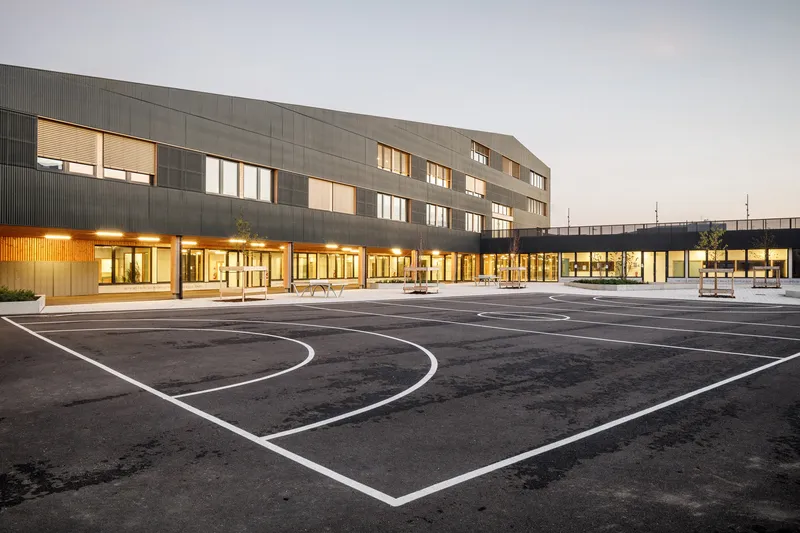
Located in Nancy, France, the Niki de Saint Phalle School, designed by MU Architecture, exemplifies innovative, sustainable education architecture. Covering 4,890 m² and completed in 2022, this elementary and middle school is a model for eco-friendly construction, combining wood, straw, and bio-sourced materials to achieve Passivhaus standards and positive energy performance.
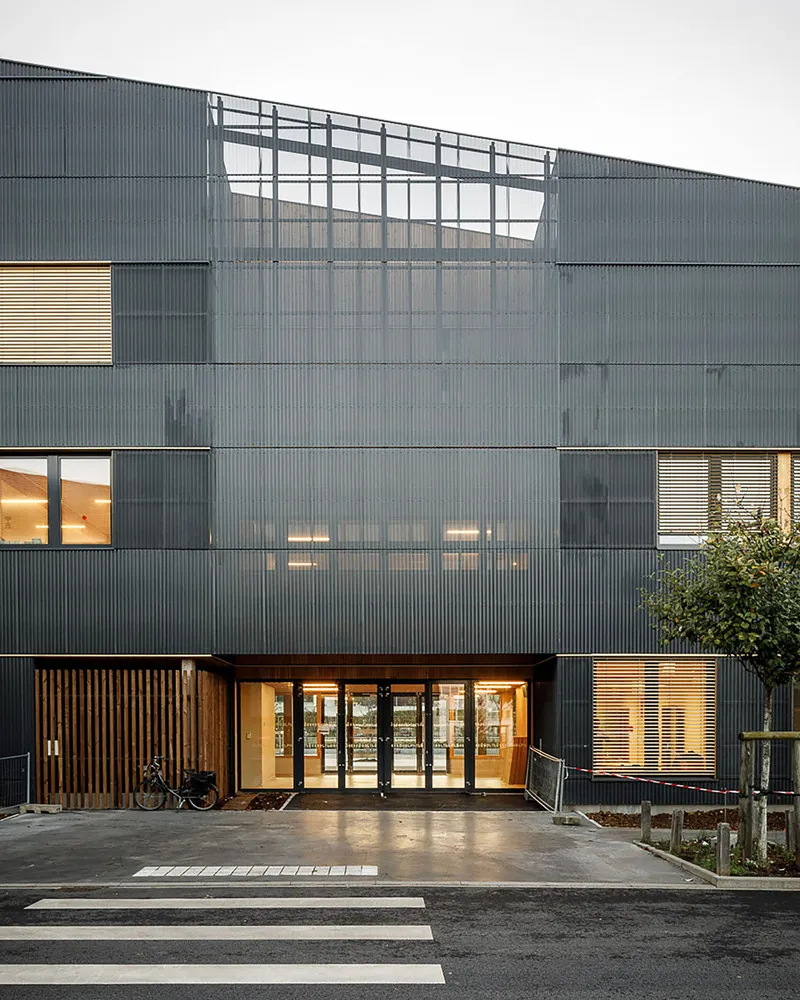
Environmentally Conscious Construction
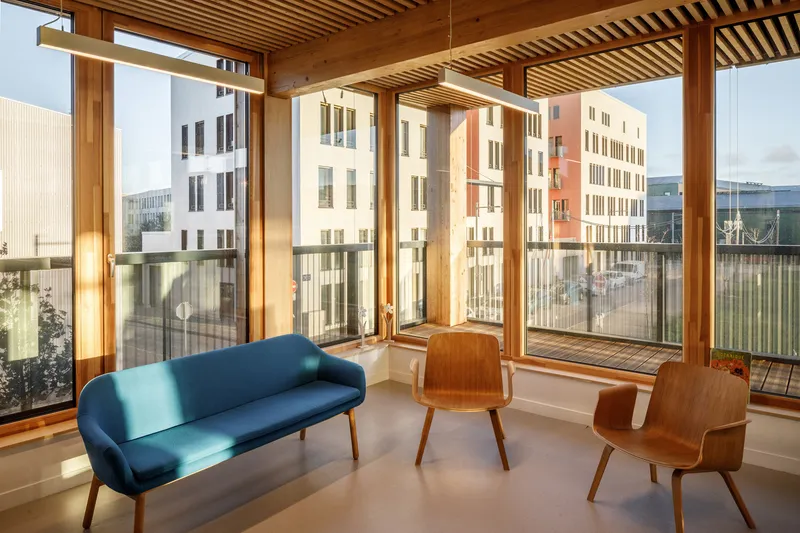
The school’s design embraces a passive energy approach, prioritizing thermal comfort and energy efficiency. With a wooden frame and straw insulation, it is the first positive-energy college in the Grand Est region and the first ERP R+3 building in France constructed entirely of wood and straw. MU Architecture’s material choices balance simplicity, functionality, and scalability, allowing flexible and adaptable interior spaces for evolving educational needs.
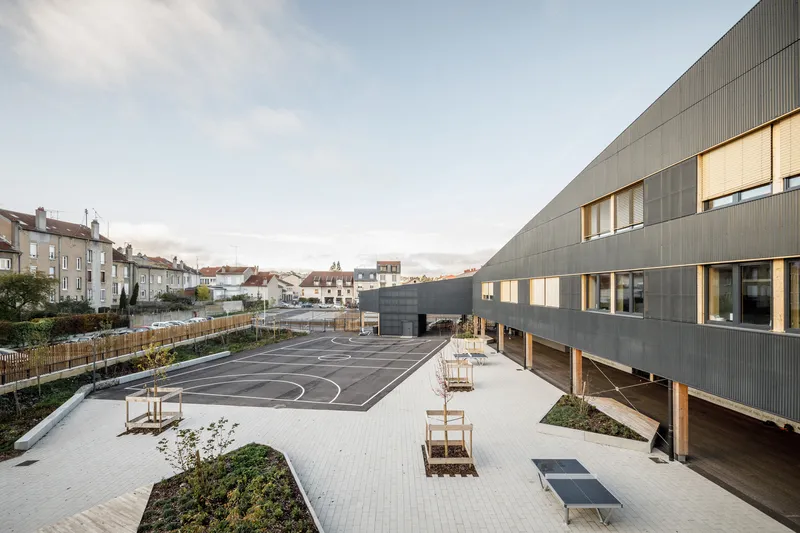
Wood and Straw: Sustainable Materials
Wood provides a light, warm, and resilient structure, while straw, wood fiber, and cellulose wadding contribute to low carbon impact and high energy efficiency. Prefabricated components reduced structural weight and construction time. Collaborating with local Lorraine straw producers, MU Architecture developed a custom wooden structure to accommodate 36 cm thick straw bales, combining traditional carpentry skills with modern ecological design.

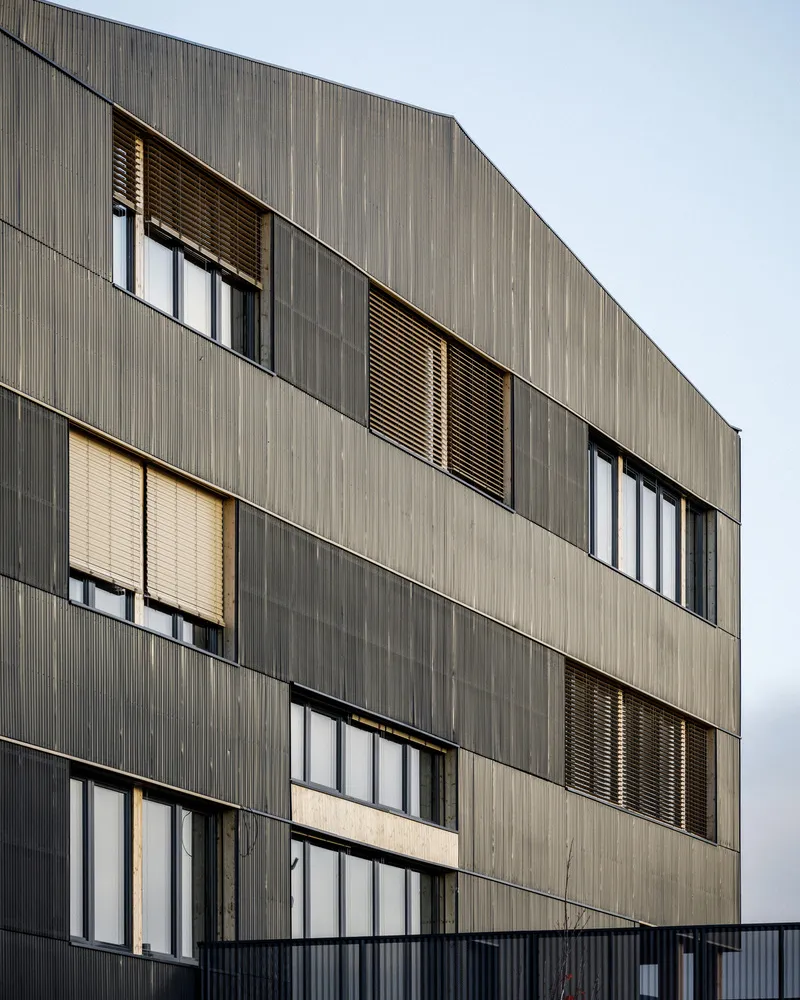
Advanced Ecological Systems
The school integrates an adiabatic power plant and ventilation systems, ensuring year-round thermal comfort without conventional heating or cooling. Thick, 60 cm walls, 36 cm of which are filled with straw, maintain airtightness and allow the school to consume less than 15 kWhEP/m²/year, far below the French average of 240 kWh/m²/year for older buildings. These features highlight the project’s leadership in energy-efficient educational design.
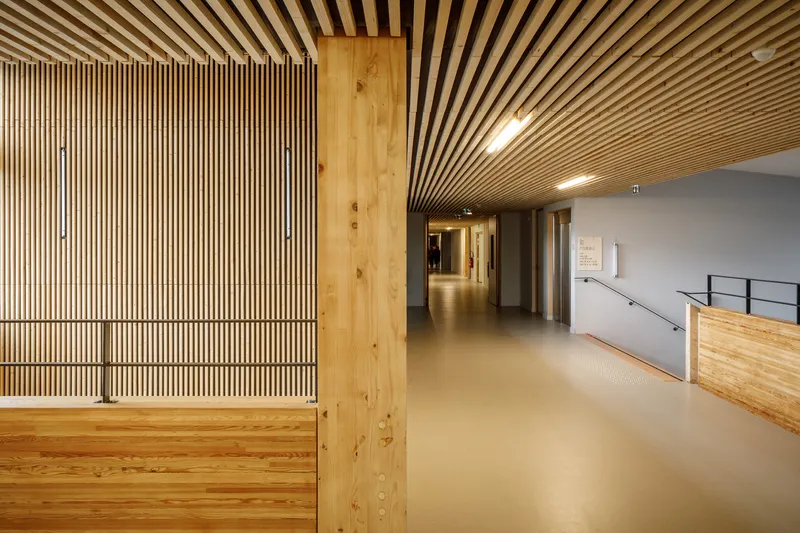
Readable and Flexible Spaces
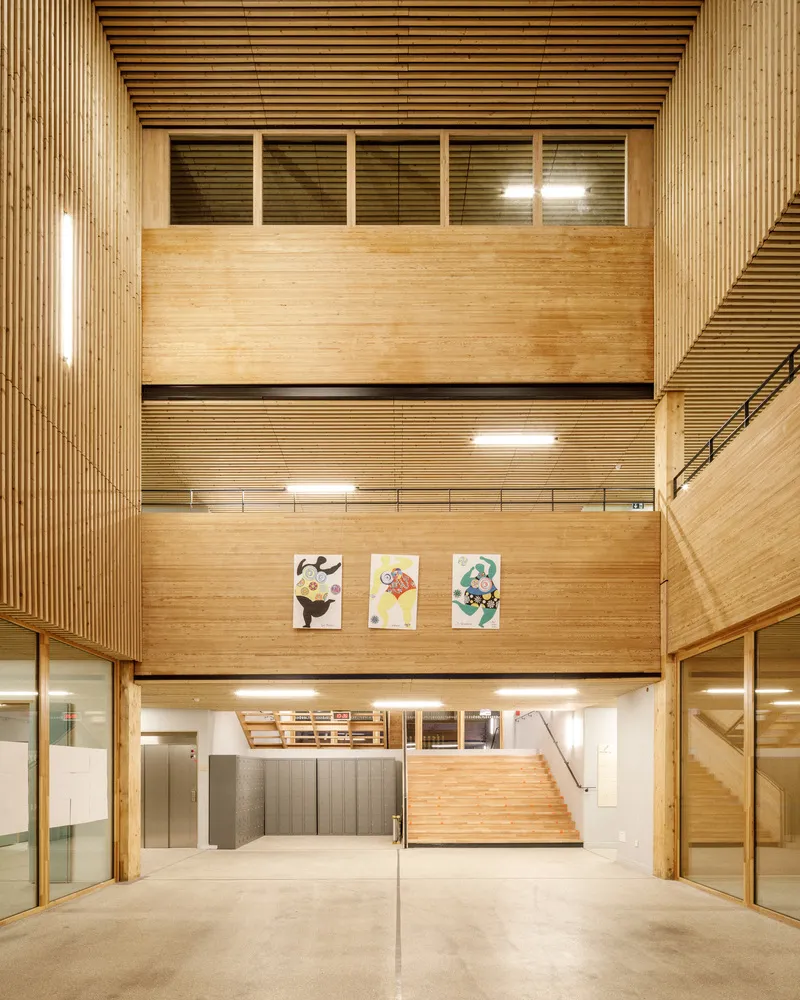
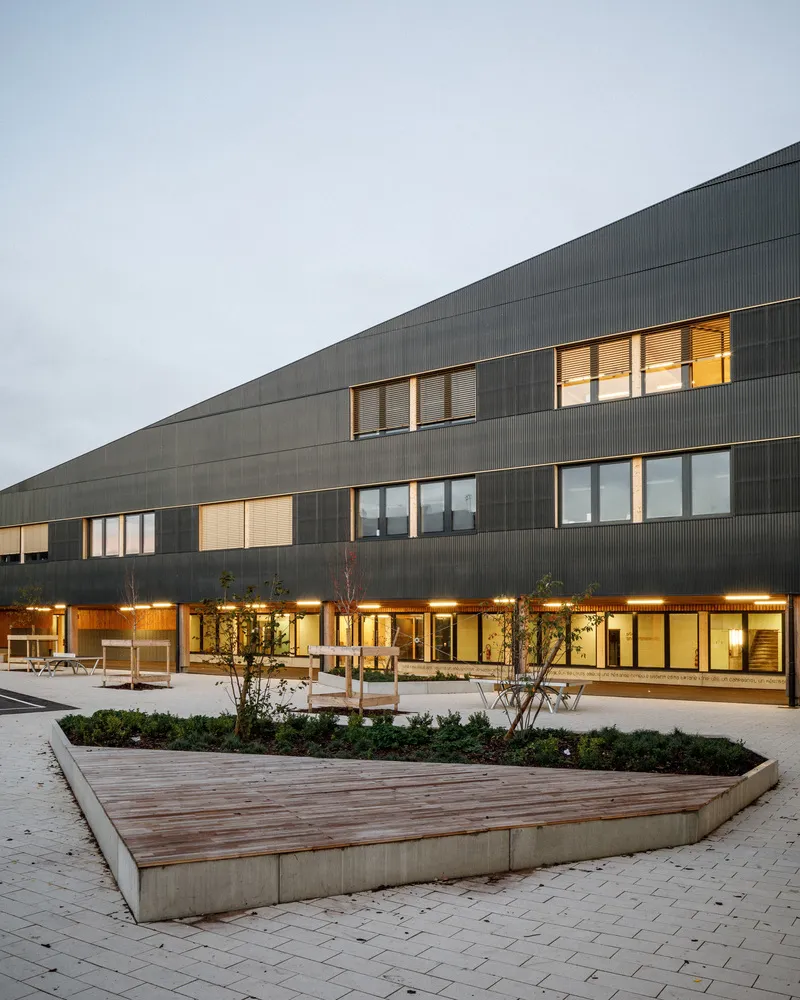
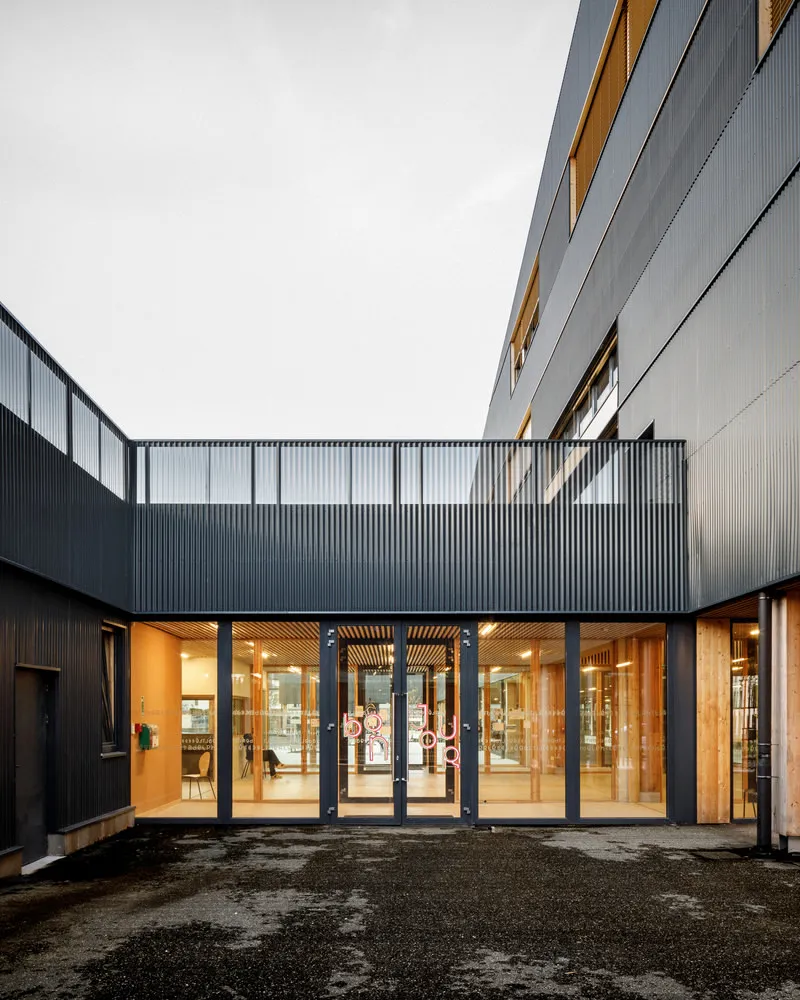
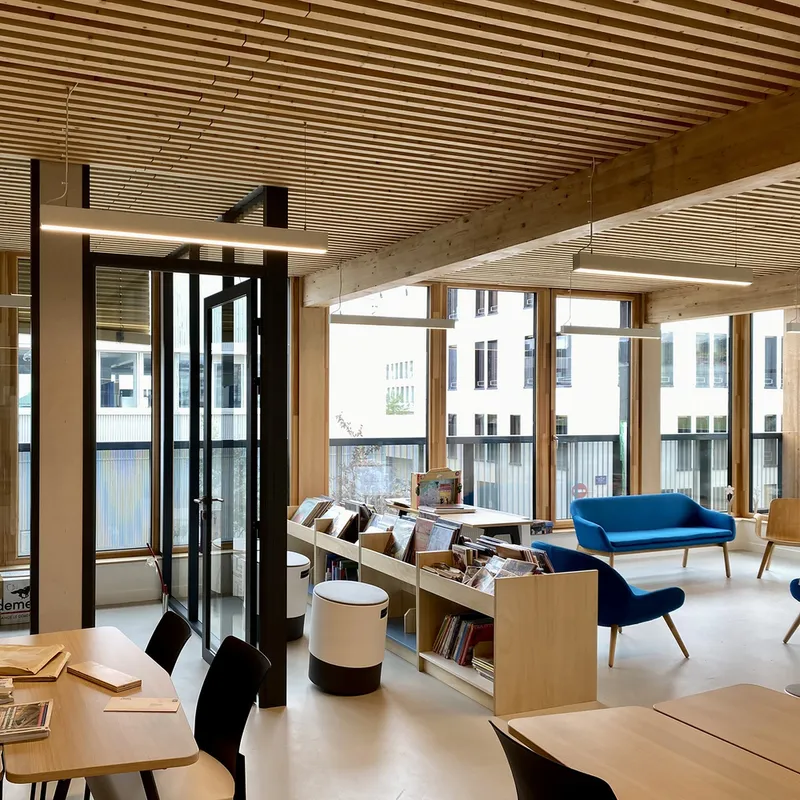
MU Architecture emphasized clarity and circulation in the floor plan. A wide perspective from the entrance guides visitors through the courtyard and central hall, with open staircases that create dynamic movement. Wooden soffits and wall treatments improve the spatial readability, while expansive circulation areas offer comfort and adaptability, supporting various educational activities and fostering a sense of openness throughout the school.
The Niki de Saint Phalle School demonstrates how sustainable materials, passive energy design, and thoughtful spatial planning can converge to create a future-focused learning environment. It stands as an inspiring example of ecological, functional, and scalable school architecture in France.
All photographs are works of
11H45


Popular Articles
Popular articles from the community


LT2A and OPEN Architectes Thread a Brick and Glass High School Through a Wooded Belgian Campus
In Braine-l'Alleud, a 3,000 m² wing for Collège Cardinal Mercier pairs pale brick with a glazed colonnade, deferring to a small chapel and a dense wood.

Jaramillo Van Sluys Arquitectura and Urbanismo Turn a Demolished Registry Lot in Quito into an Orchard Plaza
In Quito's Centro Histórico, a 2,800 m² plaza exposes the San Agustín convent wall and redraws its lost Augustinian orchard in volcanic stone.

GROUP A Strips a 1969 Rotterdam Harbor Headquarters to Its Frame and Wraps It in Timber Louvers
In Rotterdam's M4H harbor district, Ferro Offices reuses a 1969 frame, adds one timber storey and reaches BREEAM-NL Outstanding.

David Ortega Stacks a Two-Story Mexico City Penthouse Around a Steel Stair and a Pergola-Shaded Roof Terrace
In Colonia Roma, a 300 m² penthouse uses oak joinery, a planted steel stair and a slatted roof pergola to make a new-build apartment feel like a house.

Similar Reads
You might also enjoy these articles

Gil Mello Arquitetura Tilts a Single Roof Toward the Waterfalls on a Plateau Above Aiuruoca, Brazil
In Aiuruoca, Minas Gerais, a 200 m² house of local labor and reclaimed poles pairs a low valley veranda with a tall mountain one.

U.GA Architects Wraps an Oval Rooftop Pool in Curved Board-Formed Concrete on Busan's Jeollidan-gil
In Busan's Jeonpo-dong, a 454 m² mixed-use block stacks a neighborhood facility, guest rooms and an oval rooftop pool inside spiraling concrete walls.

Felipe Hess Arquitetos Turns a Blind Stone Wall to the Street and Opens a Brazilian House onto a Courtyard and Canal
A canal-front house in Brazil hides behind painted stone and planting, then opens to an olive-tree courtyard, a reed-ceilinged porch and a curving pool.

David Macias Steps a Doorless Stone and Plaster House Down a Tropical Colombian Hillside
In the humid hills of Colombia, Threshold House replaces the front door with an open void and terraces its 850 m² down the slope instead of fighting it.

Explore Educational Building Competitions
Discover active competitions in this discipline

Challenge to design public laboratory

Challenge to reimagine the Iron Throne

Photograph architecture without architects

Illustrate the lost glory of Angkor Wat - Render Challenge
Comments (0)
Please login or sign up to add comments
No comments yet. Be the first to comment!