

Niko Design Studio Wraps a 51 m² Tokyo Home Around a Greenhouse for Living with Plants
In dense Chiyoda City, a U-shaped house distorts its footprint to maximize earth where trees and plants can grow alongside its inhabitants.


Most residential briefs open with a room count or a budget. The Kimoto House started with a wish: a sunroom where the owners could grow plants and live while looking at them. Niko Design Studio took that request literally, designing a house in Chiyoda City, Tokyo, that treats vegetation not as decoration but as a co-inhabitant. The result is a 51 m² residence completed in 2020 that wraps itself into a U-shaped plan, embracing an inner terrace on its east side where exposed earth is left open for trees and potted greenery to thrive.
What makes this project genuinely interesting is the inversion of priorities. Rather than carving out human rooms first and tucking a planter box into a leftover corner, Niko Design Studio distorted the ground floor footprint to maximize the area of soil where plants could root. The house becomes a three-dimensional circulation route that orbits this green core, with two staircases providing direct access to the inner terrace from the entrance. The architecture serves the garden, not the other way around.
A Cantilevered Volume on a Narrow Street
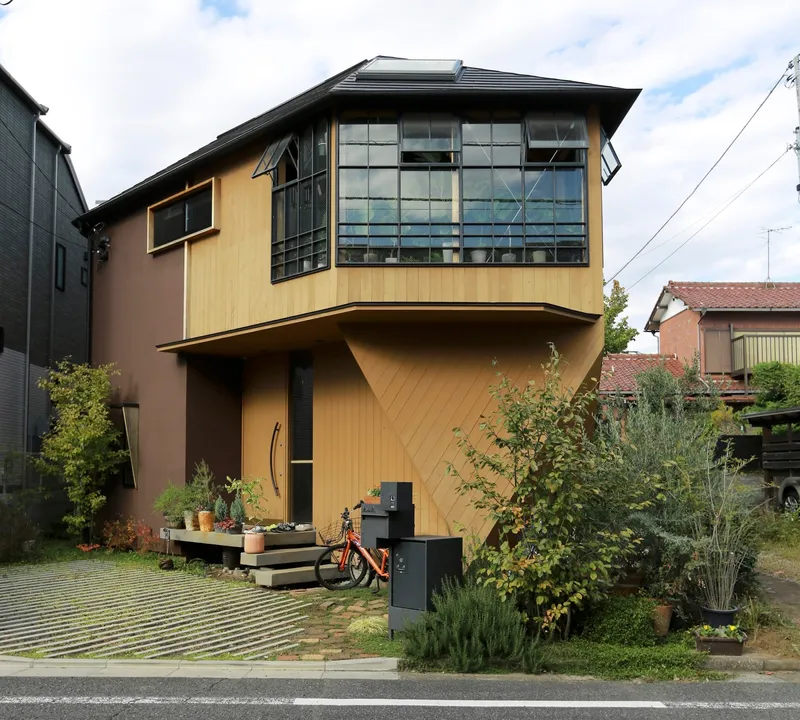
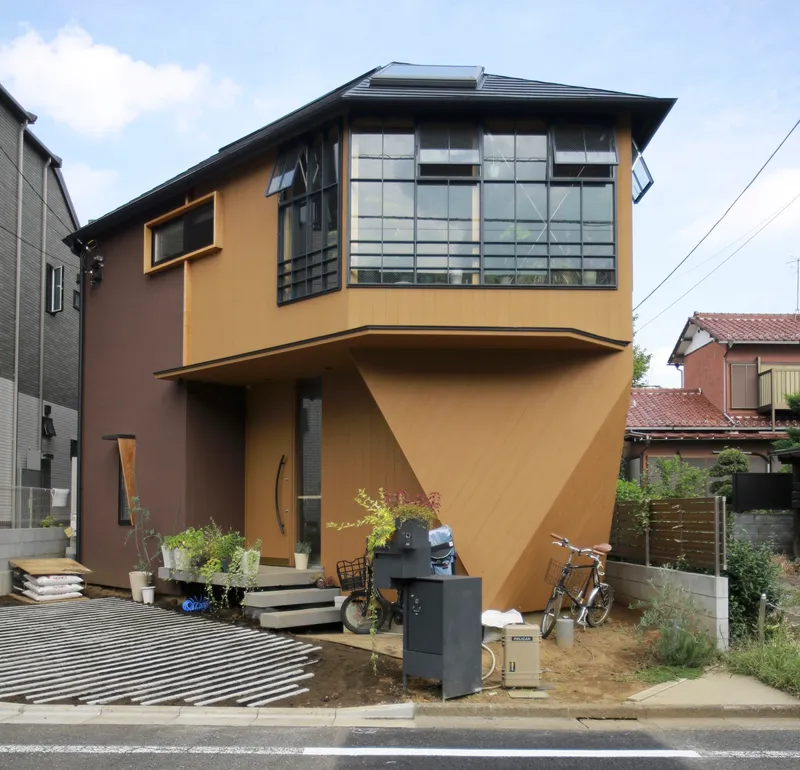
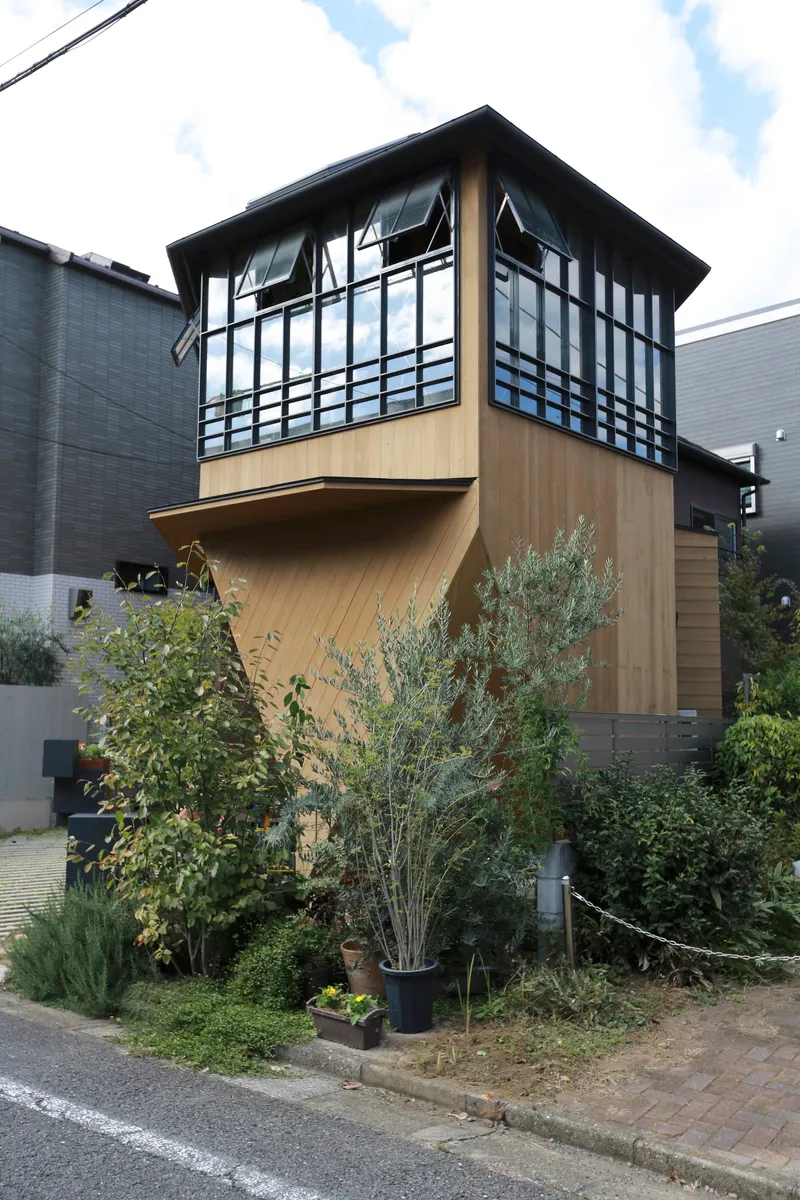
From the street, the Kimoto House announces itself through a bold cantilever. The upper volume projects forward, clad in pale corrugated metal on one face and ochre plaster on another, with gridded windows punched across its surface. Below, the setback ground level creates a shaded threshold where potted plants gather at the entrance. The material palette is restrained and slightly raw: corrugated sheet, timber cladding, plaster. Nothing precious, nothing trying too hard. The house reads as a workshop for living rather than a polished object.
The overhang also serves a practical role. In a dense urban context like Chiyoda, the projection shields the planted approach from direct rain while gaining usable floor area on the upper level. It is a small architectural move that yields disproportionate benefits for both the street presence and the interior plan.
The Inner Greenhouse as Buffer Zone
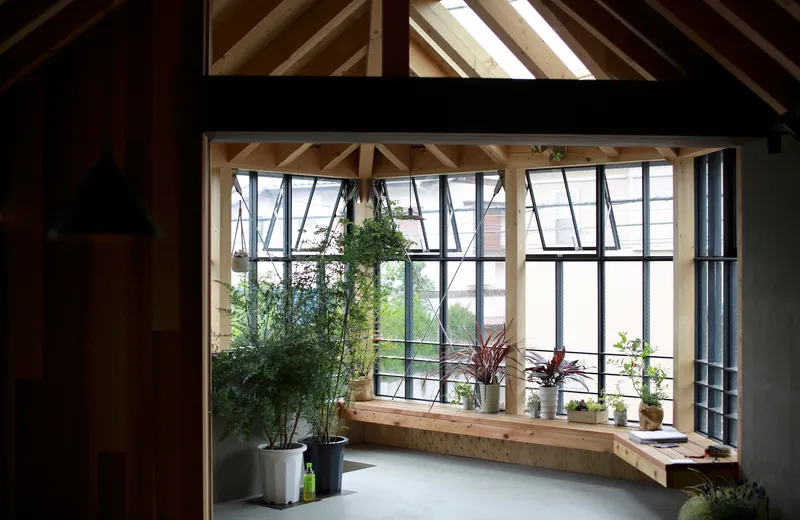
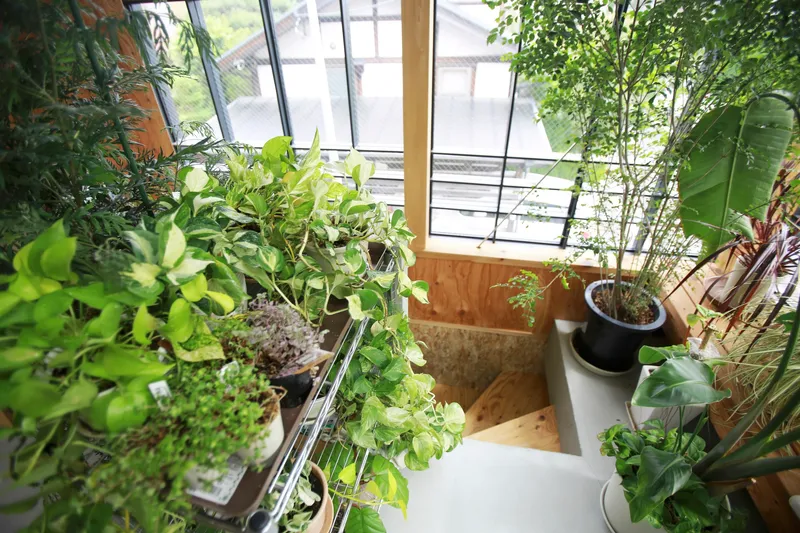
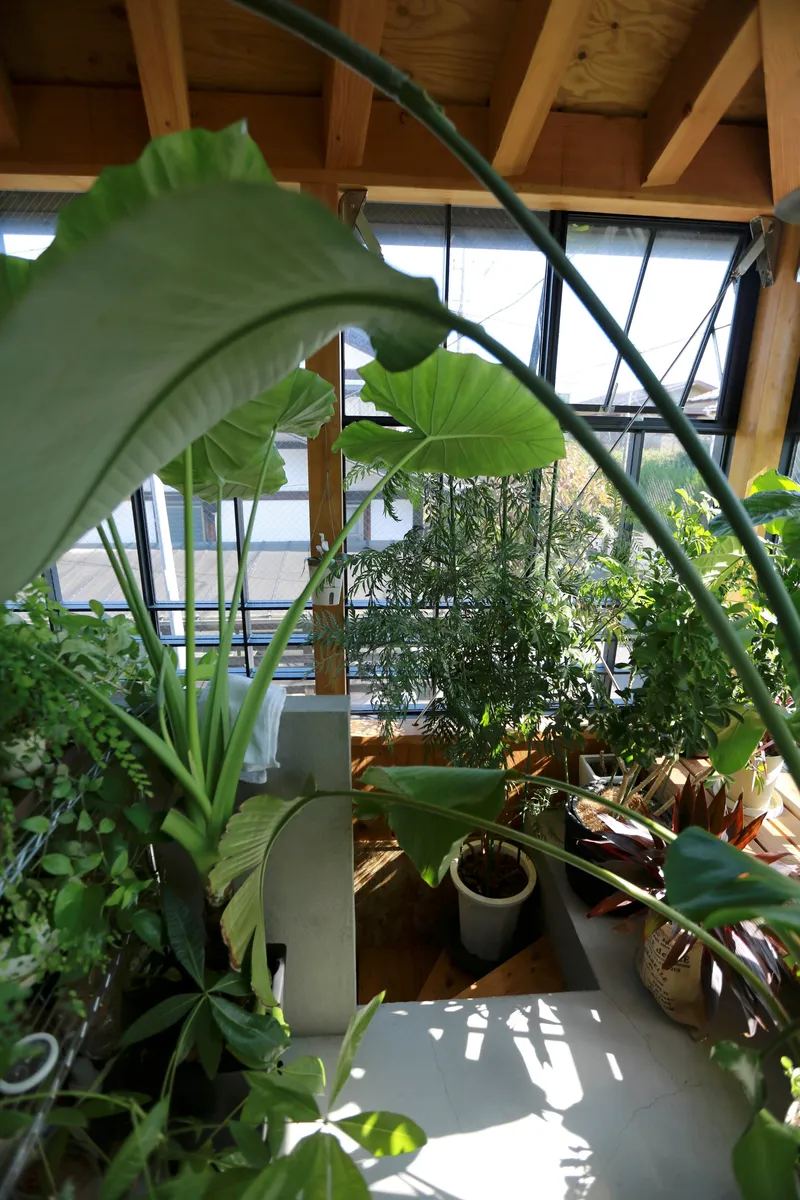
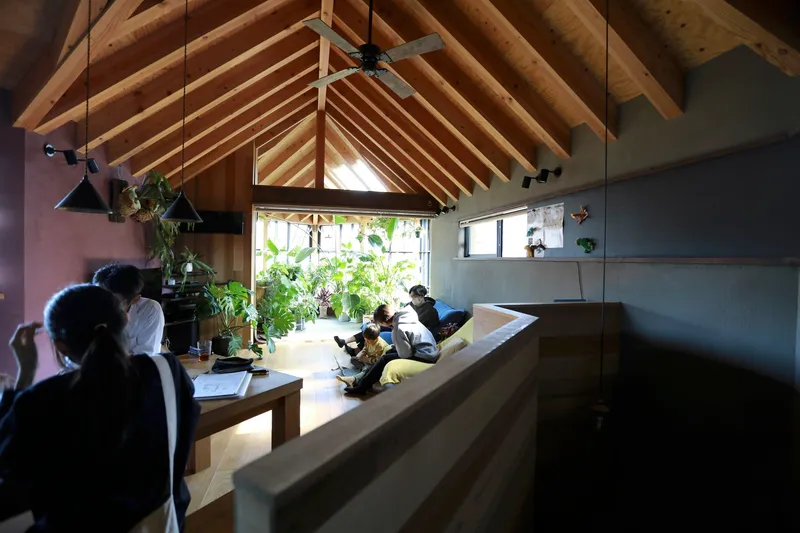
The greenhouse is the heart of the house. Enclosed by operable steel-framed windows and sheltered beneath sloped timber rafters and skylights, this inner terrace operates as a buffer zone between the private living spaces and the street. It filters views, tempers climate, and hosts a small ecosystem of potted plants, hanging vines, and at least one tree planted directly into the floor. The space is not hermetically sealed; it breathes, opens, and shifts with the seasons.
Tropical leaves press against the glazed facades, creating dappled shadows that move across the interior throughout the day. The planting is dense enough to feel immersive but not so overgrown that it overwhelms the modest footprint. Niko Design Studio clearly understood that a greenhouse at this scale must remain navigable, a room you pass through repeatedly on the daily circulation loop rather than a sealed display case you admire from a distance.
Timber Structure as Interior Character
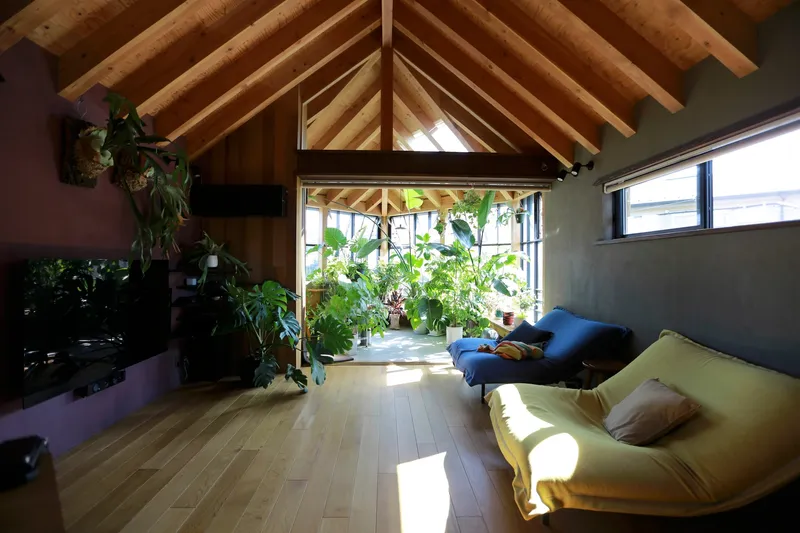
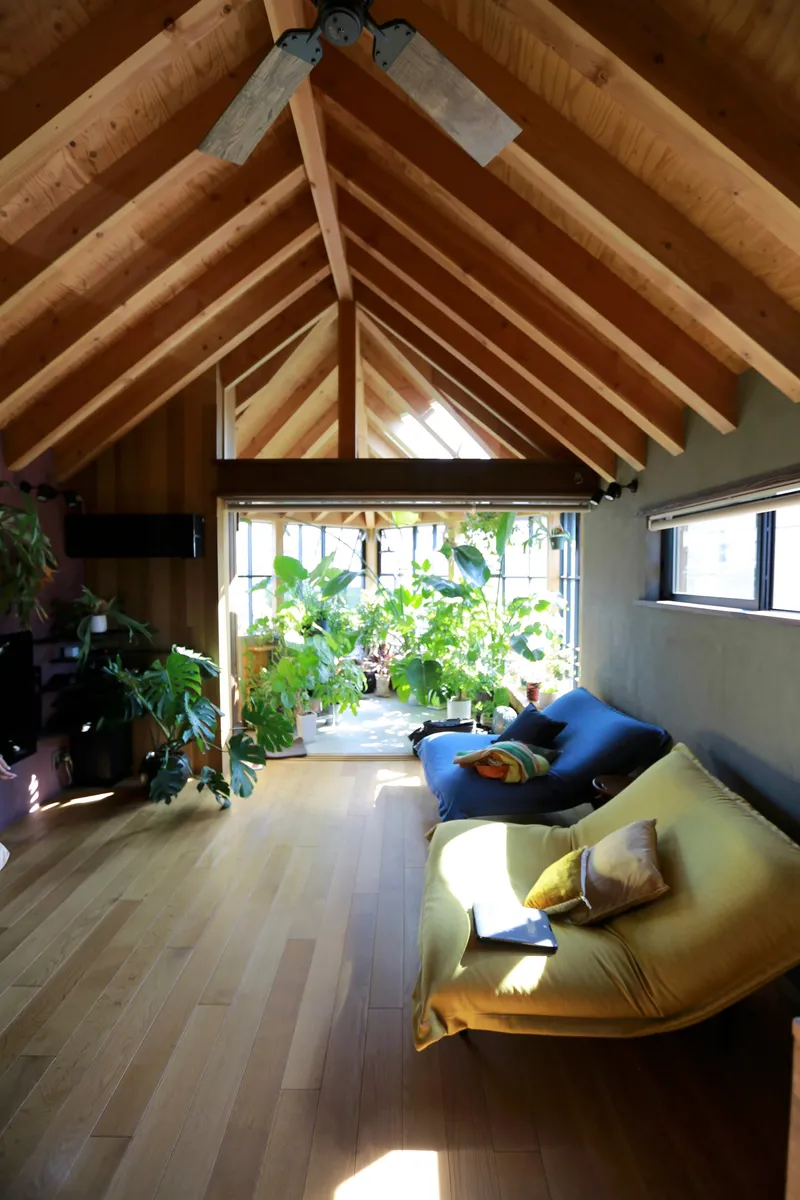
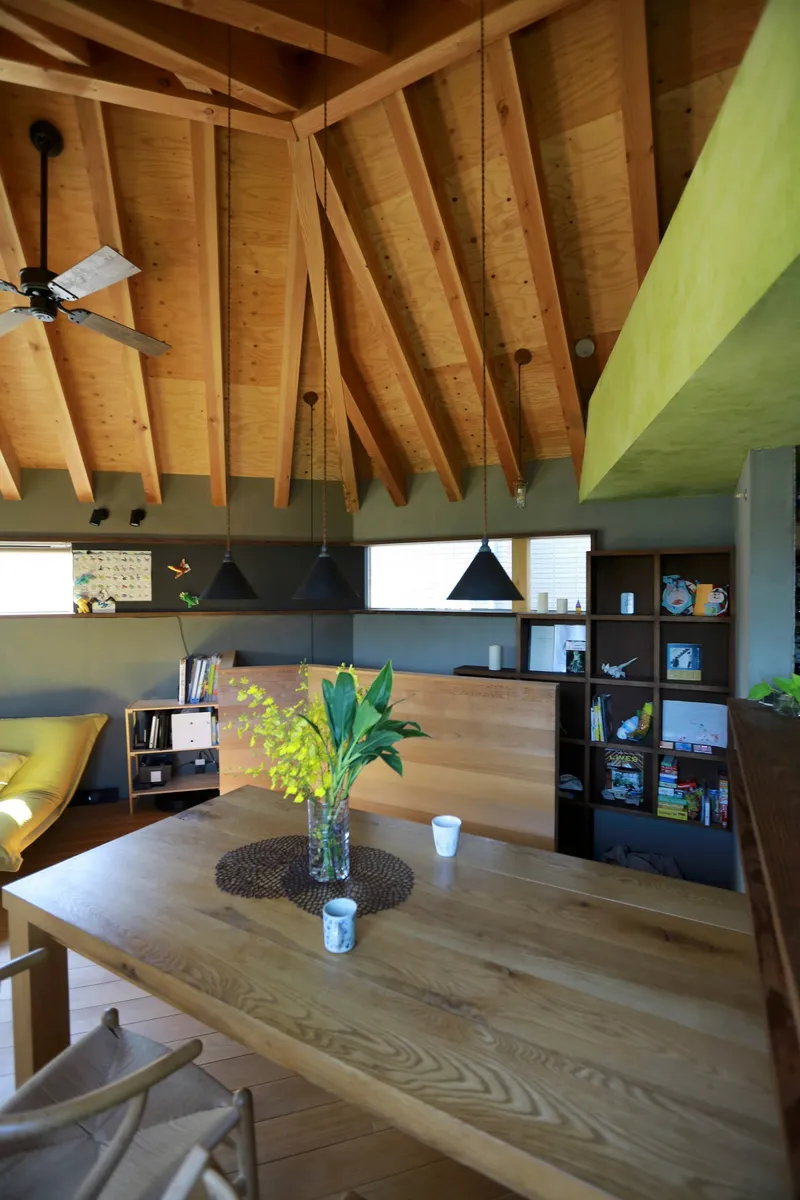
Step inside and the exposed timber rafter ceiling dominates. The structure is left entirely visible: curving beams, gabled trusses, and plywood sheathing form a warm, vaulted canopy over the living and dining areas. The rafters are not decorative. They are the ceiling, and their geometry gives each room a distinct spatial identity despite the small overall area. In the dining zone, the beams curve gently overhead, lending an almost chapel-like intimacy. Toward the corner windows, the gable opens up to admit generous daylight.
The decision to keep the structure exposed is both economical and atmospheric. Finishing a 51 m² house with plasterboard ceilings would flatten the interiors. Here, every joint and rafter tail is legible, giving the rooms a sense of craft and a visual density that compensates for their compact dimensions.
Living Spaces Woven Around Greenery
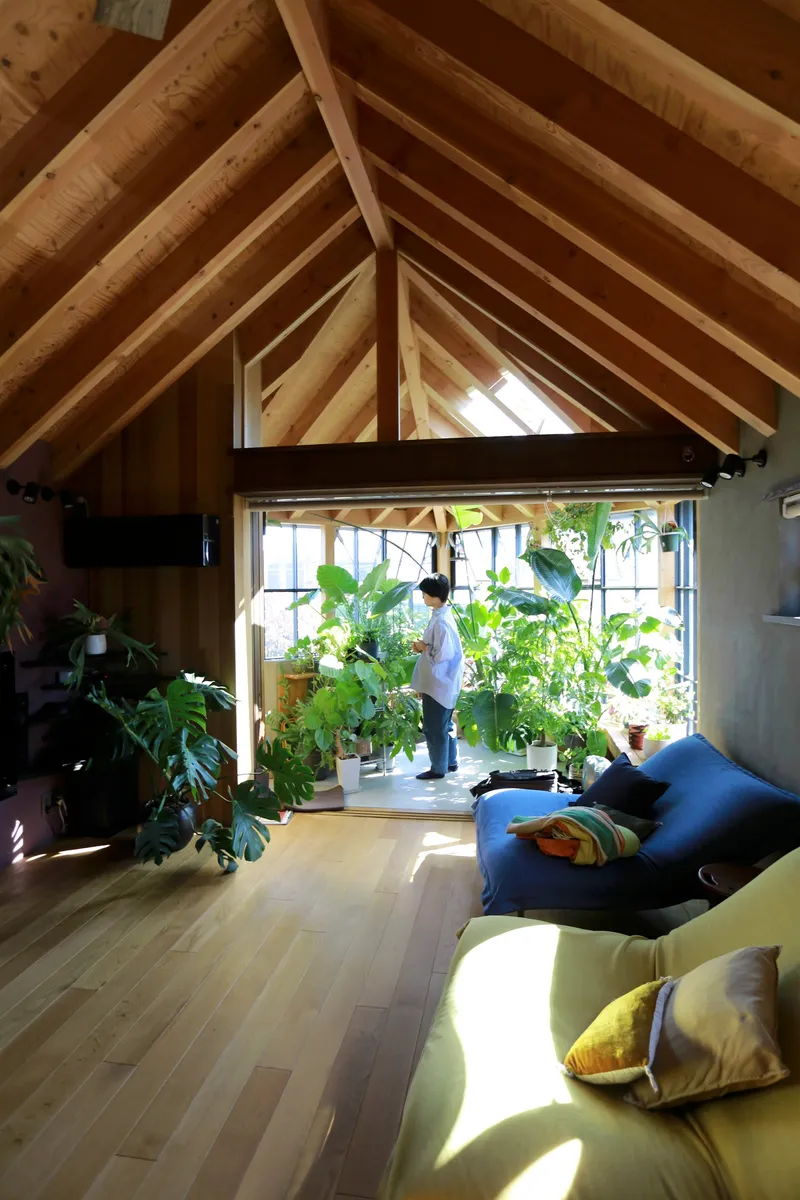
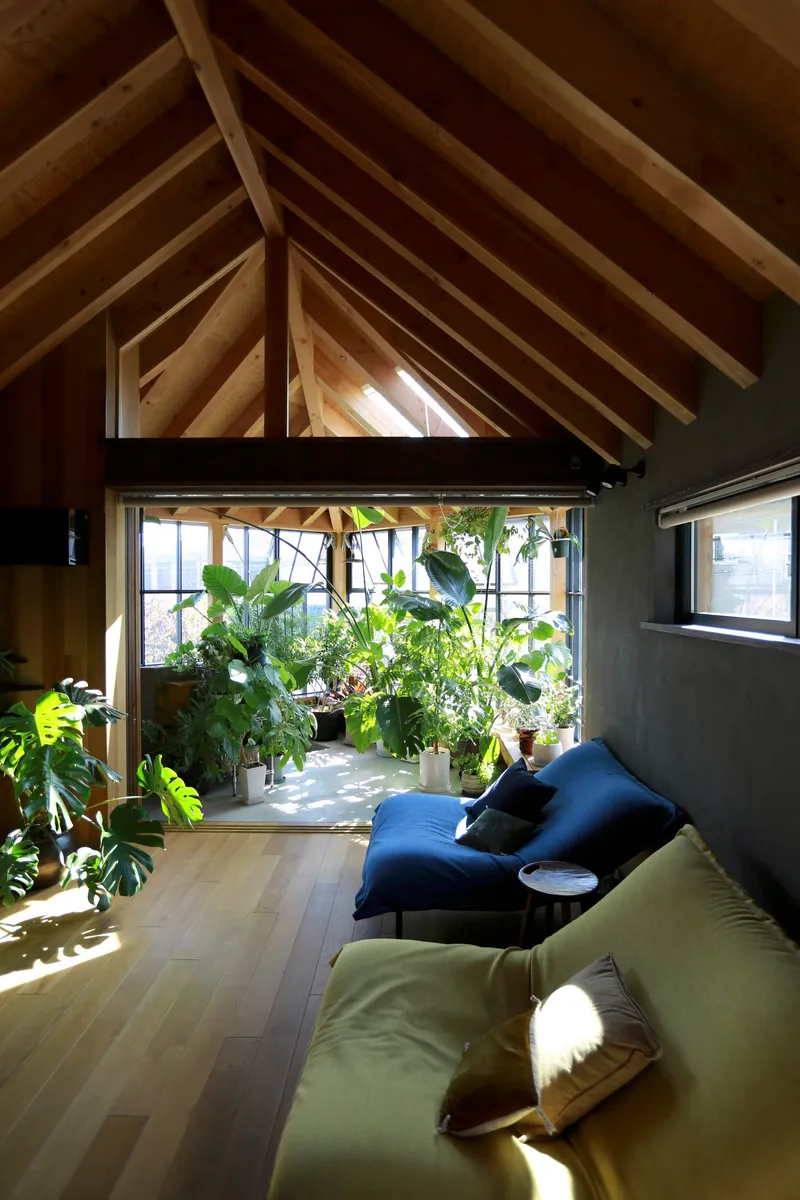
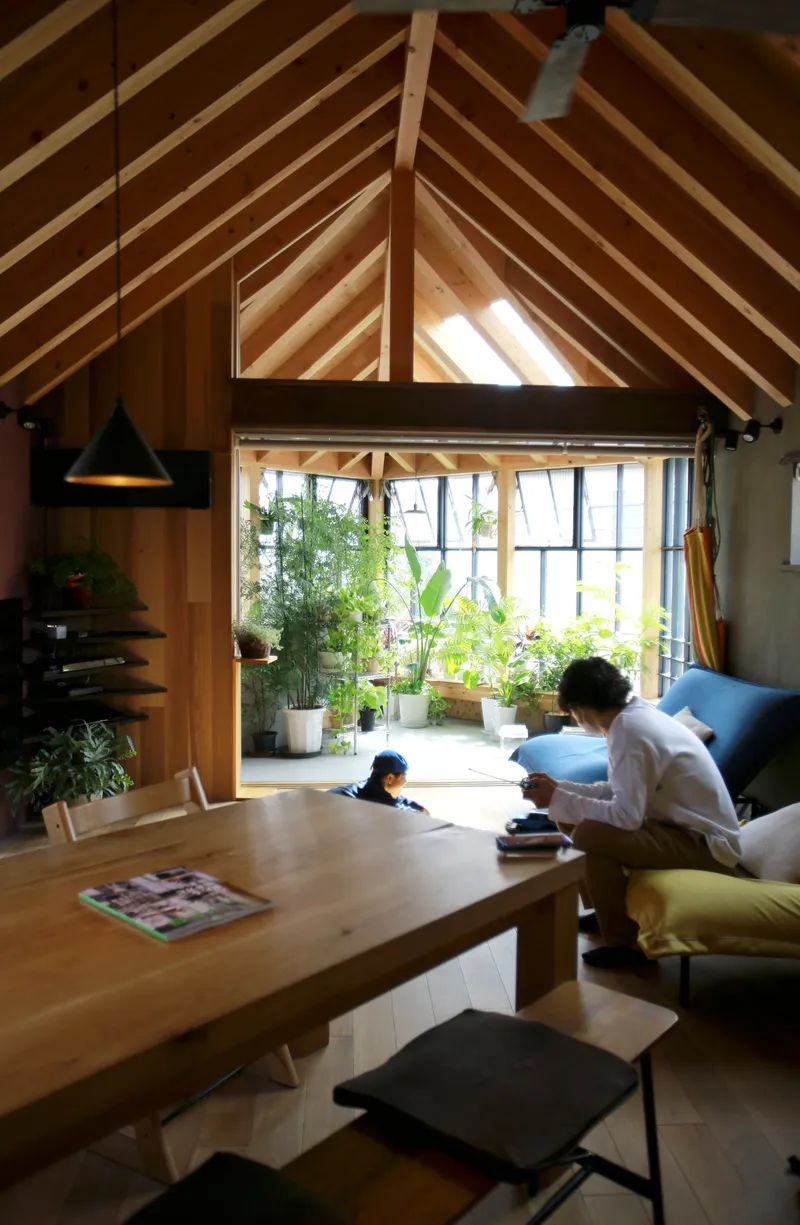
The living areas are never fully separated from the planted zones. From the sofa, you look through gridded windows into a wall of potted greenery. From the dining table, sunlight filtered through leaves reaches deep into the plan. One photograph captures an inhabitant tending plants inside the sunroom while another person reads on the sofa just meters away. The boundary between domestic life and gardening is intentionally blurred.
Niko Design Studio framed this relationship carefully. The concrete walls that define the sunroom are thick and present, giving the greenhouse a sense of permanence. The glazing between the two zones is generous but structured, so the transition feels deliberate rather than accidental. You are always aware of the plants, but you are not living in a jungle. The house maintains a comfortable tension between shelter and exposure.
Compact Rooms with Distinct Identities
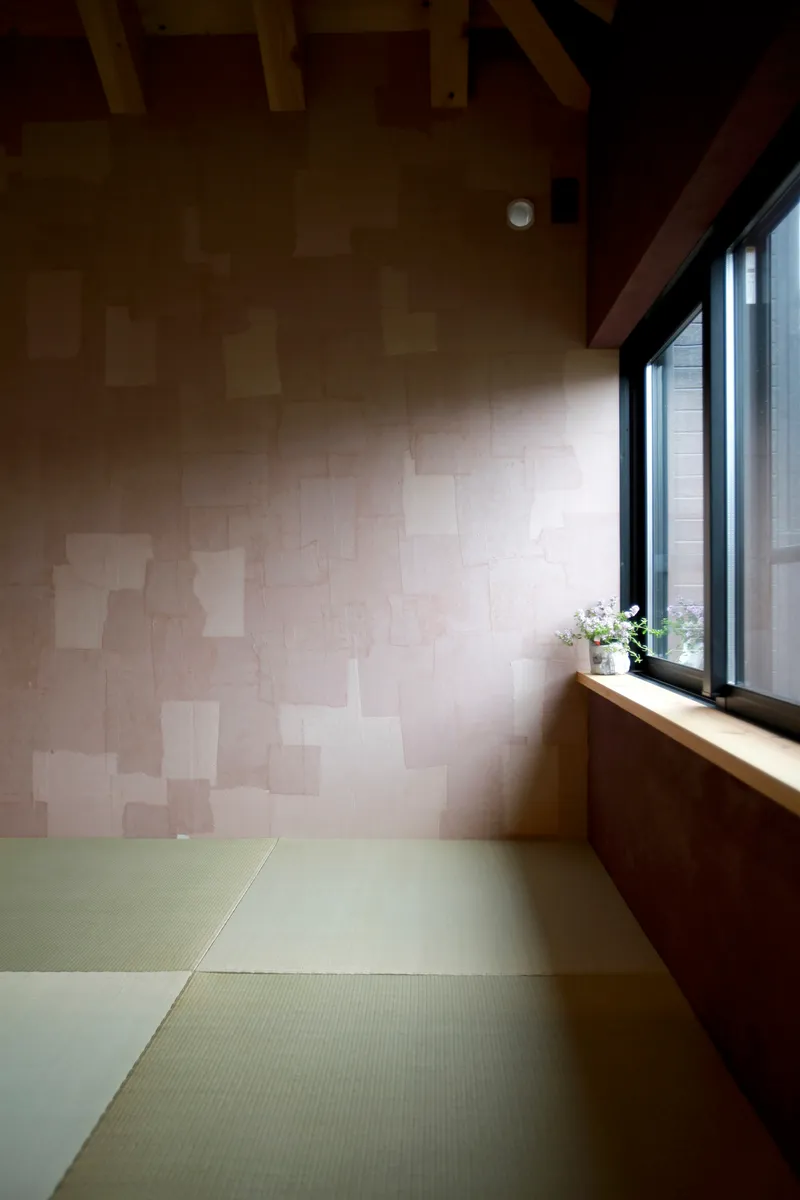
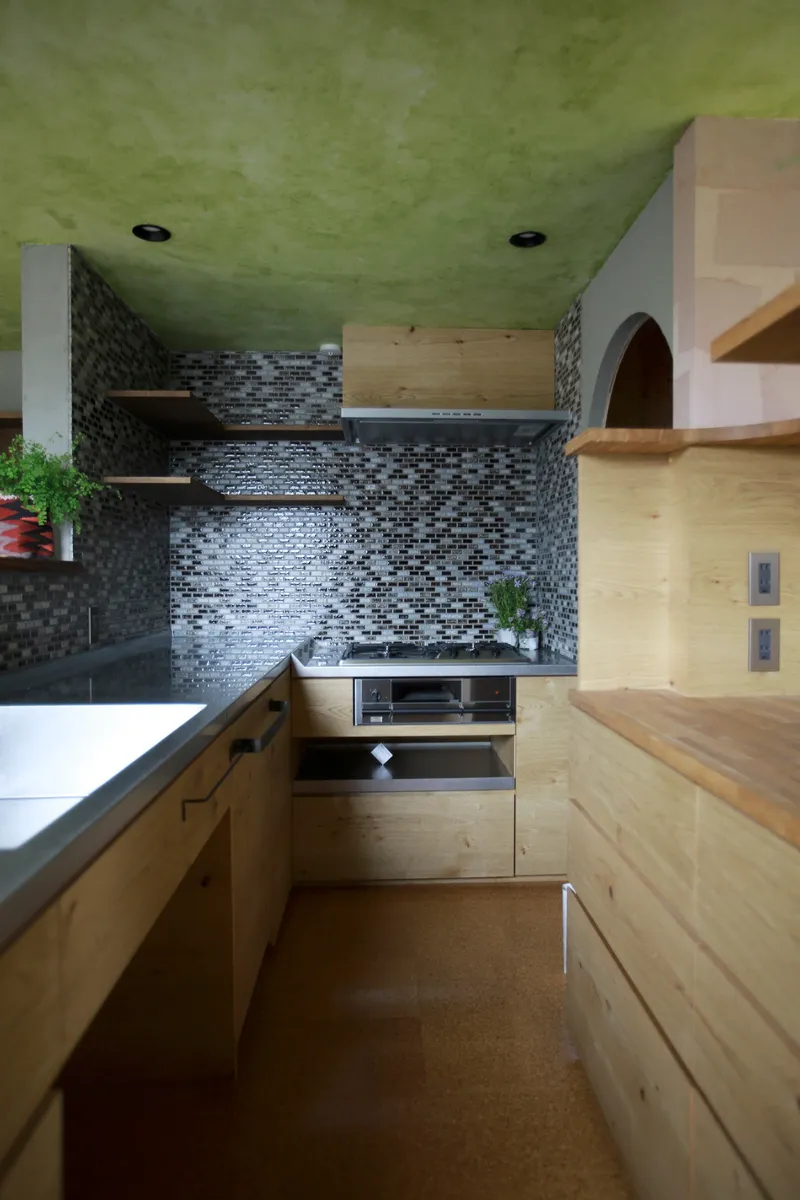
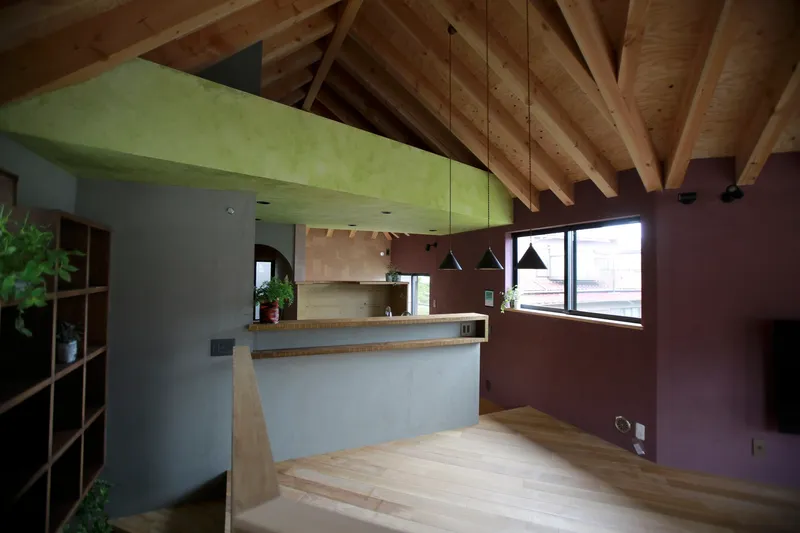
At 51 m², every room must earn its keep, and each one does so with a specific material or spatial gesture. A tatami mat floor meets a patchwork plywood wall beneath the timber beams, creating a quiet retreat that feels rooted in Japanese residential tradition. The kitchen deploys black mosaic tile and a lime green ceiling, a sharp, playful contrast to the warm timber everywhere else. These are confident choices in a small house, where a single material decision defines the character of an entire room.
The open plan connecting kitchen and living area benefits from the vaulted rafter ceiling, which knits the rooms into a continuous spatial experience while the material shifts below mark out distinct zones. It is a smart strategy for micro-housing: let the structure unify, let the surfaces differentiate.
Circulation as Architecture
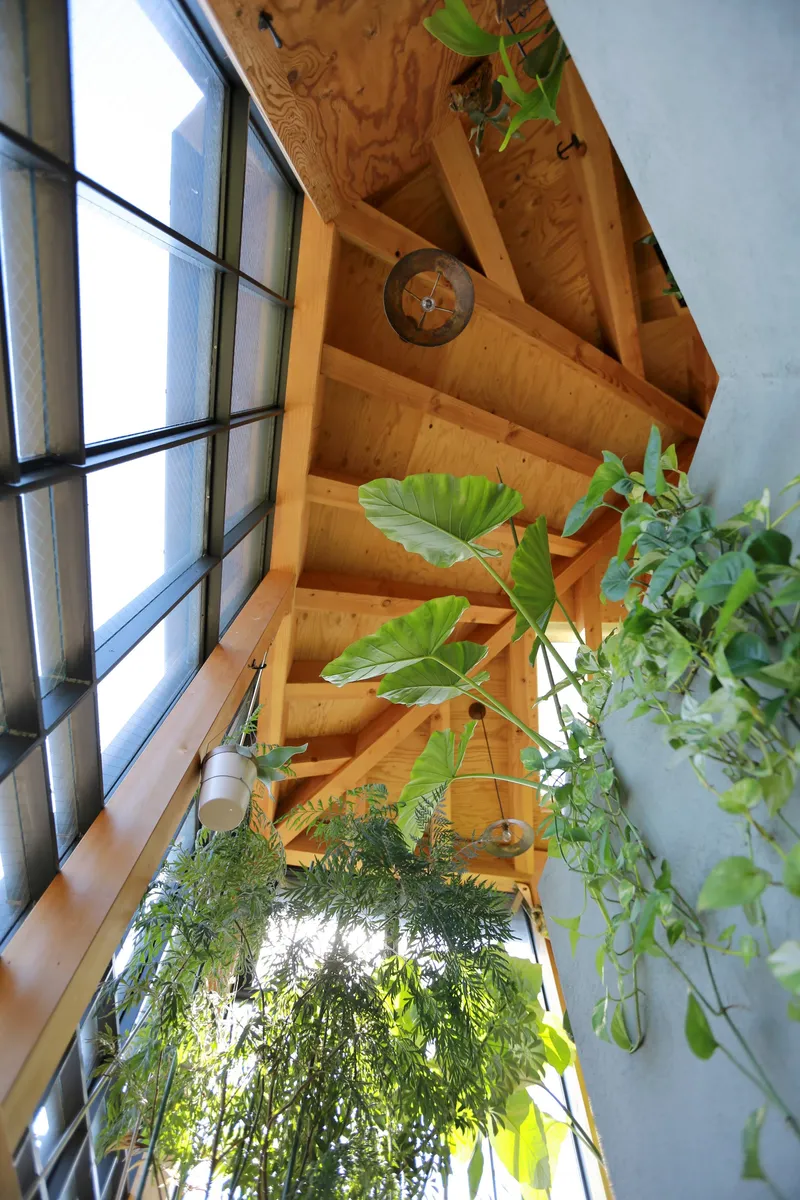
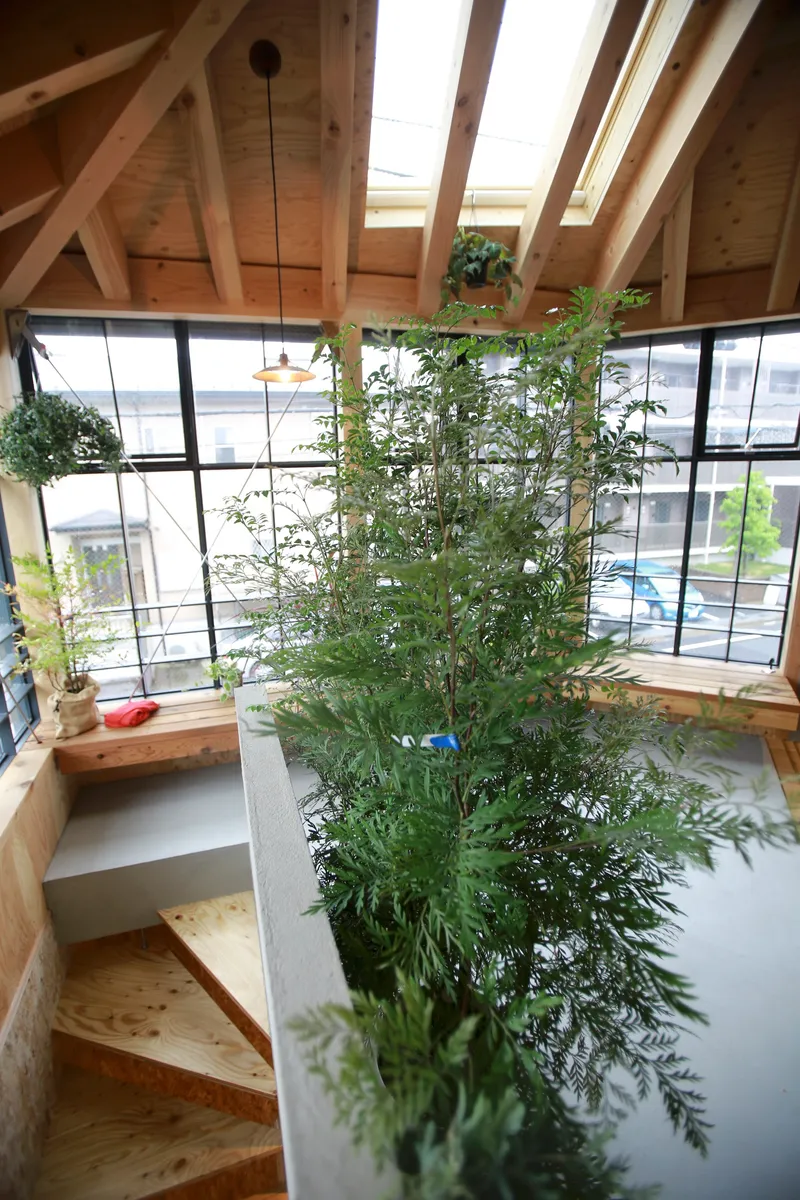

The two staircases are not redundant. They create a loop, turning the house into a continuous circuit where you can move from entrance to terrace to upper living space and back without retracing your steps. One staircase runs alongside a glazed wall with hanging plants in bright natural light, transforming a purely functional connector into one of the most atmospheric moments in the house. The upper level greenhouse, with its sloped rafters, skylights, and a tree growing through the floor, rewards you at the top of the climb.
Niko Design Studio describes the building as a three-dimensional circulation route, and this framing is accurate. The house is experienced in motion. Rooms are not static containers but waypoints along a path that continually brings you back into contact with plants, daylight, and the sky. In a house this small, that sense of movement makes the space feel far larger than its numbers suggest.
Plans and Drawings
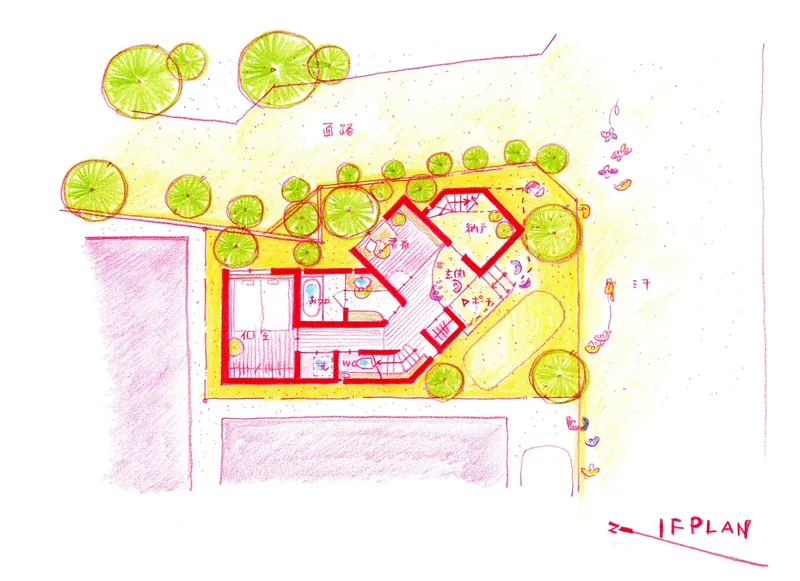
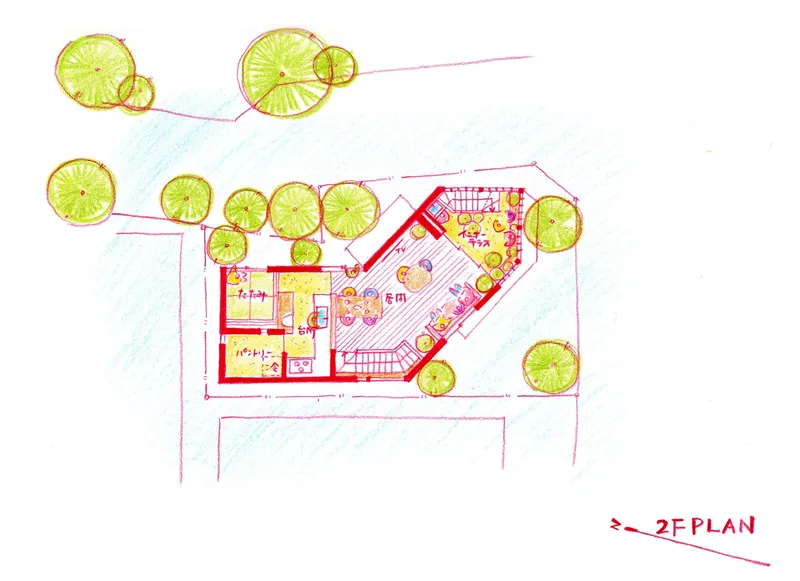

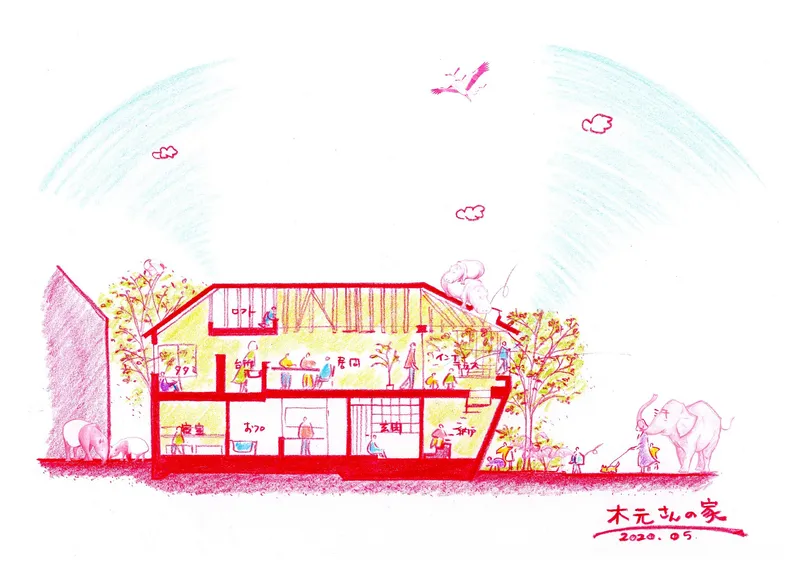
The hand-colored drawings reveal the logic behind the angular footprint. The ground floor plan shows how the building's perimeter is deliberately distorted, pulling away from the rectangular site boundaries to leave pockets of earth for trees. The upper floor plan confirms the open living space and its relationship to the terrace and tree canopy. The section drawing, rendered in watercolor, shows the split-level organization and the way the greenhouse spaces rise through both floors, connecting ground soil to skylight. The site plan makes the urban density legible: the Kimoto House sits in a tight matrix of adjacent structures, making its commitment to planted ground all the more remarkable.
Why This Project Matters
The Kimoto House is a small project with a radical premise. It asks what happens when a house is designed for plants first and people second, then discovers that the resulting architecture serves both inhabitants better than a conventional plan ever could. The U-shaped footprint, the distorted ground floor, the dual staircases, and the greenhouse buffer zone are all consequences of prioritizing soil and sunlight alongside bedrooms and kitchens. The design is not a compromise. It is a synthesis.
In a moment when sustainability discourse is dominated by energy performance metrics and material carbon calculations, the Kimoto House offers a quieter argument. Living with plants daily, watching them grow through your floors and press against your windows, changes how you relate to the non-human world. It is not a technical solution but a spatial one, and at 51 m² in central Tokyo, it proves that even the tightest urban sites can accommodate this ambition.
Kimoto House by Niko Design Studio, Chiyoda City, Japan. 51 m², completed 2020. Photography by Takehito Nishikubo.
About the Studio
Share Your Own Work on uni.xyz
If projects like this are the kind of work you want to make, uni.xyz is a place to publish your own, find collaborators, and enter design competitions.


Popular Articles
Popular articles from the community


David Ortega Stacks a Two-Story Mexico City Penthouse Around a Steel Stair and a Pergola-Shaded Roof Terrace
In Colonia Roma, a 300 m² penthouse uses oak joinery, a planted steel stair and a slatted roof pergola to make a new-build apartment feel like a house.

David Macias Steps a Doorless Stone and Plaster House Down a Tropical Colombian Hillside
In the humid hills of Colombia, Threshold House replaces the front door with an open void and terraces its 850 m² down the slope instead of fighting it.

U.GA Architects Wraps an Oval Rooftop Pool in Curved Board-Formed Concrete on Busan's Jeollidan-gil
In Busan's Jeonpo-dong, a 454 m² mixed-use block stacks a neighborhood facility, guest rooms and an oval rooftop pool inside spiraling concrete walls.

Cube Design Draws an Ecological Corridor Between Two Shenzhen Hills with the Nankai Building
Beside Shenzhen's container docks, the Nankai Building pairs stacked balconies with a climbing green screen to connect two hillsides across its height.

Similar Reads
You might also enjoy these articles


LAVA Architecten Gives Vocational Education a Sawtooth-Roofed Face on a Mechelen School Campus
In Mechelen, Belgium, a 2,053 m² STEM school on a 6×6 m grid turns workshops and classrooms into rooms that can be rearranged as teaching changes.

KEMA Studio Turns a Derelict Marvila Attic into a 60 m² Lighthouse Apartment Above Lisbon
In Lisbon's Marvila district, a rebuilt roof, four skylights and two plywood volumes turn an unlivable attic into a bright home facing the Tagus.

Pixel Gardens: One Repeated Module Stacked Into a Terraced Social Housing Tower for Famagusta
Salem Bader's shortlisted housing tower builds a vertical neighbourhood from one repeated module, offsetting units to carve terraces, light and air.

Bao Huynh Watercolor Atelier: A Serene Art Retreat in Hội An
Bao Huynh Watercolor Atelier in Hội An blends multifunctional art spaces, sustainable design, local materials, and family-friendly living in a serene environment.

Explore Residential Building Competitions
Discover active competitions in this discipline

Challenge to design mud housing for contemporary communities

Challenge to reimagine the Iron Throne

Photograph architecture without architects

Illustrate the lost glory of Angkor Wat - Render Challenge
Comments (0)
Please login or sign up to add comments
No comments yet. Be the first to comment!