

nLDKX Apartment by ULTRA STUDIO: Innovative Refurbishment of Japanese Residential Typology
nLDKX Apartment by ULTRA STUDIO transforms a standard Japanese 2LDK layout into an adaptable, elliptical, visually striking, market-ready living space.


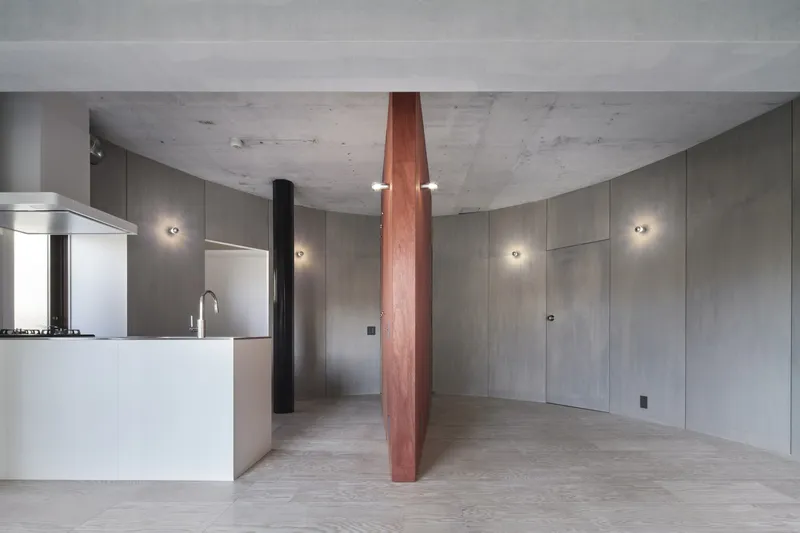
Located in Japan, the nLDKX Apartment, designed by ULTRA STUDIO, is a remarkable reinterpretation of the traditional Japanese nLDK apartment layout, blending market-oriented constraints with bold spatial creativity. Completed in 2022 and covering an area of 70 m², this refurbishment project reimagines the standard apartment typology to stand out in the competitive real estate market. Photographed by Tomoyuki Kusunose, the apartment demonstrates how architectural interventions can transform ordinary floor plans into dynamic, visually engaging living spaces.

Understanding nLDK in Japanese Residential Design
In Japan, the term nLDK is a widely recognized typology in the real estate market. The “n” refers to the number of bedrooms, while L represents the living room, D the dining area, and K the kitchen. For example, a two-bedroom apartment is described as 2LDK. This typology is central to property searches and market analysis, as families typically select apartments based on the number of bedrooms suitable for their household size and income. For instance, a family with a child often searches for 2LDK or larger, while developers strategically provide floor plans that meet these general demands.
Despite its long-standing presence since post-war housing, the rigid nature of the nLDK format has been criticized for limiting spatial flexibility. However, projects like nLDKX demonstrate that thoughtful interventions can honor the market-driven framework while introducing creativity and functional innovation.

Refurbishment within the Purchase-Resale Scheme
The nLDKX Apartment was commissioned as part of the “Purchase-Resale” housing scheme, where buyers acquire standardized apartments, refurbish them to add value, and resell them. Such projects cannot fully personalize spaces to individual inhabitant needs, yet they must stand out in the market by creating a unique identity within conventional layouts.
Maintaining the nLDK zoning is crucial, as property search websites rely on it. Buyers frequently search by replacing “n” in nLDK with their desired number of bedrooms. ULTRA STUDIO faced the challenge of designing a space that feels distinct and engaging while remaining within the recognized market typology.
Transforming the Standard Layout
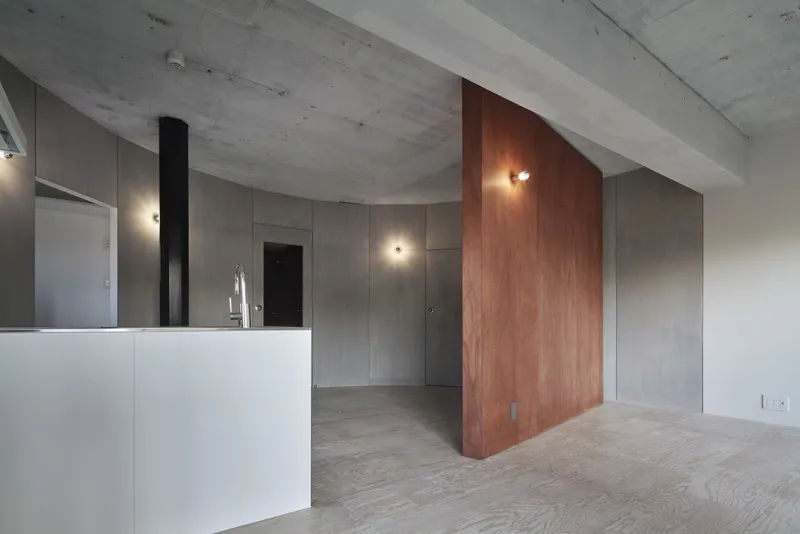
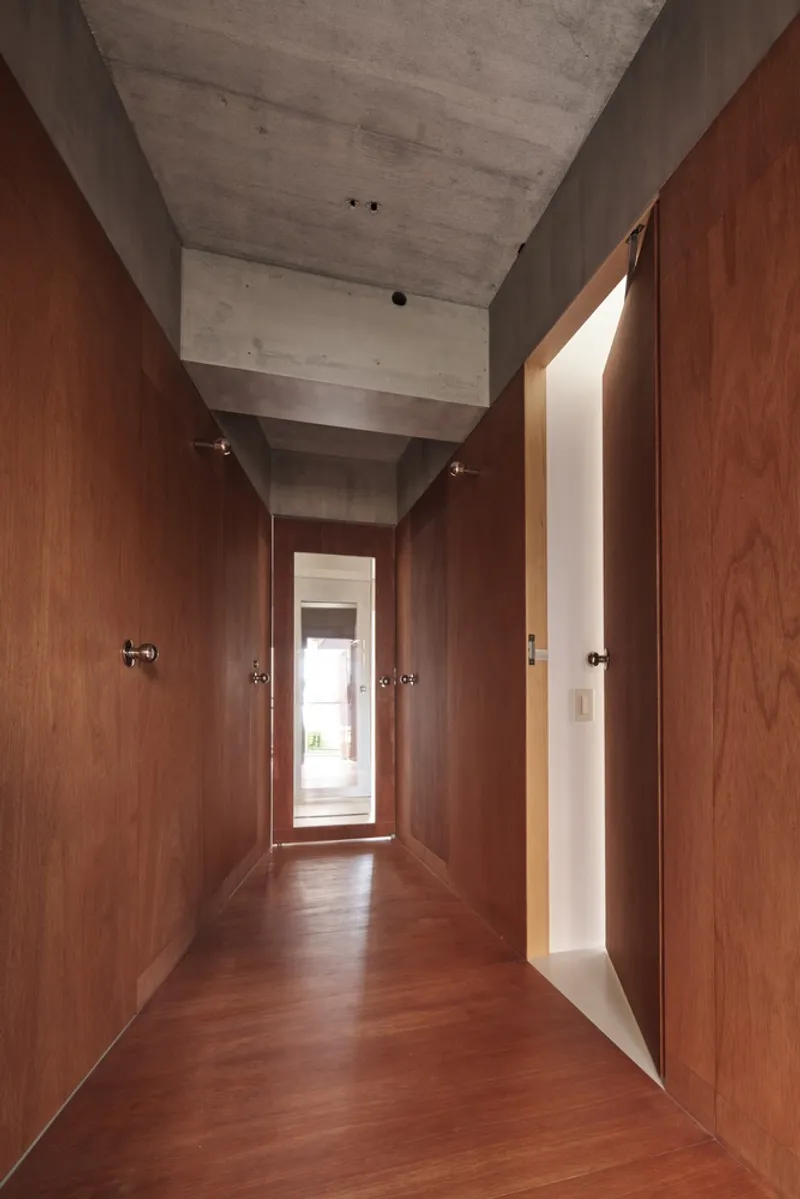
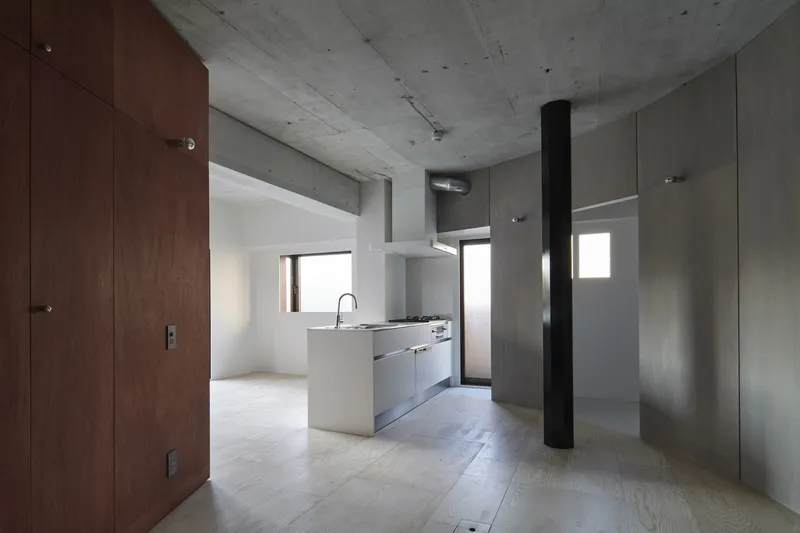
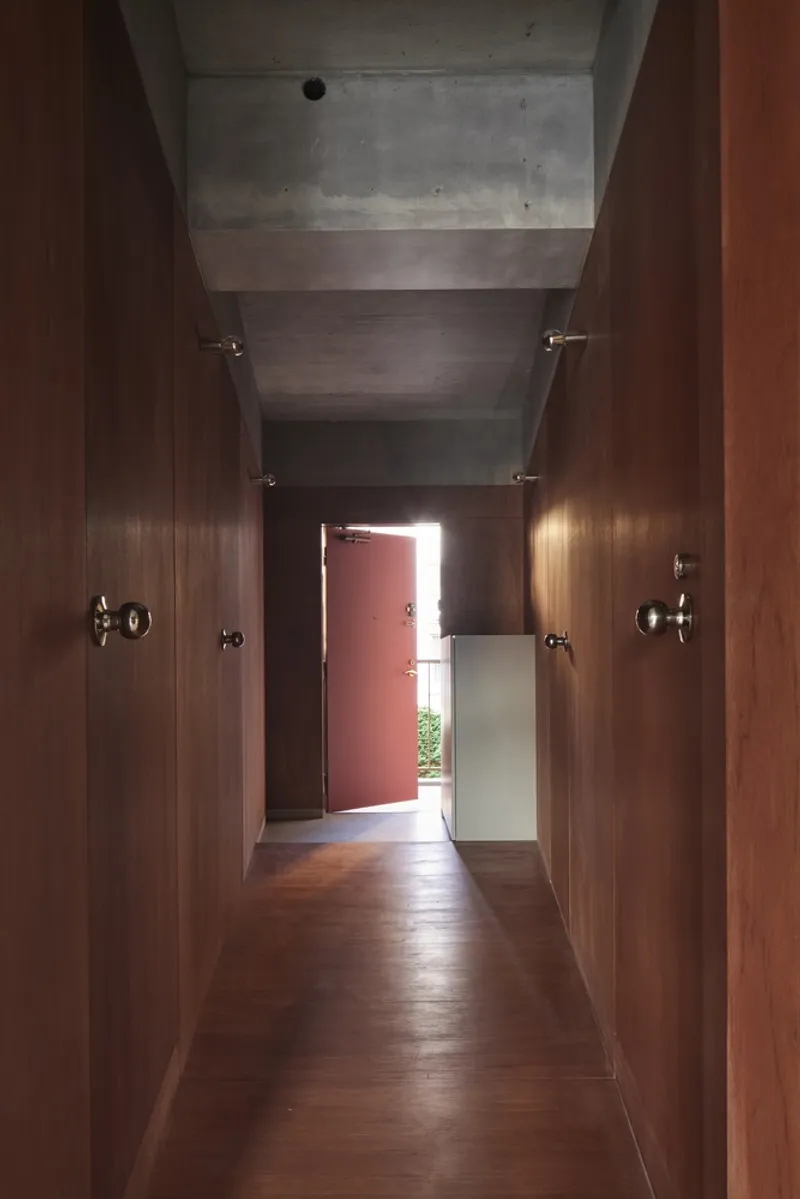
The original three-bedroom layout included a windowless Japanese-style room, which was removed to expand the LDK into an elliptical shape, creating a sense of openness. The entrance was widened, and the corridor narrowed toward the LDK, enhancing the perception of space.
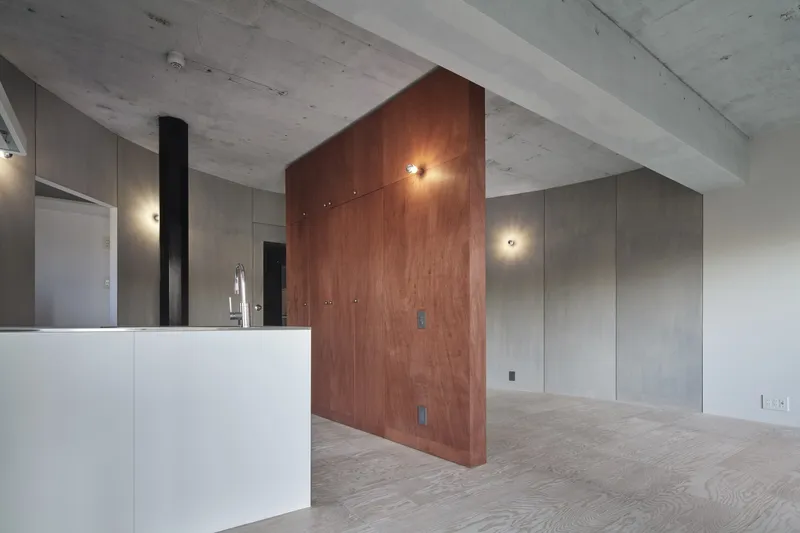
Inside the LDK, carefully designed elements contribute to a strong spatial identity. A white, box-shaped kitchen, wedge-shaped shelves, and octagonal columns hiding plumbing fixtures introduce visual intensity and functional innovation. The wedge-shaped shelves, mounted on castors, allow inhabitants to adapt the space for multiple uses, from work to studio activities, reflecting contemporary lifestyles.
Dynamic Interaction Between Private and Shared Spaces
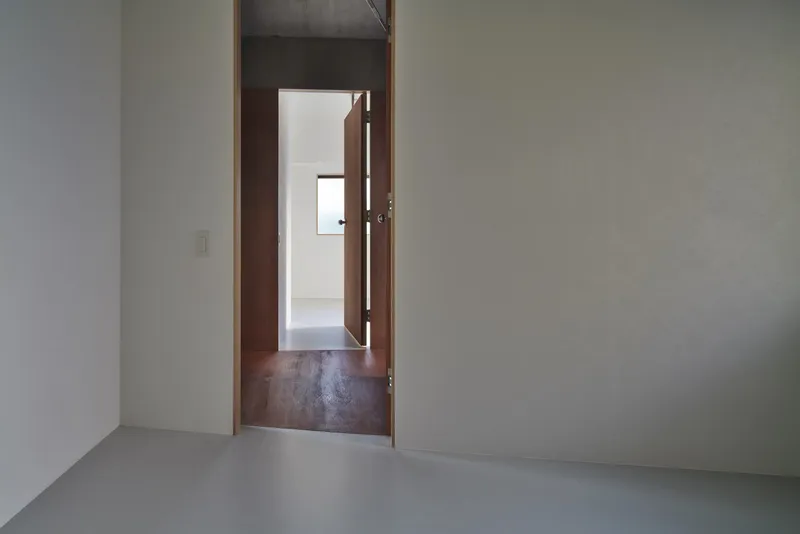
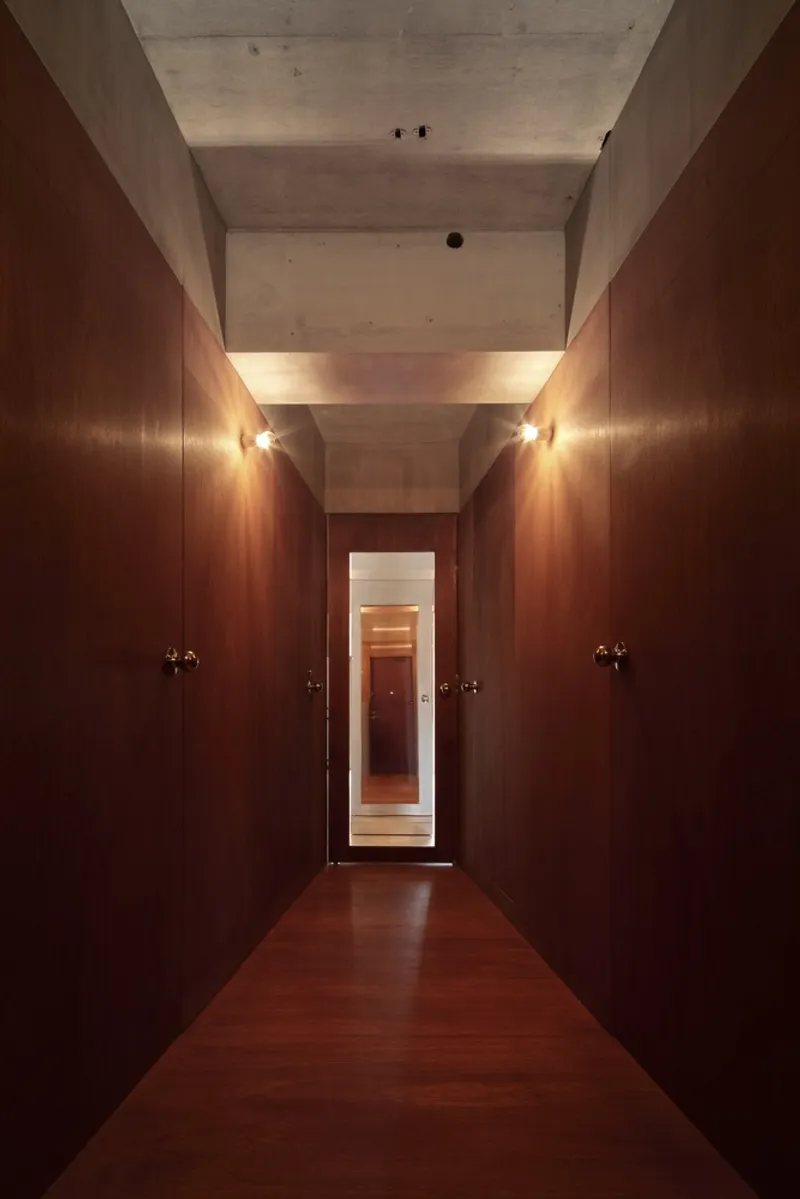
The apartment retains a corridor, individual bedrooms, and one LDK, but the interplay between elliptical expansion and wedge-shaped corridor elements differentiates it from generic apartments. The entrance opens into a private zone separated from communal areas, featuring red plywood flooring and walls, which contrast with bright white private rooms.
A strategically placed mirror in the LDK visually connects the entrance and guides the eye through the elliptical space, enhancing the sense of depth. By expanding the LDK and creatively interpreting market principles, ULTRA STUDIO has reinvented the traditional nLDK format, demonstrating that adherence to typology can coexist with architectural innovation.
Architectural Significance
The nLDKX Apartment exemplifies how Japanese residential design can evolve within standardized frameworks, offering flexibility, visual intensity, and adaptability. It balances the requirements of the real estate market with contemporary spatial practices, creating an apartment that is both functional and architecturally expressive.
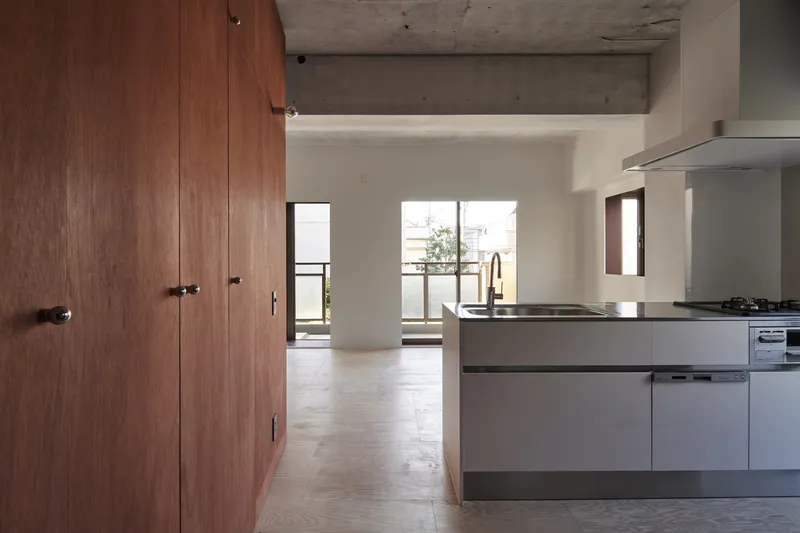
All photographs are works of Tomoyuki Kusunose


Popular Articles
Popular articles from the community


Singing Woman: An Opera House That Performs Before the Curtain Rises
Ovidiu Cristian Pavel's conceptual opera house translates Estonia's choral identity into a sculpted waterfront landmark facing the Baltic Sea.

Temporary Home for Dogs: A Reversed Zoo Rethinks Animal Shelter Architecture
In Bucharest, a sinuous corridor and freed landscape flip the logic of containment, designing a shelter that works to make itself unnecessary.

Tsunami Convergenics: Turning Catastrophic Ocean Forces into Underwater Housing Infrastructure
A speculative underwater settlement off the coast of Onagawa, Japan, treats tsunamis and typhoons as energy sources rather than threats.

Manzana Morphosis: Stretching Barcelona's Grid into a Living Landscape for 2050
A radical reworking of the Eixample manzana turns density into a tool for generous public space, vertical ecology, and environmental performance.

Similar Reads
You might also enjoy these articles


Hodi-Mandai Geram
Project Function: Preservation and revitalization of the Intangible heritage and socio-spatial identity of the Hodi by Housing, Cultural Memory Center, Sacred Grove, landscape, local tourism economy


Olio Towers: A Mid-Rise for Performers That Fuses Housing, Rehearsal, and Stage
Located blocks from Houston's Theater District, this modular tower stacks living units around a central performance atrium.

Oasis: Modular Green Housing Carved into Dhaka's Urban Fabric
A shortlisted Plugin Housing entry reclaims unauthorized settlements in Dhaka with stepped concrete volumes, green roofs, and ventilation-driven design.

Black Hole: A Floating Megastructure for the Post-Physical Era
Emiliano Mazzarotto envisions a spherical, self-scaling arena where e-sports, digital hotels, and holographic stadiums replace traditional public space.

Explore Interior Design Competitions
Discover active competitions in this discipline

Challenge to design luxury tourism on rails

Challenge to reimagine the Iron Throne

Photograph architecture without architects

VR headsets Storefront design competition
Comments (0)
Please login or sign up to add comments
No comments yet. Be the first to comment!