
TCTC Converts a Seoul Office Building into a Studio Where Every Detail Is a Prop
NONSCALED Studio Space in Mapo-gu layers café, gallery, and filming studio into 142 square meters of controlled light and quiet materiality.

Most rental filming studios promise neutrality: white walls, diffused light, a blank canvas. TCTC's NONSCALED Studio Space in Mapo-gu, Seoul, takes a different position. Occupying 142 square meters inside the Academy Science Seoul office building, the project stacks a café across two floors beneath a third-floor gallery, then threads a filming studio through the whole arrangement. The result is a space where neutrality is not absence but accumulation, where every surface, fixture, and object has been calibrated to double as a backdrop.
What makes the project worth studying is how deliberately it collapses the boundary between set design and architecture. Instead of stripping a room bare so photographers can project their own vision onto it, TCTC fills the space with specific, characterful elements: a suspended plywood column, a wire-rope wardrobe frame, a rolling kitchen island. The bet is that specificity, handled with restraint, gives creatives more to work with than emptiness ever could.
Light as Material
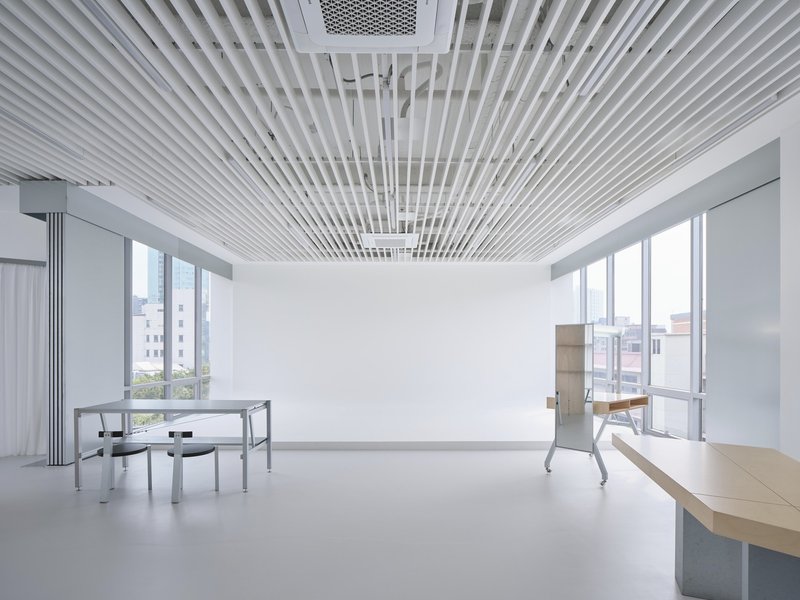
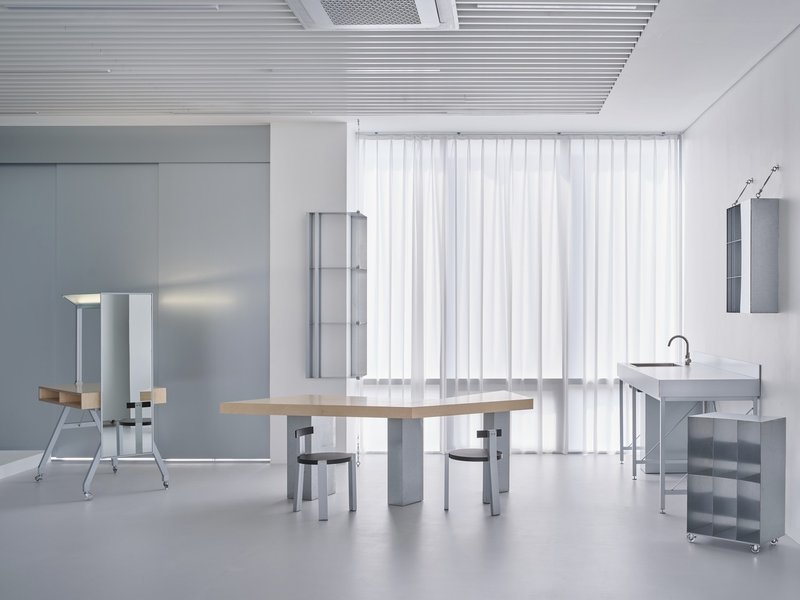
Metal sliding doors run along both sides of the studio's horizontal volume, turning natural light into an adjustable variable rather than a fixed condition. Photographers can open or close the panels to sculpt daylight across the grey floor, shifting from full wash to a raking sidelight in seconds. Floor-to-ceiling sheer curtains add a second filter, softening direct sun into a luminous haze that wraps evenly around objects and bodies.
The white slatted ceiling amplifies this strategy. It bounces light downward while breaking it into fine parallel lines, lending a quiet rhythm to overhead surfaces that reads well on camera without competing for attention. Combined with the full-height glazing overlooking neighboring buildings, the ceiling ensures that even on overcast days the interior holds a consistent, workable glow.
Objects That Perform Double Duty
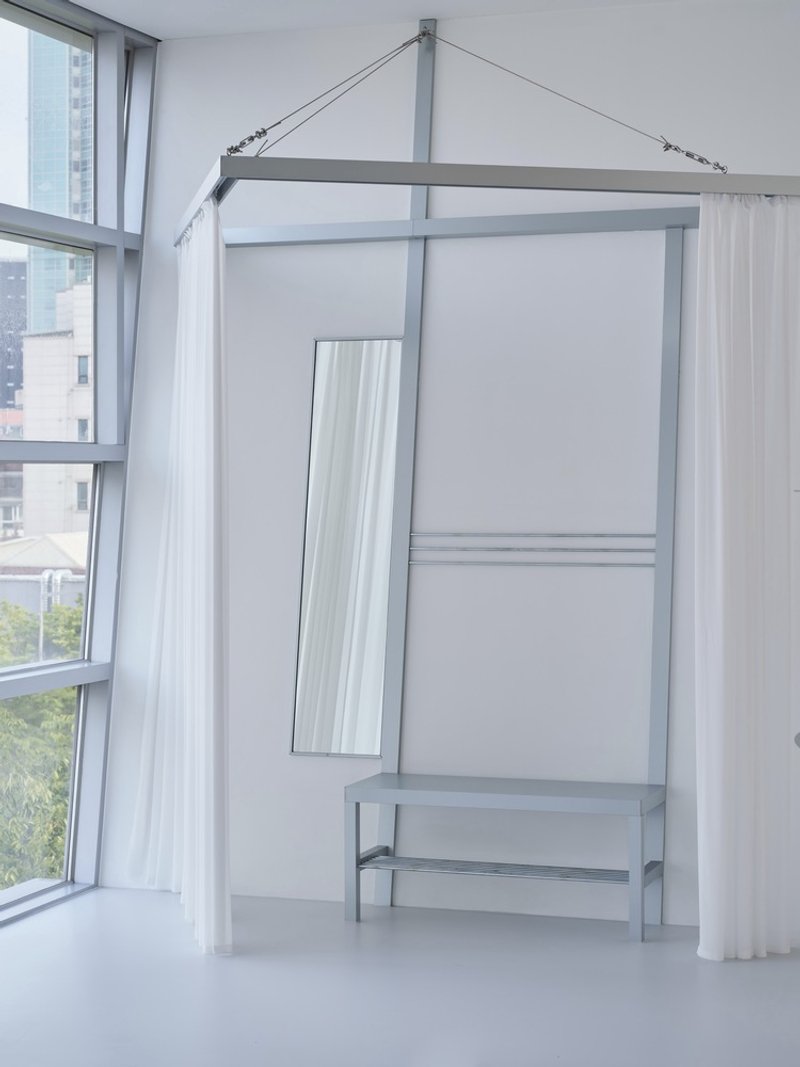
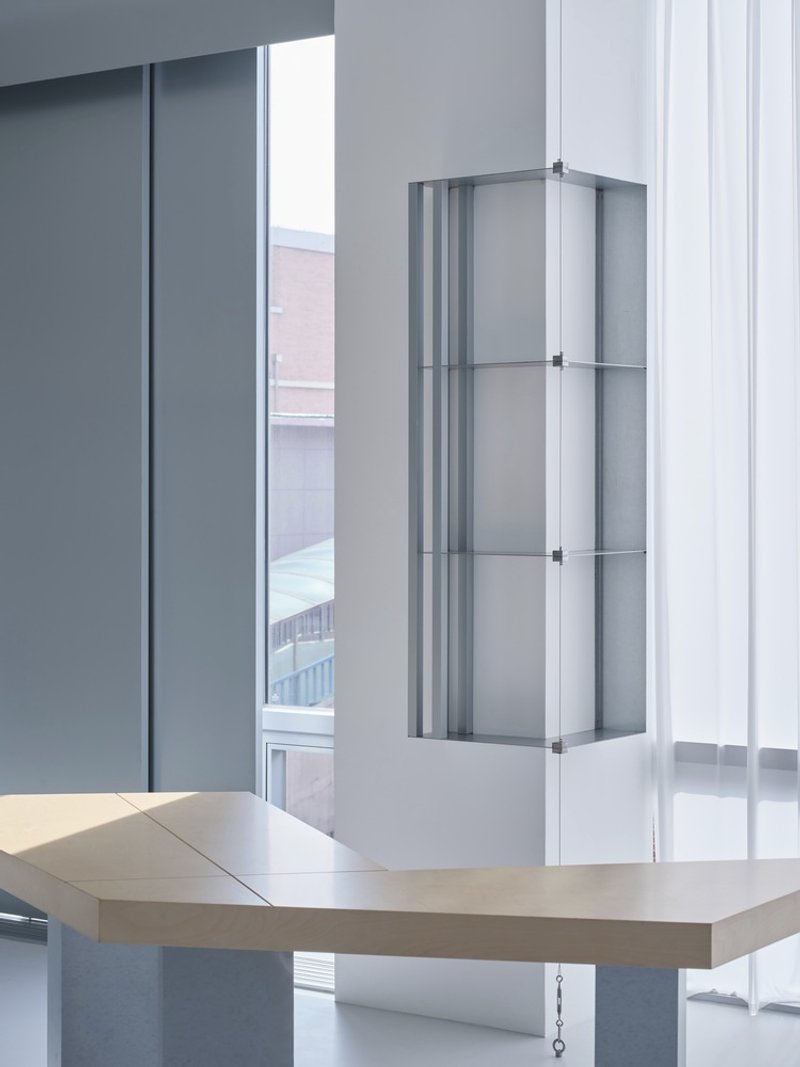
A metal-frame wardrobe structure sits beside a window, functioning as both a real storage piece and a set piece. Its open geometry, mirrored panel, and minimal bench invite a dozen staging scenarios without needing to be moved. Nearby, a suspended glass display cabinet flanks a folded plywood table edge and grey sliding panels, creating a composition that reads as gallery installation and functional shelving simultaneously.
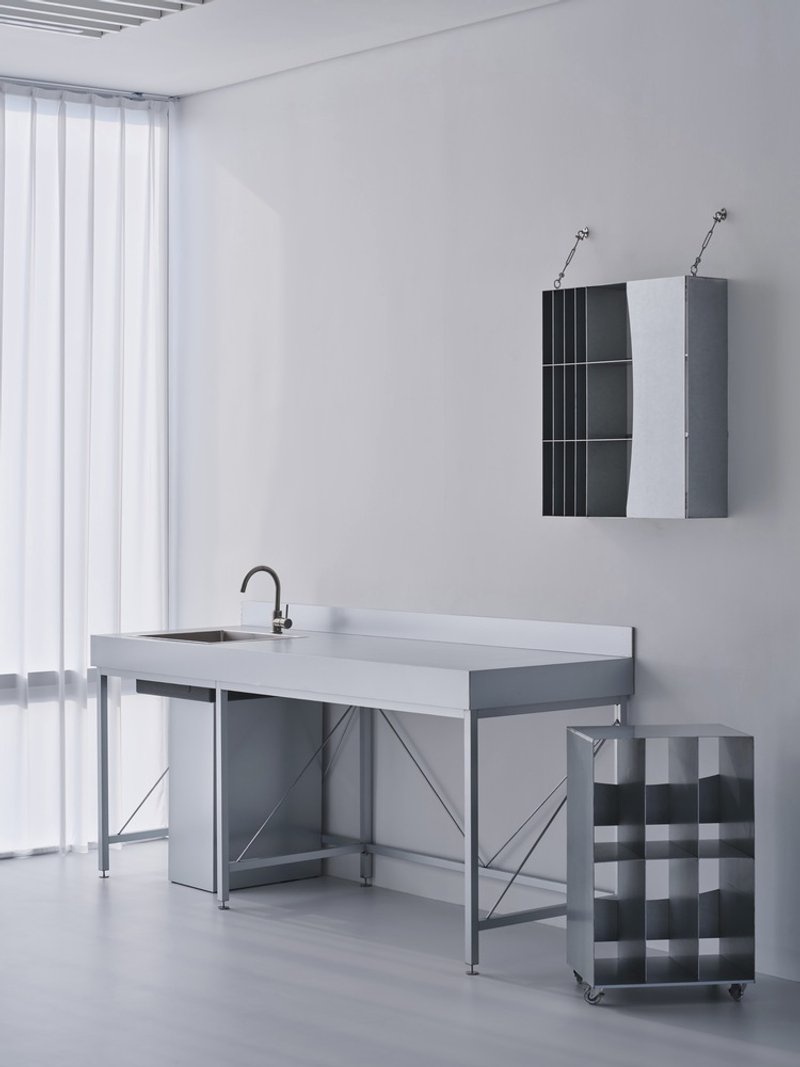
The kitchen corner follows the same logic. A white countertop island on casters can roll into frame or out of it, while wall-mounted cabinetry keeps the backdrop clean. Nothing is purely decorative, nothing is purely utilitarian. TCTC has designed a collection of furniture-scale architectures that give filmmakers and photographers ready-made vignettes without locking the room into a single mood.
Structural Accents and Vertical Circulation
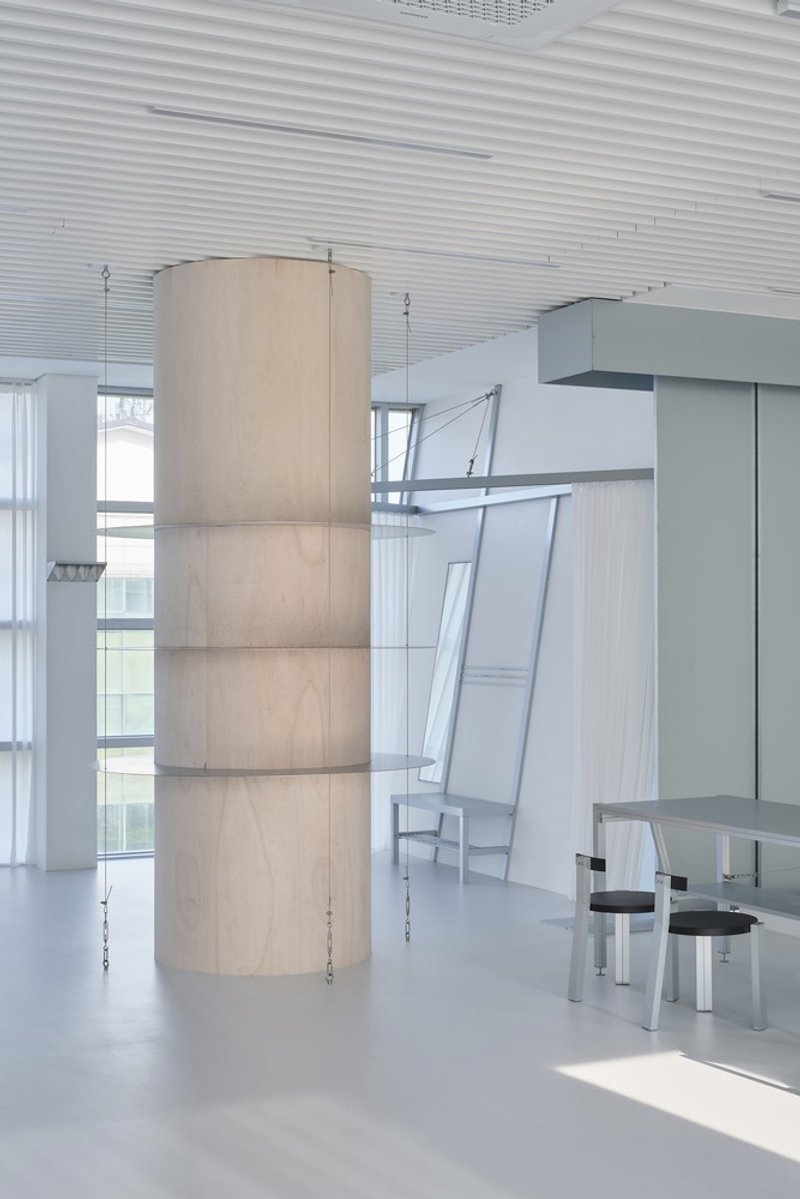
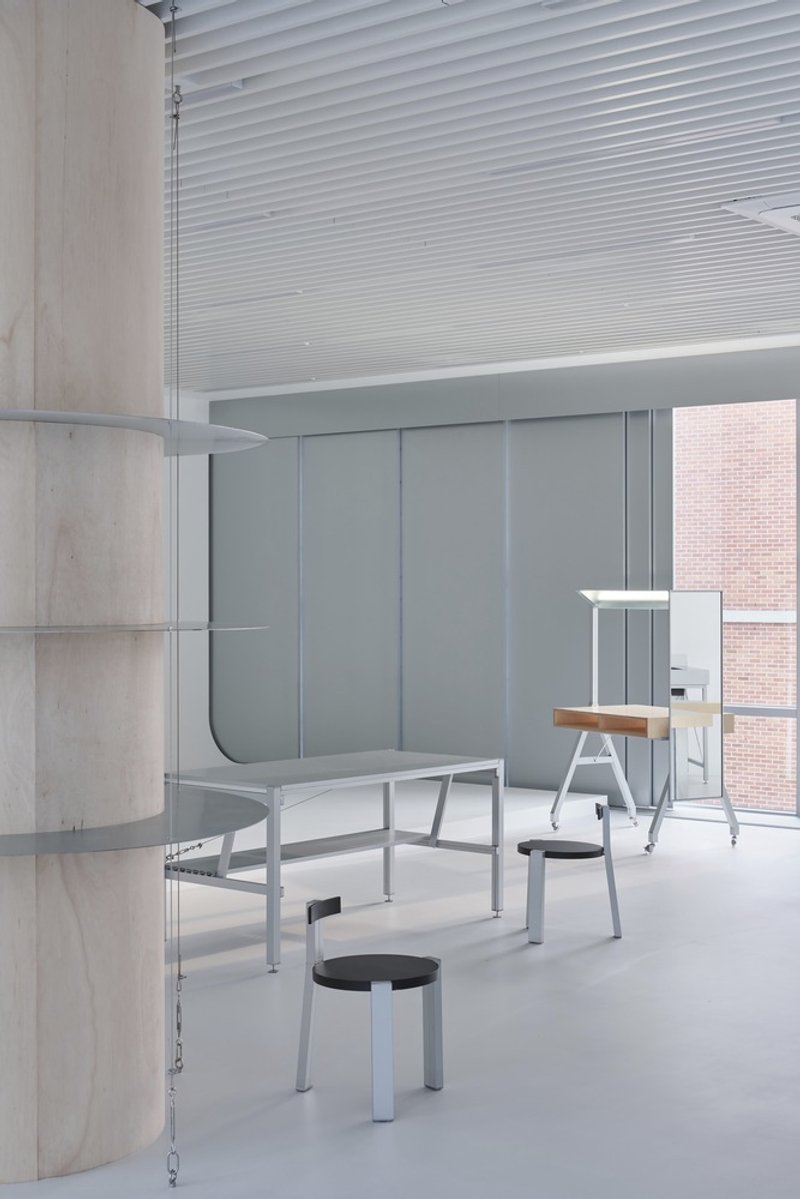
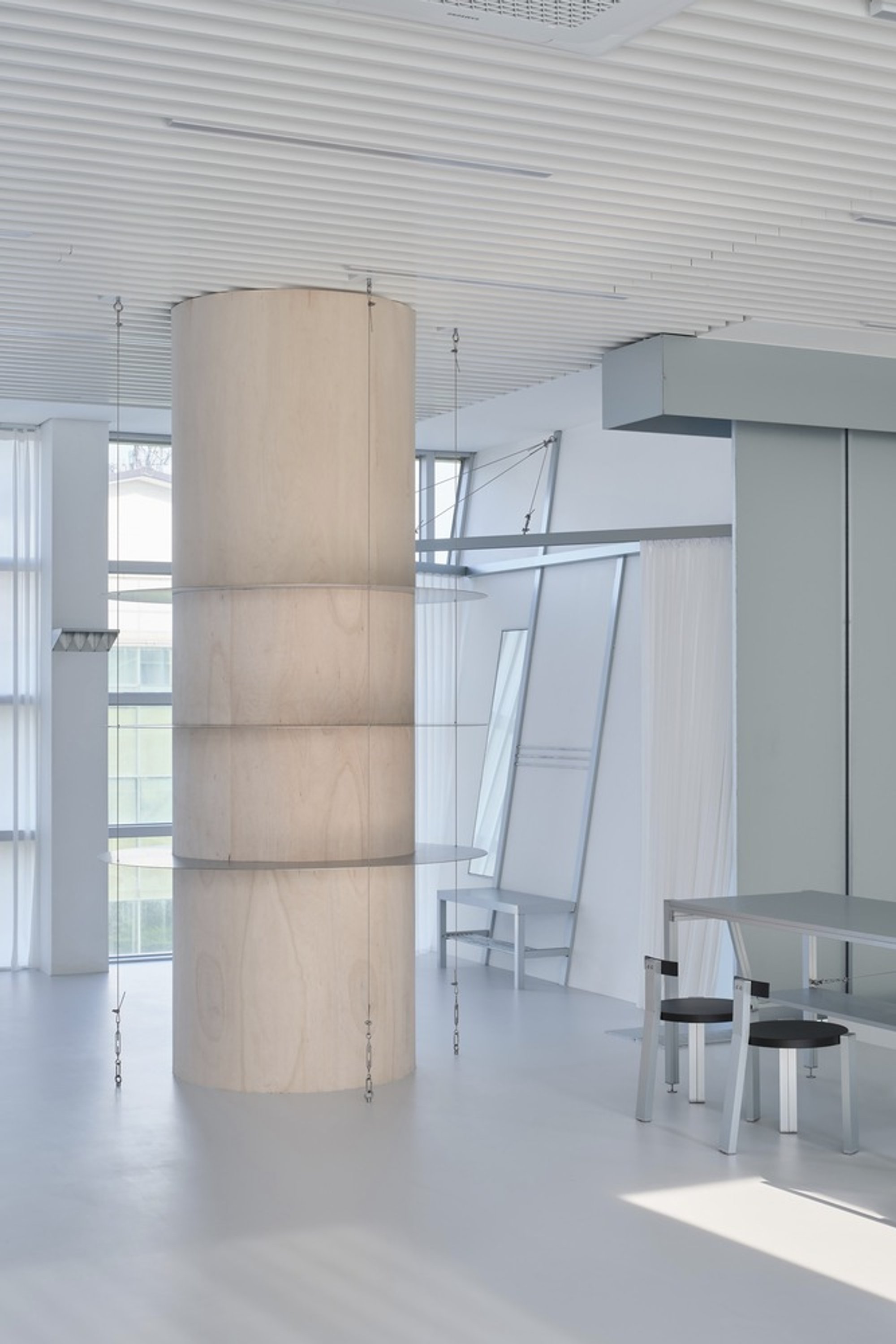
The most striking moment is a cylindrical plywood column suspended from the slatted ceiling beside an angled metal staircase. It is an improbable object: a column that does not touch the ground, reading as both structural gesture and sculptural installation. Whether it conceals services or exists purely as a compositional anchor, it signals that the space is operating on a register beyond the practical.
The staircase itself connects the café levels to the gallery above, its dark metal treads and slender handrails providing a deliberate contrast against the pale plywood and white finishes. A long bench table with stools sits beneath the slatted ceiling on the café level, grounding the social program in a restrained industrial palette of grey partitions and warm timber. The transition from communal seating to filming stage happens without a threshold, reinforcing the idea that the entire building is one continuous, shoot-ready environment.
Material Restraint, Not Minimalism
Calling NONSCALED minimalist would misread the project. Minimalism subtracts; TCTC selects. The palette is narrow: plywood, grey metal, white surfaces, sheer fabric. But within that range the textures multiply. Timber grain on a table edge sits next to the smooth face of a sink unit. A rolling storage cart's perforated metal contrasts with the matte white of a kitchen island. The effect is a space that photographs as calm but reveals material richness on closer inspection.
That distinction matters for a studio intended to host diverse creative work. A truly minimal room offers one note; this room offers several, each subtle enough to recede behind whatever a photographer places in the foreground. It is architecture performing as accompaniment rather than solo.
Why This Project Matters
NONSCALED Studio Space makes a persuasive case that the best creative infrastructure is not empty but carefully furnished. By treating every architectural element as a potential prop, TCTC dissolves the conventional separation between the space you work in and the space you photograph. The sliding doors that control daylight, the suspended column that punctuates the frame, the rolling island that repositions a scene: each is a design decision that expands what a 142-square-meter room can produce.
For a discipline that often equates flexibility with blankness, the project offers a useful correction. Flexibility can also come from density of detail, from objects that invite reinterpretation rather than demand removal. In a city like Seoul, where small commercial spaces must justify every square meter, that philosophy turns a modest office conversion into a genuinely multivalent cultural venue.
NONSCALED Studio Space by TCTC. Located in Mapo-gu, Seoul, South Korea. 142 m². Photography by Kim Donggyu.
About the Studio
Share Your Own Work on uni.xyz
If projects like this are the kind of work you want to make, uni.xyz is a place to publish your own, find collaborators, and enter design competitions.



Popular Articles
Popular articles from the community

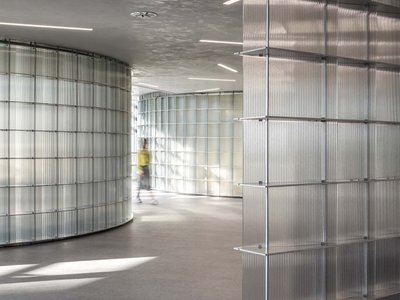
HCCH Studio Wraps a Shanghai High-Rise Office in Curved Walls of Translucent Glass
A 1,000 square meter fit-out in Lujiazui replaces the typical tech-office palette with layered glass, micro-cement, and quiet rigor.
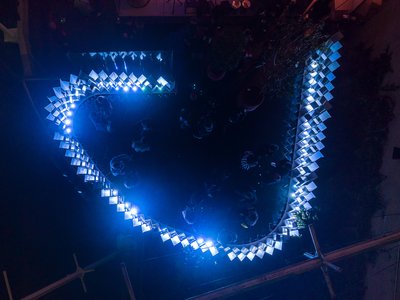
Rojkind Arquitectos and Think Parametric Build a Glueless Pavilion from 67 Interlocking Panels
A serpentine fiber-cement installation in Chapultepec Park celebrates a decade of architectural media in Mexico City.
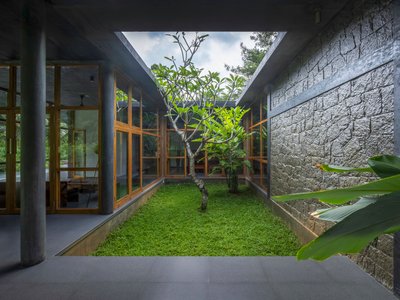
3dor Concepts Wraps a Kerala Home in Mirrored Concrete Arcs Around a Courtyard Tree
In the Western Ghats foothills of Thamarassery, a 270 m² single-story house uses two curved volumes to frame nature as its center.
Fausto Terán and Toro Fuse Japanese Craft with Mexican Tradition in a Lakeside Retreat
Nakamura House pairs Shou-Sugi-Ban charred pine with handmade clay tile at the foot of Atlangatepec Lagoon in Mexico.

Similar Reads
You might also enjoy these articles

Olio Towers: A Mid-Rise for Performers That Fuses Housing, Rehearsal, and Stage
Located blocks from Houston's Theater District, this modular tower stacks living units around a central performance atrium.
Oasis: Modular Green Housing Carved into Dhaka's Urban Fabric
A shortlisted Plugin Housing entry reclaims unauthorized settlements in Dhaka with stepped concrete volumes, green roofs, and ventilation-driven design.

Black Hole: A Floating Megastructure for the Post-Physical Era
Emiliano Mazzarotto envisions a spherical, self-scaling arena where e-sports, digital hotels, and holographic stadiums replace traditional public space.
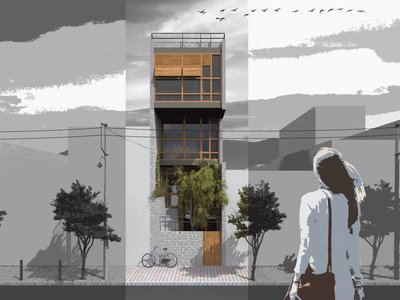
Compact & Sustainable Living in Piraeus: A Four-Level Family Home Built Around Light and Air
A narrow townhouse in one of Greece's densest port cities uses a central atrium and passive strategies to house three generations under one roof.

Explore Architecture Competitions
Discover active competitions in this discipline




The International Standard for Design Portfolios


The Global Benchmark for Architecture Dissertation Awards


The Global Benchmark for Graduation Excellence


Challenge to reimagine the Iron Throne
Comments (0)
Please login or sign up to add comments
No comments yet. Be the first to comment!