
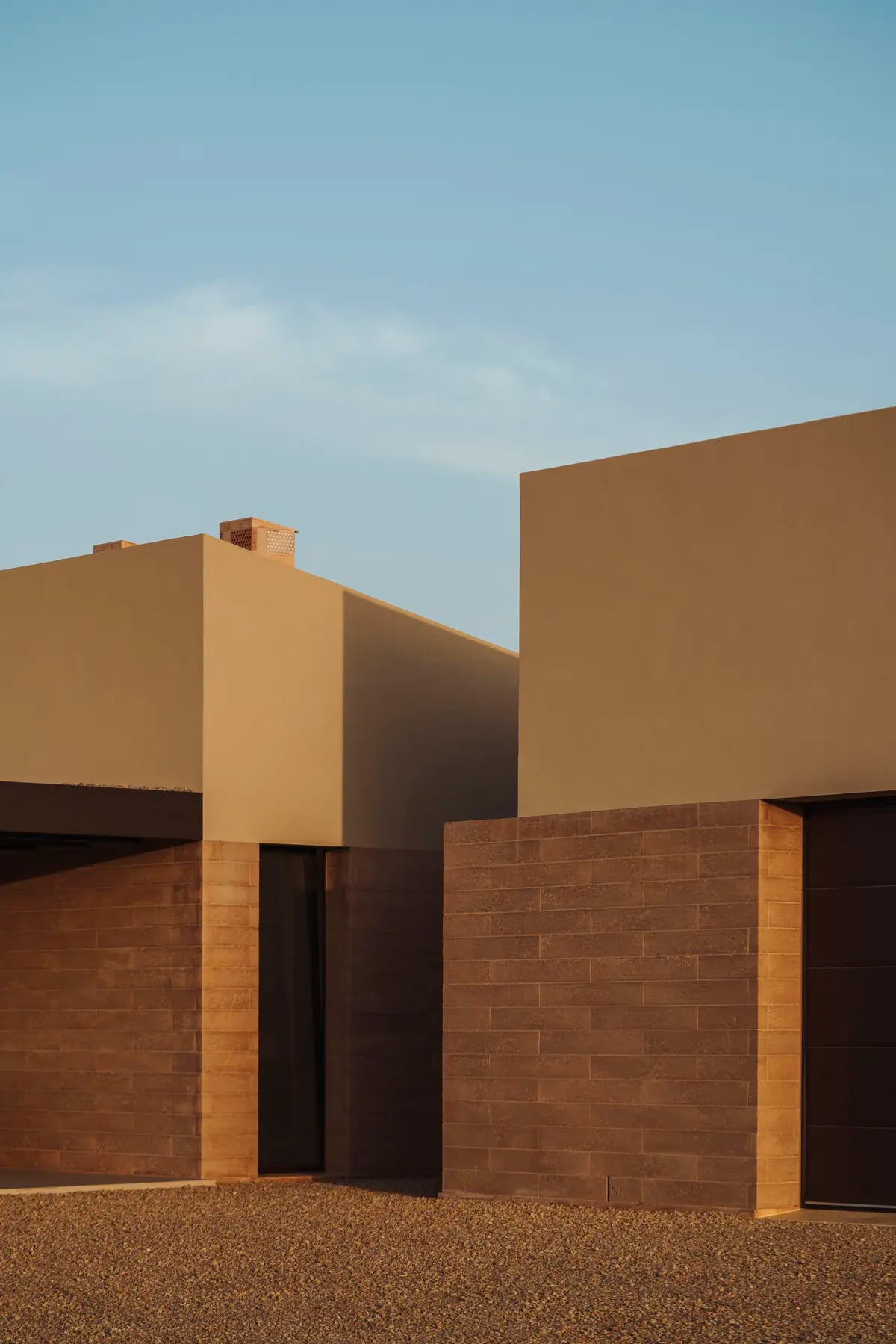
NØRA Studio Builds a Wind-Catching Cruciform House from Earth Blocks on Rural Mallorca
Vents House in Sa Pobla orients two crossed volumes at 45 degrees to channel the island's daytime and nighttime breezes through every room.


Most houses in the Mallorcan countryside play it safe: stone walls, shuttered windows, a courtyard. Vents House, designed by NØRA studio for a family in Sa Pobla, starts from the same regional vocabulary but pushes it into genuinely strange territory. Two bar-shaped volumes collide in a cruciform plan, rotated 45 degrees off north so that the island's prevailing winds, the daytime "embat" and the nighttime "terral," funnel through interiors without mechanical help. The name says it all: "vents" is Catalan for winds, and the entire house is engineered around airflow before anything else.
What makes the project worth studying isn't just the passive cooling trick. It's the way NØRA treats material expression as climate logic. The lower portions of the facade are built with Tapialblock, a precast earthen block made from earth and lime that is fully recyclable. Above, ochre stucco lightens the massing. Gravel courts, sandstone pavers, and steel pergolas manage solar gain at the thresholds. Every surface does thermodynamic work. The result is a 310 square meter house that feels rooted in the flat agricultural landscape below the Serra de Tramuntana while operating on principles most local builders would not recognize.
Two Crosses on a Flat Field

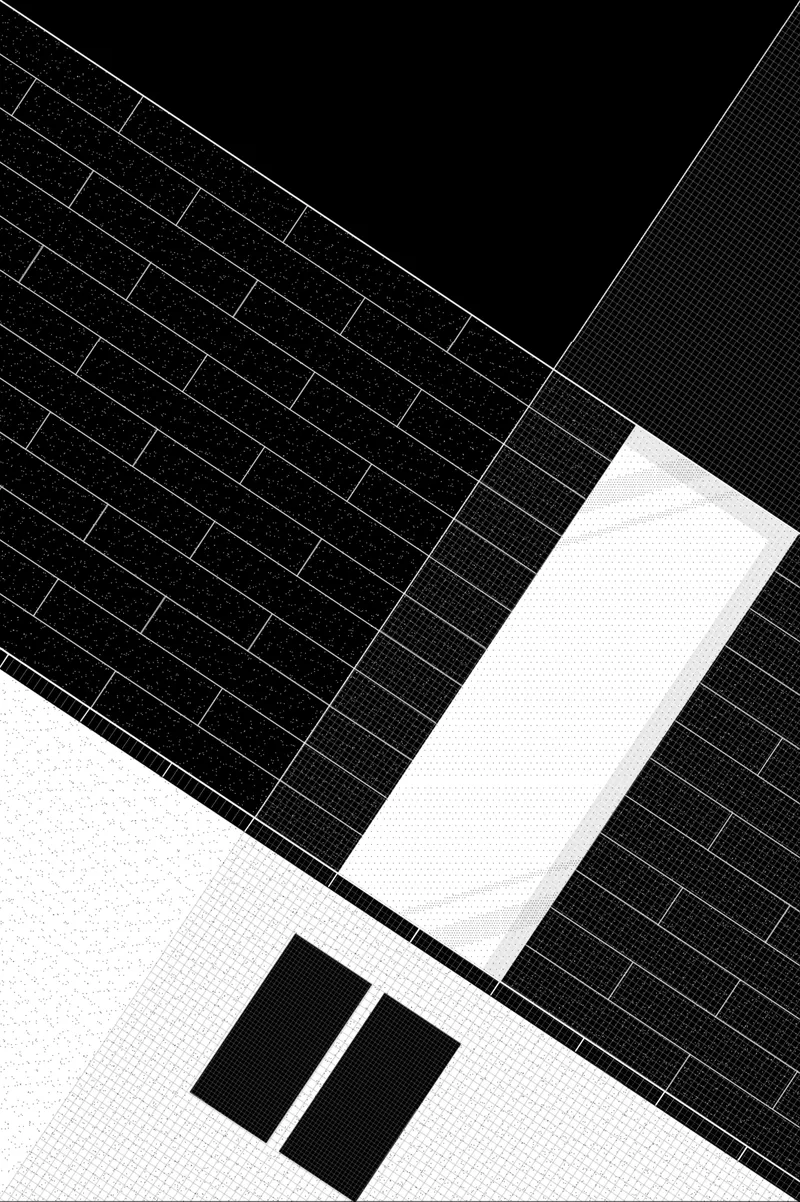

From above, the building reads as a pinwheel: two elongated volumes intersecting at their midpoints, generating four wings that radiate outward into the landscape. Day zones sit at the central intersection, directly connected to the pool terrace and outdoor living areas. Night zones occupy the peripheral wings. The geometry is emphatic, almost diagrammatic, but the 45-degree rotation keeps it from feeling rigid. Instead, each wing captures a different slice of the horizon, framing views toward the mountains or the agricultural plain depending on which room you stand in.
The cruciform plan also produces the project's most useful byproduct: four corner courtyards. These outdoor rooms break the building's strong geometry and create sheltered microclimates at every quadrant. Gravel surfaces absorb less heat than paving, and the rammed earth walls radiate stored warmth slowly after dark, moderating temperature swings in a climate where summer days routinely exceed 35 degrees Celsius.
Earth and Lime at the Base


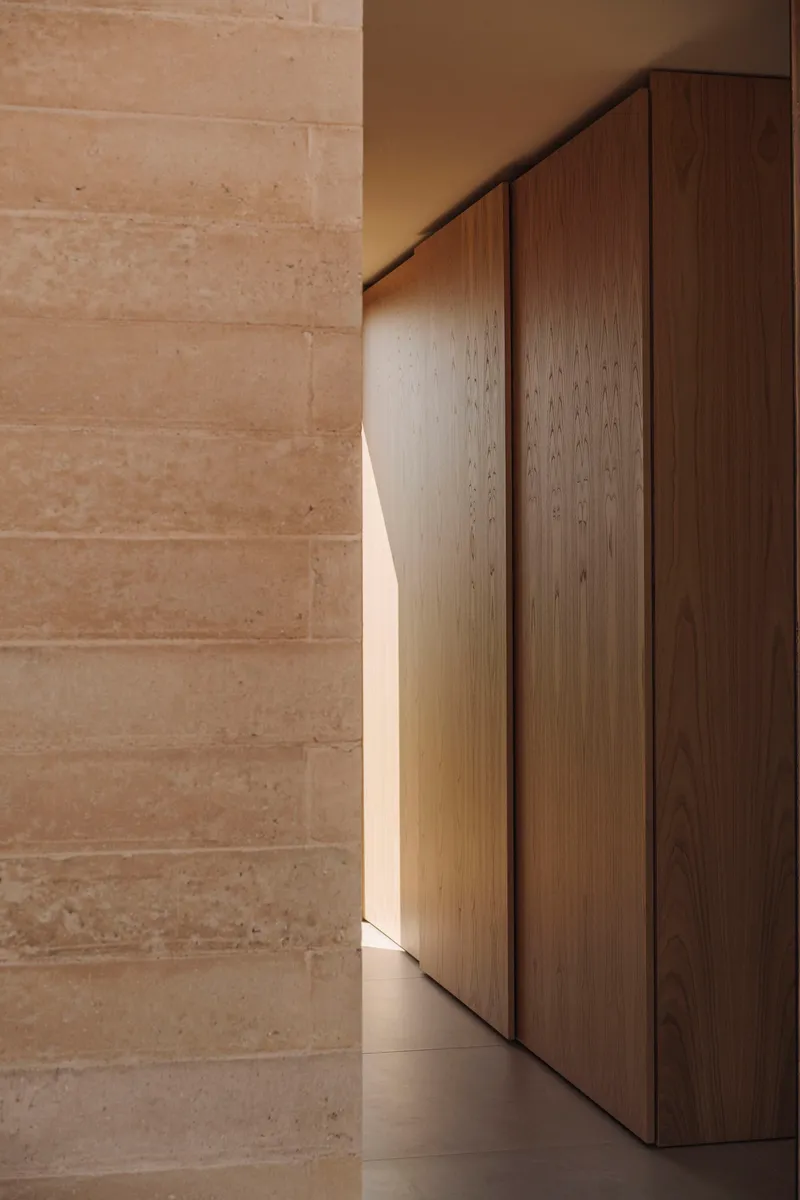
The material palette is deliberately hierarchical. At ground level, Tapialblock walls, each unit measuring 8 by 100 by 15 centimeters, establish a hefty, striated base that reads like compressed earth but performs like precision masonry. The blocks are a product called Fetdeterra, made entirely from earth and lime with no cement, positioning the house's most structurally exposed surfaces as its most sustainable ones. Up close, the layered texture of the blocks is quietly spectacular, each course recording a slightly different mineral tone pulled from local soil.
Where the rammed earth meets other materials, ceramics serve as a linking element, providing a clean joint between the earthen base and the lighter stucco volumes above. Sandstone appears at outdoor thresholds and high-traffic surfaces where durability matters. The overall color story, ochre and sand and warm grey, locks the house into the predominant tones of Sa Pobla's rural landscape so convincingly that the building looks like it grew rather than was built.
Thresholds and Courtyards
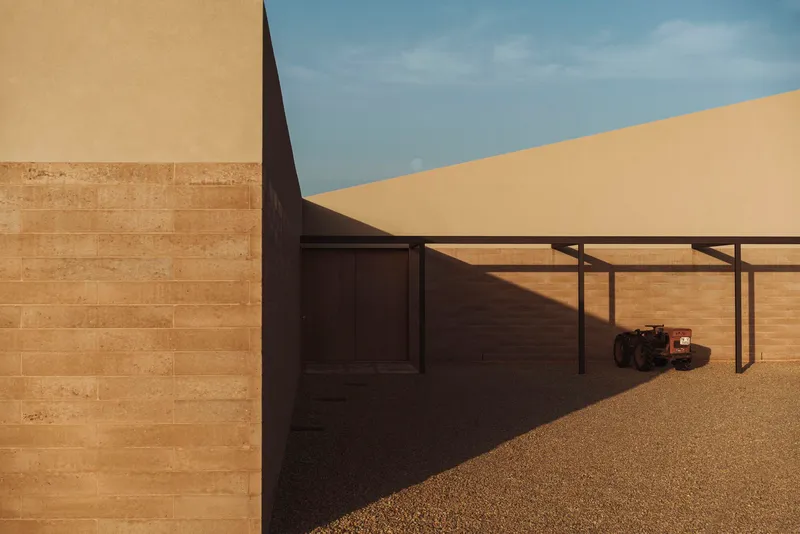

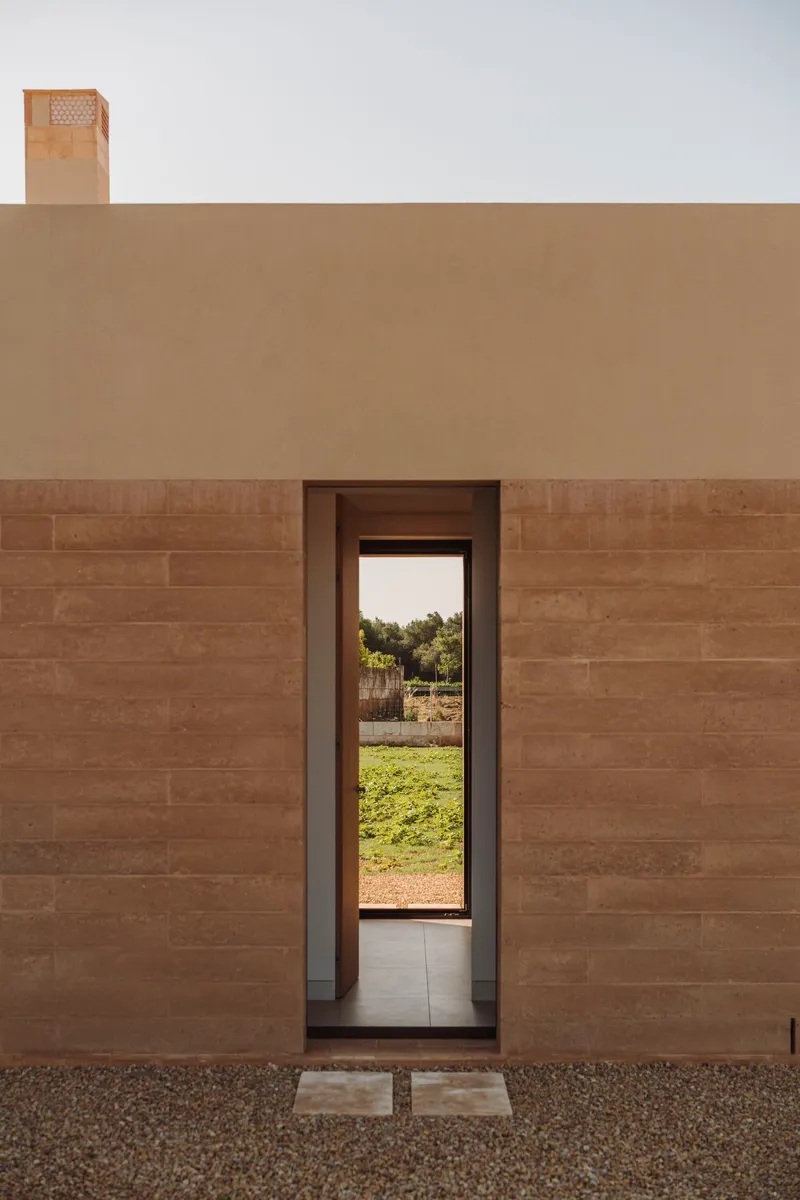
The transitions between inside and outside are where this house works hardest. A steel pergola throws linear shadows across a gravel courtyard, modulating sunlight before it reaches the rammed earth wall beyond. Tall, narrow doorways frame views through multiple layers: courtyard, lawn, landscape. The effect is cinematic, each opening calibrated to compress or expand depth depending on your position.
The entry sequence is handled with restraint. A steel-framed portal with a timber door sits within the courtyard walls, catching afternoon light at an angle that makes the metal glow against the earth. There is no grand gesture, no cantilevered canopy. You arrive into a courtyard, orient yourself, and then choose a direction. The cruciform plan means you are never more than a few steps from an outdoor room, and the gravel underfoot signals that you have not fully left the exterior even when walls surround you.
Interior Warmth in Wood and Light

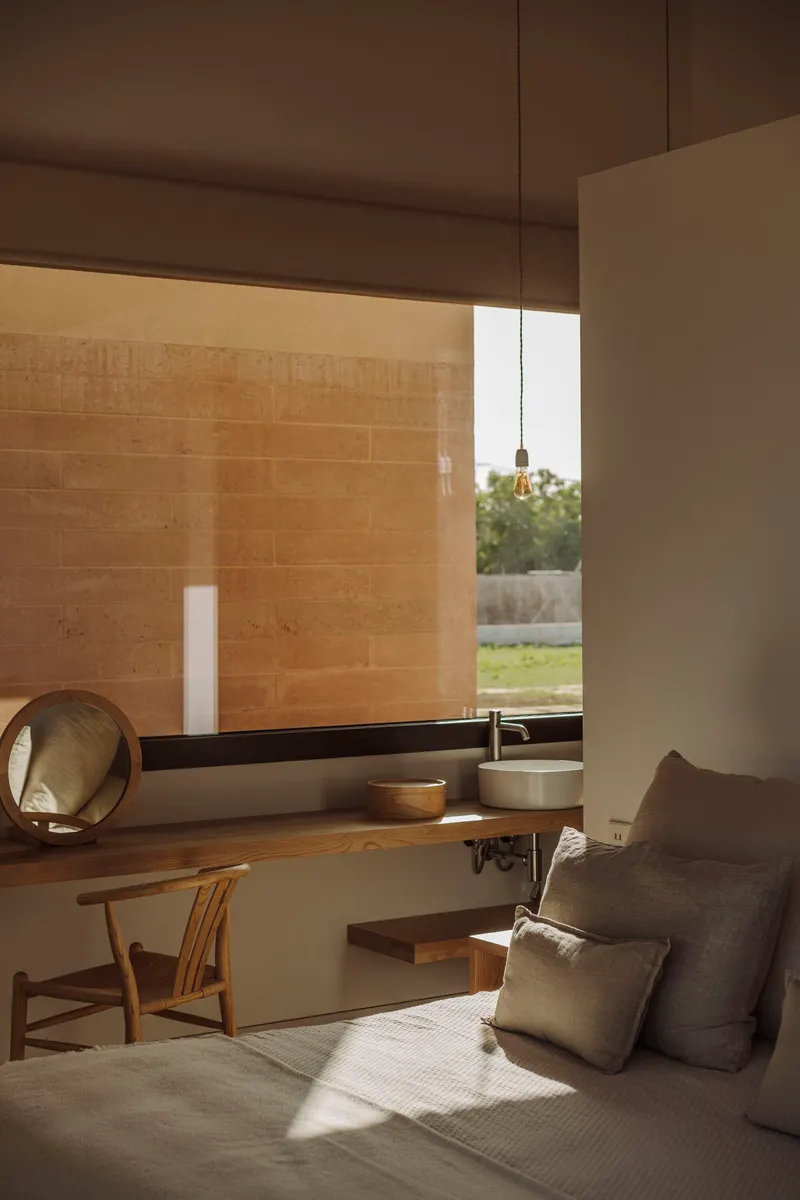

Inside, wood takes over as the dominant material. Exposed timber ceiling beams run the length of the main living space, their pale grain contrasting with the earthy walls visible through clerestory windows. A kitchen island anchors the open-plan day area, lit by woven pendant fixtures that soften the otherwise clean geometry. Light tones on walls and floors keep the interiors airy despite the thermal mass working at the building's perimeter.
A floating timber staircase with open risers rises in a white hallway, its detailing precise enough to read as furniture. The clerestory in the living area is a smart move: a horizontal slot window at the top of the wall frames a strip of rammed earth on the exterior, turning construction material into a landscape element seen from the sofa. It is a small detail, but it reveals how carefully the architects choreographed sightlines between interior finishes and the earthen envelope outside.
Carport, Pool, and the Peripheral Moments
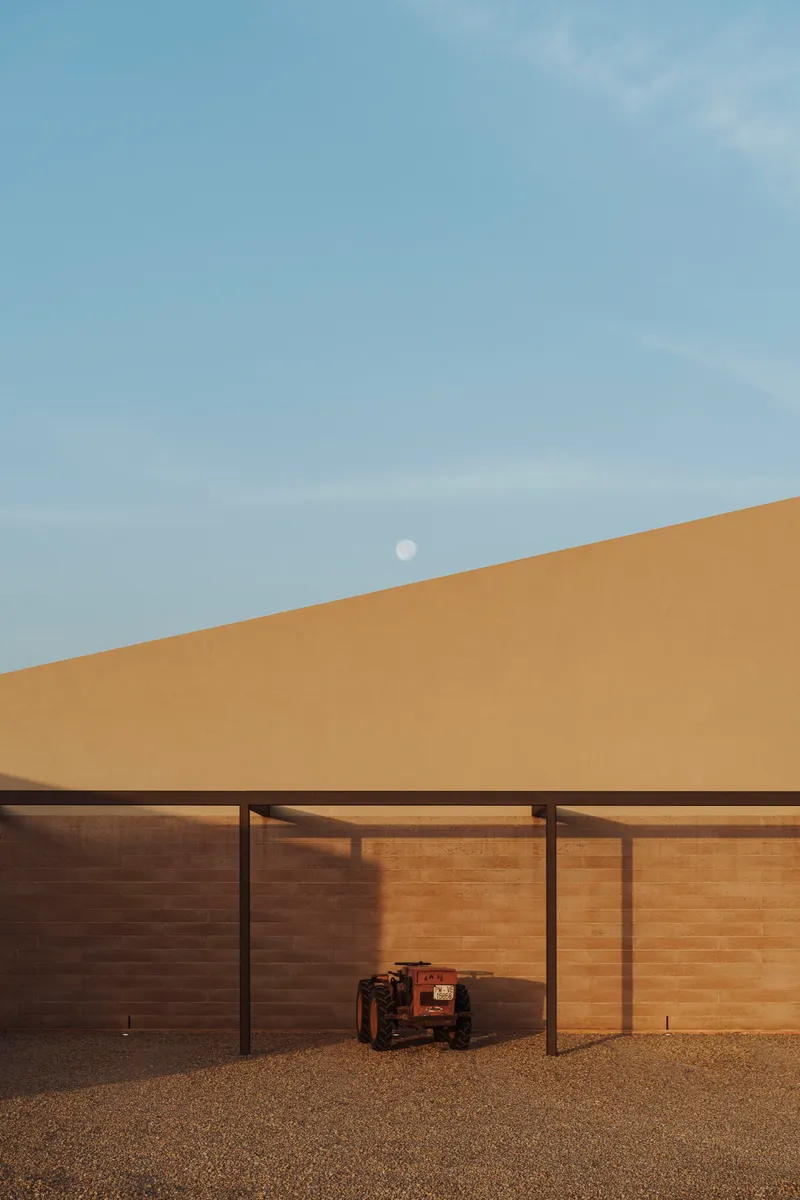

The carport at the edge of the composition is almost too elegant for its function. Slender steel columns support a roof screened with timber panels, and an image captured beneath a fading moon gives it the quality of a pavilion rather than a parking structure. The pool, rectilinear and flush with the lawn, extends the living space outward from the central intersection, reinforcing the cruciform geometry at landscape scale.
Even the bathroom participates in the indoor-outdoor dialogue. A black-framed glass door opens directly onto a gravel terrace and the green field beyond, dissolving the boundary between the most private room in the house and the agricultural landscape. It is a confident gesture, only possible because the building's orientation and wing arrangement guarantee privacy without fences or hedges.
Plans and Drawings
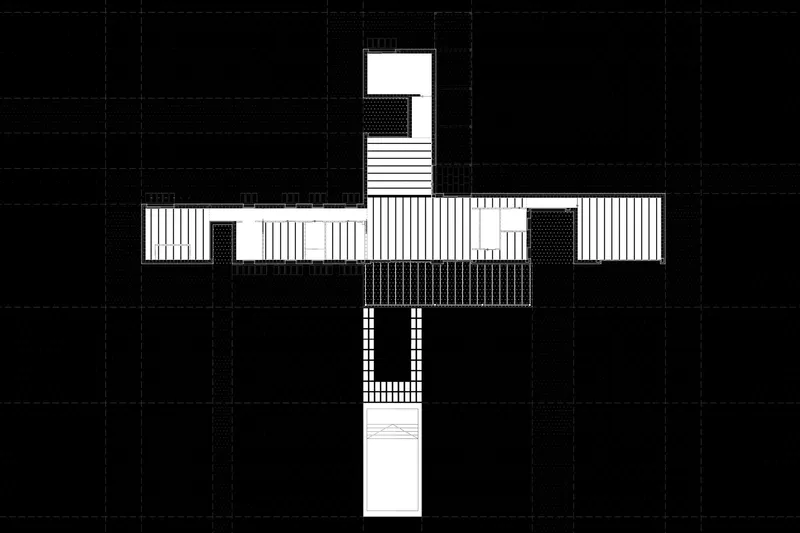

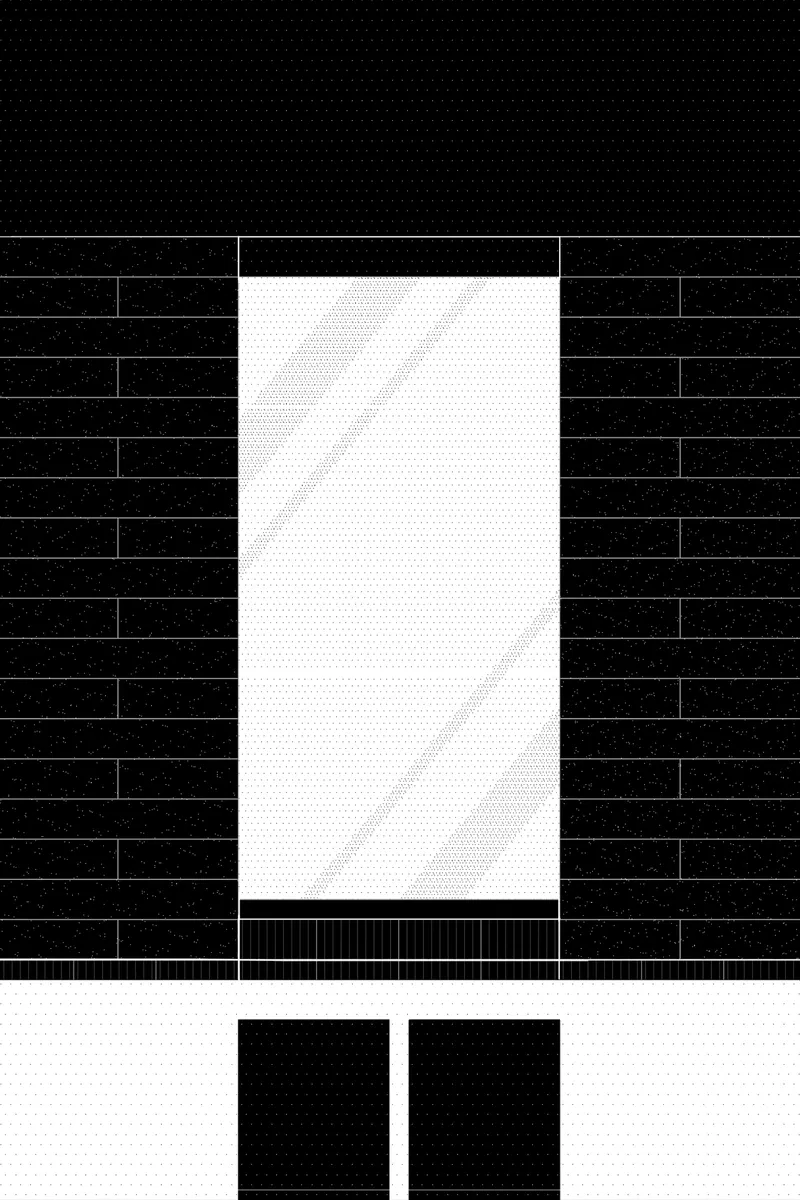


The floor plan confirms what the photographs suggest: a clean cruciform with a vertical tower element and linear wings extending in four directions. The site plan reveals the 45-degree rotation relative to the surrounding road network, a deliberate misalignment that optimizes solar exposure and wind capture rather than conforming to property boundaries. Axonometric drawings expose the staircase as a vertical hinge between levels, with patterned screening and volumetric voids carved into the cross geometry. The elevation drawing shows the Tapialblock courses wrapping the base continuously, giving the house a unified datum line that reads as a geological stratum.
Why This Project Matters
Vents House is an argument that climate-responsive architecture does not have to look didactic or austere. The passive cooling strategy, rotating a plan to catch prevailing winds, is as old as Mediterranean building culture itself. What NØRA studio adds is material specificity: choosing a fully recyclable earthen block system over conventional concrete masonry, and then letting that choice drive the entire visual identity of the house. The result is a building where sustainability and aesthetics are not separate conversations.
More broadly, the project demonstrates that rural residential architecture can be inventive without being alien. The sloping roofs, earthy tones, and courtyard typology all descend from Mallorcan tradition, but the cruciform plan and the rotated orientation push those traditions past their usual limits. In an era when too many countryside houses default to either nostalgic pastiche or imported minimalism, Vents House occupies a productive middle ground: specific to its climate, honest about its materials, and genuinely new.
Vents House, designed by NØRA studio (lead architects Marina Munar Bonnin, Rafel Capó Quetglas, Pau del Campo Montoliu, and Luca Lliteras Roldán). Sa Pobla, Mallorca, Spain. 310 m². Completed 2022. Photography by Ricard López.
About the Studio
Share Your Own Work on uni.xyz
If projects like this are the kind of work you want to make, uni.xyz is a place to publish your own, find collaborators, and enter design competitions.


Popular Articles
Popular articles from the community


Opera on the Sea: Driftwood Logic Shapes a Timber Opera House on Estonia's Coast
Trevor Orgill's opera house translates the entangled drift of floating timber into a civic building where wood, water, and music converge.


FCC Arquitectura Expands a Portuguese Granite House with a Board-Marked Concrete Wing
In Portugal, JV House pairs a cleaned-up whitewashed and granite dwelling with a timber-shuttered concrete extension, courtyards and a garden pool.

David Ortega Stacks a Two-Story Mexico City Penthouse Around a Steel Stair and a Pergola-Shaded Roof Terrace
In Colonia Roma, a 300 m² penthouse uses oak joinery, a planted steel stair and a slatted roof pergola to make a new-build apartment feel like a house.

The Amber Palace Opera: A Geological Fiction Surfaces on Tallinn's Baltic Waterfront
Pierre Brillard reimagines a Baltic legend as a public landscape, opera house, and waterfront promenade rooted in Tallinn's coastal identity.

Similar Reads
You might also enjoy these articles

LAVA Architecten Gives Vocational Education a Sawtooth-Roofed Face on a Mechelen School Campus
In Mechelen, Belgium, a 2,053 m² STEM school on a 6×6 m grid turns workshops and classrooms into rooms that can be rearranged as teaching changes.

KEMA Studio Turns a Derelict Marvila Attic into a 60 m² Lighthouse Apartment Above Lisbon
In Lisbon's Marvila district, a rebuilt roof, four skylights and two plywood volumes turn an unlivable attic into a bright home facing the Tagus.

Pixel Gardens: One Repeated Module Stacked Into a Terraced Social Housing Tower for Famagusta
Salem Bader's shortlisted housing tower builds a vertical neighbourhood from one repeated module, offsetting units to carve terraces, light and air.

Bao Huynh Watercolor Atelier: A Serene Art Retreat in Hội An
Bao Huynh Watercolor Atelier in Hội An blends multifunctional art spaces, sustainable design, local materials, and family-friendly living in a serene environment.

Explore Light & Ventilation Competitions
Discover active competitions in this discipline

Challenge to design a barrier free sports center

Challenge to design an outdoor ice-rink and park

Challenge to design mud housing for contemporary communities
Comments (0)
Please login or sign up to add comments
No comments yet. Be the first to comment!