
NYC STAIRWAY TO BALCONIES
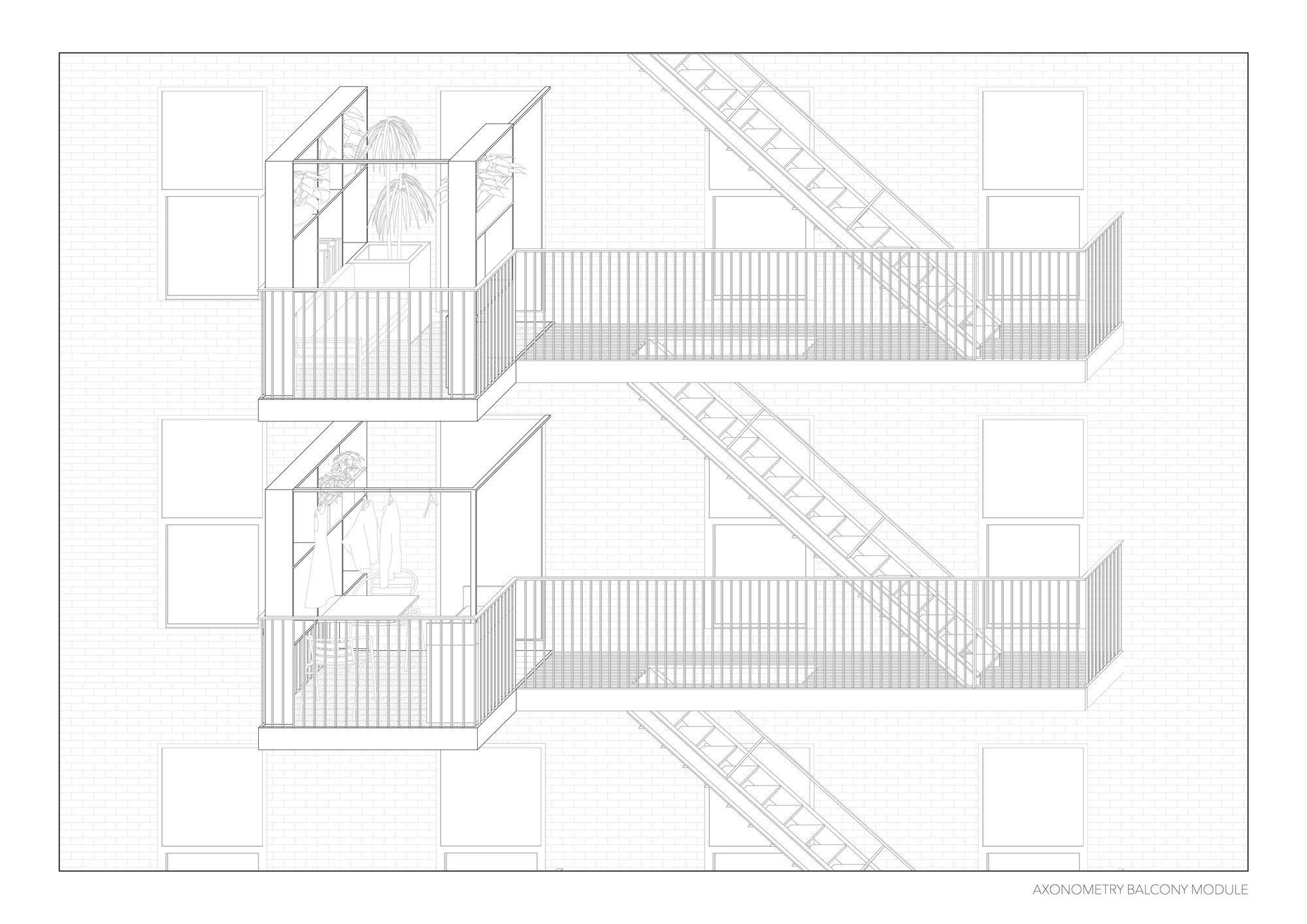
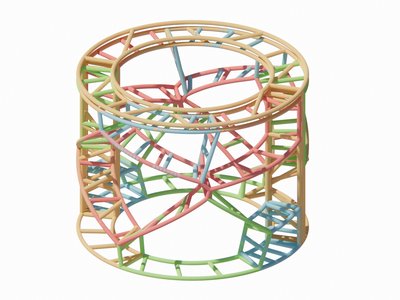
The balcony module, designed as a variable steel shelving structure, connects to the steel railing of the historic fire escapes in New York.

The housing shortage in New York City, particularly in central neighborhoods like Manhattan, Brooklyn, and parts of Queens, poses a significant problem. The high demand for housing and limited supply drive up rents, making it difficult for many people to find affordable apartments. In the popular central neighborhoods, apartments are often very small to accommodate the high price per square foot. Balconies are not common in New York City, especially in older buildings or more affordable rental units. Often, only modern luxury apartments and new high-rise complexes in more expensive areas offer balconies or terraces.
Since a balcony greatly improves the quality of living in an already small apartment, I have set a goal to improve existing apartments in central New York locations by adding balconies. This way, tenants of more affordable apartments can have the opportunity to expand their living space and personalize it. It was particularly important to me that the balconies could be added to existing buildings without too much effort.
Fire escapes are a characteristic feature of many older buildings in New York City and are ideal for expansion with a balcony. Originally installed as a safety feature for emergency escape on the exterior of buildings, they now primarily contribute to the historical charm of the buildings. Fire escapes are especially found in older neighborhoods like the Lower East Side, Greenwich Village, SoHo, and parts of Chelsea.
The balcony module should accommodate as many uses as possible on a very small area of 2 x 2 x 2.4 meters while still allowing for individual customization. The balcony is accessible through both the adjoining window and the fire escape. This enhances the significance of the fire escape, and multiple balconies on a building can strengthen the neighborhood relationship. Residents of the building could decide to share their balconies with each other, assigning each balcony a specific use, for instance. As a prototype, I have designed two balcony modules that are bordered by a customizable shelf. This shelf can be used as a plant rack and can include a foldable table. Additionally, the shelves serve as privacy screens, providing a bit of seclusion in the bustling city. The balcony is primarily seen as an extension of the living space, allowing access to fresh air. It can accommodate at least two seating options and, with the foldable table, can be used as a workspace, relaxation spot, or dining area. The plant racks offer vertical space for numerous plants or even garden beds. Additionally, there is room for more flower pots or an electric grill, making the balcony a place for flexible use.



Popular Articles
Popular articles from the community

Treehouse Apartment: A Warm Timber Interior Blending Craft, Play, and Contemporary Living
Warm timber apartment with integrated treehouse, combining natural materials, craftsmanship, and playful design to create a flexible, family-oriented living environment.
Flamboyant House by Juliana Camargo + Prumo Projetos
Modern Brazilian house integrating existing tree, pool, and volumes with glass, wood, and transitional spaces blending interior, exterior, and landscape seamlessly.
A Contemporary Take on Iranian Residential Architecture
A modern interior design in Mashhad that reinterprets brick, light, and spatial flow to create a warm, contemporary residential architecture.


The Ken Roberts Memorial Delineation Competition (Krob)
As the most senior architectural drawing competition currently in operation anywhere in the world, it draws hundreds of entries each year, awarding the very best submissions in a series of medium-based categories.


Similar Reads
You might also enjoy these articles
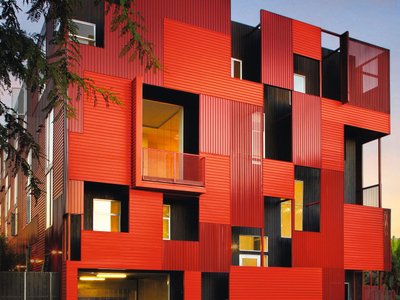
Converge Hub – A Human-Centered and Sustainable Mobility Hub at the Urban Edge
Its open and permeable design promotes sustainable movement through walkable connections, green axes, and integrated public transport
51st Annual KRob - Ken Roberts Memorial Delineation Competition
Join us in celebrating 51 years in excellence in architectural representation! With $2,400 in prize money awarded across 8 categories, this prompt-less competition is accessible to all!



Explore Architecture Competitions
Discover active competitions in this discipline




The International Standard for Design Portfolios


The Global Benchmark for Architecture Dissertation Awards


The Global Benchmark for Graduation Excellence


Challenge to reimagine the Iron Throne
Comments (0)
Please login or sign up to add comments
No comments yet. Be the first to comment!