

O Building by Yohei Kawashima Architects – Innovative Mixed-Use Architecture in Musashino, Tokyo
O Building by Yohei Kawashima Architects features a three-story mixed-use design in Musashino, Tokyo, with a unique mirrored pathway enhancing light and circulation.


Located in the bustling commercial district of Musashino City, Tokyo, the O Building designed by Yohei Kawashima Architects is a remarkable example of modern mixed-use architecture that harmoniously blends functionality with experiential design. Completed in 2022, this three-story tenant building occupies a compact 87 m² site, distinguished by its unique flagpole-shaped layout, connecting the north and south streets.

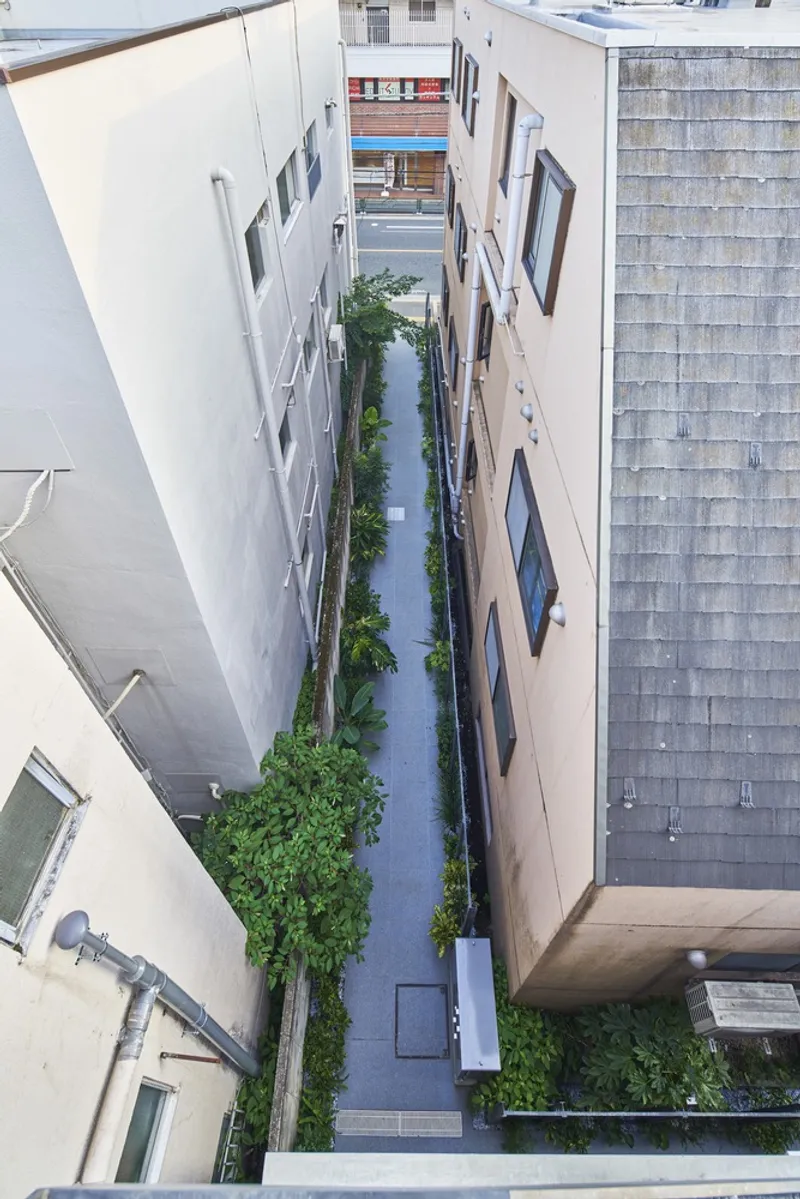
Architectural Concept & Design
The primary design challenge of the O Building was to respond to the site's distinctive geometry while ensuring optimal human circulation and enhancing the urban pedestrian experience. The architects envisioned the slant-shaped site not as a limitation but as an opportunity:
- Pathway Integration: The narrow, flagpole-like configuration serves as a natural pedestrian flow, seamlessly guiding visitors from one street to another.
- Dynamic Facade Experience: The building’s exterior and the pathway are designed to offer visual intrigue, directing people toward a fresh, engaging walking experience.

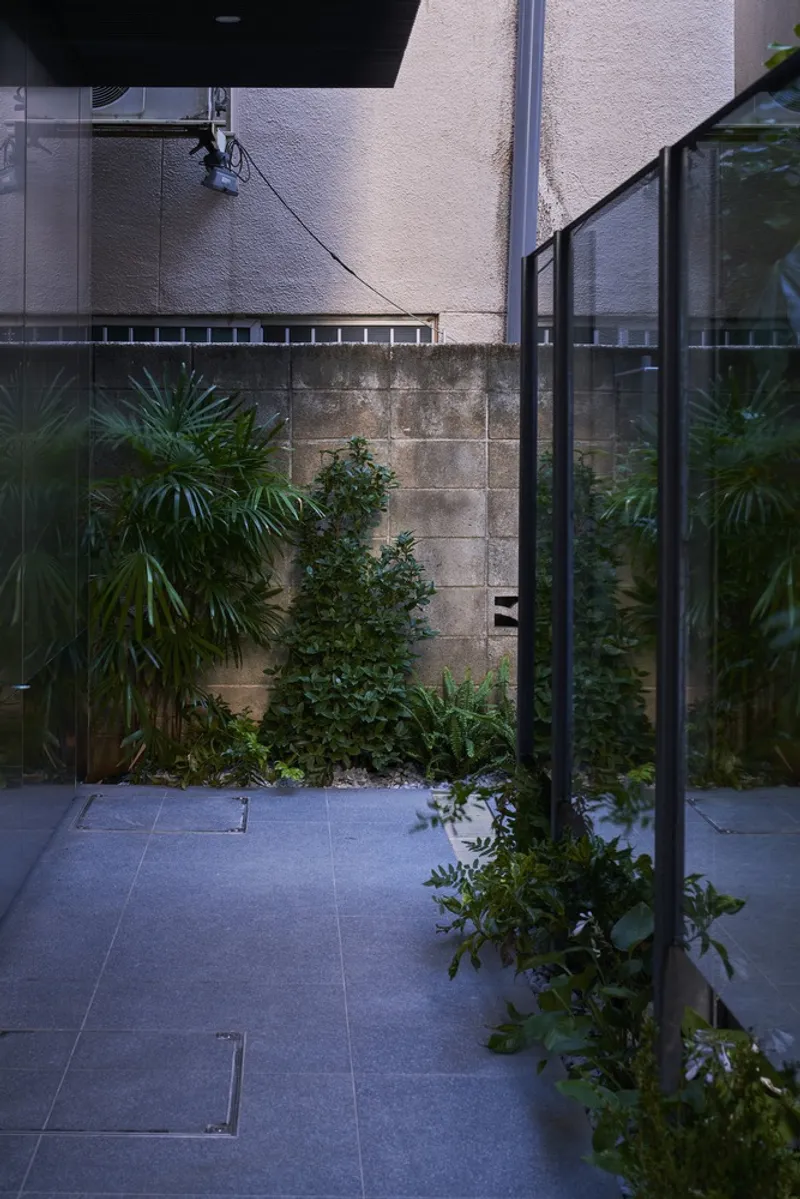
Functional Layout & Legal Considerations
To comply with Japan's slant line building regulations, the structure is strategically set back from neighboring lots. The design places external stairs along the side, creating a pathway beneath that connects the two streets. Each floor is arranged with simple, uniform tenant spaces, maximizing efficiency while allowing light to filter through the central pathway.
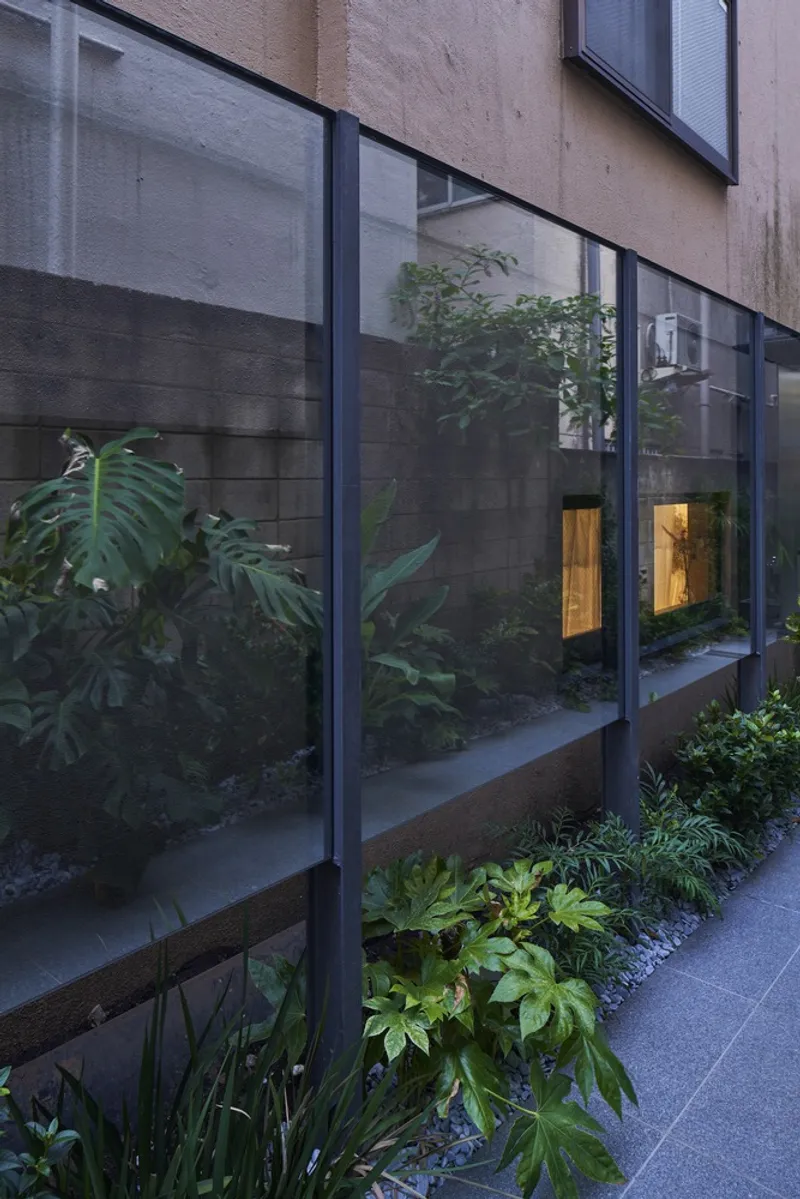
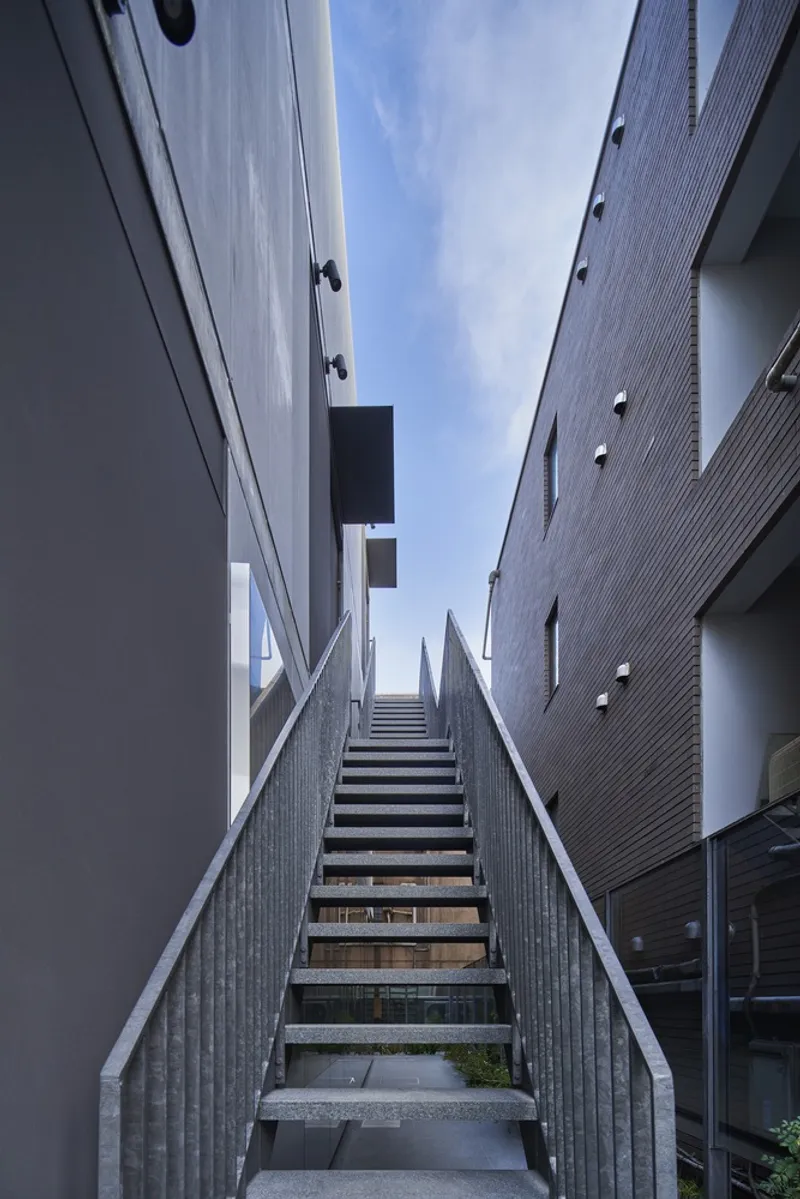
Transforming a Shadowed Alley into a Luminous Experience
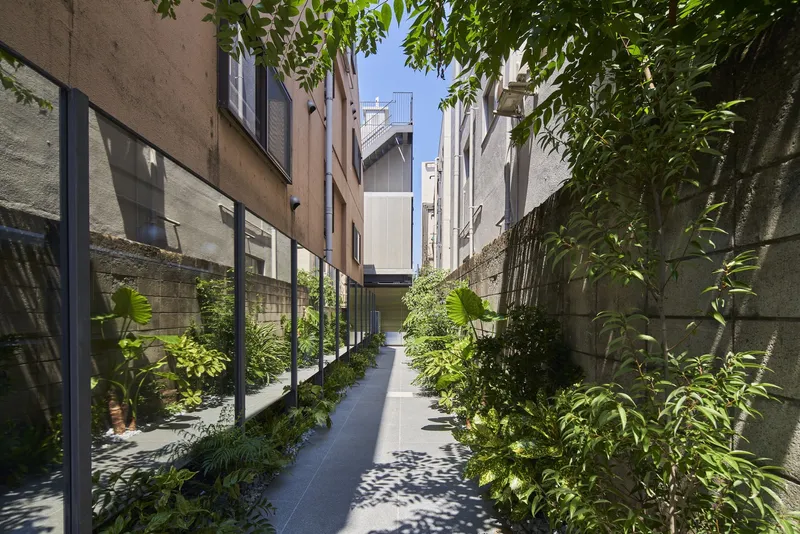
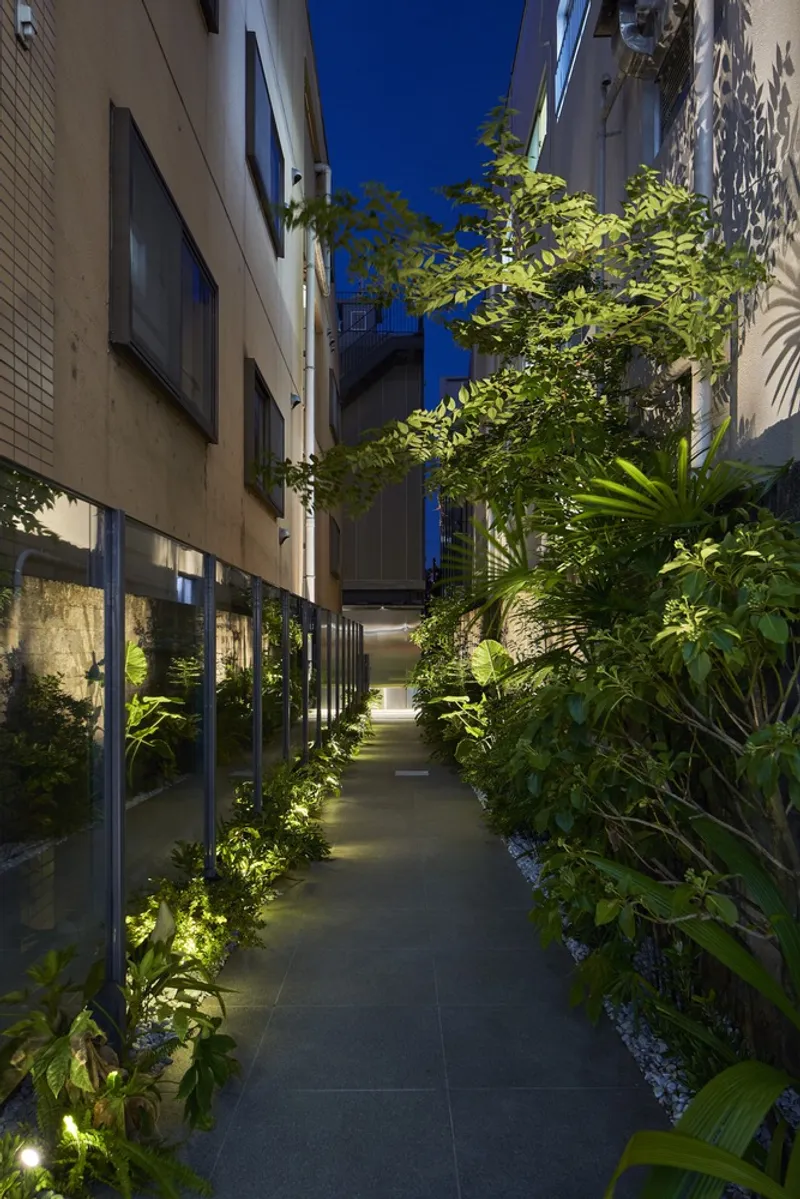
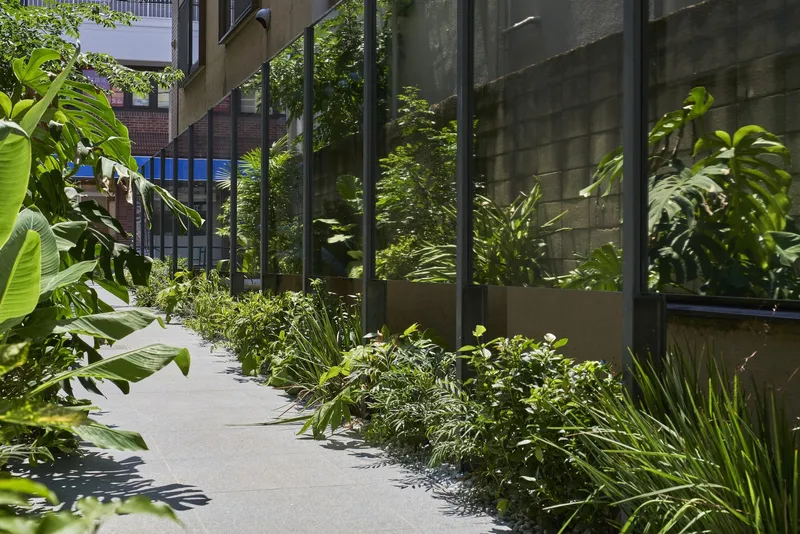
Given the dense commercial context, the north-south pathway could easily become dark and oppressive. To counter this, the architects introduced a half-mirror wall along the walkway. This innovative solution:
- Reflects shifting sunlight throughout the day.
- Captures the light and shadow interplay, enhancing the spatial experience.
- Superimposes views of the adjacent buildings, creating a sense of depth and movement.
Rather than concealing the rear of the building with a simple flat wall, the half-mirror pathway transforms the corridor into a dynamic experiential space, where pedestrians can enjoy the gradual changes in sunlight and the evolving urban scenery. This approach elevates the quality of connection between surrounding buildings, turning a previously dark alley into a vivid, inviting public passage.
Technical Team & Construction
- Lead Architect: Yohei Kawashima
- Structural Engineering: TECTONICA, TECTONICA INC
- Construction: Nichinan Iron Construction

All photographs are works of Koji Fujii / TOREAL


Popular Articles
Popular articles from the community


David Macias Steps a Doorless Stone and Plaster House Down a Tropical Colombian Hillside
In the humid hills of Colombia, Threshold House replaces the front door with an open void and terraces its 850 m² down the slope instead of fighting it.

Jaramillo Van Sluys Arquitectura and Urbanismo Turn a Demolished Registry Lot in Quito into an Orchard Plaza
In Quito's Centro Histórico, a 2,800 m² plaza exposes the San Agustín convent wall and redraws its lost Augustinian orchard in volcanic stone.

Juan García Correa, John González and Claudia Rueda Sink a Circular Amphitheater into a Manizales Engineering Building
On the La Nubia campus in Manizales, Colombia, the S1 Building folds labs and offices into a hillside of ramped lawns that double as a campus route.

David Ortega Stacks a Two-Story Mexico City Penthouse Around a Steel Stair and a Pergola-Shaded Roof Terrace
In Colonia Roma, a 300 m² penthouse uses oak joinery, a planted steel stair and a slatted roof pergola to make a new-build apartment feel like a house.

Similar Reads
You might also enjoy these articles


Hodi-Mandai Geram
Project Function: Preservation and revitalization of the Intangible heritage and socio-spatial identity of the Hodi by Housing, Cultural Memory Center, Sacred Grove, landscape, local tourism economy


Olio Towers: A Mid-Rise for Performers That Fuses Housing, Rehearsal, and Stage
Located blocks from Houston's Theater District, this modular tower stacks living units around a central performance atrium.

Oasis: Modular Green Housing Carved into Dhaka's Urban Fabric
A shortlisted Plugin Housing entry reclaims unauthorized settlements in Dhaka with stepped concrete volumes, green roofs, and ventilation-driven design.

Black Hole: A Floating Megastructure for the Post-Physical Era
Emiliano Mazzarotto envisions a spherical, self-scaling arena where e-sports, digital hotels, and holographic stadiums replace traditional public space.

Explore Architecture Competitions
Discover active competitions in this discipline

Challenge to reimagine the Iron Throne

Photograph architecture without architects

Illustrate the lost glory of Angkor Wat - Render Challenge

Design challenge to reuse E-waste
Comments (0)
Please login or sign up to add comments
No comments yet. Be the first to comment!