
O2 Design Atelier Fuses Two Lots into a Naturalist's Tropical Compound in Selangor
A cul-de-sac house in Malaysia merges paired strata parcels, board-formed concrete, and dense planting into a single domestic landscape.


Most houses in Malaysian suburbia treat their plots as containers to be filled. The Tropical Shift House, designed by O2 Design Atelier and Choo Poo Liang Architect, inverts the premise. Sitting at the dead end of a cul-de-sac in Selangor, it joins two abutting lots under a paired strata arrangement, then deliberately refuses to build on one of them. That second parcel becomes a private garden, not a future wing. The result is a 9,038 square meter estate where the house defers to its landscape rather than the other way around.
What makes this project genuinely interesting is not its size but its refusal of size. The architecture is muscular: board-formed concrete, perforated screens, cantilevered volumes. Yet the massing strategy, revealed clearly in the axonometric diagrams, is subtractive. Volumes are shifted, lifted, and carved to create voids that let foliage push into every room. Led by architect Edric Choo Poo Liang with project architects Joshua Quah and Evans Khor, the team built a house for a client described as a naturalist by temperament, and the design takes that brief literally.
A Perforated Face to the Street


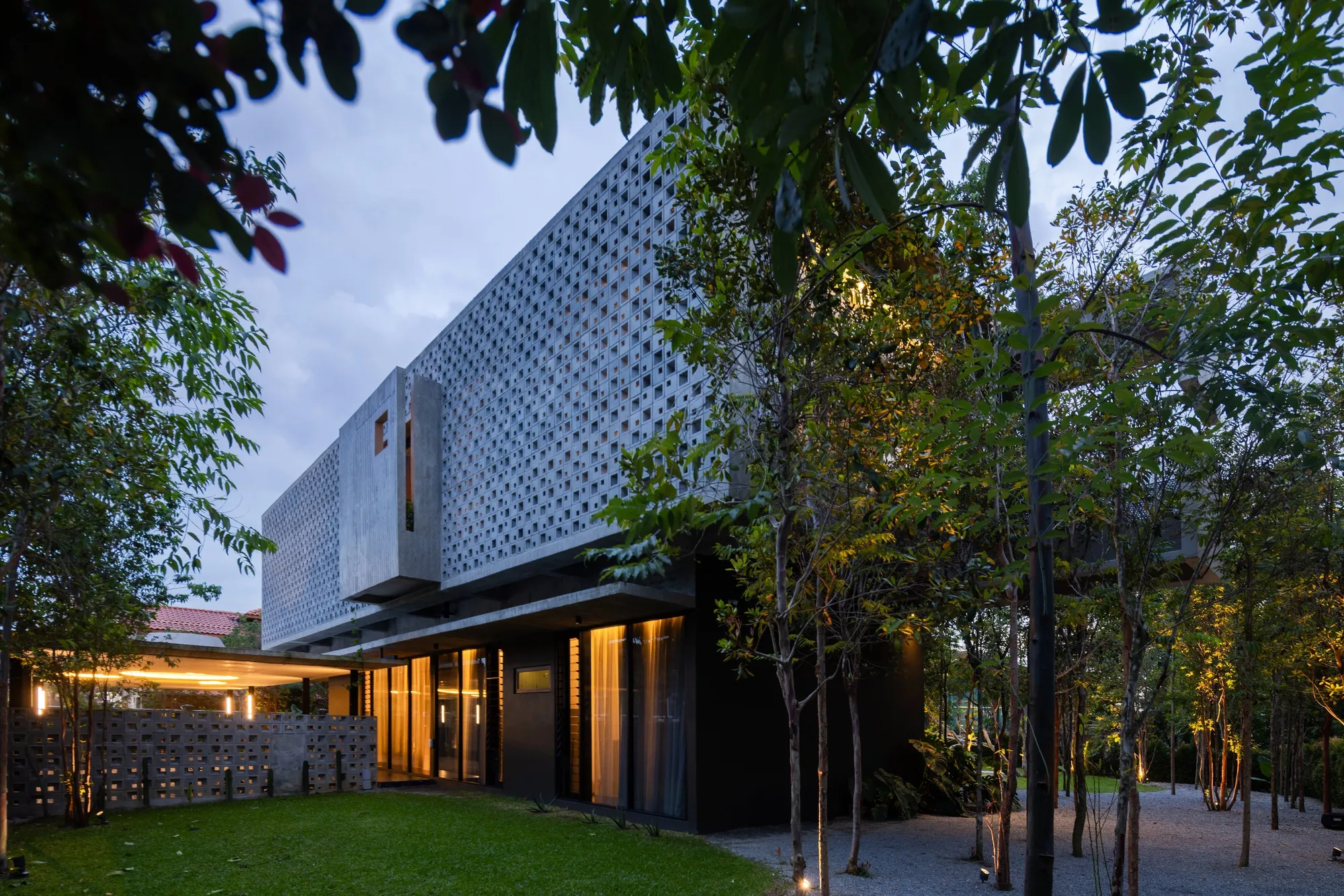
The street elevation is a deliberate act of concealment. A perforated concrete screen wraps the upper level, sitting above a cantilevered carport and a run of board-formed concrete walling. The screen filters light and air while refusing the transparency that a glass facade would offer. Behind it, the house recedes into planting. At dusk, the relationship reverses: interior light leaks through the perforations, turning the white volume into a lantern above a glass-walled base.
The layering is worth noting. Timber cladding, patterned concrete, rooftop planting, and dark metal all appear within a single elevation, but they are organized by depth rather than decorative pattern. Each material sits on a different plane, giving the facade a geological quality, like strata exposed by a cut.
Concrete as Landscape Material


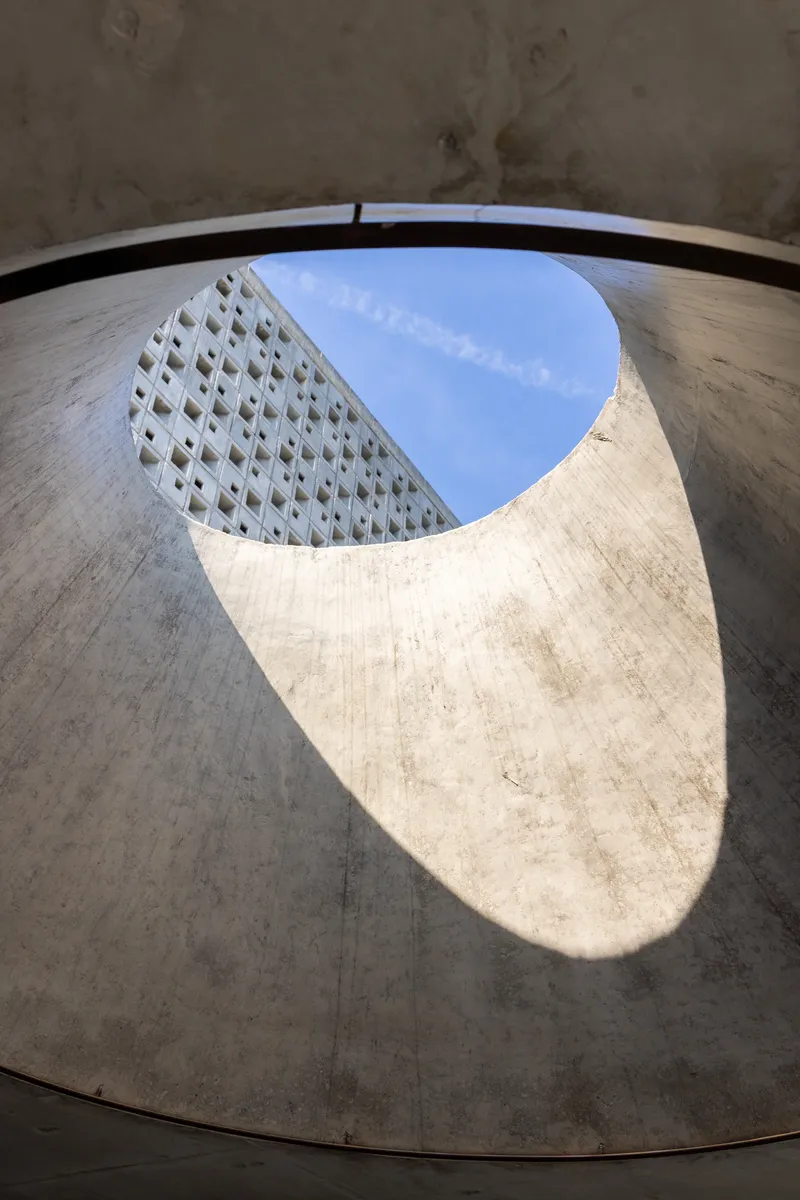
The carport alone would justify attention. Its board-formed concrete soffit is punctured by circular skylights that drop columns of light onto the driveway below. It reads less as a parking structure and more as a grotto, and the circular oculi recall the teardrop-shaped opening visible elsewhere in the project, where a concrete frame carves sky into geometry. These are not decorative gestures; they regulate sunlight in a climate that demands shade but punishes darkness.
Board-formed concrete recurs throughout the project as its primary tectonic language, but the formwork is never monolithic. Grain patterns shift from wall to wall, and the material is paired consistently with plywood and timber to warm it. The cylindrical concrete tower, with its vertical ribbing, stands among trees and gravel like a ruin that the garden has absorbed.
The Central Void and Its Bridges
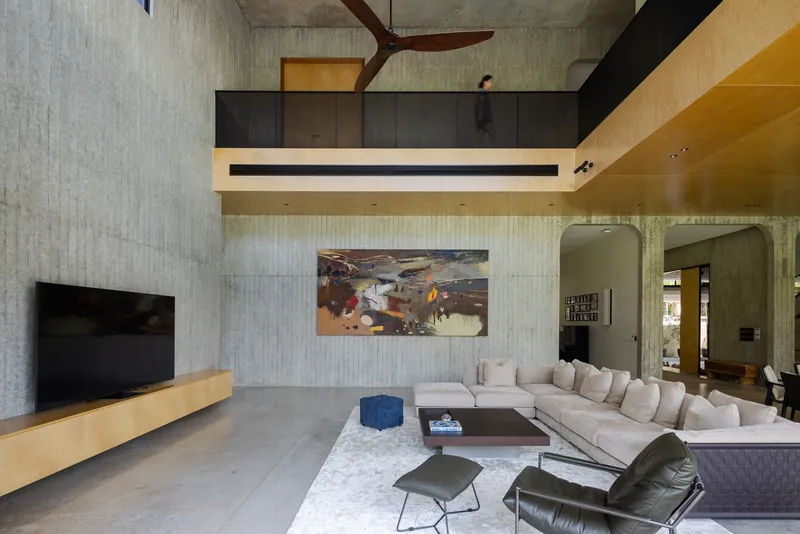


The double-height living room is the spatial engine of the house. Board-formed concrete walls rise to meet exposed timber beams, and a timber-lined mezzanine bridges overhead, connecting the upper bedrooms. The void draws light down through clerestory openings and pulls air upward through stack ventilation, a fundamental tropical strategy executed here with genuine conviction.
A black steel staircase is set against one of the concrete walls, catching dappled sunlight from overhead openings. The timber bridge spanning the void is visible from multiple vantage points, and its warm tone against the raw concrete below creates a deliberate contrast between the public ground floor and the private upper level. The house reads vertically as a transition from heavy to light, from mineral to organic.
Living Open to the Garden

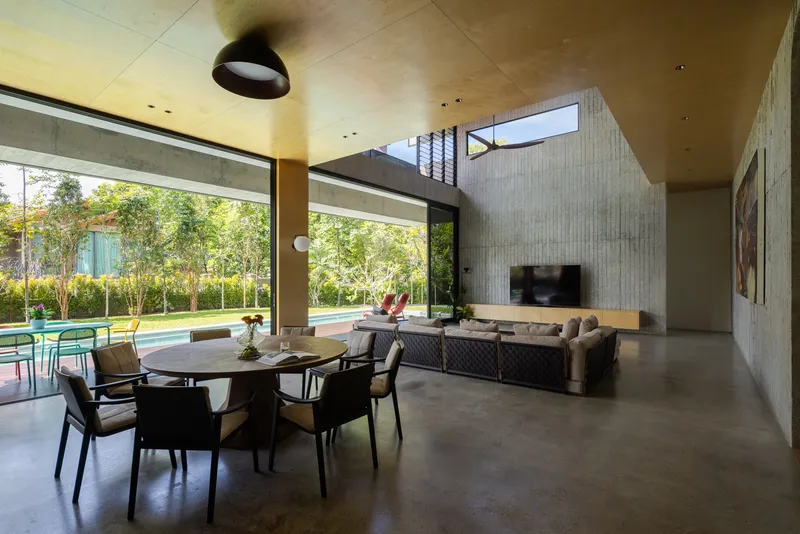
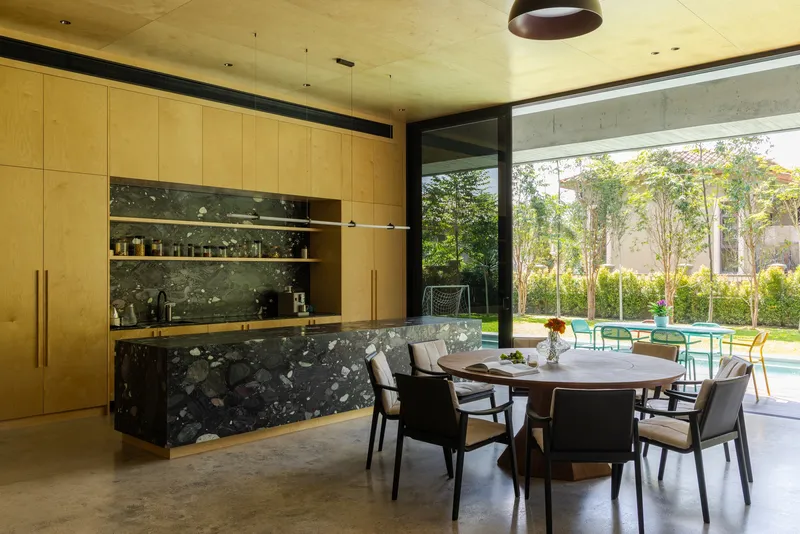
At ground level, the plan dissolves into landscape. The living room opens through full-height sliding glass doors onto lawn and trees, while the kitchen and dining area address a garden courtyard through a terrazzo-topped island. Plywood ceilings and cabinetry unify these zones, giving the open plan a coherent warmth that prevents it from feeling like a showroom.
Polished concrete floors reflect clerestory light from the garden side, and the effect is of a room that is simultaneously interior and exterior. The perforated black brick wall visible in the living room filters daylight through a field of square openings, casting geometric shadows that shift throughout the day. It is one of several moments where the house uses pattern not for ornament but for environmental modulation.
Thresholds and Passages

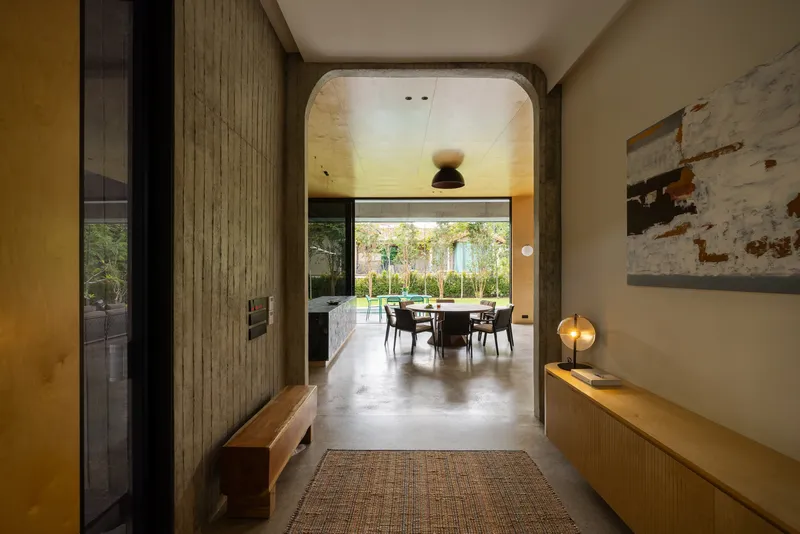

The approach to the house is choreographed with care. An entry corridor with board-formed concrete walls and an arched ceiling compresses space before releasing it into the dining area beyond. The dark stone floor at the threshold gives way to warmer plywood surfaces inside, marking the transition from public to private with material rather than doors.
The courtyard, surfaced in gravel with slender trees, sits beneath the cantilevered upper volume. A person standing in it is framed by architecture overhead and garden on all sides. It functions as both light well and social room, a space that belongs neither fully inside nor fully outside.
Private Rooms, Distinct Identities
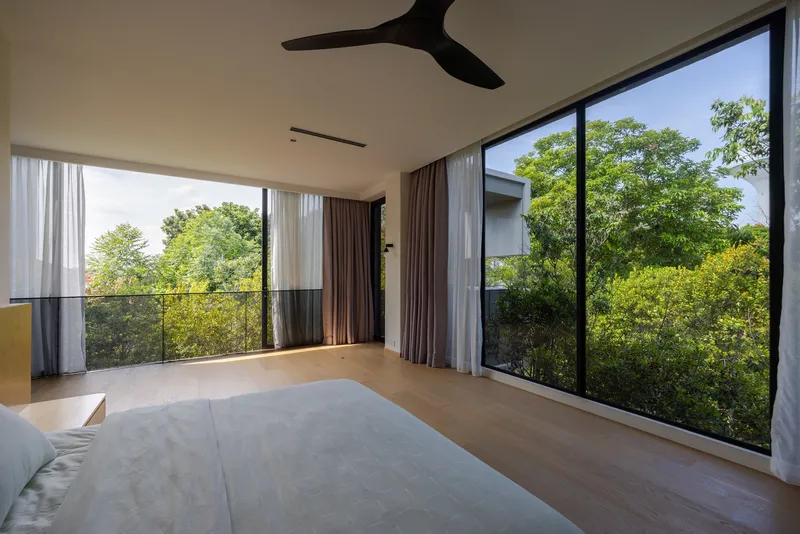
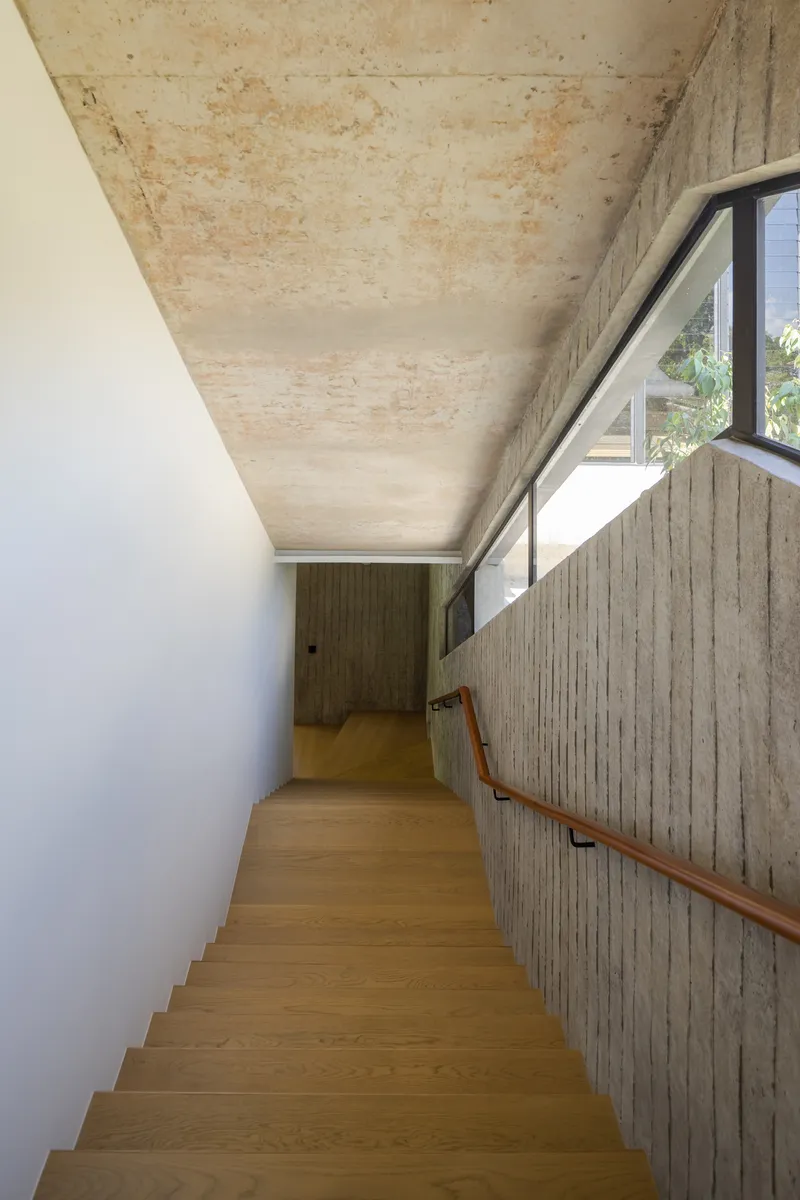

Upstairs, the bedrooms and balconies achieve something rare in large houses: intimacy. Floor-to-ceiling glazing with sheer curtains overlooks a canopy of green trees, collapsing the distance between bedroom and forest. The timber stair that ascends alongside the concrete wall is a quiet, tactile passage, and the covered balcony with terracotta tiles and dark metal railings offers a domestic belvedere among dense foliage.
Bathrooms as Small Architectures


The bathrooms deserve their own discussion. A curved enclosure with fluted concrete walls, a circular sink, and a skylight casting morning light reads like a small chapel. Another places a bathtub behind a glass screen overlooking a planted courtyard through textured concrete block walls. The cylindrical tower, seen from outside as a ribbed concrete column, likely houses one of these bathing spaces, giving a utilitarian program a monumental expression.

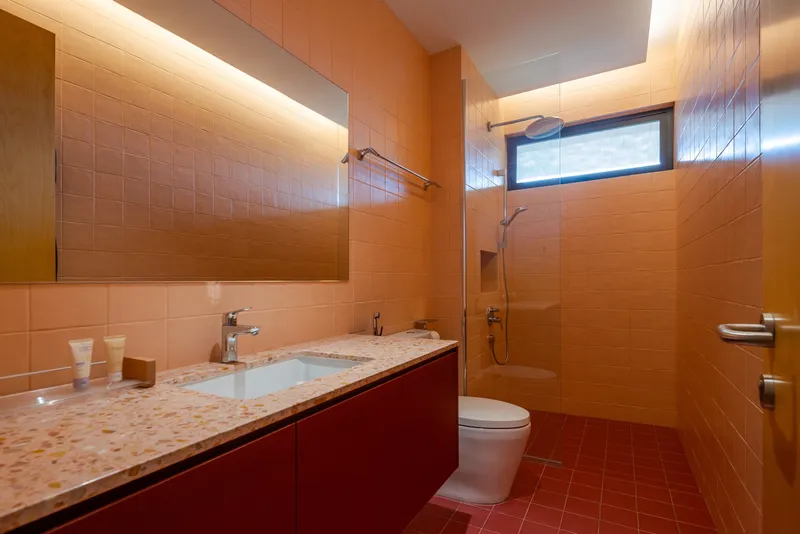

Material palettes vary from room to room: terrazzo vanities with terracotta tile walls, green tile with timber doors, red cabinetry with clerestory windows. Each bathroom is its own composition, yet they share a commitment to natural light from above and a refusal of the sealed, artificially lit boxes that dominate residential bathroom design in the region.
Plans and Drawings
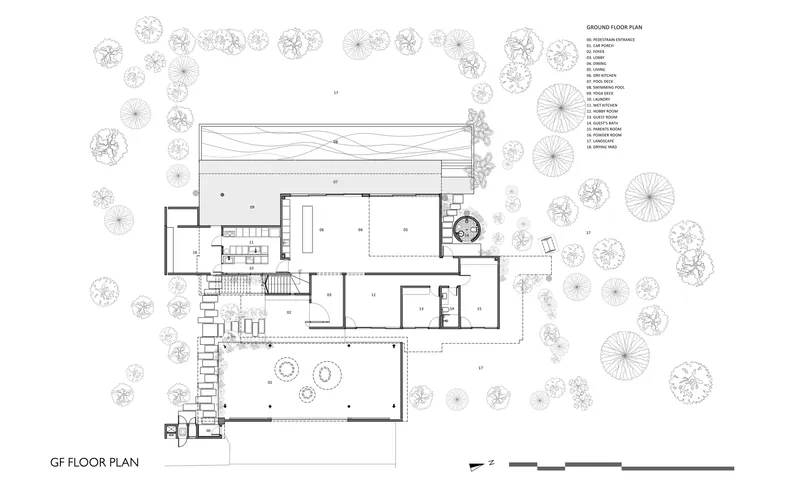
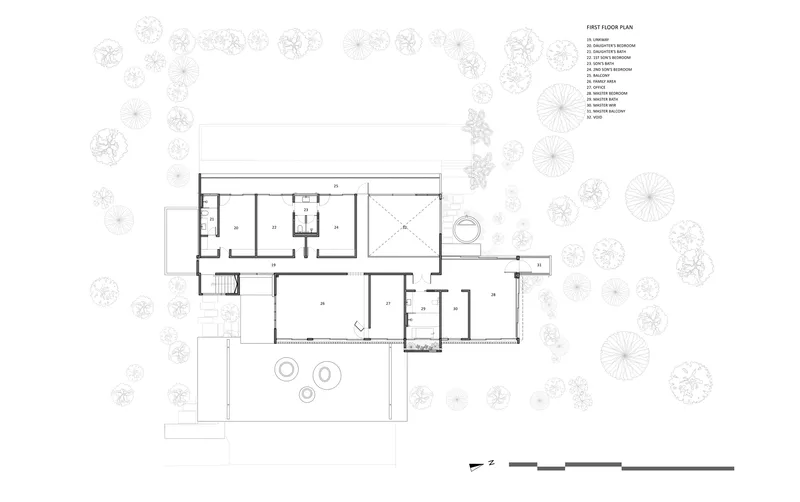
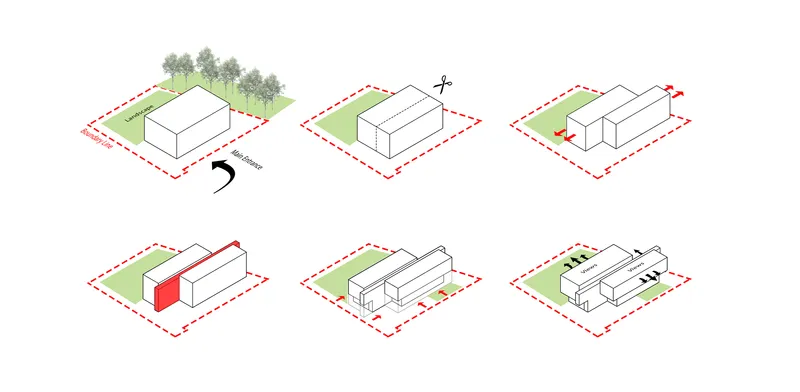
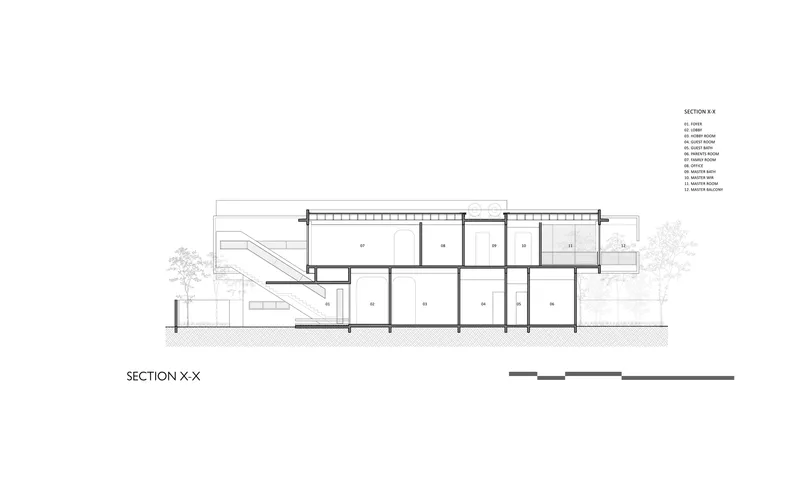


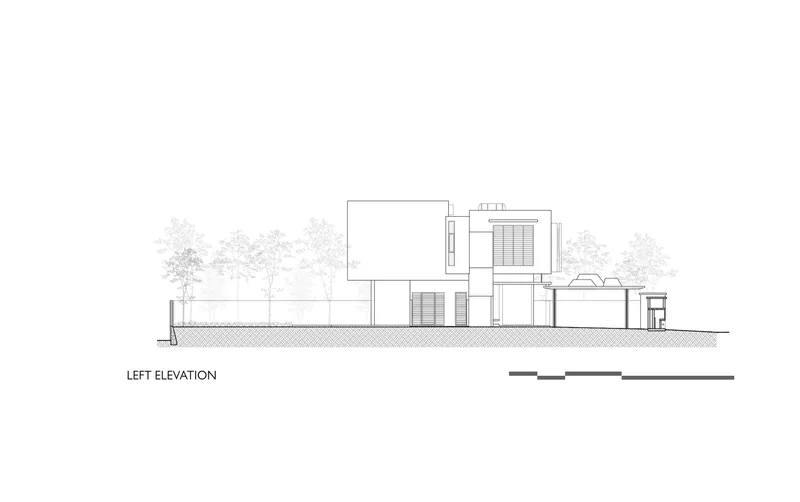
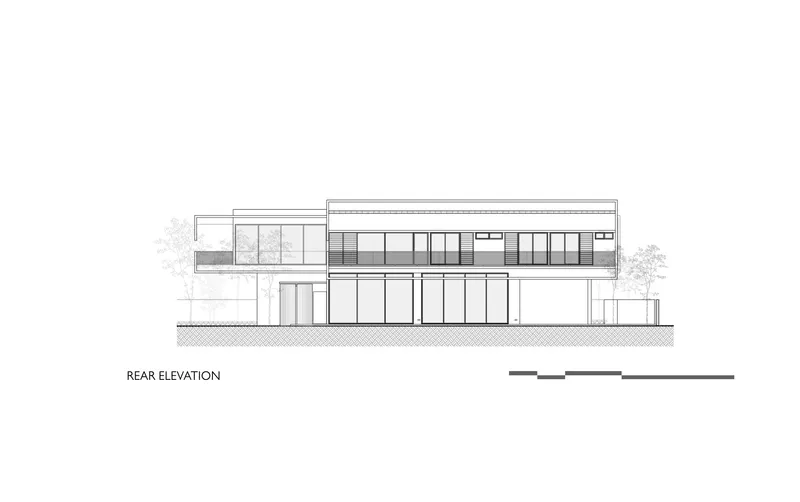
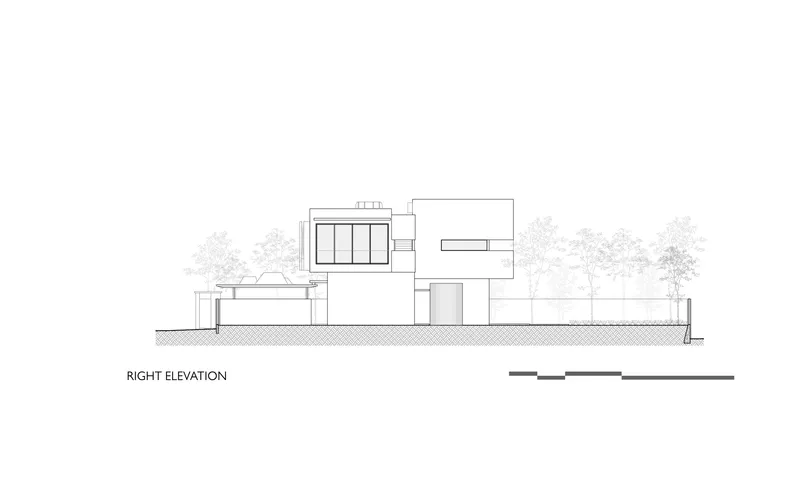


The axonometric sequence is particularly revealing. Six stages of massing development show how the volumes were shifted, split, and lifted on the sloped site. The ground floor plan confirms the generosity of the landscape strategy: tree canopies outnumber rooms, and the pool sits between volumes like a clearing in a forest. Sections show the split-level arrangement that gives each room its own relationship to the ground, and the elevations make clear how different the house looks from every side. No single elevation tells the whole story.
The first floor plan places bedrooms around a central void, maintaining the visual and spatial connection to the double-height living space below. The right elevation drawing reveals the offset volumes and the sloped ground plane that justify the project's name: this is architecture that shifts, literally, in response to terrain and climate.
Why This Project Matters
The Tropical Shift House is significant because it treats landscape as primary structure rather than decoration. In a development context where two lots would ordinarily yield two houses, this project uses one for architecture and one for garden. That decision is not sentimental; it is strategic. The garden lot provides shade, privacy, microclimate cooling, and a visual depth that no amount of interior design could replicate. The house performs better because half the site is deliberately empty.
It also demonstrates that board-formed concrete, often associated with Brutalist austerity, can work as a tropical material when combined with timber, planting, and a rigorous approach to natural light. The collaboration between O2 Design Atelier and Choo Poo Liang Architect produced a house that is heavy and porous at once, rooted in its site yet open to the air that moves through it. In a region where tropical modernism risks becoming a style rather than a practice, this project reminds us that the practice comes first.
Tropical Shift House by O2 Design Atelier and Choo Poo Liang Architect. Selangor, Malaysia. 9,038 m². Completed 2024. Photography by Pixelaw.
About the Studio
Choo Poo Liang Architect
Share Your Own Work on uni.xyz
If projects like this are the kind of work you want to make, uni.xyz is a place to publish your own, find collaborators, and enter design competitions.




Popular Articles
Popular articles from the community


Riyadh For All: Intergenerational Urban Design for Active Aging in Rabat
Riyadh For All reimagines urban design in Rabat with intergenerational co-living, adaptive courtyards, and Moroccan cultural exchange today.

AL-JANNAH: Sustainable Architecture and Permaculture for Afghan Widows
AL-JANNAH uses sustainable architecture and permaculture to create resilient oasis of housing, learning, work and renewal for Afghan widows.

Co-life: Sustainable Architecture for Age-Friendly Community Living
Co-life reimagines sustainable architecture for seniors through courtyards, rammed earth, shared gardens, and spaces designed for belonging.

The Ocean Hive: Sustainable Architecture for a Self-Sufficient Civilization at Sea
The Ocean Hive imagines sustainable architecture at sea, where modular habitats, algae, wave power and ocean waste sustain a growing colony.


Similar Reads
You might also enjoy these articles

Bao Huynh Watercolor Atelier: A Serene Art Retreat in Hội An
Bao Huynh Watercolor Atelier in Hội An blends multifunctional art spaces, sustainable design, local materials, and family-friendly living in a serene environment.

Atelier Macri Concept Store Interior Design by CASE-REAL
Atelier Macri store features a "ko" counter, walnut wood details, cork displays, blending retail, gallery, and seamless customer experiences.

Manuel Vargas Izquierdo Stadium and High-Performance Sports Center: Architectural Excellence in Jalpa de Méndez
The Manuel Vargas Izquierdo Stadium blends sustainable design, inclusive sports facilities, and cultural-inspired architecture, revitalizing Jalpa de Méndez’s public spaces.
KAKR Buluh Awar Hall: Revitalizing Community and Ecology Through Bamboo Architecture
Community built bamboo hall revitalizes Buluh Awar village, empowering youth, restoring ecology, celebrating vernacular craftsmanship through sustainable architecture and culture.




Comments (0)
Please login or sign up to add comments
No comments yet. Be the first to comment!