
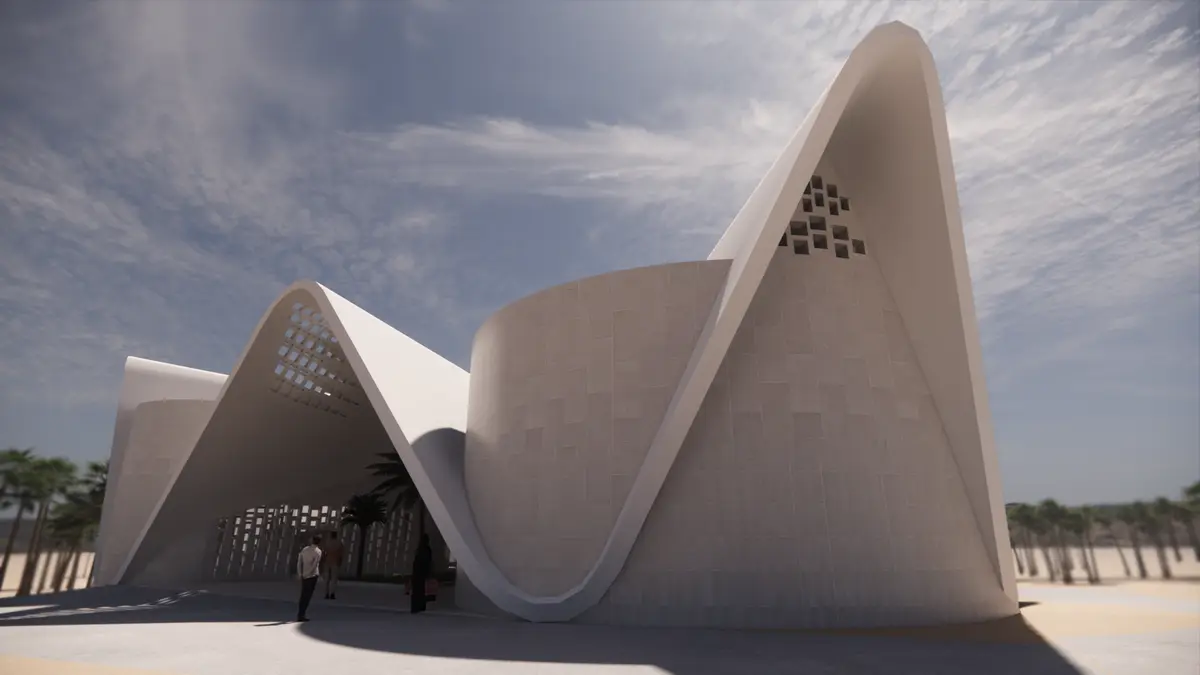
Oasis Towers
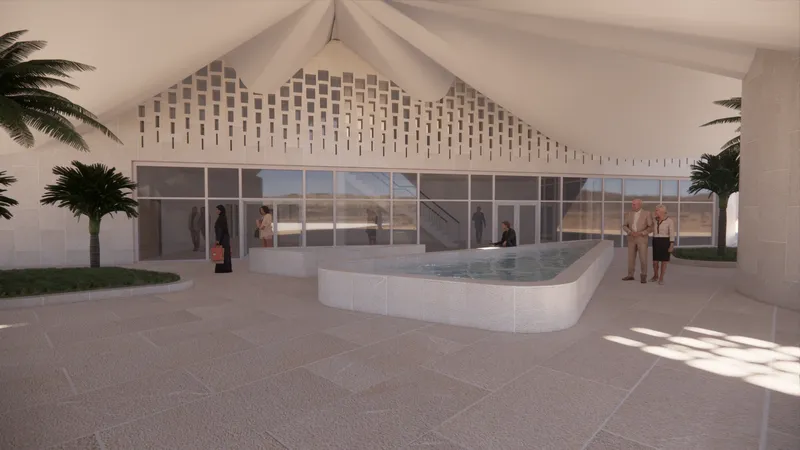
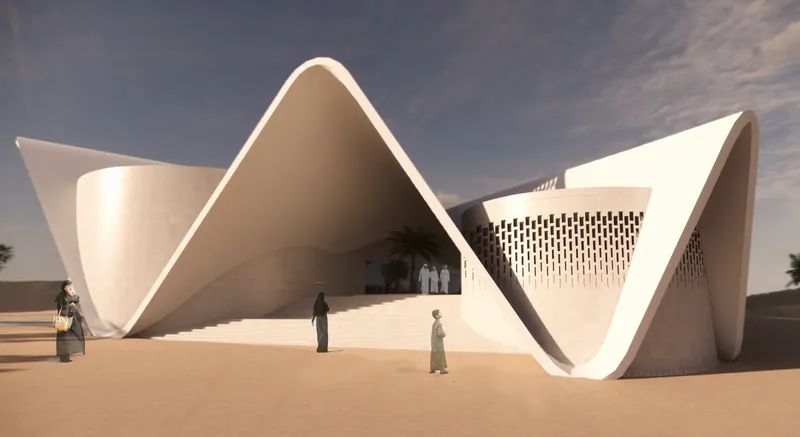
In designing the cultural centre, several factors had to be taken into account in such an unusual location. One of them was, for example, hot climate conditions. The proposal seeks to make use of traditional wind tower technologies, thus reflecting the history and culture of the area, and also ensuring a pleasant indoor environment in buildings. There are three buildings on the site, which form an atrium between them. Each building has its own wind tower.The roofing of atrium and the construction of wind towers creates an interesting interweaving of waves with buildings. The atrium offers view to the lake and surrounding mountains. Wind towers on buildings are based on the principle of air pressure. This is the simplest design principle that is used for the longest time. The opening on the tower is oriented on the side, facing the prevailing wind direction, it can catch it and direct it inside the building. Air flows through the building and is lead away from the other side. This creates drafts and cools the environment in the building. In the largest, main building, which is located on the western plot, there are garages in the basement, designed mainly for employees. On the ground floor there is an entrance hall, from which it is possible to further transition to the theater, library or sanitary core. The second floor is connected to the entrance hall by gallery. On this floor there is also, entrance to the balconies of the theater, musical hall and administration. In a smaller building located in the southwest of the plot called the art house,is located an exhibition gallery and workshop rooms. In the third, smallest, building is the coffee-shop, restaurant and kitchen.

 Concept
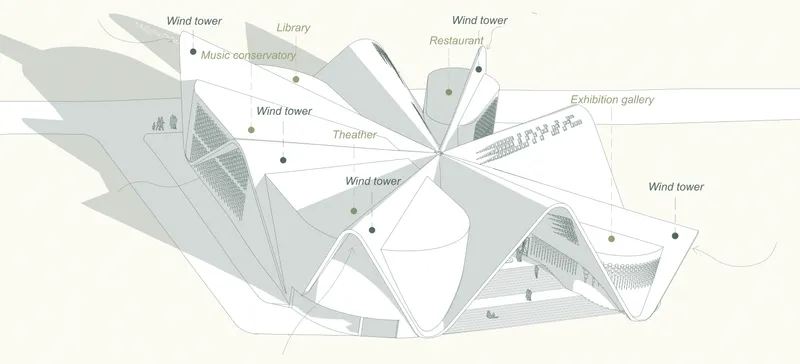
Each building has a wind tower which is used to cool the building and create a pleasant indoor environment
 Site plan
 Ground floor
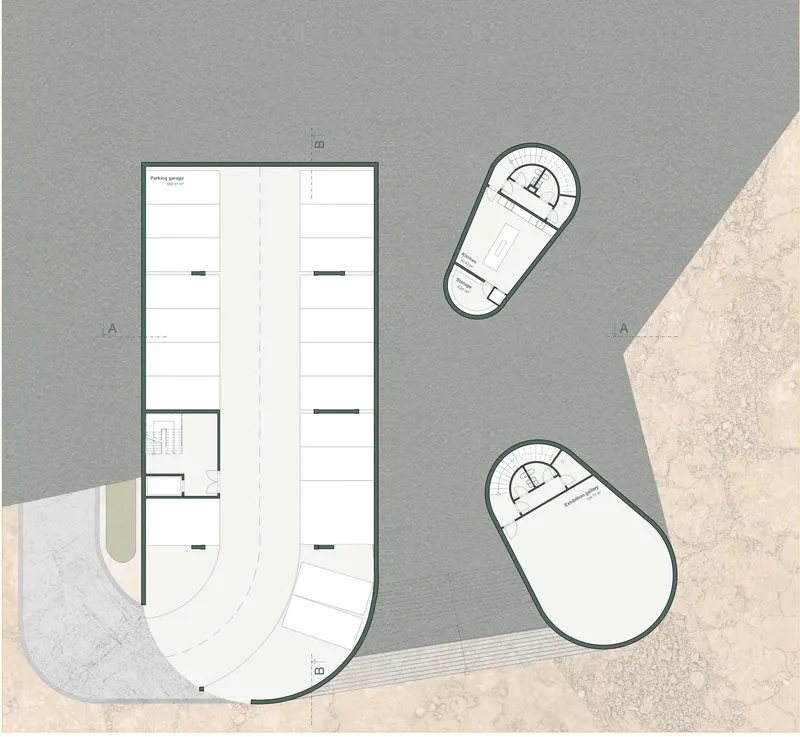 Lower ground floor
 Firs floor
 Section through the theater entrance hall and library
 Section through the music hall, entrance hall and atrium
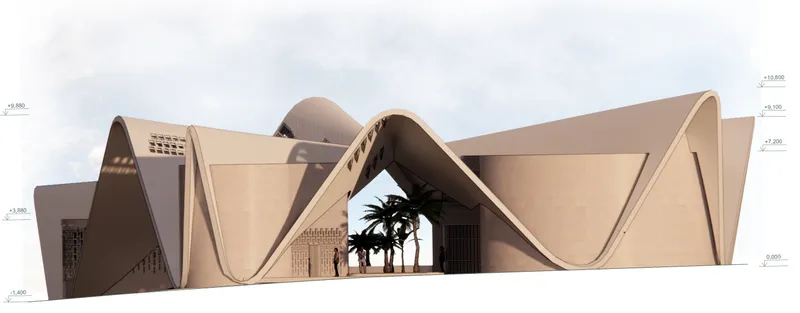 North elevation
 South elevation
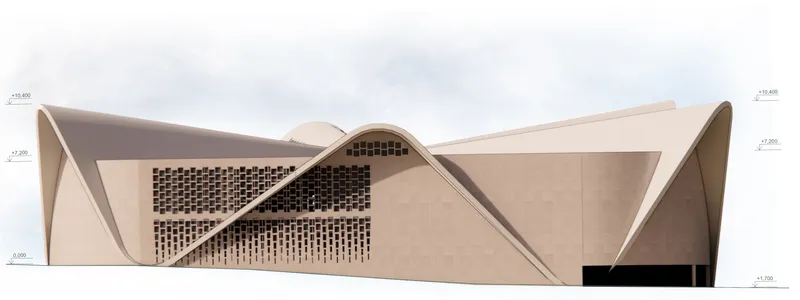 East elevation
 West elevation
In arid climates, daytime temperature fluctuations are often extreme, with desert temperatures often falling below zero at night. The material used in the building is mainly stone for its good heat absorption. It absorbs cold at night and cools the building naturally later during a day, when is the temperature higher.
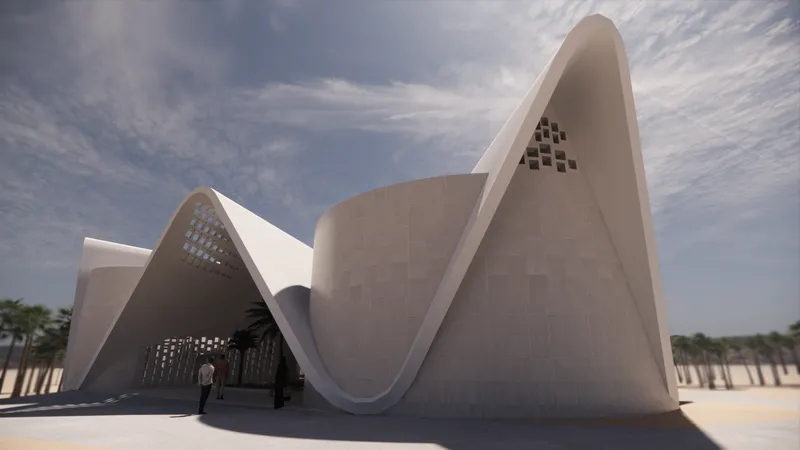
To illuminate indoor spaces are used small windows, which prevent the building from overheating.

Popular Articles
Popular articles from the community


Little Red Riding Hood: Architectural Design as a Journey Through Fear, Light, and Storytelling
Little Red Riding Hood reimagines the fairy tale through architectural design shaped by fear, light, scale, memory, uncertainty, and choice.

The Ocean Hive: Sustainable Architecture for a Self-Sufficient Civilization at Sea
The Ocean Hive imagines sustainable architecture at sea, where modular habitats, algae, wave power and ocean waste sustain a growing colony.

The Musturak Paradise: Senior Living Architecture for a Connected Future in Temara, Morocco
The Musturak Paradise reimagines senior living architecture in Temara via private homes, social spaces, culture, community, and shared care.

Lunar Spiral: Space Architecture Shaped by the Mathematics of the Universe
Lunar Spiral reimagines space architecture through Fibonacci geometry, lunar regolith, levitating habitats, and self-sustaining Moon living.

Similar Reads
You might also enjoy these articles

Day and Night Park: A Time-Based Urban Newsstand in Beijing
A temporary urban newsstand in Beijing blending travel, light, and reading through poetic colors, compact form, and community-focused design.

Modernist Patio Renovation in El Masnou, Barcelona by Oliver Segura Arquitectura + Cebrià Arquitectura
Modernist patio renovation blending tradition and innovation with a movable pool, leveled floors, and Catalan materials in El Masnou.

Alto Residencial Coop: Cooperative Housing Development in Santiago de Compostela by Carbajo Barrios Arquitectos
A linear cooperative housing complex blending white volumes and perforated metal façades, enhancing community living, natural light, privacy, and urban integration.
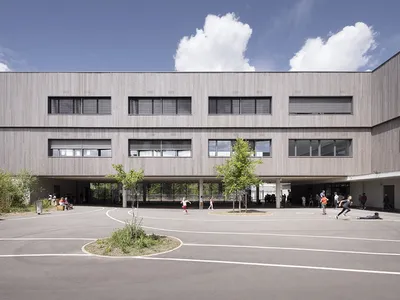
Vil Genis School by BPA ARCHITECTURE – Massy, France
Vil Genis School in Massy, France, features sustainable design, south-facing classrooms, community integration, accessible spaces, and modern educational architecture.

Explore Cultural Architecture Competitions
Discover active competitions in this discipline


Challenge to design locus for the upliftment of human rights

Bring back Drive In's

Design challenge to reuse E-waste
Comments (0)
Please login or sign up to add comments
No comments yet. Be the first to comment!