

Oasis Valleys Institute: A Sustainable Architectural Marvel by EssTeam Design Services
Oasis Valleys Institute is a sustainable educational facility in India, designed with minimal environmental impact, energy efficiency, and resource conservation.


Sustainable Educational Architecture in India
Nestled in the serene landscape of Chandod, India, Oasis Valleys Institute, designed by EssTeam Design Services, stands as a testament to environmentally conscious architecture. Completed in 2017, this 33,090 ft² educational facility seamlessly integrates with its natural surroundings while prioritizing sustainability, energy efficiency, and minimal environmental impact.
Minimal Footprint, Maximum Impact
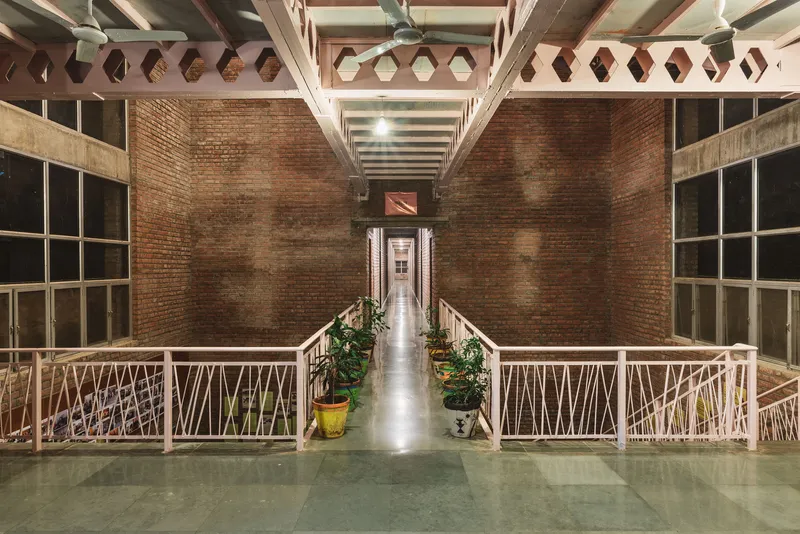
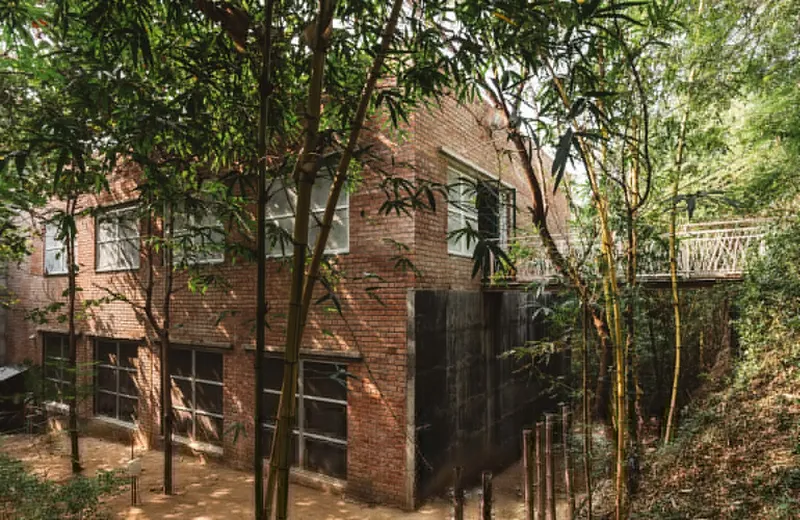
Set on a sprawling 7-acre hilly site, the architectural design of Oasis Valleys Institute exhibits remarkable restraint by occupying the smallest possible footprint. The rectangular structure (12m x 80m) is strategically positioned north-south within the valley, minimizing disruption to the natural water flow from the nearby Narmada River.
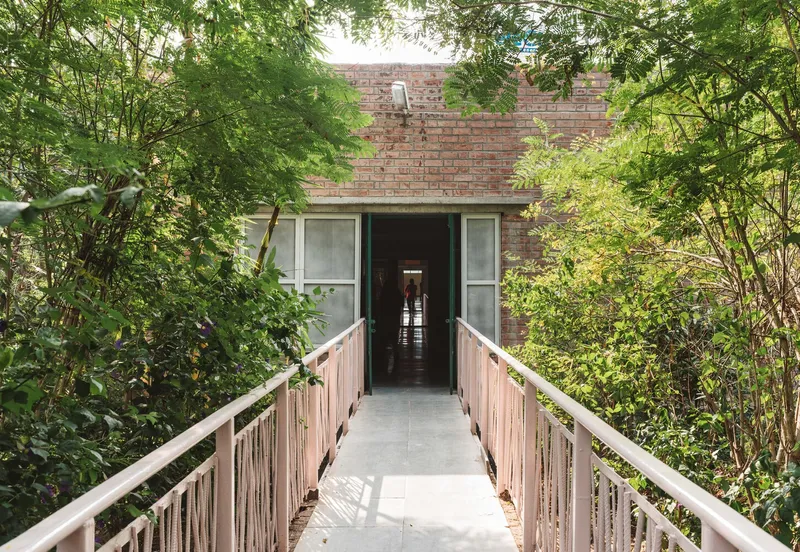
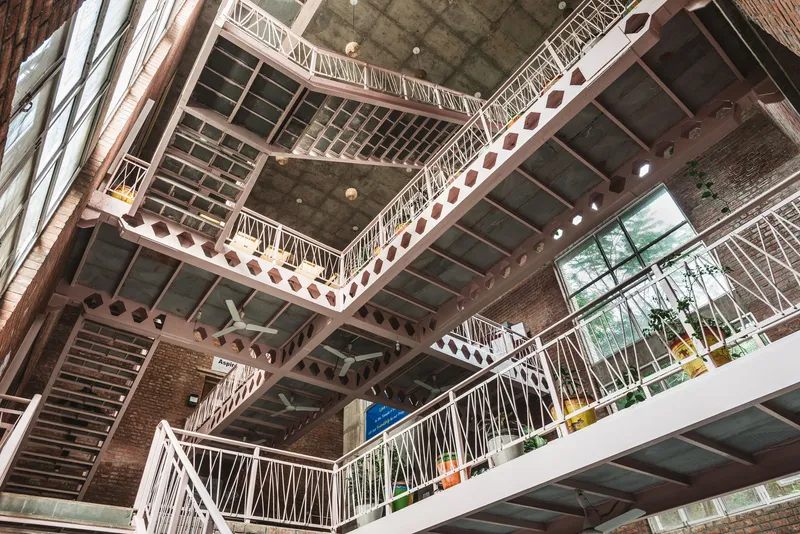
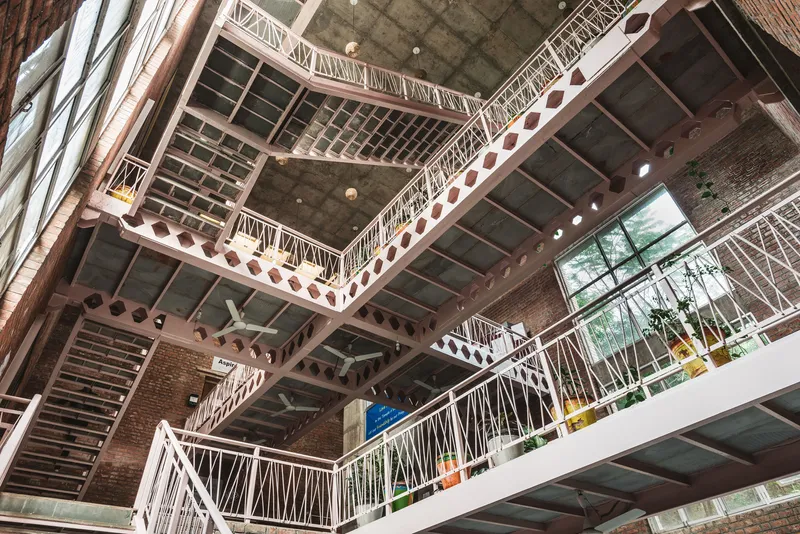
The institute comprises two primary zones—workshop spaces and residential accommodations—connected by a striking five-story atrium. The atrium serves as a vibrant social hub, featuring suspended bridges and open landings, fostering interaction and community engagement. Visitors enter from the top floor, offering an unconventional yet thought-provoking spatial experience—aligning with the institute’s core values of paradigm shift and transformative education.
Building Character Through Architecture
The Oasis Valleys Institute is more than just an educational institution; it is a space designed to inspire integrity, proactive learning, and compassion. When the institute’s trustees approached EssTeam Design Services, they emphasized their commitment to character education for children. This vision profoundly influenced the architectural approach, ensuring that the design itself became a teaching tool.
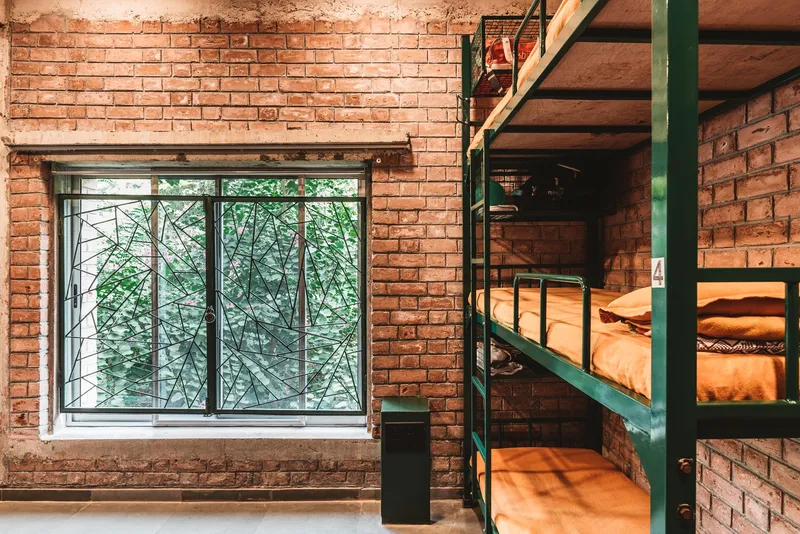
One of the first steps in creating this sustainable campus was the plantation of over 5,000 trees on previously barren land. The material palette was carefully selected to maintain honesty in design—featuring exposed concrete, clay bricks, and Kotah stone flooring throughout.
The facility includes:
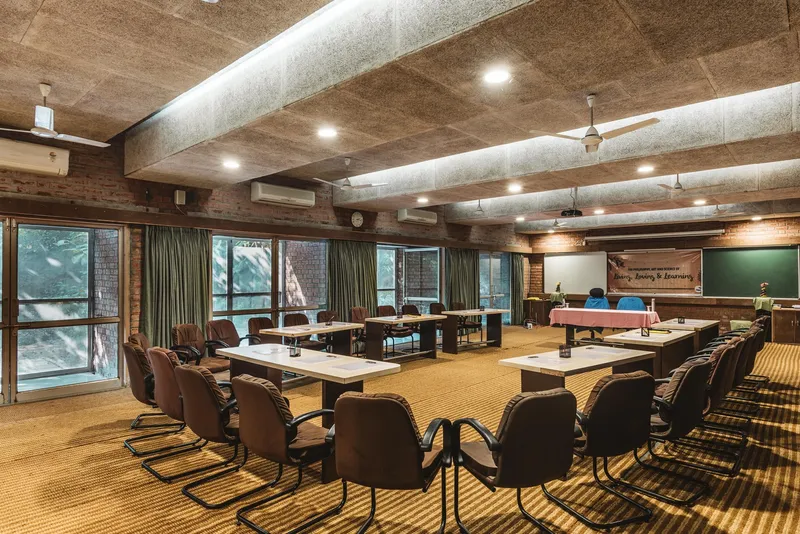
- Two expansive workshop halls, each accommodating 80 students
- 12 guest rooms and dormitories, housing up to 120 students
- State-of-the-art kitchen, dining, and sanitation facilities
Eco-Friendly and Resource-Efficient Design
The Oasis Valleys Institute embraces sustainability at every level, ensuring minimal energy consumption and resource wastage. Some key sustainable features include:
1. Energy Efficiency
- Optimal building orientation provides natural shading, reducing heat gain.
- Cavity walls enhance thermal insulation, maintaining a comfortable indoor environment.
- 100% natural daylighting reduces dependency on artificial lighting.
- Minimal mechanical ventilation, eliminating the need for air conditioners.
2. Water Conservation
- Solar water heaters supply hot water for all bathing areas.
- Rainwater harvesting system directs water to percolation wells.
- High-efficiency faucets and flushing systems significantly reduce water wastage.
3. Waste Management
- Bio-compost and vermi-compost plants convert organic waste into manure.
- Recycled construction materials such as discarded paver blocks for pathways and reused steel waste for railings.
- No paint usage, ensuring zero volatile organic compounds (VOCs) in the environment.
A Model for Future Educational Architecture
By seamlessly blending sustainability, architectural innovation, and educational philosophy, the Oasis Valleys Institute sets a benchmark for future institutional projects. Through its minimalistic yet impactful design, the project exemplifies how architecture can serve as a powerful medium for learning, transformation, and environmental stewardship.



Popular Articles
Popular articles from the community


Temporary Home for Dogs: A Reversed Zoo Rethinks Animal Shelter Architecture
In Bucharest, a sinuous corridor and freed landscape flip the logic of containment, designing a shelter that works to make itself unnecessary.

Faces of the Soviet Avant-Garde: Turning Moscow's Street Names into an Open-Air Museum
A network of sculptural installations across a Moscow residential district transforms forgotten architect names into spatial encounters with cultural memor

Manzana Morphosis: Stretching Barcelona's Grid into a Living Landscape for 2050
A radical reworking of the Eixample manzana turns density into a tool for generous public space, vertical ecology, and environmental performance.

The Amber Palace Opera: A Geological Fiction Surfaces on Tallinn's Baltic Waterfront
Pierre Brillard reimagines a Baltic legend as a public landscape, opera house, and waterfront promenade rooted in Tallinn's coastal identity.

Similar Reads
You might also enjoy these articles


Hodi-Mandai Geram
Project Function: Preservation and revitalization of the Intangible heritage and socio-spatial identity of the Hodi by Housing, Cultural Memory Center, Sacred Grove, landscape, local tourism economy


Olio Towers: A Mid-Rise for Performers That Fuses Housing, Rehearsal, and Stage
Located blocks from Houston's Theater District, this modular tower stacks living units around a central performance atrium.

Oasis: Modular Green Housing Carved into Dhaka's Urban Fabric
A shortlisted Plugin Housing entry reclaims unauthorized settlements in Dhaka with stepped concrete volumes, green roofs, and ventilation-driven design.

Black Hole: A Floating Megastructure for the Post-Physical Era
Emiliano Mazzarotto envisions a spherical, self-scaling arena where e-sports, digital hotels, and holographic stadiums replace traditional public space.

Explore Green Oasis Competitions
Discover active competitions in this discipline

Challenge to design public laboratory

Challenge to reimagine the Iron Throne

Photograph architecture without architects

Illustrate the lost glory of Angkor Wat - Render Challenge
Comments (0)
Please login or sign up to add comments
No comments yet. Be the first to comment!