
ODA Lifts a Concrete Pavilion Above Córdoba's Carob Trees on a Tight Budget
A 100 square meter house in the foothills of Córdoba, Argentina, treats the landscape as a luxury its budget could not otherwise afford.


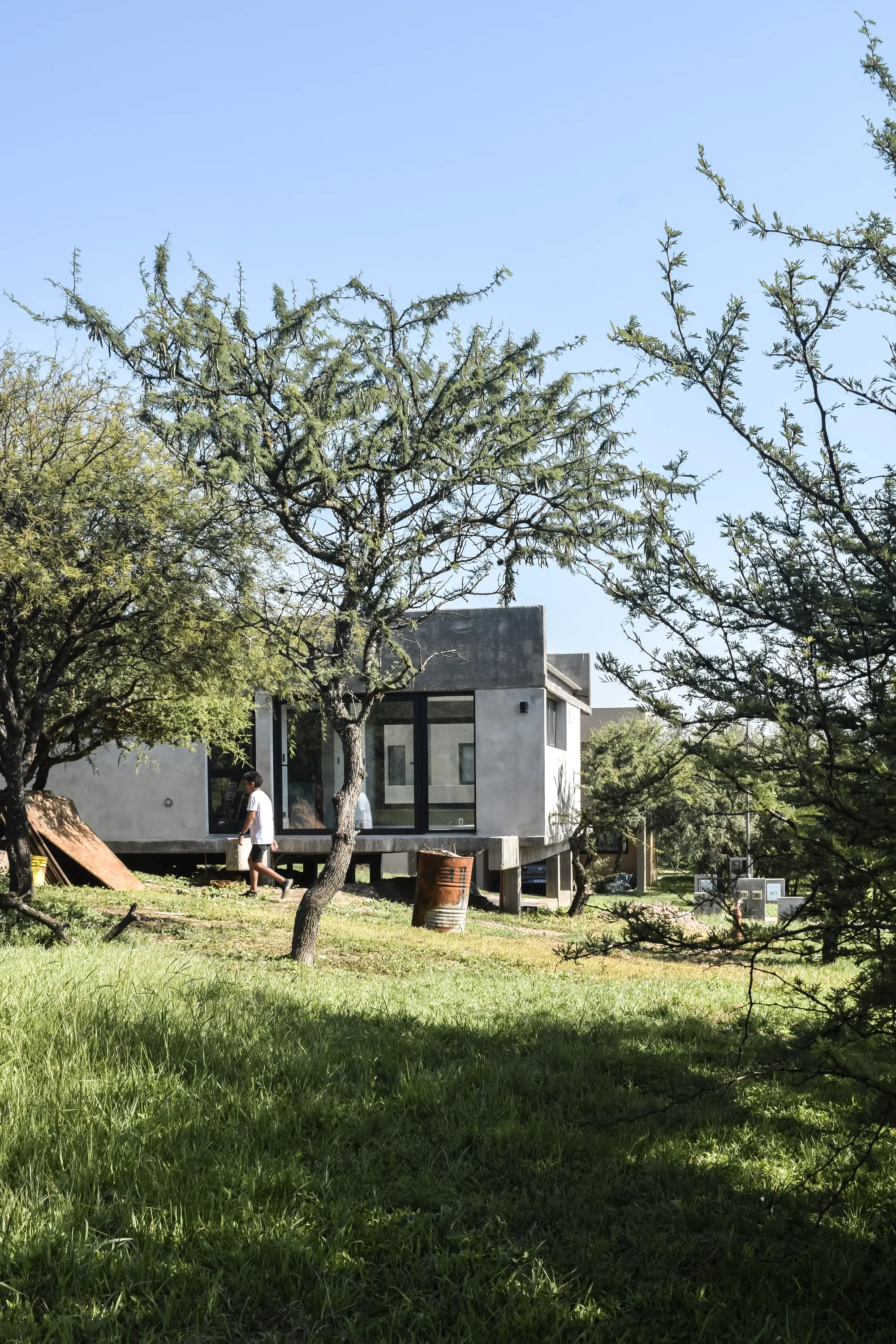
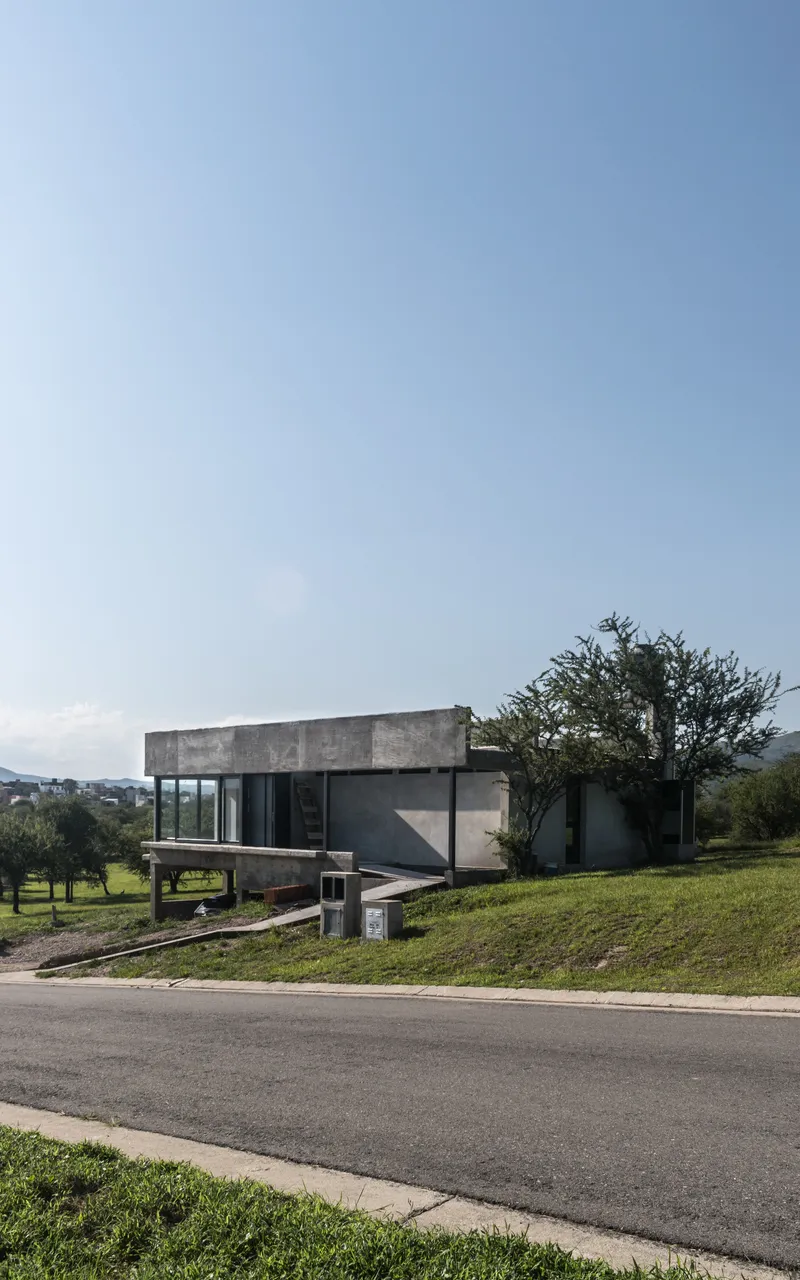
There is an honest admission at the heart of the Techi House: luxury is not measured in square meters or finishes but in the quality of the ground you stand on. ODA - Oficina de Arquitectos Lanzone - Gabarro, led by Luciana Lanzone and Max Gabarro, designed this 100 square meter dwelling in Córdoba, Argentina, around a single conviction: the place is more important than the house. That sounds like a platitude until you see how literally they took it. The house is lifted off the earth on concrete pilotis, preserving the sloped terrain, the wild grasses, and the gnarled carob trees that give this foothill site its character.
Completed in 2019, the project turns budget constraint into a disciplinary advantage. Rather than distributing limited resources across decorative gestures, the architects concentrated everything into a single structural move: a board-formed concrete frame that elevates the living volume and creates a sheltered carport and entry below. The result is a house that barely touches its site, framing views of distant mountains and suburban rooftops from a terrace that feels suspended in the canopy. It is a small project with an outsized relationship to its surroundings.
Floating in the Canopy
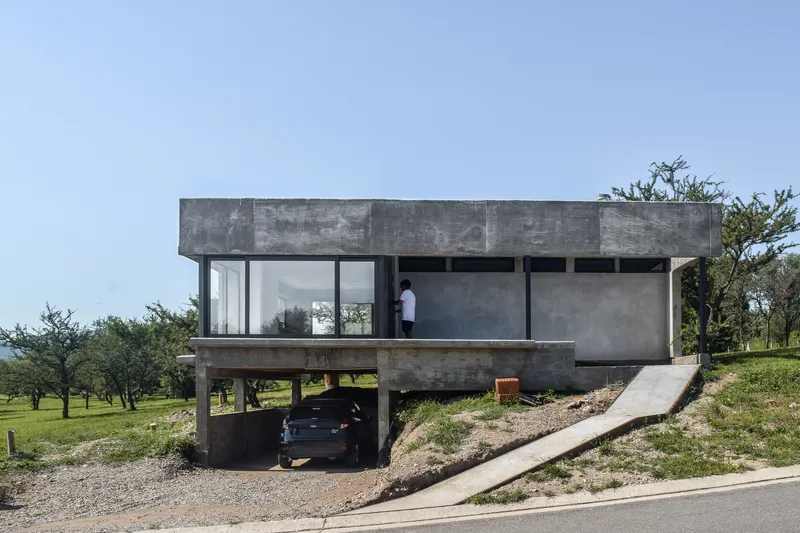
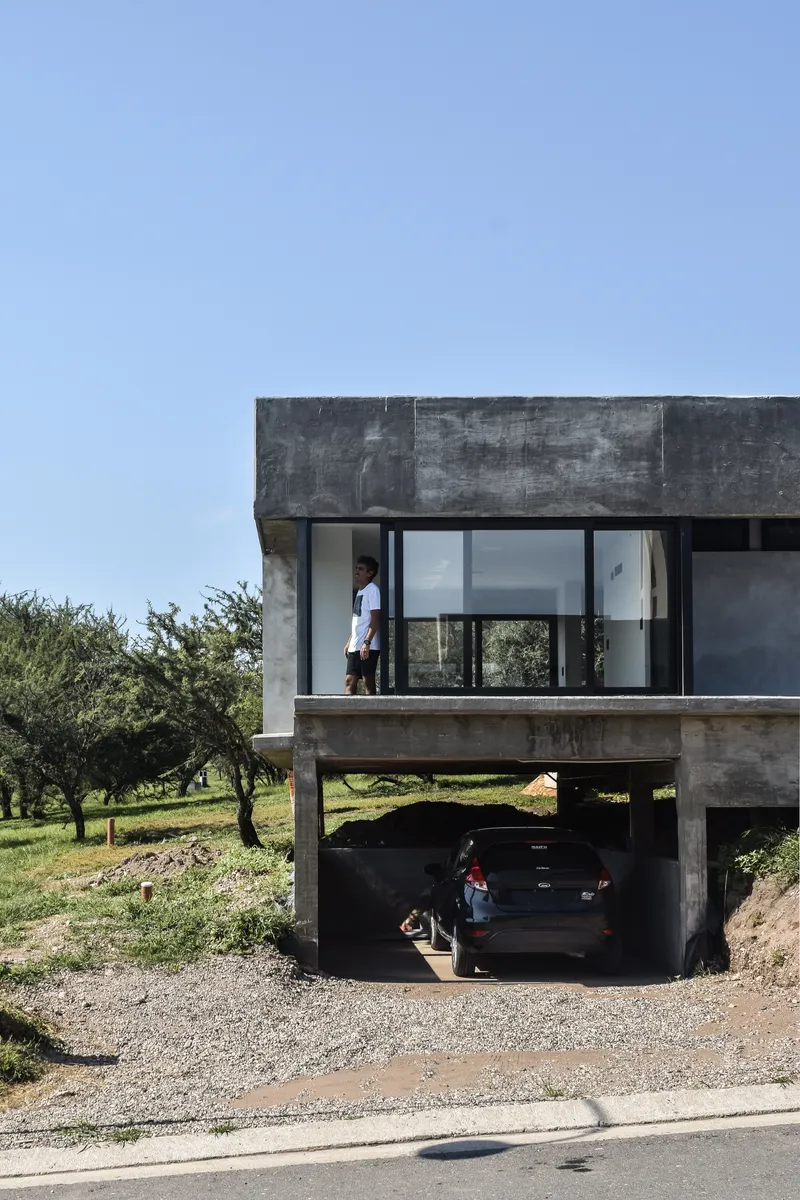
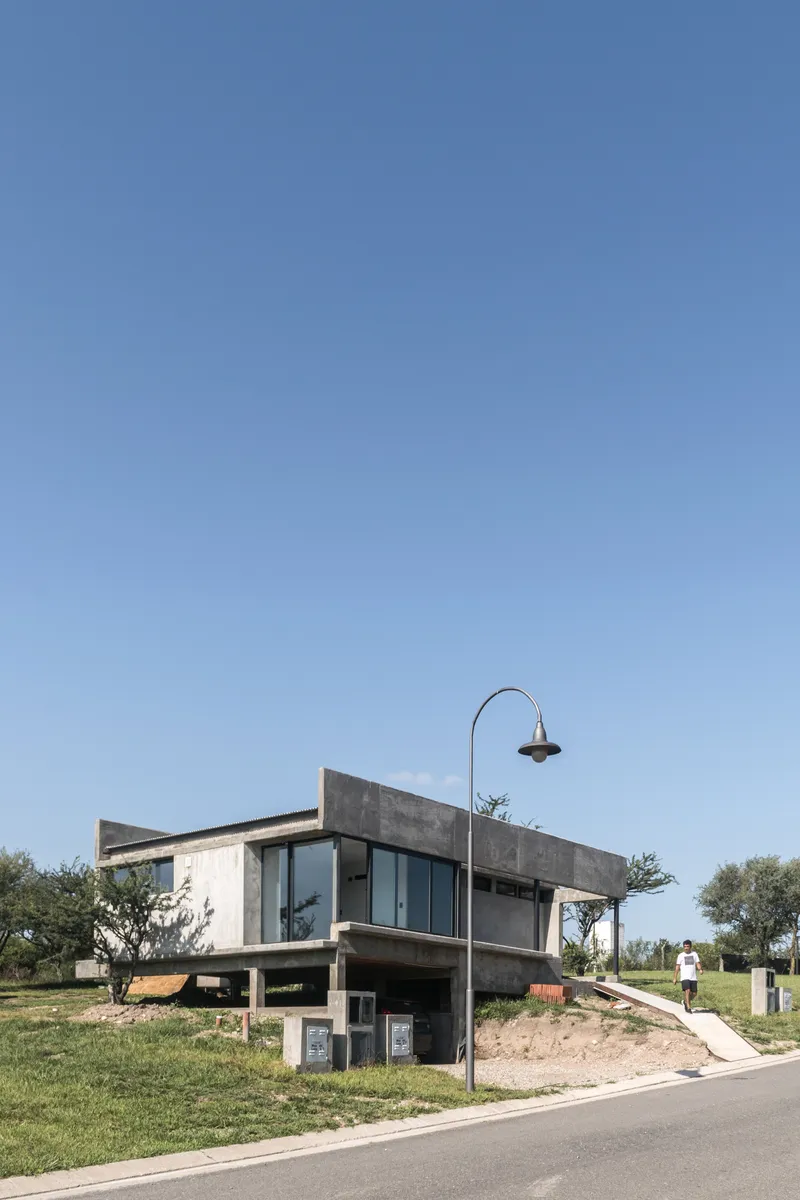
Raising the house on pilotis is not a new trick, but here it serves a purpose beyond the formal. The sloped site would have required extensive excavation and retaining walls if the house sat at grade. By lifting the volume, the architects avoided that cost and preserved the topography intact. The carport slides underneath, and the ground plane remains largely unbuilt, free for the existing carob trees to grow without constraint. A figure standing on the terrace reads the landscape at eye level with the upper branches, a detail that feels less accidental than earned.
The concrete frame is left exposed and board-formed, registering the construction process on its skin. There is no cladding to hide behind. The structural logic is the architecture: beams, columns, and slabs organized with enough discipline that nothing else is needed. From the street, the cantilevered volume projects confidently over the sidewalk, signaling that the house takes its public face seriously even on a modest budget.
Concrete as Both Structure and Finish
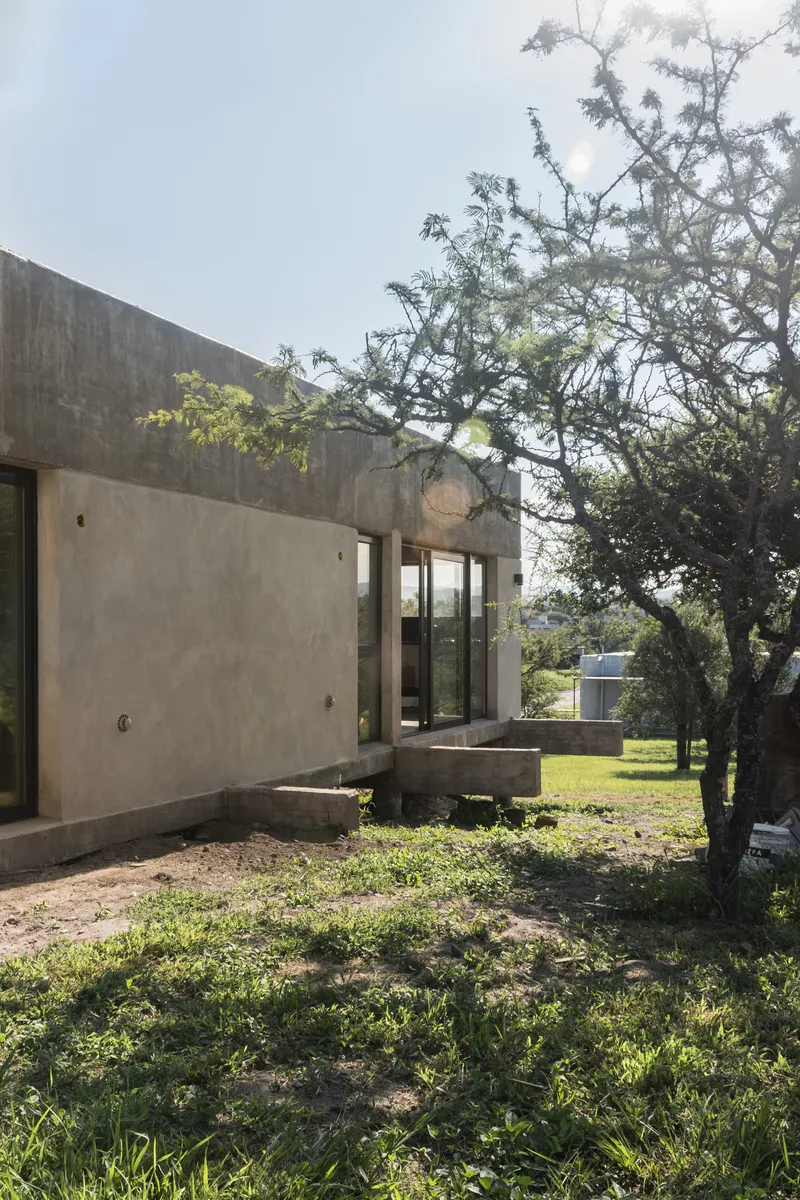
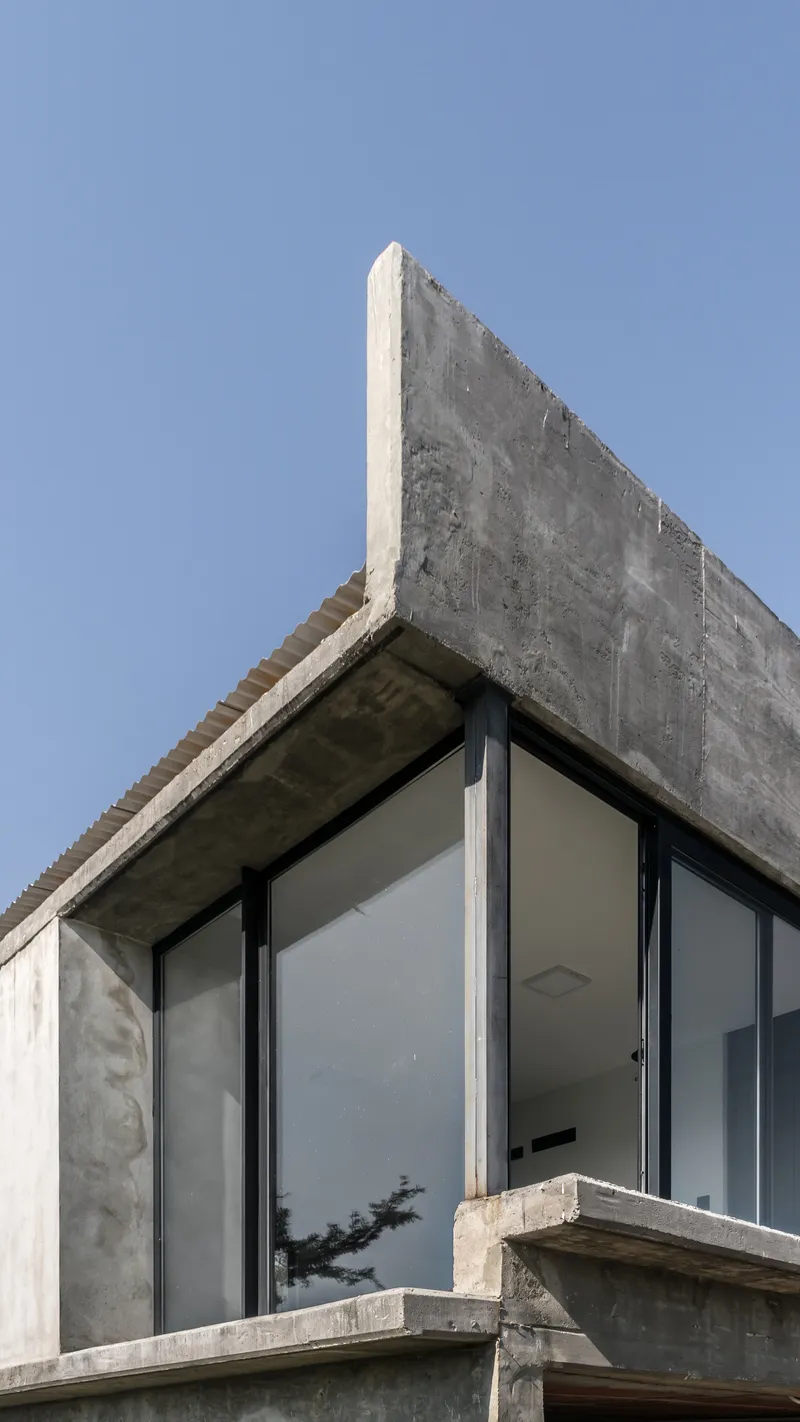
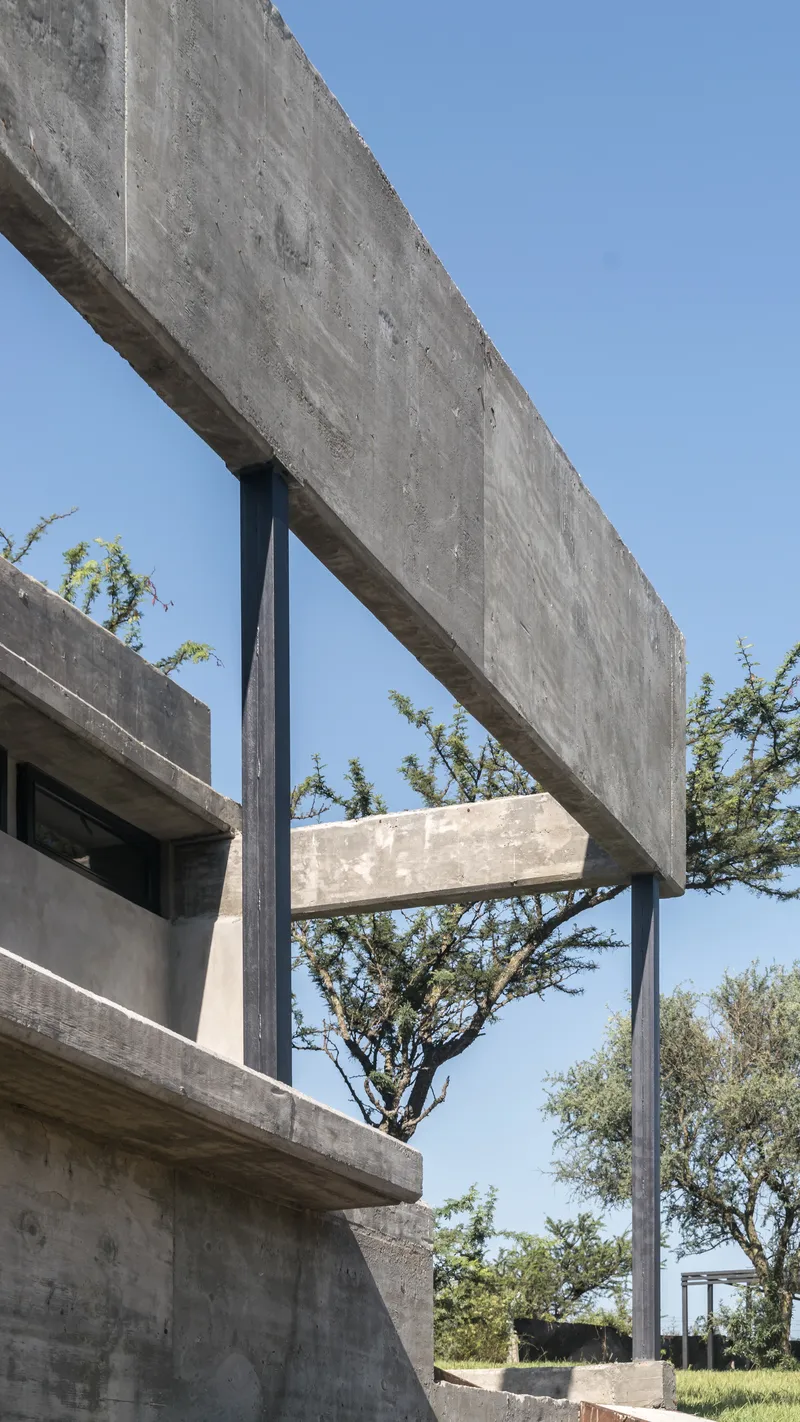
The board-formed concrete does triple duty as structure, exterior envelope, and interior surface. That consolidation is the key economic strategy. Lanzone and Gabarro did not try to make the house look expensive; they made it look precise. The formwork grain is consistent, the edges are clean, and the relationship between the concrete frame and the glazed infill panels is resolved with care. The corner condition where the parapet meets the floor-to-ceiling glass is especially tight, with the exposed soffit running uninterrupted from inside to out.
One image captures a cantilevered beam framing a single carob tree against a clear sky. It is the kind of composition that only works when the architecture is restrained enough to let the landscape do the talking. The tree is twisted and ancient; the beam is straight and new. That contrast is the project's thesis in a single frame.
A Threshold Between Ground and Sky
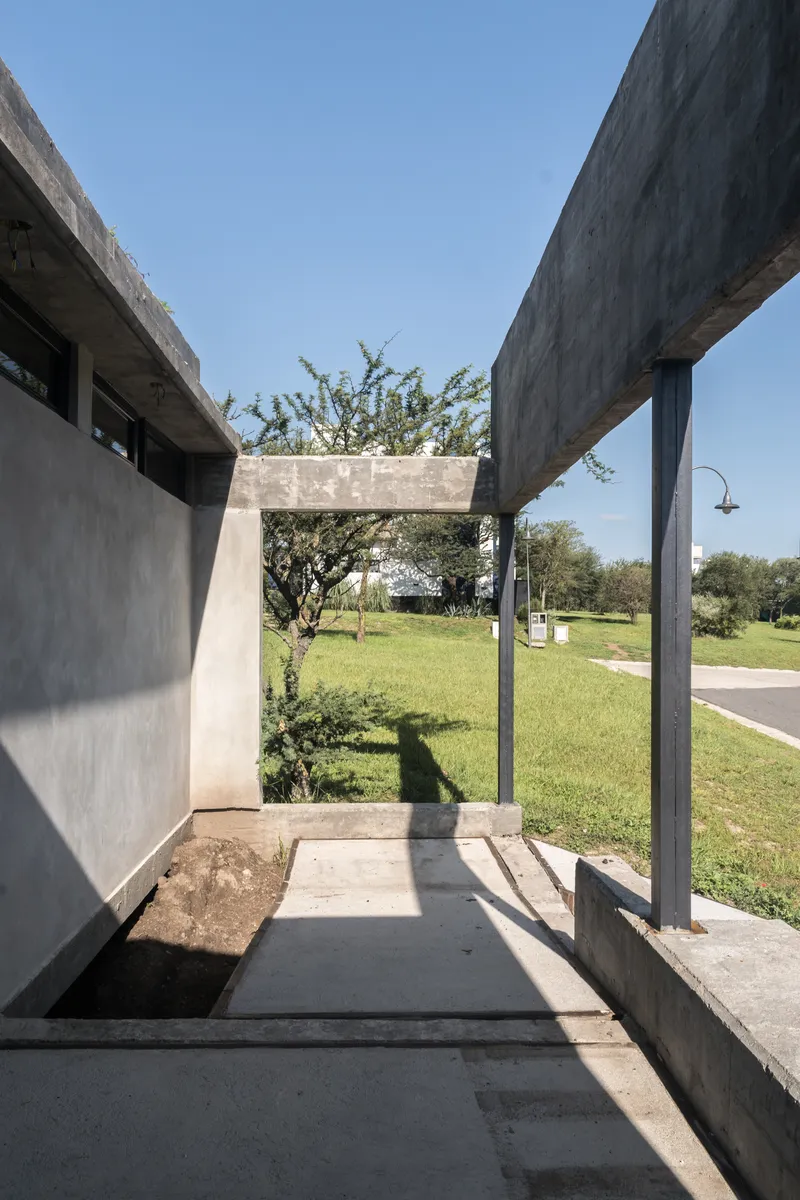
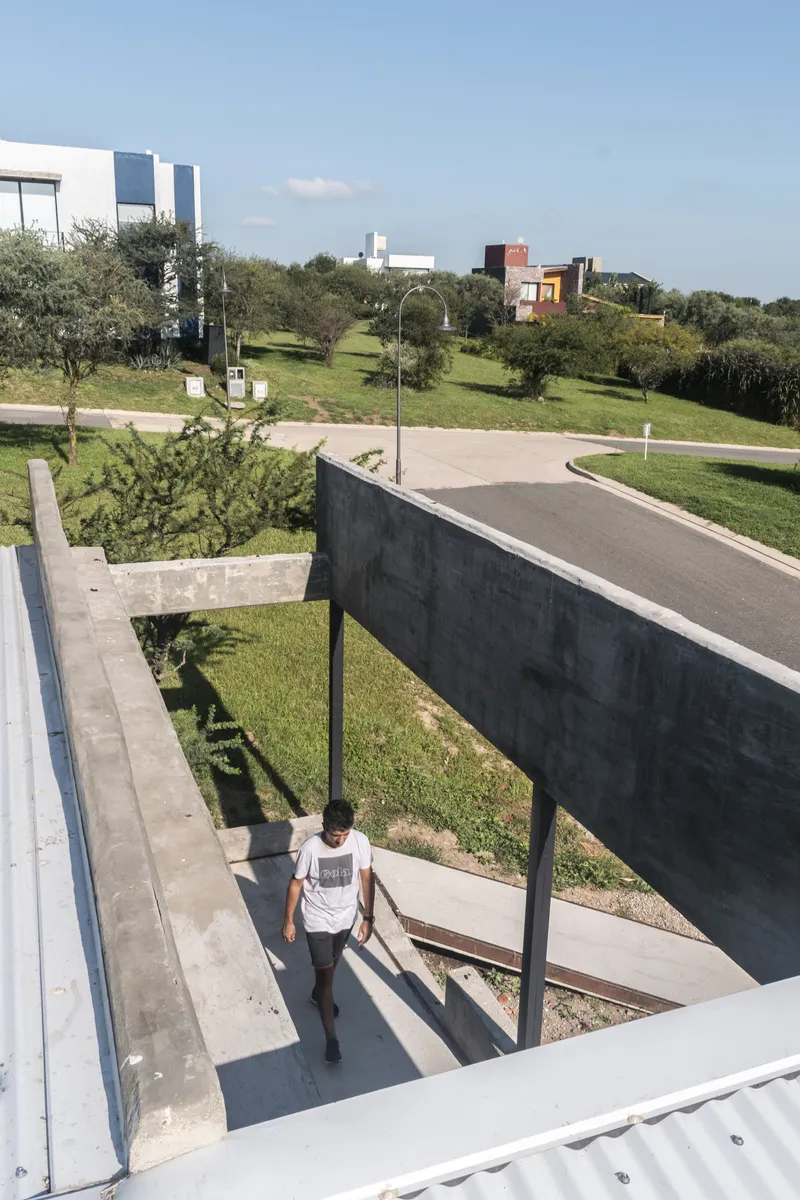
The entry sequence is worth unpacking. You arrive at street level and pass through a concrete frame that acts as a threshold, with a planted tree and a view through to the green lawn beyond. Then a bridge connects the street to the elevated dwelling, crossing above the open ground plane. It is a compressed promenade that shifts your perception of the house from solid object to inhabited frame. You are not walking into a building so much as ascending into a landscape.
The bridge detail, visible from overhead, also reinforces the house's relationship to its neighborhood. It is a connector, not a barrier. The dwelling does not wall itself off from the suburban street; it engages it directly, offering the passerby a glimpse underneath and through. That generosity is notable in a private house, and it comes from the structural decision rather than any applied gesture.
Interior Framing
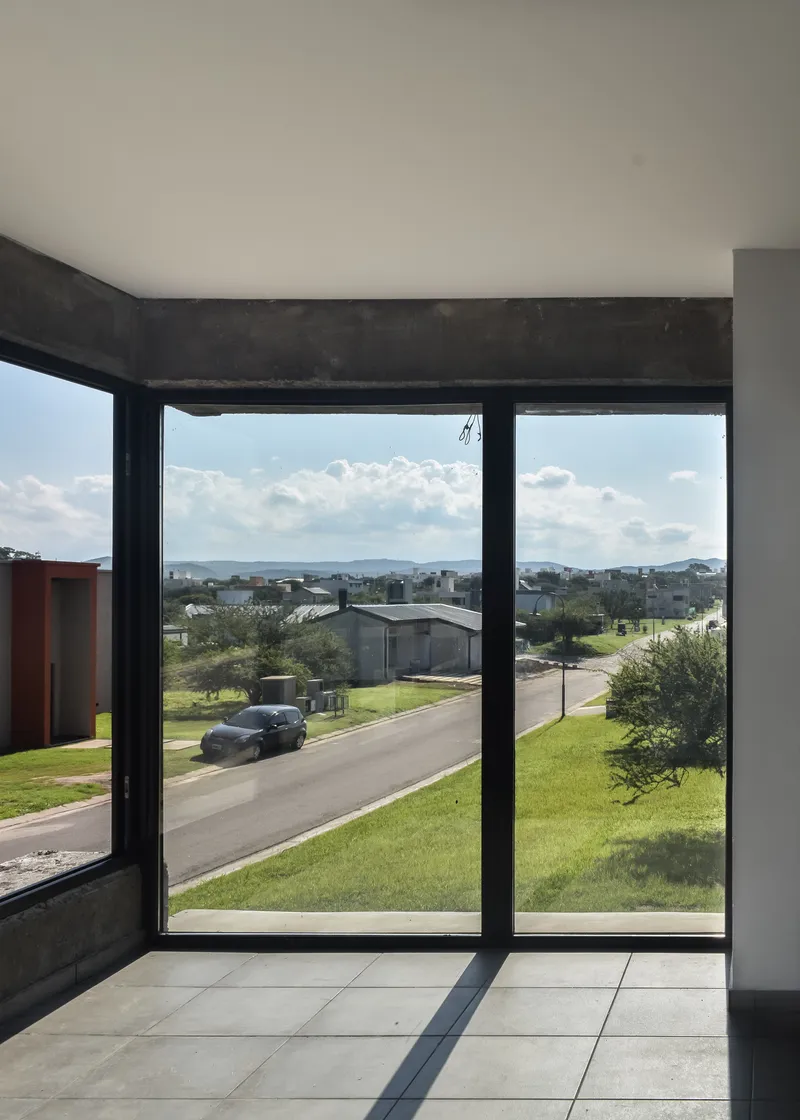
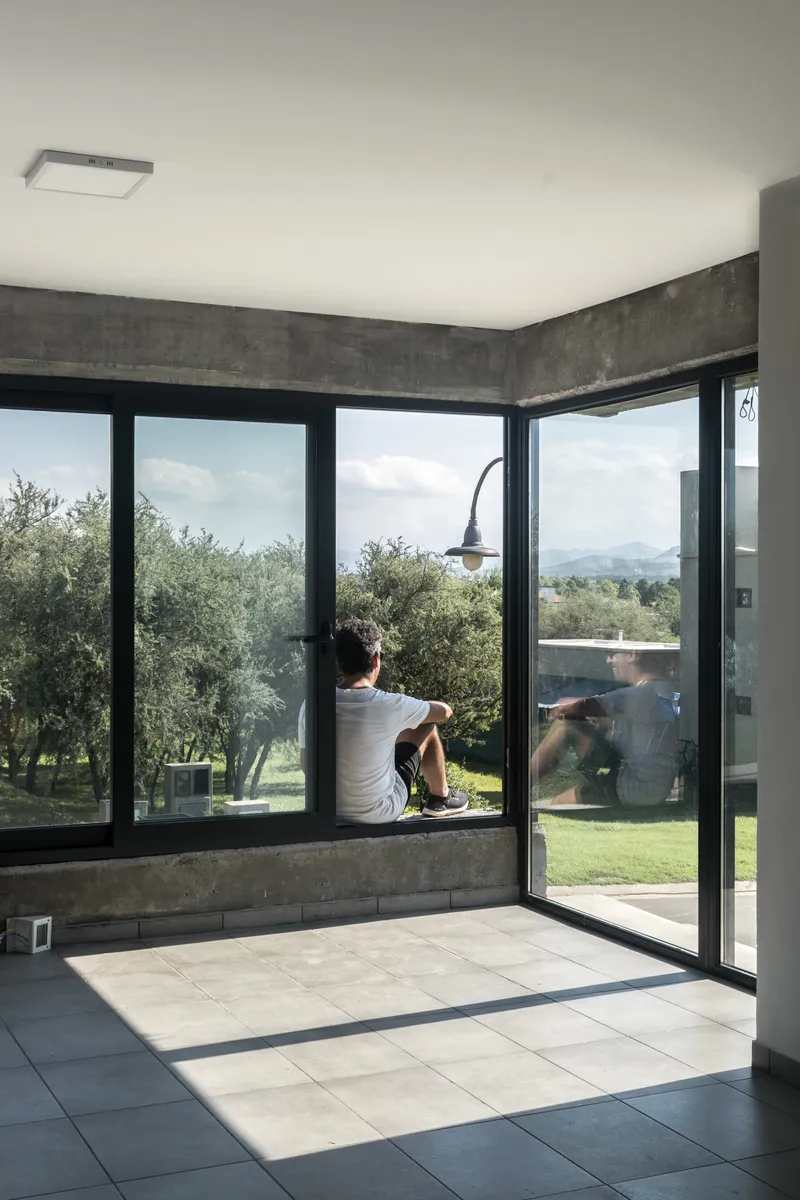
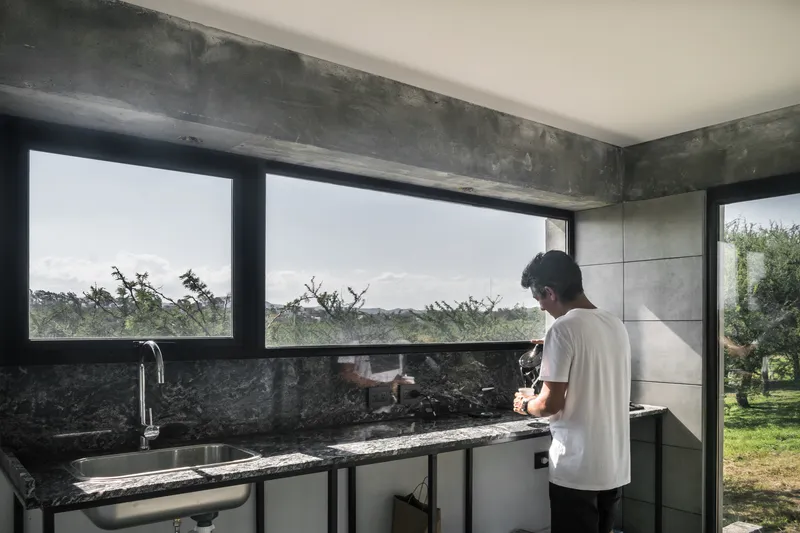
Inside, the 100 square meters are organized as an open plan with floor-to-ceiling glazing on multiple sides. The windows do not just let light in; they compose specific views. From the kitchen, a horizontal slot frames distant trees in a register that feels almost cinematic. From the living area, full-height glass dissolves the wall entirely, bringing the suburban street and distant hills into the room. A person seated on the window sill becomes part of the composition, scaled against the concrete beam soffit above and the landscape beyond.
The interior finishes are deliberately restrained: gray tile floors, polished stone countertops, black metal door frames. Nothing competes with the views. The budget enforced a material economy that a more generous commission might have undermined with gratuitous detail. Here, every surface earns its place.
Living Outdoors at Elevation
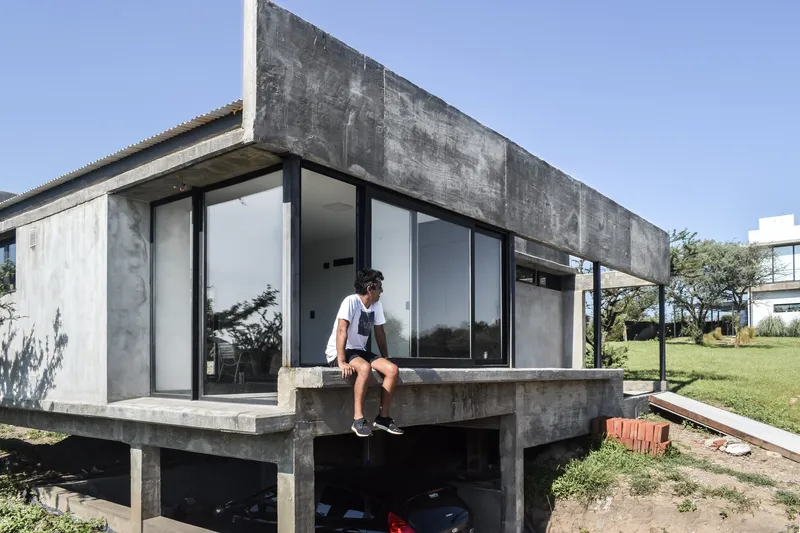
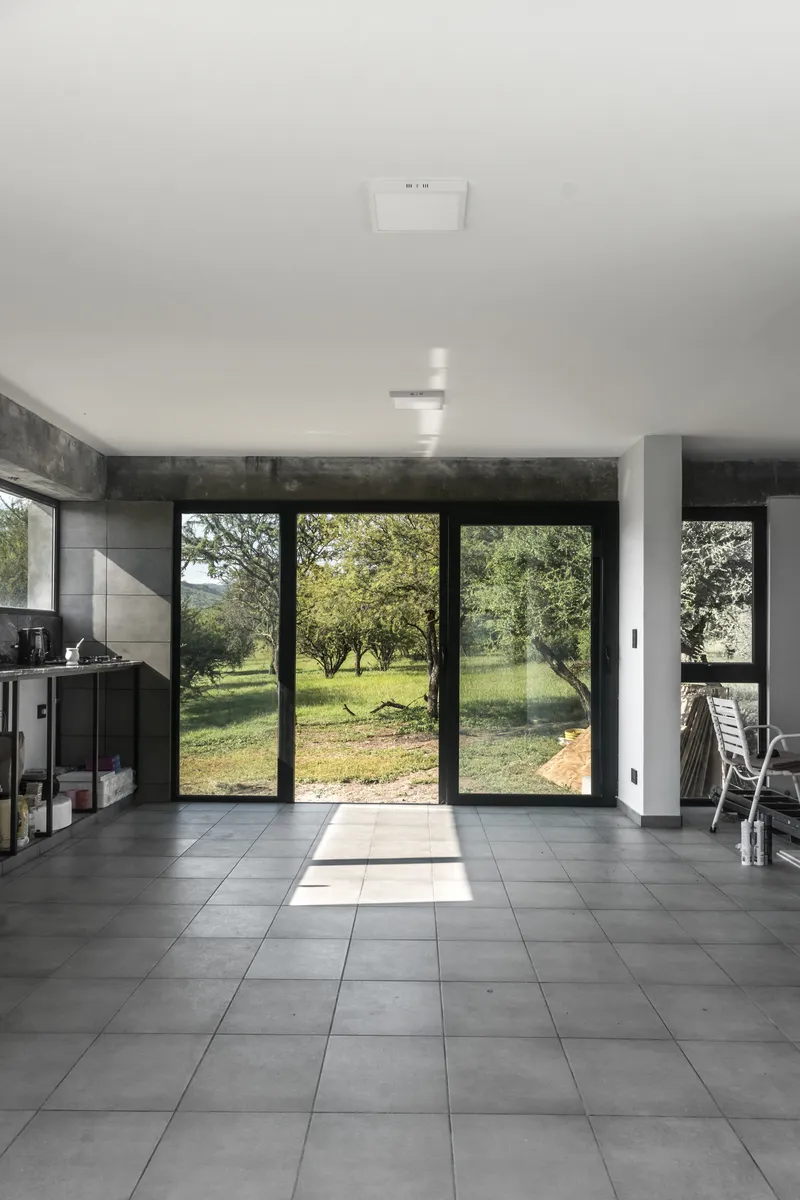
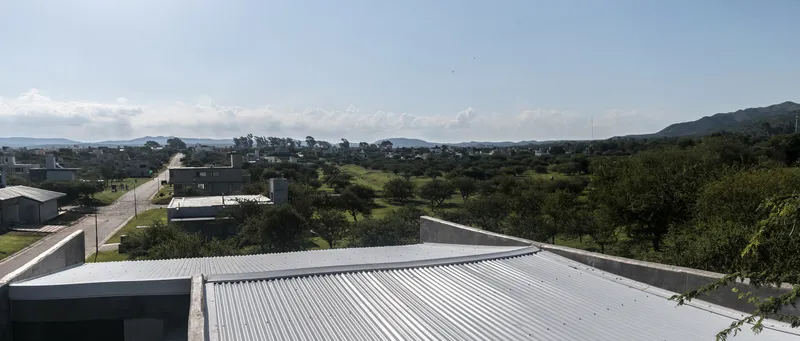
The terraces are as important as the enclosed rooms. The corner deck, where a figure sits at the parapet edge overlooking the carport below, extends the living space outdoors without adding conditioned area to the budget. Sliding glass doors open the interior directly to the garden, collapsing the boundary between inside and out. The corrugated metal roof planes extend over the suburban landscape, their low profile keeping the house subordinate to the mountain horizon beyond.
There is something quietly radical about designing a house where the terrace might be the best room. It acknowledges that in Córdoba's climate, surrounded by mountains, pastures, and carob trees, the most valuable square meters are the ones with no roof at all.
Landscape as Co-Author
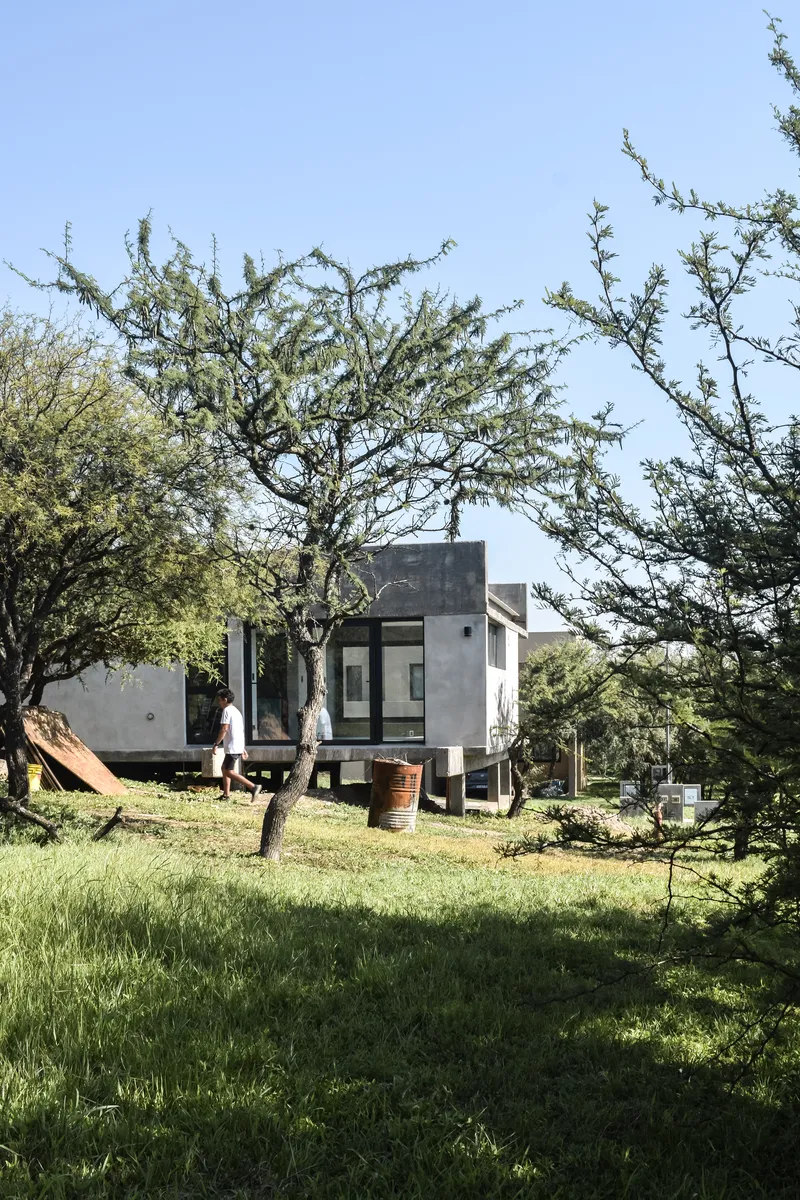
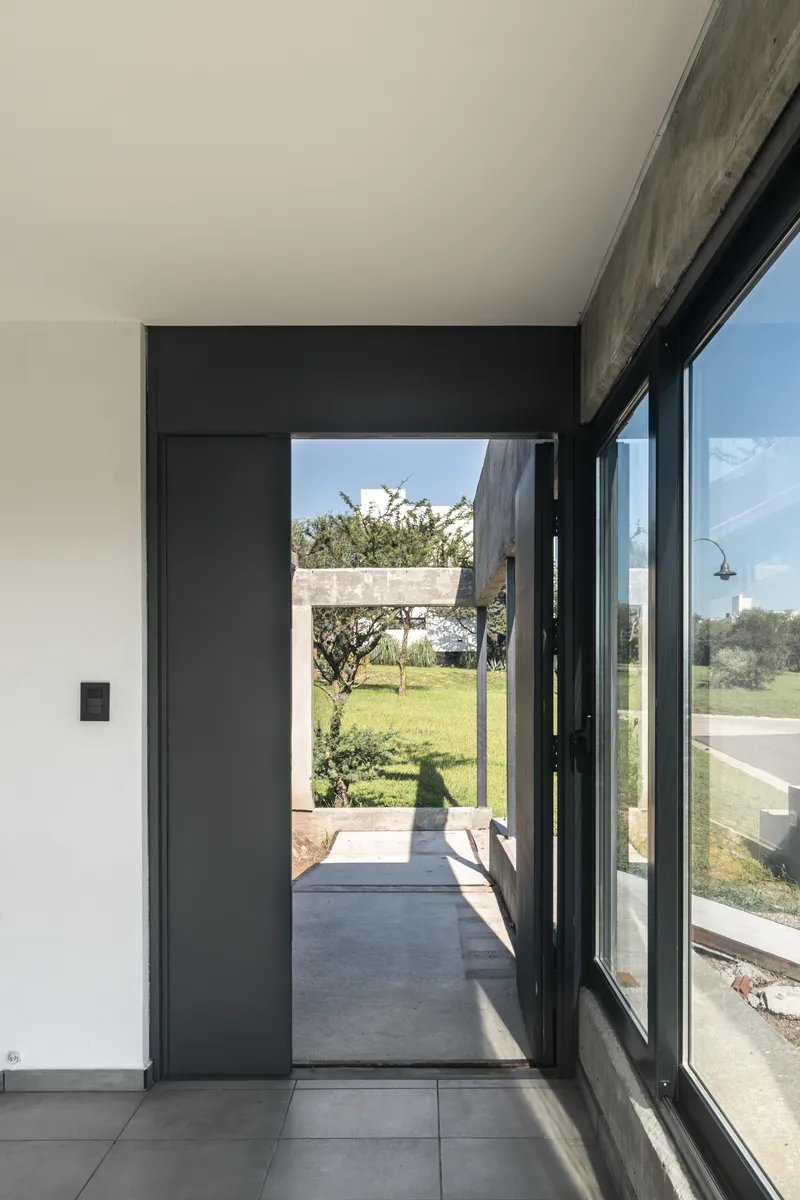
The gnarled trees and wild grasses that surround the house are not landscaping in the conventional sense. They are the pre-existing condition that the architecture was designed to preserve. The pilotis strategy keeps the root zones intact. The elevated volume avoids casting permanent shadow on the undergrowth. The result is a house that looks like it was dropped into an existing grove, which is precisely the point. When the architects said the place is more important than the house, they meant that the existing ecology has more value than any garden they could plant.
Plans and Drawings
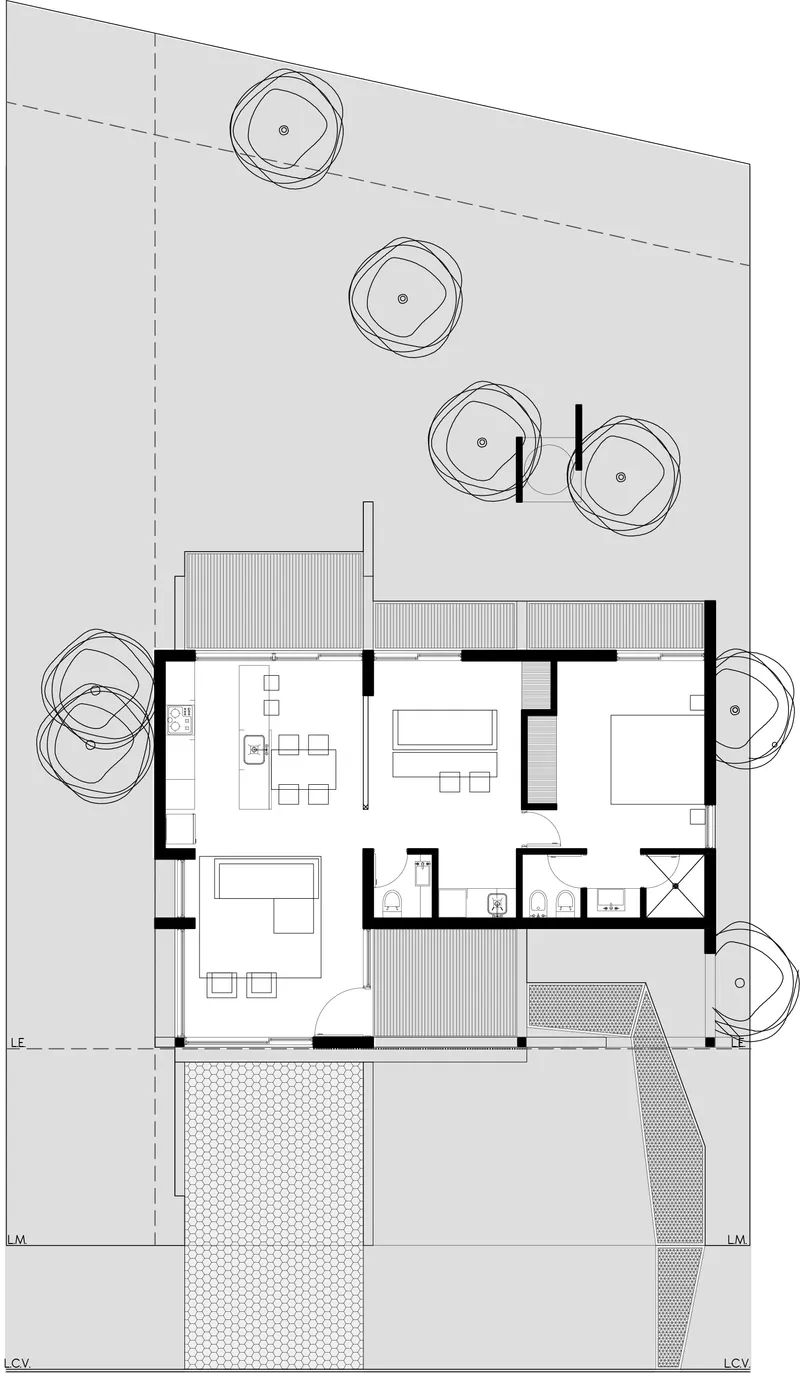
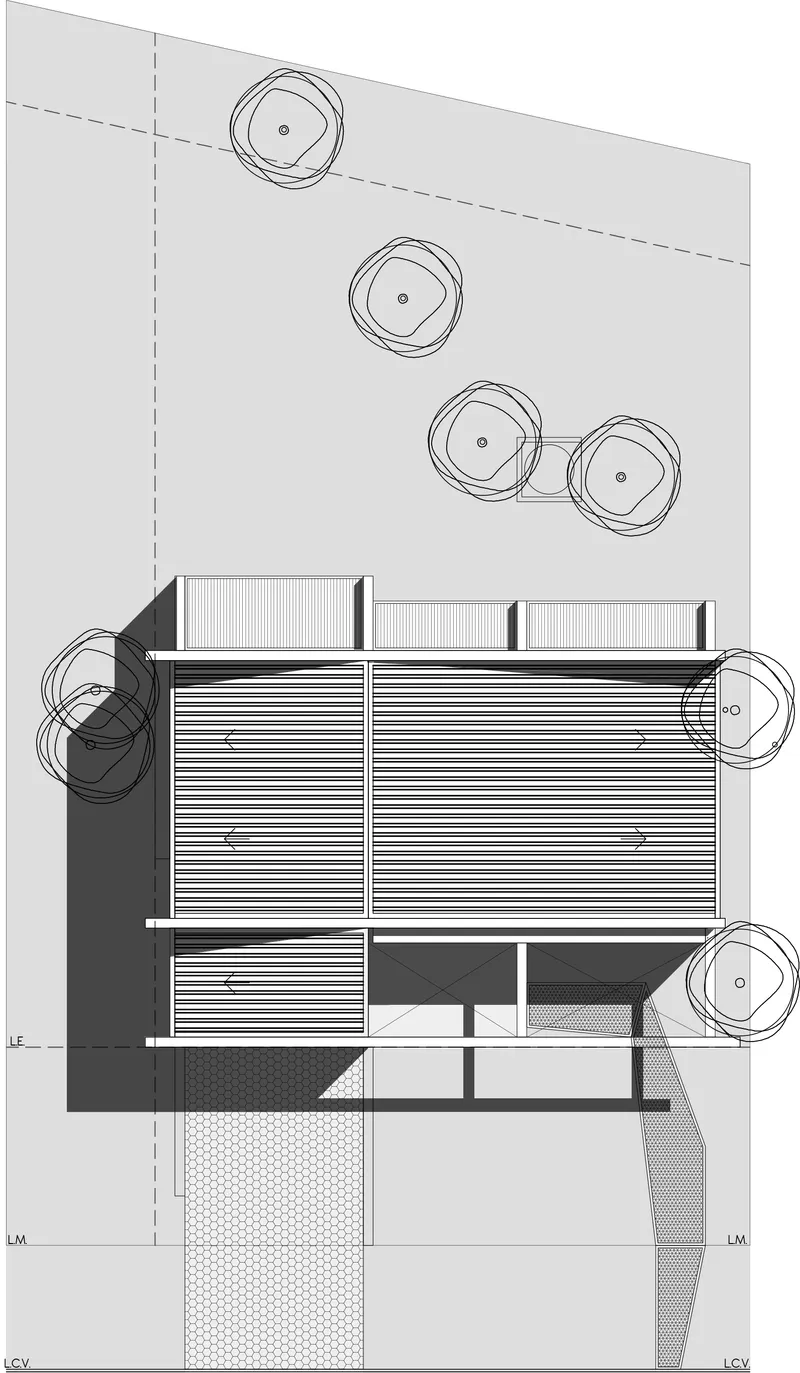
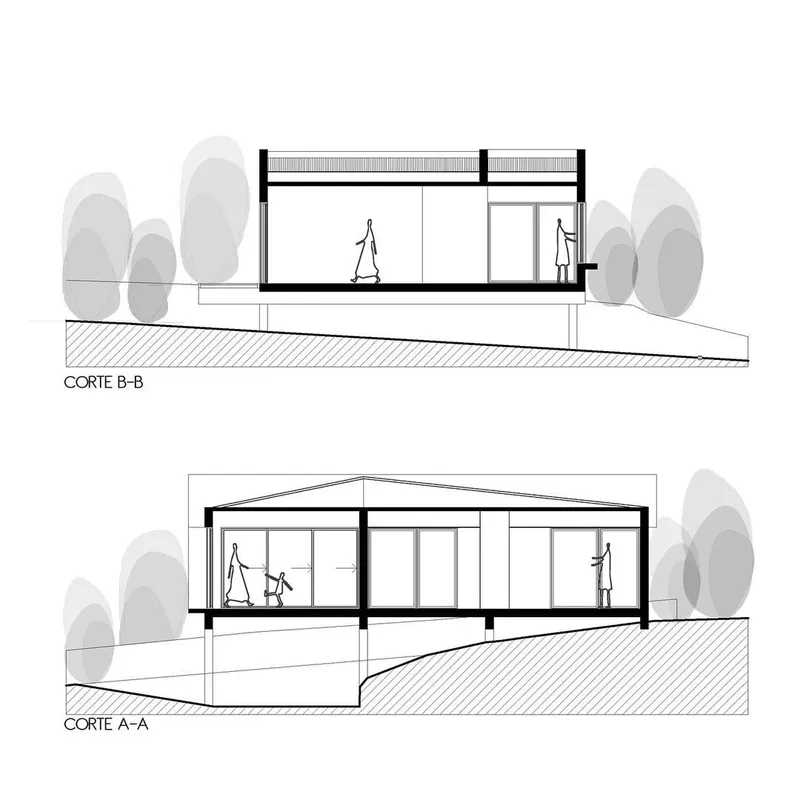
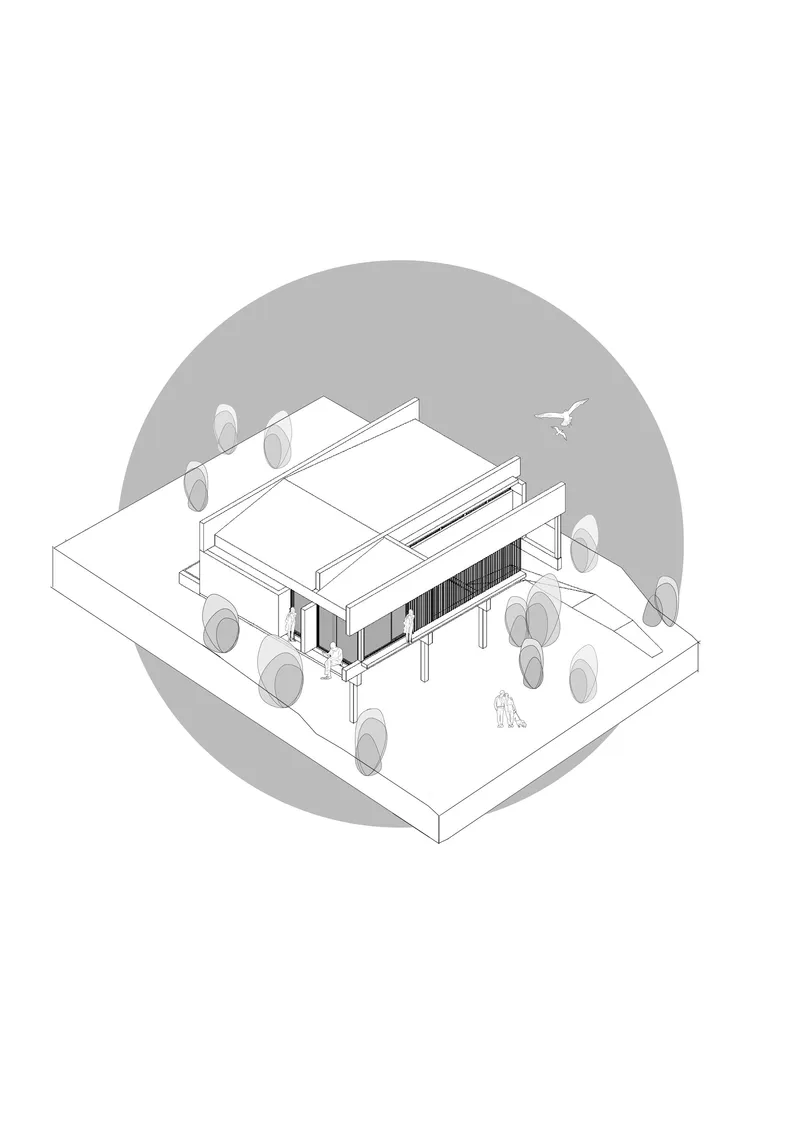
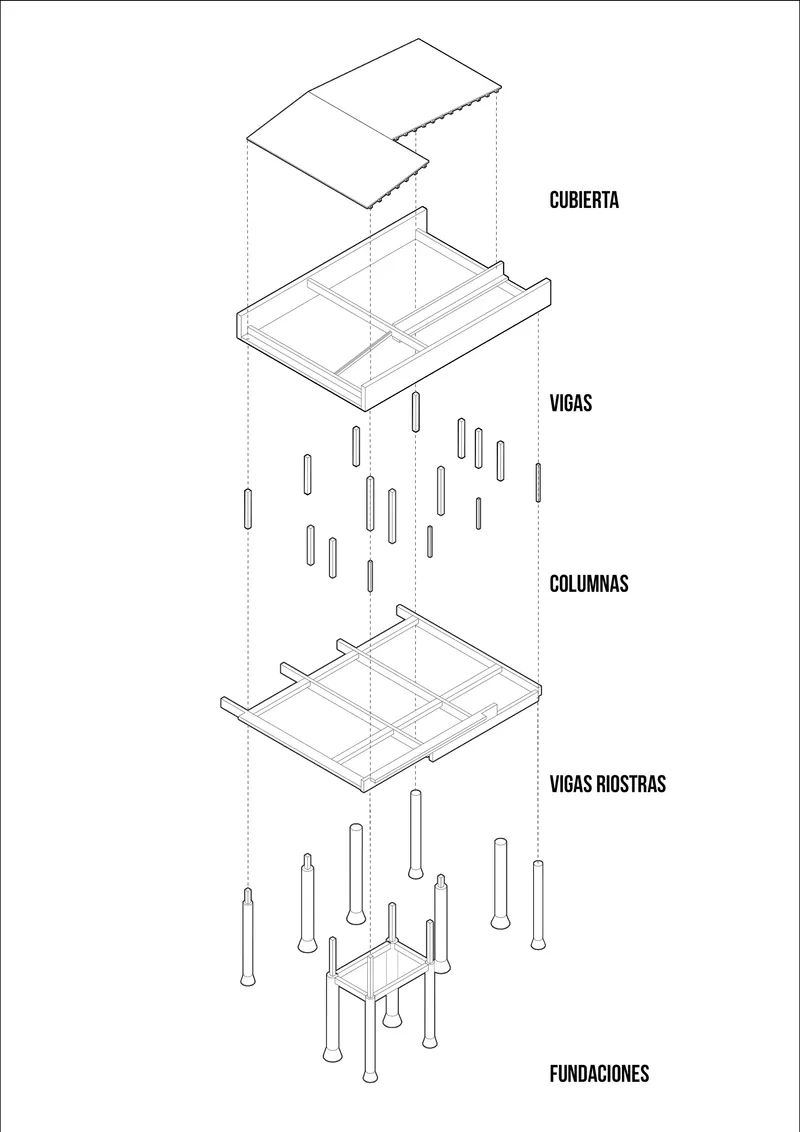
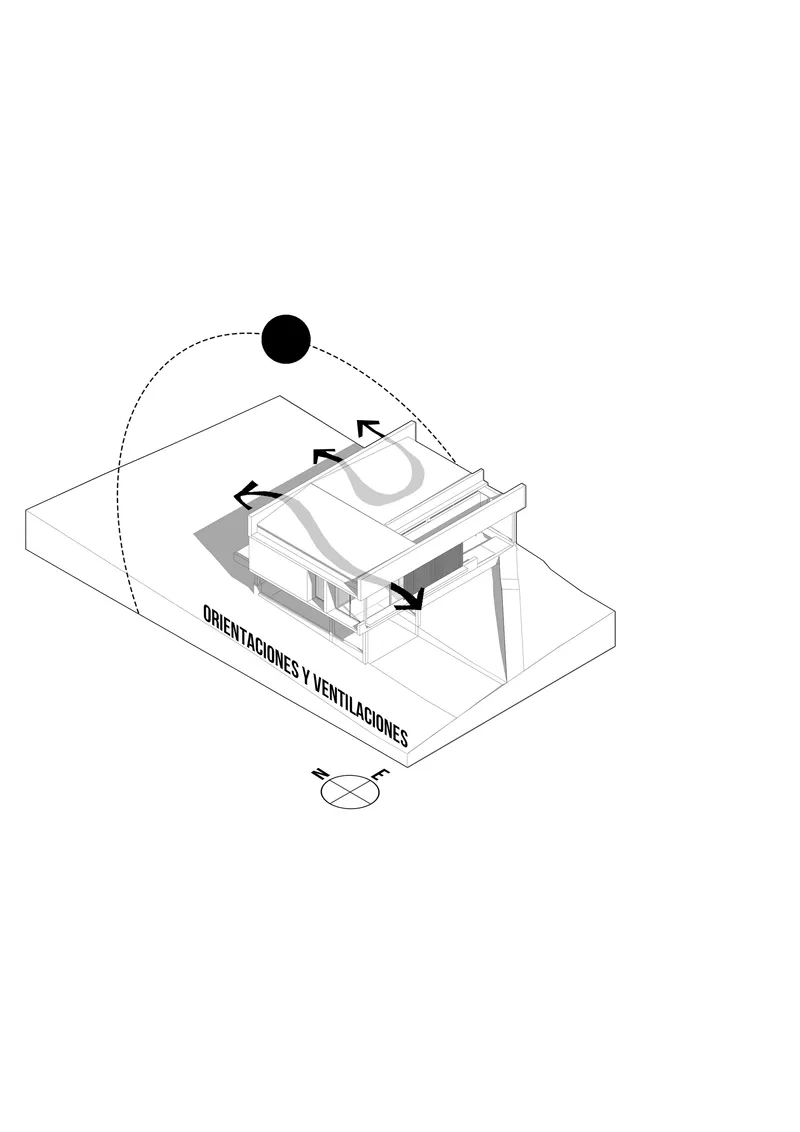
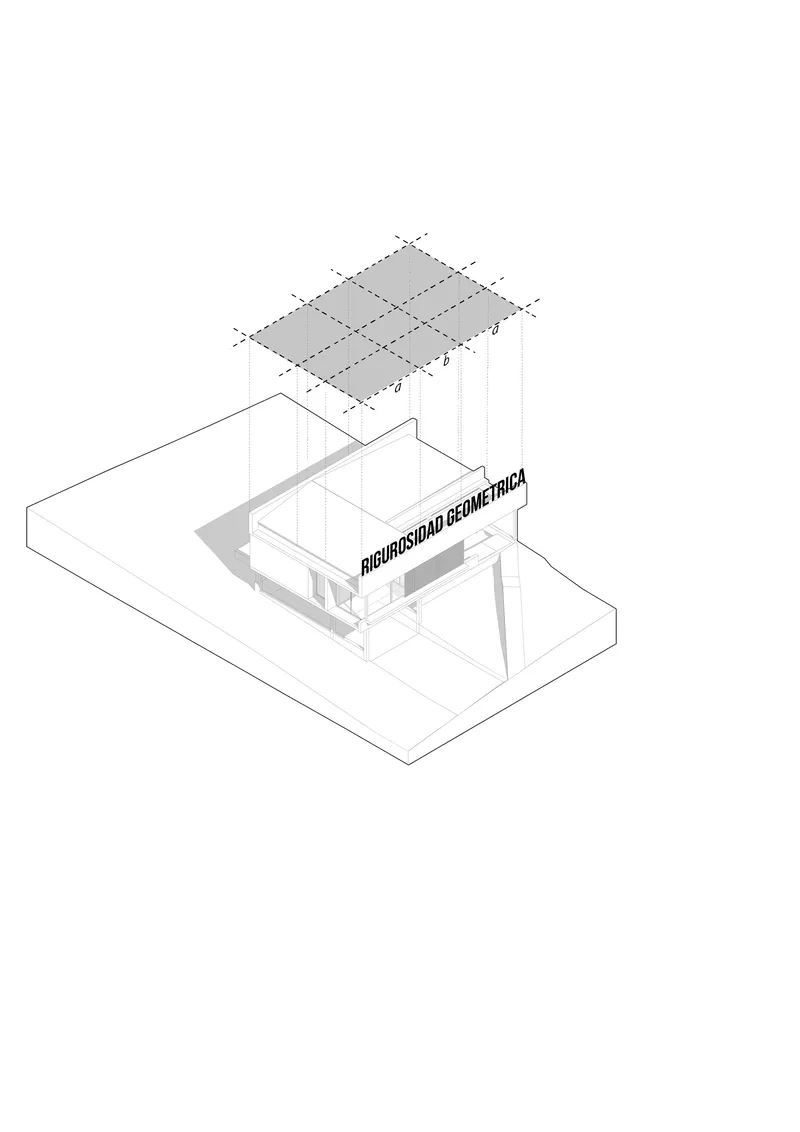
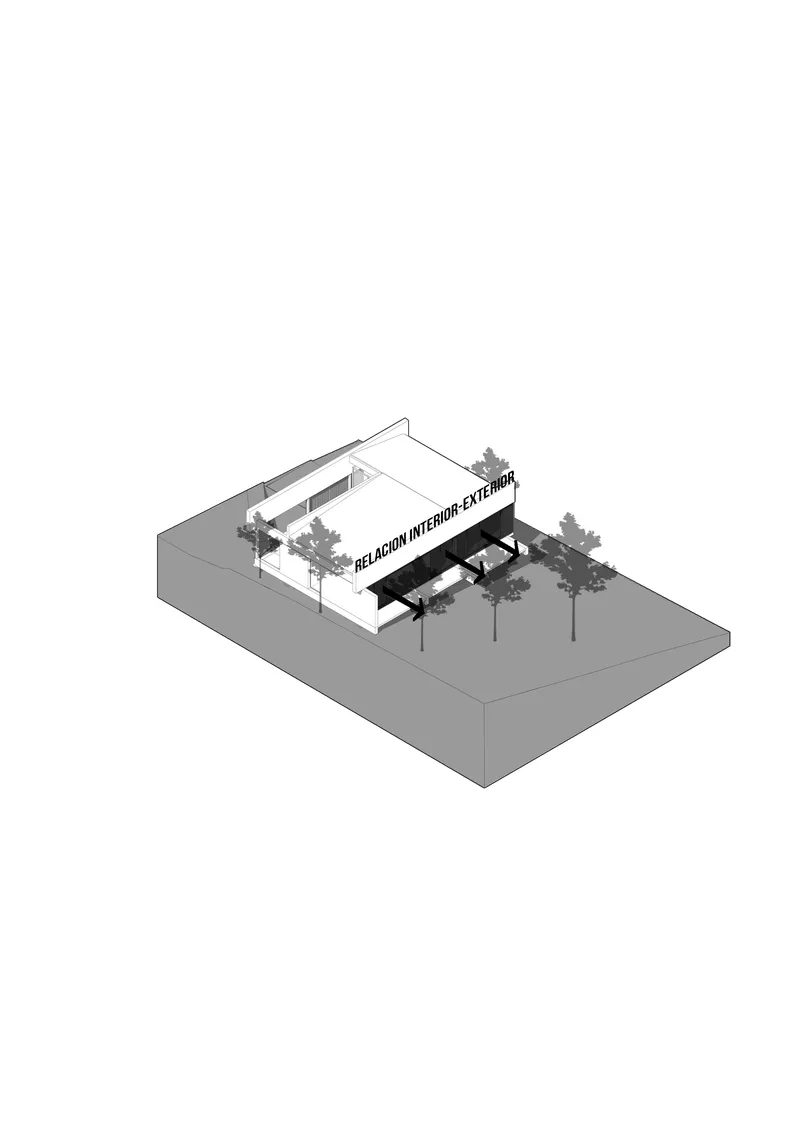
The drawings reveal the full clarity of the structural strategy. The floor plans show a compact rectangular volume organized around an open living area with a single bedroom, bathrooms, and outdoor terraces. The section drawings confirm the relationship between the flat-roofed pavilion and the sloping terrain, with the pilotis absorbing the grade change. The exploded axonometric is especially instructive, breaking the house into its constituent layers: foundation, columns, beams, and roof. Each layer is legible on its own, which speaks to the economy of means that defines the project.
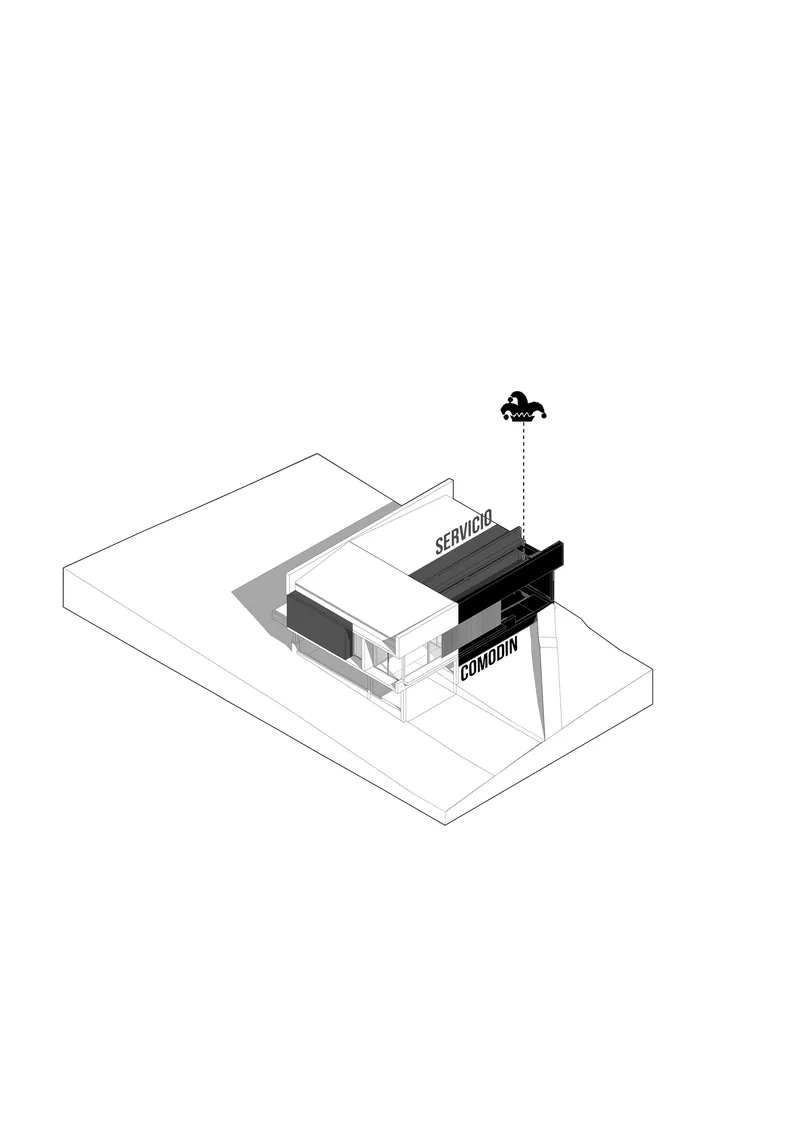
The environmental diagrams are worth studying. One axonometric maps solar orientation and ventilation paths through the pavilion, showing how cross-ventilation is achieved through the open plan and strategically placed openings. Another diagram separates service zones from circulation, illustrating how the compact program is organized to maximize the open living area. These are not decorative drawings; they are evidence that the simplicity of the built result is the product of rigorous analysis, not naivety.
Why This Project Matters
The Techi House matters because it demonstrates that constraint and quality are not opposites. With 100 square meters and a limited budget, Lanzone and Gabarro produced a house that is structurally coherent, environmentally responsive, and deeply connected to its site. They did not try to make a small house look bigger or a cheap house look expensive. They made an honest house that derives its spatial generosity from its relationship to the landscape rather than from enclosed area.
In a profession that often equates ambition with scale, projects like this are a necessary corrective. The most interesting move here is the decision to spend the budget on structure rather than finish, and to treat the existing trees and topography as the project's primary assets. The house barely touches the ground, and that restraint is its greatest luxury. For anyone designing on a tight budget in a landscape worth preserving, the Techi House offers a clear and replicable lesson: invest in the frame, trust the place, and get out of the way.
Techi House by ODA - Oficina de Arquitectos Lanzone - Gabarro (Luciana Lanzone, Max Gabarro), Córdoba, Argentina. 100 m², completed 2019. Photography by Facundo Mauricio Soraire.
About the Studio
Share Your Own Work on uni.xyz
If projects like this are the kind of work you want to make, uni.xyz is a place to publish your own, find collaborators, and enter design competitions.



Popular Articles
Popular articles from the community


The Musturak Paradise: Senior Living Architecture for a Connected Future in Temara, Morocco
The Musturak Paradise reimagines senior living architecture in Temara via private homes, social spaces, culture, community, and shared care.

Hill & Cross Opera: Sculptural Opera House Architecture Shaped by Tallinn’s Landscape and Identity
Hill & Cross Opera reimagines opera house architecture in Tallinn through its sculptural hill, civic plaza, glass wave and a luminous cross.

Co-Life: Senior Housing Design That Reconnects Older Adults With the City
Co-Life reimagines senior housing design through healing gardens, shared streets, workshops, and a sustainable community across generations.

Co-life: Sustainable Architecture for Age-Friendly Community Living
Co-life reimagines sustainable architecture for seniors through courtyards, rammed earth, shared gardens, and spaces designed for belonging.


Similar Reads
You might also enjoy these articles

Bao Huynh Watercolor Atelier: A Serene Art Retreat in Hội An
Bao Huynh Watercolor Atelier in Hội An blends multifunctional art spaces, sustainable design, local materials, and family-friendly living in a serene environment.

Atelier Macri Concept Store Interior Design by CASE-REAL
Atelier Macri store features a "ko" counter, walnut wood details, cork displays, blending retail, gallery, and seamless customer experiences.

Manuel Vargas Izquierdo Stadium and High-Performance Sports Center: Architectural Excellence in Jalpa de Méndez
The Manuel Vargas Izquierdo Stadium blends sustainable design, inclusive sports facilities, and cultural-inspired architecture, revitalizing Jalpa de Méndez’s public spaces.

KAKR Buluh Awar Hall: Revitalizing Community and Ecology Through Bamboo Architecture
Community built bamboo hall revitalizes Buluh Awar village, empowering youth, restoring ecology, celebrating vernacular craftsmanship through sustainable architecture and culture.


Explore Power Generation Competitions
Discover active competitions in this discipline


Challenge to design mud housing for contemporary communities


Challenge to reimagine the Iron Throne


Photograph architecture without architects


Illustrate the lost glory of Angkor Wat - Render Challenge
Comments (0)
Please login or sign up to add comments
No comments yet. Be the first to comment!