
ODA New York Wraps a 19-Story Upper West Side Tower in Hand-Molded Danish Brick
At the corner of 93rd and Broadway, 2505 Broadway reinterprets Manhattan's masonry tradition with 41 luxury residences and curved brick piers.

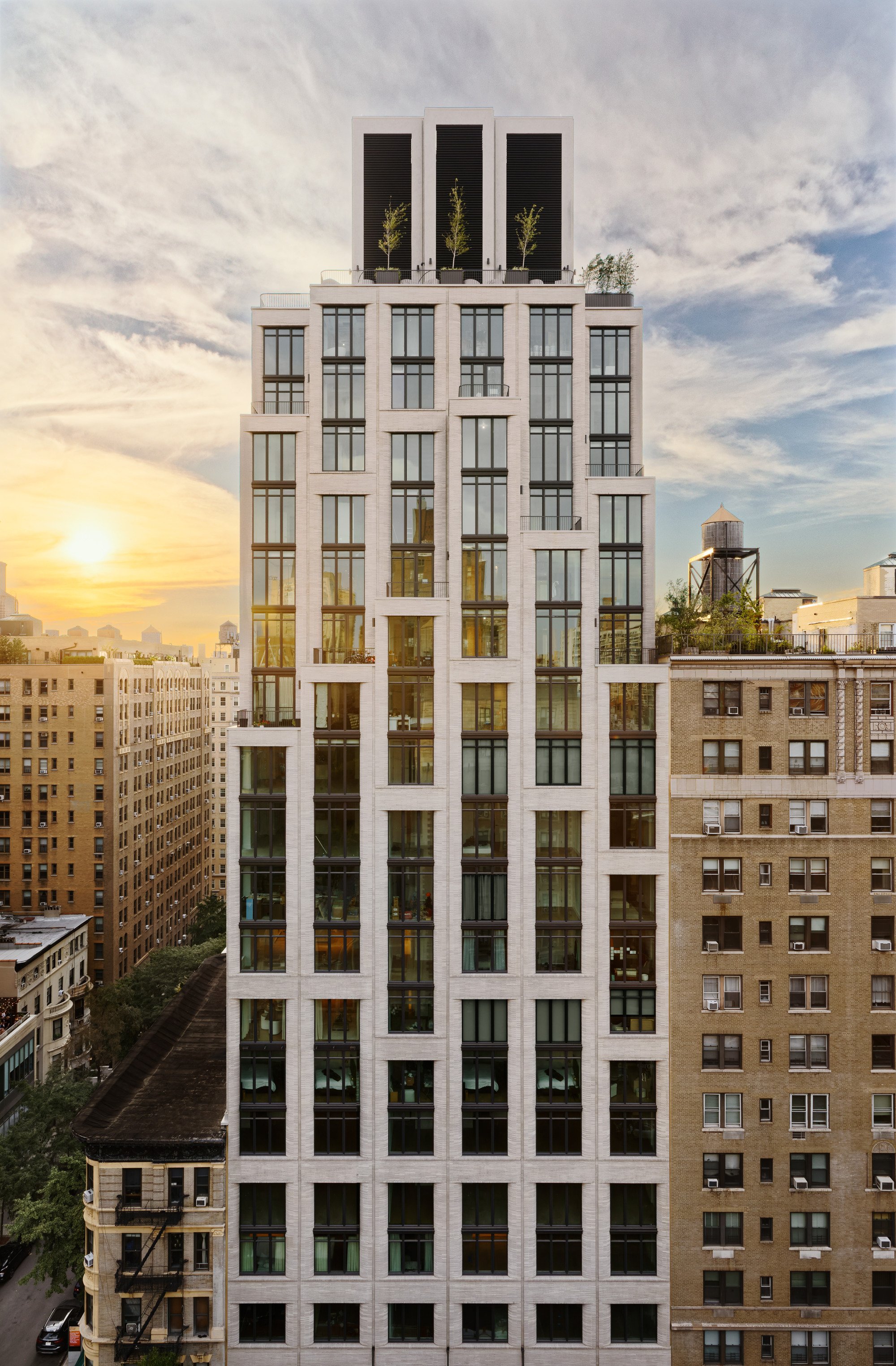
The Upper West Side has never been short on masonry towers, but few recent additions treat brick with the kind of obsessive care that ODA New York brings to 2505 Broadway. Rising 210 feet at the corner of 93rd Street, the 19-story condominium does something increasingly rare in luxury residential construction: it leads with craft. The facade is composed of custom curved bricks, hand-molded in Denmark by Petersen Tegl, an eighth-generation brickmaker. That material choice, paired with rounded vertical piers that taper into terraced setbacks at the crown, gives the building a rhythm that feels both historically grounded and entirely its own.
What makes the project genuinely interesting is how ODA founder Eran Chen describes the design process: from the outside in. That phrase gets tossed around loosely, but here it reads as credible. The building's massing, its setbacks, its oversized windows with historically inflected mullions, all of it was calibrated to the Upper West Side's particular scale before the floor plans were drawn. The result is a 75,000-square-foot tower housing 41 units, most averaging just under 2,000 square feet, that manages to sit comfortably among its pre-war neighbors while asserting a distinctly contemporary presence.
Brick Piers and Urban Scale
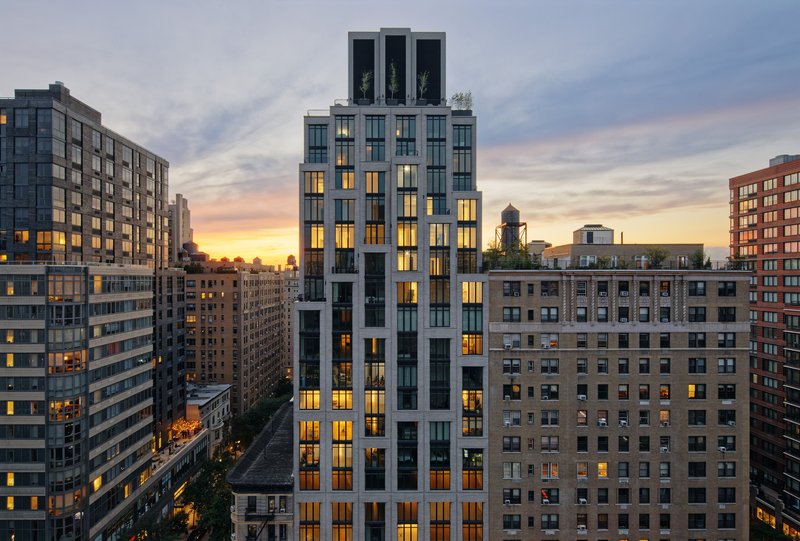
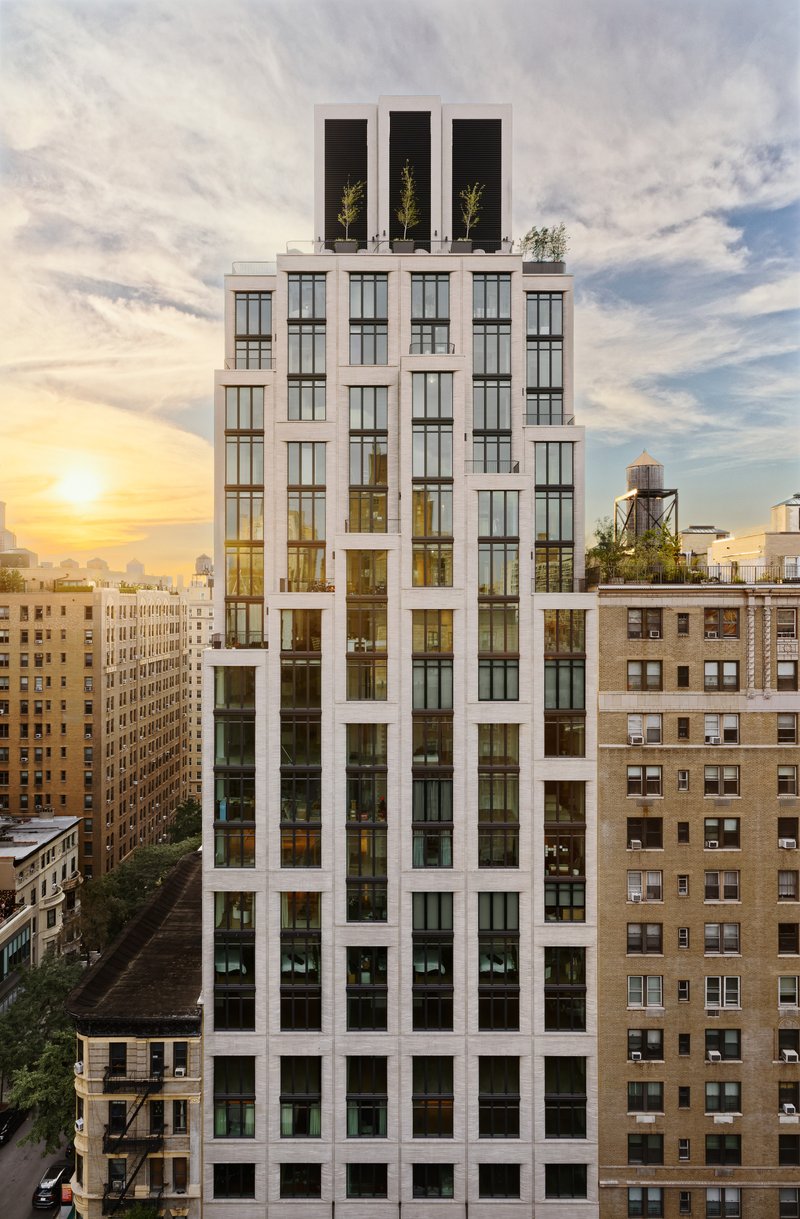
The facade's defining gesture is a series of rounded vertical brick columns that rise from the sidewalk and modulate the building's width into a legible pattern. Between these piers, floor-to-ceiling windows are vertically staggered, creating an alternating cadence of solid and void that avoids the relentless glass curtain wall look common to new-build luxury towers. A thin vertical trench runs along the centerline of each column, adding shadow lines that change character throughout the day.
The engineering behind this seemingly simple brick skin is anything but. Thornton Tomasetti consulted on the facade, which uses a thermally-broken FAST Thermal Bracket system and FERO Thermal Tie masonry connectors to support the large cavities and curved walls. It is a serious piece of building science concealed behind a deliberately warm, tactile surface. The three dark volumes at the rooftop, visible in the full facade view, mark the terraced penthouse levels where the piers finally dissolve into private outdoor space.
Contextual Setbacks and the Skyline
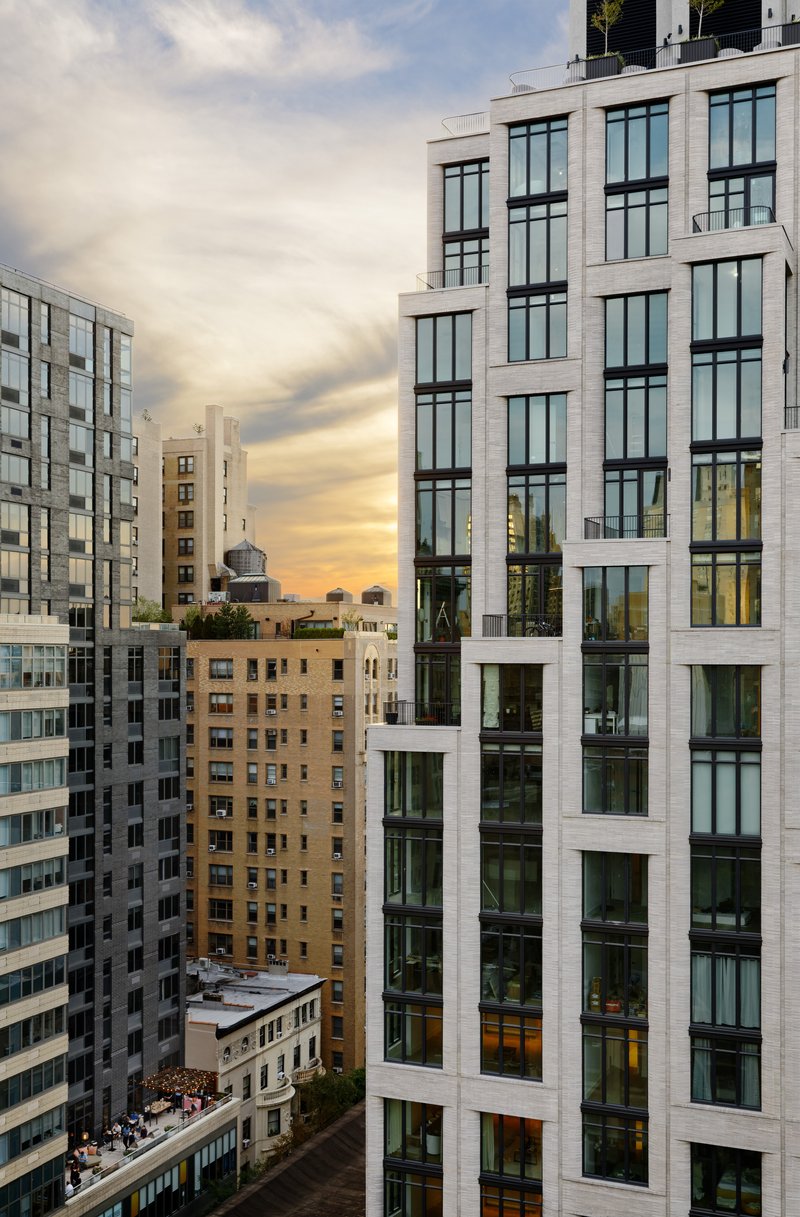
Viewed obliquely from Broadway, the tower reveals its layered massing. Upper floors step back progressively, generating terraces and planted edges that soften the silhouette against the sky. These setbacks are not arbitrary: they follow the zoning envelope while creating private outdoor rooms, including a four-bedroom penthouse with its own rooftop terrace and two townhouse-style duplexes at the building's base. The result is a profile that reads as neighborly rather than monolithic, closer in spirit to the pre-war apartment houses lining Riverside Drive two blocks west.
The Lobby as Material Statement
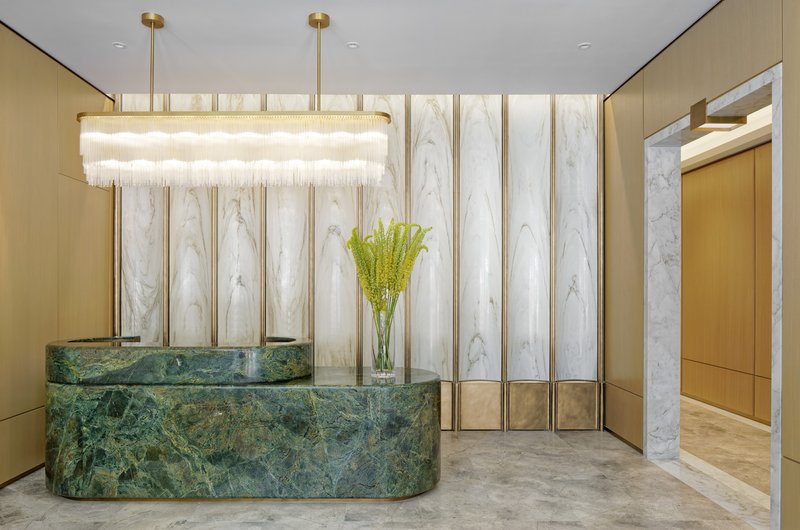
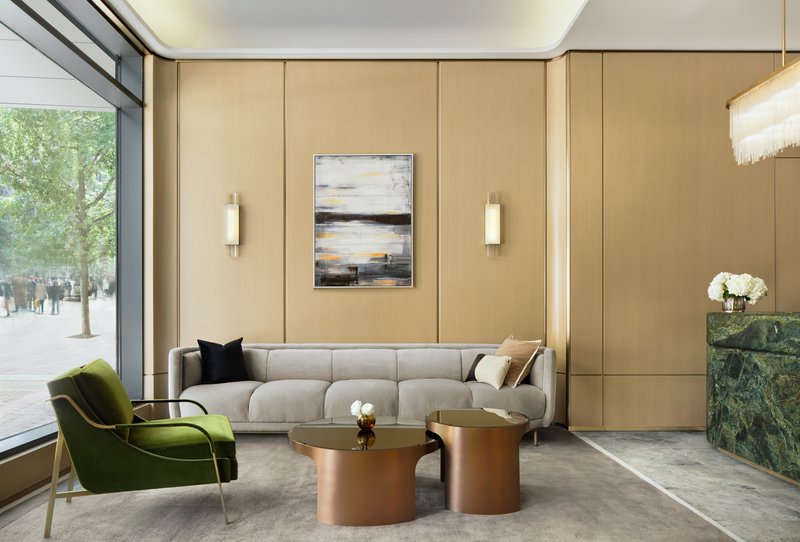
Step through the 24-hour attended lobby and the material palette shifts to stone, granite, marble, and wood. The reception desk, clad in rich green marble and backed by illuminated white stone panels, sits beneath a tiered glass chandelier that manages to feel both contemporary and referential. It is the kind of lobby that signals its intentions without shouting. The adjacent seating area, with beige paneled walls and copper-topped tables beside a corner window, sets a tone of deliberate restraint that continues upward through the residential floors.
Living Spaces Framed by Light
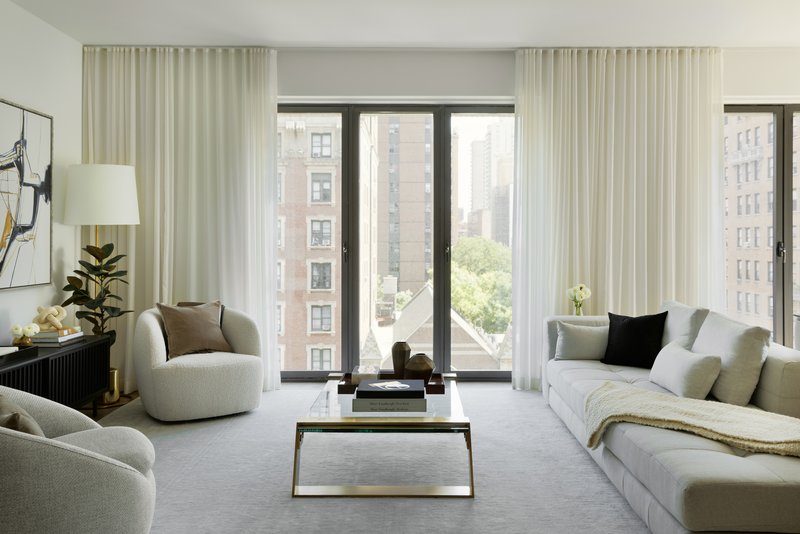
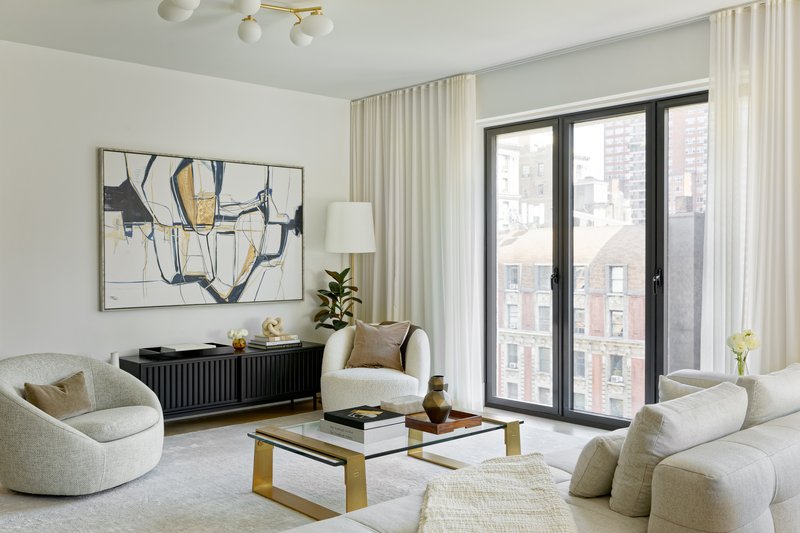
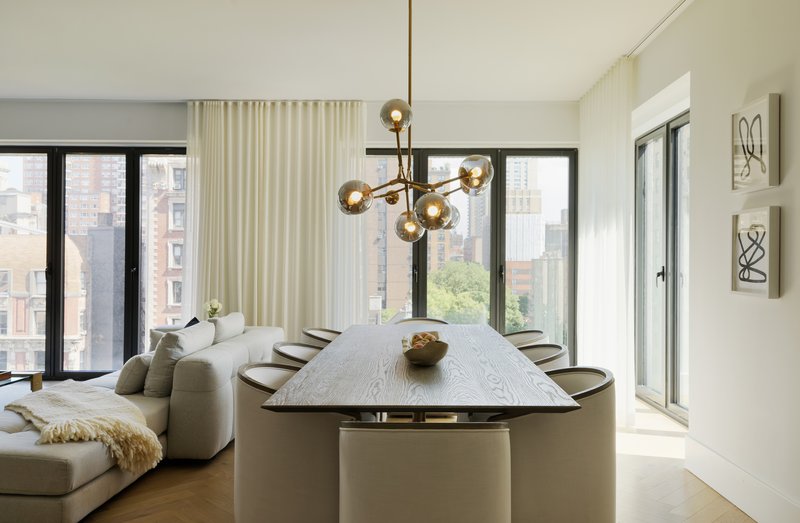
With only one to two units per floor, the apartments are organized around what ODA calls "great rooms," large light-filled spaces anchored by walls of windows. The black-framed mullions read as graphic elements against the city beyond, and the generous ceiling heights let afternoon light travel deep into each plan. Sheer curtains filter glare without blocking the wide sightlines toward the neighborhood's roofscape.
The living and dining areas shown here demonstrate the floor plans' openness. Curved sofas face the windows in one unit; a brass chandelier floats above a dining table in another. The interiors are finished in a consistent vocabulary of marble, oak, and brass that echoes the lobby's warmth without replicating it literally. The herringbone oak flooring, visible in the kitchen images, runs through most of the living spaces as a unifying thread.
Kitchens Built Around Brass and Oak
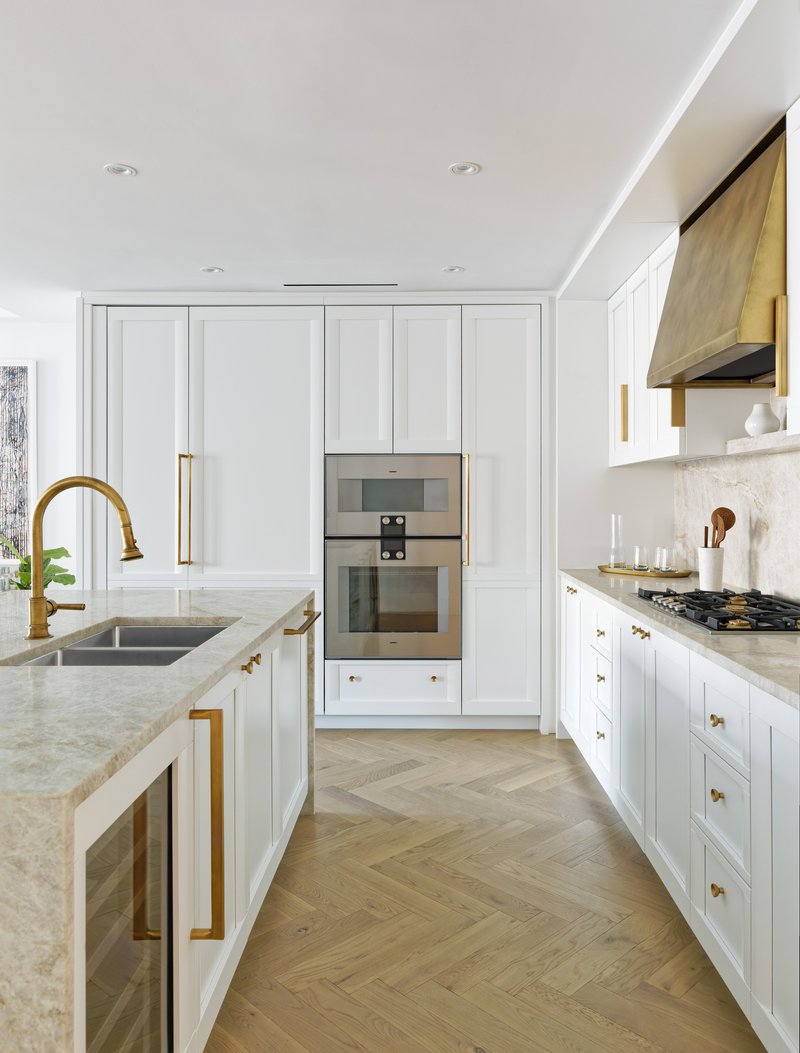
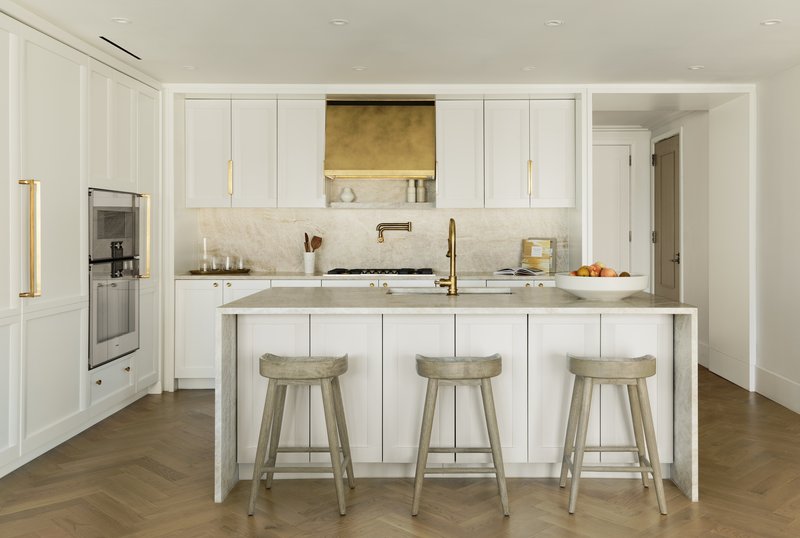
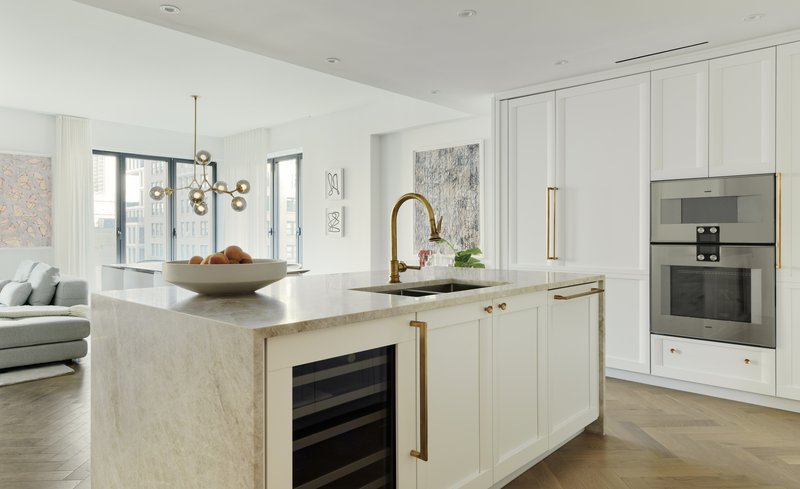
The kitchens at 2505 Broadway are designed as extensions of the living space rather than tucked-away service rooms. White paneled cabinetry sits beneath recessed lighting, with brass fixtures providing the accent warmth. Range hoods in brushed brass, visible in one unit, act as sculptural markers within an otherwise minimal composition. Integrated wine coolers and oversized islands with upholstered stools confirm that these kitchens are meant to be occupied socially, not just functionally.
Bedrooms and Private Retreats
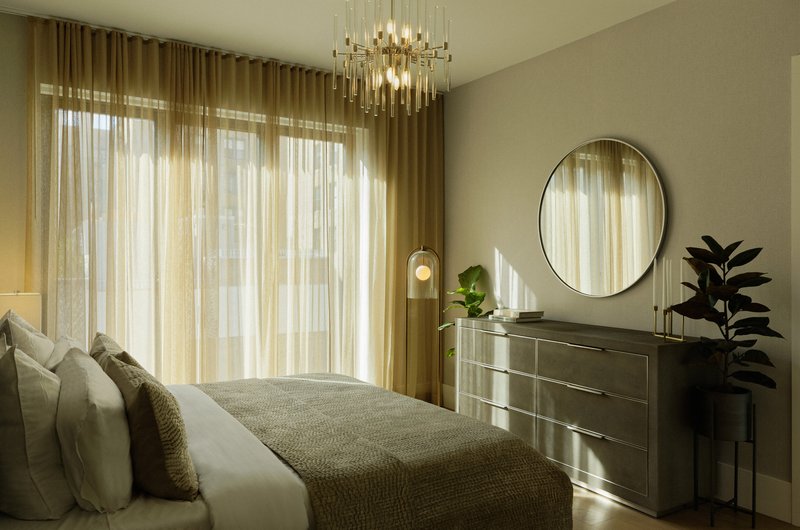
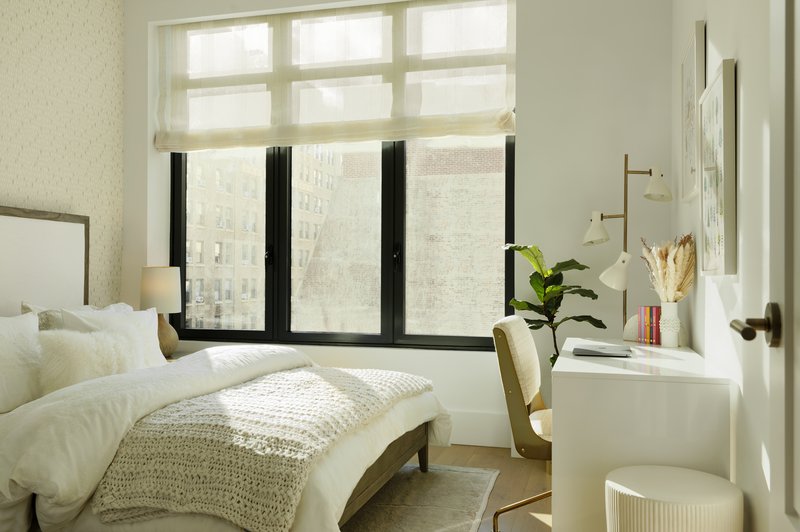
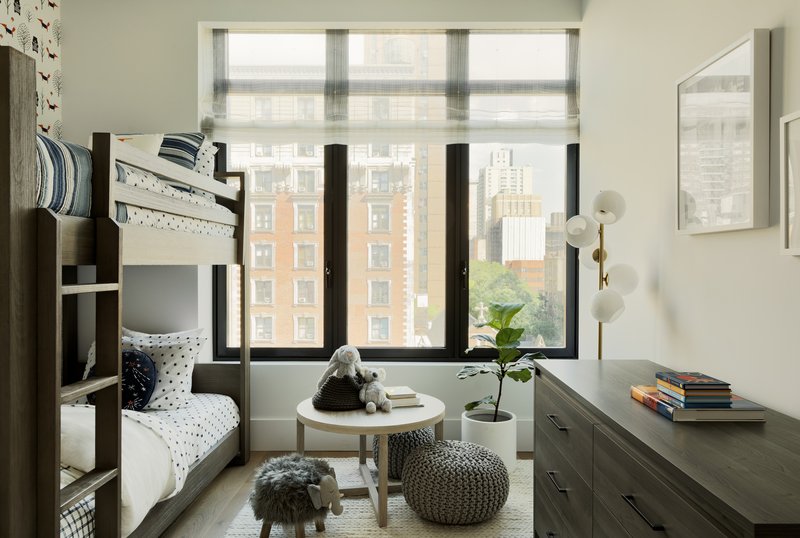
The bedrooms continue the building's commitment to natural light. Layered curtain systems, from sheer rollers to heavier drapery, let residents modulate privacy and brightness without sacrificing the connection to the surrounding cityscape. Black-framed windows maintain the exterior's graphic consistency even at this intimate scale. A built-in white desk beneath one window suggests that ODA thought carefully about how these rooms would actually be used, not just photographed.
The children's room with its bunk bed and view of neighboring apartment buildings is a quietly honest detail. It acknowledges that this is a family building on a family-oriented stretch of the Upper West Side, not a speculative trophy tower. Units range from one to four bedrooms, and the diverse floorplan configurations, including the duplexes, reflect genuine programmatic variety.
Bathing in Herringbone
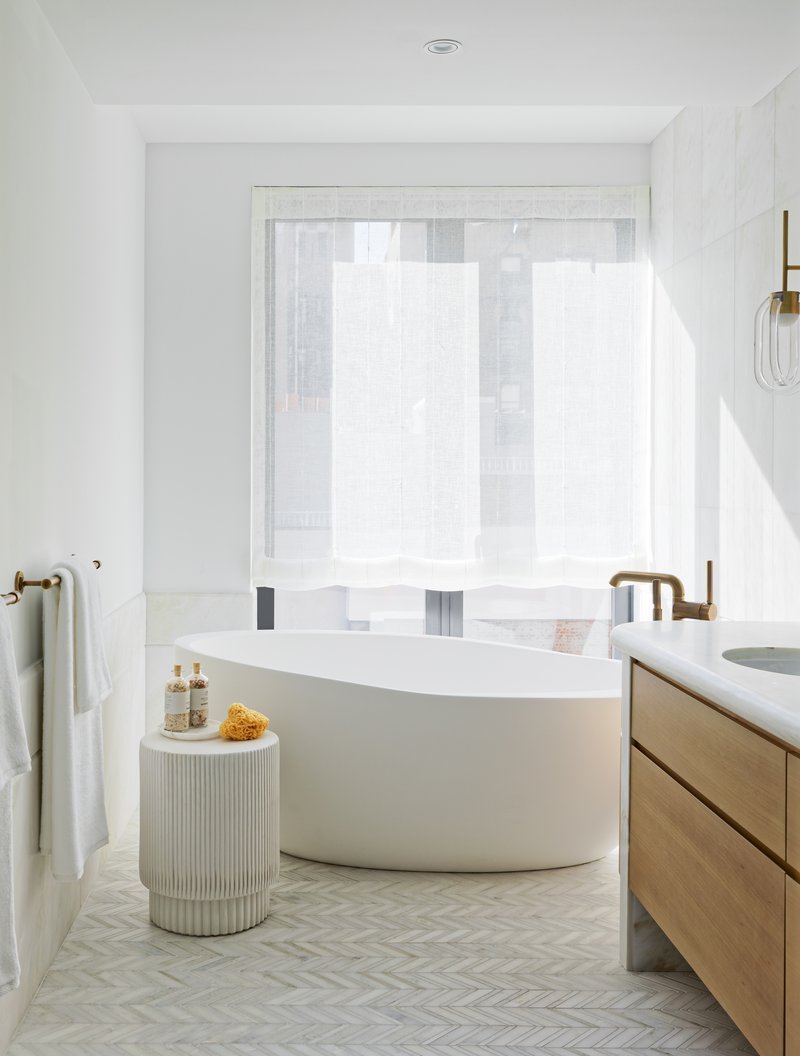
The bathrooms bring the herringbone motif from the kitchen floors onto the walls and bathroom floors in stone tile, creating textural continuity across wet and dry zones. A freestanding white tub placed near a bright window turns the daily ritual of bathing into a minor event. The material choices here, matte white surfaces, natural stone, diffused light, reflect the broader design logic: luxury expressed through craft and proportion rather than flash.
Why This Project Matters
In a city where new residential towers increasingly default to glass and metal panel systems, 2505 Broadway makes a quiet but persuasive case for masonry's continued relevance. The decision to source custom hand-molded bricks from Denmark, to engineer a thermally-broken support system for curved facade elements, and to shape the massing around contextual setbacks rather than maximum floor area represents a level of investment in exterior quality that most developers decline to make. It also demonstrates that ODA, a firm known for bold geometric moves in Brooklyn and downtown Manhattan, can modulate its ambitions to suit a neighborhood that rewards subtlety.
The building's real achievement is proportional. At 19 stories and 41 units, it is neither a boutique project nor a supertall vanity play. It occupies the productive middle ground of New York residential architecture, where the constraints of zoning, context, and unit economics converge. ODA navigated those constraints without sacrificing the building's character. Two blocks from Riverside Park and a short walk from Central Park, 2505 Broadway gives its residents access to both the city's green infrastructure and a quality of architectural finish that will age well on a block where pre-war buildings set a high standard.
2505 Broadway Apartments by ODA New York. New York, United States. 75,000 sq ft. Completed 2022. Landscape design by Steven Yavanian Landscape Architecture. Facade consultant: Thornton Tomasetti. Developed by Adam America Real Estate. Photography by Aaron Thompson.
About the Studio
Share Your Own Work on uni.xyz
If projects like this are the kind of work you want to make, uni.xyz is a place to publish your own, find collaborators, and enter design competitions.




Popular Articles
Popular articles from the community

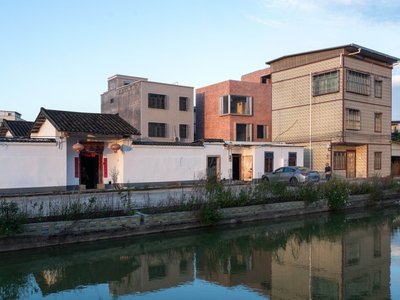
WUWU Atelier and ADINJU Rebuild an Ancestral Home in Guangdong with Quiet Brick Precision
In rural Heyuan, a 440-square-meter renovation trades spectacle for craft, turning local brick into an architecture of restrained belonging.
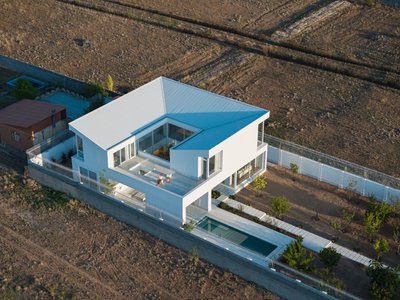
Kanisavaran Office Turns a Central Courtyard into a Light Engine on the Plains of Damavand
Shahrzad Villa in Tehran's Seyedabad plains uses a classical courtyard typology to orchestrate natural light, ventilation, and mountain views.
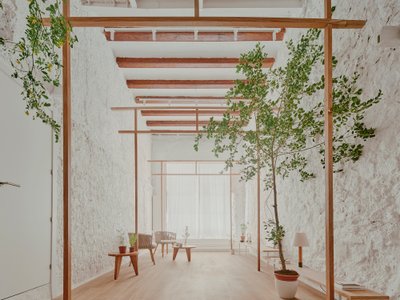
Roman Izquierdo Bouldstridge Turns an Old Barcelona Shop into a Loft Organized by Emptiness
In El Born, three timber torii frames and the Taoist concept of the void reshape 85 square meters of former commercial space into a dwelling.
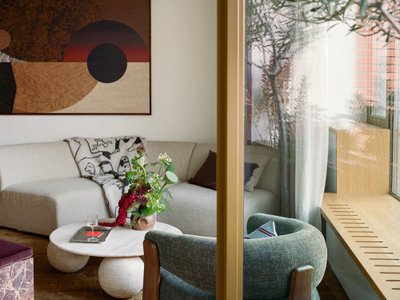
OMAMBO and DORON Atelier Weave Two Cultural Identities into an 80 m² Bucharest Apartment
Rather Two layers Romanian and Angolan heritage through stucco, recycled plastics, and deliberate spatial contrasts in central Bucharest.


Similar Reads
You might also enjoy these articles

STEM School Mechelen by LAVA Architecten: A Future-Ready Educational Architecture in Belgium
Flexible, sustainable STEM school in Mechelen featuring modular classrooms, acoustic innovation, and energy-efficient design supporting future-focused collaborative learning environments.
Marvila Apartment Renovation in Lisbon: A Bright Minimalist Attic Transformation by KEMA Studio
Bright attic transformed into minimalist Lisbon apartment with skylights, sustainable materials, open plan layout, and industrial-inspired interior design elements.

20 Most Popular Commercial Architecture Projects of 2025
From sustainable market concepts to heritage factories, the commercial buildings and proposals that drew the most attention on uni.xyz this year.
Mantiqueira House by SysHaus and M Magalhães Estúdio
A linear modular house embedded in Serra da Mantiqueira, integrating panoramic views, sustainable prefabrication, minimal terrain impact, and contemporary interiors.


Comments (0)
Please login or sign up to add comments
No comments yet. Be the first to comment!