
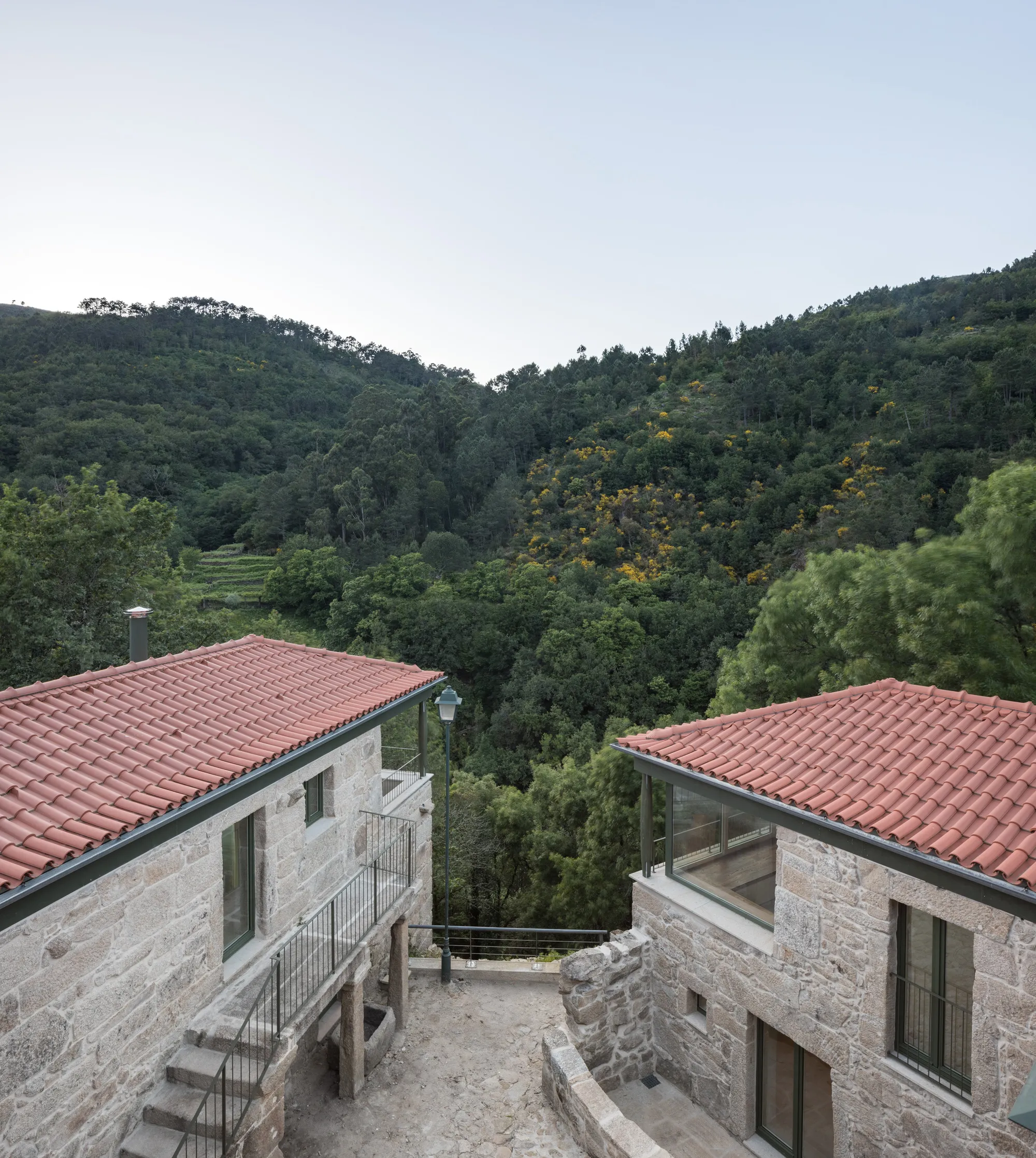
oitoo Converts Two Granite Ruins into a Pair of Retreat Houses in Portugal's Peneda-Gerês National Park
In the terraced village of Sistelo, two modest stone shells become symmetrical dwellings that frame the Vez River valley below.


Sistelo sits on a promontory above the Vez River in northern Portugal, a village defined almost entirely by granite. The terraced hillsides that once supported corn fields and grazing land give the settlement its postcard profile, but the real texture is closer: cobblestone lanes, mossy retaining walls, and the thick masonry shells of houses that have stood, or partially stood, for generations. It is a landscape where anything new must earn its place against centuries of accumulated material logic.
Porto-based oitoo took on two such shells, neighboring granite ruins near the village church, and turned them into a pair of retreat houses totaling 320 square meters. What makes the project genuinely interesting is not the preservation narrative itself, which is common enough in Portuguese mountain villages, but the discipline of the architectural response. The two houses face each other across a shared courtyard, forming a bilateral symmetry that registers as both intimate and civic. New elements are unmistakably contemporary yet refuse to compete with the stone. The result is less a renovation and more a careful negotiation between ruin and habitation.
A Village of Granite
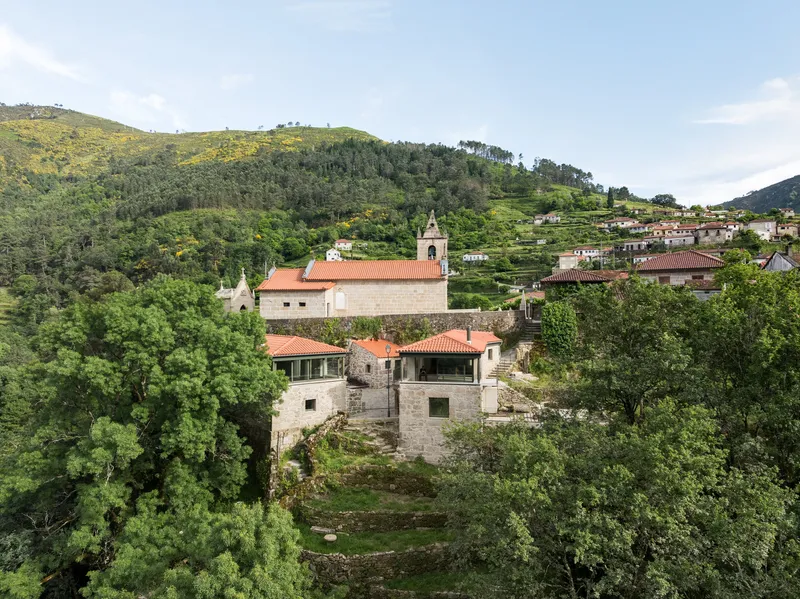


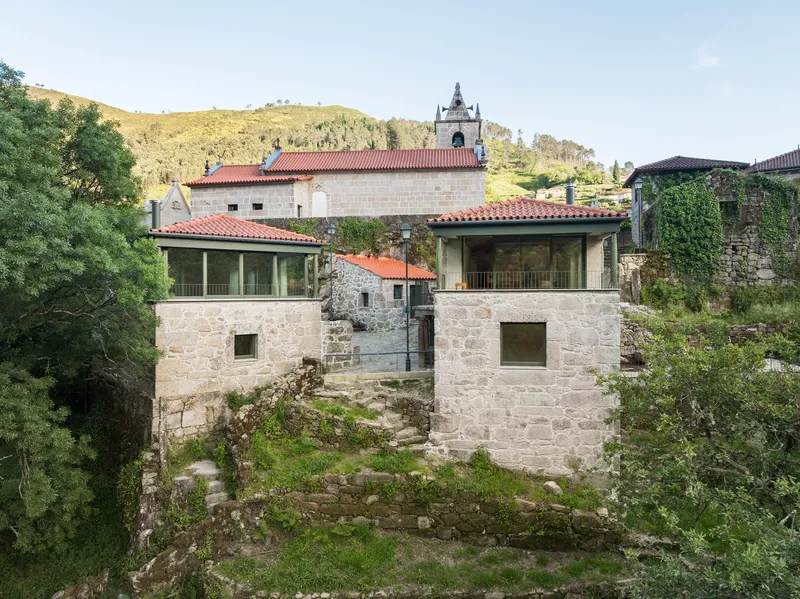
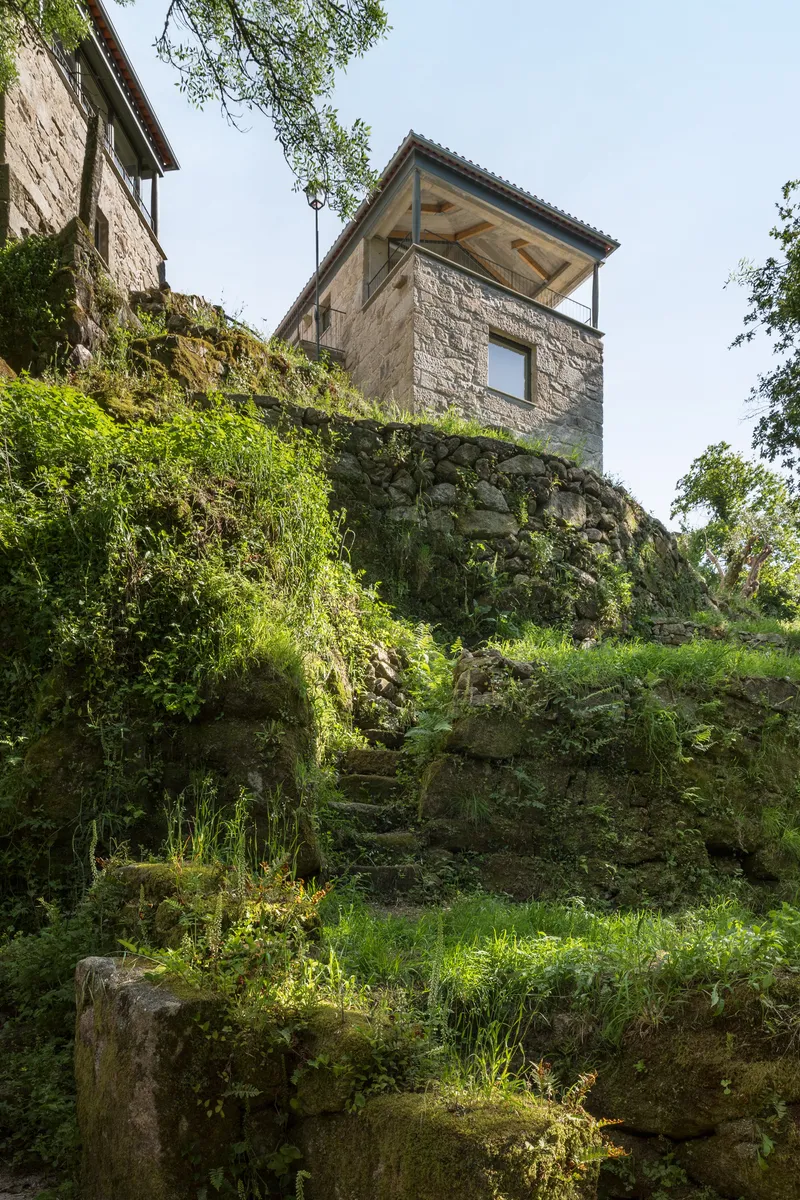
From a distance, Sistelo reads as a collection of terracotta roofs scattered across green terraces, interrupted only by the vertical accent of a church bell tower. The aerial and landscape views make clear that the village is not a planned settlement so much as an accretion: houses placed where the slope and the agricultural logic allowed. oitoo's project inherits this condition. The two houses are not freestanding objects on a flat site but components embedded in a topographic system of retaining walls, paths, and cultivated ground.
The terraces themselves are structural artifacts as much as agricultural ones, and the architects committed to stabilizing and preserving them rather than regrading the site. That decision anchors the project in the material culture of the place before a single design move is made.
Before: The Ruins as Found


The pre-existing condition was two roofless granite structures with moss-covered walls and partially collapsed interiors. Looking at the ruins, you can see the bones of the village's construction tradition: thick rubble walls, minimal openings, roofs that were once simple timber trusses under terracotta tile. The cobblestone path between them already suggested a spatial relationship, a dialogue between two volumes that the architects would later formalize into a courtyard.
oitoo's approach was to reconstruct the shells of these existing ruins rather than demolish and rebuild. The distinction matters. Reconstruction preserves the irregularities of the original masonry, the idiosyncratic wall thicknesses and the way each stone negotiates with its neighbor. New architecture then arrives inside and on top of these shells, clearly differentiated but structurally dependent on what was already there.
The Courtyard as Shared Room

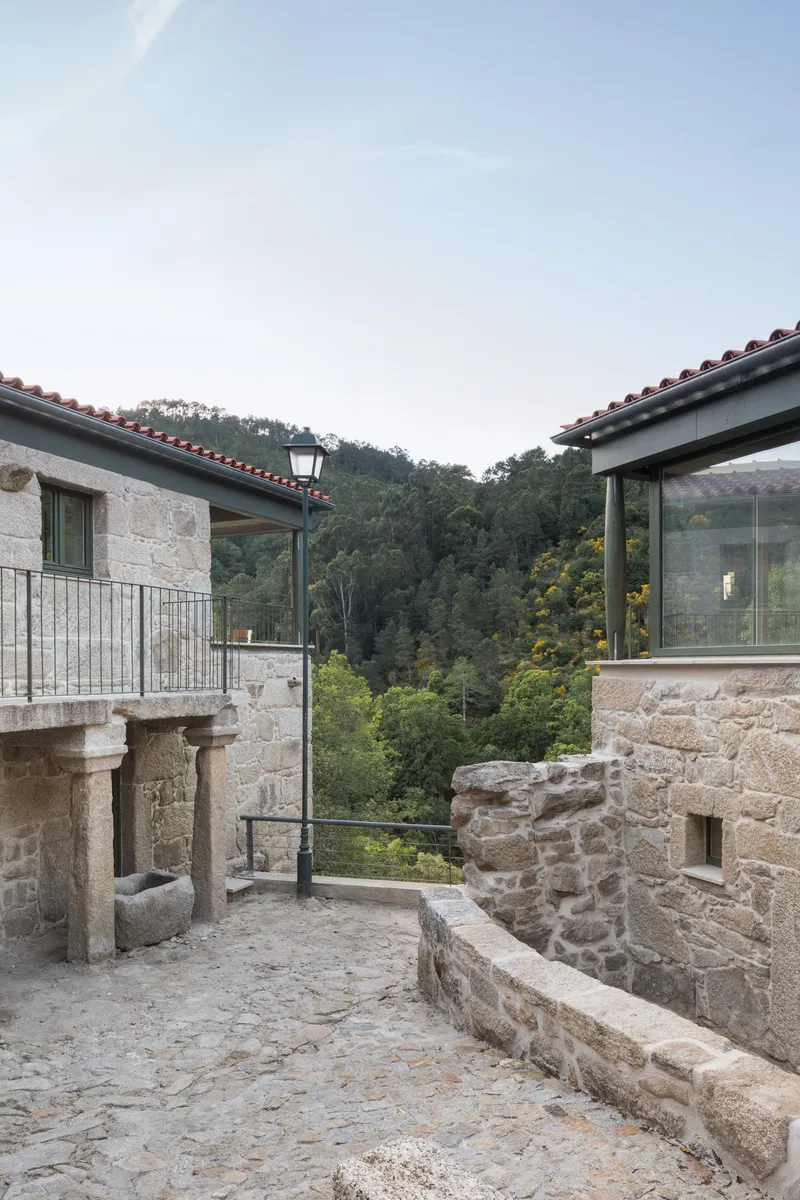
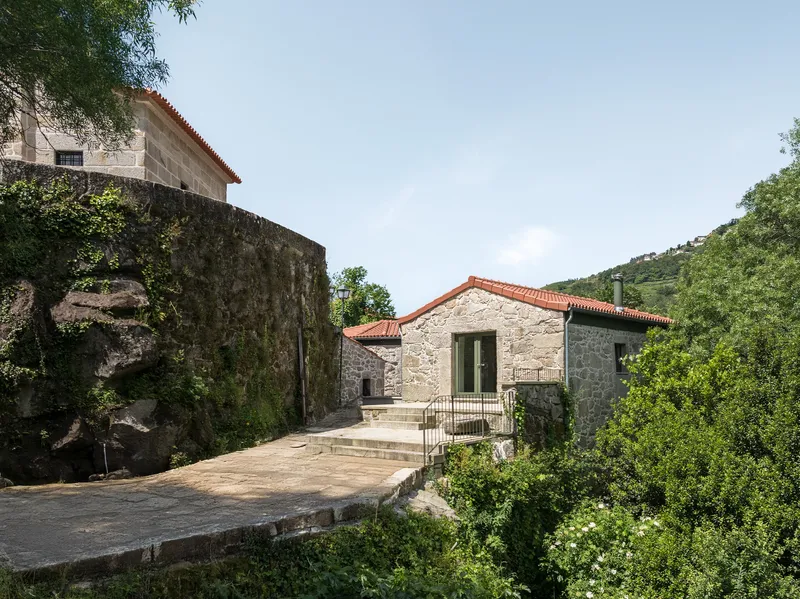
The space between the two houses is as carefully designed as the interiors. A stone-paved courtyard connects the volumes at grade, with historic column fragments left in place as markers of the site's prior life. At dusk, the courtyard becomes theatrical: glazed openings on the upper floors glow against the dark granite, and the wooded hillside rises behind like a scrim. The courtyard is not leftover space between two buildings. It is the organizational heart of the project, the thing that turns two houses into one composition.
A stone staircase threads between the volumes, mediating the change in elevation and reinforcing the sense that these are two halves of a single gesture. The planting is restrained, mostly existing trees and mossy ground, which keeps the material palette tight: granite, terracotta, glass, and green.
Stone Meets Glass

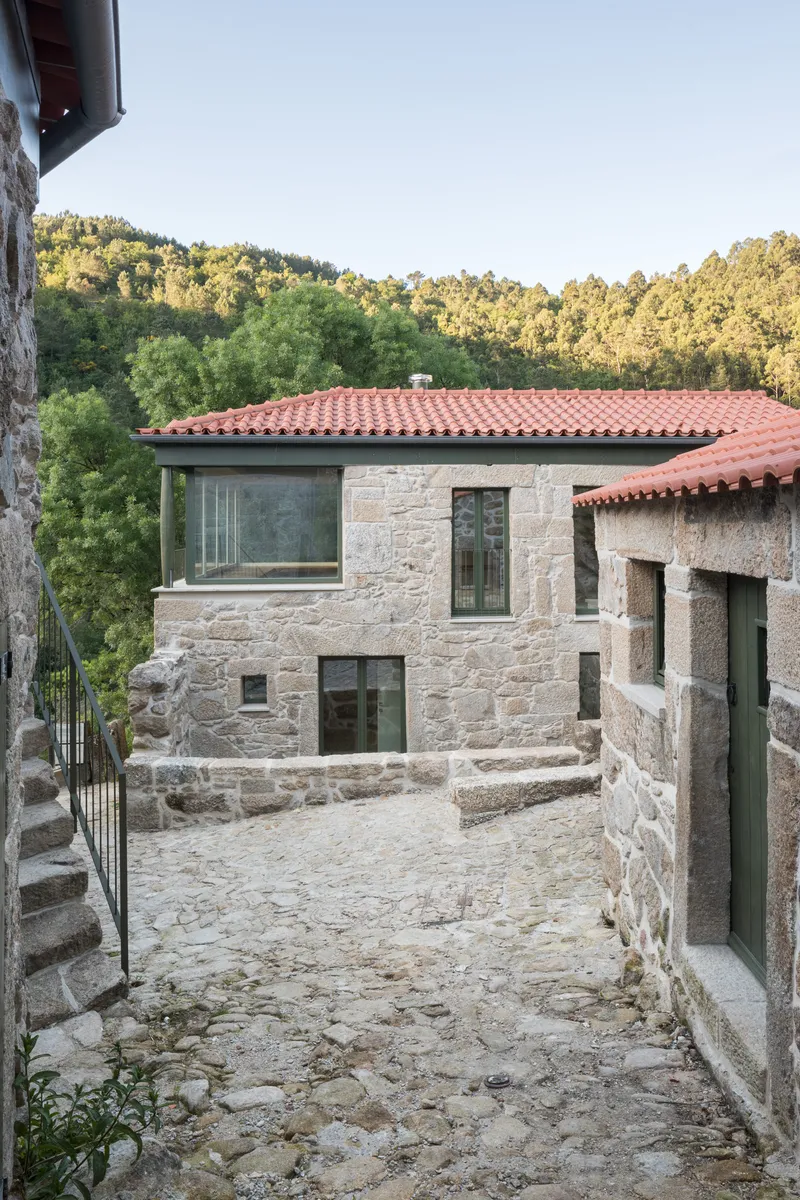
The contemporary insertions are most visible at the upper level, where glass volumes sit within or just behind the granite walls, sheltered by deep terracotta tile eaves. The effect is of a house within a house: the ruin provides the enclosure and the gravity, while the glazed elements deliver light, view, and thermal performance. It is a layered reading, old stone as thick frame, new glass as permeable membrane.
From the narrow lane that descends between the two buildings, the interplay is striking. Balconies and glazed openings puncture the stone with a precision that makes the original wall thickness legible. You understand these walls as mass, as something that took real labor to build, precisely because the new openings are so thin and transparent by comparison. The architects describe the new elements as discreet yet clearly contemporary, and the distinction holds: nothing here pretends to be old, but nothing shouts for attention either.
The Upper Floor as Landscape Room
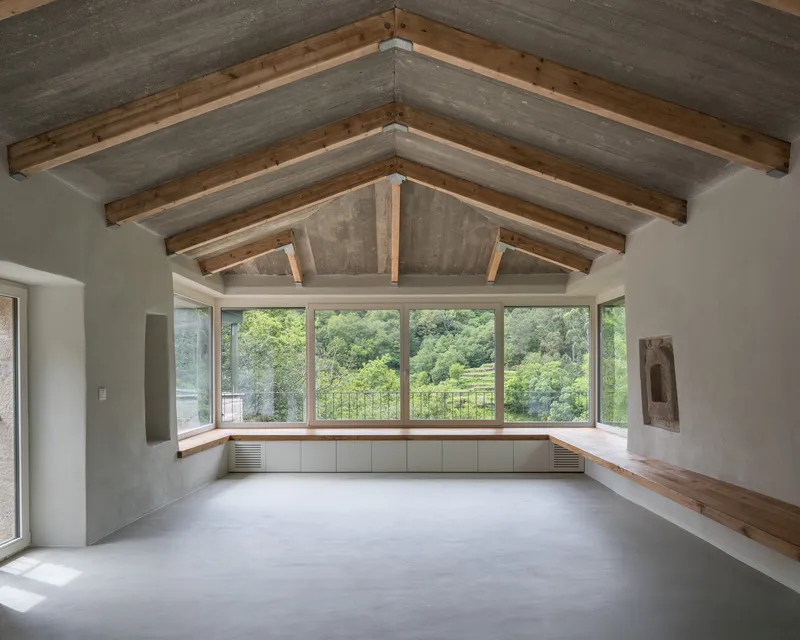
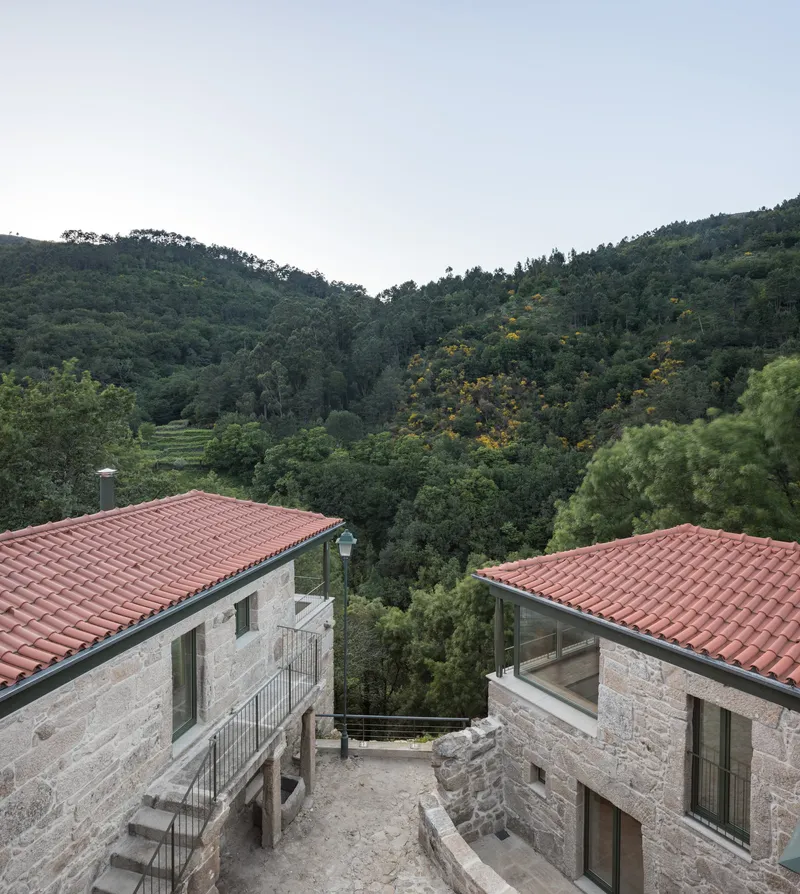
Each house is organized as a two-storey structure with the upper floor given over to a single open living space. The interior shown here, with its exposed timber truss ceiling, continuous window bench, and polished concrete floor, is deliberately spare. The view does the work. A generous loggia on the upper level frames the Vez River valley below, and the window bench invites you to sit with that view for a long time. The material choices inside, wood, concrete, stone, are the same ones used outside, which collapses the distinction between interior and landscape.
The timber roof structure, visible from inside, reconnects the house to the construction tradition of the village. These are not engineered trusses hidden behind plasterboard. They are working elements, honestly expressed, that recall the simple timber-under-tile roofs of the original buildings. The stone tower element rising above the hillside garden reads as a kind of belvedere, a lookout point that makes the topographic position of the site an architectural experience rather than just a geographic fact.
Plans and Drawings
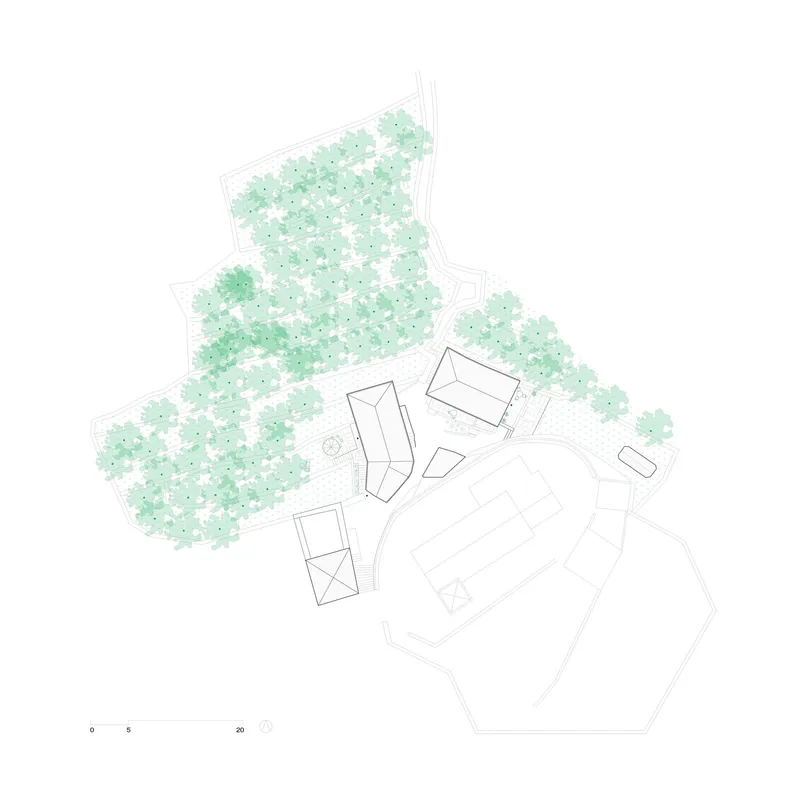
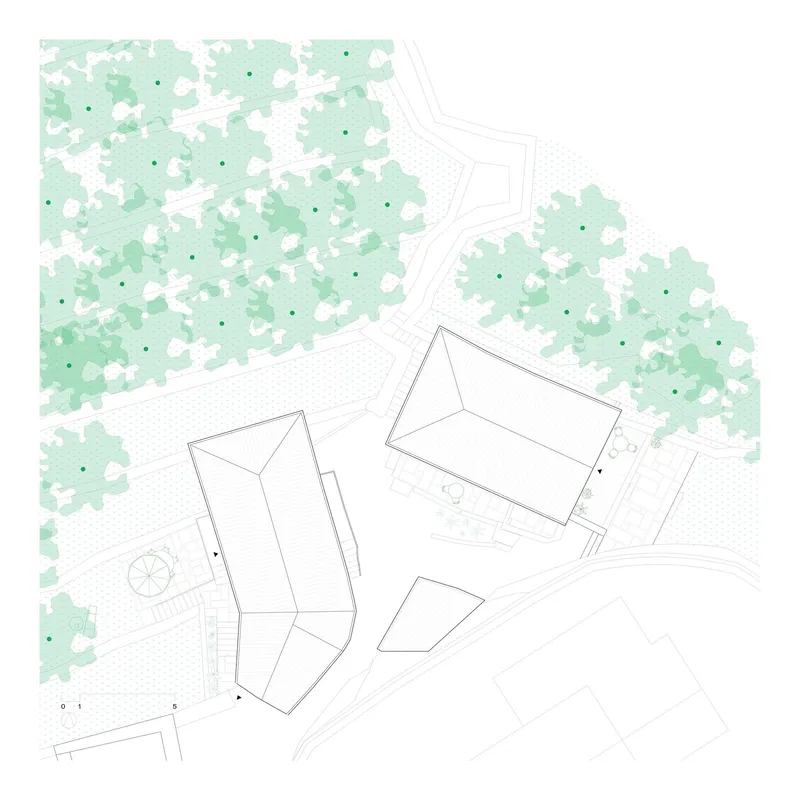

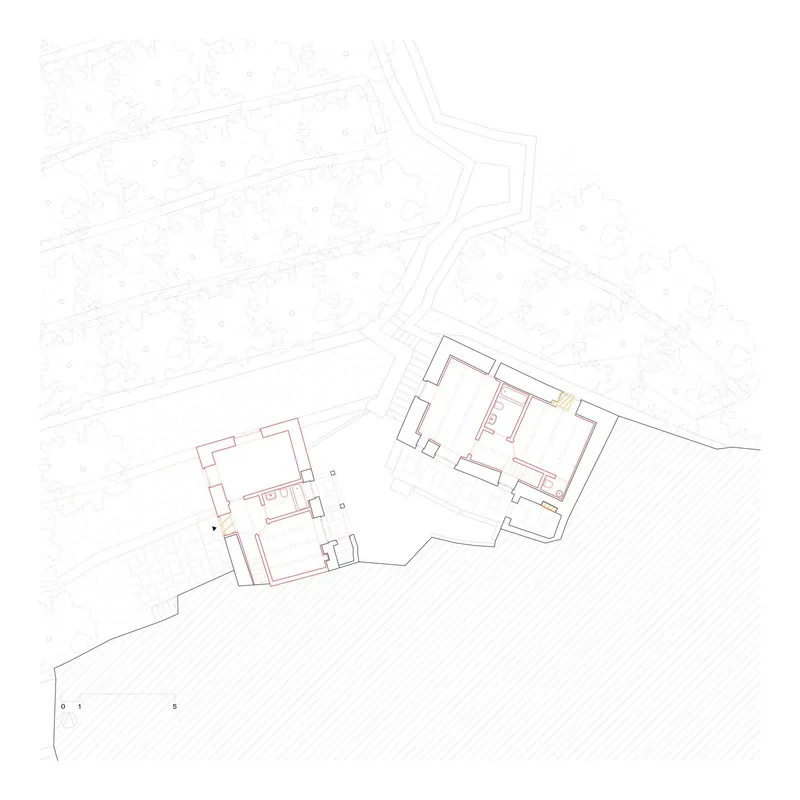
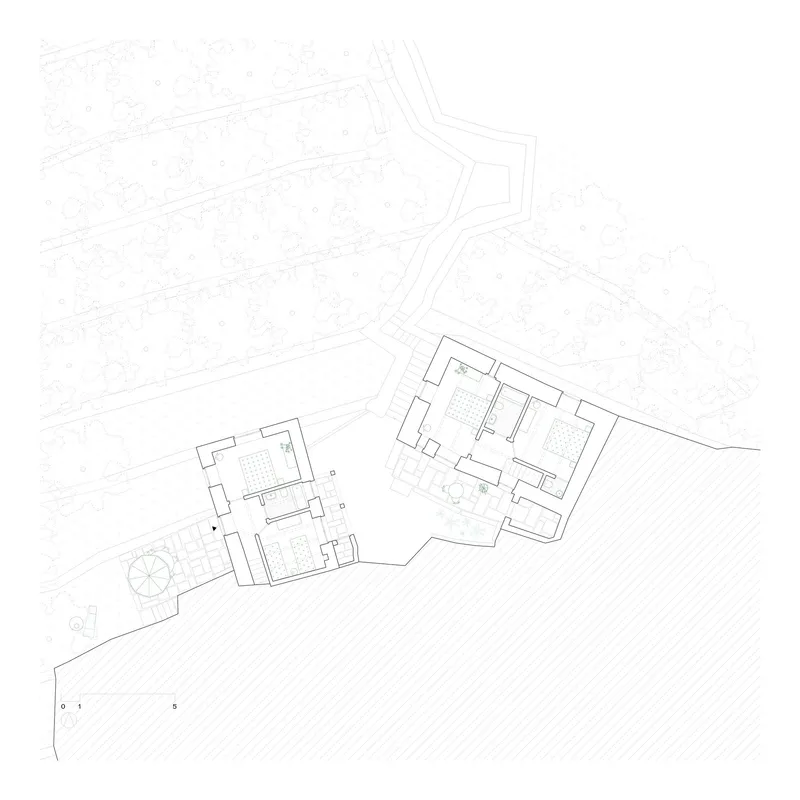


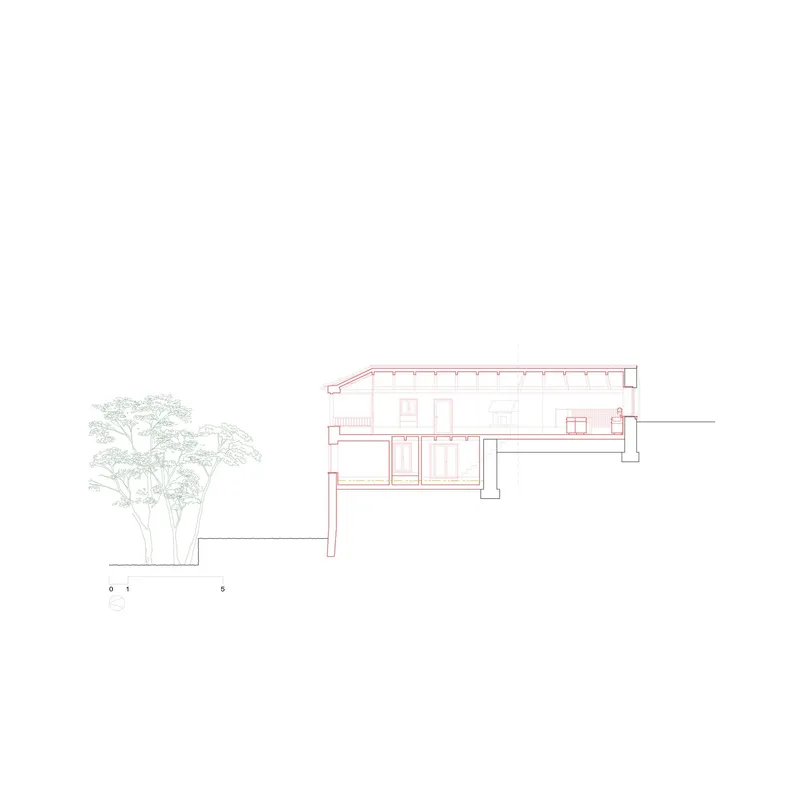
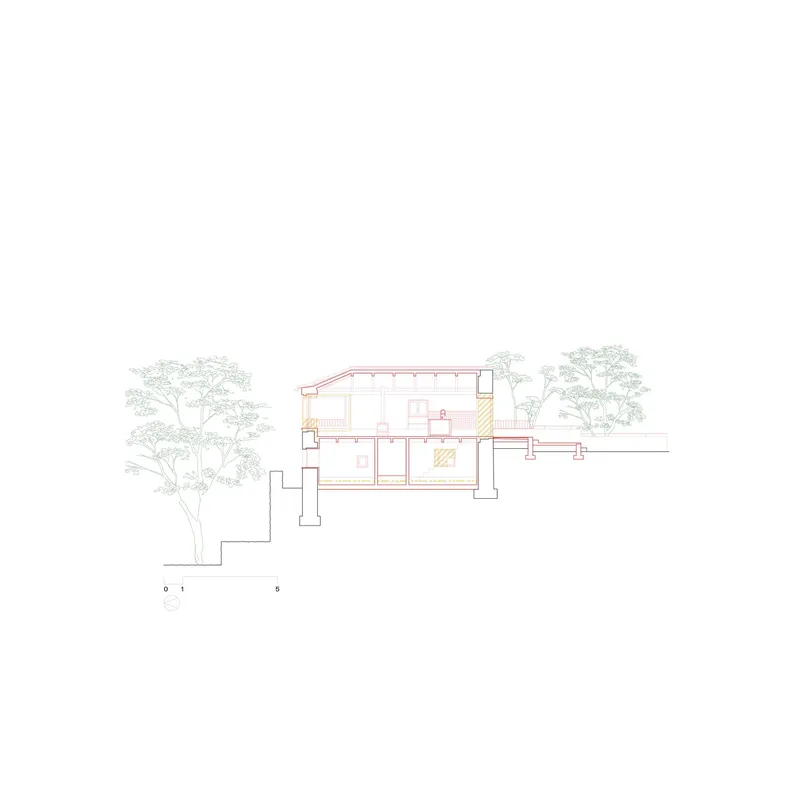
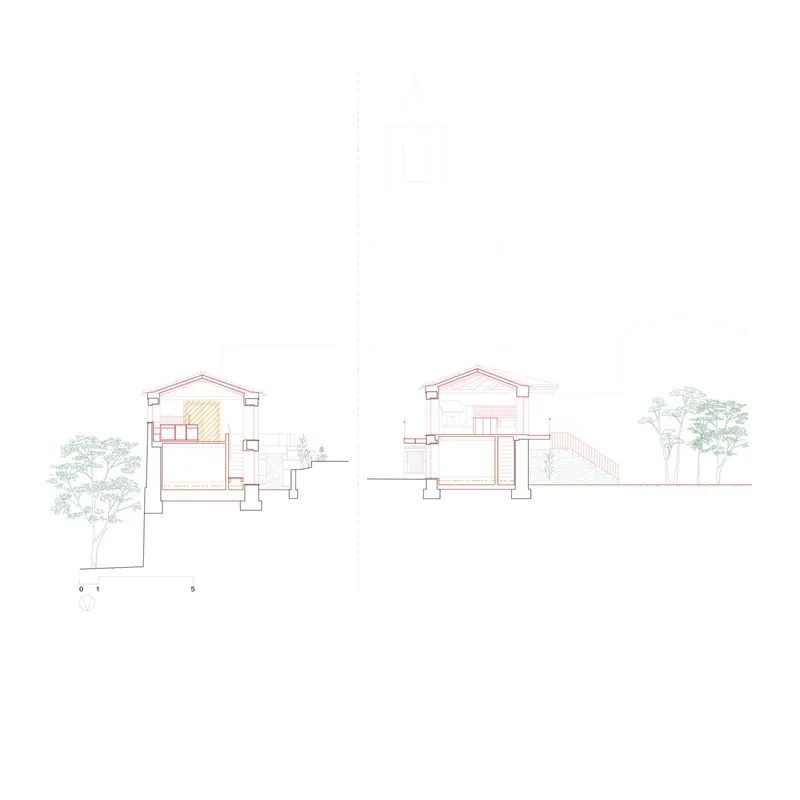
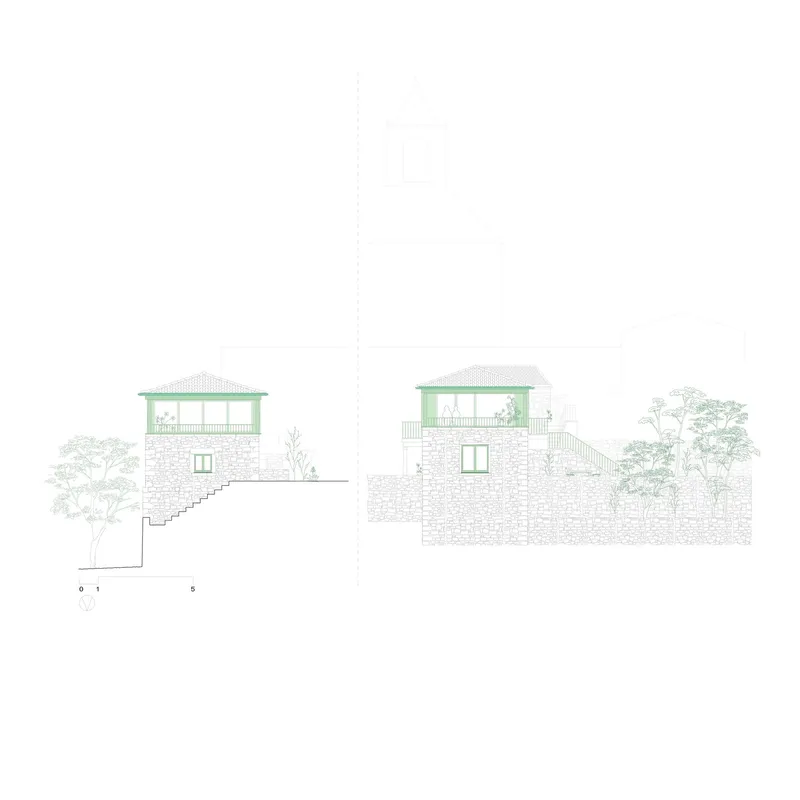
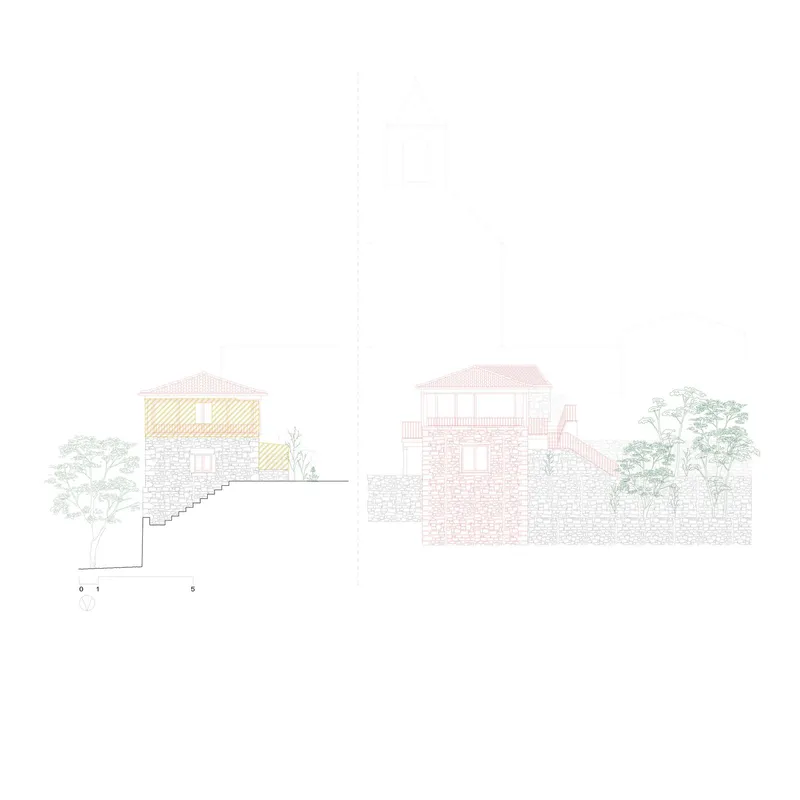
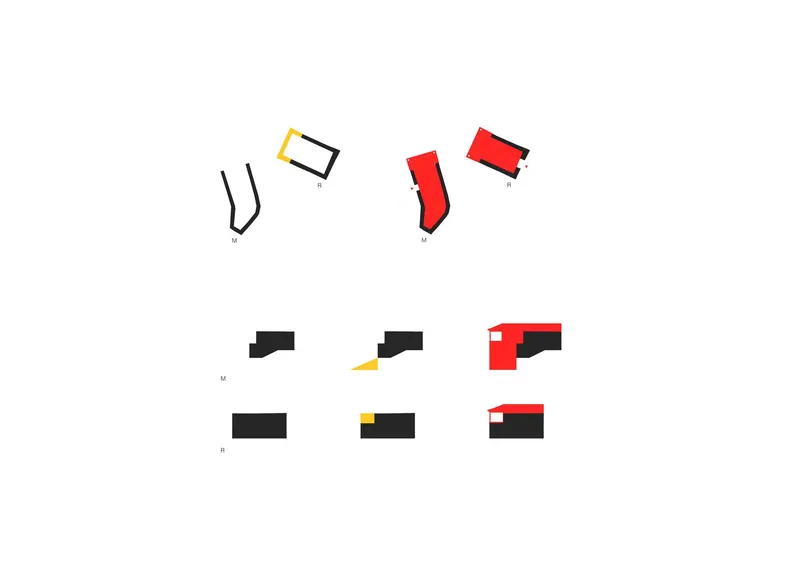
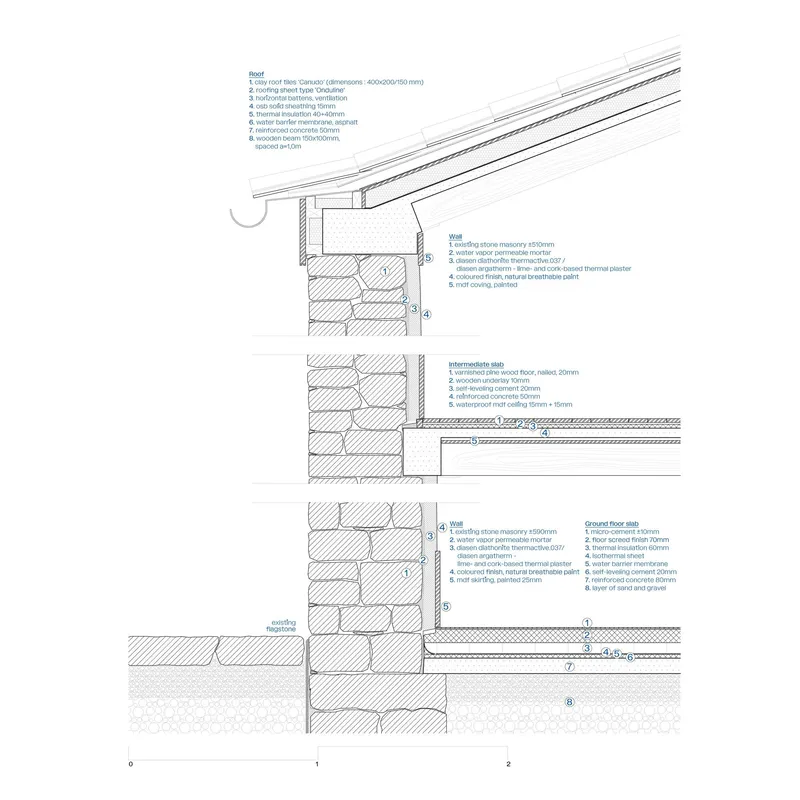
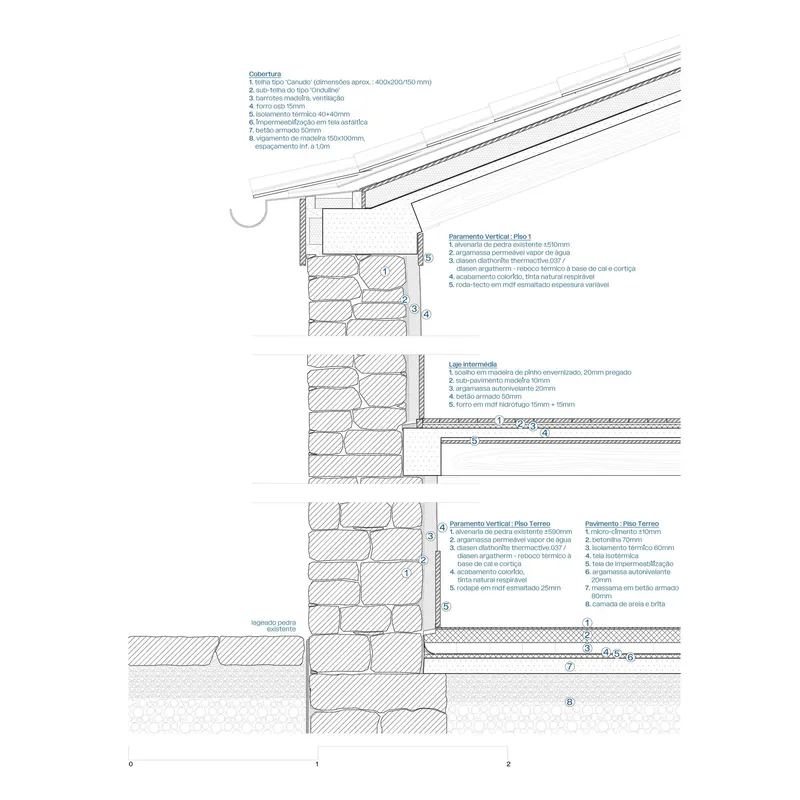
The drawing set reveals the full complexity of what appears, in photographs, to be a simple intervention. Site plans show the two structures nestled within a canopy of mature trees, their footprints modest relative to the landscape they occupy. Floor plans expose the thick masonry walls and the way circulation is threaded through narrow passages between old and new. The sections are where the project's intelligence is most legible: split levels step down the hillside, and the relationship between interior floor heights and exterior terrace levels becomes clear. Nothing is flat here. Every surface negotiates the slope.
The construction details deserve close reading. Roof eave assemblies, wall sections with thermal insulation layered behind the existing masonry, and floor junction details all demonstrate how a contemporary standard of comfort was achieved without dismantling the granite shells. The axonometric phasing diagram, with red volumes added to a black base structure, makes the design strategy explicit: preserve the ruin, then insert. It is an honest diagram of an honest method.
Why This Project Matters
Portugal has no shortage of ruin-to-house conversions, and the Peneda-Gerês region has become a magnet for architects looking to test their ideas against old stone. What sets The Sister Houses apart is the refusal to treat the two structures as isolated objects. By formalizing the courtyard between them and making the symmetry of their facing facades the project's central gesture, oitoo created something that operates at the scale of the village, not just the dwelling. The project adds to Sistelo's collection of granite houses without mimicking what was there before.
The restraint is the point. Stone and wood, the two materials specified, are time-proven in this landscape. The contemporary glazing is subordinate to the masonry rather than the other way around. And the preservation of the agricultural terraces ties the domestic program back to the larger territorial logic that made the village possible in the first place. In a moment when mountain tourism threatens to flatten regional specificity into generic luxury, this is a project that takes the specificity seriously and lets it lead.
The Sister Houses, designed by oitoo, Sistelo, Portugal. 320 m², completed 2024. Photography by Attilio Fiumarella.
About the Studio
Share Your Own Work on uni.xyz
If projects like this are the kind of work you want to make, uni.xyz is a place to publish your own, find collaborators, and enter design competitions.




Popular Articles
Popular articles from the community


Conexión: Biophilic Design Reimagines High-Rise Living in Hong Kong
Conexión reimagines high-rise living in Hong Kong through biophilic design, green facades, shared spaces, daylight, water and nature within.
EW PARK: Sustainable Architecture Reimagines the Future of Urban Parking
EW PARK reimagines city parking as a modular wooden tower combining automation, solar energy, electric mobility, and adaptable urban design.

The Ocean Hive: Sustainable Architecture for a Self-Sufficient Civilization at Sea
The Ocean Hive imagines sustainable architecture at sea, where modular habitats, algae, wave power and ocean waste sustain a growing colony.

Co-life: Sustainable Architecture for Age-Friendly Community Living
Co-life reimagines sustainable architecture for seniors through courtyards, rammed earth, shared gardens, and spaces designed for belonging.

Similar Reads
You might also enjoy these articles

Bao Huynh Watercolor Atelier: A Serene Art Retreat in Hội An
Bao Huynh Watercolor Atelier in Hội An blends multifunctional art spaces, sustainable design, local materials, and family-friendly living in a serene environment.

Atelier Macri Concept Store Interior Design by CASE-REAL
Atelier Macri store features a "ko" counter, walnut wood details, cork displays, blending retail, gallery, and seamless customer experiences.

Manuel Vargas Izquierdo Stadium and High-Performance Sports Center: Architectural Excellence in Jalpa de Méndez
The Manuel Vargas Izquierdo Stadium blends sustainable design, inclusive sports facilities, and cultural-inspired architecture, revitalizing Jalpa de Méndez’s public spaces.

KAKR Buluh Awar Hall: Revitalizing Community and Ecology Through Bamboo Architecture
Community built bamboo hall revitalizes Buluh Awar village, empowering youth, restoring ecology, celebrating vernacular craftsmanship through sustainable architecture and culture.





Comments (0)
Please login or sign up to add comments
No comments yet. Be the first to comment!