
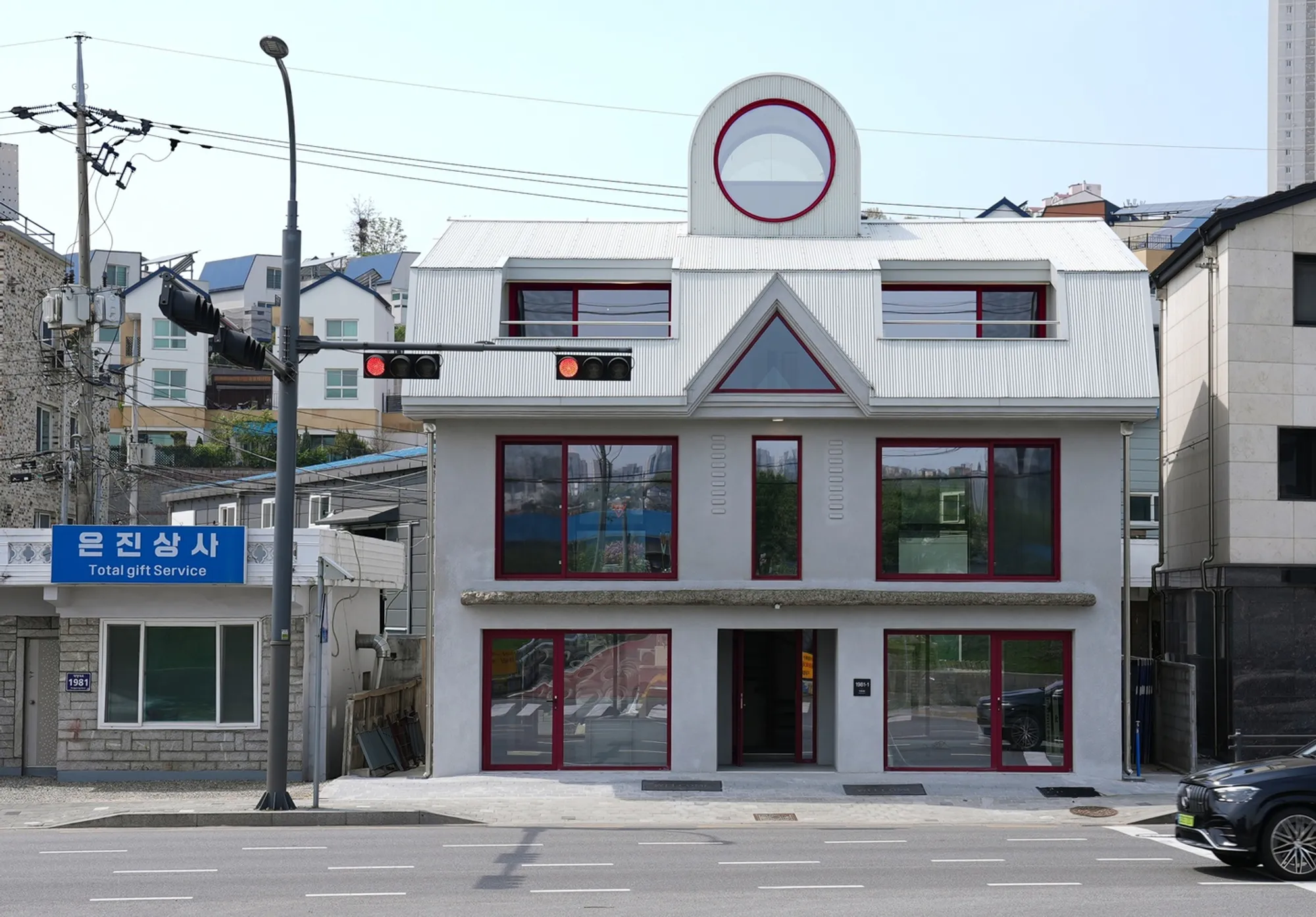
Old House Renovation Transformed into Dukwoo PCI Paint Company HQ by pH7 Architects
Old 1980s house in Yongin transformed into Dukwoo PCI HQ, blending postmodern character, structural clarity, color-coded design, and material memory.


Breathing New Life into a Postmodern Gem
In the heart of Yongin City, South Korea, pH7 Architects undertook a remarkable transformation of a deteriorating 1980s residential building into the vibrant headquarters for Dukwoo PCI, a boutique paint company. Originally known as the “Robot House” due to its playful geometric forms and circular windows reminiscent of Japanese animation, the building was a postmodern icon. However, aging materials and an outdated structure rendered it unsuitable for contemporary office use.
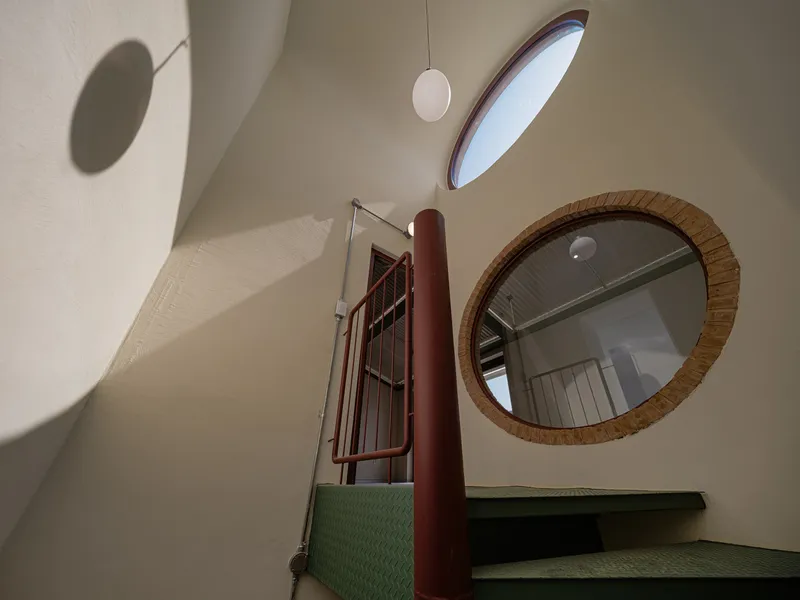
Rather than stripping away its character, the renovation preserves and reinterprets the building’s identity, fusing memory with modern functionality.
Design Approach: Structure, Space, and Color
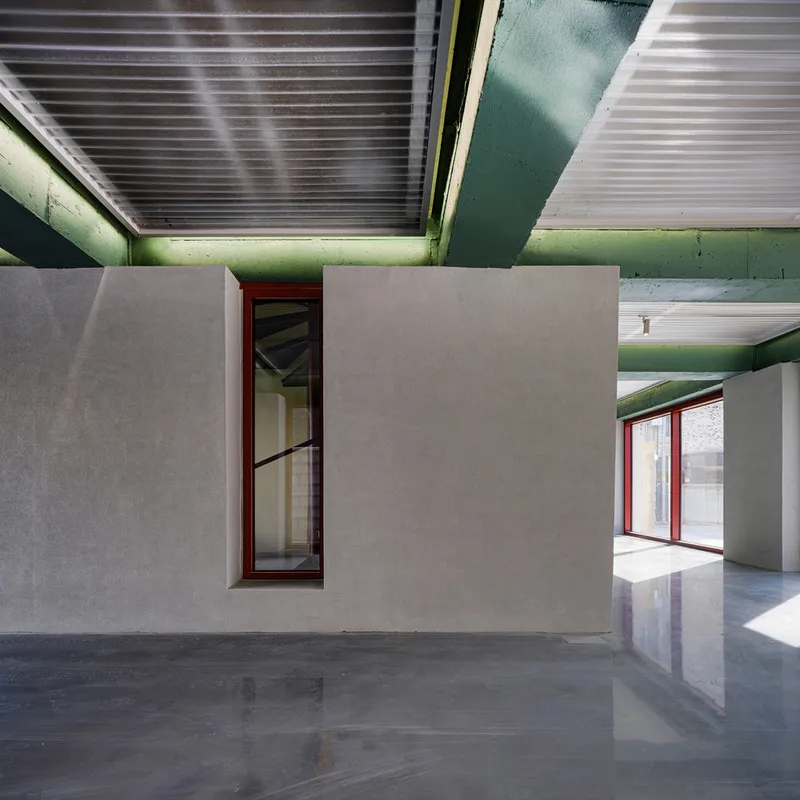
The architectural intervention involved reinforcing the original structure with a new steel frame, removing outdated partitions, and implementing a clear spatial hierarchy. The design maintains the building’s whimsical postmodern essence while introducing a chromatic system that reflects Dukwoo PCI’s brand identity.
Color as a Core Design Language
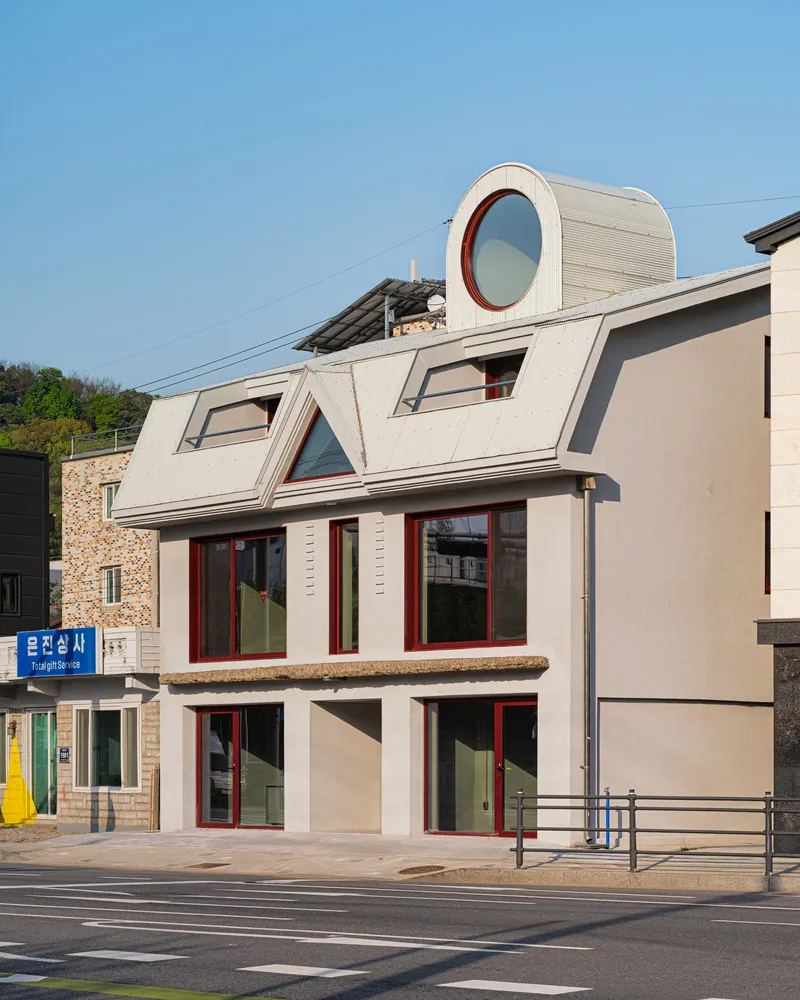
For a paint company, color is more than decoration—it becomes a spatial narrative. The architects introduced a color-coded system:
- Burgundy for columns
- Green for beams
- White for the corrugated roof
- Grey for the stucco exterior
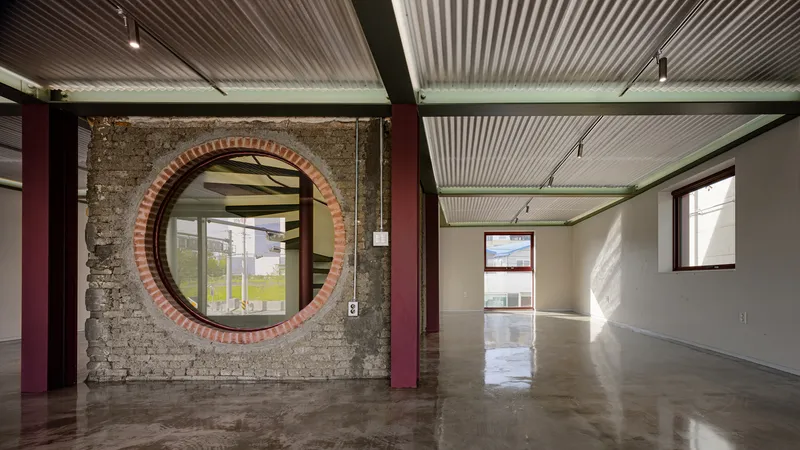
This strategy visually organizes the interior while embedding the client’s direct craftsmanship into the construction. Each painted surface reflects Dukwoo PCI’s identity, making color both a brand statement and an authorship element.
Celebrating Structure and Material Honesty
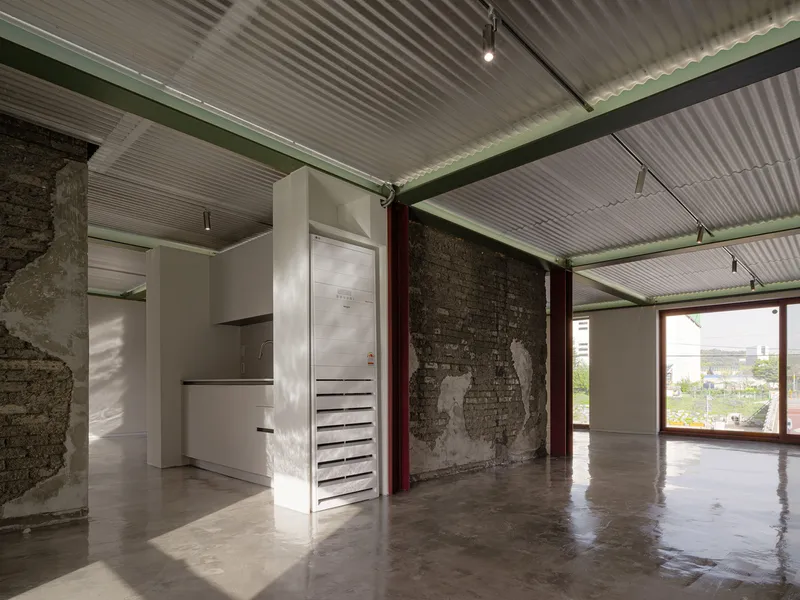
Moving away from decorative postmodern motifs, the renovation emphasizes structural clarity and material transparency. Exposed steel frames, brick walls, and concrete beams reveal the building’s construction logic. Indirect lighting highlights textures and shadows, allowing the tactile qualities of surfaces to define the spatial experience. The result is a functional, breathable office environment that engages occupants actively rather than as a mere visual object.
Preserving Memory Through Materials
Time and history play central roles in this renovation. Existing elements such as concrete beams, brick stairwells, and a spiral steel staircase were preserved or selectively renewed. Notable interventions include:
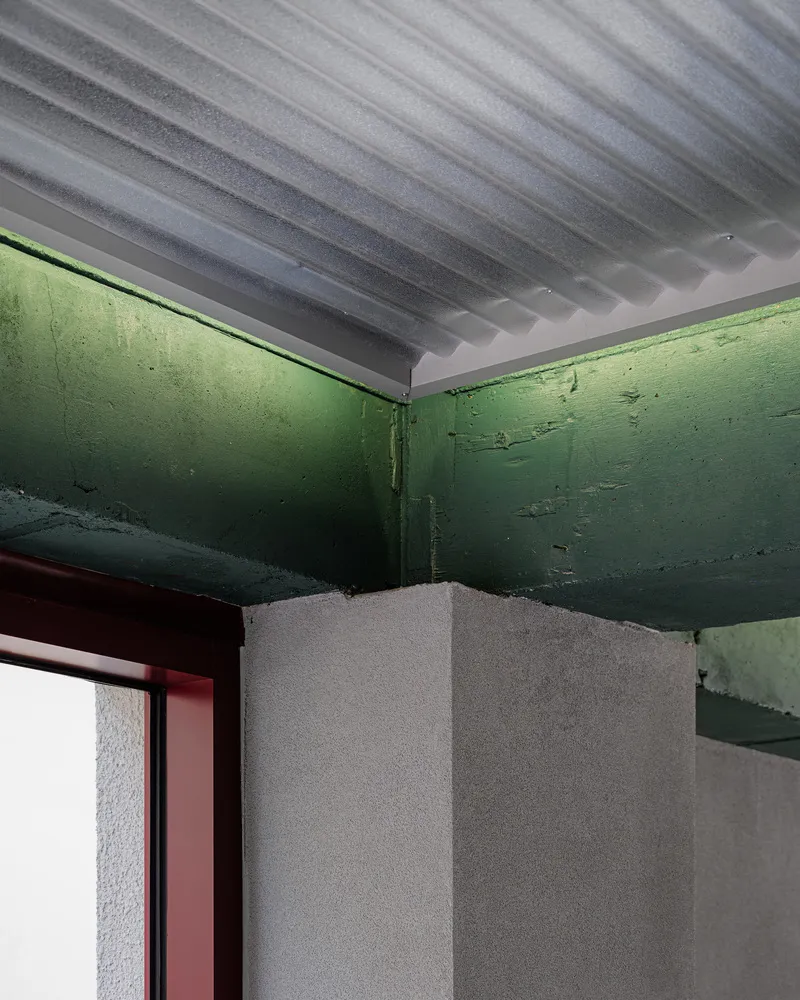
- Green-painted beams and lighting that accentuate aged textures on the first floor
- Exposed brick walls with a patina that narrates the building’s past
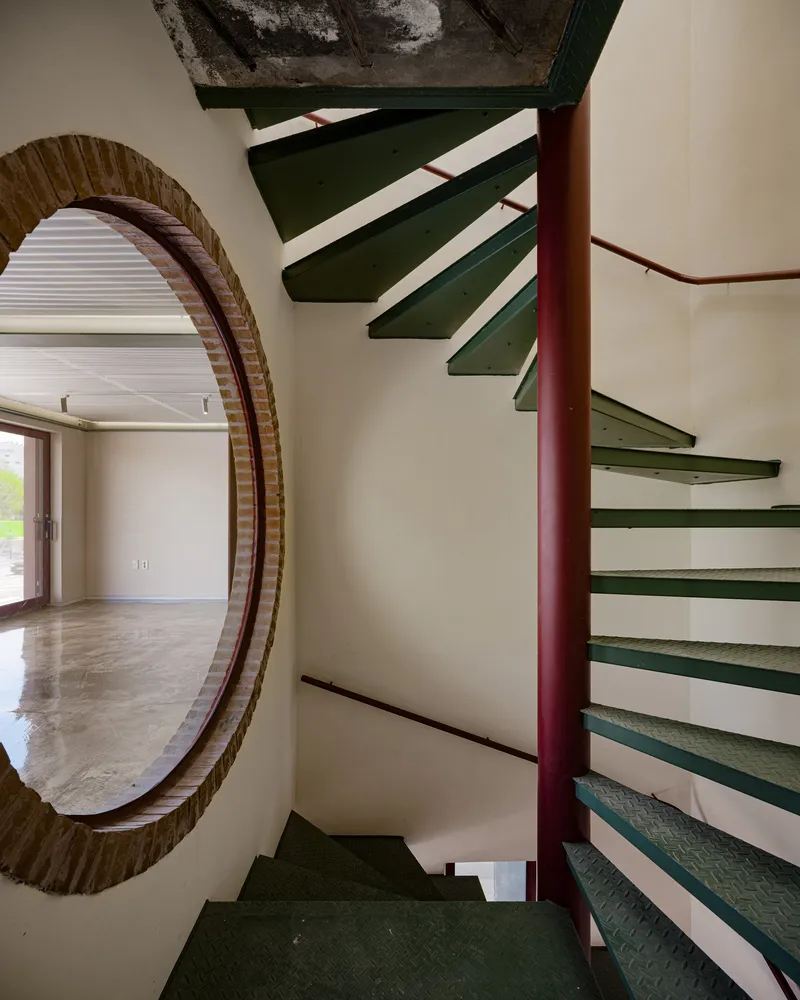
- A fully glazed central circular window enhancing transparency
- Spiral staircase refurbished with new treads and finished in burgundy and green
- Translucent corrugated panels concealing yet revealing the rough concrete ceiling
Through these interventions, the building’s material memory becomes an integral part of its modern identity.
A Hybrid of Memory, Brand, and Modernity
More than a simple renovation, this project serves as a spatial narrative where postmodern legacy, material authenticity, and brand identity converge. Minimal yet precise interventions have reborn a former residential building into an inspiring workspace that celebrates craftsmanship, history, and color.
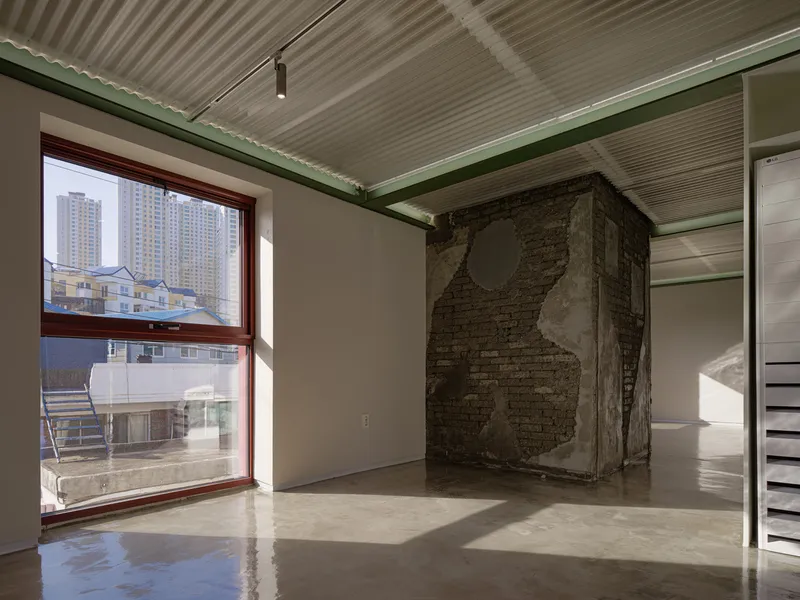
pH7 Architects’ Dukwoo PCI Paint Company HQ demonstrates how thoughtful renovation can bridge past and present, transforming iconic architecture into functional, visually compelling modern workplaces.
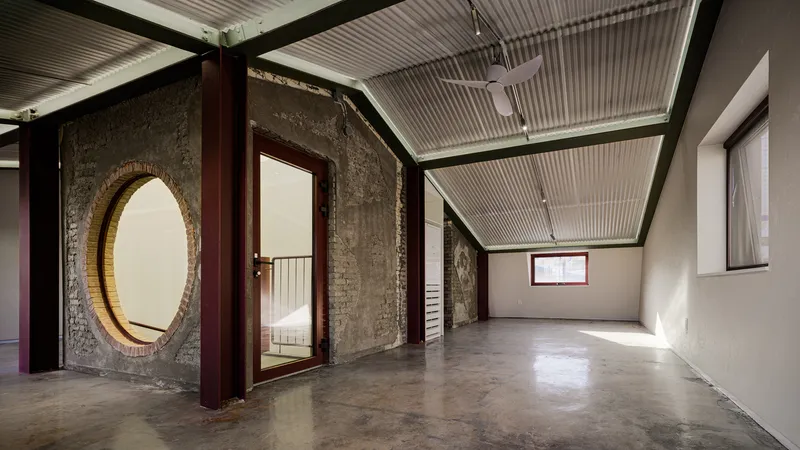
All photographs are works of Kim Yongsoon



Popular Articles
Popular articles from the community


The Ocean Hive: Sustainable Architecture for a Self-Sufficient Civilization at Sea
The Ocean Hive imagines sustainable architecture at sea, where modular habitats, algae, wave power and ocean waste sustain a growing colony.

EW PARK: Sustainable Architecture Reimagines the Future of Urban Parking
EW PARK reimagines city parking as a modular wooden tower combining automation, solar energy, electric mobility, and adaptable urban design.

Co-Life: Senior Housing Design That Reconnects Older Adults With the City
Co-Life reimagines senior housing design through healing gardens, shared streets, workshops, and a sustainable community across generations.

The Earth Pod: 3D Printed Homes for Resilient Refugee Communities
The Earth Pod reimagines refugee housing through 3D printed homes made from clay, combining resilience, self-sufficiency, and rapid shelter.

Similar Reads
You might also enjoy these articles


Hodi-Mandai Geram
Project Function: Preservation and revitalization of the Intangible heritage and socio-spatial identity of the Hodi by Housing, Cultural Memory Center, Sacred Grove, landscape, local tourism economy


Olio Towers: A Mid-Rise for Performers That Fuses Housing, Rehearsal, and Stage
Located blocks from Houston's Theater District, this modular tower stacks living units around a central performance atrium.

Oasis: Modular Green Housing Carved into Dhaka's Urban Fabric
A shortlisted Plugin Housing entry reclaims unauthorized settlements in Dhaka with stepped concrete volumes, green roofs, and ventilation-driven design.

Black Hole: A Floating Megastructure for the Post-Physical Era
Emiliano Mazzarotto envisions a spherical, self-scaling arena where e-sports, digital hotels, and holographic stadiums replace traditional public space.

Explore Adp Architects Competitions
Discover active competitions in this discipline



Challenge to reimagine the Iron Throne


Photograph architecture without architects


Illustrate the lost glory of Angkor Wat - Render Challenge


Design challenge to reuse E-waste
Comments (0)
Please login or sign up to add comments
No comments yet. Be the first to comment!