
ONDIS: A Human-Centered Office for Non-Discrimination and Anti-Crime Support by 7a+i
A compact, adaptive civic office in Valencia by 7a+i, designed for inclusion, transparency, sustainability, and municipal transformation.


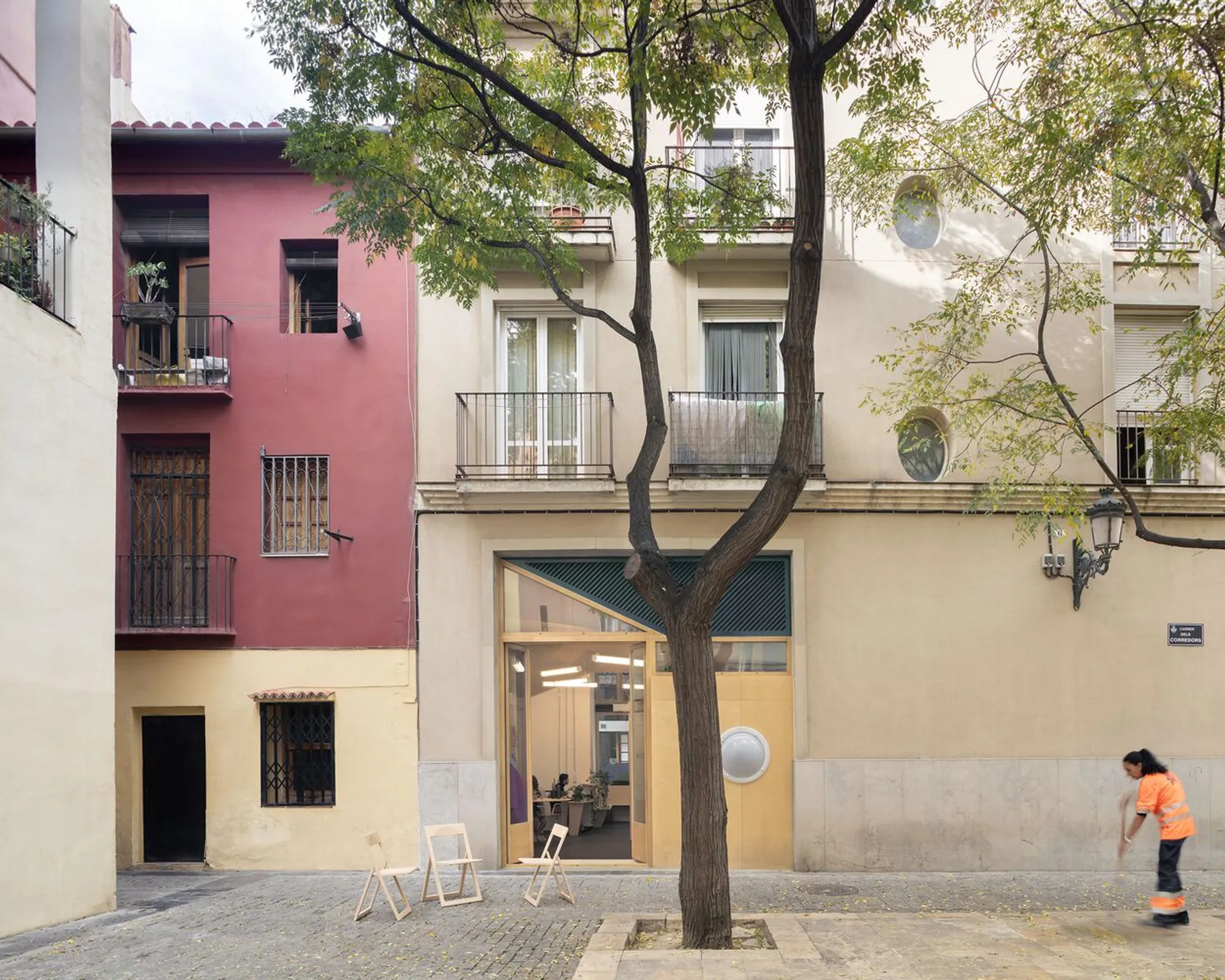
The ONDIS (Non-Discrimination and Anti-Crime Office) in Valencia, Spain, designed by architecture studio 7a+i, stands as a meaningful response to the city’s initiative for inclusivity and civic support. Conceived as part of the Municipal Coexistence Plan against Discrimination and Hate (COMVA Plan), this compact yet impactful 53-square-meter space aims to provide care, support, and awareness for individuals facing discrimination or hate crimes.
A Dual-Spirit Space: Intimate Yet Transparent
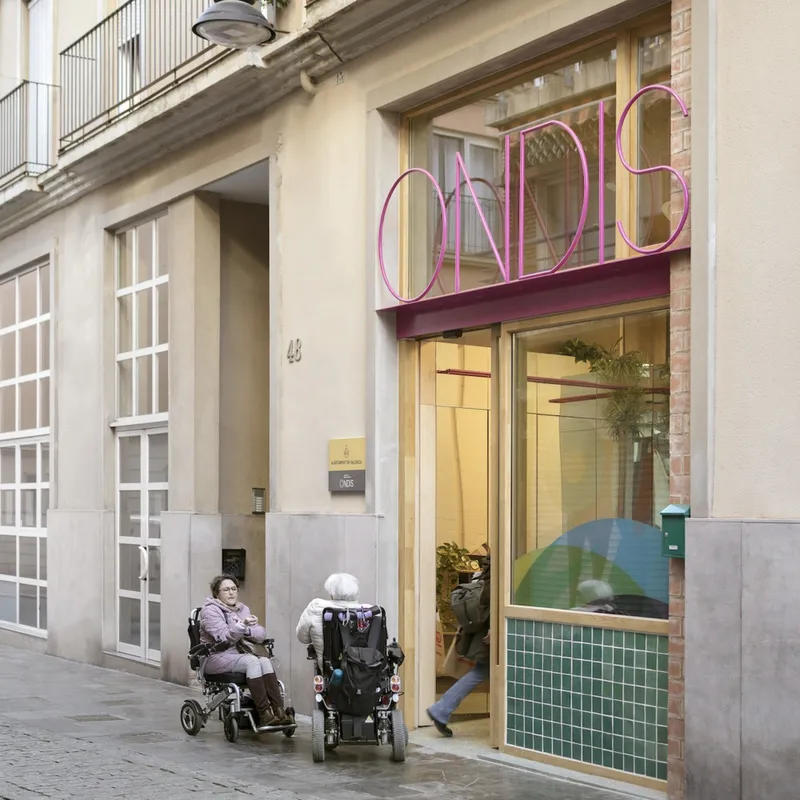
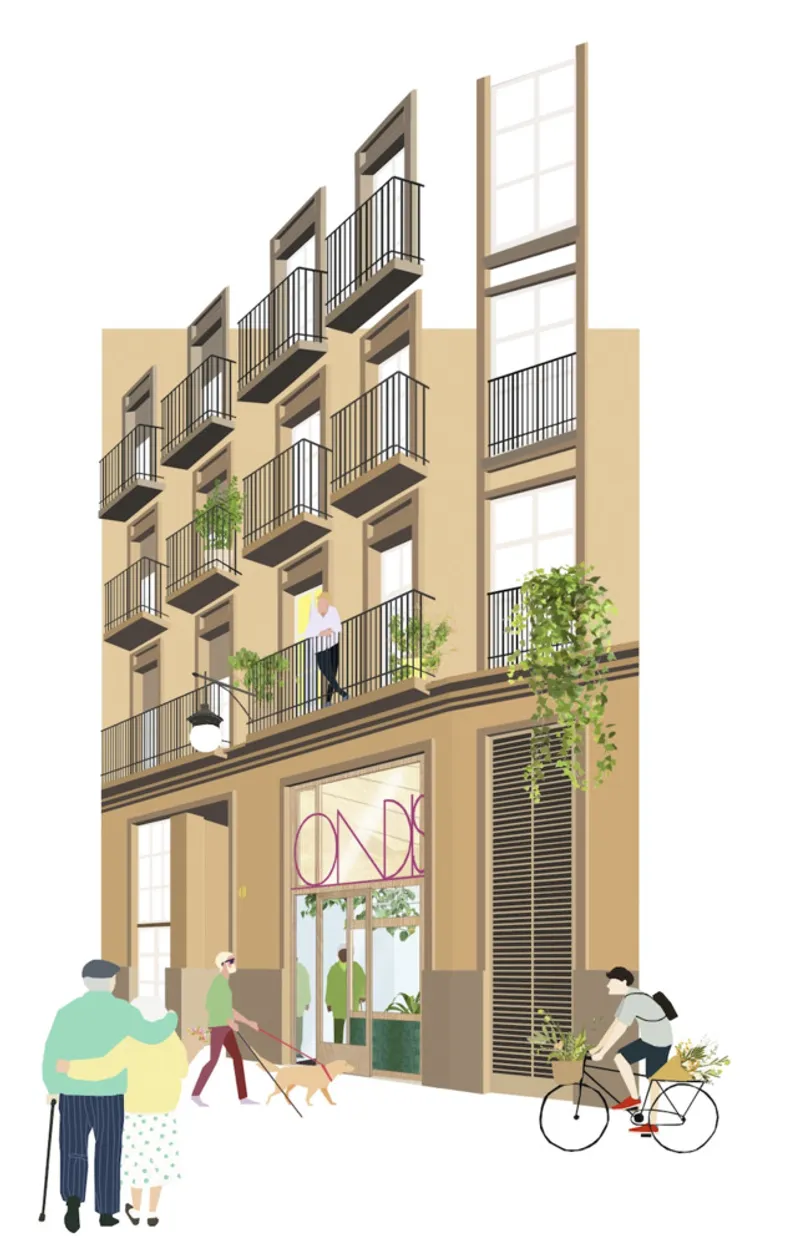
Strategically located on the ground floor of a municipal housing building, the ONDIS office opens onto two distinct streets—Alta Street, an emblematic thoroughfare, and Corredores Street, a quiet square. The dual-access layout echoes the project’s dual purpose: to serve as both a safe, intimate refuge and a transparent public point of engagement. Despite the narrow and elongated configuration of the site, its generous ceiling height and inclusion of a mezzanine offered a starting point for a transformative intervention.
The site had previously served functional but temporary uses—first as a construction office, then a police storage area. The architects saw in this layered past a metaphor for change, and set out to design a space that would itself symbolize transformation and civic renewal.
Designing for Evolving Civic Infrastructure
With ONDIS being the first municipal office of its kind in Valencia, the architects proposed a design that would not only accommodate current needs but also adapt to future challenges. The space is conceived as a flexible and evolving infrastructure—an architecture that can change in tandem with shifting policies, services, and public needs.
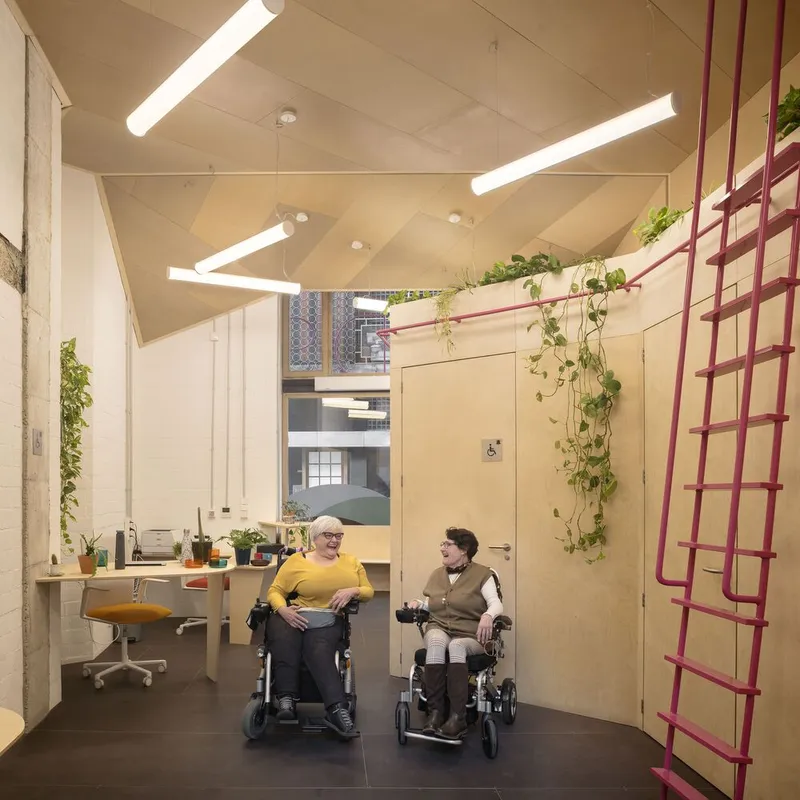
Rather than relying on fixed partitions or static configurations, 7a+i developed a modular design system using dry construction techniques and sustainable materials. This approach allowed for easy reconfiguration, future relocation, or even complete reuse of components. Panels attached to a lightweight substructure form the walls, floors, and ceilings, crafting an environment that feels fluid, continuous, and transparent—qualities further emphasized by the treatment of both facades.
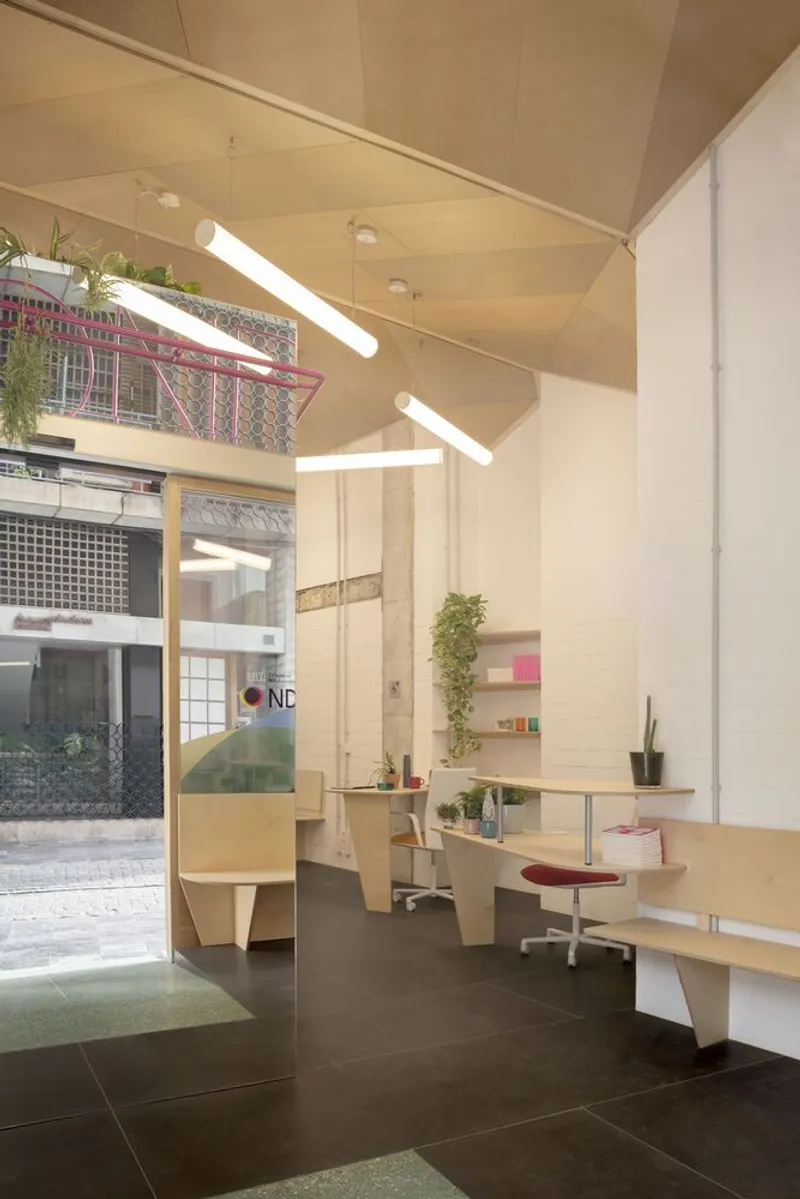
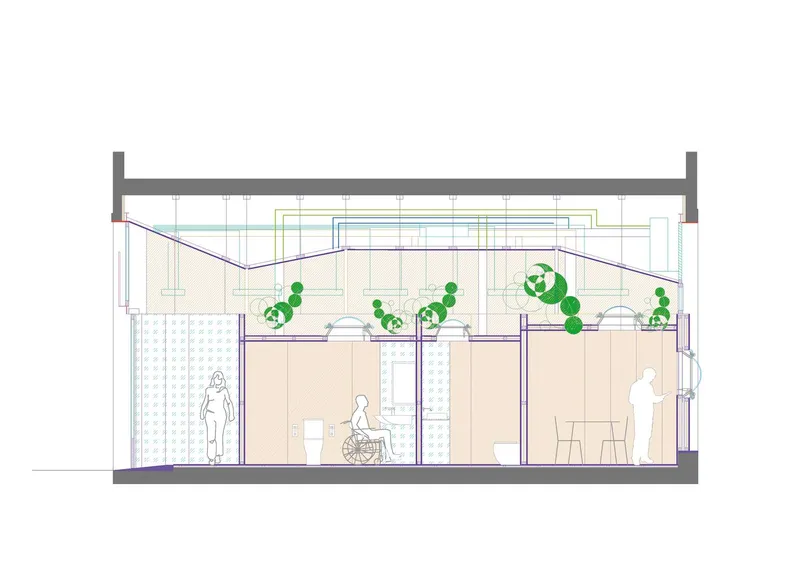
Construction as Assembly and Transformation
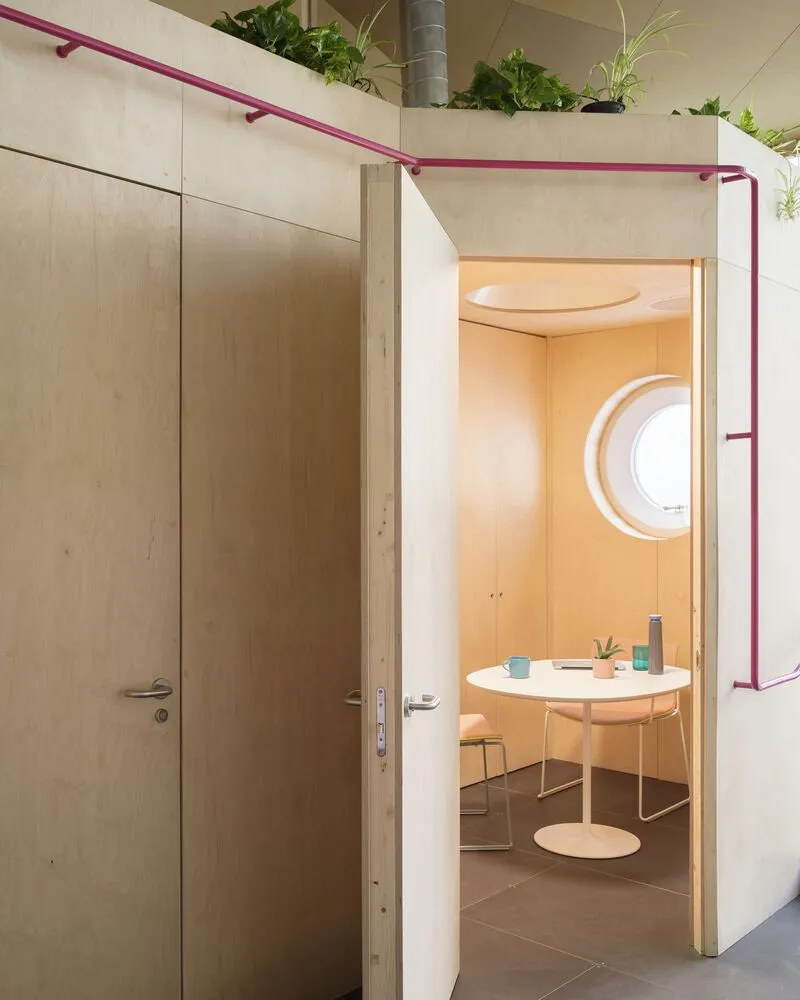
The project unfolded as a hands-on assembly workshop, where design, fabrication, and spatial articulation occurred simultaneously. The use of recognizable materials recontextualized from their traditional uses helps users feel both grounded and subtly disrupted—mirroring the project’s ambition to challenge the status quo of civic architecture.
The sustainability strategy went beyond energy use or passive performance. It prioritized materials that are low-impact in their production and capable of being reused or recycled. This reinforces the ONDIS office as a circular architecture prototype—one that is temporary, portable, and regenerative.




Popular Articles
Popular articles from the community


Lunar Spiral: Space Architecture Shaped by the Mathematics of the Universe
Lunar Spiral reimagines space architecture through Fibonacci geometry, lunar regolith, levitating habitats, and self-sustaining Moon living.

Hill & Cross Opera: Sculptural Opera House Architecture Shaped by Tallinn’s Landscape and Identity
Hill & Cross Opera reimagines opera house architecture in Tallinn through its sculptural hill, civic plaza, glass wave and a luminous cross.

The Ocean Hive: Sustainable Architecture for a Self-Sufficient Civilization at Sea
The Ocean Hive imagines sustainable architecture at sea, where modular habitats, algae, wave power and ocean waste sustain a growing colony.

Co-Life: Senior Housing Design That Reconnects Older Adults With the City
Co-Life reimagines senior housing design through healing gardens, shared streets, workshops, and a sustainable community across generations.

Similar Reads
You might also enjoy these articles


Hodi-Mandai Geram
Project Function: Preservation and revitalization of the Intangible heritage and socio-spatial identity of the Hodi by Housing, Cultural Memory Center, Sacred Grove, landscape, local tourism economy


Olio Towers: A Mid-Rise for Performers That Fuses Housing, Rehearsal, and Stage
Located blocks from Houston's Theater District, this modular tower stacks living units around a central performance atrium.

Oasis: Modular Green Housing Carved into Dhaka's Urban Fabric
A shortlisted Plugin Housing entry reclaims unauthorized settlements in Dhaka with stepped concrete volumes, green roofs, and ventilation-driven design.

Black Hole: A Floating Megastructure for the Post-Physical Era
Emiliano Mazzarotto envisions a spherical, self-scaling arena where e-sports, digital hotels, and holographic stadiums replace traditional public space.


Explore Office Building Competitions
Discover active competitions in this discipline



Challenge to reimagine the Iron Throne


Photograph architecture without architects


Illustrate the lost glory of Angkor Wat - Render Challenge


Design challenge to reuse E-waste
Comments (0)
Please login or sign up to add comments
No comments yet. Be the first to comment!