
One Ashley Road Building: A Landmark of Regenerative Mixed-Use Architecture in Tottenham Hale
A landmark mixed-use development in Tottenham Hale, combining residential towers, retail, offices, and public spaces inspired by industrial heritage.

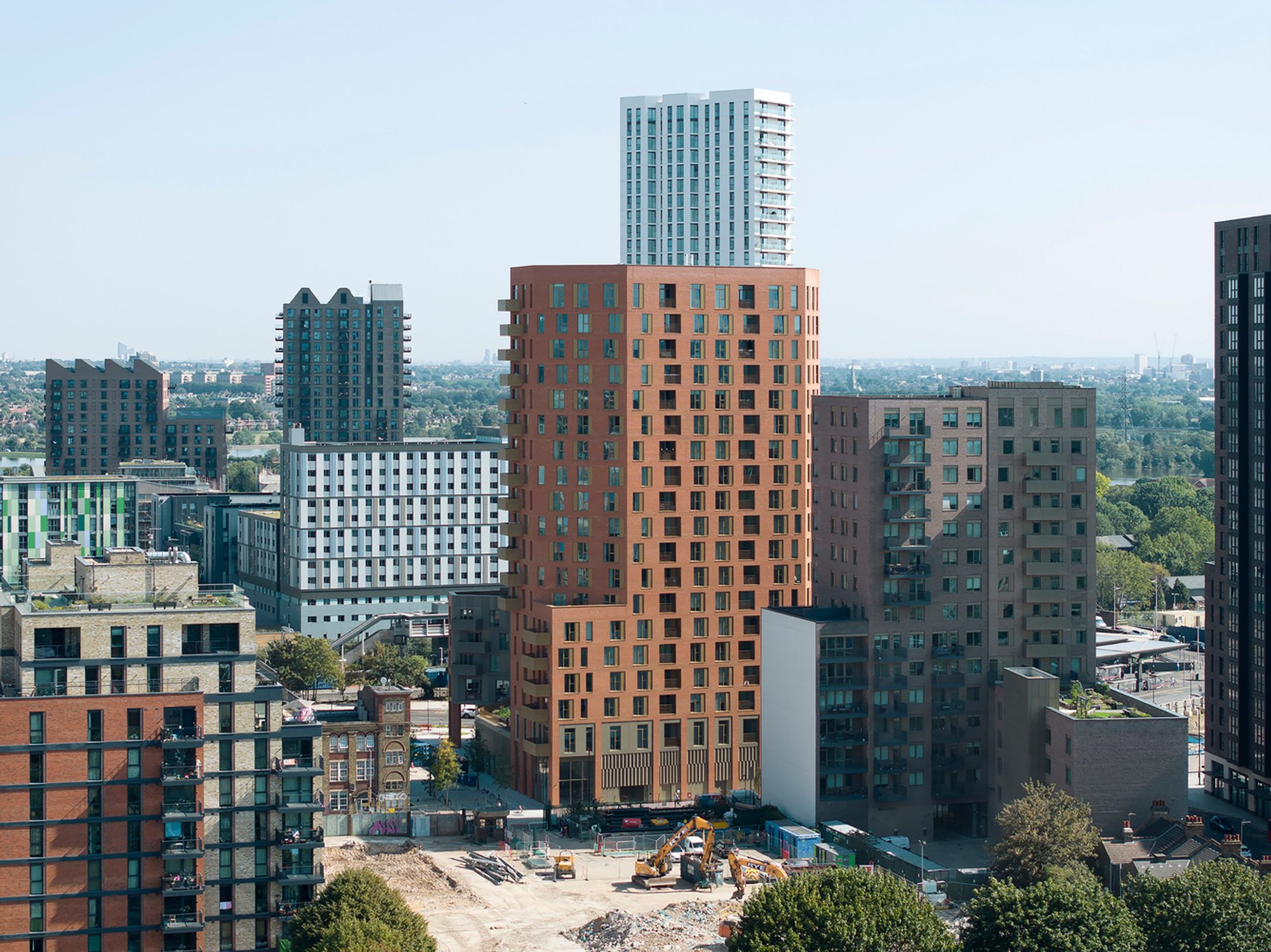
One Ashley Road Building, designed by Alison Brooks Architects, stands as a defining gateway to the large-scale regeneration of Tottenham Hale in London, United Kingdom. Developed for Related Argent, the project anchors the Heart of Hale masterplan, transforming a former post-industrial, traffic-dominated transport interchange into a vibrant, walkable, and socially connected urban neighborhood.
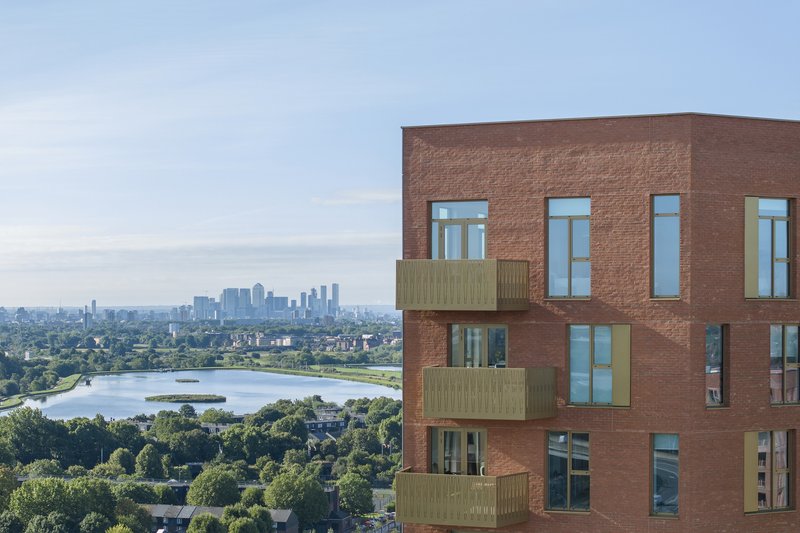
Completed in 2023 and spanning approximately 20,600 square meters, One Ashley Road is conceived as a dense live-work-shop complex that integrates residential living, commercial activity, public space, and landscape design into a cohesive architectural framework. Positioned near the Walthamstow Wetlands and the Lea Valley waterways, the building establishes a strong dialogue between urban infrastructure and natural systems.
Mixed-Use Density Rooted in Place
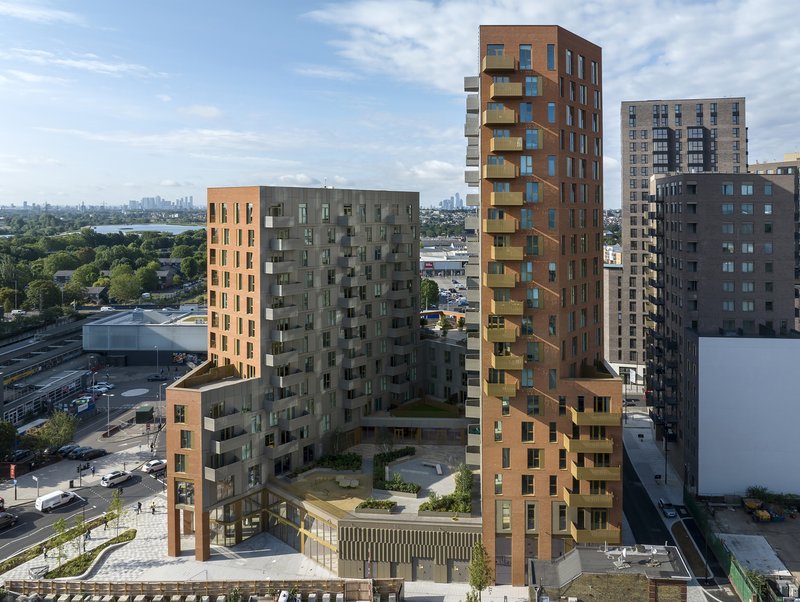
The scheme comprises two residential towers framing a perimeter courtyard block, accommodating 183 homes above three active ground and podium levels of retail, incubator offices, and community-oriented commercial spaces. This vertical stacking of uses reinforces the idea of mixed-use urban density while maintaining a human-scaled public realm at street level.
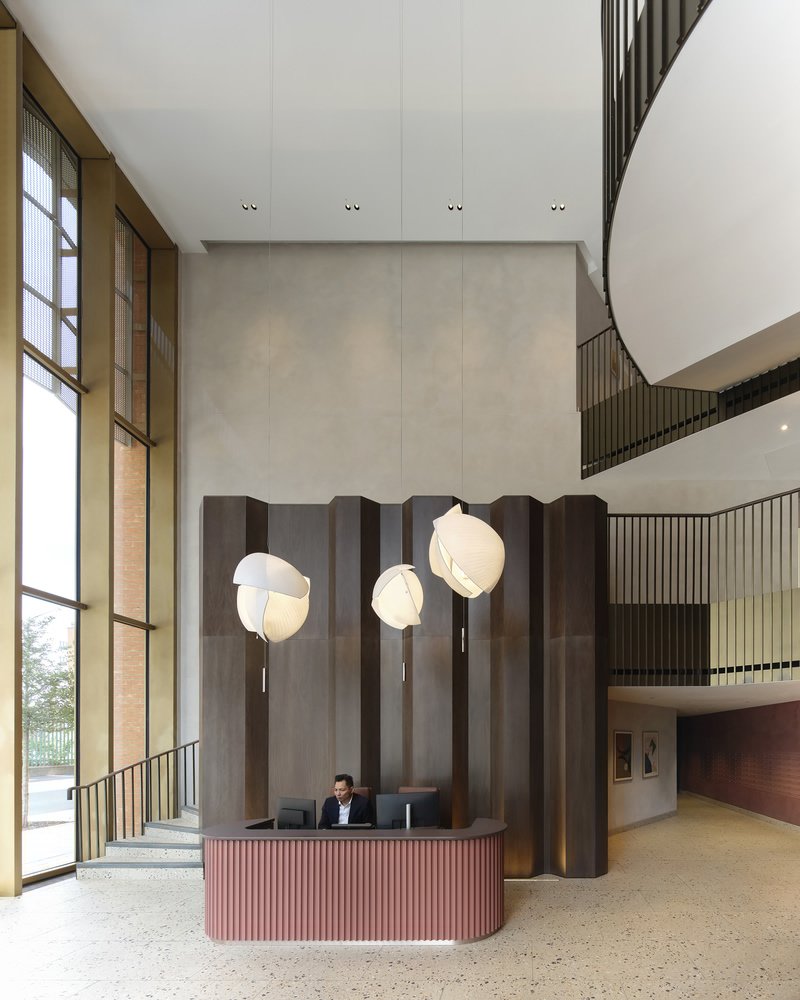
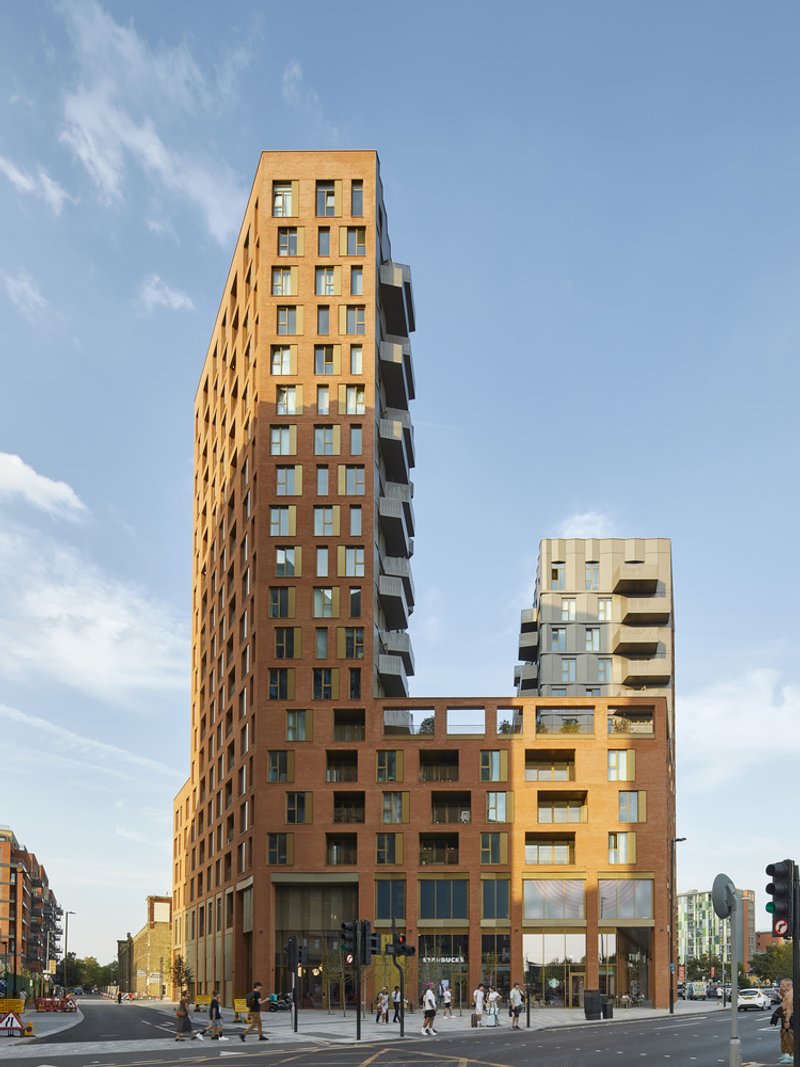
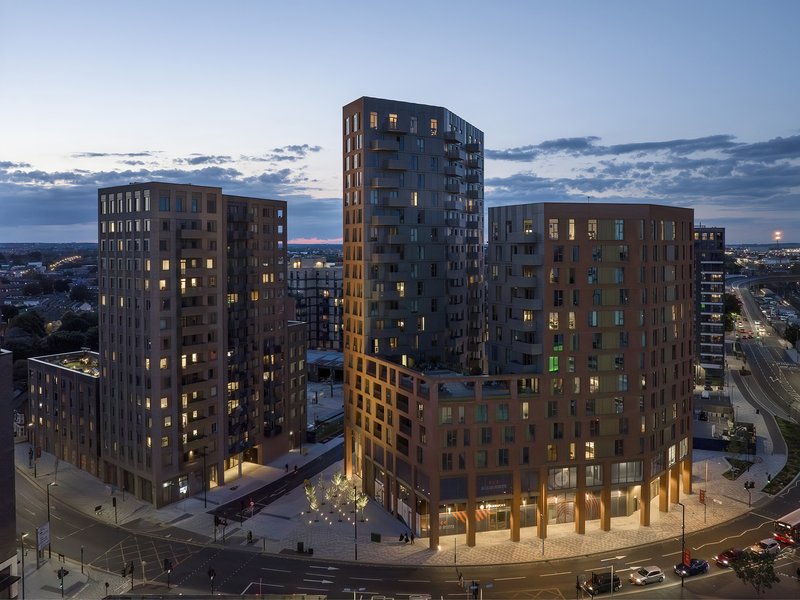
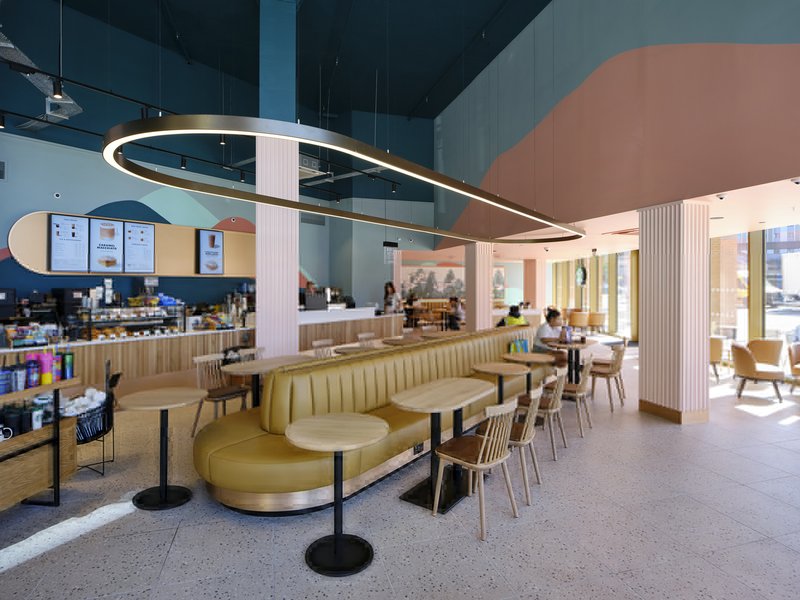
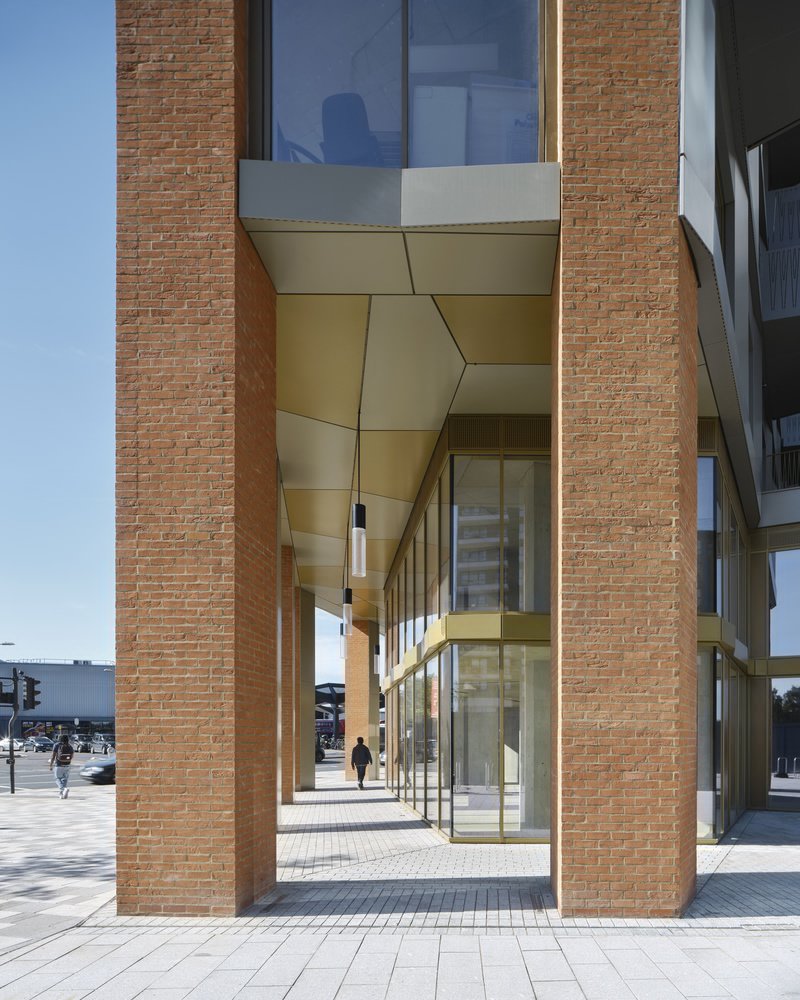
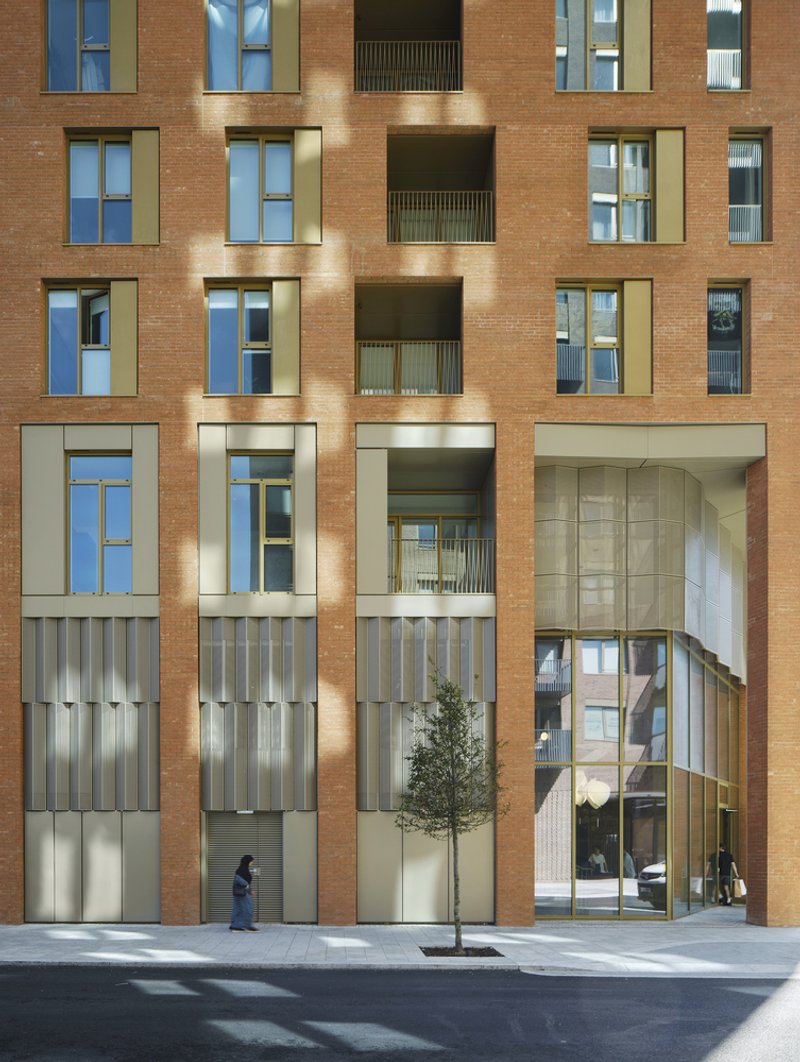
At the base, a colonnaded frontage addresses the Tottenham Hale transport hub, creating a civic threshold and a clear “front door” to the wider regeneration area. A new tree-lined civic square marks the prow of the site, while a pedestrian passage draws people into the historic Berol Factory Courtyard, strengthening physical and social connectivity across the neighborhood.
Architectural Form Inspired by Industrial Heritage
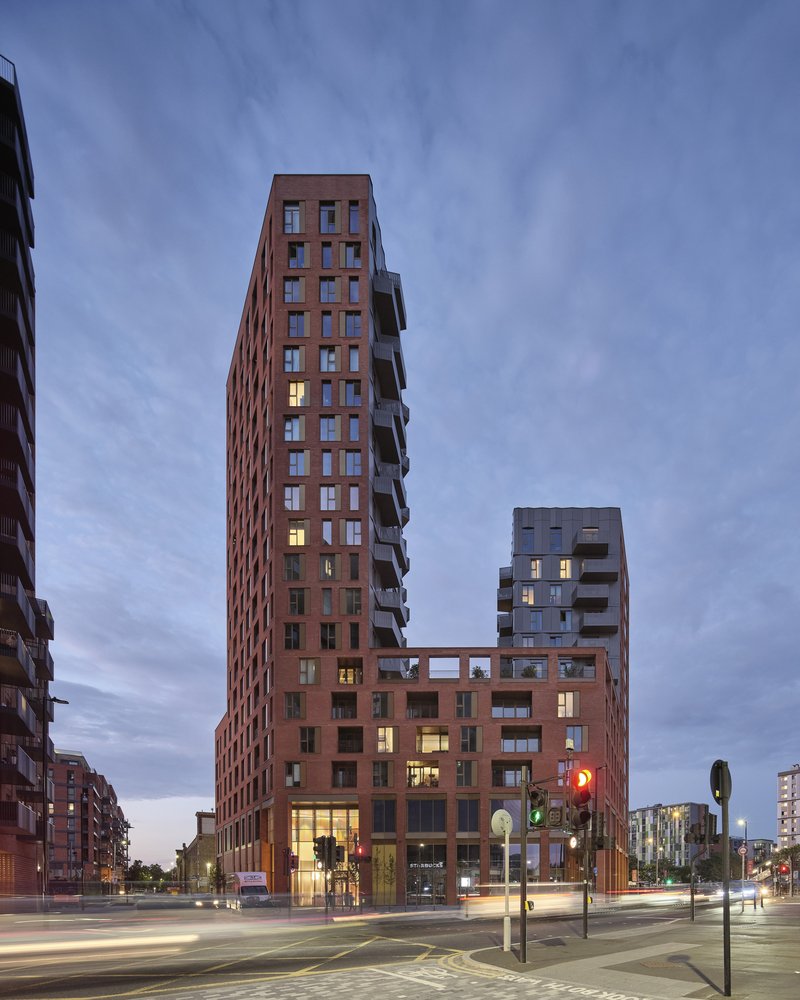
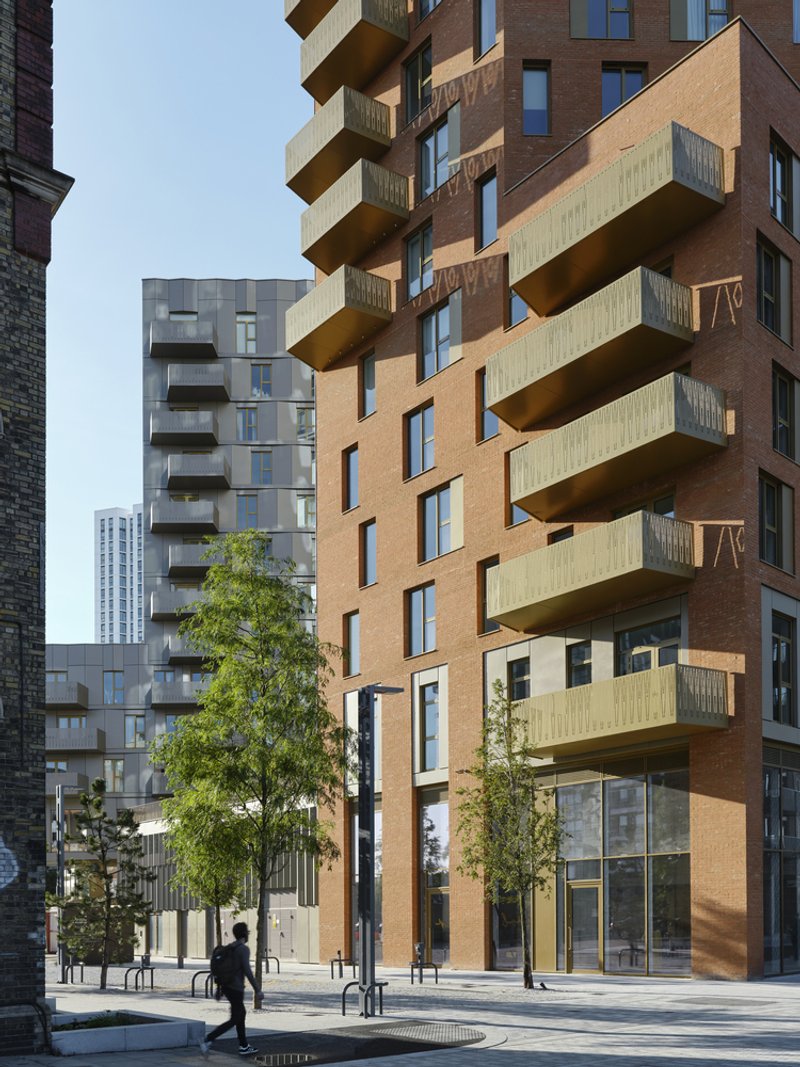
One Ashley Road’s architectural identity is deeply informed by its industrial context, particularly the adjacent Berol House, once part of the Eagle Pencil Company Factory. The building’s expressive, carved massing and faceted geometry reinterpret this heritage through a contemporary lens.
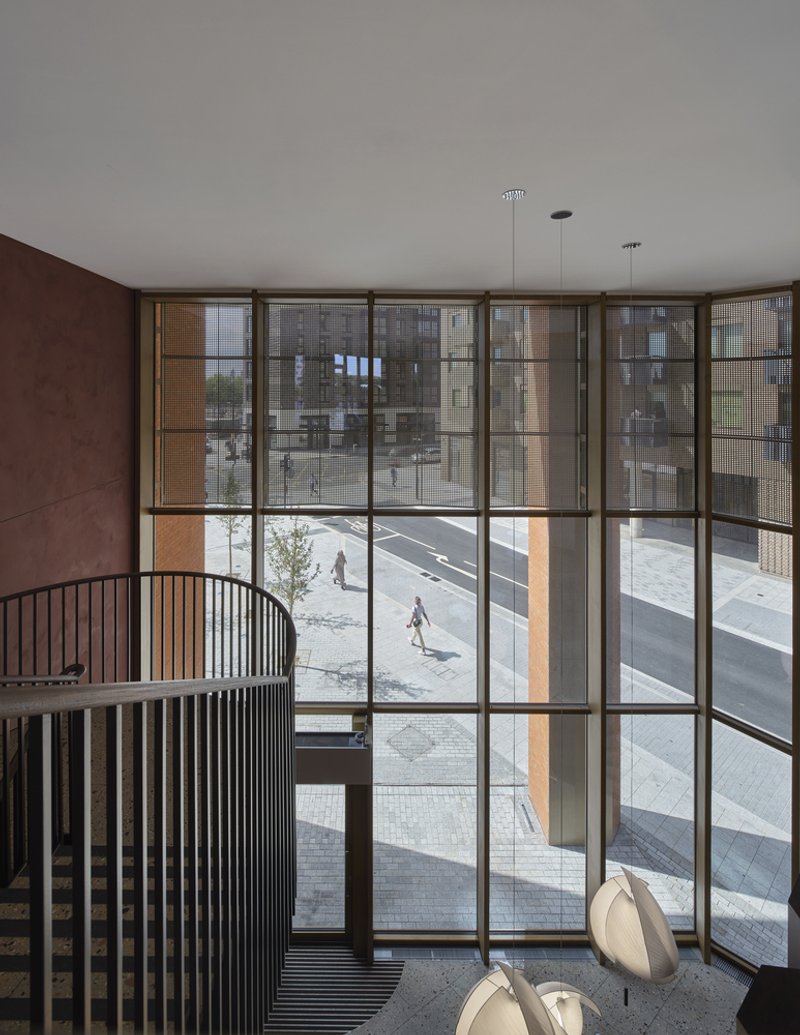
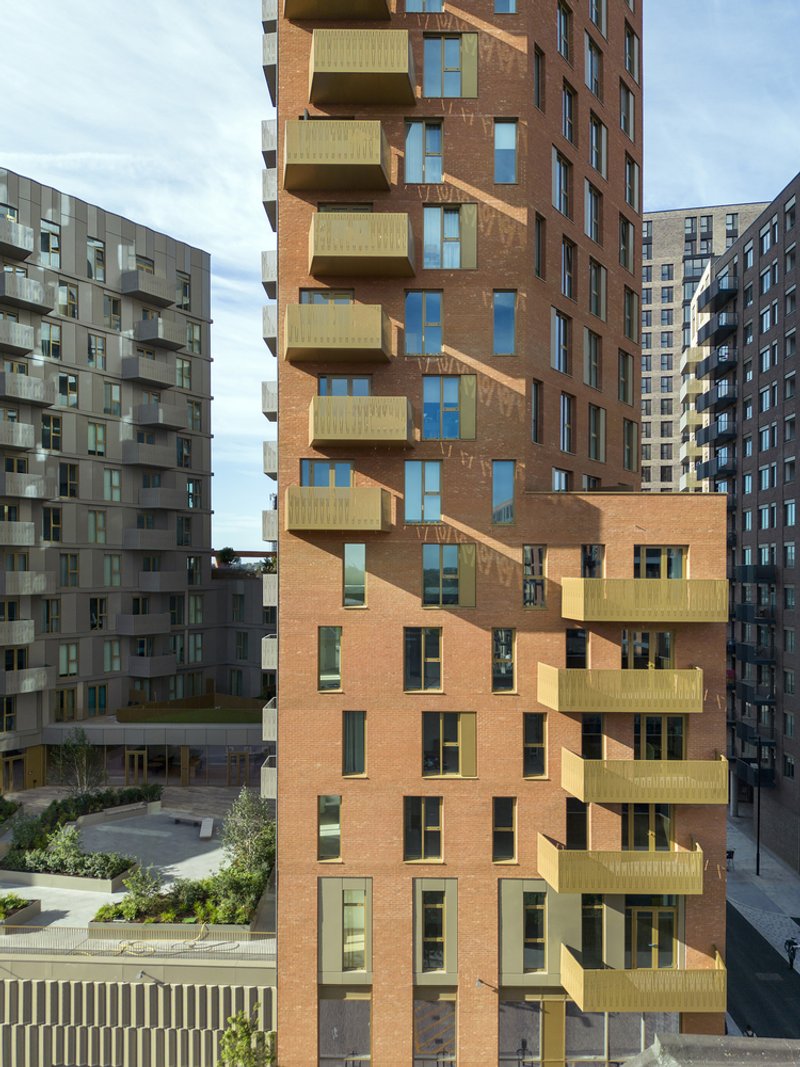
The outer envelope is defined by a rich orange brick skin, establishing material continuity with London’s industrial past, while a contrasting inner layer of shimmering metal panels introduces lightness and visual depth. Inspired by the graphic colors and hexagonal motifs of the iconic Berol Eagle Pencil, these abstract patterns animate the façade and generate a distinctive skyline presence. The pronounced verticality of the towers enhances the building’s role as a landmark within the evolving Tottenham Hale cityscape.
Public Realm, Courtyards, and Elevated Gardens
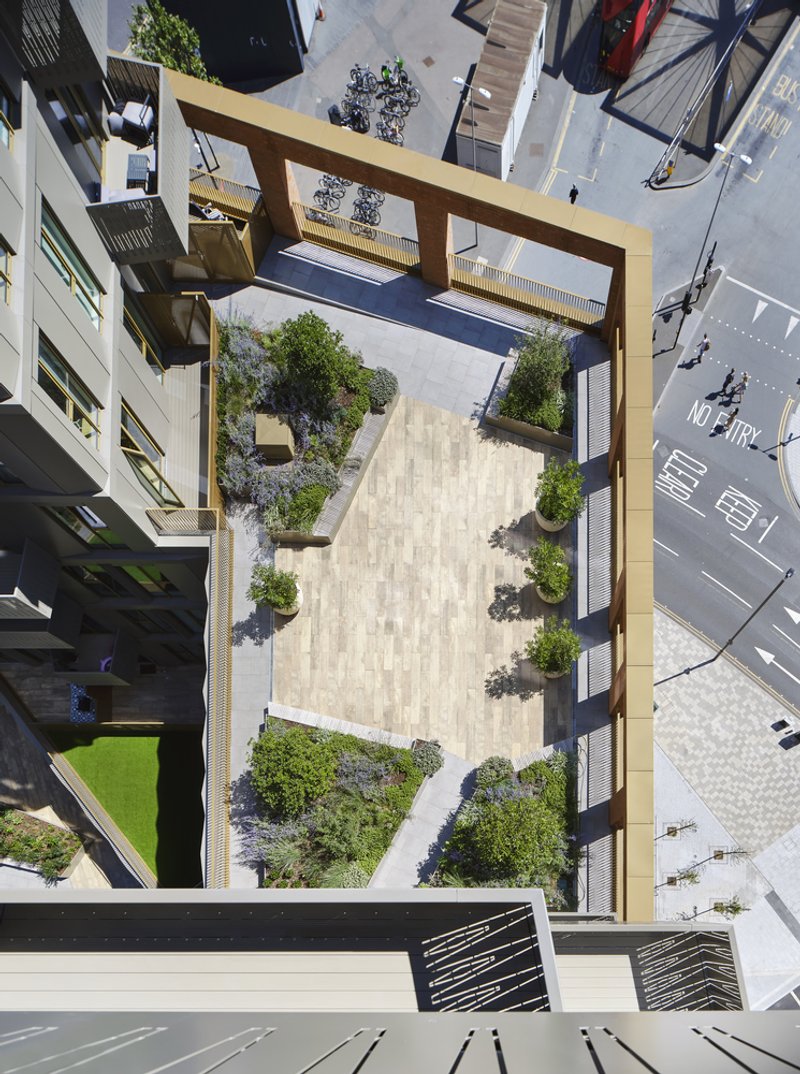
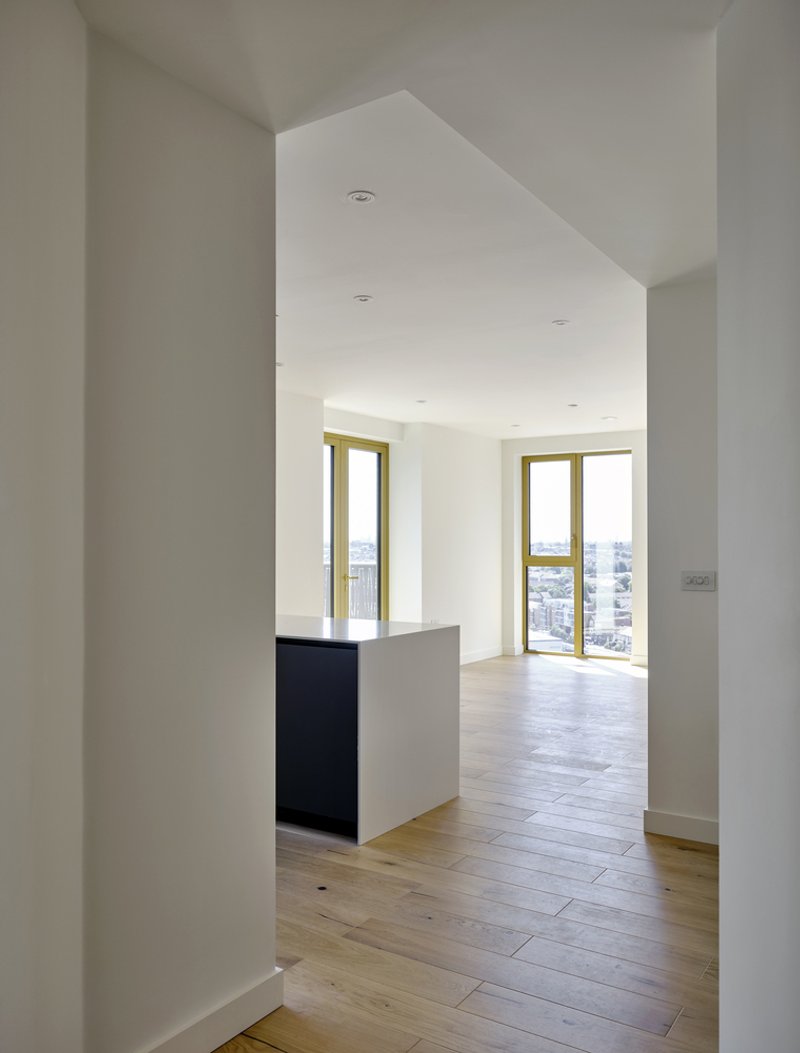
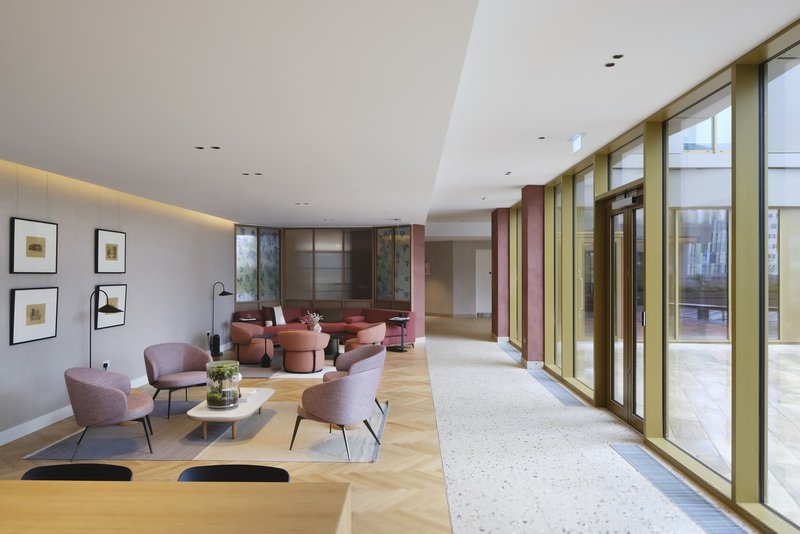
The stepped massing strategy plays a critical role in shaping both the public and private realms. At podium level, a secluded residents’ garden and co-working space create a calm retreat above the activity of the street. Higher up, a south-facing communal roof garden on the seventh floor overlooks the new civic square, offering expansive views and shared outdoor amenities.
Internally, the courtyard elevations depart from the solidity of the brick exterior, featuring faceted metal cassette panels that reflect daylight deep into the block. This luminous inner façade transforms the heart of the building into a shimmering veil of light, enhancing spatial quality and visual comfort for residents.
Engineering Ingenuity and Site Constraints
A defining challenge of the project was the presence of two Victoria Line tunnels running directly beneath the site. Rather than treating this as a limitation, the design leverages the constraint as a generator of form. The two towers and their piling systems are strategically positioned on either side of the tunnels, carefully addressing structural loading, acoustic performance, and vibration control associated with London Underground infrastructure.
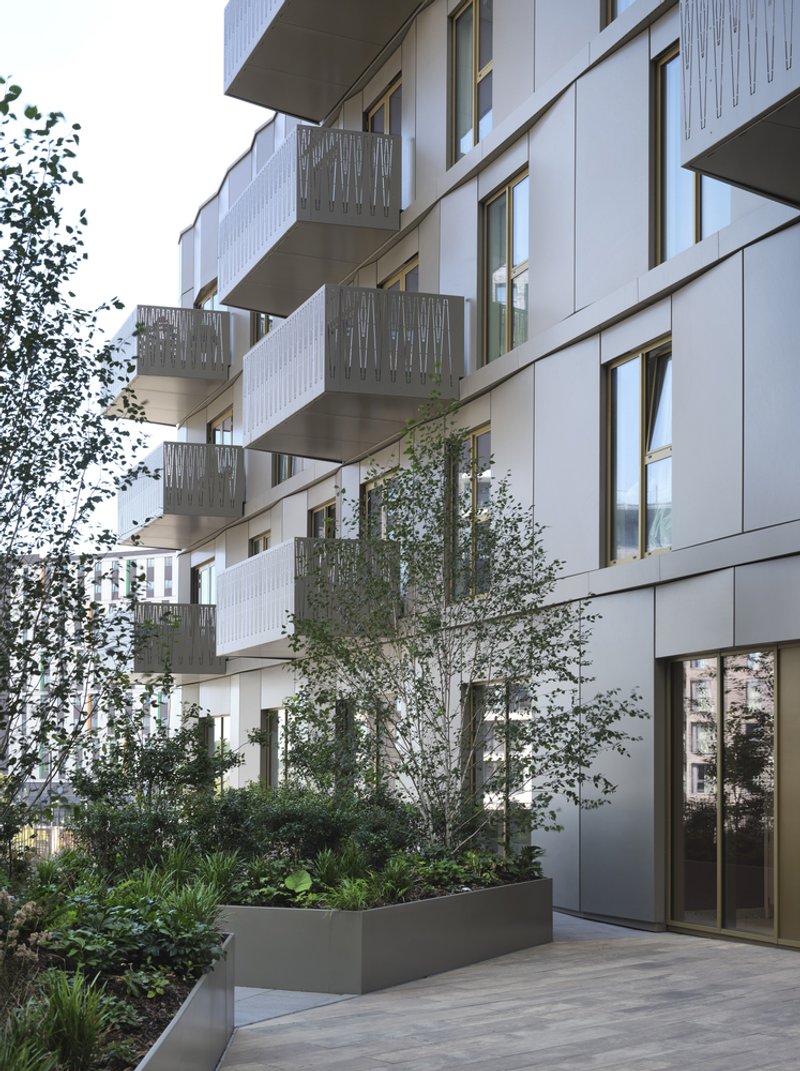
This precise coordination resulted in a stepped base that recesses to the north, creating a series of communal green terraces. These landscaped platforms provide residents with access to fresh air, natural light, and panoramic views, reinforcing the project’s commitment to wellbeing and environmental integration.
A Contemporary Model for Urban Regeneration
One Ashley Road exemplifies a new generation of mixed-use architecture in London, where density, identity, and public life are carefully balanced. By weaving together housing, employment, retail, landscape, and infrastructure, the project contributes to the transformation of Tottenham Hale into a diverse, inclusive, and sustainable urban district.
Rooted in local history yet unmistakably contemporary, the building demonstrates how architectural expression, material innovation, and urban strategy can work together to create a meaningful sense of place within large-scale regeneration.
All photographs are works of
Paul Riddle




Popular Articles
Popular articles from the community

Rojkind Arquitectos and Think Parametric Build a Glueless Pavilion from 67 Interlocking Panels
A serpentine fiber-cement installation in Chapultepec Park celebrates a decade of architectural media in Mexico City.
RDTH architekti Rips Out Nearly Every Wall in a Prague Apartment and Replaces Them with Furniture
A 101-square-meter post-war flat in Prague trades rigid partitions for a single rotated furniture block, curtains, and glass concrete.

20 Most Popular Office Building Projects of 2025
From biophilic workspaces in India to net-positive energy offices in New Delhi, 20 office building projects that defined architecture in 2025.
20 Most Popular Furniture Design Projects of 2025
Modular street systems, parametric benches, and insect hotels: the furniture design projects that captivated architects on uni.xyz in 2025.


Similar Reads
You might also enjoy these articles

Bamboo Housing Challenge 2026: Design Affordable, Sustainable Homes Using Bamboo
An international design competition by Bamboo U and IBUKU inviting architects and designers to reimagine affordable housing using bamboo — with the winning design built full-scale in Bali.

Computational Design & Education: Beegraphy Design Awards Introduces 7th Category (Featuring Jiyun's Innovative Approach)
Dive into Beegraphy’s 7th Design Awards category, where computational design meets education to create immersive, interactive learning tools, inspired by Jiyun’s work.

From Parametric Lighting to Urban Furniture: Join the 2nd Workshop in Beegraphy’s Computational Design Series
Dive into Cutting-Edge Design Techniques and Practical Applications with Industry Experts

Introducing Sphere by UNI: Pioneering a New Era in AEC Industry
Unlocking Global Potential with BIM and Agile Management


Explore Architecture Competitions
Discover active competitions in this discipline




The International Standard for Design Portfolios


The Global Benchmark for Architecture Dissertation Awards


The Global Benchmark for Graduation Excellence


Challenge to reimagine the Iron Throne
Comments (0)
Please login or sign up to add comments
No comments yet. Be the first to comment!