

Online x Offline Consumerism
Understanding changes in consumption habits in the pandemic


The changes in the consumption patterns can indicate a new style of commerce. With shopping going digital, the way of consuming in a physical environment (offline place) will change and be influenced by online shopping, creating a new type of shopping experience and a new type of retail that needs to adapt itself and evolve.
The world was already going through a rapid change in the consumption of goods by digital means since before the COVID-19 pandemic, but it accelerated the shift towards a more digital world and triggered changes in online shopping behaviors that are likely to have lasting effects. With restrictions due to quarantine, people were forced to migrate almost definitely to shopping on virtual stores and apps, continuing to have access to food and personal items.
These changes made consumers that used to go to more than one type of market to make their daily purchases, start to buy fewer goods in online stores than they would buy in physical stores, buying only the essential, due to the ease of locating the desired goods in digital environments, without having all the variety of products distributed in the space as it occurs in physical environments. This way, consumption has become impersonal, with people looking for agility, better prices, and larger variety during shopping.
Accelerating even more these changes, some emerging technologies can arise, like an app that identifies rapidly the lack of certain products in a residence and makes the shopping automatically, or technologies that help and improve the experiences in a physical store, giving a new meaning to the shopping ritual and creates a new way of buying, valuing the sensory perceptions found in that space. As an example of that, it is possible to create a device that changes the store according to the time of the year or a particular event or one that identifies the purchase pattern and history of the users, presenting goods based on these patterns, just like it happens at online stores. The physical store has to be an experience, creating a relationship between people and people with the brand.
The strengthening of online commerce impacts the shopping centers, that since the 50s were incorporated in the USA as a technological and organizational innovation on the retail business, adopting the shape of a large building unliked to the public space, privileging the use of cars. These shopping centers inaugurated the era of buying as fun and spectacle, creating a protected artificial landscape. This protection and reclusion end up disrupting the operation of the malls during and after the pandemic, because they are places that mostly do not have much natural lighting and ventilation, making people avoid frequenting these places. Due to that, the consumption of goods in small and local stores increases, with people avoiding going to these large establishments because of the risk of contagion.
Due to the pandemic, health concern was present in the daily lives of people around the world and this is reflected in the products that consumers put in their carts. People tend to make more proactive purchases for health, looking for products that guarantee their well-being, essential for the containment of the virus, products to complete the pantry, such as the purchase of food. This has increased the number of online sales and decreased trips to stores. The restricted life, then, showed the concern of consumers with hygiene products and mainly with lower prices found in online stores.
There was also a considerable growth in the purchase of certain products that before could not even be considered of such importance. An example happened in Brazil, where people started to buy hand antiseptics (623%), software (389%), air filters (100 %), alcohol (85), general cleaning products (58%), liquid soap (33%), softeners (30%) and bandages (29%). Other countries saw the greatest growth in other items, such as Italy, where the sale of canned food increased by 29%. In Canada, first aid items increased by 30%. In South Korea, there was an increase in instant foods of 48%.
These projections indicate that consumers can learn from the current crisis and develop healthy habits related to nutrition, health, and sanitation. Topics such as conscious consumption, which was discussed before the pandemic, can finally be practiced by a greater number of people. It will be up to local brands, companies, and merchants to also adapt to new forms of consumption.
Even after so much development, it is possible to wait for more regarding the stores of the future. Online shopping should continue to gain even more strength. Therefore, physical stores, street commerce, and fairs will have to have some kind of technological link so that at least they can keep up with the agility of online shopping, with increasingly responsive sites to serve customers who want to buy either by computer or cell phone. The data must become increasingly important to determine future and positive actions and changes. Artificial intelligence will be increasingly present in this medium, whether as virtual attendants, agile chats, or in a physical way acting in harmony with the environment of physical commerce.
The online and the offline are part of the real world. Regardless of being something present on the screen of a computer, cell phone, or tablet, that environment and the activities that take place there, such as shopping and meetings, are real things. Therefore, architecture can include in its teachings and practices the importance and advantages of using the most diverse technologies, and how the online environment can be part of the real environment in the future. This can change the way we design projects, maybe even creating new spaces in public and private architectures. If today we use large screens and devices for public lectures, perhaps in the future this type of social interaction will gain space as a physical and indispensable part of the architecture, like walls that become screens where guests from around the world are present and participating in an online way in these events.
This way, architecture starts to be thought of as a structure that will receive both an offline and physical environment as well as an online and virtual environment that occupies the same physical and real space.


Popular Articles
Popular articles from the community

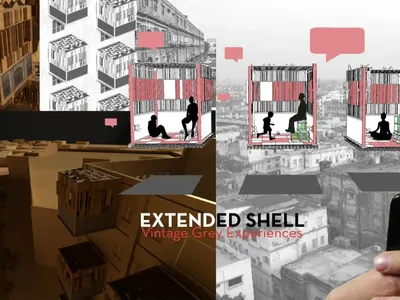
Extended Shell: Retrofitting Kolkata's Balconies as Living Urban Thresholds
A modular retrofit system recovers the social and environmental intelligence of Kolkata's historic verandas for contemporary Park Street residents.
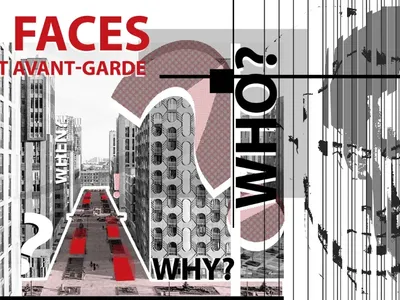
Faces of the Soviet Avant-Garde: Turning Moscow's Street Names into an Open-Air Museum
A network of sculptural installations across a Moscow residential district transforms forgotten architect names into spatial encounters with cultural memor

Opera by the Sea Estonia: Three Shells Dissolving Architecture into Tallinn's Coastline
A winning opera house proposal replaces monumental form with interconnected shells that blur the boundary between building, park and Baltic Sea.

Singing Woman: Contemporary Architecture Inspired by Estonia’s Voice and the Sea
Singing Woman turns Estonia’s song culture into flowing opera house architecture, blending public life, landscape, sea, and national memory.

Similar Reads
You might also enjoy these articles

Day and Night Park: A Time-Based Urban Newsstand in Beijing
A temporary urban newsstand in Beijing blending travel, light, and reading through poetic colors, compact form, and community-focused design.

Modernist Patio Renovation in El Masnou, Barcelona by Oliver Segura Arquitectura + Cebrià Arquitectura
Modernist patio renovation blending tradition and innovation with a movable pool, leveled floors, and Catalan materials in El Masnou.

Alto Residencial Coop: Cooperative Housing Development in Santiago de Compostela by Carbajo Barrios Arquitectos
A linear cooperative housing complex blending white volumes and perforated metal façades, enhancing community living, natural light, privacy, and urban integration.

Vil Genis School by BPA ARCHITECTURE – Massy, France
Vil Genis School in Massy, France, features sustainable design, south-facing classrooms, community integration, accessible spaces, and modern educational architecture.


Comments (0)
Please login or sign up to add comments
No comments yet. Be the first to comment!