

OpenZone Towers by AMDL CIRCLE: A Landmark of Scientific Innovation and Sustainable Architecture in Mil
A contemporary villa integrating courtyards, natural light, and green patios, creating a seamless indoor-outdoor microclimate inspired by traditional Iranian Narenjestan.


The OpenZone Towers by AMDL CIRCLE represent a bold step forward in the evolution of scientific campuses, blending cutting-edge design, sustainable strategies, and collaborative work environments. Located in Bresso, Milan, this 26,700 m² architectural complex completes the expanding OpenZone campus—an innovation hub dedicated to life sciences, biomedical research, and scientific entrepreneurship.
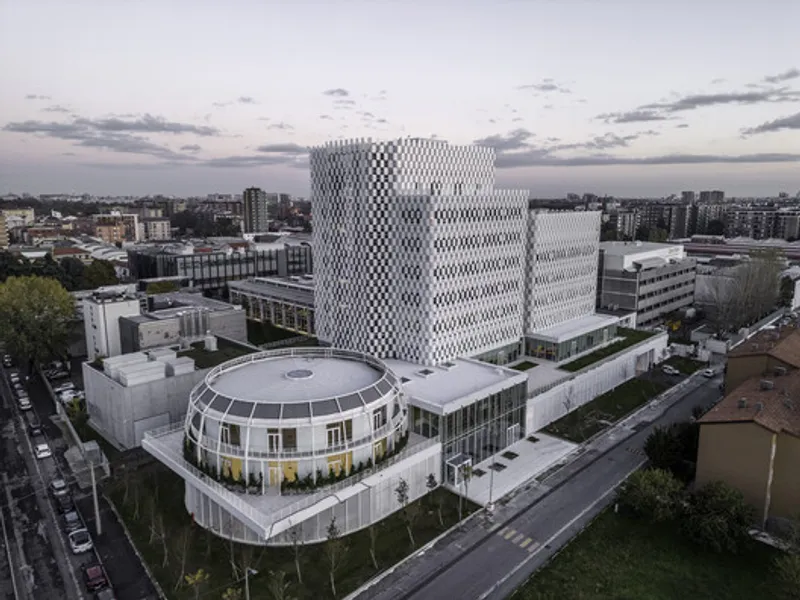
Designed by Michele De Lucchi and the AMDL CIRCLE team, the project embodies the belief that architecture can strengthen human connection, accelerate knowledge exchange, and become a catalyst for scientific progress. This philosophy shapes every element of the two iconic towers and the adjacent Green Circle pavilion.

Architecture as a Vector for Human Connection
Inspired by Stephen Hawking’s reflections on human encounters, AMDL CIRCLE approached the project with a mission: create architecture that encourages collaboration, supports research, and enhances the human experience. The result is a distinctive, recognizable campus designed to promote interaction between professionals in the health, biotech, and life sciences sectors.
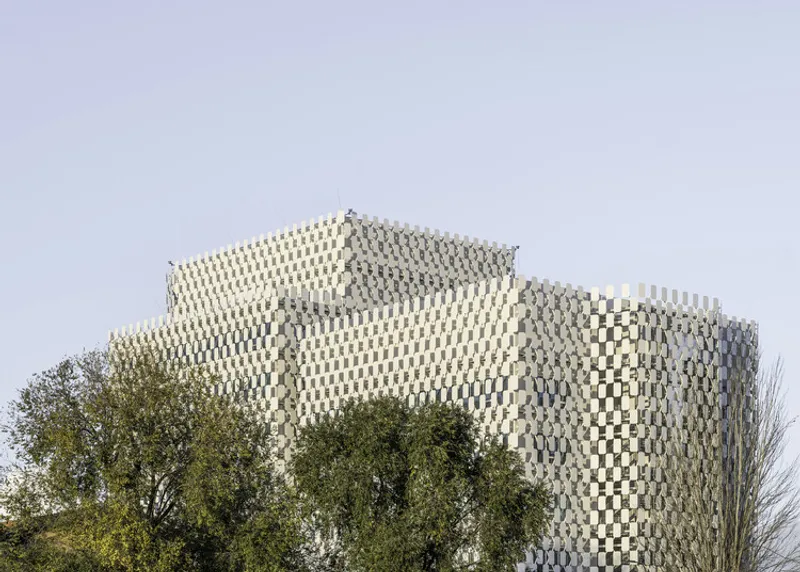
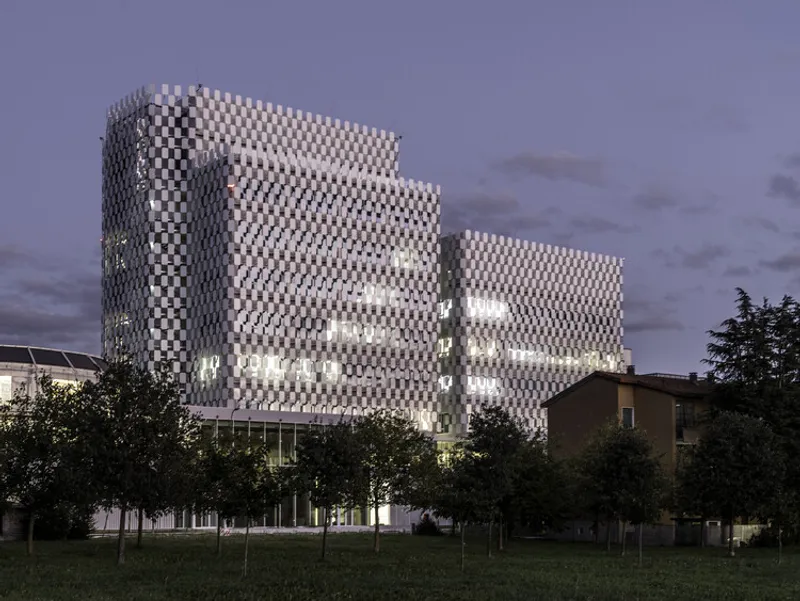
Twin Towers for Research & Innovation
The OpenZone Towers consist of:
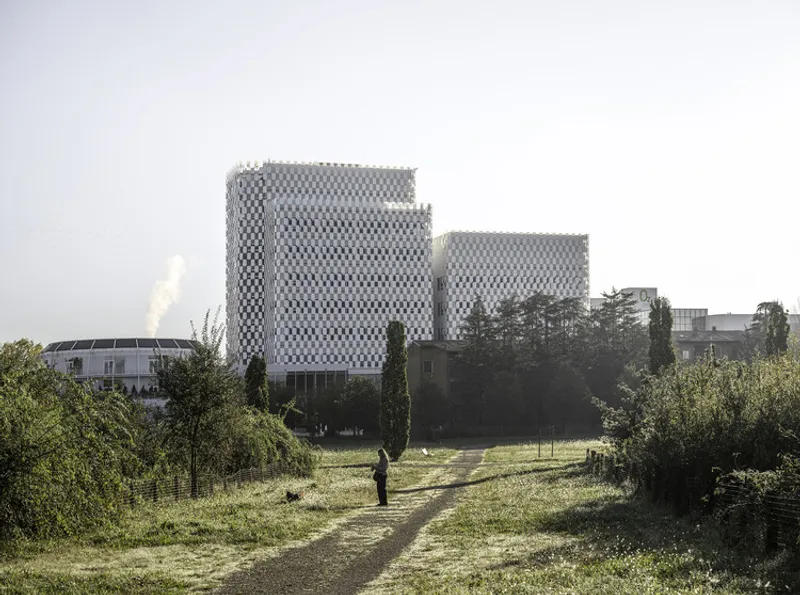
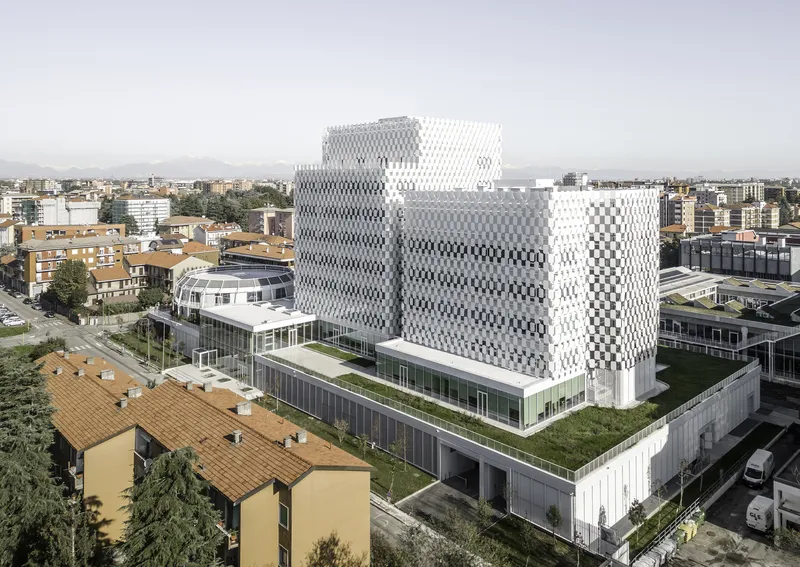
- Tower 1 – 13 floors (including 2 underground), reaching 45 meters
- Tower 2 – 10 floors (including 2 underground), reaching 32 meters
These linear, rectangular volumes accommodate a mix of high-tech laboratories, flexible offices, and innovation spaces, functioning as architectural “outposts” that connect Parco Nord’s natural landscape with advanced scientific environments.
Symbolically referencing historical frontier structures, the towers mark an entry point to progress—inviting collaboration, discovery, and urban transformation.
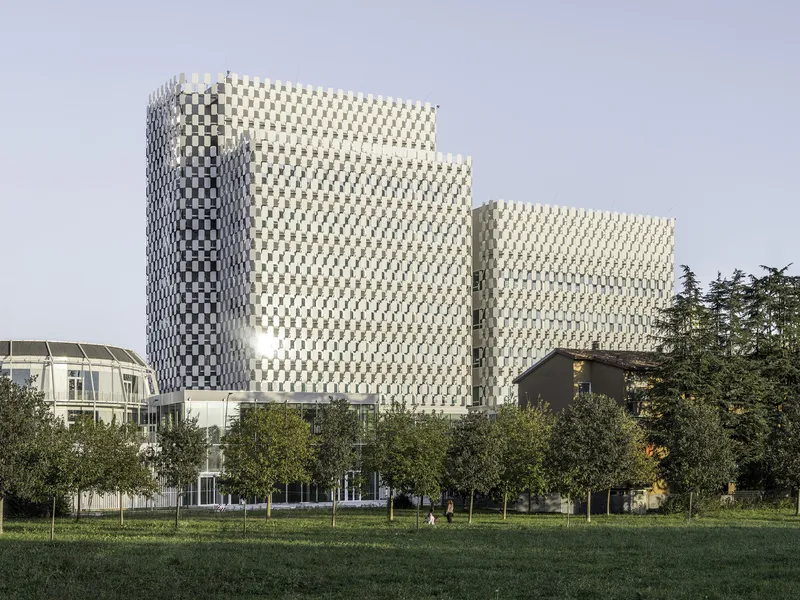
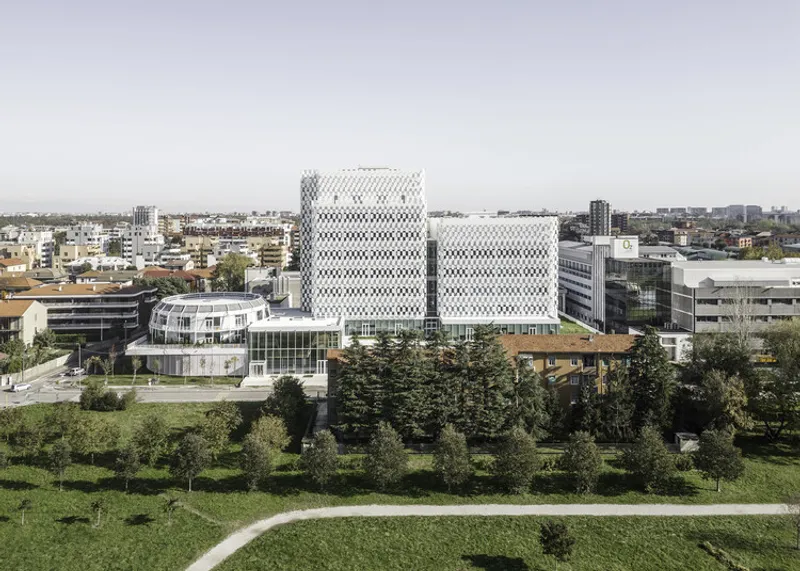
A Sculpted Façade of Glass Shingles
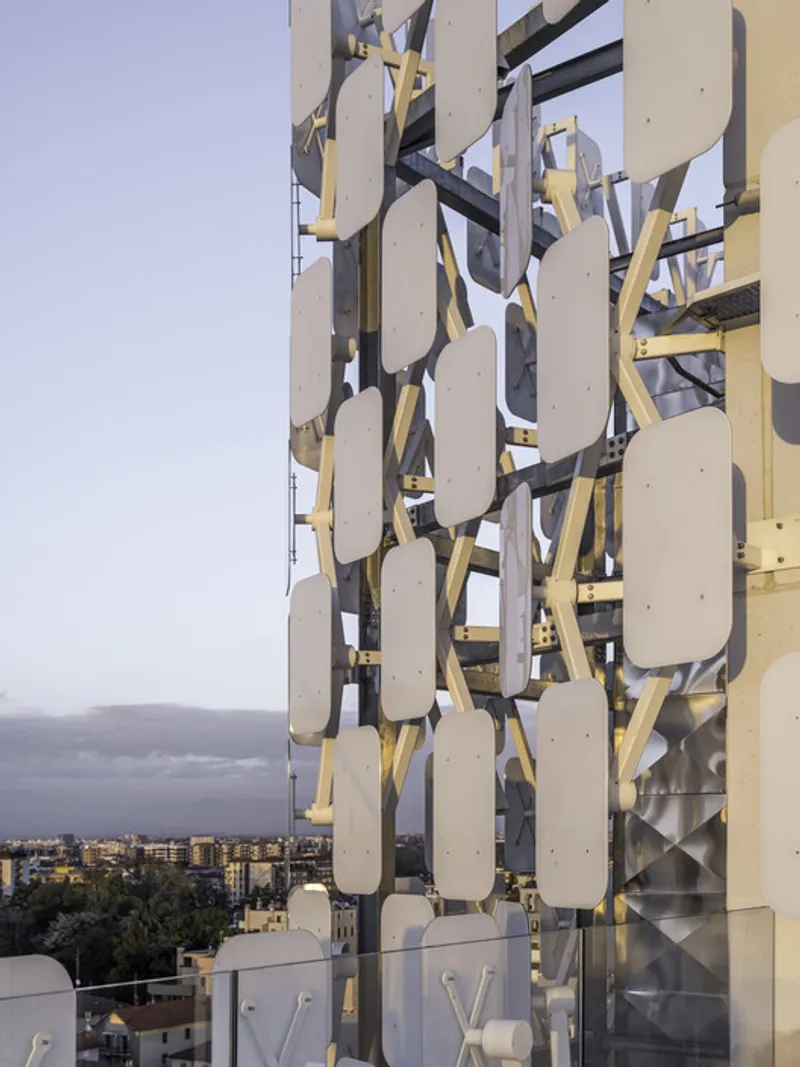
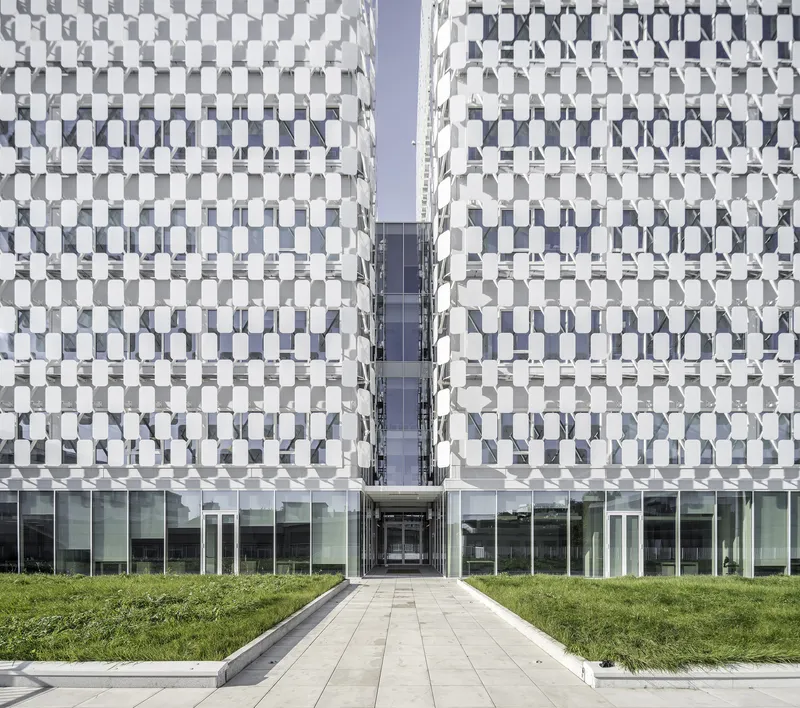
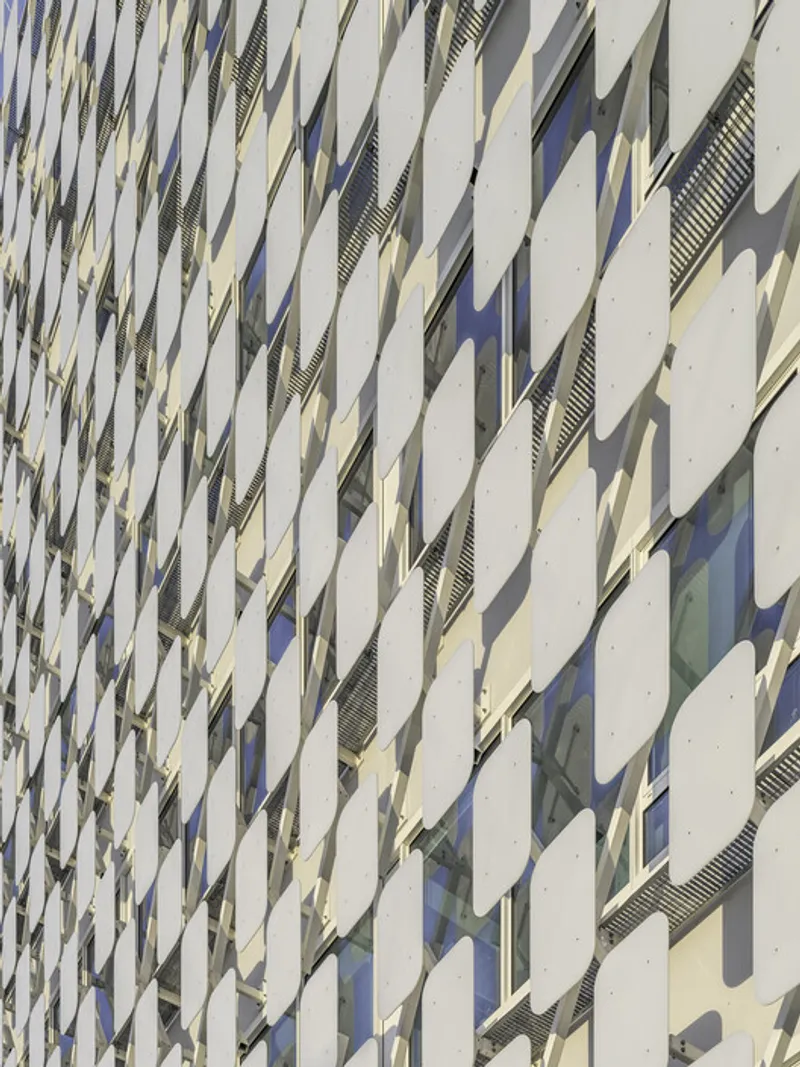
One of the most striking features is the white opacified glass shingle façade, designed to visually unify the two structures and create a sculptural identity.
Key façade characteristics
- Checkerboard shingle arrangement producing dynamic reflections
- 80 cm façade offset enabling maintenance walkways
- A rhythmic pattern of solids and voids offering natural shading
- A visually light envelope that glows subtly throughout the day
This innovative skin elevates the towers into a singular architectural statement within the Milanese urban context.
The Green Circle Pavilion: A Living, Breathing Workspace
Adjacent to the towers is the two-story Green Circle pavilion, designed as a flexible, nature-integrated hub for researchers and innovators.
Pavilion highlights
- Fully glazed volume with a steel and wood structural system
- Second skin made of steel cables supporting climbing plants
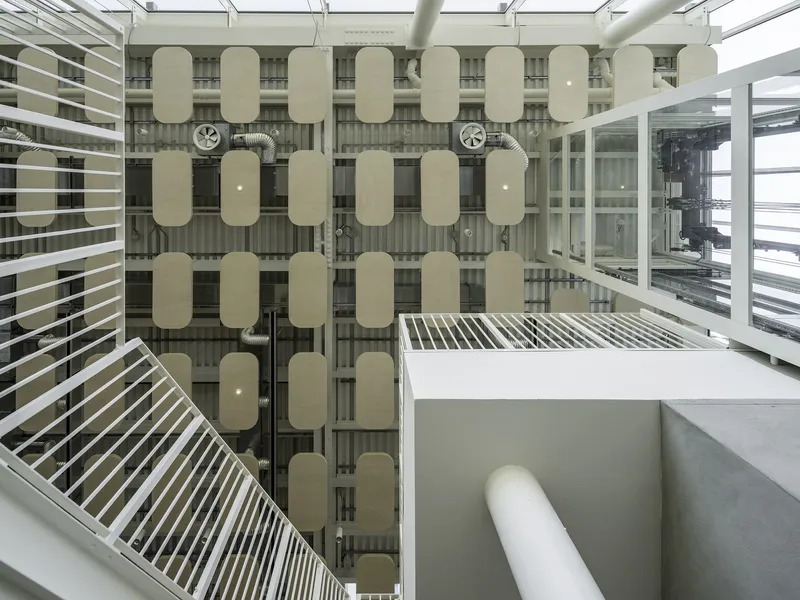
- Interior bathed in filtered natural light from skylights and vegetation
- Open-plan layout encouraging collaboration and adaptability
As the plants grow seasonally, the pavilion transforms—embodying a living architecture that connects people to landscape, wellness, and creativity.
The Elevated Green Podium
All three buildings rise from a shared green podium, which hosts:
- Two underground and two above-ground floors
- Parking, technical rooms, and shared circulation spaces
- A lush green roof that further integrates nature into the design
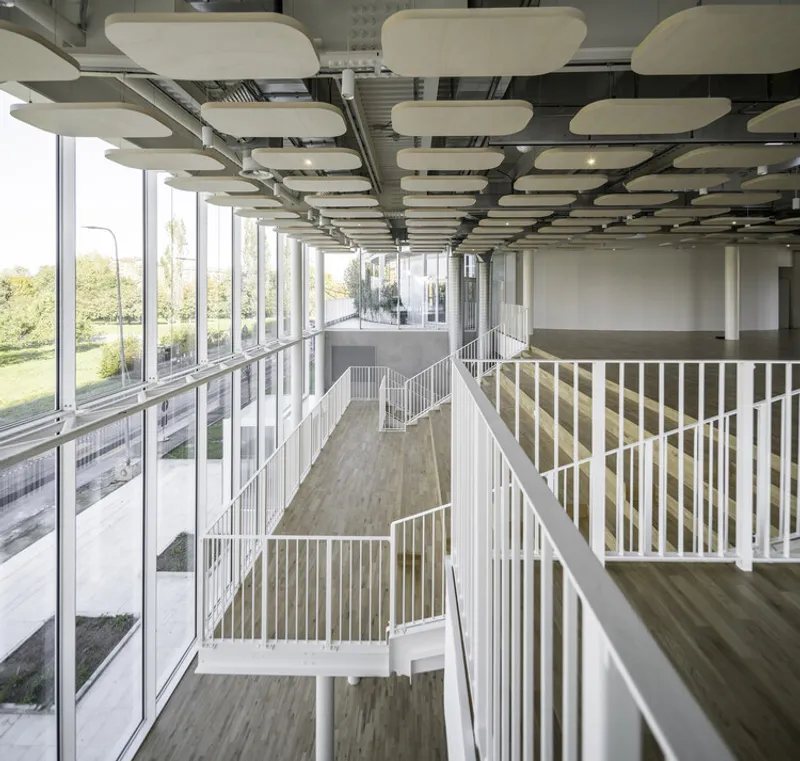
The podium’s metal-rod façade allows natural light to permeate while masking parking areas. Inside, a wooden-finished reception volume anchors a warm, inviting atmosphere, complete with a monumental staircase that doubles as an informal auditorium.
A Campus Designed for Well-Being, Sustainability, and Future Growth
The OpenZone Towers reinforce AMDL CIRCLE’s commitment to:
- Human-centered architecture
- Sustainable building strategies
- Adaptive, future-ready research environments
- Integration of nature with technological spaces
By blending innovation, ecology, and community, the project advances OpenZone’s mission to transform research into real-world impact.
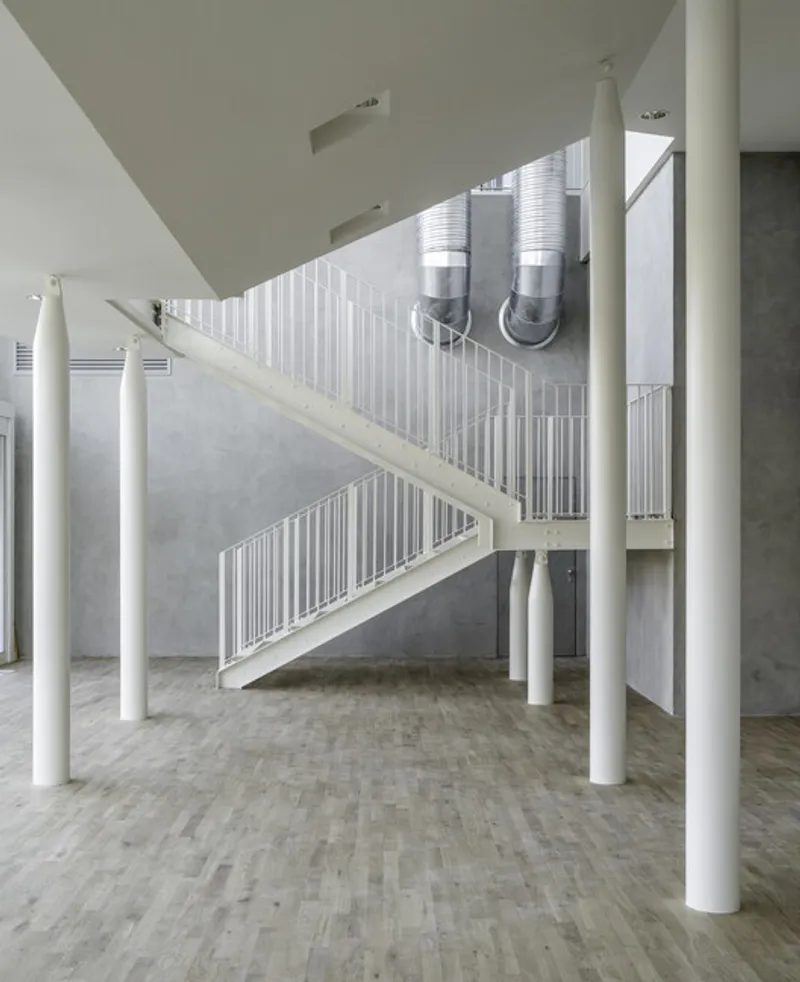
All the photographs are works of Rasmus Hjortshøj


Popular Articles
Popular articles from the community


GROUP A Strips a 1969 Rotterdam Harbor Headquarters to Its Frame and Wraps It in Timber Louvers
In Rotterdam's M4H harbor district, Ferro Offices reuses a 1969 frame, adds one timber storey and reaches BREEAM-NL Outstanding.

Jaramillo Van Sluys Arquitectura and Urbanismo Turn a Demolished Registry Lot in Quito into an Orchard Plaza
In Quito's Centro Histórico, a 2,800 m² plaza exposes the San Agustín convent wall and redraws its lost Augustinian orchard in volcanic stone.

LT2A and OPEN Architectes Thread a Brick and Glass High School Through a Wooded Belgian Campus
In Braine-l'Alleud, a 3,000 m² wing for Collège Cardinal Mercier pairs pale brick with a glazed colonnade, deferring to a small chapel and a dense wood.

David Macias Steps a Doorless Stone and Plaster House Down a Tropical Colombian Hillside
In the humid hills of Colombia, Threshold House replaces the front door with an open void and terraces its 850 m² down the slope instead of fighting it.

Similar Reads
You might also enjoy these articles


Hodi-Mandai Geram
Project Function: Preservation and revitalization of the Intangible heritage and socio-spatial identity of the Hodi by Housing, Cultural Memory Center, Sacred Grove, landscape, local tourism economy


Olio Towers: A Mid-Rise for Performers That Fuses Housing, Rehearsal, and Stage
Located blocks from Houston's Theater District, this modular tower stacks living units around a central performance atrium.

Oasis: Modular Green Housing Carved into Dhaka's Urban Fabric
A shortlisted Plugin Housing entry reclaims unauthorized settlements in Dhaka with stepped concrete volumes, green roofs, and ventilation-driven design.

Black Hole: A Floating Megastructure for the Post-Physical Era
Emiliano Mazzarotto envisions a spherical, self-scaling arena where e-sports, digital hotels, and holographic stadiums replace traditional public space.

Explore Office Building Competitions
Discover active competitions in this discipline

Challenge to reimagine the Iron Throne

Photograph architecture without architects

Illustrate the lost glory of Angkor Wat - Render Challenge

Design challenge to reuse E-waste
Comments (0)
Please login or sign up to add comments
No comments yet. Be the first to comment!