

Opera in Sight: An Iceberg Form That Merges Tallinn's Skyline with the Baltic Sea
TR3S Estudio's opera house concept fuses the vertical rhythm of historic church towers with the horizontal plane of the Baltic waterfront.


What happens when you overlay the spires of a medieval skyline onto the flat horizon of the Baltic Sea? You get an iceberg. At least, that is the conceptual leap at the heart of Opera in Sight, a proposal for Tallinn's new waterfront opera house that refuses to choose between monument and landscape. The building's curved white roof rises to a sharp vertical peak, echoing the church towers that punctuate the city's silhouette, then descends gradually until it dissolves into the ground plane, becoming a walkable public surface that extends civic life toward the water.
Designed by TR3S Estudio and recognized as an Honorable Mention in the Opera by the Sea competition, Opera in Sight sits at the convergence of city, port, and sea. The project reframes Tallinn's maritime edge not as the back boundary of the urban fabric but as a threshold, a place where arriving by boat produces a first architectural encounter with the Estonian capital. Its sculptural profile is calibrated to read differently depending on distance and direction: monumental from the harbour, transparent and accessible at pedestrian scale.
A Curved Canopy That Meets the Street


At ground level, the iceberg metaphor gives way to something more inviting. The angular white roof canopy sweeps down toward the street, sheltering a fully glazed facade that puts the building's interior life on display. Pedestrians passing beneath the canopy encounter the opera house not as a fortress of culture but as a permeable civic space. Rain or shine, the overhang creates a transitional zone between the city and the performance halls within, collapsing the distance that cultural institutions often maintain between themselves and the public.
Inside, the architecture shifts register. The main auditorium features tiered balcony seating organized beneath a vaulted ceiling that carries the sweeping geometry of the exterior inward. The spatial proportions and material warmth are tuned for performance acoustics, but the room retains a visual connection to the building's larger formal idea. There is a coherence between the roof you walk on, the canopy you shelter beneath, and the ceiling you sit under. Each is a different expression of the same curved surface.
A Waterfront Landmark Shaped by Twilight and Storm


Opera houses are, by nature, evening buildings. TR3S Estudio leans into this condition. At twilight, the sculpted roof takes on a luminous quality against the darkening sky, with light beams projecting upward from the waterfront plaza to announce the building's presence across the harbour. The plaza itself functions as an extension of the opera's public programme, a gathering space where the boundary between audience and city blurs. The architecture performs even before anyone steps inside.
Under stormier skies, the building's waterfront elevation reveals its full sculptural force. The curved white roof hovers above a glazed lobby volume, its form reading as a single continuous gesture that mediates between Tallinn's vertical landmarks and the horizontal expanse of the Baltic. The design's strength lies in this duality: from the sea, it registers as a landmark on the scale of the city's historic towers; from the shore, it reads as an inhabited landscape, its slopes and contours inviting occupation rather than mere observation.
Programme Stacked Beneath a Unified Roof

The exploded axonometric reveals how Opera in Sight organizes its programme beneath the singular roof gesture. Concert hall seating tiers are stacked and nested within the building's profile, their geometry responding to both acoustic requirements and the external silhouette. The layered roof structure acts as a mediating element, accommodating the technical infrastructure of a contemporary opera house while maintaining the clean, continuous surface that defines the project's public identity. Programme diagrams indicate a clear separation between front-of-house, performance, and back-of-house zones, all compressed under one legible form.
What the drawing makes clear is that the iceberg concept is not merely figurative. The majority of the building's volume sits below or within the slope of the roof, much like the submerged mass of its namesake. The visible peak is just the most dramatic moment of a section that works hard across its full depth, negotiating level changes, sight lines, and structural spans to deliver a building that is simultaneously a performance machine and a piece of public ground.
Why This Project Matters
Opera in Sight challenges the convention that a cultural building must assert itself through formal isolation. By making the roof walkable and the facades transparent, TR3S Estudio proposes an opera house that belongs to the city at all hours, not only during performances. The building is a civic landscape first and a concert venue second. That inversion of priority is rare in opera house design, where the temptation toward interiority and spectacle often wins out over public generosity.
The project's deeper contribution is its method of contextual response. Rather than imitating Tallinn's historic architecture, it abstracts the spatial characteristics that define the city's profile: verticality, silhouette, orientation to the sea. The iceberg form is not decoration; it is a diagrammatic synthesis of site forces made buildable. For a waterfront that will inevitably transform as Tallinn grows, this kind of architecture offers a model for how new landmarks can claim cultural authority without mimicry, rooting themselves instead in the specific landscape and urban conditions that make a place singular.
View the Full Project
About the Designers
Designer: TR3S Estudio
Enter a Design Competition on uni.xyz
uni.xyz runs architecture and design competitions year-round that reward proposals with spatial conviction and real site intelligence.
Project credits: Opera in Sight by TR3S Estudio Opera by the Sea (uni.xyz).


Popular Articles
Popular articles from the community


Singing Woman: Contemporary Architecture Inspired by Estonia’s Voice and the Sea
Singing Woman turns Estonia’s song culture into flowing opera house architecture, blending public life, landscape, sea, and national memory.
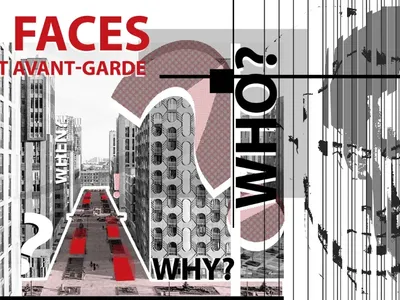
Faces of the Soviet Avant-Garde: Turning Moscow's Street Names into an Open-Air Museum
A network of sculptural installations across a Moscow residential district transforms forgotten architect names into spatial encounters with cultural memor

Cloaked Colonization: A Mobile Underwater Habitat That Moves Like a Fish
Micah Abaya's shortlisted EHC Pacific entry reimagines ocean settlement as a dispersed network of self-sustaining architectural organisms.

Opera by the Sea Estonia: Three Shells Dissolving Architecture into Tallinn's Coastline
A winning opera house proposal replaces monumental form with interconnected shells that blur the boundary between building, park and Baltic Sea.

Similar Reads
You might also enjoy these articles

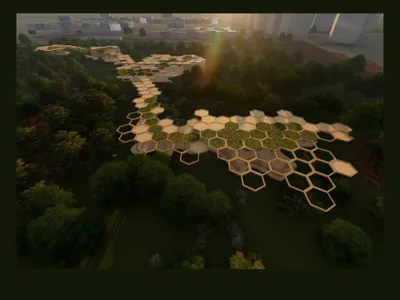
Eco Chapel: A Green Architecture Pavilion Designed in Symbiosis with the Forest
Eco Chapel uses green architecture to weave prayer, learning and reuse into a forest pavilion shaped by modular hexagonal canopies for life.
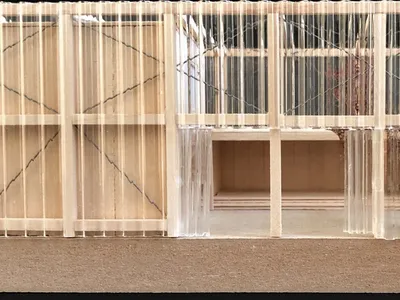
Kaffeebühnen: Coffee Shop Architecture Designed as a Civic Stage Between Vienna’s City and Park
Kaffeebühnen turns coffee shop architecture into a civic stage, linking Vienna’s park edge, urban life, warm timber yards, and coffee craft.
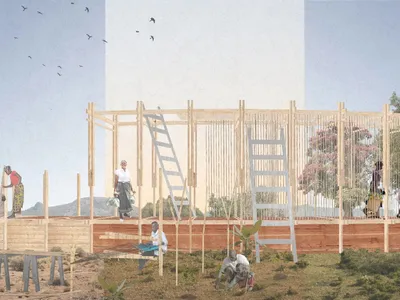
Healing Façade: Sustainable Architecture for Reforestation, Community, and Sacred Ecology in Ethiopia
Healing Façade reimagines sustainable architecture as a living wall that restores soil, catches water and renews Ethiopia's forest churches.


Urban Forest: A Vertical Ecosystem for 5,000 Workers in Singapore's Changi Business Park
Radially stacked pods and layered green decks turn a 7-acre plot into 47 acres of ecological workspace projected for 2040.

Explore Nordic Sustainable Architecture Competitions
Discover active competitions in this discipline

Challenge to reimagine the Iron Throne

Photograph architecture without architects

Illustrate the lost glory of Angkor Wat - Render Challenge

Design challenge to reuse E-waste
Comments (0)
Please login or sign up to add comments
No comments yet. Be the first to comment!