
Opera Truck. Cooper: A Modular Architecture for Urban Performance
A modular architecture intervention transforming urban squares into dynamic performance spaces through portable, scalable, and adaptive design.

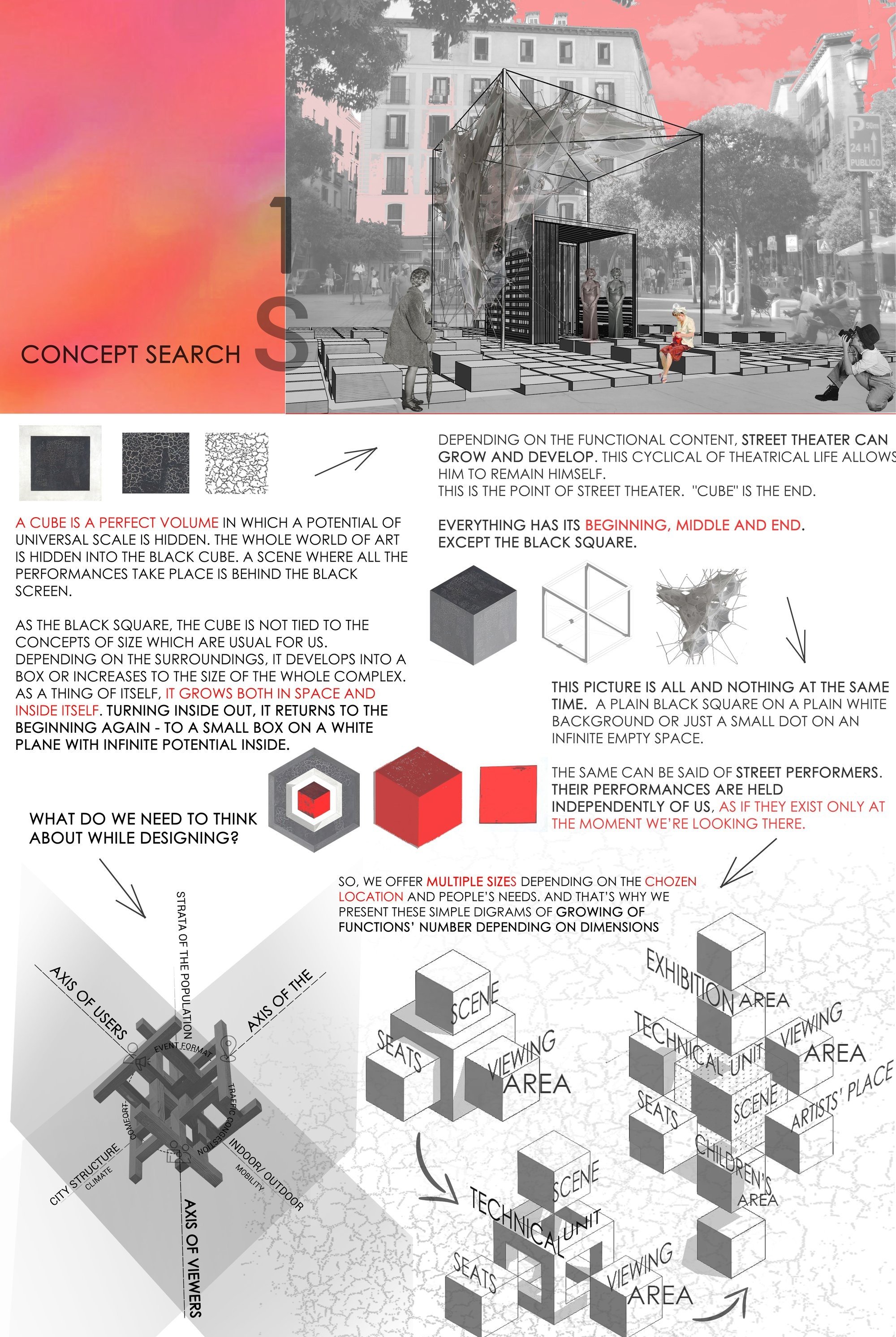
The project Opera Truck. Cooper, a shortlisted entry of Opera Truck by Марк Ли, explores the potential of modular architecture as a flexible and adaptive system for public performance. Rooted in the conceptual abstraction of Malevich’s Black Square, the proposal reinterprets minimal geometry into a dynamic spatial framework that activates urban environments.
This project positions architecture not as a static object, but as a responsive system—capable of adapting to context, scale, and use. Through its scalable configurations and transportable structure, it redefines how cultural infrastructure can exist within contemporary cities.
Modular Architecture as a System of Possibilities
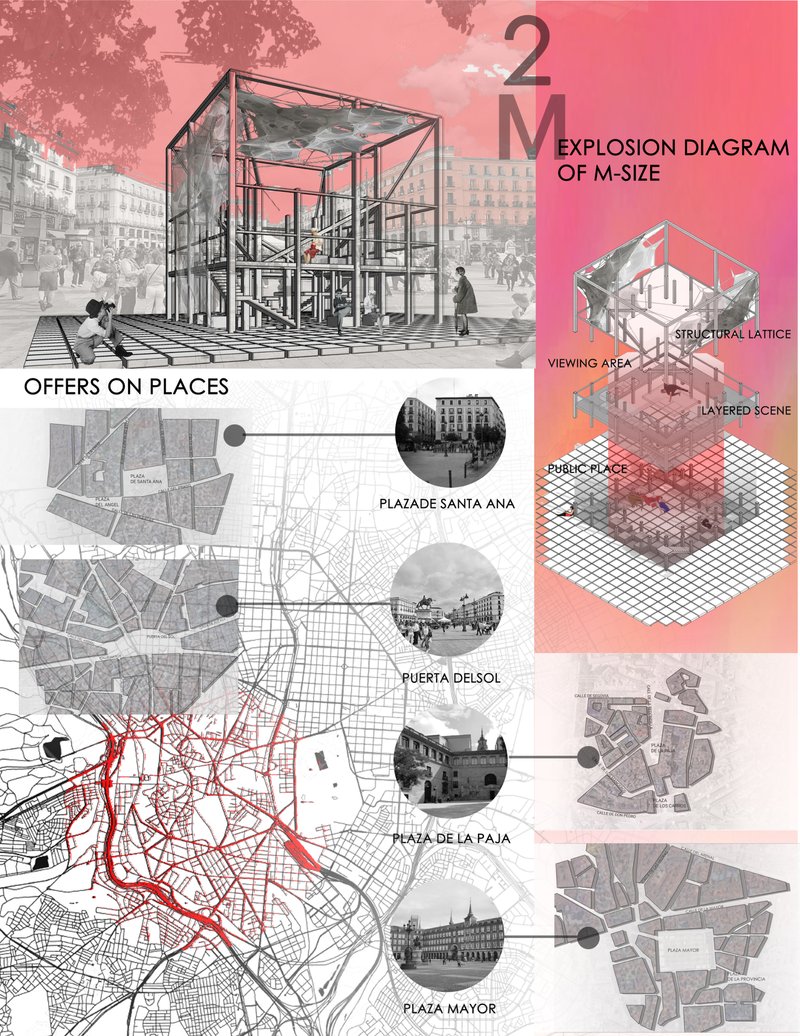
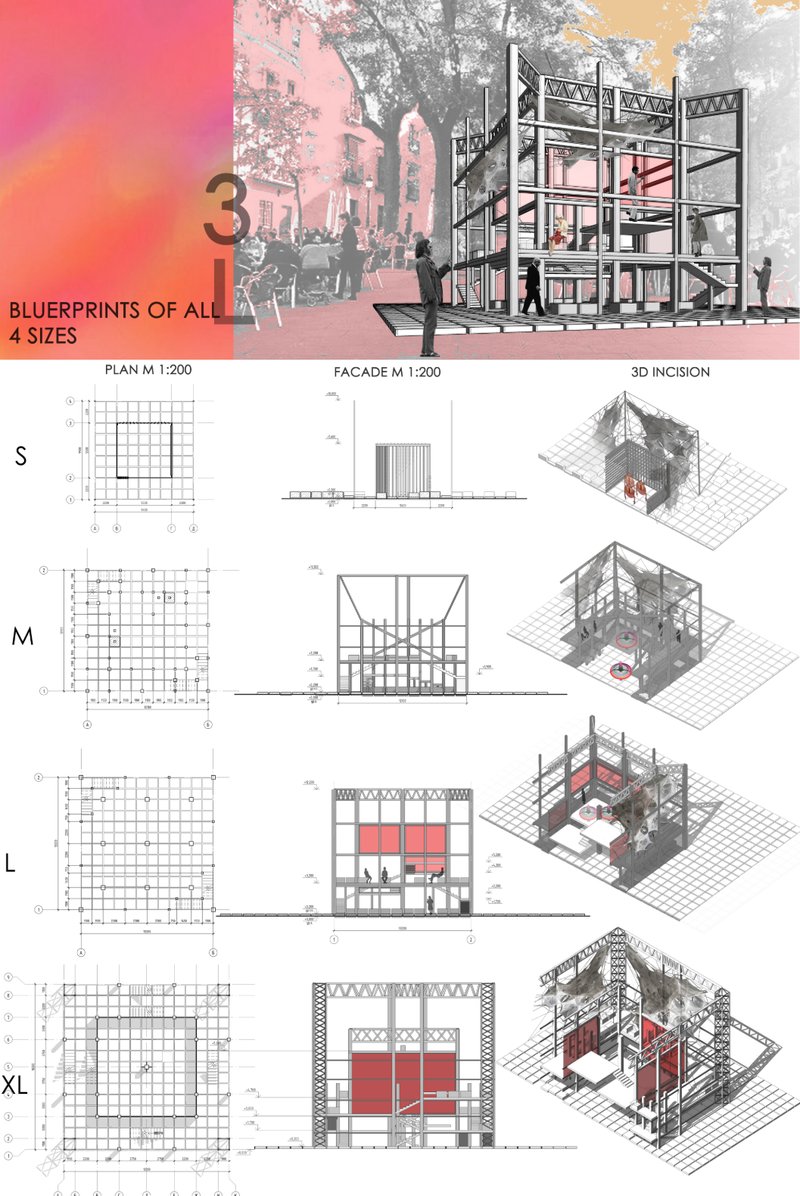
At the core of the Opera Truck lies a modular structural lattice that enables rapid assembly, disassembly, and transformation. The project is designed across multiple scales—S, M, L, and XL—each responding to different spatial and programmatic requirements.
Rather than designing a singular fixed building, the proposal introduces a system where architecture behaves like a kit of parts. Each module contributes to an evolving spatial composition, allowing the structure to expand or contract depending on the site conditions.
This approach reflects a broader shift in architectural thinking, where adaptability, mobility, and scalability are becoming central design drivers.
Structural Logic and Spatial Organization
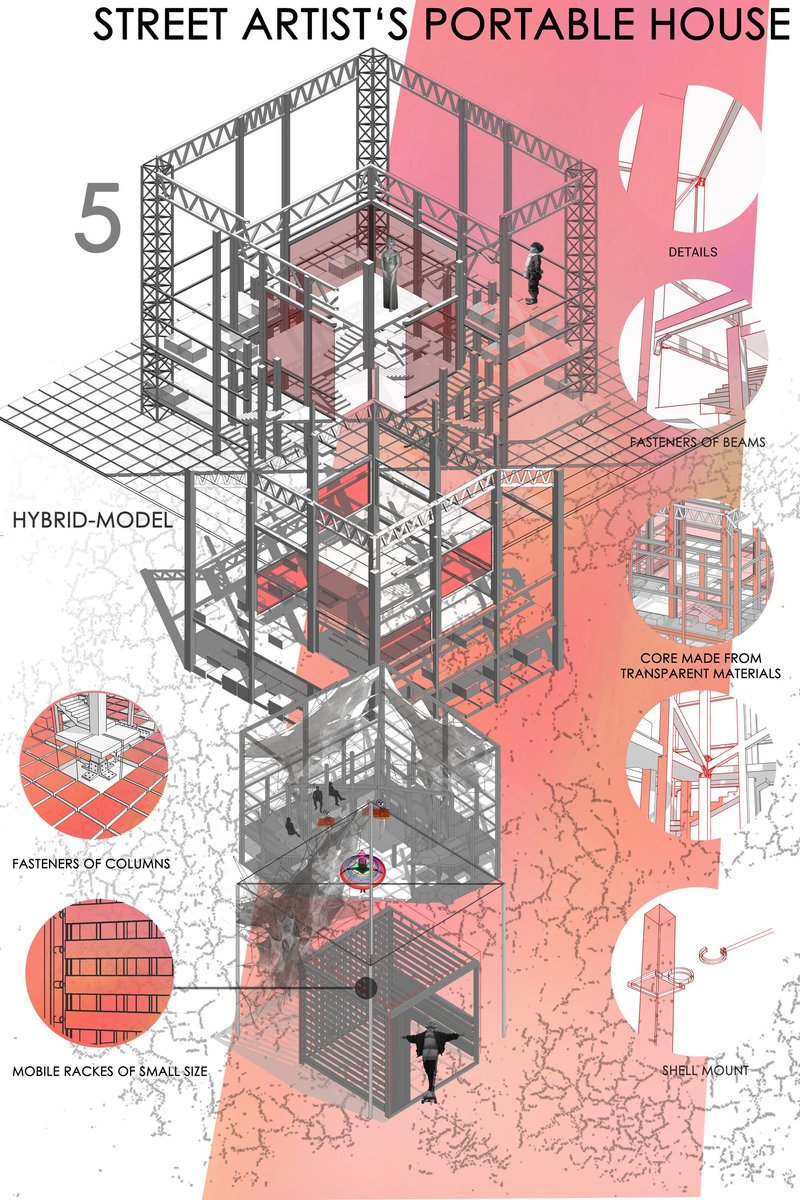
The structure is composed of a clear skeletal framework—an exposed lattice of columns and beams—forming a cubic volume. Within this framework, layers of activity are organized vertically:
- Ground level functions as a public interface with seating and informal gathering zones
- Intermediate levels host exhibitions and interactive spaces
- Upper levels provide viewing platforms and performance vantage points
At the center, a defined core acts as the focal point of performance—a contemporary reinterpretation of the stage. This “red cube” becomes both a spatial anchor and a symbolic element, referencing Malevich’s abstract geometry.
Above, a lightweight membrane stretches across the structure, creating a semi-transparent canopy that filters light while enhancing spatial drama.
Urban Integration and Site Strategy
The project is conceived as a mobile intervention that can be deployed across key public spaces. The diagrams illustrate its placement in various plazas such as Plaza de Santa Ana, Puerta del Sol, Plaza de la Paja, and Plaza Mayor.
This adaptability allows the structure to engage with diverse urban fabrics while maintaining a consistent architectural identity. Instead of imposing a permanent structure, the Opera Truck inserts itself temporarily, activating underutilized public spaces through performance and interaction.
The grid-based footprint ensures compatibility with different urban layouts, making the system highly versatile.
Explosion Diagrams and Assembly Logic
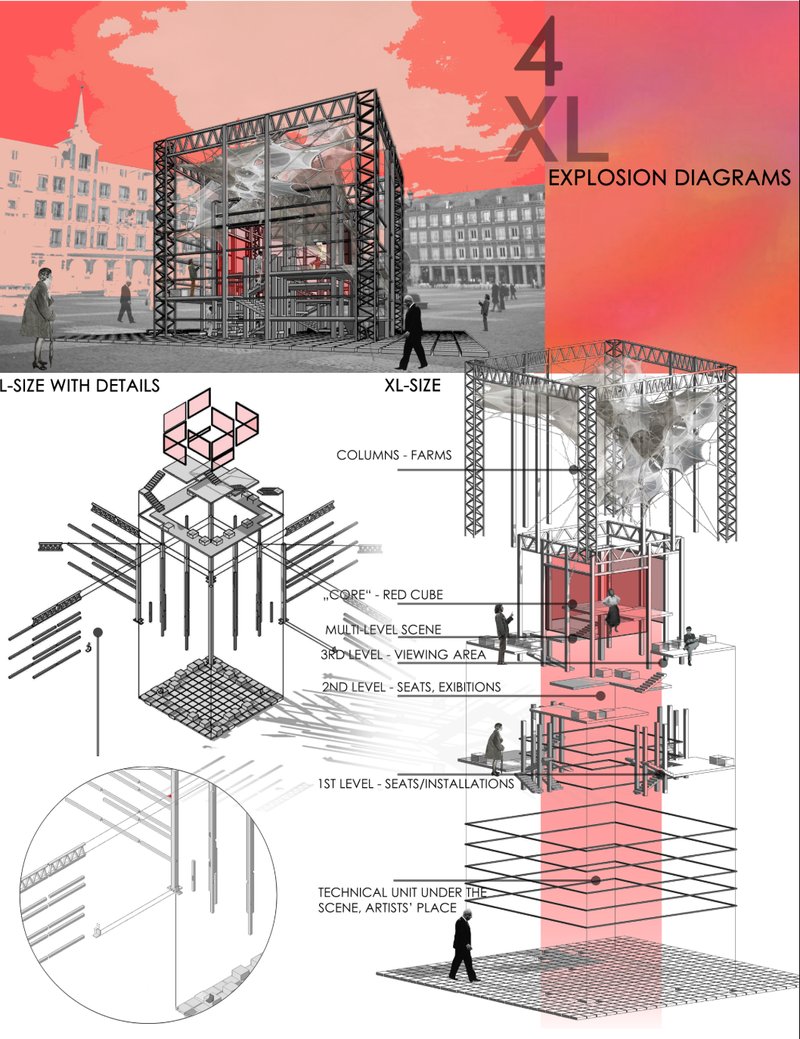
The exploded axonometric drawings reveal the precision of the modular system. Each component—columns, beams, platforms, and panels—is designed for efficient transport and quick assembly.
Key elements include:
- Structural lattice frame for stability and scalability
- Layered platforms for multi-level interaction
- Modular panels that define enclosure and openness
- Integrated circulation through stairs and vertical connections
This clarity in construction logic aligns with contemporary prefabrication techniques, reinforcing the project’s feasibility.
Hybrid Model: Architecture in Motion
The hybrid model demonstrates how the Opera Truck transitions between configurations. It is not a fixed building but a dynamic system that evolves with its context.
From a compact installation to a large-scale performance pavilion, the structure adapts seamlessly. This flexibility is critical in urban environments where space, time, and function are constantly shifting.
The mobility aspect also expands the reach of cultural infrastructure, allowing performances to travel across the city rather than being confined to a single venue.
Conceptual Influence: Malevich and Abstraction
The reference to Malevich’s Black Square is not merely aesthetic. It informs the project’s spatial philosophy—reducing architecture to fundamental forms and relationships.
The cubic geometry, central core, and minimal structural expression reflect a pursuit of purity and clarity. Yet, unlike static abstraction, this project translates those ideas into an active, inhabitable system.
The result is a dialogue between art and architecture, where abstraction becomes performative.
Rethinking Performance Spaces Through Modular Architecture
Opera Truck. Cooper challenges traditional notions of performance venues. Instead of monumental opera houses, it proposes a decentralized, accessible, and adaptable alternative.
By leveraging modular architecture, the project achieves:
- Flexibility in scale and function
- Reduced construction and transportation complexity
- Greater accessibility to cultural experiences
- Enhanced engagement with public space
It demonstrates how architecture can respond to contemporary urban conditions while maintaining strong conceptual grounding.
Opera Truck. Cooper presents a compelling vision of modular architecture as a tool for cultural activation. Through its scalable system, clear structural logic, and strong conceptual foundation, it transforms the idea of a performance space into something fluid, mobile, and inclusive.
By merging abstraction with functionality, the project offers a new paradigm—where architecture is not only built, but deployed, adapted, and experienced across the city.




Popular Articles
Popular articles from the community

OMCM arquitectos Builds a Summer House in Paraguay from Quarry Waste Blocks and Three Sacred Trees
In the young hillside neighborhood of Altos, a 696-square-meter concrete volume hovers on six pillars around three preserved native Yvyraju trees.
Constanti Architects Builds a Fortress of Privacy in Nicosia with House 345
A concrete and timber residence in Cyprus reinterprets the traditional introverted courtyard house for a new urban landscape.
BAUEN Builds Two Rammed Earth Volumes in Paraguay Inspired by the Ovenbird's Nest
In San Bernardino, a house of compacted earth channels the instinct of a constructive bird to shelter life from the Paraguayan summer.
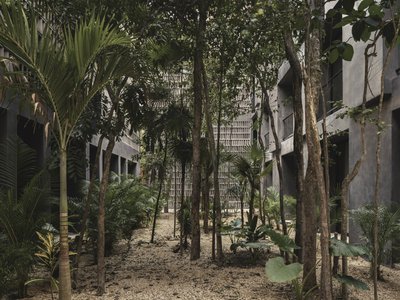
Three Studios Build 200 Affordable Units for Tulum's Displaced Hospitality Workers
Casa Selva embeds dark concrete housing blocks into Yucatán rainforest, offering dignified shelter to those priced out by the tourism they serve.

Similar Reads
You might also enjoy these articles


Urban Forest: A Vertical Ecosystem for 5,000 Workers in Singapore's Changi Business Park
Radially stacked pods and layered green decks turn a 7-acre plot into 47 acres of ecological workspace projected for 2040.
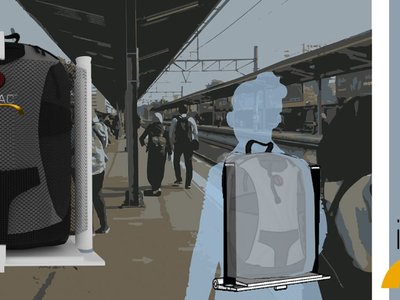
interACT: A Wearable Transit Object That Turns Commuting Into Social Infrastructure
A backpack-mounted foldable device transforms walking, waiting, and riding into moments of shared comfort across Jakarta's transit network.
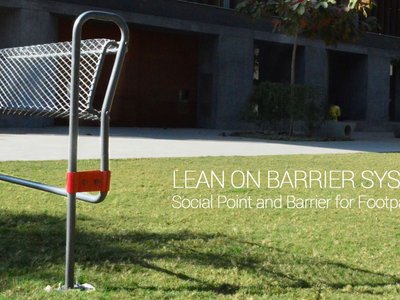
Lean On Barrier System: Where Traffic Safety Meets Chai Culture in Ahmedabad
A modular steel barrier doubles as informal seating and lean-on furniture at one of Ahmedabad's busiest intersections, keeping vendors in place.

The Black Bagh: A Living Monument Built from Water, Light, and Memory
On the banks of the Yamuna, two designers replace the myth of a marble mausoleum with a regenerative landscape of reflection and ritual.

Explore Urban Design Competitions
Discover active competitions in this discipline




The International Standard for Design Portfolios


The Global Benchmark for Architecture Dissertation Awards


The Global Benchmark for Graduation Excellence


Challenge to reimagine the Iron Throne
Comments (0)
Please login or sign up to add comments
No comments yet. Be the first to comment!