
Operatruck: Portable Architecture Redefining Public Performance Spaces
A modular portable architecture system that transforms urban squares into dynamic public performance spaces for everyday art and cultural exchange.


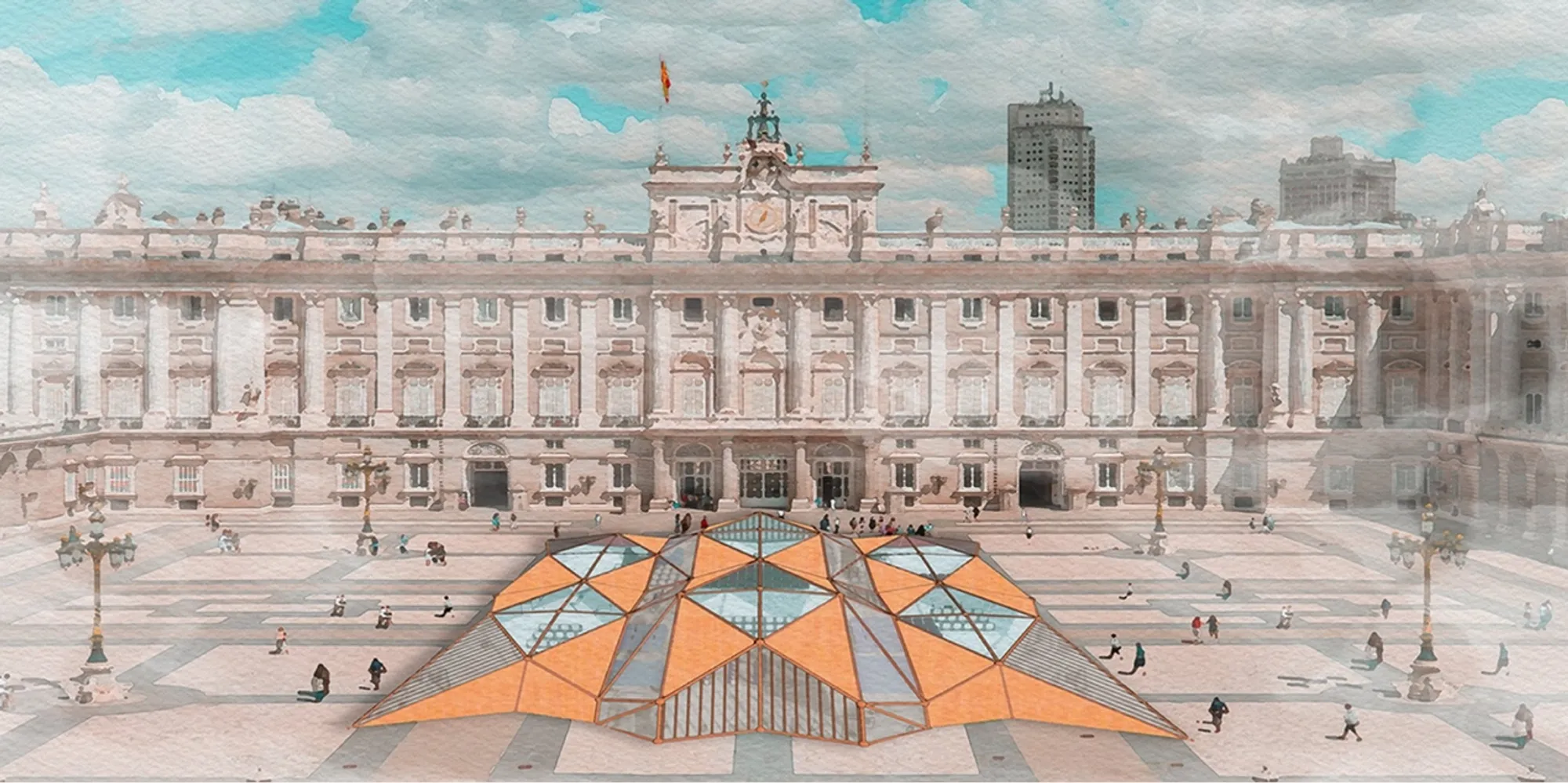
In contemporary cities where public engagement with art is increasingly mediated by screens, portable architecture emerges as a powerful counterpoint. Operatruck, an Editor’s Choice entry of theOpera Truckcompetition, reimagines how performance spaces can be embedded into everyday urban life. Designed by Danyang Li, Huang Shuting, Xu Xiangni, and 渊 苑, the project proposes a mobile, modular opera house that dissolves the boundary between performer and audience.
Rather than treating architecture as static infrastructure, Operatruck positions it as an adaptable system capable of activating underutilized public squares. It is not merely a structure, but a spatial strategy that enables art to return to the street.
Portable Architecture as Urban Catalyst
The project is grounded in the premise that art should be accessible, spontaneous, and embedded within daily routines. In many cities, performance art has become institutionalized, confined to theaters and cultural venues. Operatruck challenges this paradigm by introducing a deployable architectural system that can inhabit multiple urban contexts.
Through a careful study of Madrid’s urban fabric, the designers analyze square distributions, circulation networks, and varying spatial scales. This research informs a flexible system that can respond to different site conditions, from compact plazas to expansive civic squares.
Portable architecture here operates as an urban catalyst. It transforms passive public spaces into active cultural nodes, encouraging interaction, participation, and collective experience.
Modular System and Structural Logic
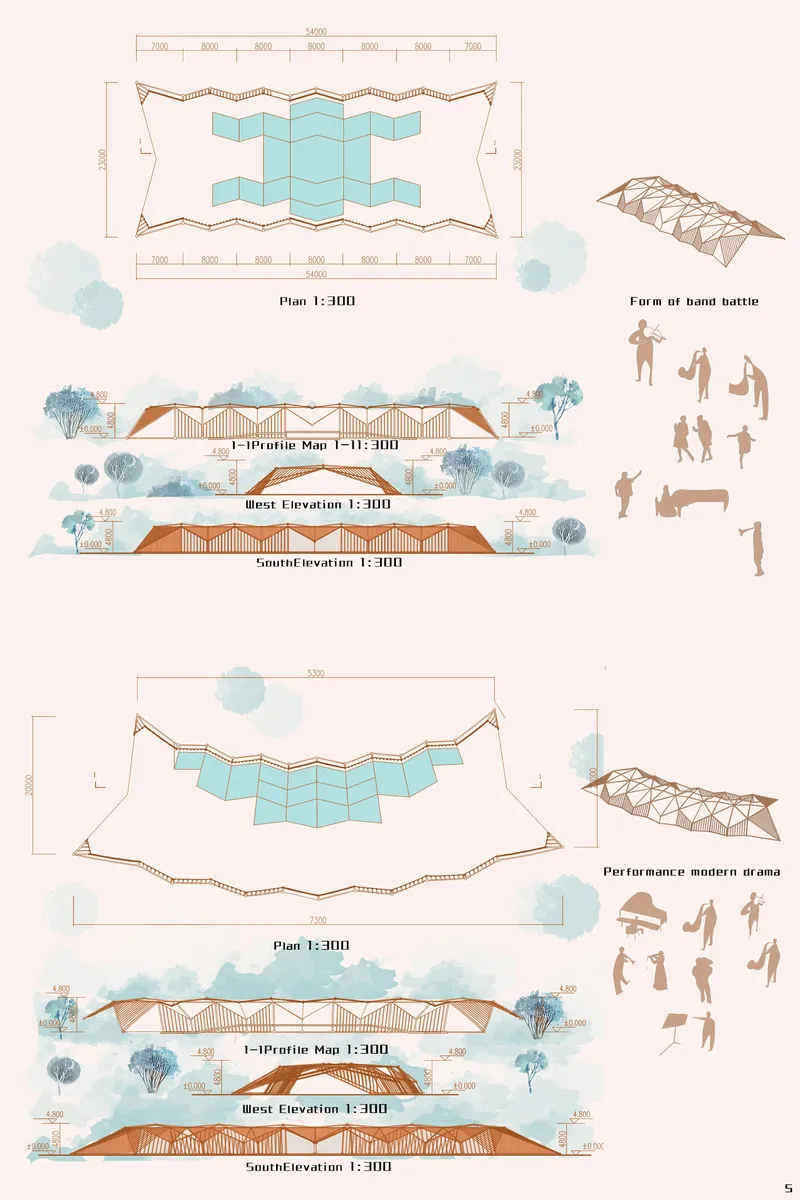
At the core of Operatruck is a highly adaptable modular system. The structure is composed of repeatable geometric units connected through expansion bars, allowing for multiple configurations. This modular logic enables the architecture to scale, morph, and respond to diverse performance requirements.
Three primary module variations generate a wide range of spatial outcomes:
- Expansion and aggregation for larger performances
- Symmetrical configurations for formal events
- Adaptive transformations in width, span, and height
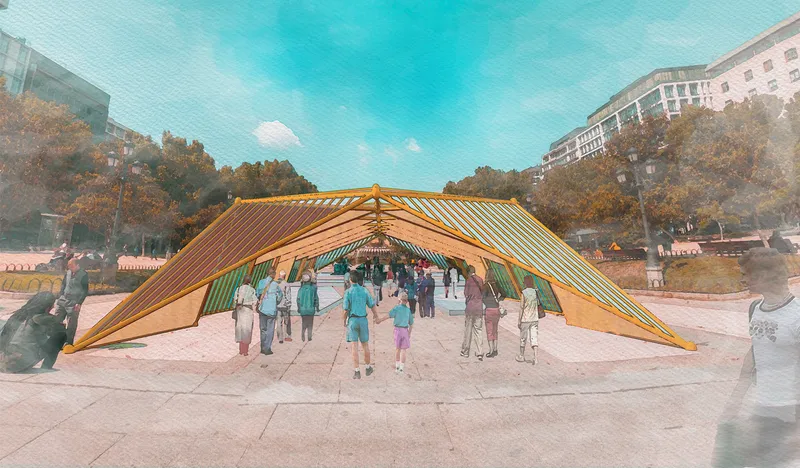
The resulting form is a lightweight, faceted canopy that provides both enclosure and openness. Its triangulated framework ensures structural stability while maintaining visual permeability.
This approach aligns with contemporary trends in portable architecture, where efficiency, flexibility, and rapid deployment are critical design parameters.
Spatial Typologies and Performance Scenarios
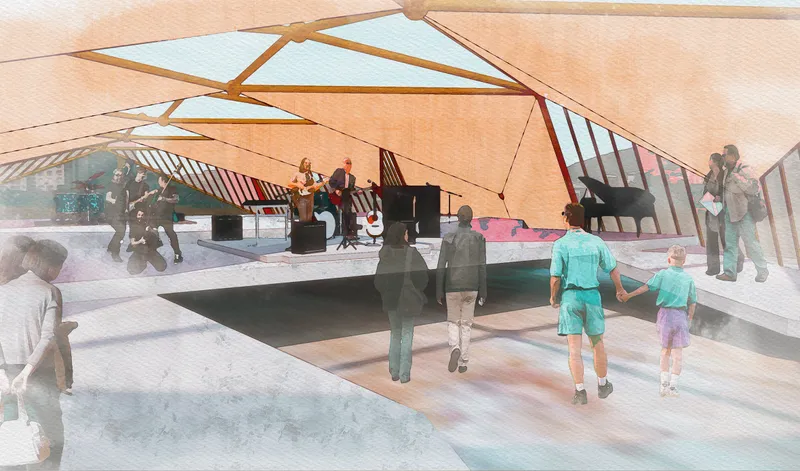
Operatruck is not a singular space but a system of spatial typologies. Each configuration supports a different mode of performance, enabling a diverse cultural program:
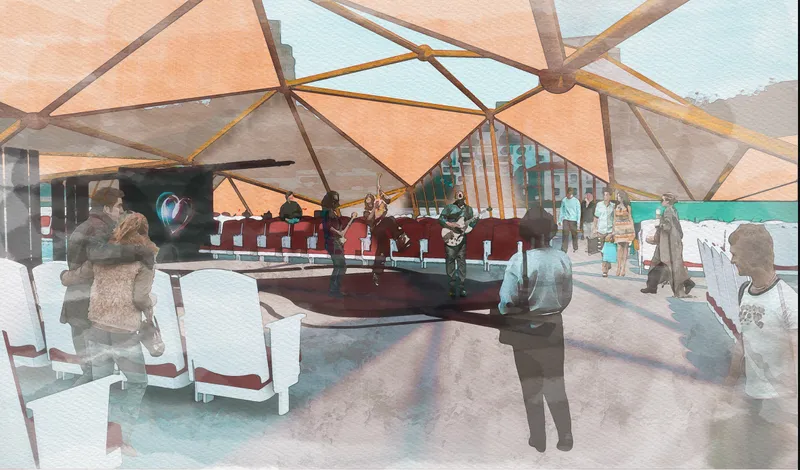
- Solo Performances: Intimate setups with focused audience engagement
- Orchestra Layouts: Linear arrangements supporting acoustic distribution
- Band Battles: Dynamic configurations encouraging interaction and movement
- Performance Art: Open-ended spaces for experimental and contemporary acts
These variations demonstrate how portable architecture can accommodate both structured and spontaneous performances. The design allows for seamless transitions between different event types, reinforcing its role as a flexible cultural infrastructure.
Architecture of Participation
A key strength of Operatruck lies in its emphasis on participation. The open, permeable structure invites passersby to engage with performances without the barriers typically associated with formal venues.
The circular and radial seating arrangements foster inclusivity, ensuring that audiences are not passive observers but active participants in the spatial experience. By lowering the threshold between artist and الجمهور, the project redefines the social dynamics of performance.
This aligns with broader architectural discourse on public space, where inclusivity and accessibility are central to design thinking.
Materiality and Construction Strategy
The structure’s lightweight construction suggests the use of prefabricated components and efficient assembly systems. The triangulated panels and skeletal framework allow for ease of transport and rapid installation.
Material choices prioritize durability and adaptability, ensuring that the structure can withstand repeated assembly cycles while maintaining structural integrity. This reinforces the project’s identity as portable architecture designed for real-world application.
Reclaiming Art in Everyday Life
The conceptual foundation of Operatruck is deeply rooted in the idea that art originates from life and should remain embedded within it. As digital technologies dominate daily routines, physical engagement with art has diminished.
Operatruck addresses this shift by bringing performance back into public spaces. It transforms ordinary urban environments into stages, making art visible, accessible, and integral to everyday experience.
By doing so, it challenges the notion that art belongs exclusively to specialized venues. Instead, it positions art as a shared cultural resource that thrives in public life.
Operatruck exemplifies the potential of portable architecture to redefine how cities engage with culture. Through its modular system, adaptable configurations, and emphasis on participation, it offers a compelling model for future public performance spaces.
More than a temporary installation, it is a framework for rethinking the relationship between architecture, art, and urban life. In an era where flexibility and accessibility are increasingly important, Operatruck demonstrates how design can bridge the gap between everyday environments and cultural expression.
As cities continue to evolve, projects like Operatruck highlight the importance of integrating art into the fabric of daily life, ensuring that public spaces remain vibrant, inclusive, and culturally rich.




Popular Articles
Popular articles from the community


Co-Life: Senior Housing Design That Reconnects Older Adults With the City
Co-Life reimagines senior housing design through healing gardens, shared streets, workshops, and a sustainable community across generations.
EW PARK: Sustainable Architecture Reimagines the Future of Urban Parking
EW PARK reimagines city parking as a modular wooden tower combining automation, solar energy, electric mobility, and adaptable urban design.

Riyadh For All: Intergenerational Urban Design for Active Aging in Rabat
Riyadh For All reimagines urban design in Rabat with intergenerational co-living, adaptive courtyards, and Moroccan cultural exchange today.

AL-JANNAH: Sustainable Architecture and Permaculture for Afghan Widows
AL-JANNAH uses sustainable architecture and permaculture to create resilient oasis of housing, learning, work and renewal for Afghan widows.

Similar Reads
You might also enjoy these articles

Eco Chapel: A Green Architecture Pavilion Designed in Symbiosis with the Forest
Eco Chapel uses green architecture to weave prayer, learning and reuse into a forest pavilion shaped by modular hexagonal canopies for life.
Kaffeebühnen: Coffee Shop Architecture Designed as a Civic Stage Between Vienna’s City and Park
Kaffeebühnen turns coffee shop architecture into a civic stage, linking Vienna’s park edge, urban life, warm timber yards, and coffee craft.
Healing Façade: Sustainable Architecture for Reforestation, Community, and Sacred Ecology in Ethiopia
Healing Façade reimagines sustainable architecture as a living wall that restores soil, catches water and renews Ethiopia's forest churches.


Urban Forest: A Vertical Ecosystem for 5,000 Workers in Singapore's Changi Business Park
Radially stacked pods and layered green decks turn a 7-acre plot into 47 acres of ecological workspace projected for 2040.





Comments (0)
Please login or sign up to add comments
No comments yet. Be the first to comment!