
Orangeale Factory by C&P Architetti: A Harmonious Blend of Industrial Design and Natural Landscape
Orangeale Factory in Veneto blends industrial architecture with nature, featuring a courtyard-centered layout, concrete interiors, gabion walls, and lush surrounding vegetation.


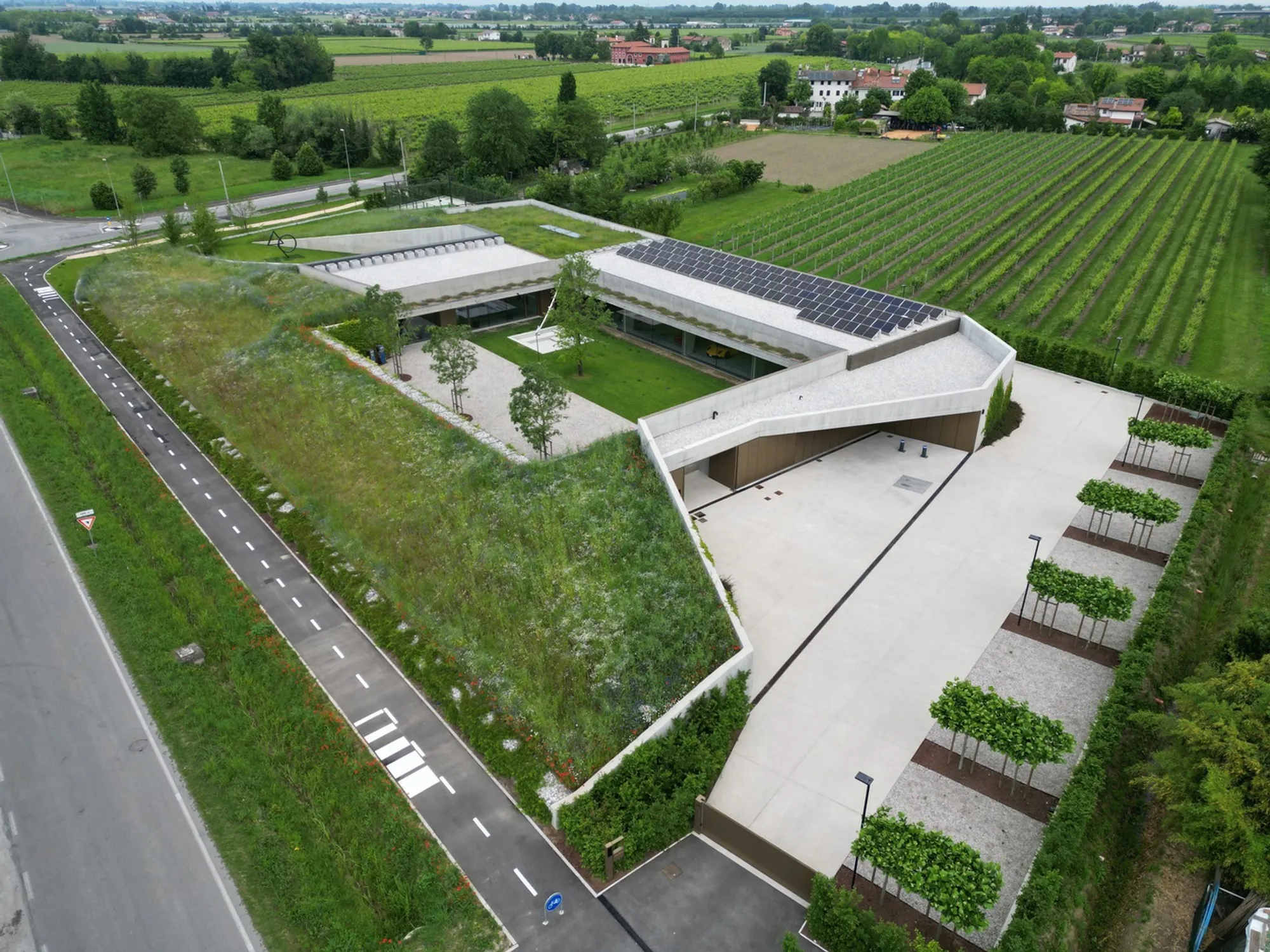
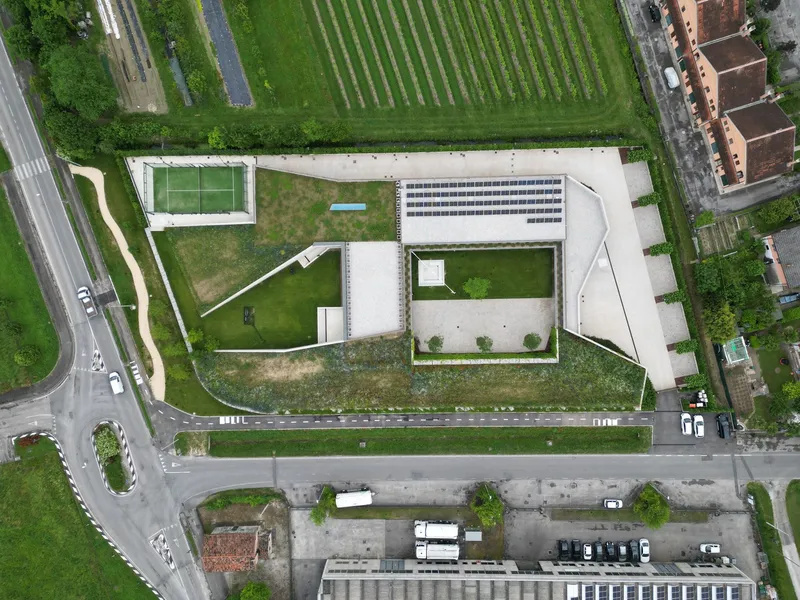
Nestled in the Veneto plain, the Orangeale Factory byC&P Architetti demonstrates an innovative approach to industrial architecture, blending seamlessly with its surrounding natural and urban context. The site, located on the built-up edge of Fossalta di Piave, sits between a low-density residential fabric and an industrial area, surrounded by single-family homes, vineyards, and urban countryside.


Context-Driven Design and Introverted Architecture
The project responds to the site's unique conditions, where the surrounding context dictates the design approach. A high embankment, dotted with cornflowers and poppies, acts as a natural screen from the main road, creating privacy while allowing the building to sit harmoniously within the landscape. This introverted architectural approach shields the factory from the ordinariness of nearby industrial buildings, emphasizing a sense of calm and spatial introspection.
A retaining gabion wall on the embankment, intended to be gradually enveloped by climbing vines, merges architecture with the evolving landscape. This “landscape in motion” introduces a dynamic interplay of nature and structure, offering a striking contrast to the seriality and rigidity of conventional industrial fabrics.

Courtyard-Centric Spatial Organization
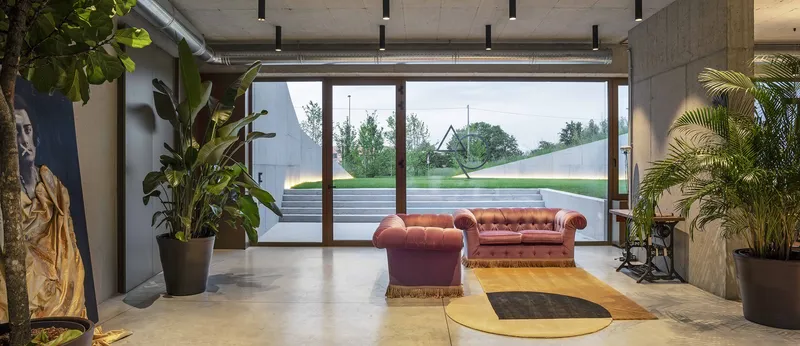
At the heart of the factory lies a large rectangular courtyard, protected from the southern road by the embankment. The courtyard defines the building’s spatial hierarchy, around which the internal rooms are organized. Three hackberry trees and a solitary oak provide natural focal points, while climbing vegetation softens the edges of the concrete and steel structure.
The courtyard not only organizes internal spaces but also serves as a green anchor, visually connecting the workspaces with nature. To the west, work areas overlook the garden through glazed facades, while to the north, a dedicated volume houses the owner’s private car collection. The careful integration of transparency and vegetation reinforces the dialogue between interior and exterior spaces.

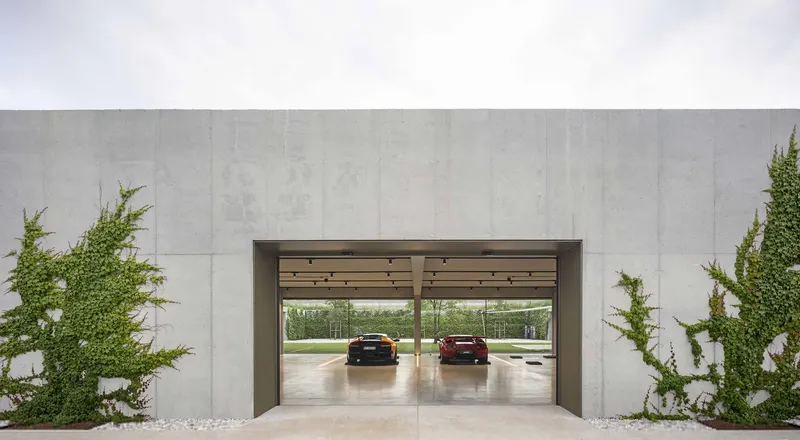

Industrial Character with Refined Interiors
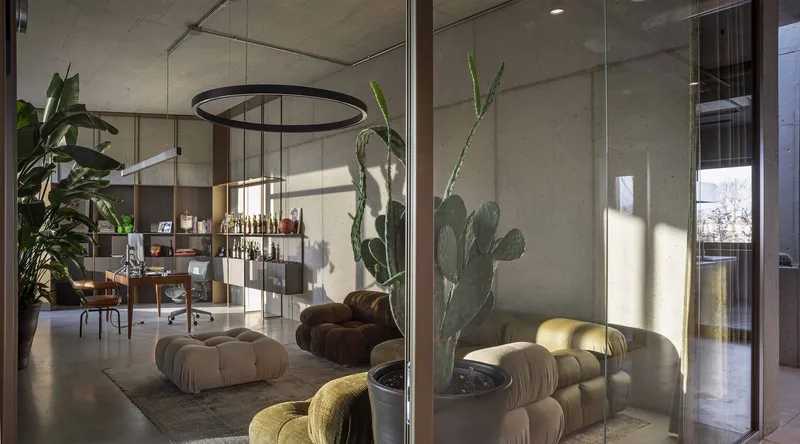
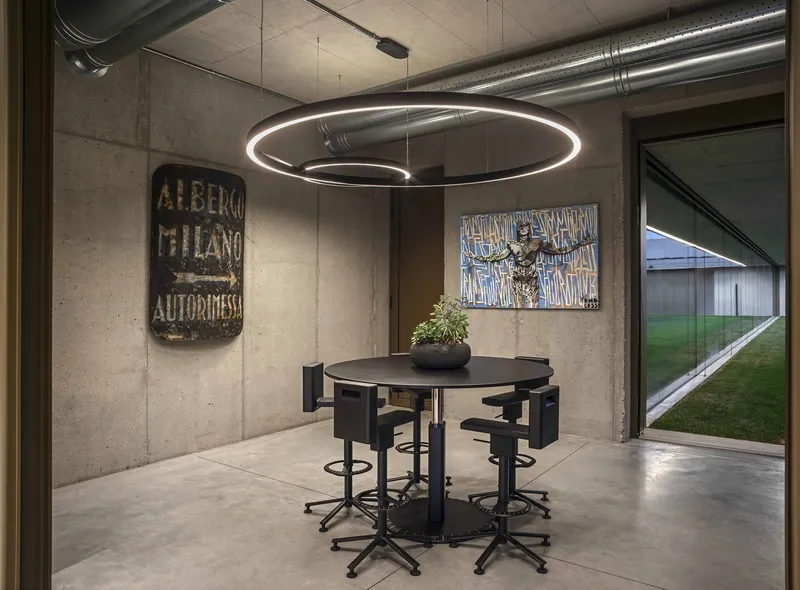
The interiors of Orangeale Factory reflect a balance between industrial functionality and refined detailing. Concrete floors, exposed ducts, and steel fixtures preserve the building’s industrial aesthetic, while partitions maintain fluidity and open circulation. Offices face the western access garden, fostering a connection with greenery and natural light throughout the workspace.
Furnishing elements from Albini, Gio Ponti, and Carlo Scarpa, along with art pieces from the owner’s collection, provide contrast to the rawness of concrete surfaces. The steel kitchen, strategically placed with large windows, overlooks neighboring vineyards, creating a unique indoor-outdoor experience.
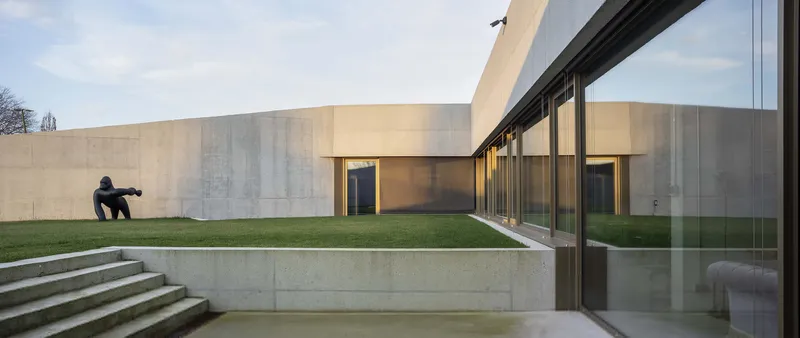
Landscape Integration and Timeless Design
The factory’s design embraces the passage of time and the movement of nature. Climbing plants gradually envelop the perimeter walls, turning the architecture into a living element within the landscape. From the outside, the building presents an almost alienating, hybrid infrastructure appearance, a contemporary industrial landmark that remains sensitive to its context.


All photographs are works of Alessandra Chemollo




Popular Articles
Popular articles from the community


The Musturak Paradise: Senior Living Architecture for a Connected Future in Temara, Morocco
The Musturak Paradise reimagines senior living architecture in Temara via private homes, social spaces, culture, community, and shared care.

Co-Life: Senior Housing Design That Reconnects Older Adults With the City
Co-Life reimagines senior housing design through healing gardens, shared streets, workshops, and a sustainable community across generations.

AL-JANNAH: Sustainable Architecture and Permaculture for Afghan Widows
AL-JANNAH uses sustainable architecture and permaculture to create resilient oasis of housing, learning, work and renewal for Afghan widows.

Conexión: Biophilic Design Reimagines High-Rise Living in Hong Kong
Conexión reimagines high-rise living in Hong Kong through biophilic design, green facades, shared spaces, daylight, water and nature within.


Similar Reads
You might also enjoy these articles


Hodi-Mandai Geram
Project Function: Preservation and revitalization of the Intangible heritage and socio-spatial identity of the Hodi by Housing, Cultural Memory Center, Sacred Grove, landscape, local tourism economy


Olio Towers: A Mid-Rise for Performers That Fuses Housing, Rehearsal, and Stage
Located blocks from Houston's Theater District, this modular tower stacks living units around a central performance atrium.

Oasis: Modular Green Housing Carved into Dhaka's Urban Fabric
A shortlisted Plugin Housing entry reclaims unauthorized settlements in Dhaka with stepped concrete volumes, green roofs, and ventilation-driven design.

Black Hole: A Floating Megastructure for the Post-Physical Era
Emiliano Mazzarotto envisions a spherical, self-scaling arena where e-sports, digital hotels, and holographic stadiums replace traditional public space.


Explore Architecture Competitions
Discover active competitions in this discipline



Challenge to reimagine the Iron Throne


Photograph architecture without architects


Illustrate the lost glory of Angkor Wat - Render Challenge


Design challenge to reuse E-waste
Comments (0)
Please login or sign up to add comments
No comments yet. Be the first to comment!