
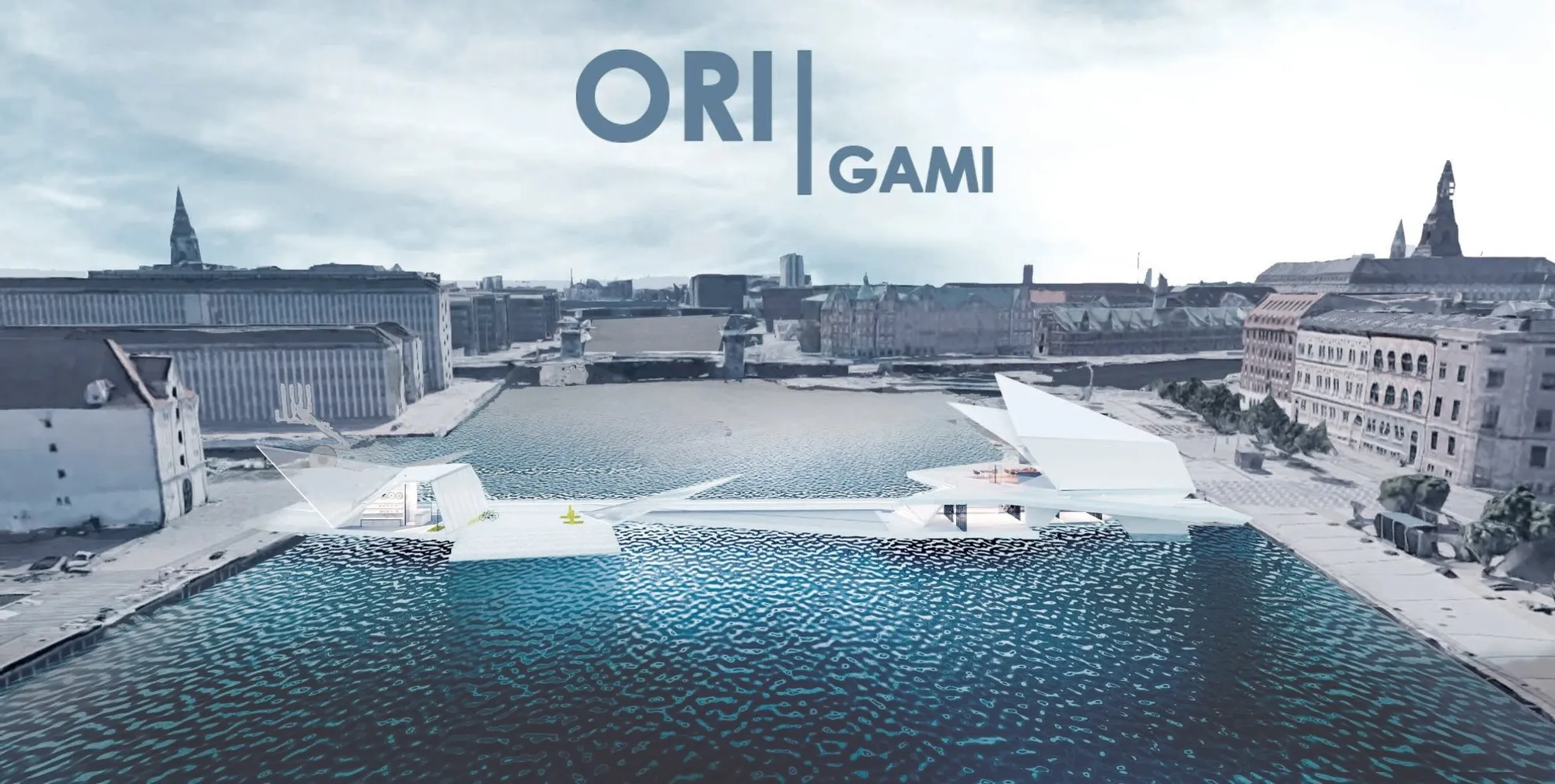
ORI|GAMI: A Landmark in Sustainable Bridge Architecture
A transformative sustainable bridge architecture in Copenhagen blending cycling culture, public space, and sculptural urban design.


Copenhagen is widely recognized as a paradise for cycling enthusiasts. Bicycles are not simply a mode of transportation in Denmark’s capital, they are a way of life. Nearly 40% of Copenhagen’s residents commute daily by bike to work, school, or university. This strong cycling culture, combined with the city’s dedication to progressive urban planning, has positioned Copenhagen as a global reference point in sustainable bridge architecture and people-centered infrastructure.
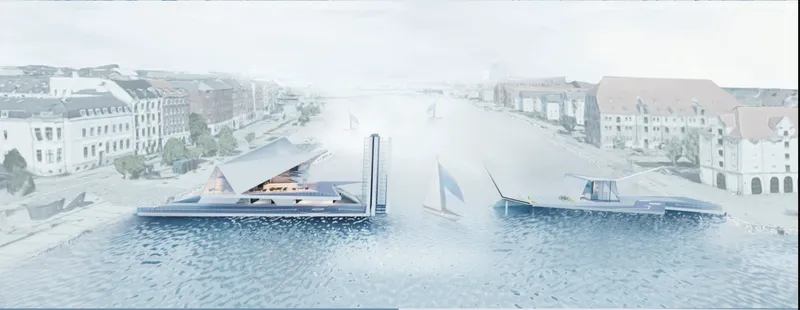
The ORI|GAMI project, designed by Ania Bednarek, responds directly to this context. Rather than functioning solely as a crossing point, the bridge transforms into a multifunctional public realm: an architectural landmark that elevates mobility, recreation, and social interaction.
Architecture Inspired by Maritime Identity
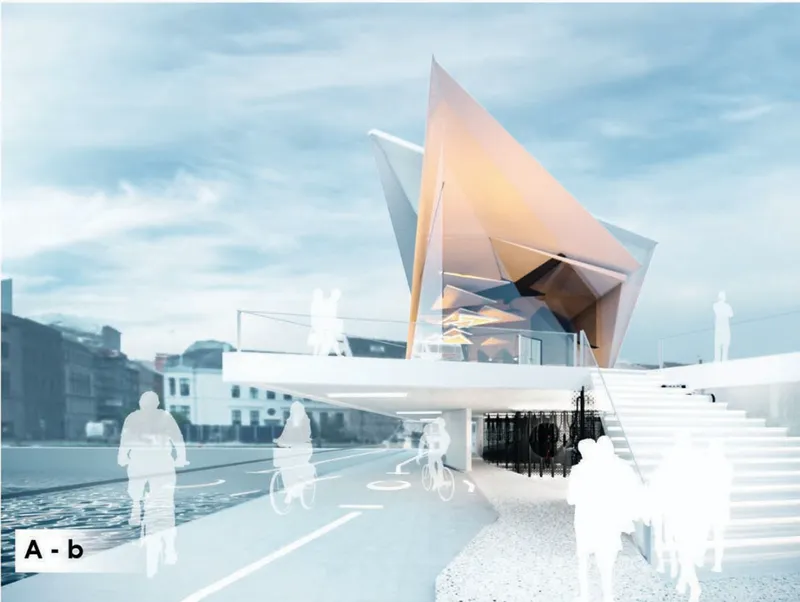
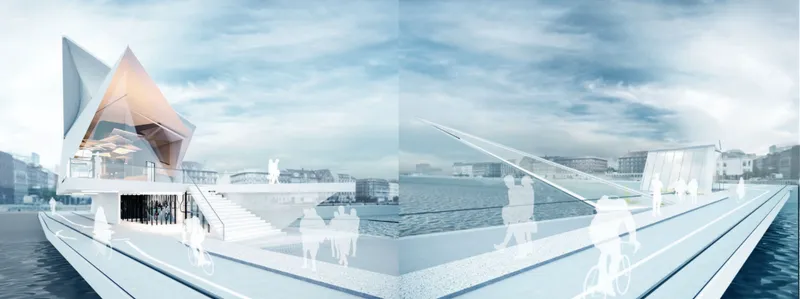
Copenhagen’s identity as a harbor city deeply influenced the conceptual foundation of ORI|GAMI. Strongly associated with maritime traditions, ships and sails became symbolic inspiration for the sculptural geometry of the structure. The folded, angular form echoes origami principles: precise, dynamic, and expressive, while simultaneously recalling sails unfolding along the waterfront.
This innovative bridge architecture moves beyond conventional infrastructure. It is conceived as a civic sculpture, carefully integrated into Copenhagen’s historic yet modern urban landscape. The project harmonizes Scandinavian design sensibilities with contemporary architectural experimentation, reinforcing the city’s reputation as a global design icon.
A Bridge as Public Space, Not Just Passage
At its core, ORI|GAMI challenges the traditional definition of a bridge. It is a public space freed from its primary function, a destination rather than merely a connector.
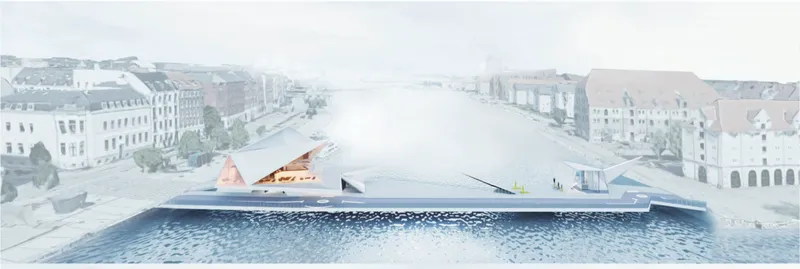
The design divides the structure into two primary zones:
Part A, Community & Café Pavilion
Located on the northern section, Part A introduces an elevated public experience. At Level 0, the project provides 320 bicycle parking spaces, ensuring accessibility and convenience for daily commuters. A carefully designed cycling roundabout enhances communication and safety, allowing cyclists to transition smoothly toward pedestrian zones.
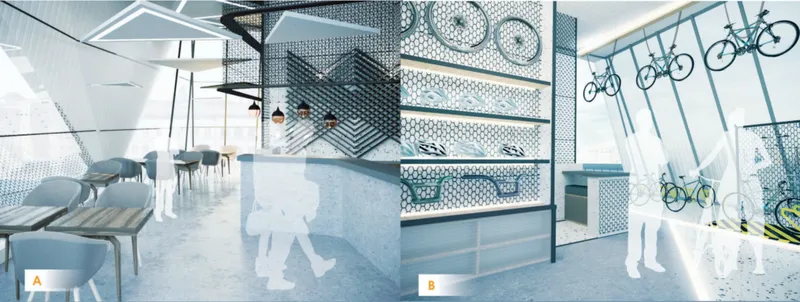
A ramp leads to Level +1, where additional bicycle parking is provided alongside a viewing platform overlooking the harbor. Beneath the sculptural folded roof sits a café, an inviting social hub that activates the bridge throughout the day. Interior spaces include:
- Café seating area with panoramic water views
- Guest facilities and staff room
- Open kitchen layout
- Integrated storage and service spaces
The café transforms the bridge into a recreational destination, encouraging residents and visitors to pause, gather, and engage with the surrounding cityscape.
Part B, Dedicated Cyclist Infrastructure
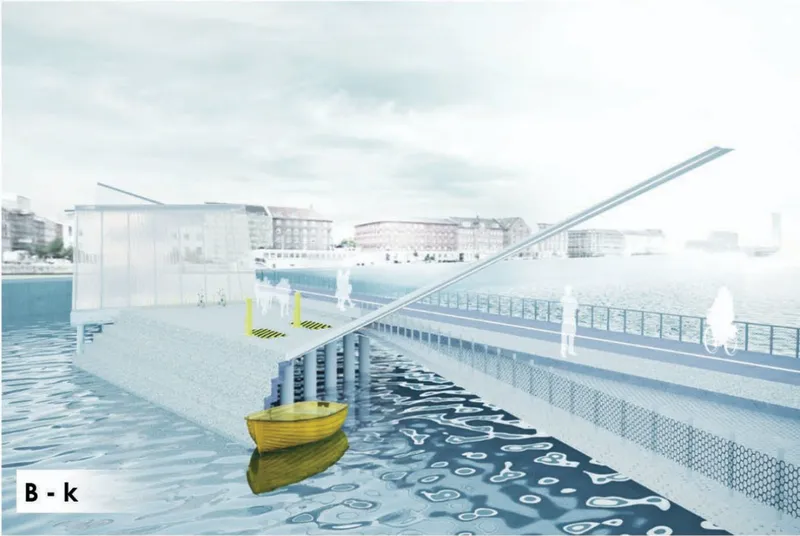
The southern section is primarily designed for cyclists. Here, ORI|GAMI strengthens Copenhagen’s cycling ecosystem with:
- A professional bike service station
- Two self-service repair areas
- Secure bicycle parking
- Social warehouse and repair lounge
Stair terraces descend toward the water, functioning as relaxation zones and mooring bases. These steps create a seamless relationship between infrastructure and waterfront leisure, reinforcing the project’s commitment to sustainable urban design.
Kinetic Movement and Urban Performance
The bridge incorporates a dynamic opening mechanism, allowing maritime traffic to pass. When activated, the morphing movement becomes a performative urban event, transforming infrastructure into spectacle. This kinetic quality strengthens its identity as a landmark within Copenhagen’s harbor.
By merging engineering precision with sculptural ambition, ORI|GAMI represents a forward-thinking model of sustainable bridge architecture. It demonstrates how infrastructure can adapt to environmental, cultural, and social conditions without compromising aesthetic innovation.
Sustainability Through Design Integration
The project emphasizes several sustainable strategies:
- Promotion of daily cycling as ecological transport
- Reduction of vehicular traffic impact
- Mixed-use public programming
- Efficient spatial organization
- Community-focused amenities
Cycling remains one of the most ecological and economically efficient transportation methods in modern cities. ORI|GAMI supports this reality by creating proper infrastructure that encourages bike usage while enhancing the urban experience.
Scandinavian Modernity Meets Contemporary Expression
Copenhagen has long combined its 17th-century architectural heritage with progressive modern development. ORI|GAMI continues this tradition by integrating bold contemporary geometry within the historic harbor setting.
Its angular, folded surfaces contrast gently with the surrounding classical facades while maintaining material and spatial sensitivity. The project embodies the Scandinavian ethos: functional clarity, human-scale design, and environmental awareness.
A New Landmark for Copenhagen
ORI|GAMI stands as more than a bridge. It is a civic platform, a cycling hub, a waterfront pavilion, and a sculptural icon. By dissolving the boundary between infrastructure and architecture, Ania Bednarek’s design reimagines what sustainable bridge architecture can achieve in the 21st century.
In a city already celebrated for its design excellence and cycling culture, ORI|GAMI reinforces Copenhagen’s global leadership in innovative urban development: where movement, community, and architecture converge.




Popular Articles
Popular articles from the community


Play: Fragments of Their World
Familiar architecture becomes modular playground design, creating safe spaces where displaced children can learn, connect, imagine and play.

Hill & Cross Opera: Sculptural Opera House Architecture Shaped by Tallinn’s Landscape and Identity
Hill & Cross Opera reimagines opera house architecture in Tallinn through its sculptural hill, civic plaza, glass wave and a luminous cross.

The Musturak Paradise: Senior Living Architecture for a Connected Future in Temara, Morocco
The Musturak Paradise reimagines senior living architecture in Temara via private homes, social spaces, culture, community, and shared care.

Riyadh For All: Intergenerational Urban Design for Active Aging in Rabat
Riyadh For All reimagines urban design in Rabat with intergenerational co-living, adaptive courtyards, and Moroccan cultural exchange today.


Similar Reads
You might also enjoy these articles

Eco Chapel: A Green Architecture Pavilion Designed in Symbiosis with the Forest
Eco Chapel uses green architecture to weave prayer, learning and reuse into a forest pavilion shaped by modular hexagonal canopies for life.
Kaffeebühnen: Coffee Shop Architecture Designed as a Civic Stage Between Vienna’s City and Park
Kaffeebühnen turns coffee shop architecture into a civic stage, linking Vienna’s park edge, urban life, warm timber yards, and coffee craft.
Healing Façade: Sustainable Architecture for Reforestation, Community, and Sacred Ecology in Ethiopia
Healing Façade reimagines sustainable architecture as a living wall that restores soil, catches water and renews Ethiopia's forest churches.


Urban Forest: A Vertical Ecosystem for 5,000 Workers in Singapore's Changi Business Park
Radially stacked pods and layered green decks turn a 7-acre plot into 47 acres of ecological workspace projected for 2040.

Comments (0)
Please login or sign up to add comments
No comments yet. Be the first to comment!