
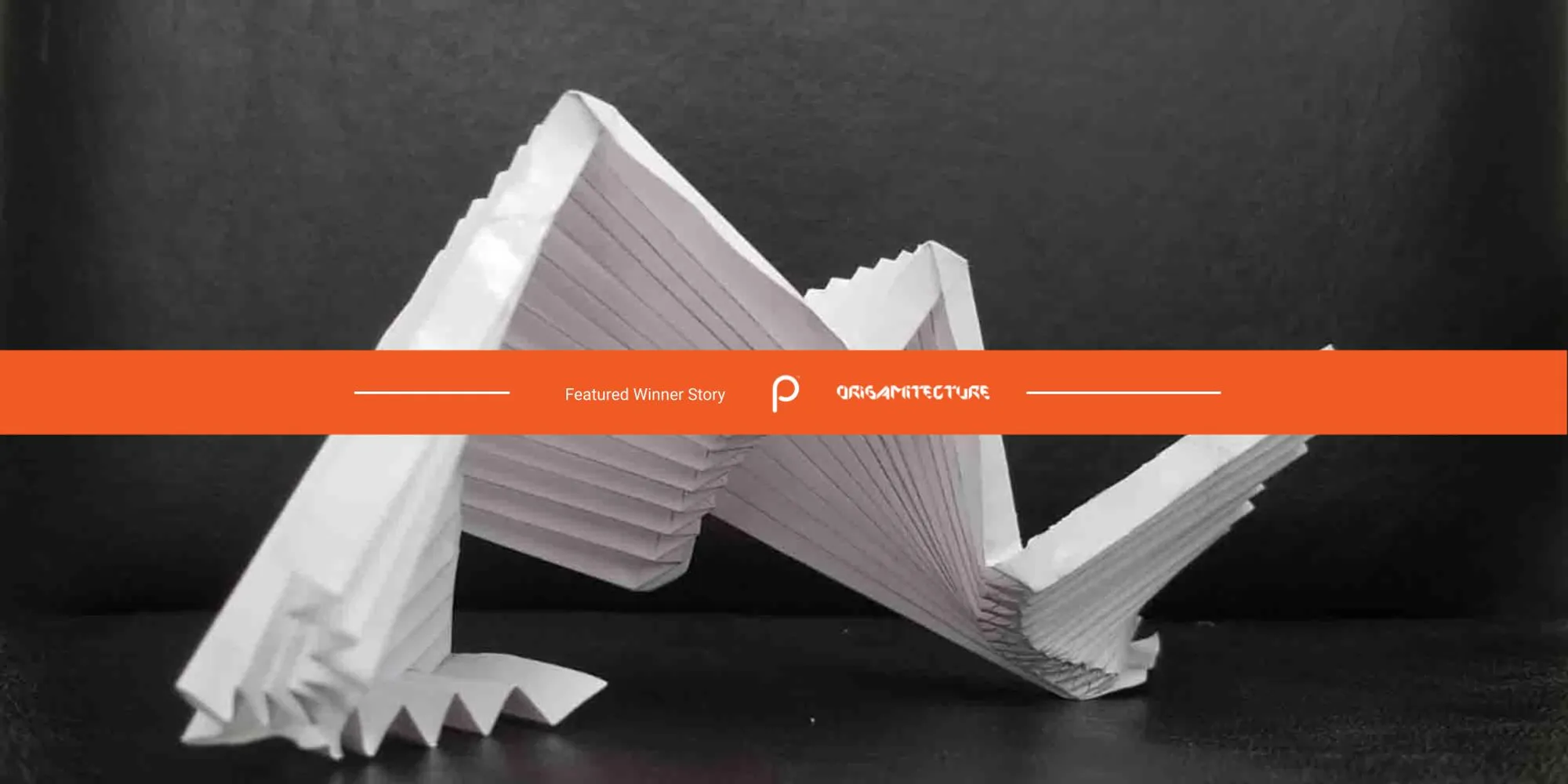
Paper powered architecture ideas
Origamitecture - Result Story


Origami continues to be an arena of exploration right from childhood to college (especially for architects). Origami is finding the third dimension with paper, an idea that converts 2D to 3D. This is one of the first ways architecture was portrayed in 3D dimension, adapted into physical models as we know today. However, despite being old, origami is still a fun way to explore 3D ideas. The structural form of papers allows exploring plate geometry in 3D in affordable ways.
While the gold standard in architecture is moving towards computer-driven tools, a look back to our past is always a great idea to re-anchor to our path for delivering a better-built environment to people. How will you devise an architecture concept with a sheet of paper with minimum cuts and maximum creativity?
The task is simple, create a building concept from a limited piece of paper, explain concept floorplans and spaces within them. The design challenge looks at developing an architectural concept on the given function and synthesizing spaces, plans, concepts within them.
Only digital technologies permitted are clicking pictures using cameras, scanning and printing them (and uploading them on UNI). Take pictures of the paper architecture model based on the design problem, set a scale, and draw its views with a sharpie or a marker. If you are using drawings ensure that they are either, sketched, drafted hand-drawn.
The design challenge was to build a flea market and exhibition space for the arts and crafts made by local craftsmen in the city of your residence. The center would be able to host 100 visitors and space for setting up flea markets. The scale of the competition and the site area is unrestrained.
However, the design shall be made by only two A3 sheets of paper (less the better) and pieces of it with minimal adhesive/cutting.
The jury for the competition consisted of esteemed designers, professionals, and academicians from around the world. The Lead Jurors for the competitions were as follows:
Michael LaFosse, Vice President, Origamido, United States
David Brill, Origami artist and landscape painter, David Brill, United Kingdom
Paul Jackson, Freelance, Origami artist, Israel
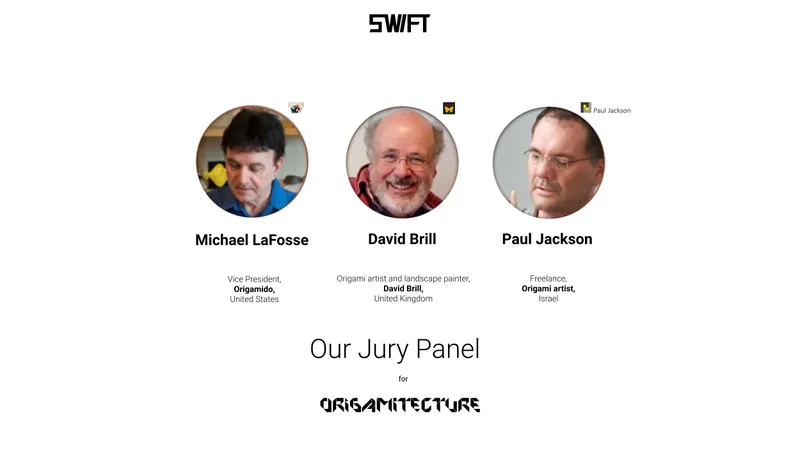
Some of the Best of competition projects are:
Winning Project: Origami Pavilion
By: Ephrata Deneke
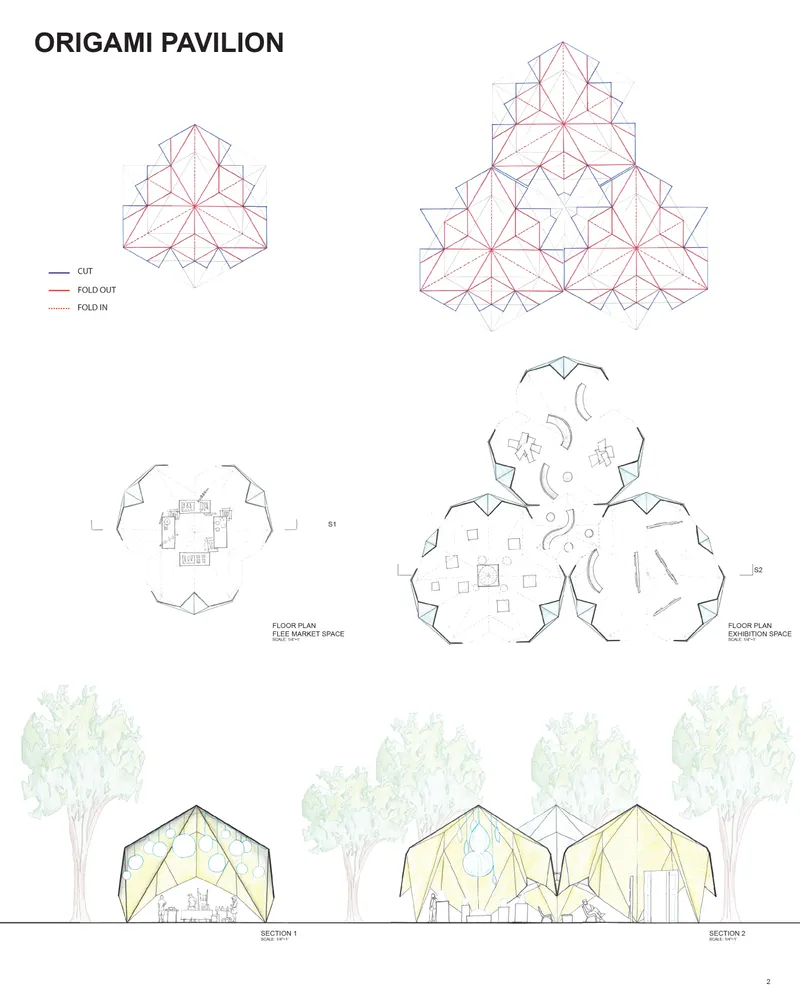
Floor plan and section of project Origami Pavilion
Description: Saturday Market and Art Exhibition Space Located in the lively Grand lake area of Oakland California, the project aims to elevate the experience people have of this popular Saturday market destination by supporting local artists and artisans to show their work.
------------------
Editor’s Choice: ANCHESTOR
By: Mohamed Abdellatif, Betül Keleş, Zeynep BOZDAM & Metin Çoktin
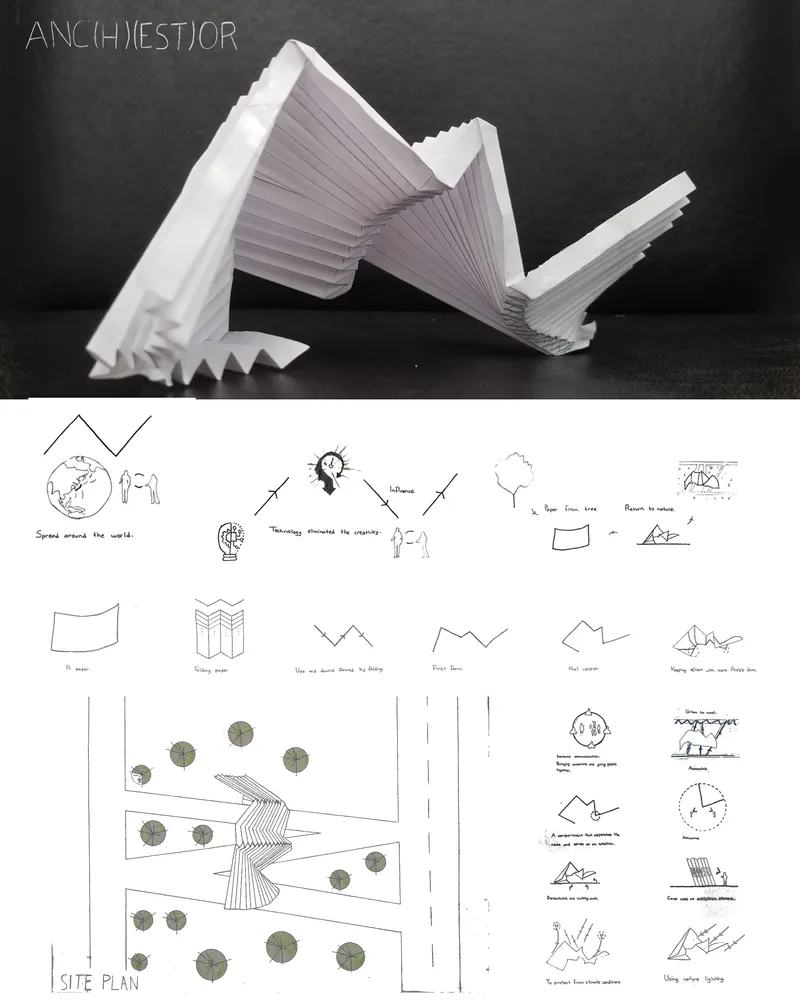
Site Plan of project Anchestor
Description: With the universality, simplicity, accessibility, and rootedness of origami, it has been tried to establish a connection with a place where a transfer can be made from past to present, from old to young, from master to novice. In the formation of the place, where handicrafts are exhibited and sold, which is the meeting point of different cultures and generations.
--------------------
Editor’s Choice: Paper Street
By: Maco & Man Hin Leung
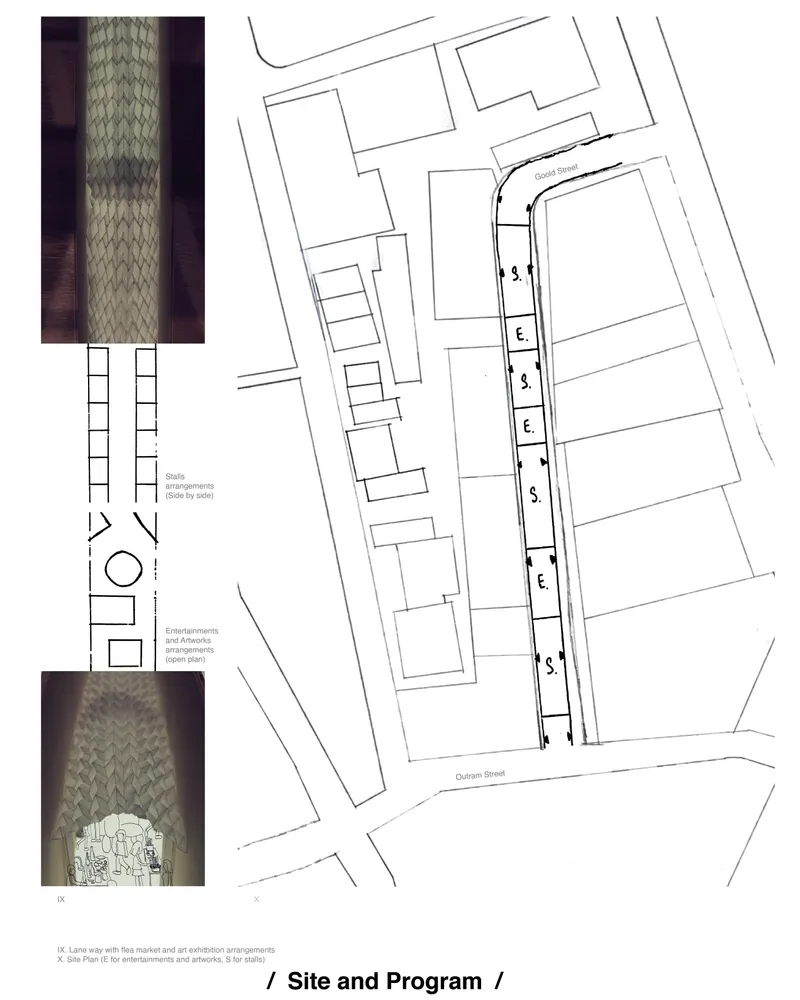
Site plan of project Paper Street
Description: ‘Paper-street’ is recognized to transform underutilized urban spaces into vibrantly activated, mixed social and artistic destinations. This project shows the new way to bring the underused part of the city back to life, not limited to Sydney but worldwide.
--------------------
Editor’s Choice: St Kilda Flea Market Place
By: Michael Assis
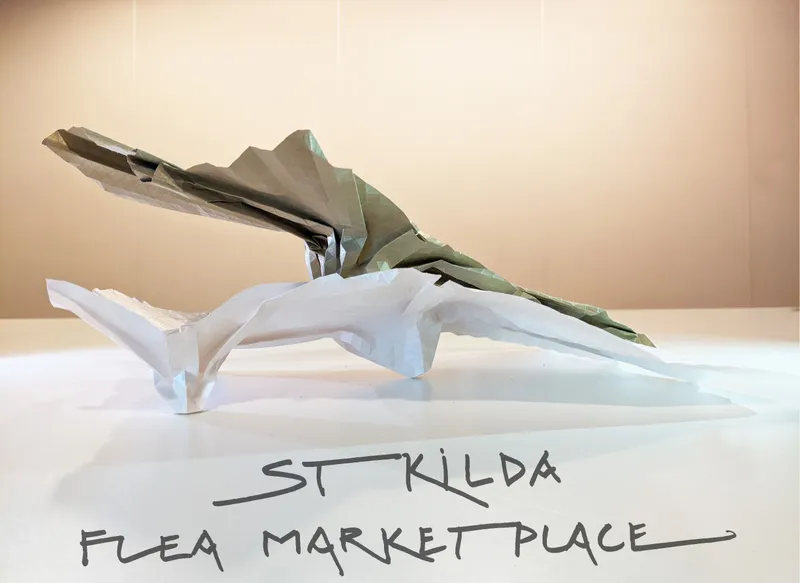
Cover image of project St Kilda Flea Market Place
Description: A market design project located in St Kilda beach in Melbourne Australia.
Follow us on social media: Facebook | Instagram | LinkedIn | Twitter | Youtube
References (3)




Popular Articles
Popular articles from the community


Hill & Cross Opera: Sculptural Opera House Architecture Shaped by Tallinn’s Landscape and Identity
Hill & Cross Opera reimagines opera house architecture in Tallinn through its sculptural hill, civic plaza, glass wave and a luminous cross.

The Musturak Paradise: Senior Living Architecture for a Connected Future in Temara, Morocco
The Musturak Paradise reimagines senior living architecture in Temara via private homes, social spaces, culture, community, and shared care.

Co-life: Sustainable Architecture for Age-Friendly Community Living
Co-life reimagines sustainable architecture for seniors through courtyards, rammed earth, shared gardens, and spaces designed for belonging.

The Earth Pod: 3D Printed Homes for Resilient Refugee Communities
The Earth Pod reimagines refugee housing through 3D printed homes made from clay, combining resilience, self-sufficiency, and rapid shelter.


Similar Reads
You might also enjoy these articles

Lunar Spiral: Space Architecture Shaped by the Mathematics of the Universe
Lunar Spiral reimagines space architecture through Fibonacci geometry, lunar regolith, levitating habitats, and self-sustaining Moon living.
The Main Dream: Modular Architecture for Play, Learning, and Community
A modular playground turns recycled plastic into adaptable spaces where refugee children can play, build, learn, and reconnect.

Play: Fragments of Their World
Familiar architecture becomes modular playground design, creating safe spaces where displaced children can learn, connect, imagine and play.

Wadi Rum Observatory: Desert Architecture Designed for the Night Sky
Wadi Rum Observatory turns desert architecture into a quiet instrument for astronomy, hiding research spaces under Jordan's starlit terrain.

Comments (0)
Please login or sign up to add comments
No comments yet. Be the first to comment!