

P + S Estudio Turn Scaffolding, Burlap, and Boulders into an Ephemeral Pavilion in Granada
A temporary structure for the TAC Festival uses rented scaffolding, local jute fabric, and quarry stones to build with air and light.


Most temporary pavilions treat impermanence as an excuse for thinness. They arrive flat-packed, photograph well, and vanish without consequence. The Aire Pavilion, designed by P + S Estudio de Arquitectura for Granada's TAC Urban Architecture Festival in 2022, does something more demanding: it treats impermanence as the entire point, building a structure whose materials were borrowed, used for a month, and returned to where they came from. Scaffolding went back to the rental yard. Twenty-two riprap stones returned to a Sierra Elvira quarry. The hessian fabric found a second life in another public space in the city. Nothing was wasted because nothing was consumed.
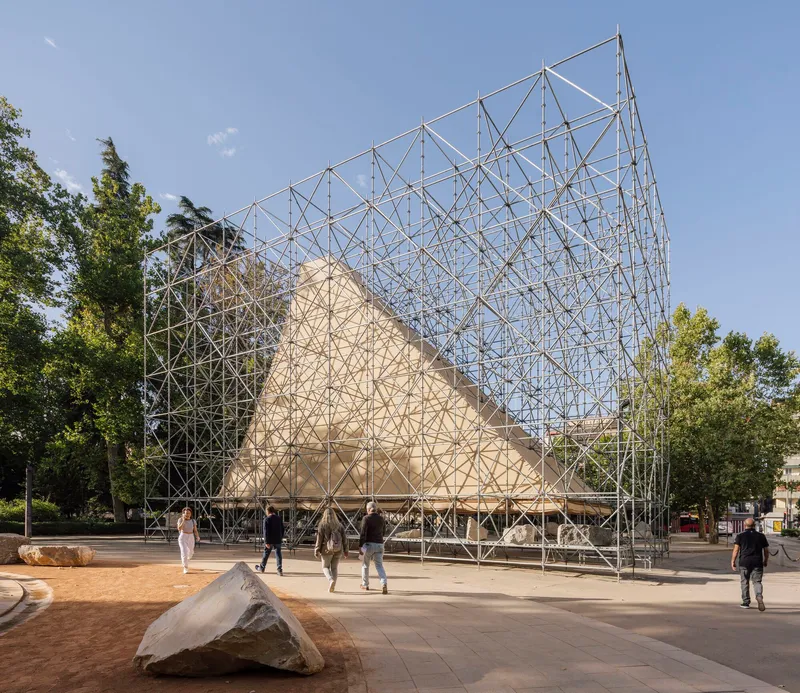
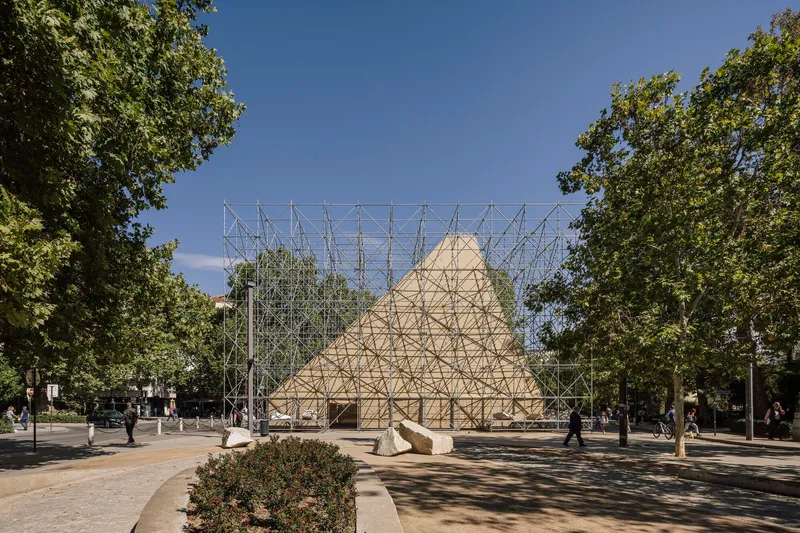
Sited in Plaza del Humilladero, the pavilion occupied 2,540 square feet and served as a flexible venue for concerts, conferences, and performances across its one-month lifespan. Architects Francisco Parada and Laura R. Salvador conceived of the project as an architecture made literally of air and light, using jute burlap, a material with deep roots in Granada's artisan tradition, as a translucent membrane that filtered sunlight by day and glowed from within at night. The triangular profile, somewhere between a desert tent and a circus big top, gave the plaza a temporary landmark that was unmistakably architectural yet almost entirely demountable.
A Skeleton You Can Rent
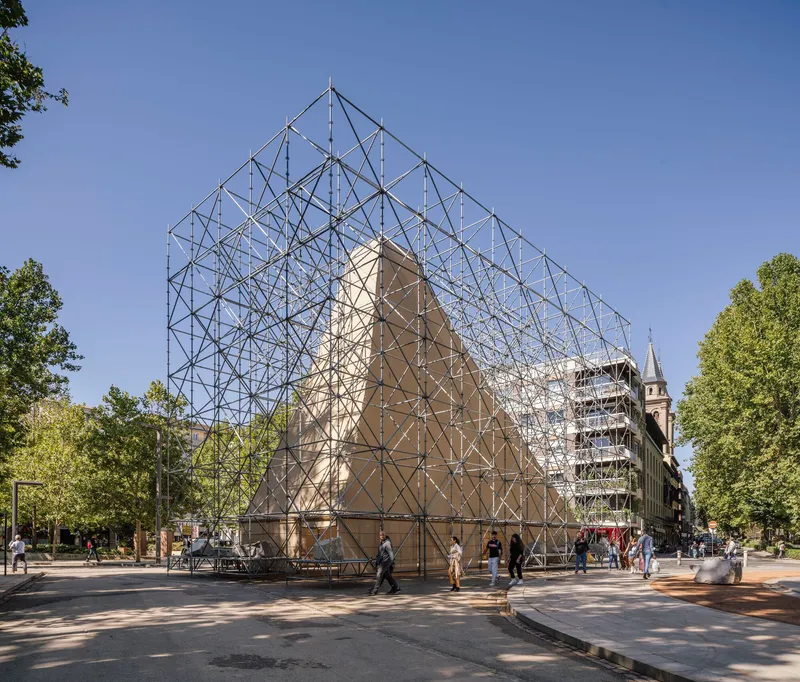
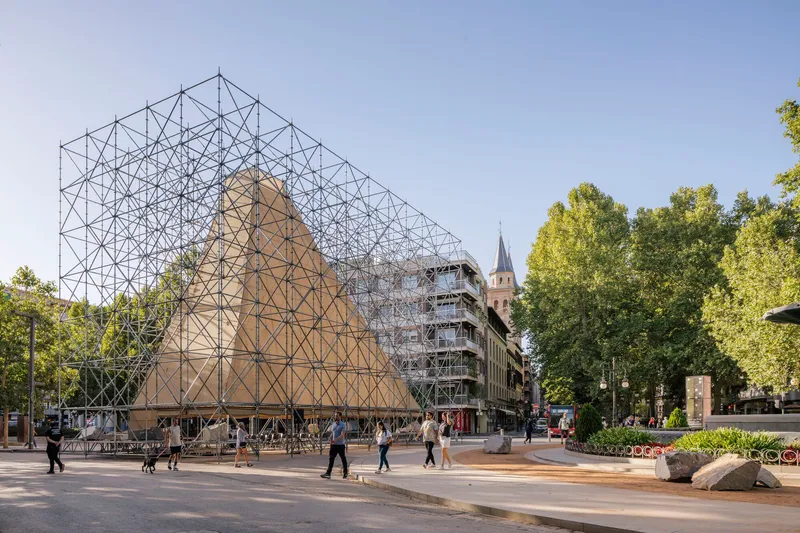
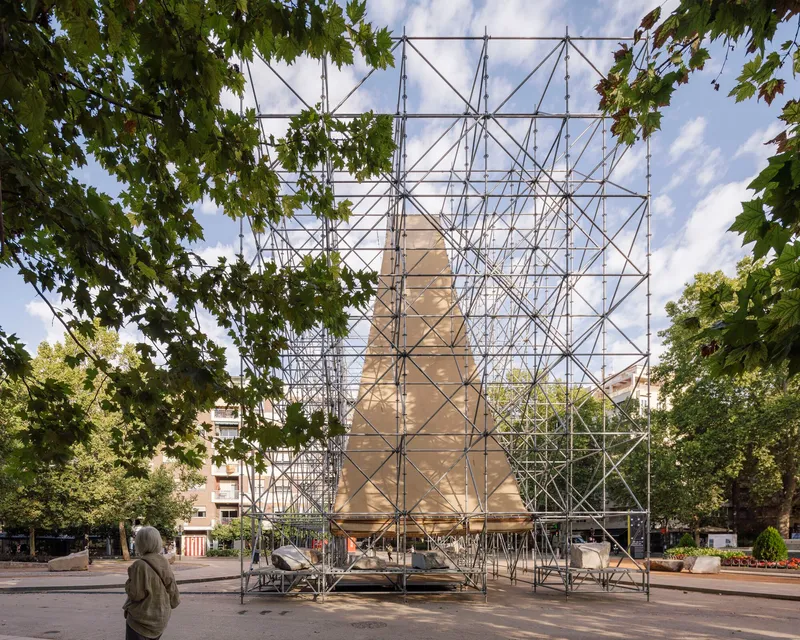
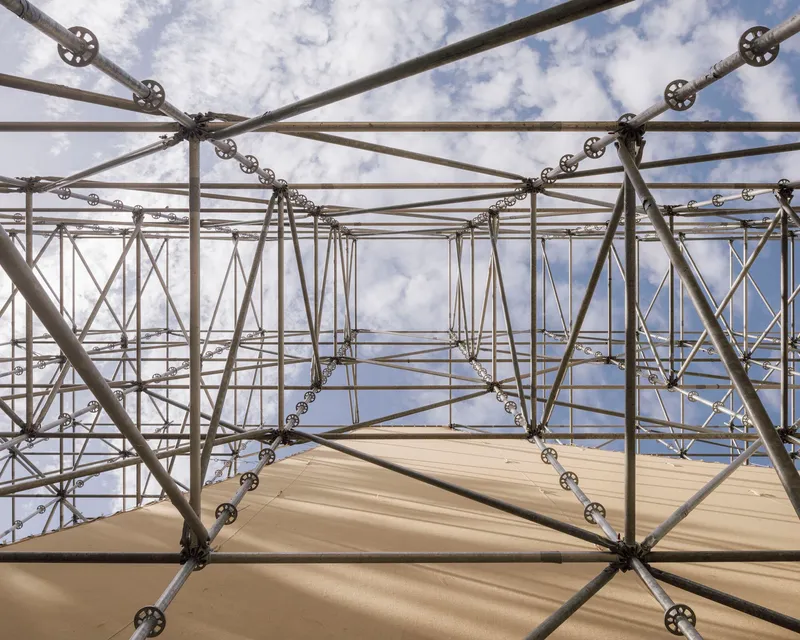
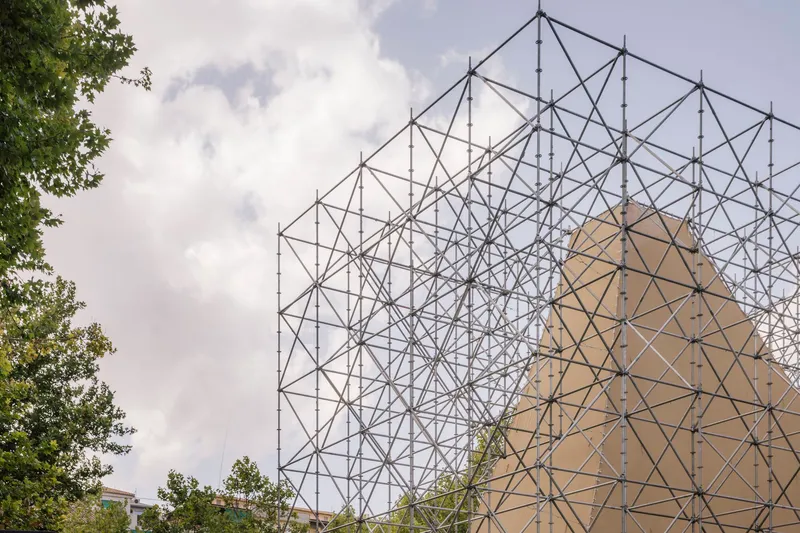
The load-bearing structure is standard modular scaffolding, the same tubular steel system that wraps around every building under renovation in southern Europe. By choosing a rental product rather than a bespoke frame, the designers collapsed fabrication time, eliminated material waste, and kept the execution budget at €90,000. The scaffolding cage reads as a transparent exoskeleton, its repetitive grid of diagonal bracing giving the pavilion a tectonic honesty that most festival structures avoid. You see every joint, every node, every brace.
There is also a conceptual payoff. Scaffolding signals incompleteness, a building caught mid-construction. The Aire Pavilion leans into that reading. It looks perpetually unfinished, and that ambiguity is productive: visitors approach it with curiosity rather than deference, treating the space as something still open to interpretation.
Burlap as Climate Device
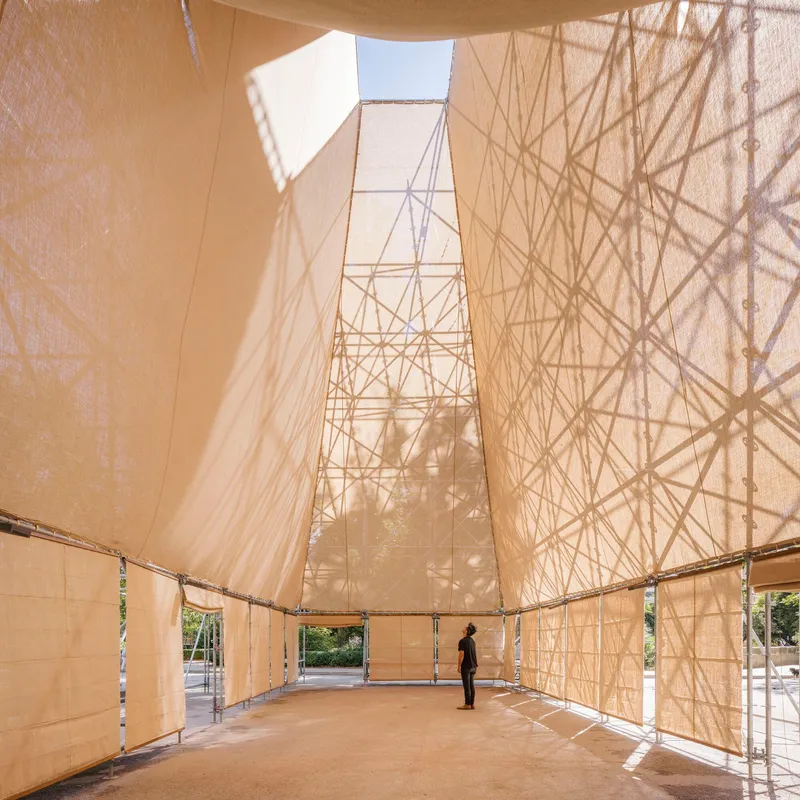
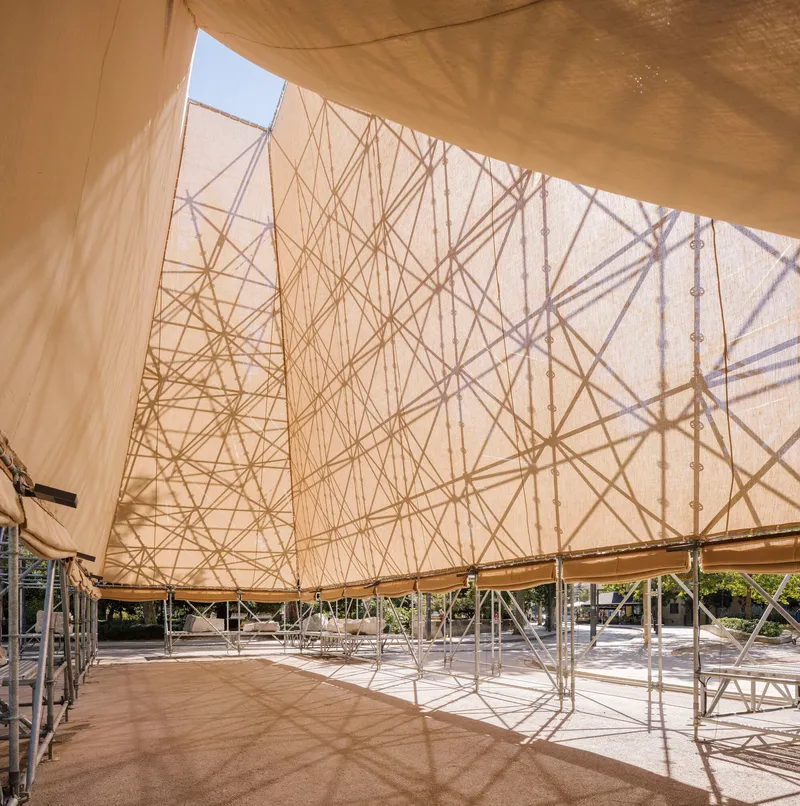
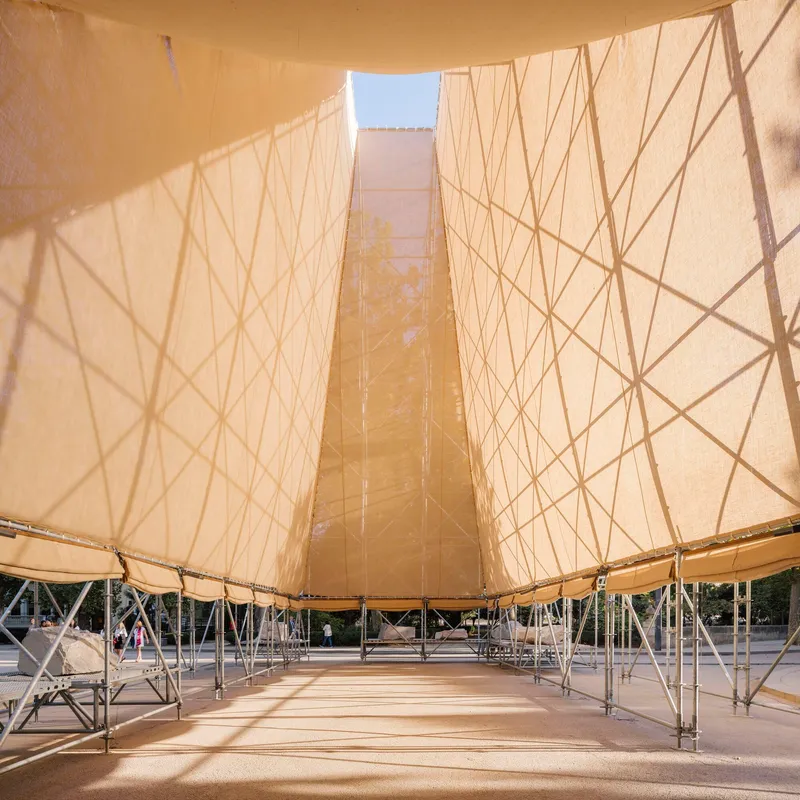
In Granada, hessian fabric has long been stretched across streets in summer to shade pedestrians. The Aire Pavilion scales that vernacular technique into an architectural enclosure. Two types of jute burlap, a heavier structural layer and a lighter envelope, wrap the triangular volume. The fabric is 100% natural and locally made, linking the pavilion to a craft tradition that most contemporary architects would overlook.
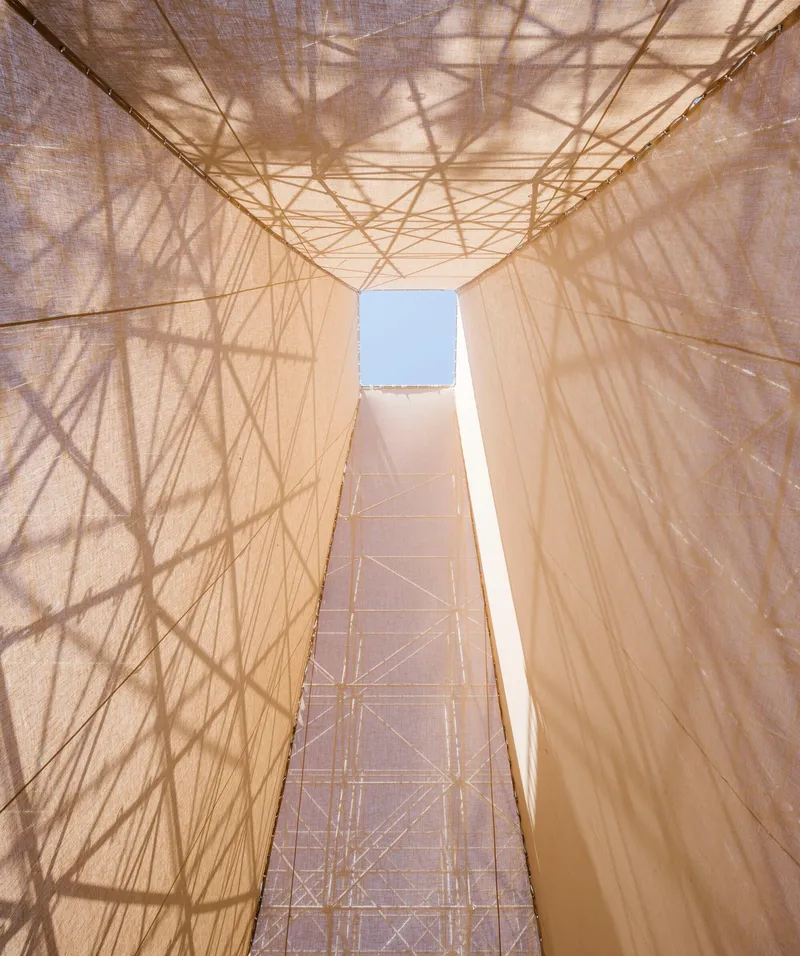
Inside, the effect is remarkable. Daylight passes through the weave as a soft, even glow, while the scaffolding framework casts geometric shadow patterns that shift across the membrane throughout the day. The square roof opening, a kind of oculus, punches concentrated light into the center of the space. The pavilion becomes a device for experiencing light rather than merely enclosing activity.
Shadows as Ornament
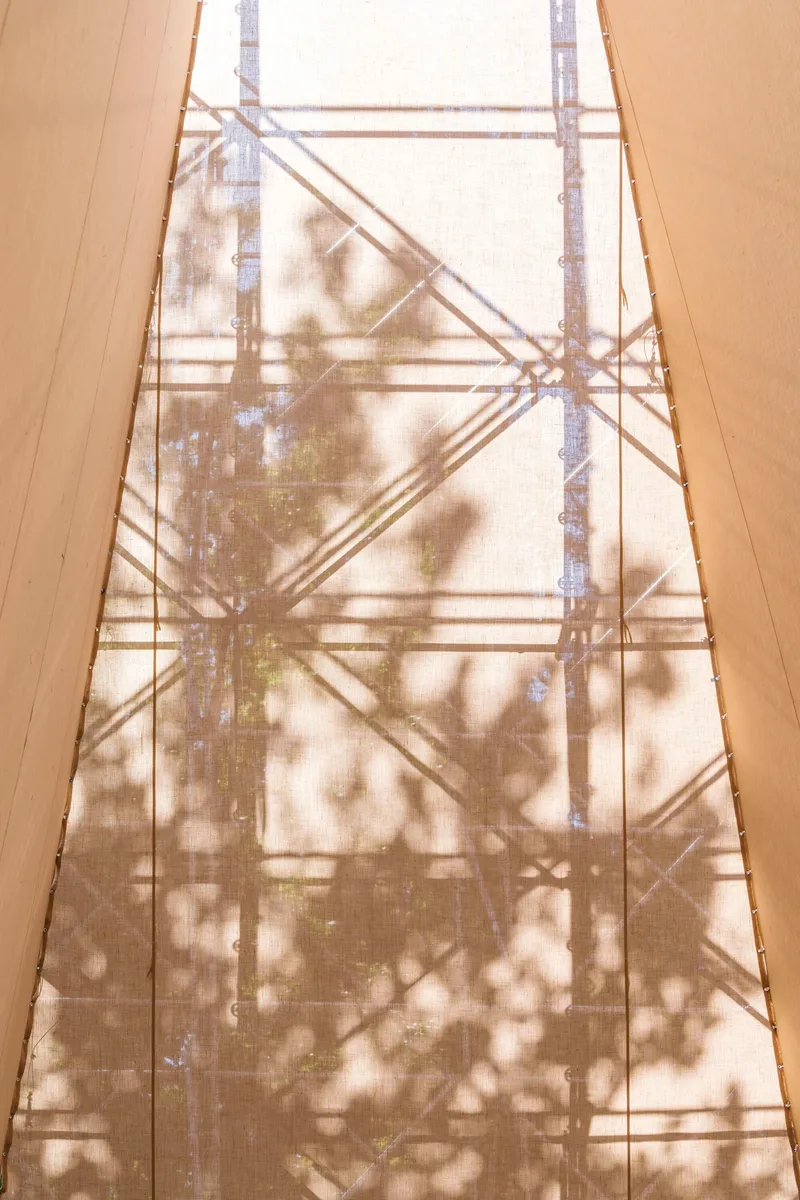
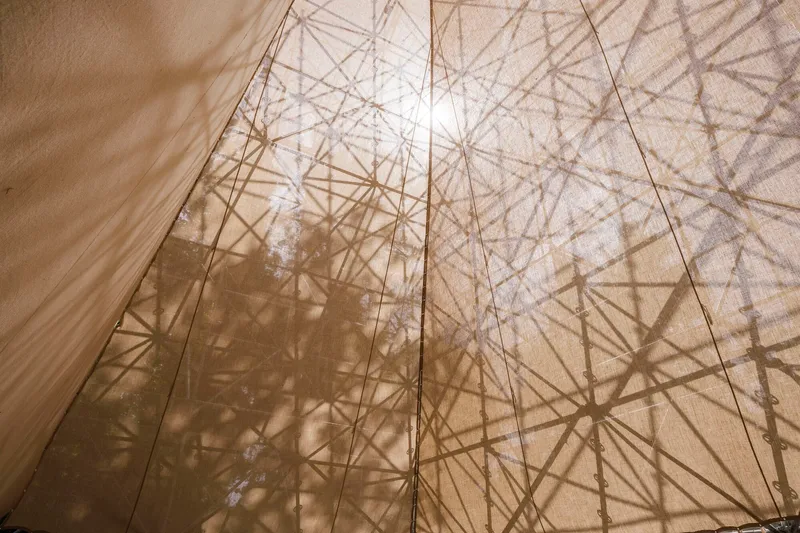
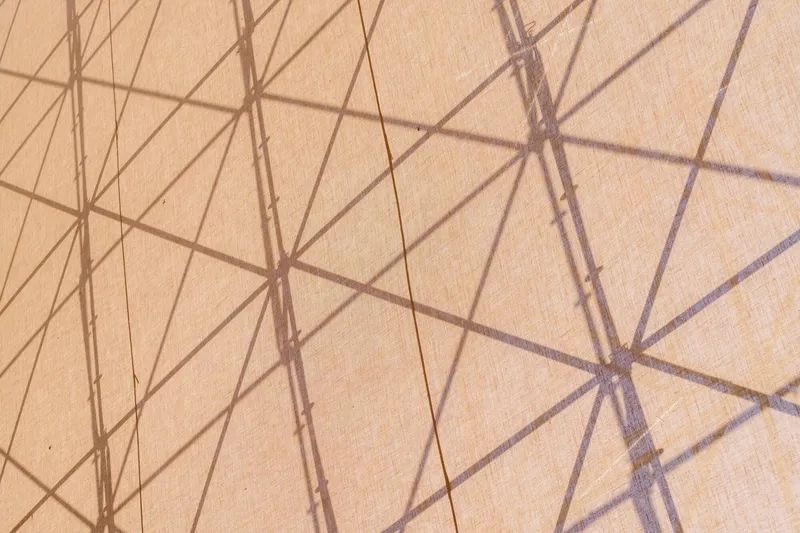
The interplay between the steel grid and the translucent fabric produces a secondary architecture of shadows. Triangulated cable patterns, diagonal bracing lines, and circular connector nodes project onto the hessian surfaces in overlapping geometries that change with the sun's angle. These are not decorative gestures applied after the fact. They are a direct consequence of structural logic meeting a permeable skin.
Detail shots reveal the intimacy of this effect: woven textile grain visible alongside crisp linear shadows, steel pipes casting arcs across sandy floors. Ornament here costs nothing and requires no fabrication. It is simply what happens when you build honestly with a translucent material.
Stones as Furniture and Counterweight
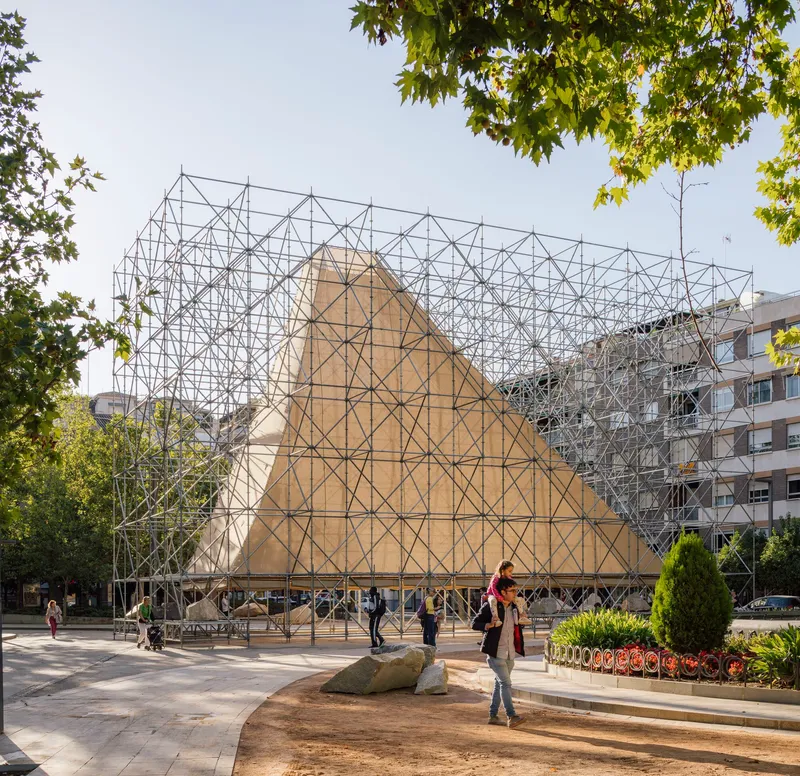
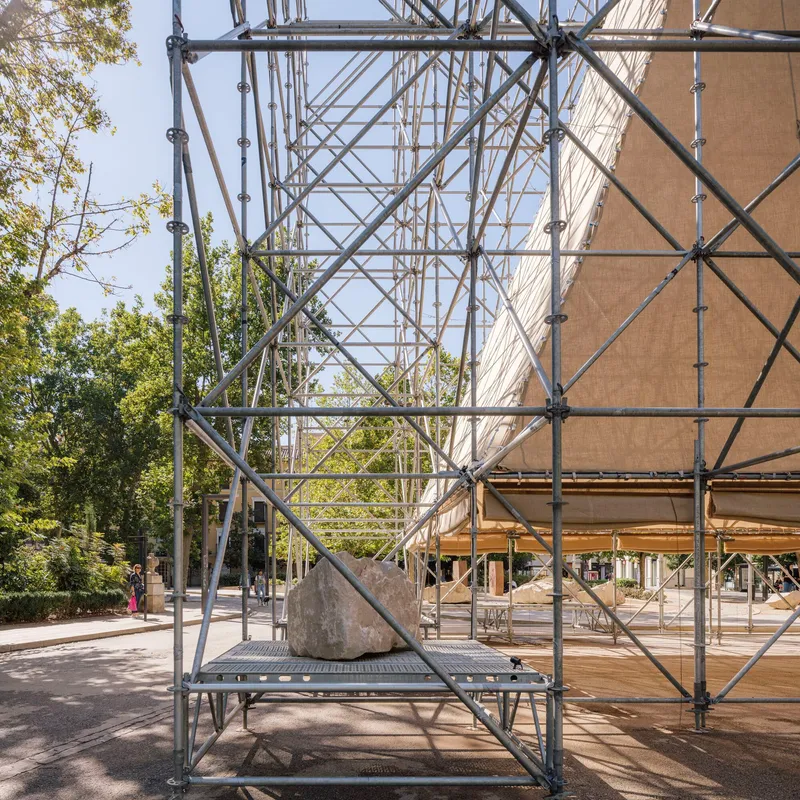
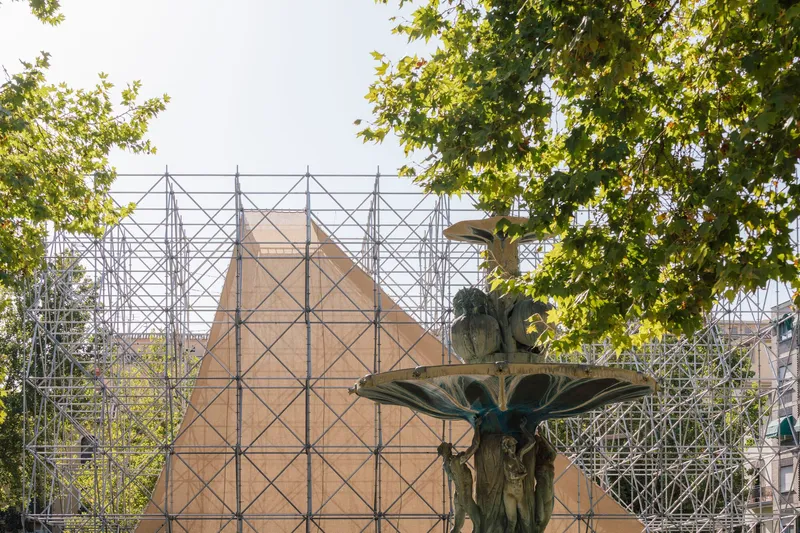
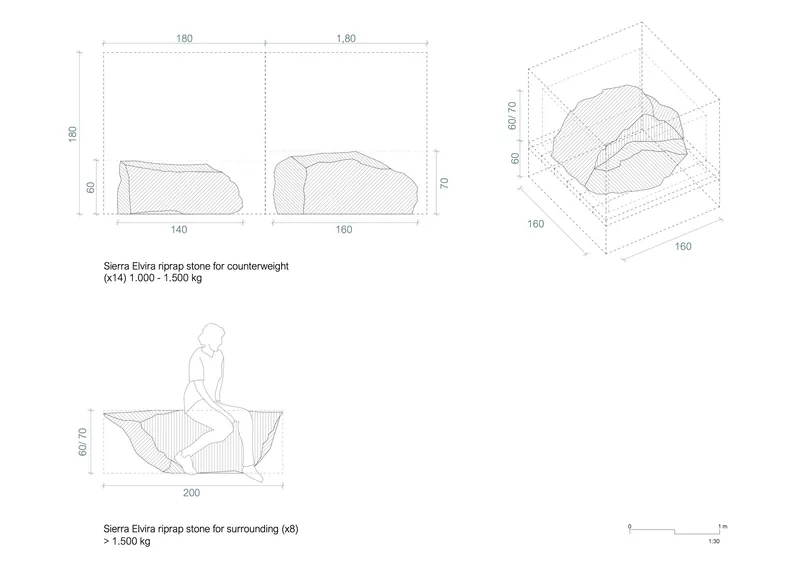
The 22 riprap stones scattered around the pavilion's base are waste material from marble extraction at the nearby Sierra Elvira quarry. They serve a dual purpose: structurally, they provide counterweight to stabilize the scaffolding; spatially, they function as impromptu urban furniture, creating informal seating and gathering points that extend the pavilion's influence into the surrounding plaza. After dismantling, each stone returned to its quarry. The material loop is complete.
Placing rough quarry stones in a polished urban square is a small provocation. It connects the city to its geological hinterland and introduces a material scale and texture that contrasts sharply with the fine grain of the burlap and the precision of the steel tubes. The stones anchor the pavilion visually and physically, preventing it from reading as weightless spectacle.
Day and Night, Two Different Buildings
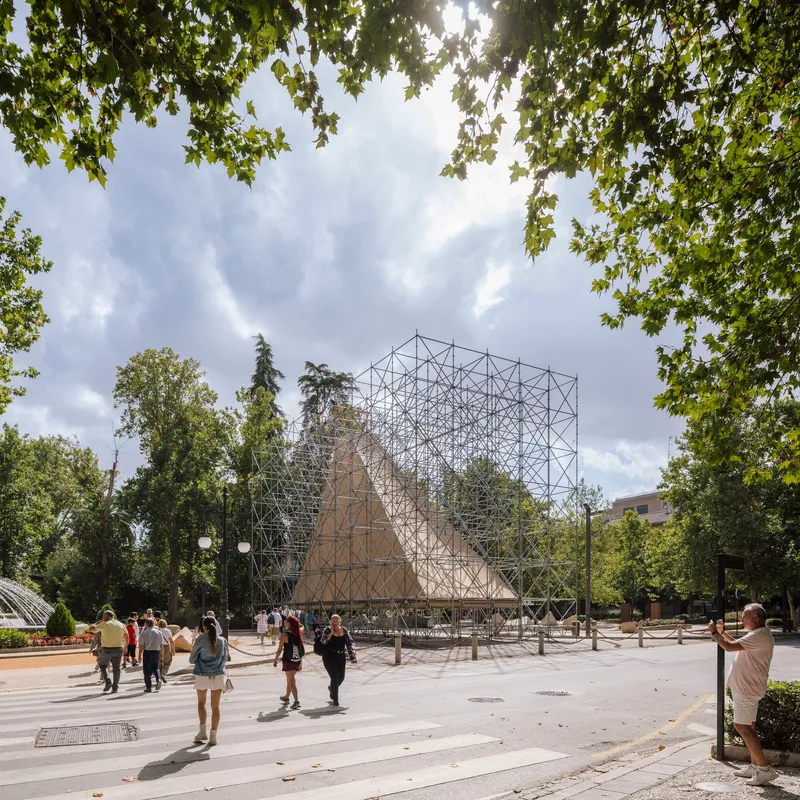
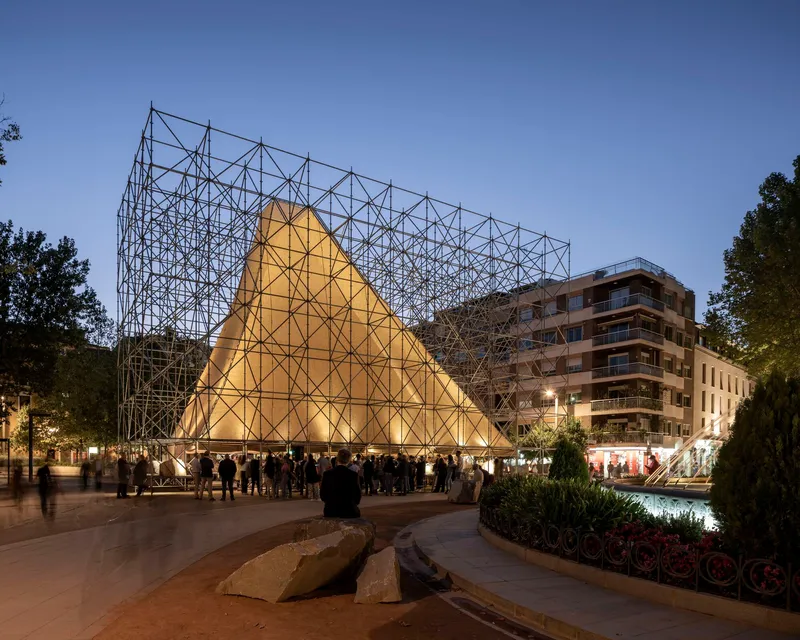
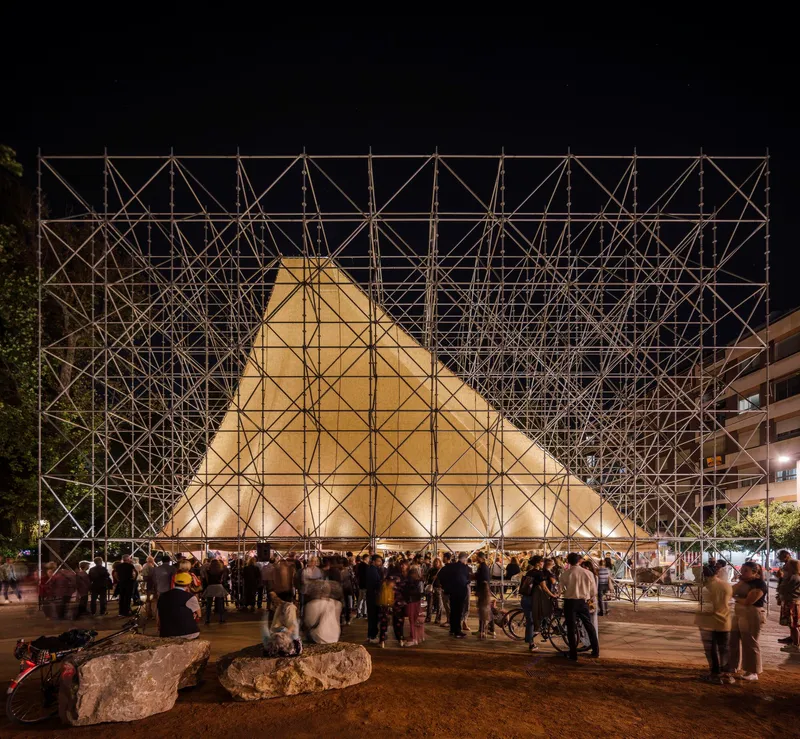
By day, the Aire Pavilion is a shaded enclosure, its burlap skin absorbing and diffusing Mediterranean sun. By night, it inverts. Interior lighting transforms the hessian into a glowing triangular lantern, the scaffolding cage now visible as a dark wireframe around a luminous volume. The plaza's social dynamic changes with it: daytime visitors drift through in small groups, while evening crowds gather around the base as if drawn to a campfire.
The night images are the strongest argument for the project's architectural ambition. The triangular form, which by day could read as merely pragmatic, becomes iconic after dark. It sits among the trees of Plaza del Humilladero like a signal beacon, proof that a structure built entirely from borrowed parts can still command a public space.
Flexible Program, Open Envelope
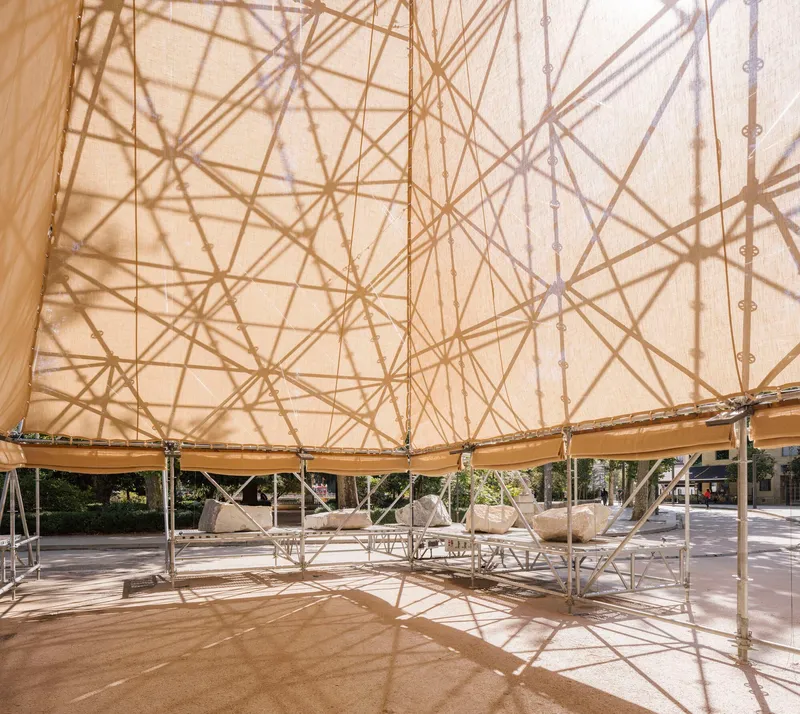
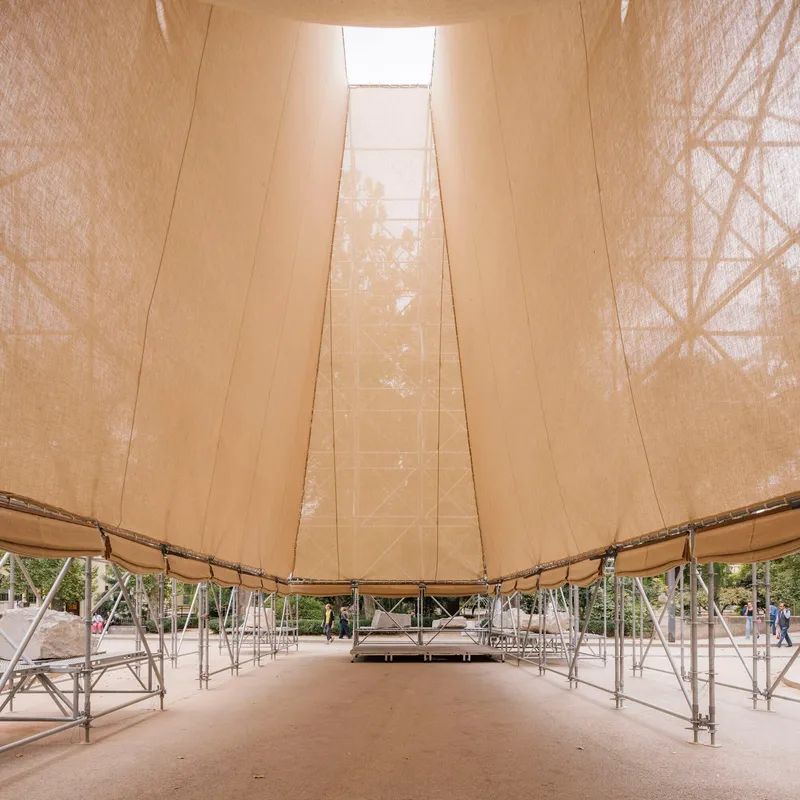
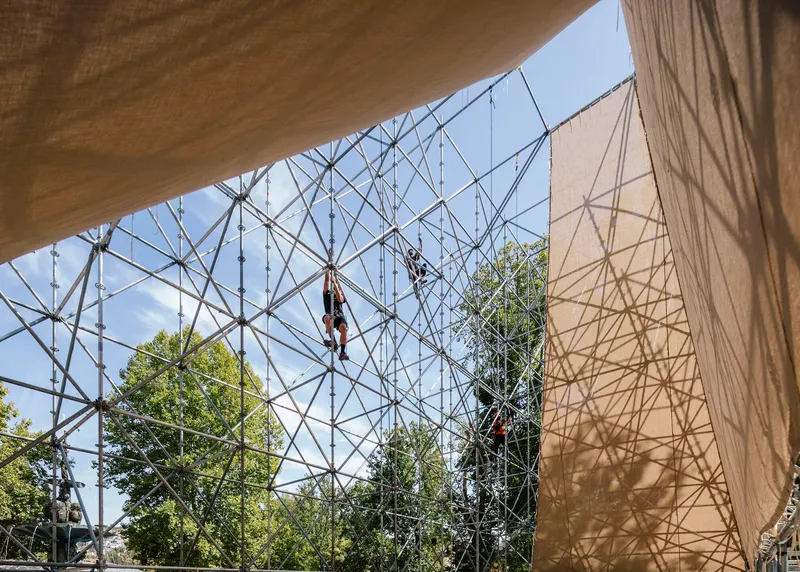
The pavilion was designed to host concerts, conferences, dance performances, and informal leisure across its month-long installation. Adaptability comes from the fabric boundaries themselves, which can be opened or closed to reshape the interior. Hammocks suspended beneath the canopy suggest the designers understood that not every cultural event requires chairs in rows. Sometimes the most valuable public program is simply permission to linger.
The indeterminate quality of the space is deliberate. Without fixed walls or permanent furnishings, the Aire Pavilion offers a scenario rather than a program. It creates the conditions for encounter and leaves the rest to the citizens of Granada.
Plans and Drawings
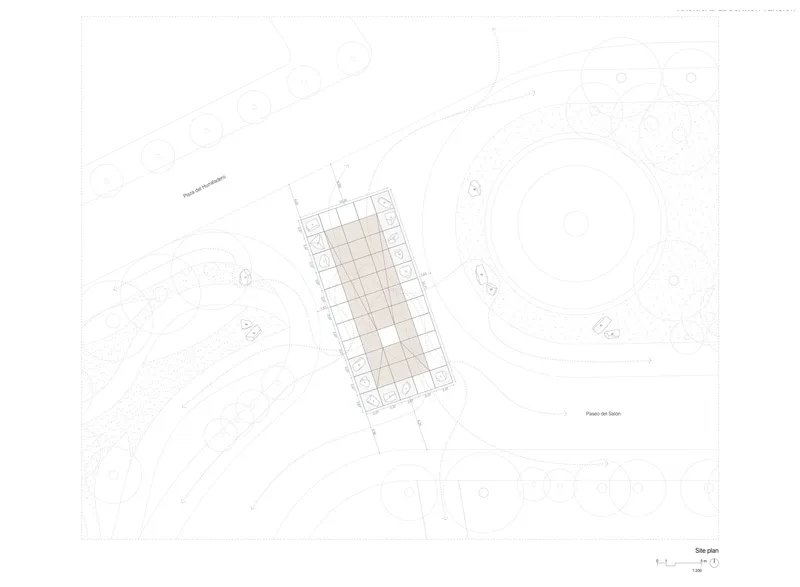
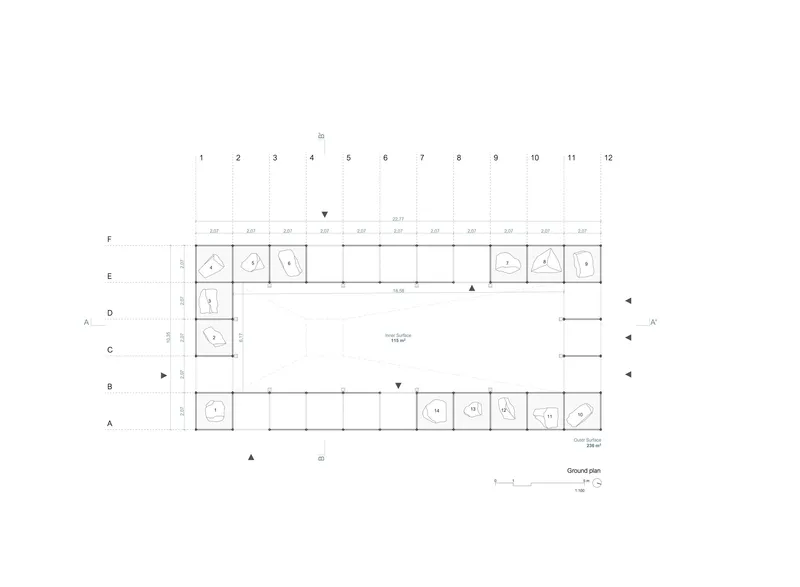
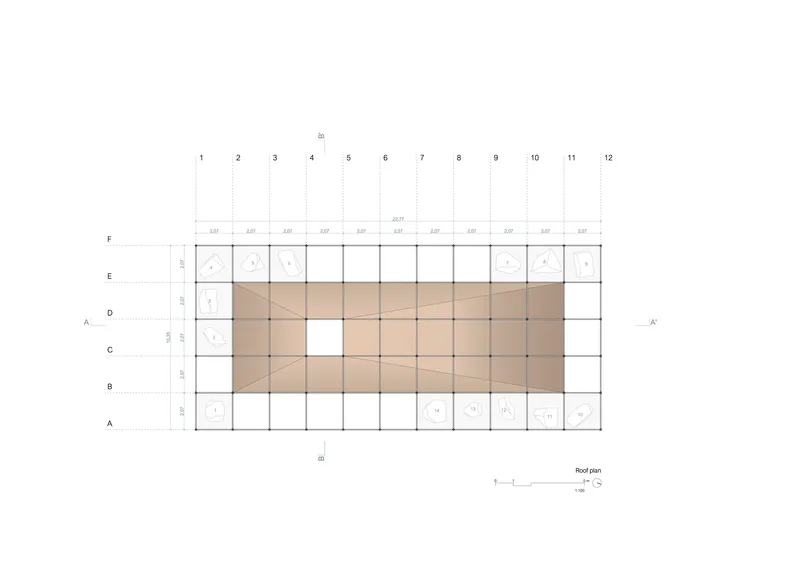
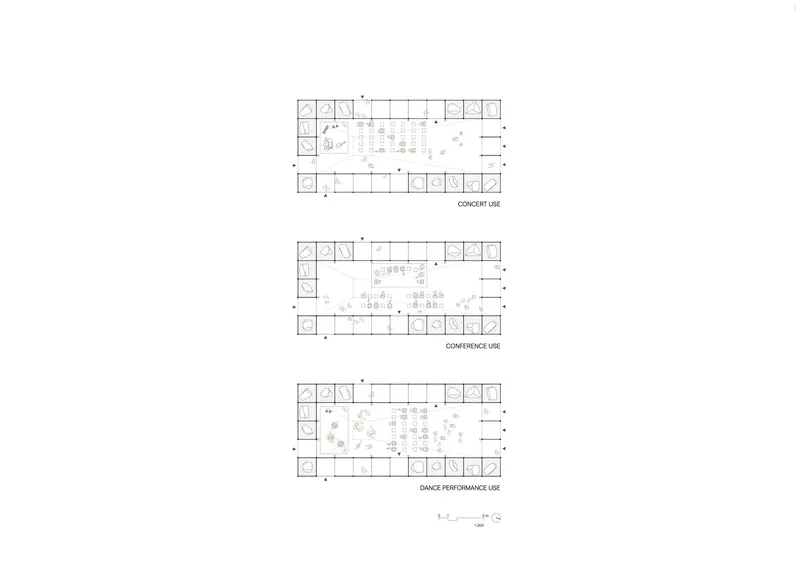
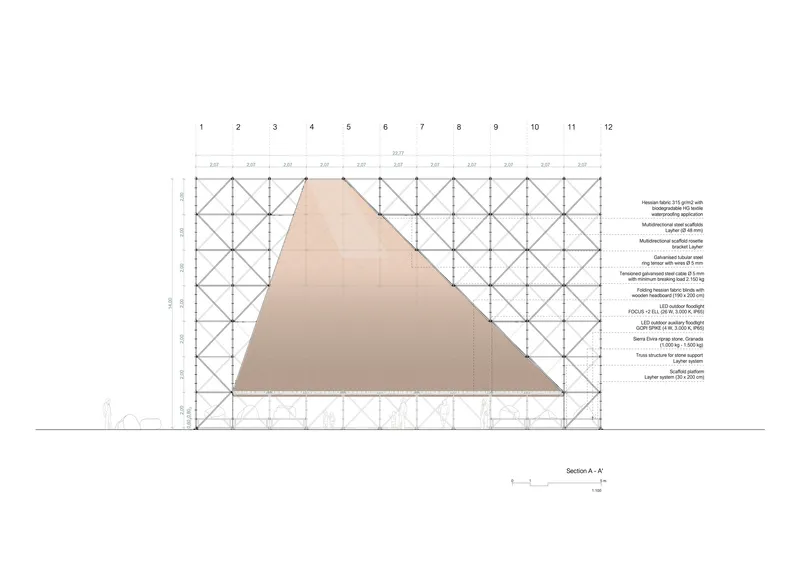
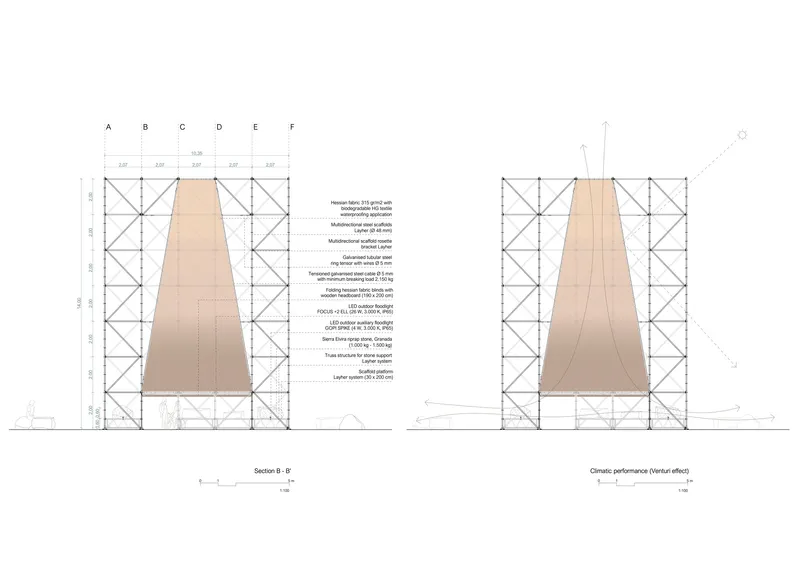
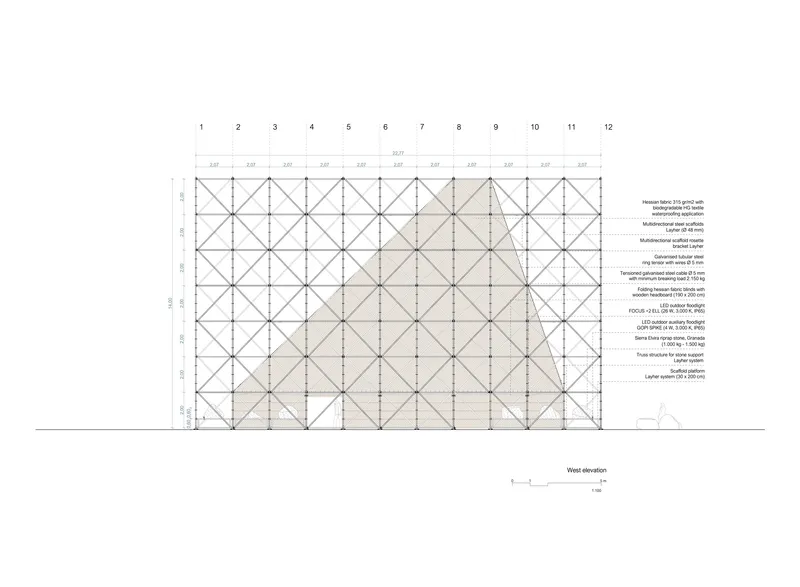
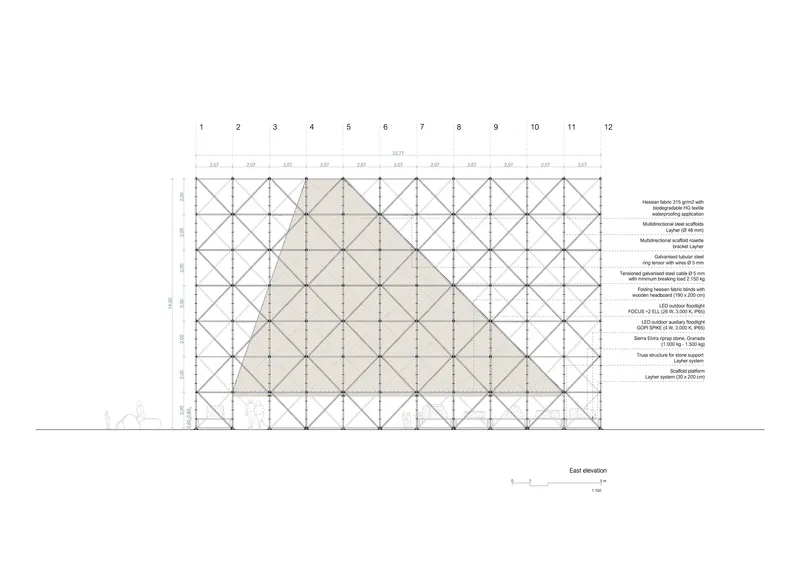
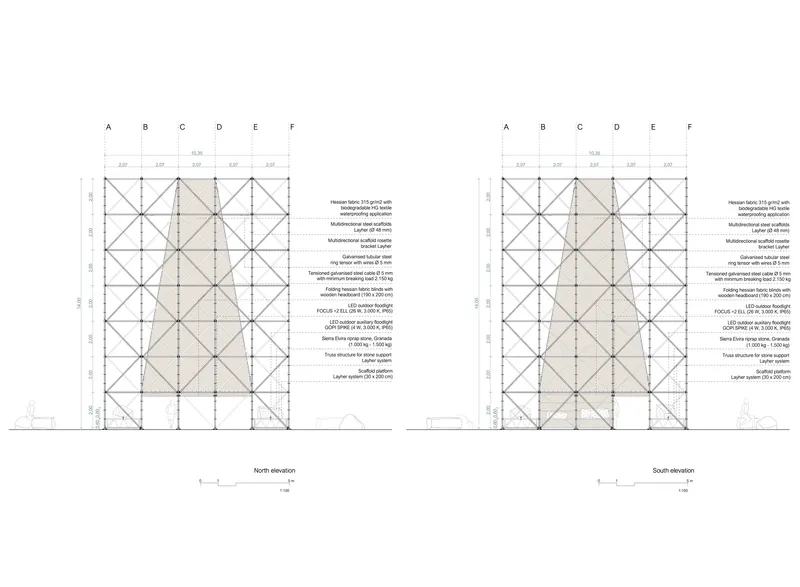
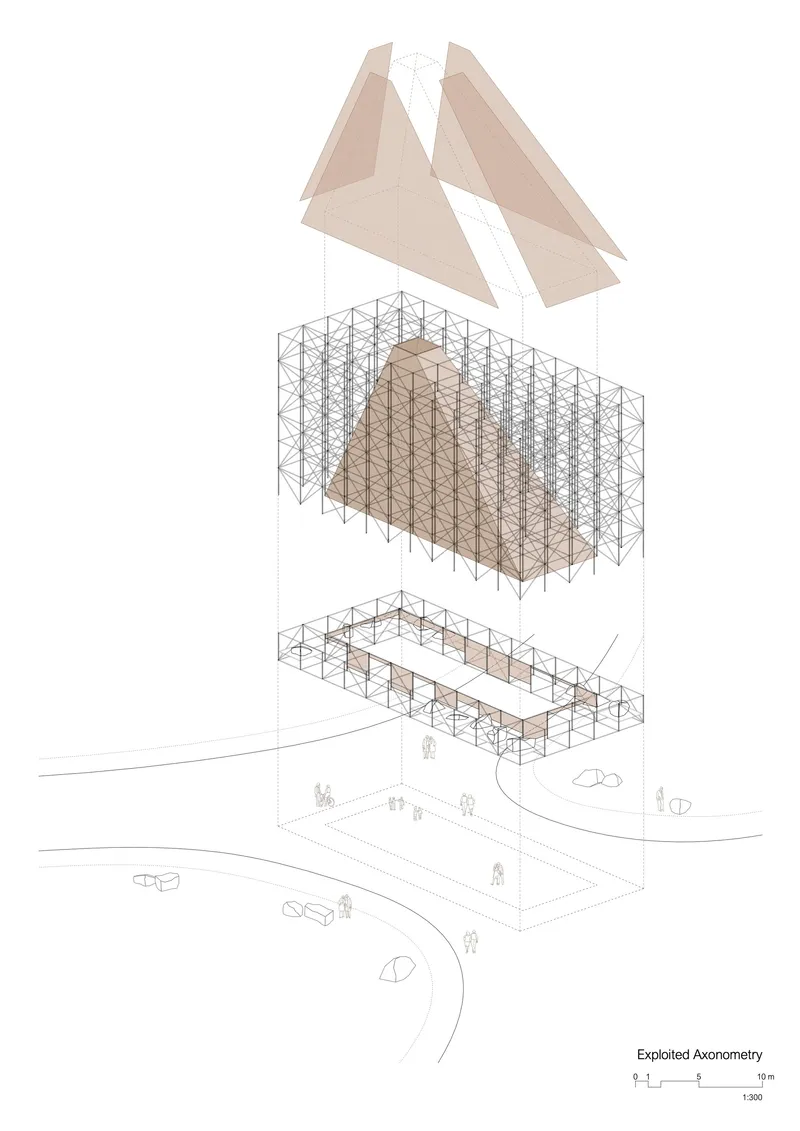
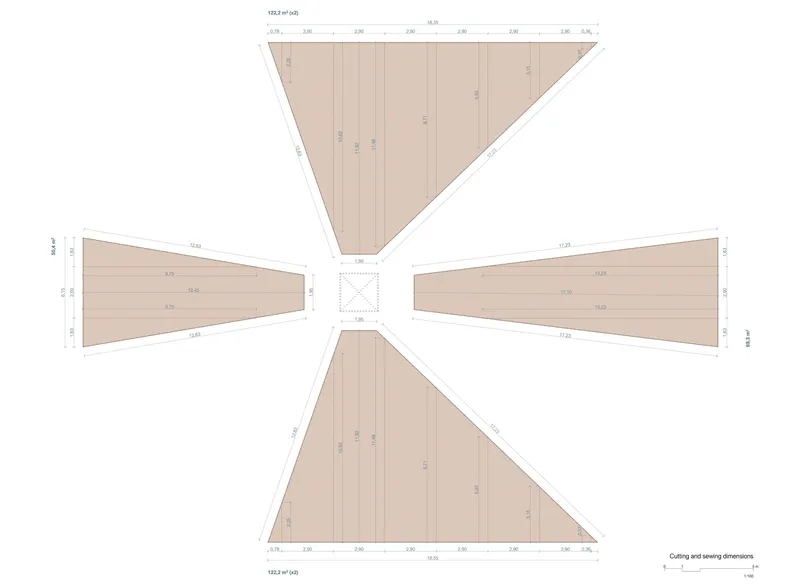
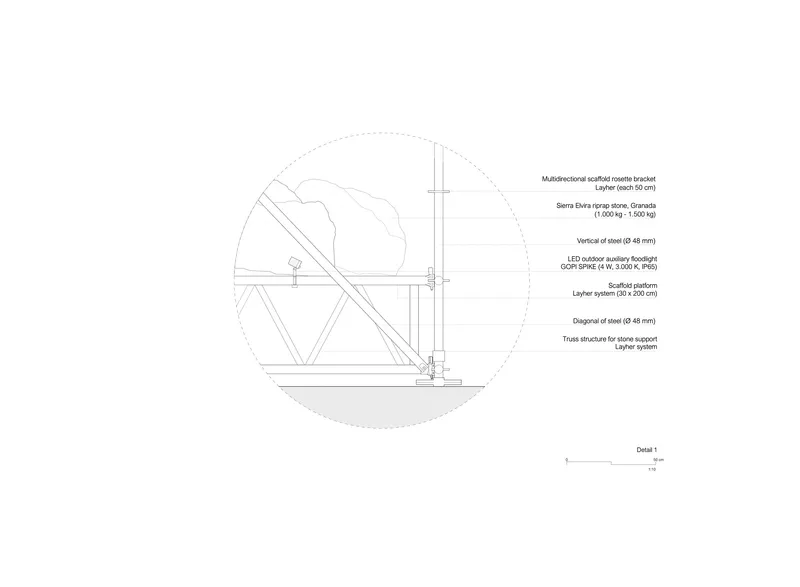
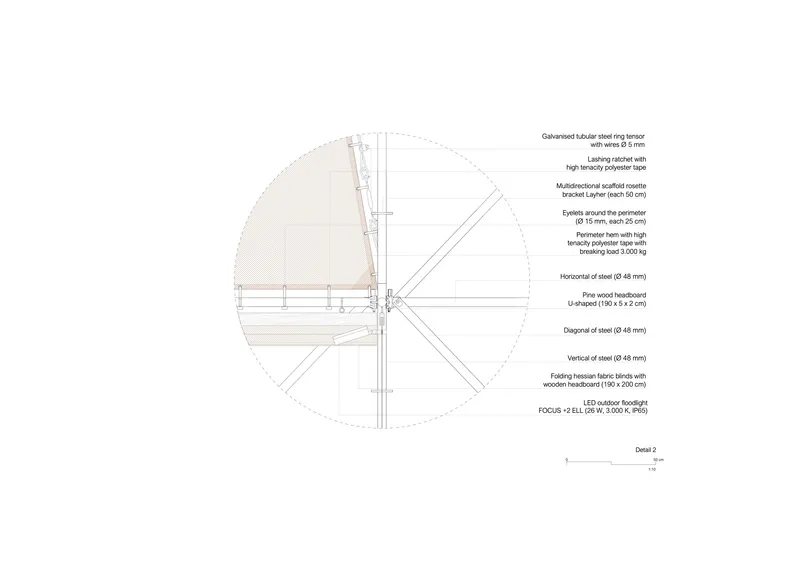
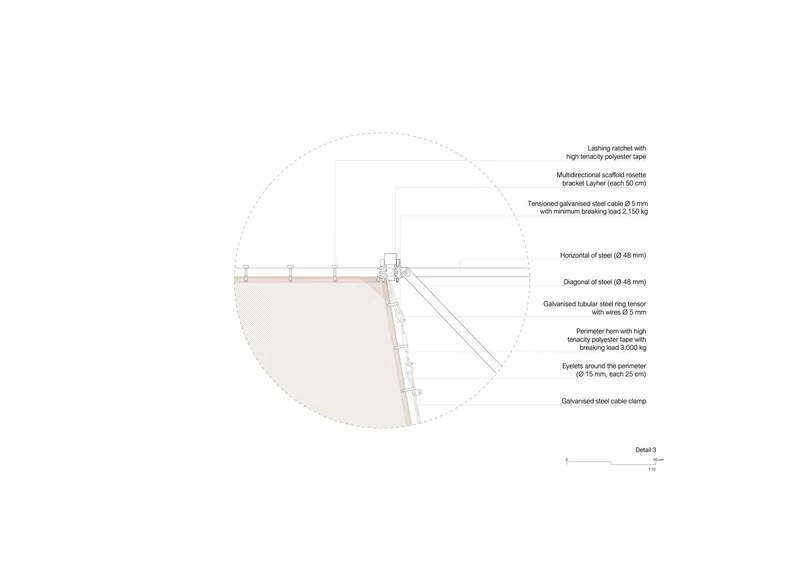
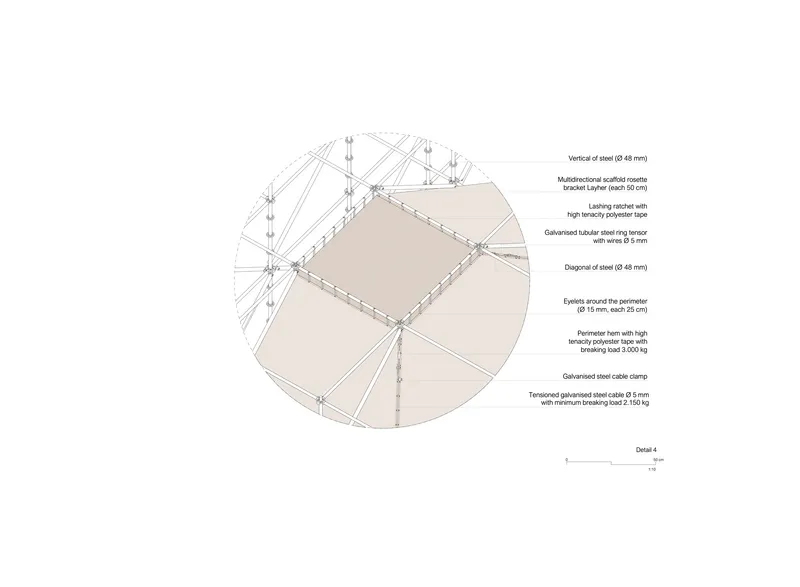
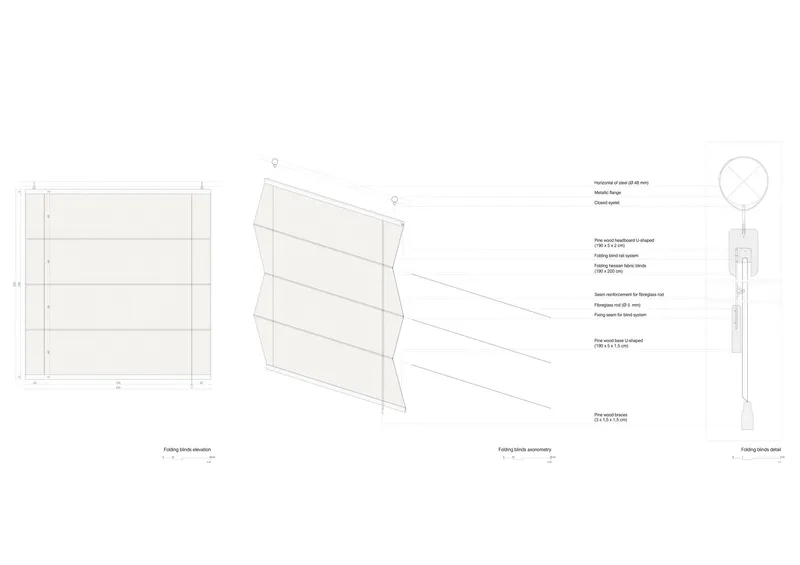
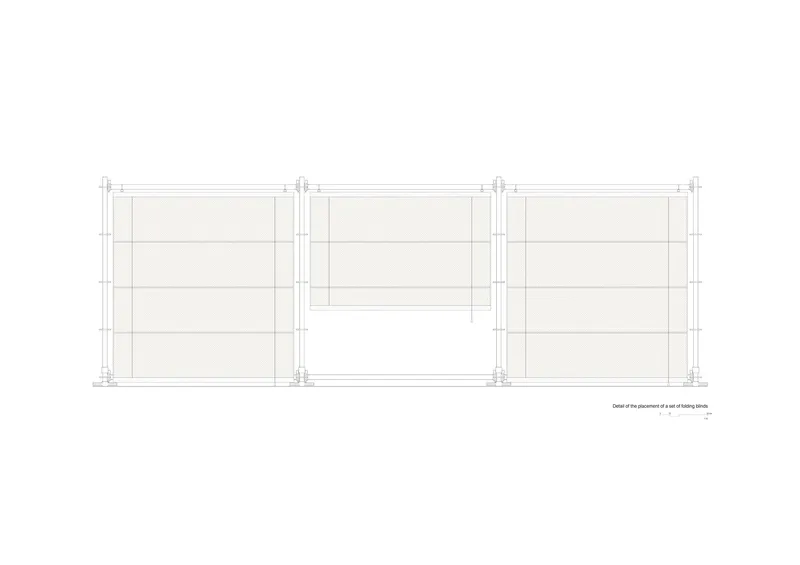
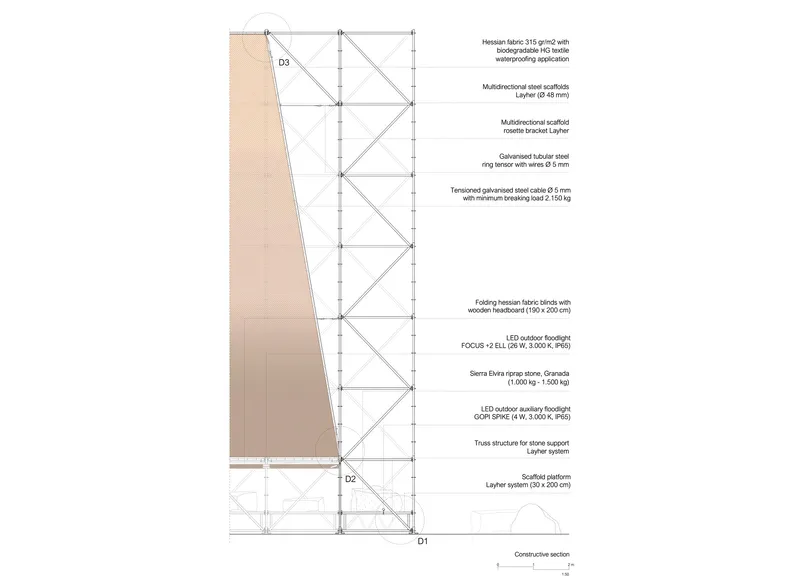
The drawing set reveals the rigor behind what could easily be mistaken for casual improvisation. The site plan shows the pavilion's precise placement between curved landscape features and circular paths in Plaza del Humilladero. Plan drawings illustrate three distinct programmatic configurations, from concert to conference to dance, demonstrating how the same footprint accommodates radically different uses. The exploded axonometric is particularly instructive, separating the four triangular roof panels from the scaffolding cage and the ground platform to expose the layered assembly logic.
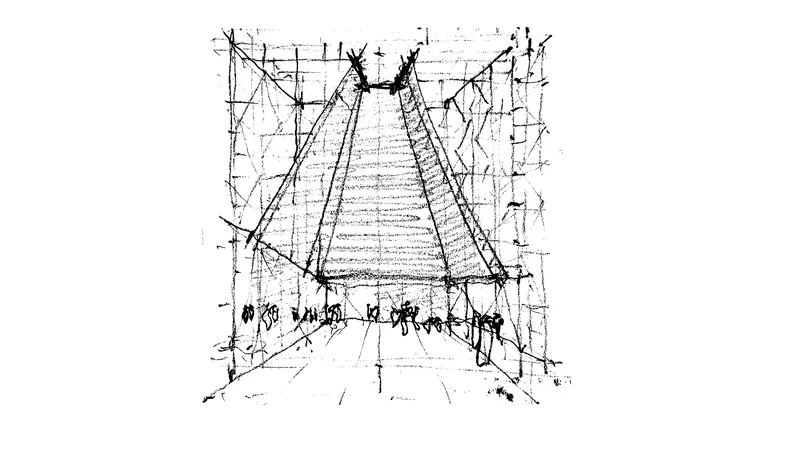
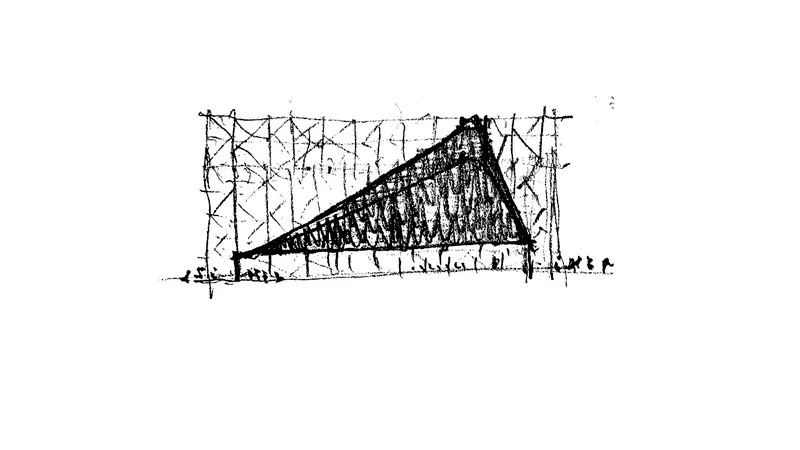
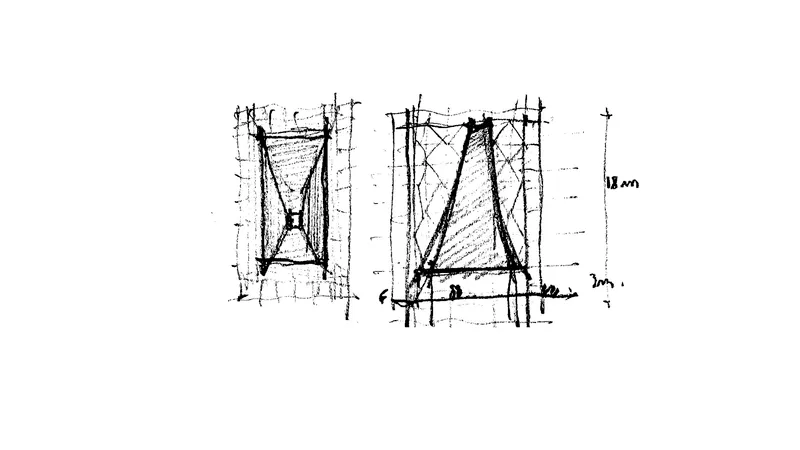
Sections confirm the steep triangular profile and show how the fabric skin is tensioned within the steel frame. Connection details at nodes, joints, and the central oculus opening demonstrate construction precision that belies the project's temporary status. The riprap counterweight drawings, complete with human figure for scale, remind us that these are not decorative boulders but engineered components. Early sketches of the sloped interior corridor suggest the architects were thinking about atmospheric experience from the outset, not just structural feasibility.
Why This Project Matters
The Aire Pavilion proposes a circular model for temporary architecture that most festival commissions ignore. Every significant material, scaffolding, stone, fabric, was sourced locally, used for one month, and returned or redeployed. The €90,000 budget bought not a disposable object but a temporary loan of materials that remain in productive circulation. If festival architecture has an environmental problem, it is precisely the assumption that short lifespan justifies cheap, throwaway construction. This project argues the opposite: brevity demands more care, not less.
Beyond its material ethics, the Aire Pavilion succeeds because it takes seriously the idea that architecture can be made from intangible elements. Air, light, and shadow are not metaphors here. They are the primary spatial experiences the structure delivers. The scaffolding and burlap are means, not ends. What you actually inhabit when you step inside is a calibrated atmosphere, warm filtered light, shifting geometric shadows, the smell of jute, open sky framed by a square oculus overhead. That is a rare achievement for any building, let alone one that existed for only 31 days.
Aire Pavilion by P + S Estudio de Arquitectura, led by Francisco Parada and Laura R. Salvador. Located in Plaza del Humilladero, Granada, Spain. 2,540 sq ft. Completed 2022. Photography by Imagen Subliminal (Rocío Romero + Miguel de Guzmán) and Javier Callejas.
About the Studio
Share Your Own Work on uni.xyz
If projects like this are the kind of work you want to make, uni.xyz is a place to publish your own, find collaborators, and enter design competitions.


Popular Articles
Popular articles from the community


Faces of the Soviet Avant-Garde: Turning Moscow's Street Names into an Open-Air Museum
A network of sculptural installations across a Moscow residential district transforms forgotten architect names into spatial encounters with cultural memor

The Amber Palace Opera: A Geological Fiction Surfaces on Tallinn's Baltic Waterfront
Pierre Brillard reimagines a Baltic legend as a public landscape, opera house, and waterfront promenade rooted in Tallinn's coastal identity.

Opera by the Sea Estonia: Three Shells Dissolving Architecture into Tallinn's Coastline
A winning opera house proposal replaces monumental form with interconnected shells that blur the boundary between building, park and Baltic Sea.

Manzana Morphosis: Stretching Barcelona's Grid into a Living Landscape for 2050
A radical reworking of the Eixample manzana turns density into a tool for generous public space, vertical ecology, and environmental performance.

Similar Reads
You might also enjoy these articles

Pixel Gardens: One Repeated Module Stacked Into a Terraced Social Housing Tower for Famagusta
Salem Bader's shortlisted housing tower builds a vertical neighbourhood from one repeated module, offsetting units to carve terraces, light and air.

Bao Huynh Watercolor Atelier: A Serene Art Retreat in Hội An
Bao Huynh Watercolor Atelier in Hội An blends multifunctional art spaces, sustainable design, local materials, and family-friendly living in a serene environment.

Atelier Macri Concept Store Interior Design by CASE-REAL
Atelier Macri store features a "ko" counter, walnut wood details, cork displays, blending retail, gallery, and seamless customer experiences.

Manuel Vargas Izquierdo Stadium and High-Performance Sports Center: Architectural Excellence in Jalpa de Méndez
The Manuel Vargas Izquierdo Stadium blends sustainable design, inclusive sports facilities, and cultural-inspired architecture, revitalizing Jalpa de Méndez’s public spaces.

Explore Scaffolding Competitions
Discover active competitions in this discipline

Challenge to design a portable theatre

Challenge to design a portable music platform

Challenge to design an open learning module for the elderly

Challenge to design luxury tourism on rails
Comments (0)
Please login or sign up to add comments
No comments yet. Be the first to comment!