

Peng’s House by L&M Design Lab: A Rural-Urban Architectural Harmony in Qidong
Peng’s House blends tradition and modernity, creating a multigenerational rural home that respects cultural heritage and contemporary lifestyles.


A Multigenerational Home Bridging the City and Countryside
After achieving early retirement (FIRE), Mr. Peng—born in the 1980s—chose to return to his rural hometown of Qidong with his wife and children to live with his aging parents. This intergenerational shift catalyzed the transformation of his family’s traditional countryside home into a dynamic residence that harmoniously blends rural customs with modern urban lifestyles.
Peng’s House is more than a renovation—it’s a spatial narrative that respects local building codes, cultural rituals, and multi-generational living needs, all within the confines of a 90 m² foundation.
Designing Within Limits: Reinterpreting the Rural “Matchbox”
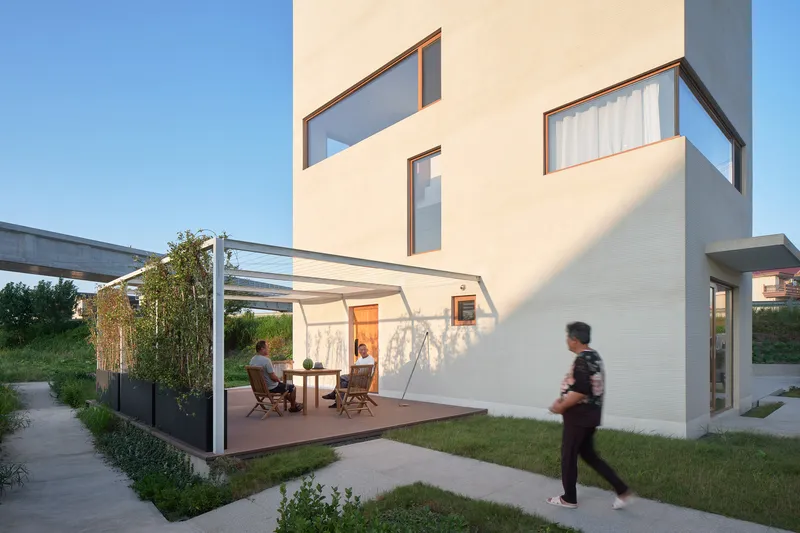
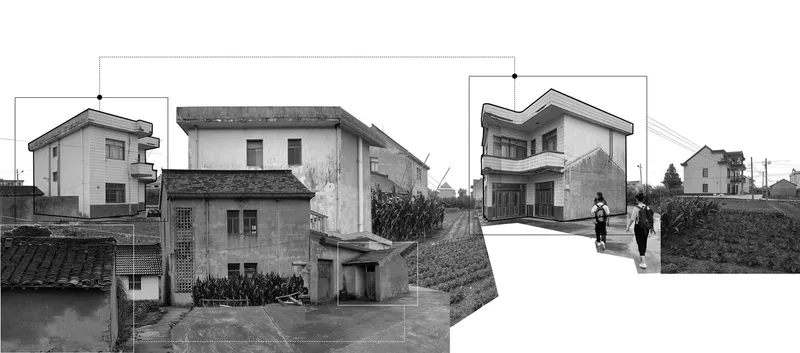
The original house, built in the 1980s, followed a basic rural “matchbox” typology that once defined homes across the Yangtze River delta. Qidong’s strict rural planning regulations required the architects to retain the original building’s footprint and facade proportions. Thus, L&M Design Lab approached the project as a sensitive renewal rather than a complete rebuild—resulting in a minimalist, contextual redesign that speaks to both memory and modernity.
Fortress and Sanctuary: A Home at the Edge of the Village
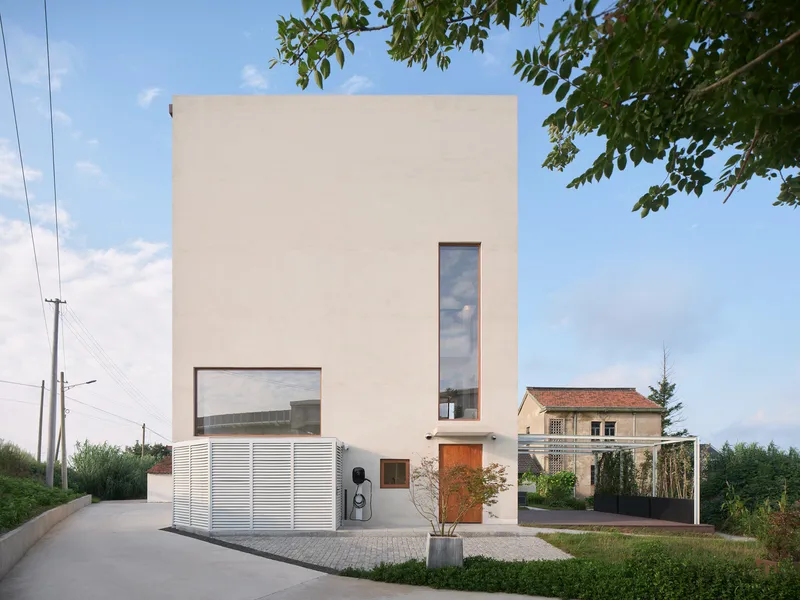
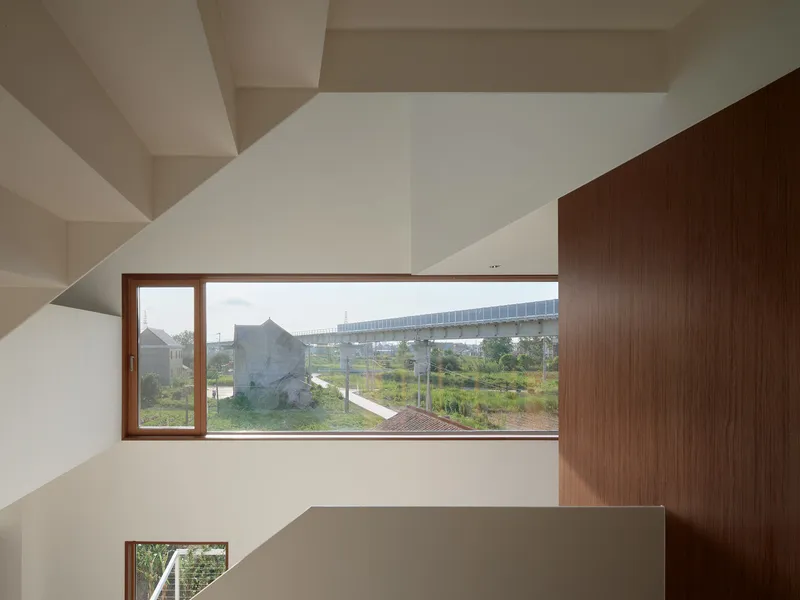
Positioned at the end of a village and bordered by the highway and railway, the new design avoids openings on the east and north elevations. Instead, windows open toward the village to the south and west, cultivating privacy and tranquility while fostering community connections. This defensive orientation acts as a symbolic resistance to unchecked urbanization, creating a peaceful refuge for the family.
Adaptive Strategies and Cultural Continuity
Despite careful planning and community diplomacy, village disputes forced the demolition of auxiliary structures like the chicken coop and firewood house. In their place, a grape arbor was introduced, continuing the family’s tradition of social gatherings. Mr. Peng’s father now hosts neighborhood mahjong games beneath its shade—preserving a social ritual in an open-air format.
Rural Customs Meet Spatial Evolution
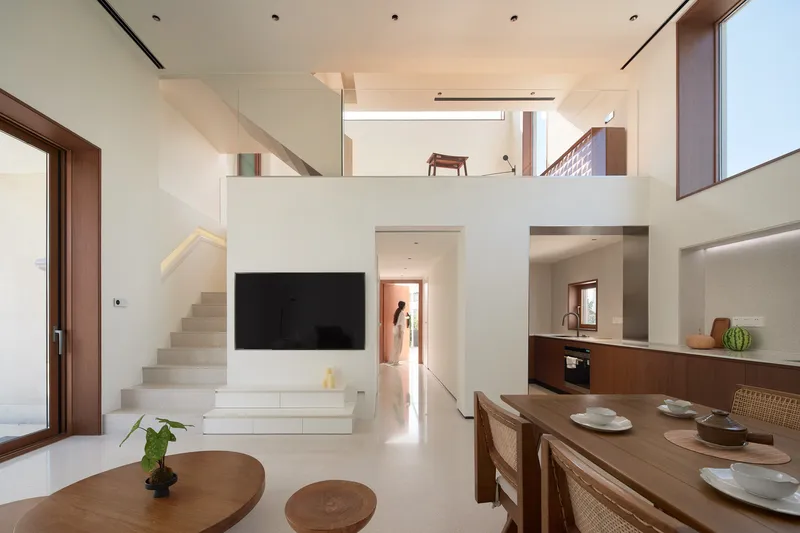
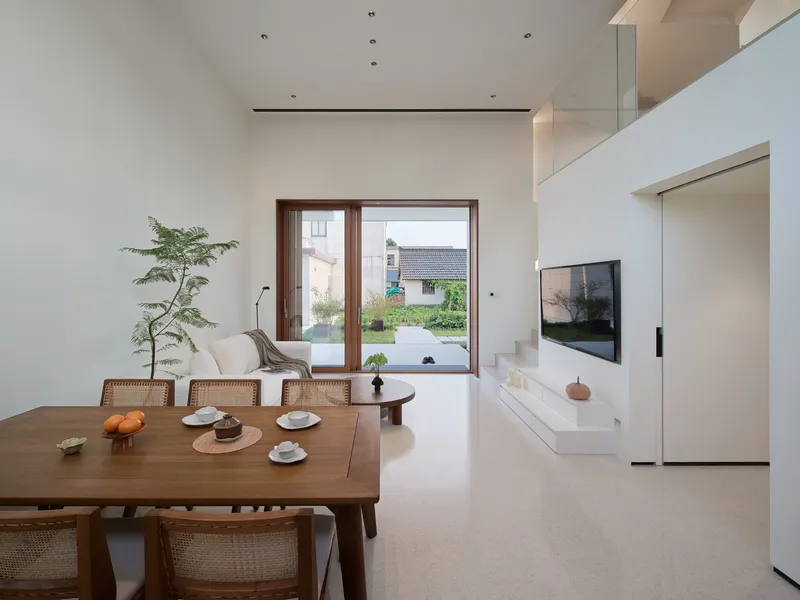
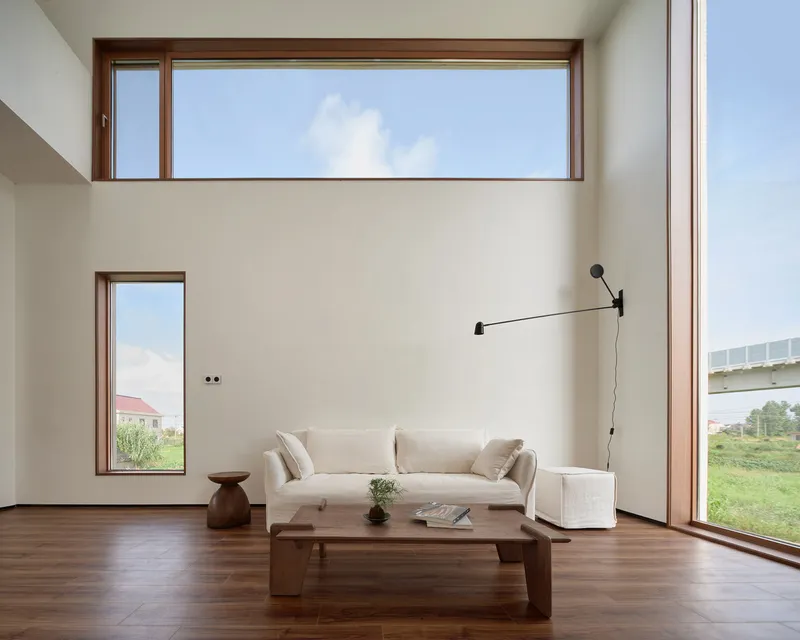
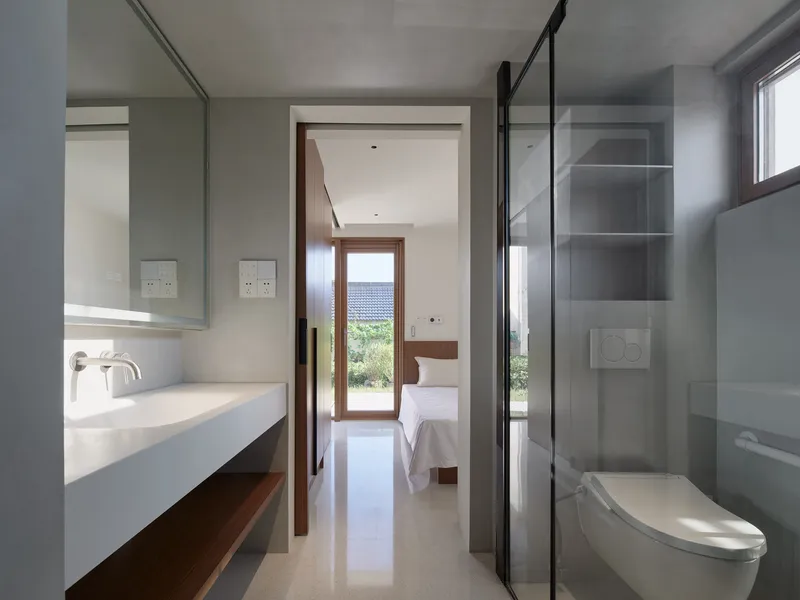
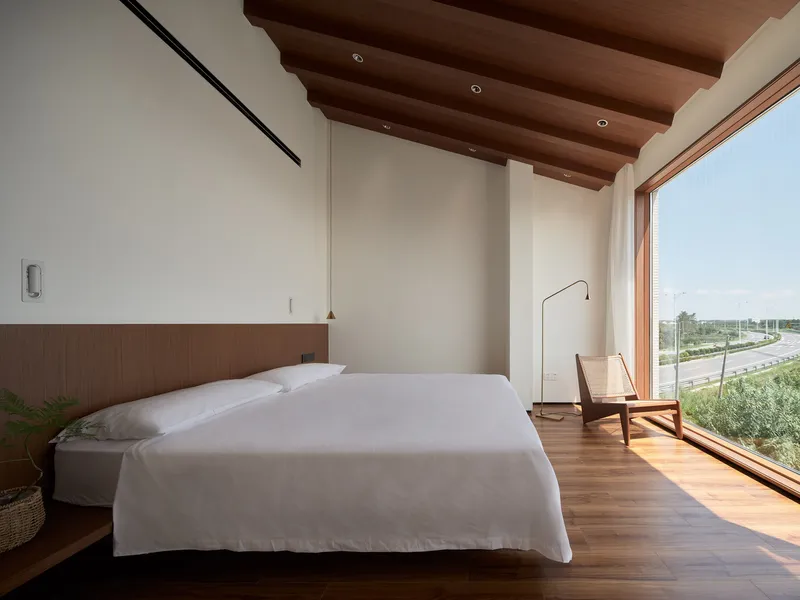
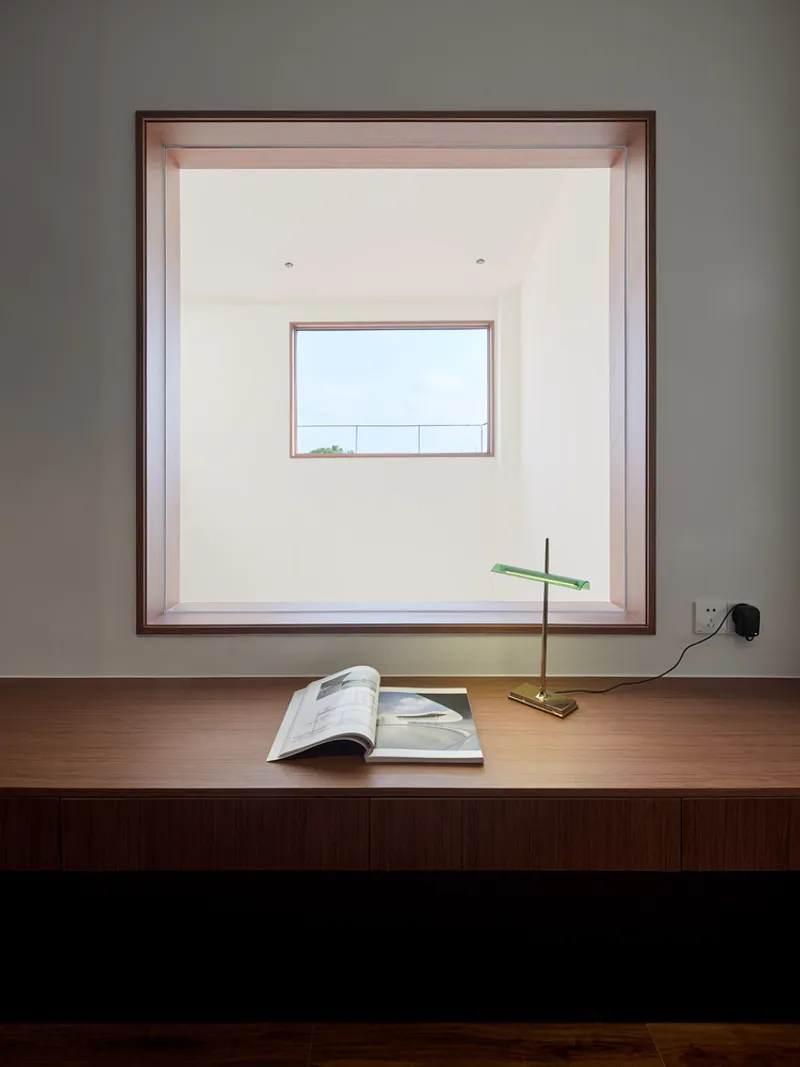
At the core of the residence is a hall and compartment layout, a traditional rural configuration used for ancestral worship, funerals, and gatherings. This symbolic architectural gesture grounds the home in cultural values. The redesign replaces former spiritual elements with modern comforts: the incense burner view is now a window framing blue skies, and the hall becomes a communal western-style kitchen.
The terrazzo floors—identical to the original—offer a low-maintenance, familiar material for the elderly, blending utility with sentiment.
Intergenerational Layers: A Vertical Separation of Lives
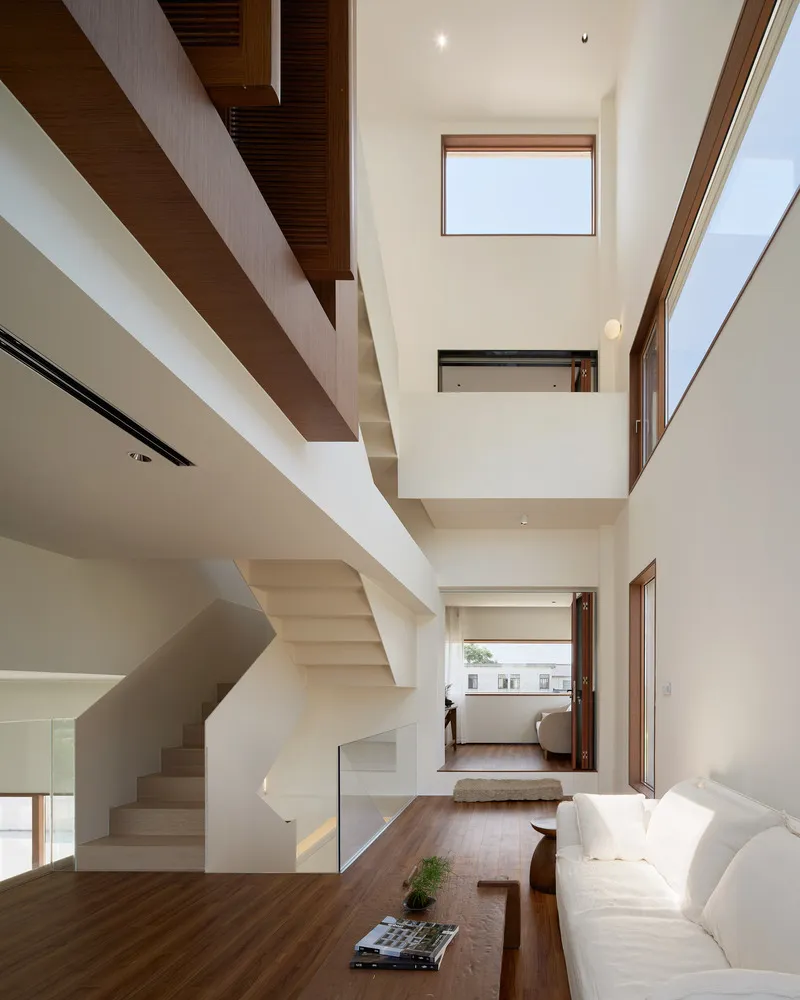
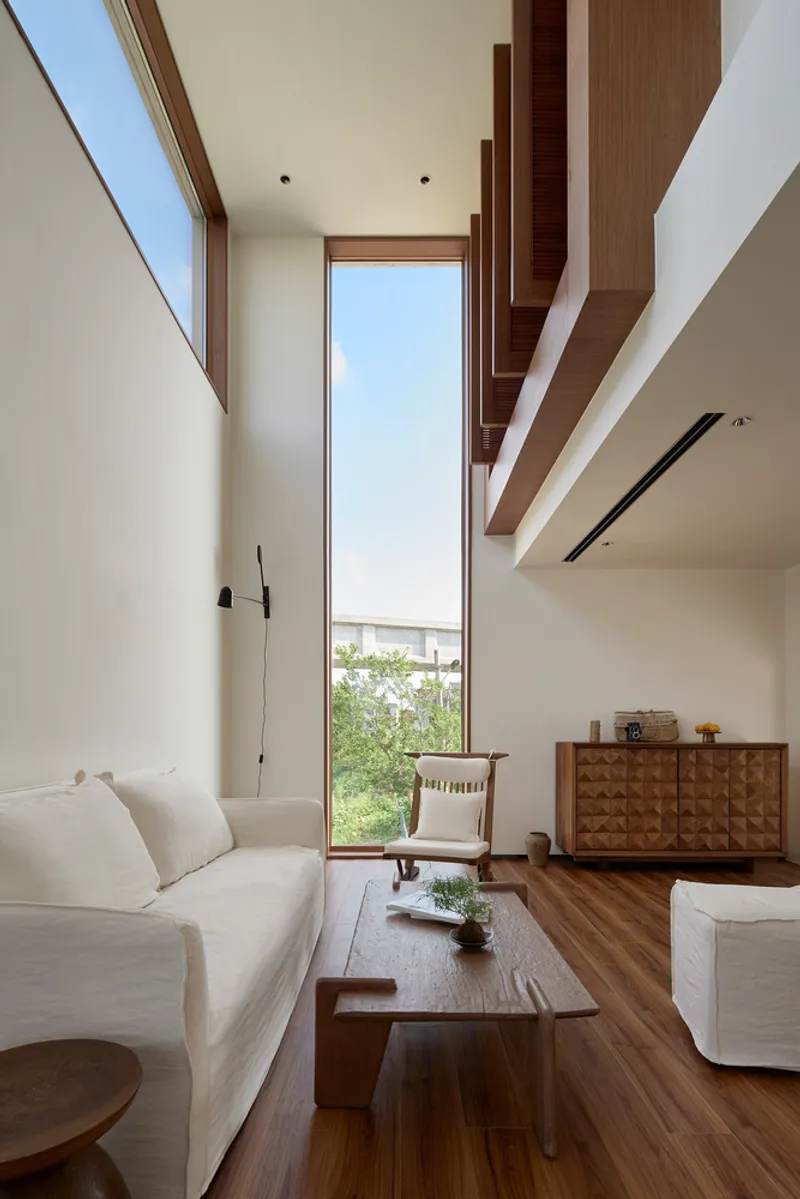
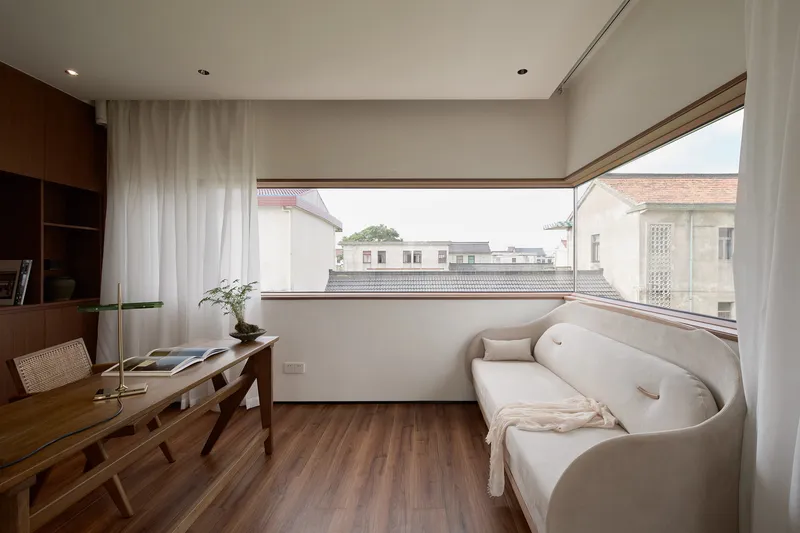
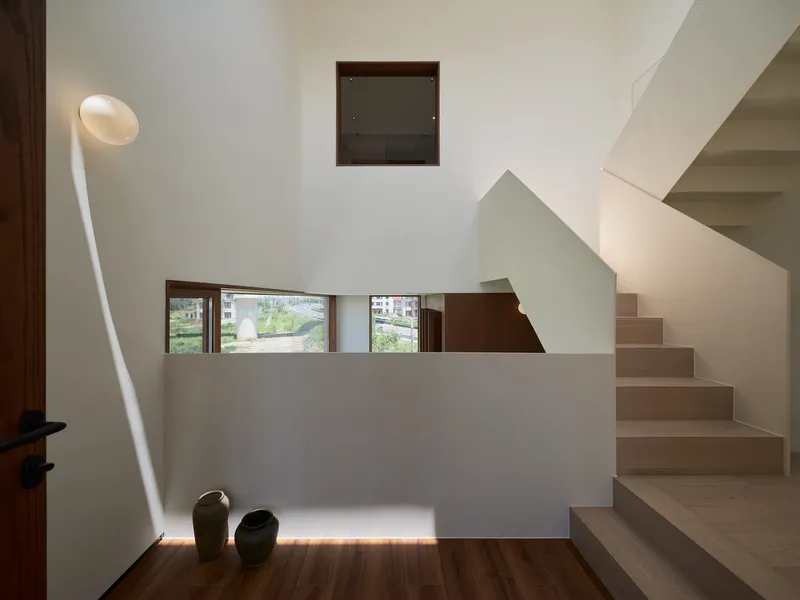
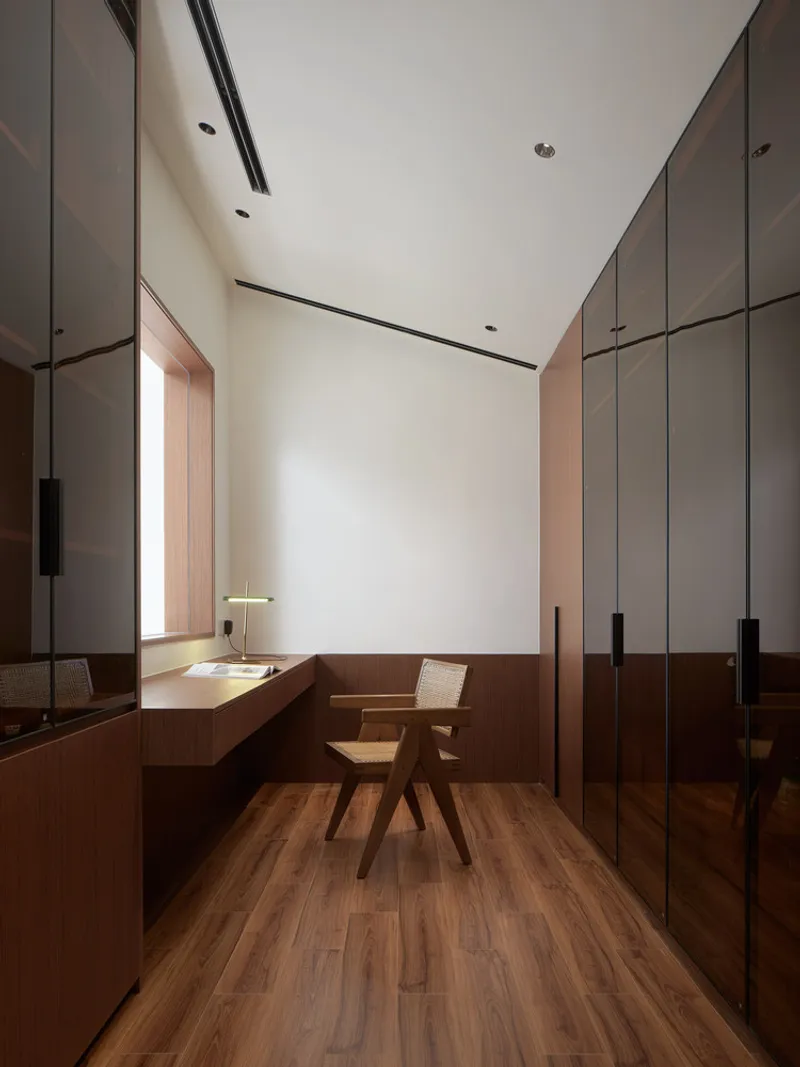
Above the ground floor lies the domain of the post-80s generation. Each level represents a layer of privacy, with staggered platforms introducing semi-detached living quarters, study rooms, and bedrooms for each family member. While visually only 2.5 stories high, the house actually spans four interwoven levels—a clever spatial play by L&M Design Lab to accommodate independence and intimacy simultaneously.
This vertical segmentation reflects evolving family dynamics, where private spaces for work, relaxation, and digital media have become central to modern living.
Architectural Symbolism and Poetic Details
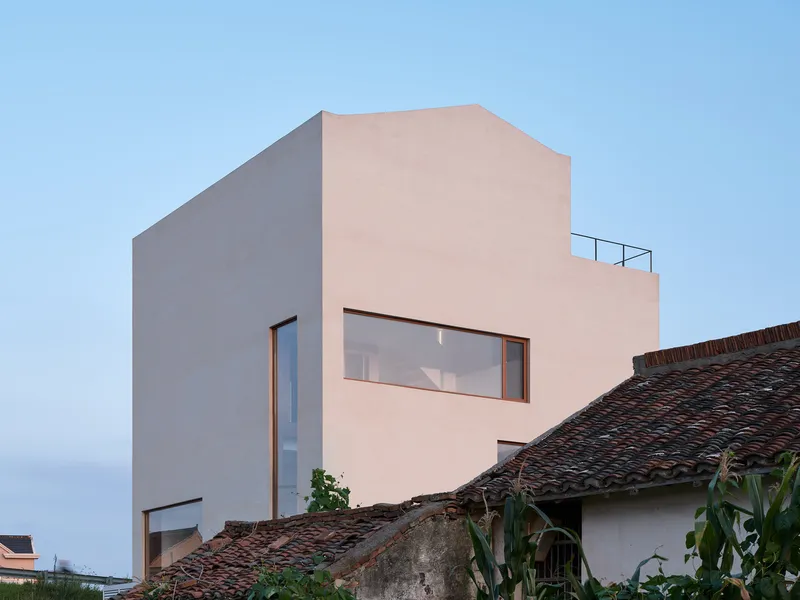
The upper floors feature diagonal balconies and windows that intersect like an “X” across the south facade. This geometric layering blurs the boundaries between interior and exterior, horizontal and vertical, urban and rural. The effect is poetic—a home that welcomes light, air, and layered views, while subtly dissolving the rigid boxy outline of the original rural typology.
The western gable wall, softened with layered openings, expresses the home’s internal dynamics outwardly, serving as both a metaphor and literal translation of transparent family life.
Crossing House: A Home at the Cultural Intersection
Nicknamed the Crossing House, the design reflects its metaphorical and physical placement—between tradition and modernity, between generational values, and between the city and the village. Mr. Peng, now a stock market investor, likens the home’s staggered levels to the upward curves of a bullish market—an optimistic architecture for a future grounded in heritage.
L&M Design Lab has created not just a home, but a cultural artifact—a reinterpretation of vernacular architecture that accommodates changing societal norms without severing its historical roots.
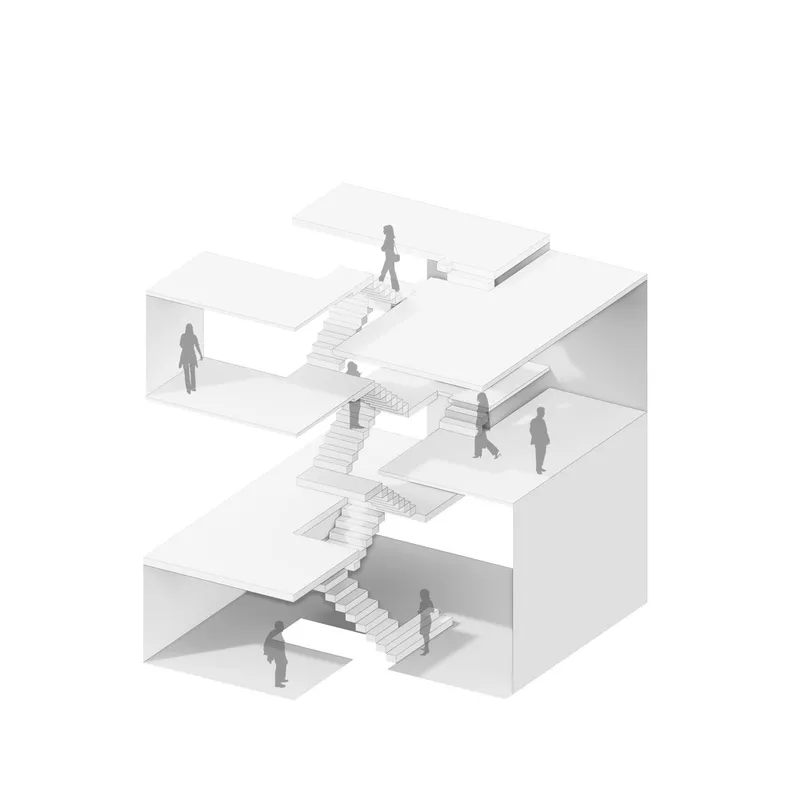
All Photographs are works of Qingyan Zhu.



Popular Articles
Popular articles from the community


Conexión: Biophilic Design Reimagines High-Rise Living in Hong Kong
Conexión reimagines high-rise living in Hong Kong through biophilic design, green facades, shared spaces, daylight, water and nature within.
EW PARK: Sustainable Architecture Reimagines the Future of Urban Parking
EW PARK reimagines city parking as a modular wooden tower combining automation, solar energy, electric mobility, and adaptable urban design.

The Ocean Hive: Sustainable Architecture for a Self-Sufficient Civilization at Sea
The Ocean Hive imagines sustainable architecture at sea, where modular habitats, algae, wave power and ocean waste sustain a growing colony.

Hill & Cross Opera: Sculptural Opera House Architecture Shaped by Tallinn’s Landscape and Identity
Hill & Cross Opera reimagines opera house architecture in Tallinn through its sculptural hill, civic plaza, glass wave and a luminous cross.

Similar Reads
You might also enjoy these articles


Hodi-Mandai Geram
Project Function: Preservation and revitalization of the Intangible heritage and socio-spatial identity of the Hodi by Housing, Cultural Memory Center, Sacred Grove, landscape, local tourism economy


Olio Towers: A Mid-Rise for Performers That Fuses Housing, Rehearsal, and Stage
Located blocks from Houston's Theater District, this modular tower stacks living units around a central performance atrium.

Oasis: Modular Green Housing Carved into Dhaka's Urban Fabric
A shortlisted Plugin Housing entry reclaims unauthorized settlements in Dhaka with stepped concrete volumes, green roofs, and ventilation-driven design.

Black Hole: A Floating Megastructure for the Post-Physical Era
Emiliano Mazzarotto envisions a spherical, self-scaling arena where e-sports, digital hotels, and holographic stadiums replace traditional public space.

Explore Housing Competitions
Discover active competitions in this discipline



Challenge to reimagine the Iron Throne


Photograph architecture without architects


Illustrate the lost glory of Angkor Wat - Render Challenge


Design challenge to reuse E-waste
Comments (0)
Please login or sign up to add comments
No comments yet. Be the first to comment!