

Pessoal House by COM/O atelier in Lisbon: Adaptive Reuse Architecture Redefining Cemetery Spaces
Adaptive reuse transforms Lisbon cemetery building into light-filled refuge, blending function, emotion, and contemporary architecture for workers’ well-being.


The Pessoal House, designed by COM/O atelier, stands as a compelling example of adaptive reuse architecture in Lisbon, redefining how neglected service buildings can be transformed into meaningful, human-centered spaces. Located within the historic Alto de São João cemetery, this project bridges the symbolic divide between life and death, offering a carefully considered architectural response to a unique and emotionally charged context.
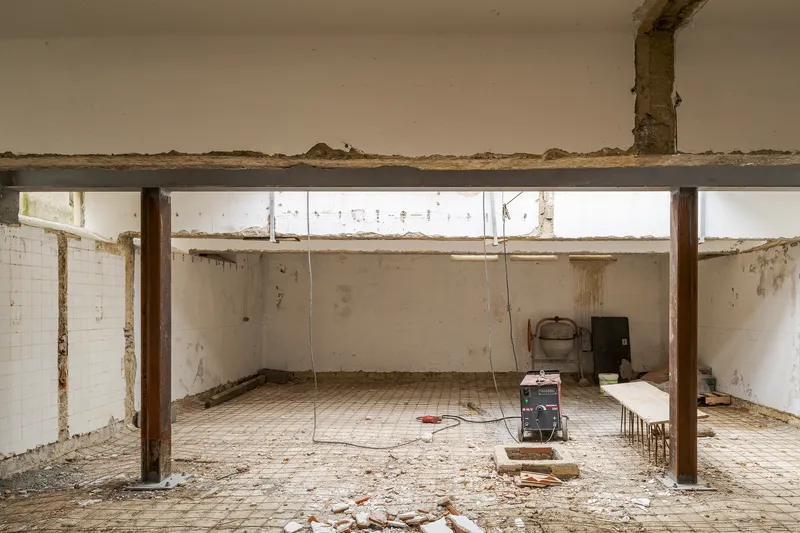
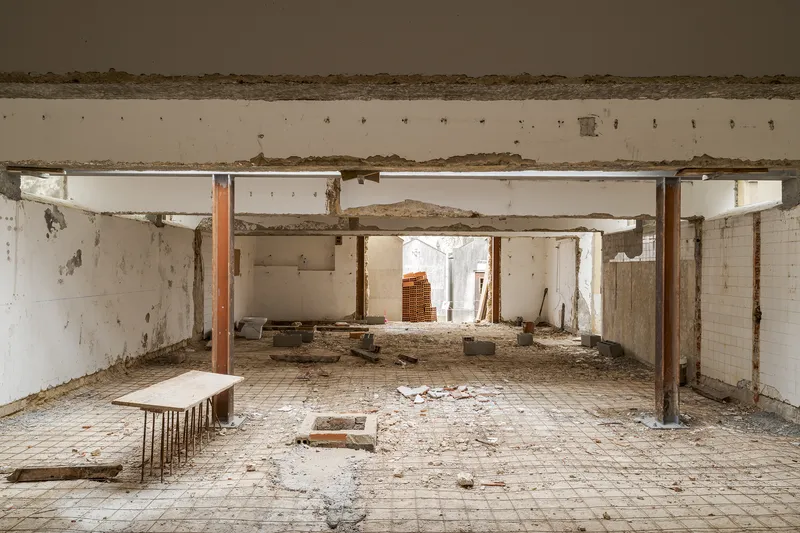
Originally functioning as changing rooms for crematorium workers and a small maintenance workshop, the building had fallen into severe disrepair. Poor spatial conditions, inadequate ventilation, and outdated facilities made it unsuitable for its users. The architects approached the project not simply as a renovation, but as an opportunity to rethink how architecture can support the daily lives of individuals working in proximity to death.
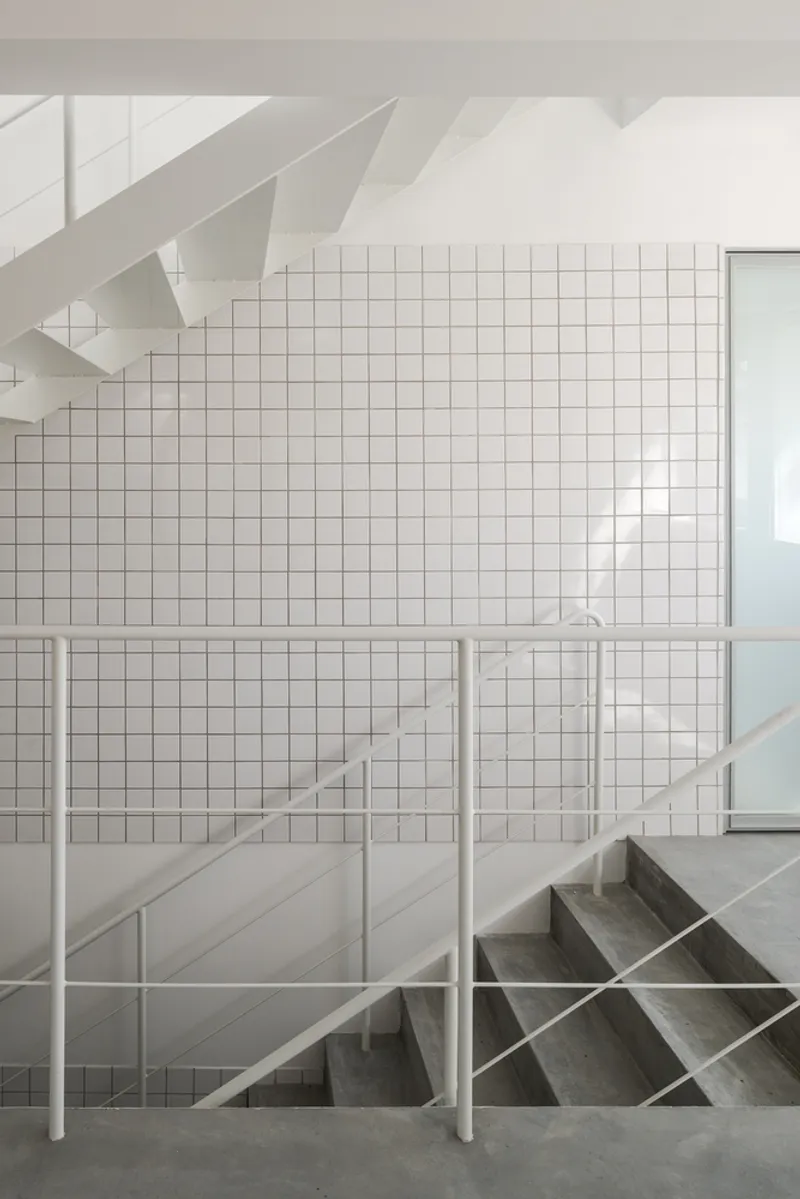
This Portugal residential renovation project is not a traditional home, but rather a hybrid functional space: one that serves workers while creating a sense of refuge, dignity, and calm within a cemetery environment.
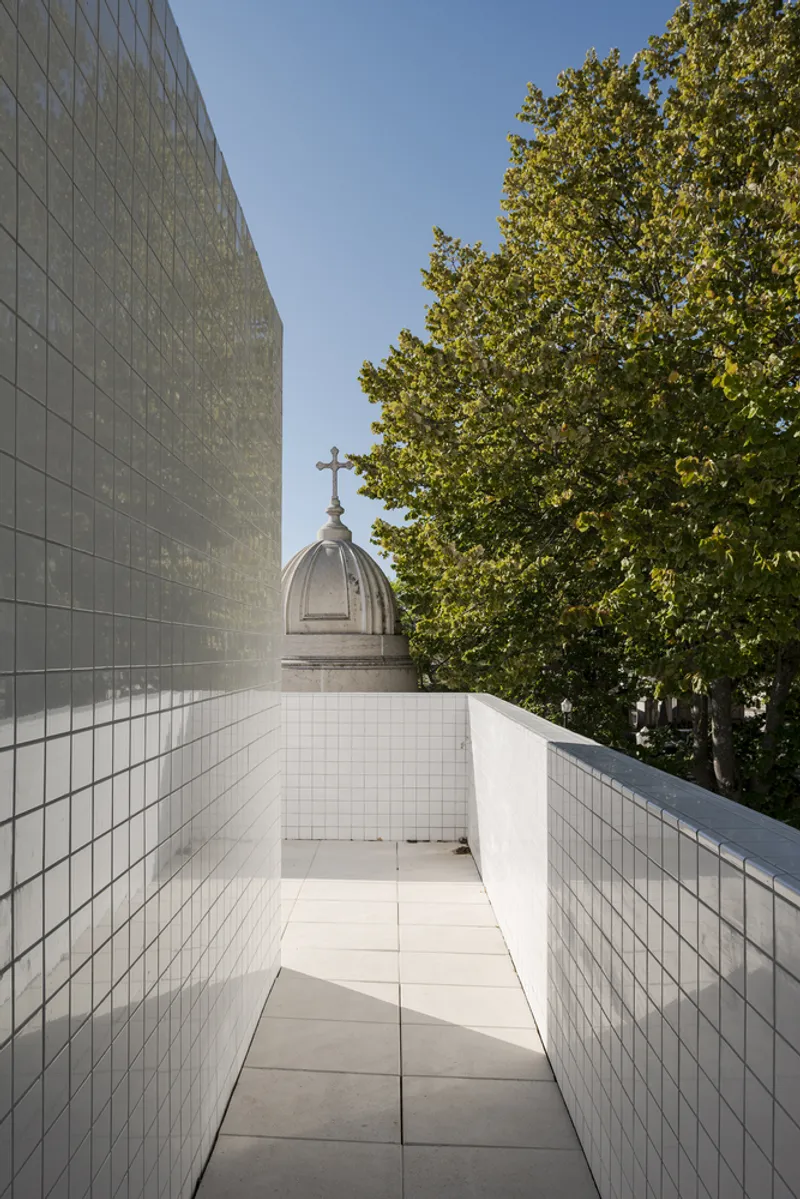
Context-Driven Design: Architecture Between Life and Death
Designing for Human Experience in a Cemetery Setting
The conceptual foundation of Pessoal House revolves around a powerful question: how can architecture improve the daily experience of those who work surrounded by death? The project addresses this by creating a spatial narrative that emphasizes light, openness, and psychological comfort.
Situated in Lisbon’s Alto de São João cemetery, the building overlooks the Tagus River, introducing a rare visual and emotional connection to nature. This relationship between architecture and landscape becomes central to the design strategy, transforming the building into a place of pause and reflection.
Rather than reinforcing the somber atmosphere of the cemetery, the architects sought to introduce life-affirming spatial qualities, making the building an “escape within a place of mourning.”
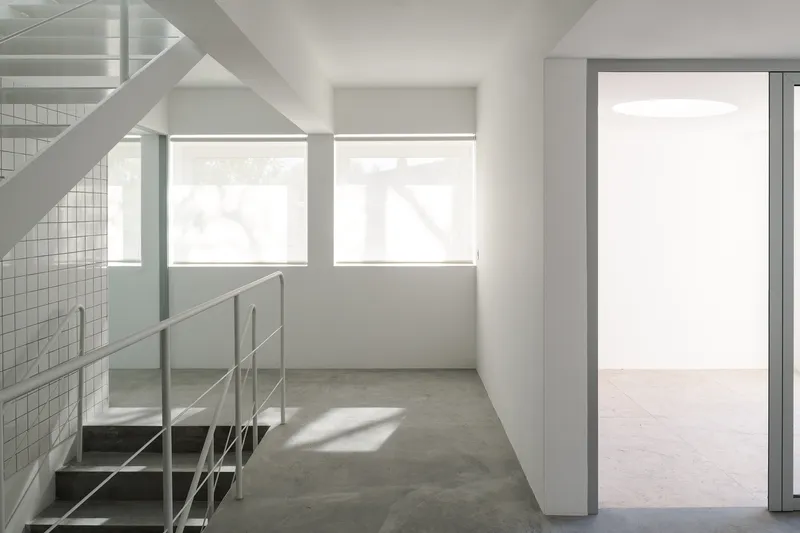
Preserving Structure While Reinventing Interior Functionality
Retaining the Existing Architectural Rhythm
A key feature of the project is the preservation of the building’s original structural rhythm, defined by evenly spaced windows along the facades. This consistent metric becomes the organizing principle for the redesigned interior layout.
By maintaining the external facades, COM/O atelier ensures continuity with the historical context while focusing interventions on the interior and roof. This approach aligns with sustainable architecture principles, minimizing demolition and preserving embodied energy.
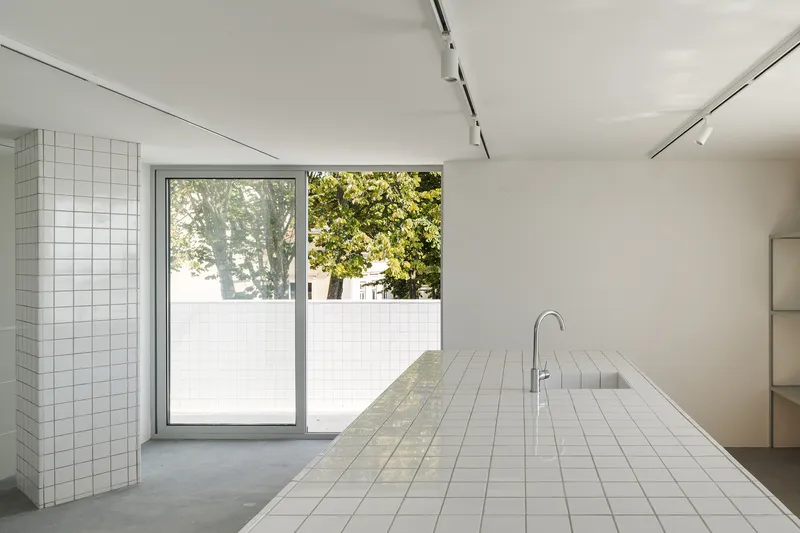
Reorganization of Program and Circulation
The building’s functionality was completely reimagined to improve usability and health conditions. The architects introduced a clear vertical zoning strategy:
- Ground Floor: Dedicated to workshop and storage spaces, accessible from the lower street level
- First Floor: Houses changing rooms and staff facilities, now relocated to a healthier, better-ventilated environment with access from the upper street
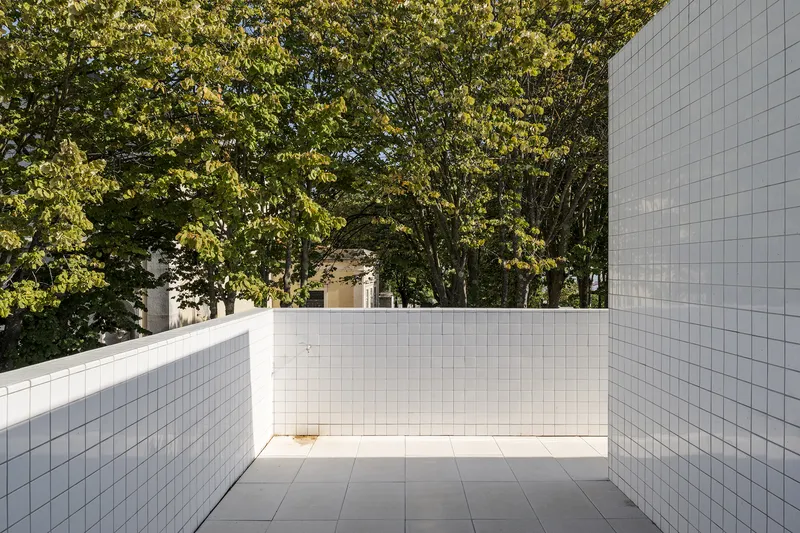
- Third Floor Addition: A new communal level featuring a kitchen, rest area, and terrace overlooking the Tagus River
This reconfiguration enhances both circulation efficiency and spatial hierarchy, ensuring that each function operates independently yet cohesively within the overall structure.
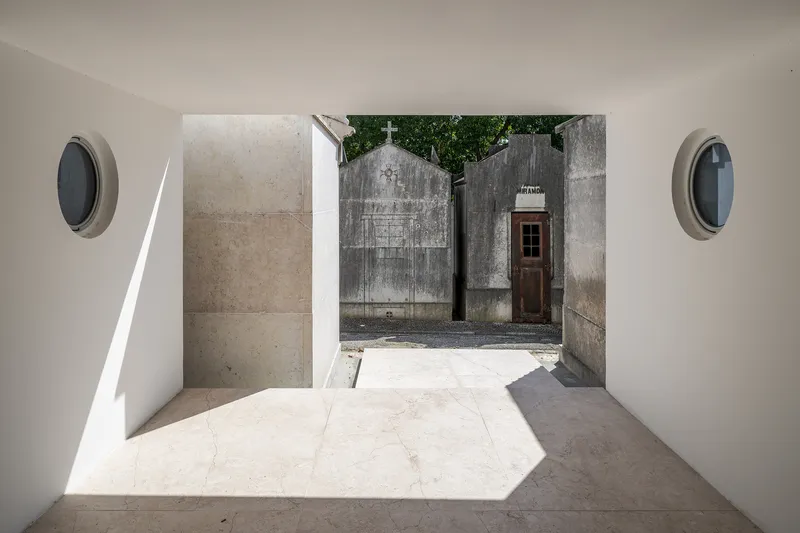
The Central Box Concept: Spatial Innovation in Interior Design
A Core Element That Defines Movement
One of the most distinctive features of Pessoal House is the introduction of a central rectangular “box” within the first floor. This volume contains the changing rooms and is deliberately positioned away from the existing facades.
This design move creates a circulation loop around the central core, allowing users to move freely while maintaining privacy within the changing spaces. The separation between the core and the outer shell also enhances ventilation and natural light distribution.

Extending the Concept Vertically
The central box concept is echoed in the design of the newly added third floor. This continuity reinforces the architectural language of the project, creating a cohesive spatial identity across all levels.
The result is a layered architectural experience, where interior volumes interact dynamically with the existing structure.
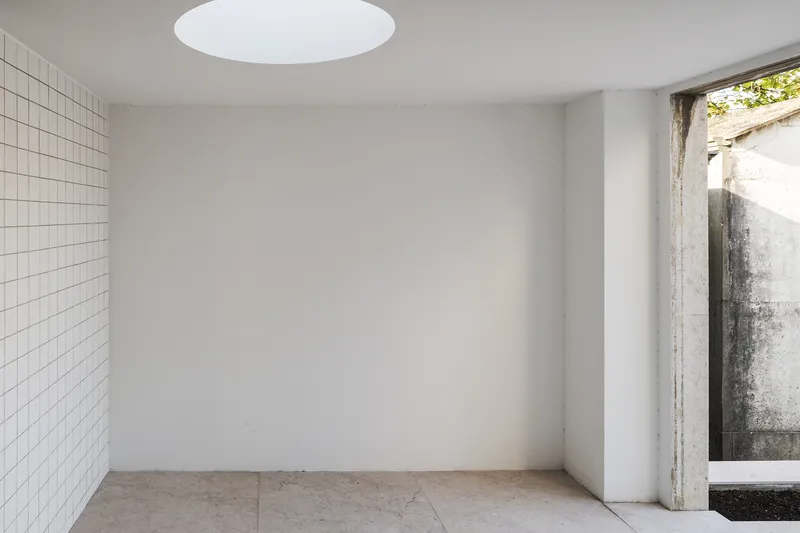
Material Strategy: White Tiles and Glass as Narrative Elements
Contrasting Old and New Through Materiality
The architects employed a minimal yet expressive material palette to distinguish new interventions from the original structure. The use of white ceramic tiles across both interior and exterior surfaces creates a unified visual identity while clearly marking the renovated elements.
This approach achieves two goals:
- It respects the historical integrity of the existing building
- It introduces a contemporary architectural language that enhances clarity and brightness
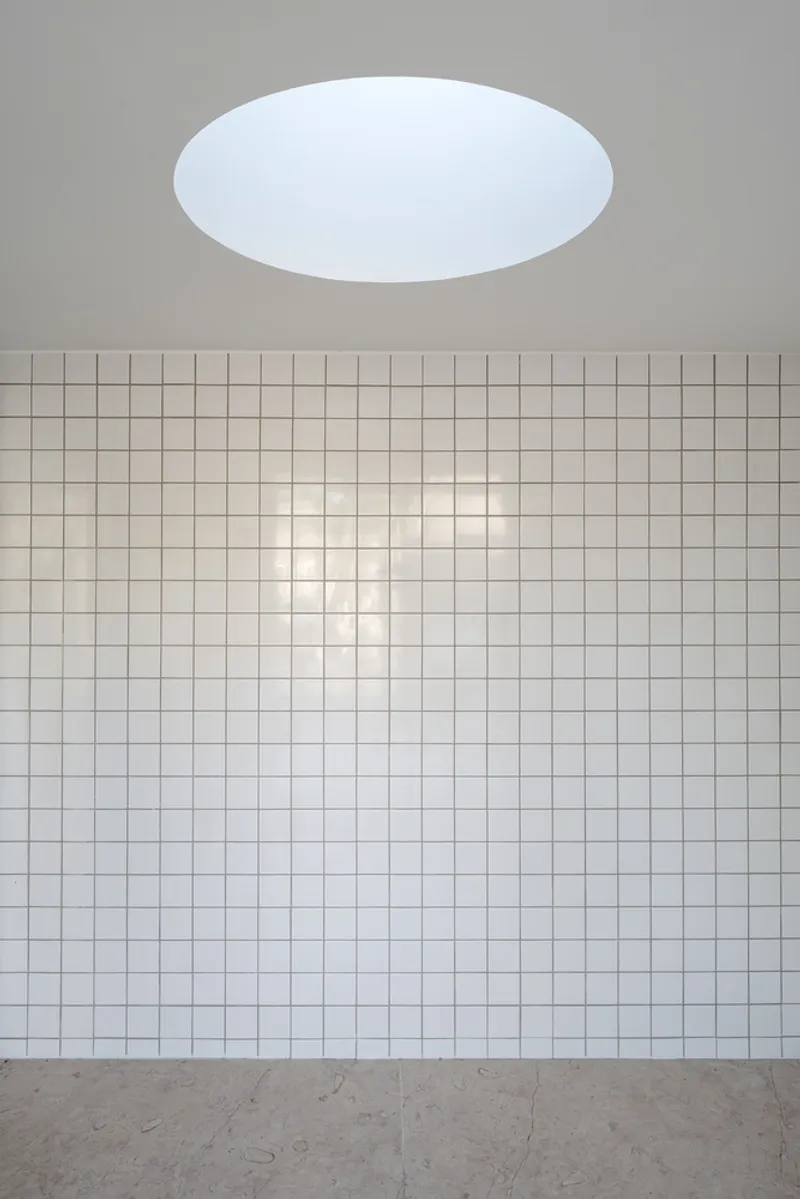
Glass as Atmosphere and Function
Glass plays a critical role in shaping the interior environment. Two distinct types are used strategically:
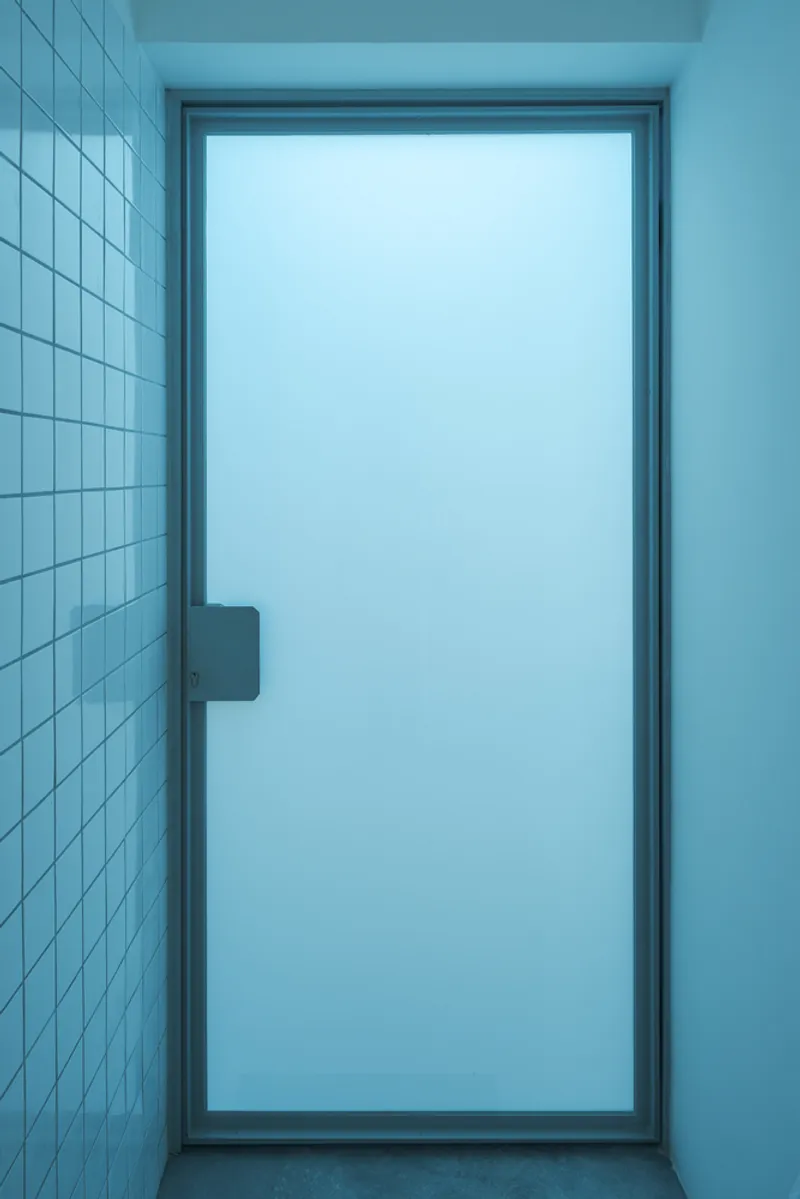
- Translucent Glass: Applied to interior doors and partitions, it recreates a soft, diffused light reminiscent of steam-filled bath spaces, enhancing privacy while maintaining luminosity
- Transparent Glass: Used in windows to establish visual connections with the exterior landscape and maximize natural daylight
Together, these elements contribute to a calm, hygienic, and light-filled atmosphere, essential for the well-being of users.

Skylight Design: A Vertical Connection Through Light
A Symbolic and Functional Feature
A striking architectural intervention is the vertical skylight that runs through the building, connecting all floors. Positioned between the changing rooms, it serves as both a source of natural light and a symbolic element.
The skylight is constructed using blue-tinted glass, referencing the stained glass commonly found in cemetery tombs. This subtle detail ties the building to its context while introducing a poetic dimension to the design.
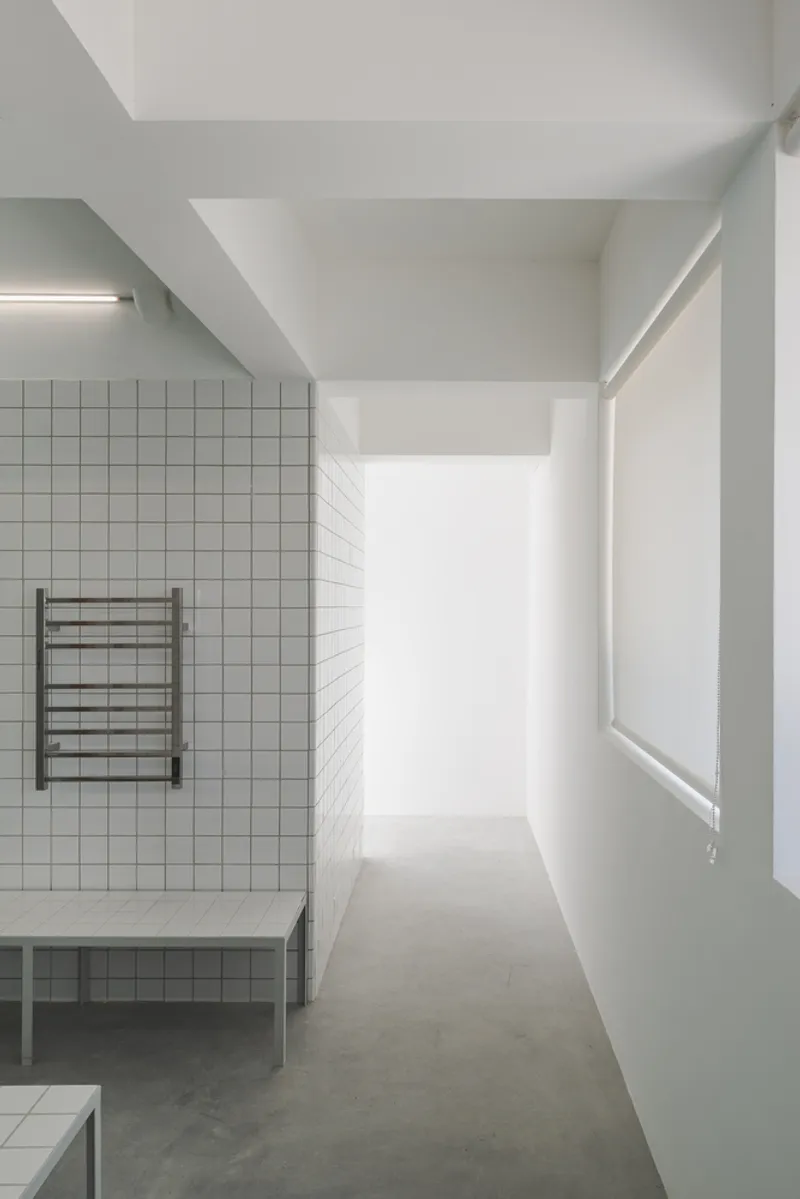
Enhancing Spatial Continuity
Beyond its symbolic value, the skylight improves:
- Vertical circulation clarity
- Natural lighting penetration across levels
- Visual connectivity within the building
This feature transforms the interior into a light-filled vertical sequence, enhancing the overall spatial experience.
The Rooftop Addition: Creating a Space for Rest and Reflection
A Terrace with a View of the Tagus River
The newly added third floor introduces a much-needed communal space for staff, complete with a small kitchen and relaxation area. Extending outward, a terrace offers panoramic views of the Tagus River.
This elevated space becomes a place of respite, allowing workers to disconnect from their demanding environment. The integration of outdoor space reinforces the project’s focus on well-being and human-centered design.
Architecture as Emotional Support
In a setting often associated with grief and solemnity, the rooftop terrace provides:
- A sense of openness and freedom
- Access to fresh air and natural light
- A visual escape toward the horizon
This intervention highlights how architecture can positively influence emotional states, even in challenging contexts.
Adaptive Reuse and Sustainability in Contemporary Architecture
Minimizing Intervention, Maximizing Impact
Pessoal House exemplifies sustainable adaptive reuse architecture, where the existing structure is preserved and enhanced rather than replaced. By retaining the facades and structural framework, the project reduces construction waste and environmental impact.
Efficient Use of Space and Resources
The reorganization of functions across multiple levels ensures optimal use of space without expanding the building footprint excessively. The addition of the third floor is carefully integrated, maintaining proportional harmony with the original structure.
This approach reflects broader trends in urban regeneration and sustainable design, particularly in historic European cities like Lisbon.
A Thoughtful Dialogue Between Architecture and Context
Pessoal House by COM/O atelier is more than a renovation: it is a profound architectural statement about the relationship between life, work, and environment. By transforming a deteriorated service building into a functional and uplifting space, the project demonstrates how architecture can respond sensitively to complex human experiences.
Through strategic spatial planning, material clarity, and a deep understanding of context, the architects have created a building that supports its users both physically and emotionally. It stands as a benchmark for adaptive reuse projects, especially those situated in unconventional or challenging locations.
Ultimately, Pessoal House redefines the role of architecture within a cemetery, proving that even in places associated with death, design can celebrate life.
All photographs are works of
Daniel Malhão


Popular Articles
Popular articles from the community


Cube Design Draws an Ecological Corridor Between Two Shenzhen Hills with the Nankai Building
Beside Shenzhen's container docks, the Nankai Building pairs stacked balconies with a climbing green screen to connect two hillsides across its height.

GROUP A Strips a 1969 Rotterdam Harbor Headquarters to Its Frame and Wraps It in Timber Louvers
In Rotterdam's M4H harbor district, Ferro Offices reuses a 1969 frame, adds one timber storey and reaches BREEAM-NL Outstanding.

David Ortega Stacks a Two-Story Mexico City Penthouse Around a Steel Stair and a Pergola-Shaded Roof Terrace
In Colonia Roma, a 300 m² penthouse uses oak joinery, a planted steel stair and a slatted roof pergola to make a new-build apartment feel like a house.

David Macias Steps a Doorless Stone and Plaster House Down a Tropical Colombian Hillside
In the humid hills of Colombia, Threshold House replaces the front door with an open void and terraces its 850 m² down the slope instead of fighting it.

Similar Reads
You might also enjoy these articles

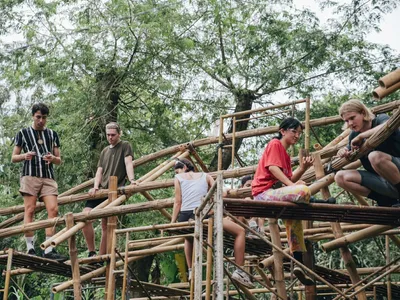
Bamboo Housing Challenge 2026: Design Affordable, Sustainable Homes Using Bamboo
An international design competition by Bamboo U and IBUKU inviting architects and designers to reimagine affordable housing using bamboo — with the winning design built full-scale in Bali.
Computational Design & Education: Beegraphy Design Awards Introduces 7th Category (Featuring Jiyun's Innovative Approach)
Dive into Beegraphy’s 7th Design Awards category, where computational design meets education to create immersive, interactive learning tools, inspired by Jiyun’s work.
From Parametric Lighting to Urban Furniture: Join the 2nd Workshop in Beegraphy’s Computational Design Series
Dive into Cutting-Edge Design Techniques and Practical Applications with Industry Experts

Last Call: Unleash Your Architectural Genius in SHAK's Kindergarten Design Competition
Urgent call for architects to join SHAK's kindergarten design competition before the looming deadline

Explore Architecture Competitions
Discover active competitions in this discipline

Challenge to reimagine the Iron Throne

Photograph architecture without architects

Illustrate the lost glory of Angkor Wat - Render Challenge

Design challenge to reuse E-waste
Comments (0)
Please login or sign up to add comments
No comments yet. Be the first to comment!